



Cities across Canada and North America are entering a decisive period for housing. Population growth, shifting household structures, rising land costs, climate pressure, and affordability challenges are converging at the same time. The result is clear in both policy debate and lived experience: the conventional housing model is no longer sufficient for the scale or complexity of urban demand. If cities are going to remain economically productive, socially stable, and environmentally resilient, they need housing systems that are faster, smarter, more flexible, and better integrated into the urban fabric.
Table Of Content
- Why current housing systems are under strain
- The shift from isolated buildings to integrated housing systems
- Missing middle housing and the return of urban flexibility
- Purpose-built rental as a cornerstone of future supply
- Modular and prefabricated construction as productivity tools
- Adaptive reuse and the reinvention of underused space
- Co-operative, nonprofit, and non-market housing in a mixed system
- Sustainability as a core housing criterion
- Transit-oriented development and the rise of complete communities
- Aging in place, intergenerational living, and flexible urban housing
- The governance challenge: zoning, permitting, finance, and infrastructure
- What future-ready housing systems should prioritize
- Common misconceptions that need to be left behind
- Conclusion: housing as long term city strategy
The central challenge is not simply to build more homes, although supply is undeniably part of the story. Canada Mortgage and Housing Corporation estimates that Canada needs roughly 430,000 to 480,000 new housing units per year over the next decade to restore affordability to 2019 levels. Yet Canada recorded 227,697 housing starts in 2024 in centres with populations above 10,000, which, while up 2 percent from the previous year, remains well below what is needed. In the United States, an estimated 1,358,700 housing units were started in 2025, but many metropolitan markets still struggle with severe affordability gaps. These figures illustrate a deeper structural issue: housing production is active, but it is not consistently matching need by location, price point, tenure, or household type.
That is why the future of housing should be understood as a systems question, not just a construction question. A future housing system is shaped by the interaction of land use policy, infrastructure capacity, financing, development approvals, building technology, climate resilience, and community planning. It includes market and non-market housing, ownership and rental, urban infill and adaptive reuse, as well as new approaches to design and delivery. In practical terms, the future of urban living depends on whether cities can coordinate these moving parts with greater precision and greater ambition.
This matters because housing is more than shelter. It is a foundation for economic opportunity, public health, transportation efficiency, and social cohesion. Poorly located or poorly planned housing adds pressure to roads, public services, household budgets, and the environment. Well designed housing, by contrast, can shorten commutes, reduce energy use, improve access to services, and create stronger neighborhoods. As urban regions grow, the strategic value of housing rises accordingly.
The most promising future housing systems are not one-size-fits-all solutions. They are multi-layered frameworks that combine purpose-built rental, missing middle housing, modular construction, adaptive reuse, co-operative and nonprofit housing, and transit-oriented development. They are also supported by governance reforms such as faster permitting, as-of-right zoning, infrastructure investment, and pre-approved building typologies. In that sense, innovation in housing is not only about what gets built, but about how cities make building possible.
The future housing conversation should move beyond the narrow idea of more units at any cost. The real objective is better-located, lower-carbon, more flexible housing that expands affordability while strengthening urban livability.
Why current housing systems are under strain
To understand where housing systems must go, it helps to understand why current systems are failing to keep pace. The first pressure point is demand. Urban populations continue to grow, driven by natural increase, migration, labor concentration, and the continued pull of cities as centers of education, healthcare, culture, and employment. At the same time, household sizes have evolved, with more single-person households, aging populations, and changing family structures creating demand for a broader range of unit types than the market has historically supplied.
The second pressure point is affordability. In many cities, housing prices and rents have outpaced income growth for years. Ownership has become less attainable for younger households, while rental affordability has deteriorated for lower and middle income households alike. Even where supply is increasing, the timing, tenure, and cost structure of new housing often fail to address the most urgent affordability gaps. Luxury condominiums in high-demand markets may add inventory, but they do not necessarily solve the lack of family-sized rentals, deeply affordable units, or accessible housing for seniors.
Financing conditions have also become more difficult. Higher interest rates, stricter lending conditions, and construction cost volatility have made many projects harder to underwrite. In this environment, even strong demand does not automatically translate into new supply. A city can have a clear need for housing, available development capacity, and an active private sector, yet still see projects delayed because capital stacks no longer work. This is one reason why future housing systems need a wider range of delivery models, including public financing tools, co-operative structures, and nonprofit partnerships.
Climate risk is another major factor. UN-Habitat’s World Cities Report 2024 warns that poorly planned housing and infrastructure are increasingly vulnerable to heat, flooding, and other hazards. This is not a distant concern. In North America, urban expansion must now account for wildfire smoke, grid stress, stormwater overload, urban heat islands, and insurance risk. Housing systems that ignore resilience may look less expensive at the outset, but they can impose much higher long term costs on households, municipalities, and insurers.
Finally, many current systems are constrained by policy and process rather than by technical capacity alone. CMHC has noted that the homebuilding industry in Canada may have the potential to produce more than 400,000 homes per year. If that is the case, the problem is not just labor or market demand. It is coordination across approvals, servicing, land use permissions, trade capacity, development timing, and infrastructure readiness. Future housing strategy therefore requires cities to address bottlenecks that sit outside the building site itself.
The shift from isolated buildings to integrated housing systems
One of the most important conceptual changes now underway is the shift from seeing housing as a series of individual projects to seeing it as integrated urban infrastructure. A building does not succeed in isolation. Its value and performance depend on access to transit, schools, parks, utilities, healthcare, retail, and employment. When housing is disconnected from these systems, households absorb the inefficiency through longer commutes, higher transportation costs, and weaker access to everyday needs.
This is why future housing systems must be aligned with the broader idea of complete communities. A complete community is one where residents can access daily needs with less dependence on long car trips and where density is matched by services and amenities. In practical terms, this means new housing should be planned alongside transit investments, childcare expansion, school capacity, public realm improvements, and resilient infrastructure. The housing system is not separate from the city. It is one of the main ways the city functions.
Integrated systems also improve long term feasibility. Developers and public agencies are more likely to deliver successful projects when there is clarity around zoning, servicing, and local infrastructure support. Residents are more likely to accept new density when it is paired with visible improvements to mobility, open space, and neighborhood services. This is a critical political dimension of future housing strategy. Urban growth becomes easier to support when it is experienced as thoughtful city-building rather than reactive intensification.
There is also a productivity advantage in systems thinking. If land use policy, infrastructure planning, and approvals are coordinated, projects face fewer delays and less uncertainty. That lowers risk, improves investment confidence, and accelerates delivery. In a market where time is often one of the most expensive variables, systemic efficiency can be as important as construction speed.
Missing middle housing and the return of urban flexibility
Among the most discussed innovations in future housing is the expansion of missing middle housing. This term refers to multi-unit, ground-oriented or low-rise housing forms such as duplexes, triplexes, fourplexes, townhouses, courtyard apartments, and small apartment buildings. These forms sit between detached homes and high-rise towers, and they are particularly important in established neighborhoods where demand is rising but large-scale redevelopment may be difficult or inappropriate.
Missing middle housing offers several strategic benefits. It can increase supply in high-opportunity areas, support family housing, and distribute growth more evenly across cities rather than concentrating it only along a few major corridors. It also tends to produce housing at a more human scale, which can help bridge the perceived divide between density and neighborhood character. In many cases, these forms were once common in North American cities before exclusionary zoning restricted them.
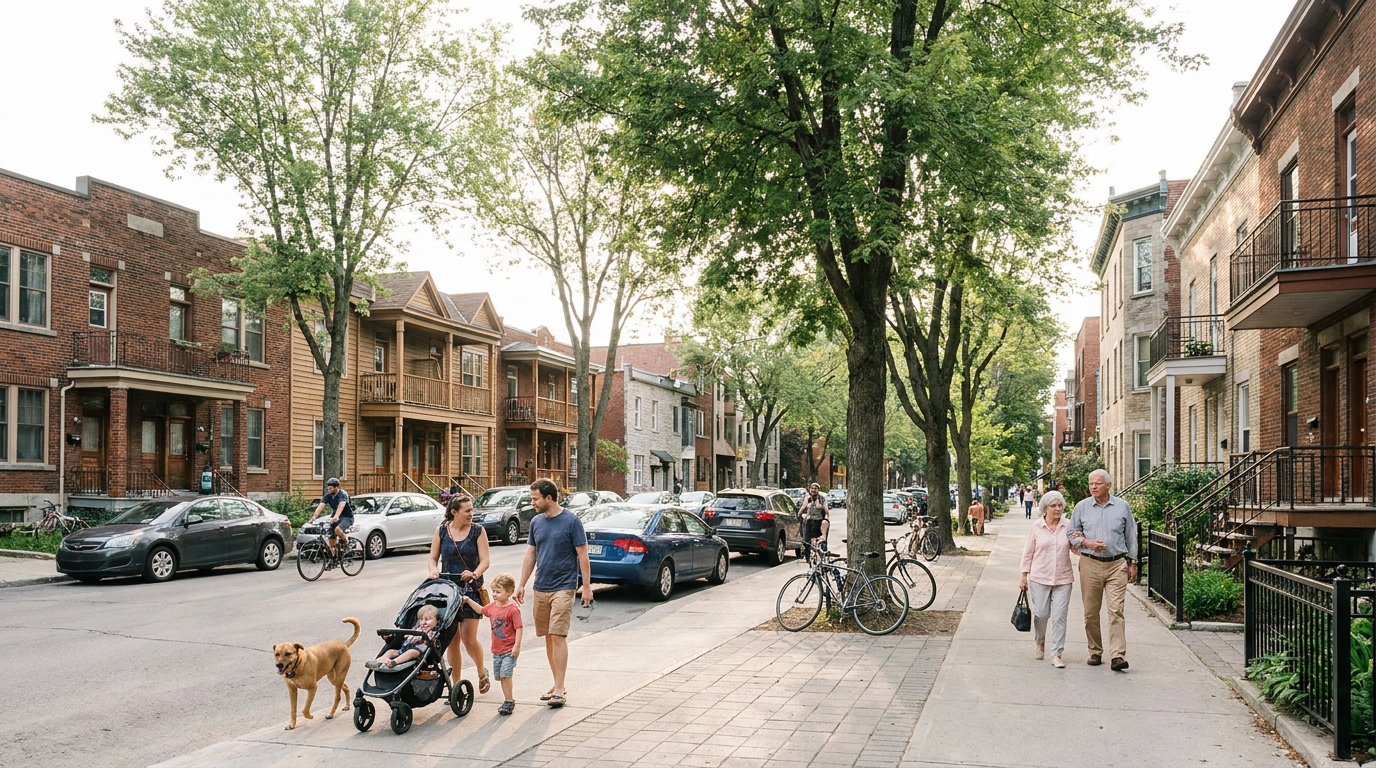
A key misconception in urban housing is that higher density automatically reduces livability. In reality, livability depends much more on design quality, street conditions, public services, and mobility options than on raw unit count alone. A neighborhood of well designed fourplexes, trees, sidewalks, and nearby shops may offer a much better quality of life than an isolated low-density area that requires every trip to be made by car. Density without planning can create friction, but thoughtful density often enhances convenience and social vitality.
For future housing systems, missing middle forms restore flexibility to the urban land base. They allow cities to add homes in places where infrastructure already exists and where residents can benefit from established schools, transit, and amenities. They also diversify the types of units available, which is essential for younger households, downsizers, seniors, and multigenerational families. In strategic terms, this is not just a design issue. It is a land efficiency and affordability issue.
Purpose-built rental as a cornerstone of future supply
The growing emphasis on purpose-built rental reflects one of the clearest realities in urban housing today: ownership cannot be the only pathway through which cities meet demand. In many metropolitan areas, the economics of homeownership have become unattainable for a large share of households, while the existing rental stock is aging, limited, or priced beyond reach. Purpose-built rental responds to this by creating housing specifically intended for long term rental use, often with more stable management and clearer tenure than condominium units rented out individually.
Recent housing starts in Canada have shown the importance of rental construction, especially in larger cities where renter demand remains strong. This matters because future housing systems need reliable supply across the income spectrum, not just sale units for those who can access ownership. Rental housing also supports labor mobility, student populations, newcomers, and households that value flexibility. In a modern urban economy, a healthy rental sector is not a secondary product. It is essential infrastructure.
Purpose-built rental can also serve broader city-building goals when linked to mixed-income development, inclusionary policy, and transit investment. New rental housing near major employment nodes and mobility corridors can reduce transportation burdens and broaden access to opportunity. When cities pair this with financing support or land contributions, they can also preserve affordability outcomes for moderate income and lower income renters who might otherwise be excluded from well located neighborhoods.
CMHC’s 2025 reporting highlighted substantial federal support for rental, affordable, greener, and co-operative housing through loan and fund programs. That is significant because it signals movement away from a purely market-led approach toward a more mixed delivery environment. The future rental landscape will likely involve private capital, public financing, nonprofit operators, and institutional investment all playing different roles. The strategic objective is not ideological purity. It is to create a broader and more durable housing pipeline.
Modular and prefabricated construction as productivity tools
One of the most visible forms of housing innovation is modular and prefabricated construction. These methods shift more of the building process into controlled factory settings where components or entire modules are manufactured before being transported to the site for assembly. In the right conditions, this can reduce weather delays, improve quality control, standardize production, and shorten overall delivery timelines.
Interest in modular housing has grown because it addresses one of the sector’s most persistent problems: inconsistent productivity. Traditional site-built construction is exposed to labor availability, climate conditions, sequencing delays, and logistical inefficiencies. Factory-built systems can smooth some of these variables, especially for repeatable housing types such as mid-rise rental, supportive housing, student housing, and certain infill formats. This makes modular approaches particularly relevant as cities seek to scale supply more quickly.
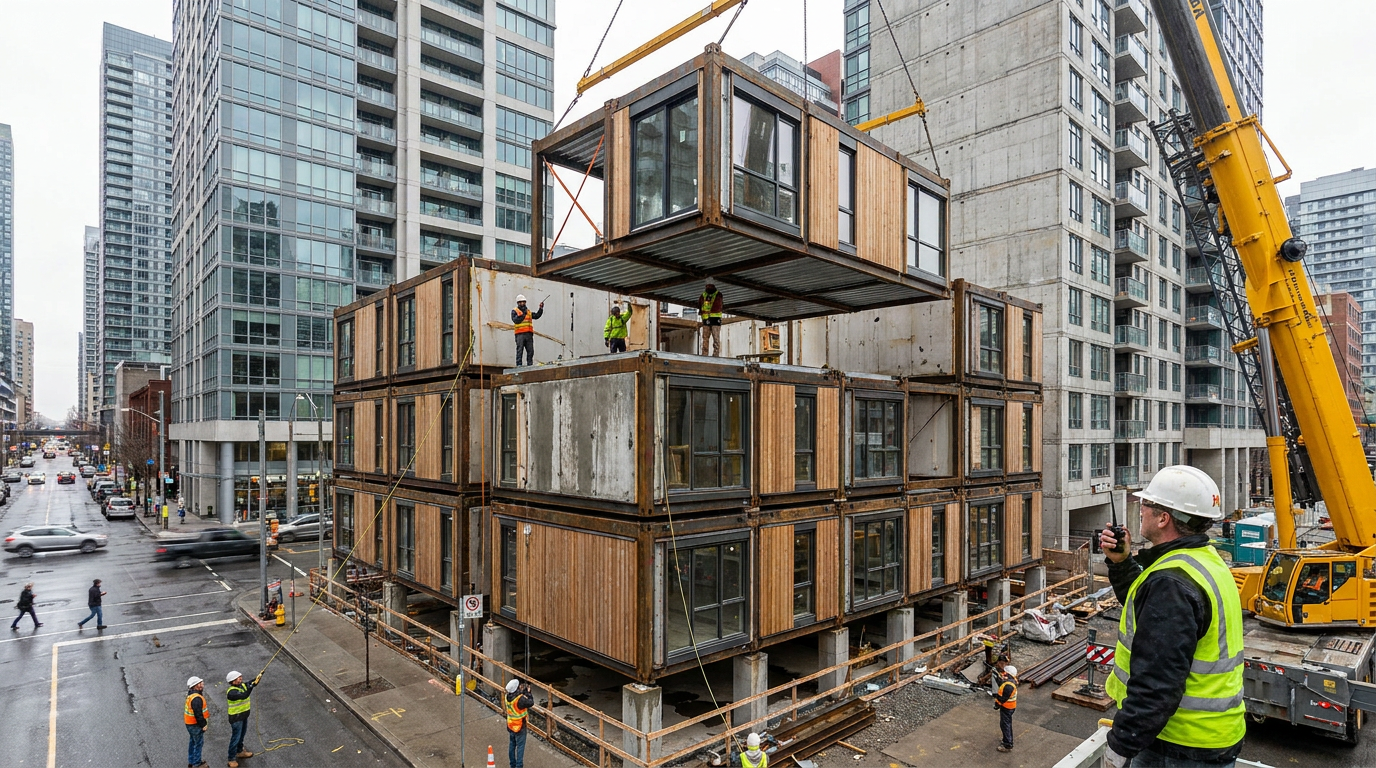
Still, modular construction should not be treated as a silver bullet. The biggest barriers to housing delivery are often found in land use rules, approvals, infrastructure constraints, and financing structures rather than in assembly methods alone. A faster building system does not create serviced land, remove restrictive zoning, or close a feasibility gap caused by interest rates. That is why modular should be understood as one part of a broader housing system, not as the entire answer.
Its real value lies in how it connects to policy reform. When cities combine modular methods with pre-approved designs, standardized code pathways, public land strategies, and faster permitting, the productivity gains become more meaningful. In that context, modular housing can help reduce project uncertainty and create more predictable delivery. It is strongest when embedded in a coordinated ecosystem.
Adaptive reuse and the reinvention of underused space
Future housing systems will not rely only on new construction. They will also depend on how effectively cities adapt the buildings they already have. Adaptive reuse involves converting underused properties such as offices, retail buildings, industrial structures, motels, or institutional sites into residential or mixed-use housing. This approach is increasingly relevant as work patterns shift, certain commercial assets underperform, and urban land becomes more constrained.
The strategic appeal of adaptive reuse is straightforward. It can bring new life to struggling districts, make use of existing infrastructure, and in some cases deliver housing faster than ground-up development. It also has sustainability advantages because it may preserve embodied carbon by retaining parts of existing structures. In downtown areas facing office vacancies, adaptive reuse can help diversify activity and support a more balanced urban environment.
However, adaptive reuse is not always simple. Structural limitations, floor plate depth, building code requirements, servicing upgrades, and financing challenges can all complicate conversions. That is why policy support matters. Clear conversion guidelines, tax incentives, targeted financing, and building code flexibility can make adaptive reuse more viable. As with modular housing, the lesson is that innovation succeeds when regulatory and financial systems are aligned with it.
For growing cities, adaptive reuse offers a practical reminder that the future is often built from the assets of the present. Not every neighborhood can wait for large redevelopment. In many cases, the path to more housing and more urban vitality starts with rethinking what existing buildings can become.
Co-operative, nonprofit, and non-market housing in a mixed system
One of the most persistent misconceptions in housing policy is that affordability can be solved by market supply alone. Additional supply is necessary and beneficial, especially in high-demand urban areas, but it does not always reach households with the greatest need. Many households are structurally excluded from market ownership or market rental because their incomes cannot support prevailing prices even in a growing market. This is where co-operative, nonprofit, and other non-market housing models become essential.
Co-operative housing offers a particularly important template because it can create long term affordability without relying on continuous speculation-driven pricing. Residents typically participate in governance, and the housing is managed with stability rather than rapid turnover in mind. Nonprofit and community-based models can similarly preserve affordability, support vulnerable populations, and anchor mixed-income communities over time. These approaches widen the range of housing outcomes available within a city.
The renewed policy support for co-op and affordable housing in Canada points to a broader strategic shift. Future housing systems are likely to be mixed systems in which private developers, institutional investors, nonprofits, municipal governments, and senior levels of government all contribute different tools and capital sources. This is not a retreat from market participation. It is recognition that urban housing functions best when multiple delivery channels exist for different household needs.
In practical terms, mixed systems also create resilience. If one segment of the market slows due to financing conditions or investor sentiment, others may continue to advance. A city with only one housing model is more exposed to cyclical shocks. A city with a diversified housing ecosystem is better positioned to maintain production and affordability through changing economic conditions.
Sustainability as a core housing criterion
Sustainability is no longer an optional enhancement to housing strategy. It is a core criterion for future housing systems. As climate risk intensifies and energy costs remain volatile, housing must be designed and located in ways that reduce emissions, lower operating costs, and improve resilience. This includes building decarbonization, energy efficiency, all-electric systems, low-carbon materials, stormwater-sensitive site planning, and passive survivability measures that protect occupants during power disruptions or heat events.
UN-Habitat has emphasized that cities are central to climate action and that housing and infrastructure are highly exposed when they are poorly planned. This is particularly relevant in Canadian and northern climates, where thermal performance has major implications for affordability. A more efficient building envelope, better insulation, heat recovery, and electrified heating can reduce utility bills over time and improve indoor comfort. For lower income households, those operating savings can be as important as initial rent or mortgage costs.
Another common misconception is that green housing always costs too much to deliver. The reality is more nuanced. Some sustainability features do increase upfront capital costs, especially in early adoption phases or where supply chains are immature. But those costs can be offset by lower energy use, better durability, reduced maintenance, and lower climate-related losses over the long term. As building standards and markets mature, the cost differential often narrows further.
From a strategic standpoint, sustainability should be assessed through a life-cycle lens rather than a narrow initial-cost lens. A housing system that appears cheaper today but locks residents into high energy bills, flood vulnerability, or overheating risk is not actually low cost. It simply shifts costs into the future. The better question for cities is how to structure policy, incentives, financing, and procurement so that resilient low-carbon housing becomes easier to deliver at scale.
Transit-oriented development and the rise of complete communities
Housing systems cannot be separated from transportation systems. Where homes are built influences how people move, how much they spend, and how much time they lose in daily travel. This is why transit-oriented development has become central to future urban housing strategy. By concentrating housing near high-quality transit, cities can support ridership, reduce car dependence, and improve access to jobs and services without requiring endless outward expansion.
Transit-oriented development is about more than station proximity. At its best, it creates complete communities with mixed-use buildings, walkable streets, active ground floors, public space, and a range of housing types and price points. This is especially important in North American cities where exclusionary zoning and fragmented growth patterns have historically separated housing from opportunity. A well planned transit district can integrate mobility, density, employment, and public life in ways that improve both affordability and livability.
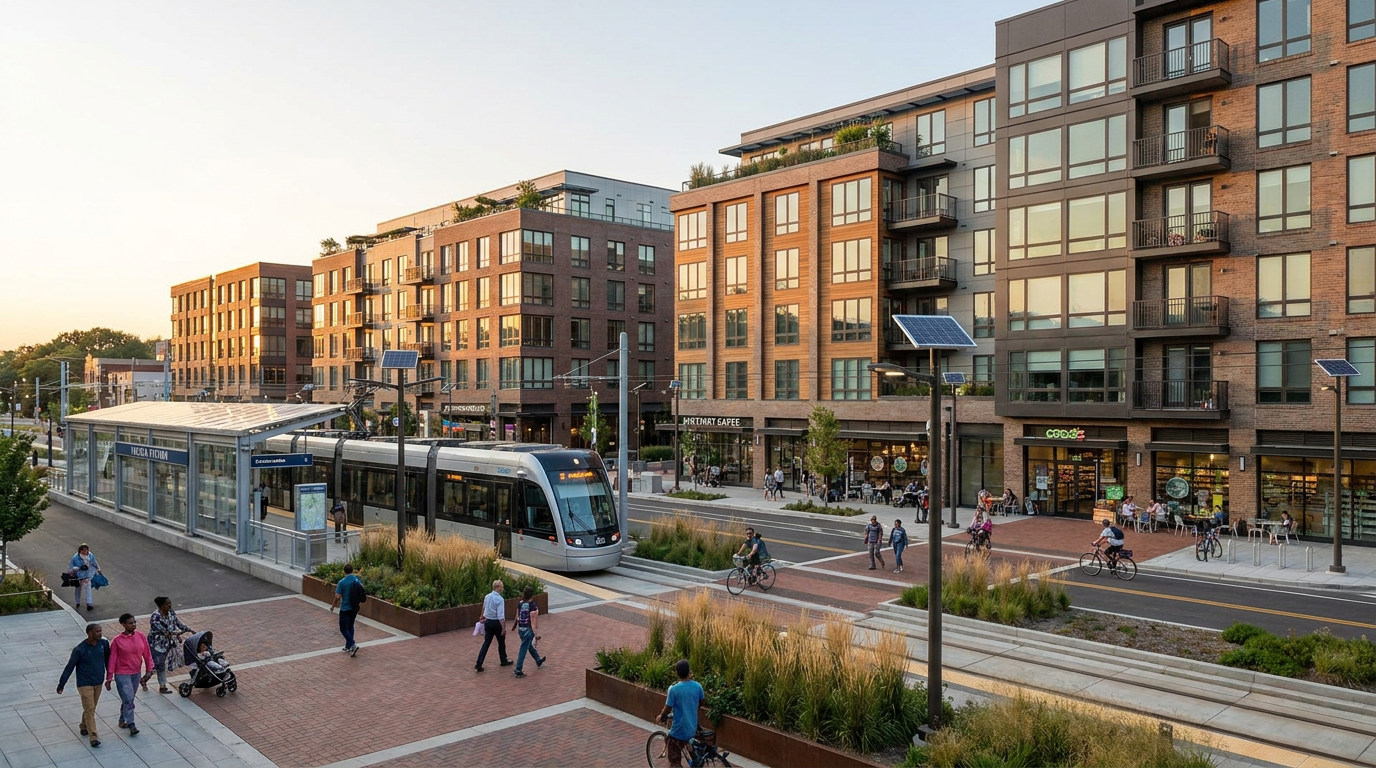
This is also where one of the biggest urban myths deserves correction. Density does not inherently degrade quality of life. Poor design, inadequate public services, unsafe streets, and weak transportation choices degrade quality of life. Density that is linked to transit, schools, green space, childcare, and neighborhood retail can actually improve daily living by making essentials more accessible. The key variable is integration, not simply intensity.
For municipalities, transit-oriented housing also improves infrastructure efficiency. Water, sewer, roads, and transit investments tend to perform better when growth is concentrated where service already exists or can be expanded efficiently. In fiscal terms, compact well connected development often has advantages over dispersed low-density expansion. That makes transit-oriented housing not only an environmental strategy, but also a long term municipal finance strategy.
Aging in place, intergenerational living, and flexible urban housing
Future housing systems must respond not only to growth, but also to demographic change. Aging populations, smaller households, and more complex family arrangements are reshaping what urban residents need from housing. A system optimized only for one household model will fall short. Cities need homes that can support aging in place, intergenerational living, accessible design, and changing life stages without forcing households into disruptive moves.
This means flexibility must become a more central design principle. Secondary suites, adaptable layouts, universal design features, family-sized rentals, and accessible common spaces can all help create a housing stock that serves people longer and better. In established neighborhoods, missing middle forms can offer options for seniors who want to stay in familiar communities while downsizing from larger detached homes. In newer developments, mixed unit sizes and accessible design can accommodate a broader range of needs from the start.
There is also an affordability dimension here. When households have housing options that fit changing circumstances, they are less likely to face unnecessary cost spikes or displacement. Intergenerational households, for example, may prefer layouts that support privacy and shared living at once. Aging residents may need proximity to healthcare and transit more than large interior space. A future housing system should make room for these realities instead of forcing everyone into standardized products.
In strategic terms, flexible housing expands social resilience. It allows neighborhoods to evolve with their residents rather than experiencing repeated cycles of exclusion and replacement. That is a subtle but powerful form of urban stability.
The governance challenge: zoning, permitting, finance, and infrastructure
Much of the discussion around future housing focuses on physical forms, but the largest constraints are often institutional. Zoning can prohibit needed housing types. Permitting can add uncertainty and delay. Infrastructure can lag growth. Financing can fail to bridge viable projects into delivery. These are not side issues. They are the core operating system of housing production.
As-of-right zoning is one of the most important reforms because it reduces uncertainty around what can be built. If suitable housing types are permitted without lengthy discretionary processes, projects become easier to finance and deliver. Pre-approved designs can also support speed and consistency, especially for missing middle, modular, and small-scale infill formats. Faster approvals do not mean abandoning standards. They mean applying standards with clarity and efficiency.
Infrastructure planning is equally critical. New housing cannot move at scale if water, sewer, stormwater, transit, and community services are not ready to support it. This is why future housing systems must be integrated with capital planning and long range growth management. A city may permit density on paper, but if infrastructure timing lags too far behind, actual delivery will stall. Coordination is what turns entitlement into homes.
Finance remains a decisive variable as well. Public loans, guarantees, tax tools, land policies, and partnership structures can all influence whether projects pencil out, especially for rental and affordable housing. Since UN-Habitat has pointed to major global shortfalls in climate-resilient infrastructure financing, it is clear that local housing ambitions need stronger financial architecture behind them. Ambition without execution capacity will not close the supply gap.
What future-ready housing systems should prioritize
If cities want housing systems that are truly future-ready, they need clear priorities that connect supply, resilience, and quality of life. The objective is not simply to maximize unit counts in isolation. It is to build a durable framework for urban living that can absorb growth while improving how cities function. That requires a coordinated set of priorities rather than fragmented responses.
- Increase supply in the right places. Focus growth where transit, jobs, and services already exist or can be expanded efficiently, while opening more established neighborhoods to missing middle housing and gentle intensification.
- Expand delivery models. Support a mix of market, nonprofit, co-operative, and public-private housing pathways so affordability does not depend on a single sector alone.
- Improve system productivity. Pair modular methods, standardized approvals, pre-approved designs, and digital permitting with stronger project coordination across agencies and utilities.
- Build for climate resilience. Embed energy efficiency, electrification, passive survivability, stormwater management, and low-carbon materials into mainstream housing policy and finance.
- Link housing to complete communities. Ensure density is matched by schools, parks, childcare, retail, healthcare, and high-quality public space.
- Design for demographic change. Promote accessible housing, family-sized rentals, flexible unit layouts, and aging-in-place strategies so the housing stock serves a wider range of households over time.
These priorities are mutually reinforcing. A transit-oriented rental project can also be low carbon, mixed income, and designed for accessibility. A missing middle zoning reform can also support aging in place and better use of existing infrastructure. The point is not to pursue isolated innovations, but to shape a coherent housing ecosystem where each decision adds value across multiple policy goals.
Common misconceptions that need to be left behind
For future housing systems to gain traction, several long-standing misconceptions need to be challenged directly. The first is the idea that density automatically reduces livability. In practice, livability depends on urban design, service quality, mobility options, and access to amenities. Poorly planned density can fail, but so can poorly planned sprawl. The issue is not whether a city grows, but how it grows.
The second misconception is that market supply alone can solve affordability at every level. Supply growth is essential and should be accelerated, but many households require non-market, subsidized, or co-operative options to access stable housing. This is especially true in expensive urban regions where construction and land costs push market rents beyond what lower income residents can pay. A complete housing system recognizes both market efficiency and social need.
The third misconception is that sustainability is simply a cost burden. Better building performance can reduce operating expenses, improve comfort, and lower long term risk exposure. In a climate-disrupted future, resilience is part of affordability, not separate from it. The cheapest building on opening day is not necessarily the most economical building over its life cycle.
The final misconception is that future housing is mainly a technology story. Technology matters, especially in construction and building systems, but the larger barriers are often zoning, approvals, financing, and infrastructure coordination. Cities do not solve housing shortages through gadgets alone. They solve them through governance, policy alignment, and strategic execution.
Conclusion: housing as long term city strategy
The future of urban living will be determined in large part by the quality of the housing systems cities build now. Canada’s need for 430,000 to 480,000 new units per year, compared with 227,697 starts in 2024, shows the scale of the challenge. The broader North American picture tells a similar story: substantial production, but persistent affordability gaps and uneven outcomes. More homes are needed, but so is a better framework for deciding what gets built, where it gets built, and who it serves.
The most effective future housing systems will combine quantity with intelligence. They will include purpose-built rental, missing middle housing, modular delivery, adaptive reuse, co-operative and nonprofit models, and transit-oriented development. They will be supported by reforms to zoning, permitting, financing, and infrastructure planning. They will also treat sustainability, resilience, and livability as central performance measures rather than secondary aspirations.
Ultimately, housing should be understood as long term city strategy. It shapes land value, economic competitiveness, social mobility, climate outcomes, and the everyday experience of residents. When cities get housing right, they do more than accommodate growth. They create the conditions for broader urban success. The next generation of housing systems must therefore be ambitious enough to meet demand, disciplined enough to deliver at scale, and thoughtful enough to make urban life better in the process.



No Comment! Be the first one.