


Space-age sustainability is the practice of applying technologies originally developed for spacecraft, satellites, and other extreme environments to everyday home design and renovation. In practice, it looks far less dramatic than the name suggests: a rooftop solar array that lowers electricity bills, an advanced insulation layer hidden inside a wall during a renovation, or a set of smart sensors that quietly reduce wasted energy in the background. These upgrades matter because they draw on ideas that were refined where efficiency, durability, and precision were never optional — spacecraft and satellites cannot afford wasted power or failed materials. Brought down to Earth, that same design discipline helps ordinary homes use less energy, hold comfortable temperatures more consistently, and perform better through heat waves, cold snaps, and grid stress, without requiring homeowners to adopt anything exotic or unfamiliar.
Table Of Content
- Why Space Exploration Has So Much to Teach Us About Sustainable Homes
- Solar Power: The Most Visible Space-Inspired Upgrade
- What Solar Means in Everyday Home Life
- Smart Sensors, Smarter Homes, Better Energy Decisions
- Advanced Insulation: The Hidden Upgrade with Outsized Impact
- Reflective Insulation and Thermal Control
- Aerogel and High-Performance Retrofits
- High-Performance Windows and the Space Logic of Comfort
- Solar Thermal and the Overlooked Opportunity in Heating
- Phase-Change Materials and Thermal Storage at Home
- Electrification, Heat Pumps, and the Importance of Working as a System
- Low-Impact Materials and Durability as Sustainability
- Common Misconceptions About Space-Age Sustainability
- How to Bring Space-Age Sustainability Into Your Own Home
- A Practical Upgrade Path
- The Real Future of Sustainable Homes Is Already Here
That history matters because it changes the way we think about sustainable home design. Instead of treating green upgrades as niche or experimental, we can see them as part of a long process of refinement. NASA describes a spinoff as a commercialized product that incorporates NASA technology or expertise, and that framing is useful here because it reminds us that some of the most practical home improvements have extraordinary technical roots. The value is not in novelty for its own sake. The value is in applying well-tested ideas to the places we live every day.
For homeowners and renovators in Canada and across North America, this is particularly relevant now. Energy costs, climate resilience, and long-term building performance are becoming central parts of renovation decisions. The International Energy Agency continues to emphasize that building energy codes and efficiency policies remain a major lever for reducing demand in the buildings sector, which means better homes are not just about adding gadgets. They are about combining materials, systems, and design choices that work together over time.
In that sense, space-age sustainability is not really futuristic. It is a useful way to describe highly practical technologies with a proven record of solving hard problems. From advanced solar cells to reflective insulation, thermal management materials, and precision monitoring systems, the same design logic that helps equipment survive space can also help homes waste less energy and perform more gracefully through heat waves, cold snaps, and grid stress.
This article explores how those innovations translate into real home upgrades. The focus is not on speculative concepts or expensive one-off experiments. It is on realistic, achievable improvements that can reduce energy use, improve comfort, and support a greener future without asking homeowners to live in a laboratory.
Why Space Exploration Has So Much to Teach Us About Sustainable Homes
Space missions are defined by limits. Every kilogram matters, every watt matters, and every material must perform under demanding conditions. That mindset has a natural connection to sustainability because efficient buildings rely on the same principles. They use less energy, lose less heat, manage resources carefully, and depend on systems that work reliably over long periods with minimal waste.
When agencies and researchers develop technologies for space, they are often trying to solve problems that also exist on Earth in a less dramatic form. How do you keep interior temperatures stable when external conditions are harsh and variable. How do you generate power from sunlight as efficiently as possible. How do you use advanced materials to do more with less thickness, less weight, and less maintenance. These are all building questions too, especially in climates where heating and cooling demand are significant.
NASA’s climate and spinoff materials point to Earth-side applications for reflective insulation, improved solar technologies, and precision sensing. Some of these products reach homeowners directly, while others move through manufacturers, contractors, and building suppliers before becoming part of standard construction and renovation practice. The pathway is not always visible to the end user, but the influence is real.
There is also an important mindset shift here. Sustainability is often framed as sacrifice, but space-inspired design suggests something more elegant. It suggests performance. A home that stays warmer in winter, cooler in summer, and uses less energy to do both is not only more sustainable. It is more comfortable, more resilient, and often more financially sensible over the long term.
Space-age sustainability works best when it feels ordinary in daily life. The most successful upgrades are usually the ones that disappear into the background while making a home healthier, more efficient, and easier to live in.
Solar Power: The Most Visible Space-Inspired Upgrade
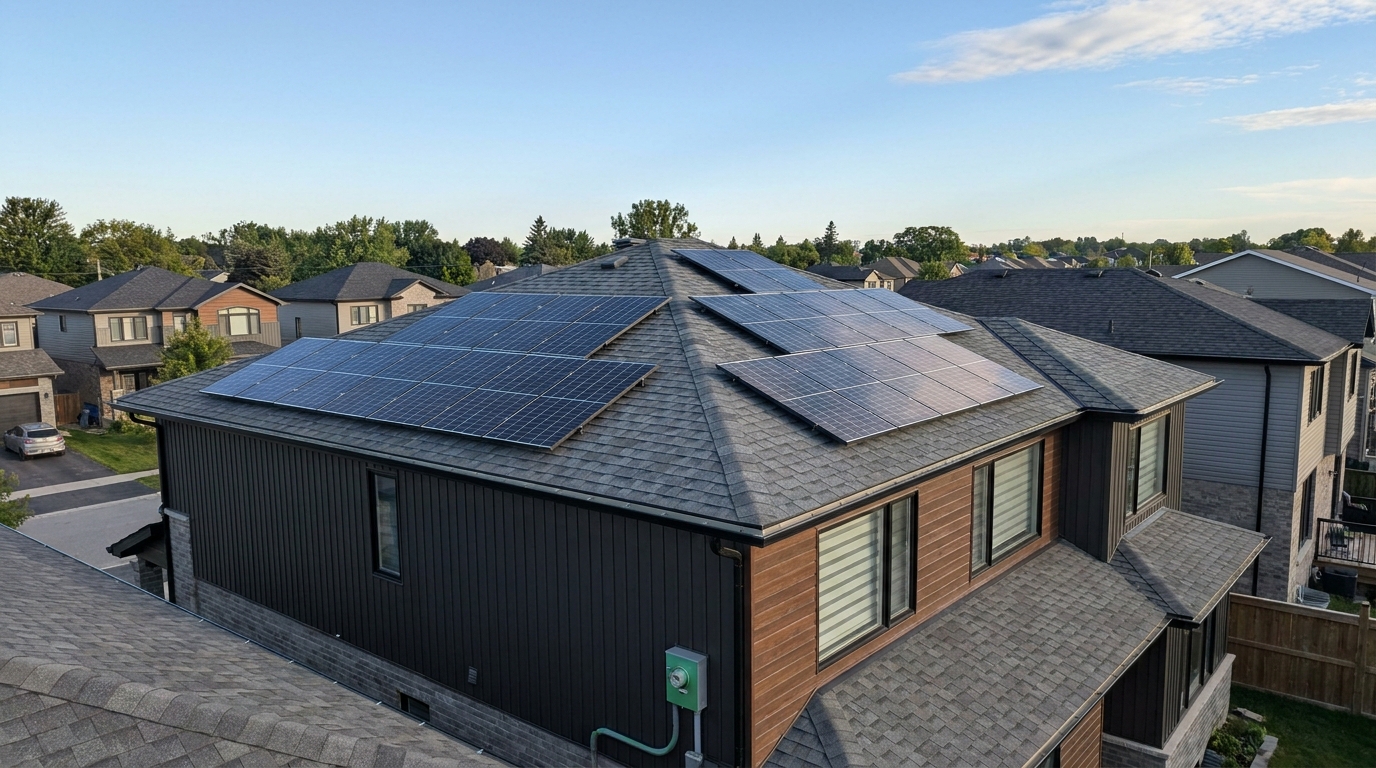
If there is one space-linked technology that homeowners instantly recognize, it is solar energy. Solar power has deep ties to space exploration because satellites and spacecraft rely on photovoltaic systems to generate electricity in environments where reliability is essential. Over time, advances in solar-cell efficiency, durability, and manufacturing have supported a much broader market on Earth, including residential rooftops.
For Canadian homeowners, solar is far more practical than many people assume. Natural Resources Canada reports that the country’s solar photovoltaic capacity reached 6,452 megawatts in 2022, and solar generation produced about 4,323 gigawatt hours that year, enough to power more than 470,000 typical Canadian homes. Those are not fringe numbers. They signal a technology that has moved firmly into mainstream energy planning.
Even more striking is the untapped potential. NRCan’s assessment of Canadian building stock found that rooftops across the country could theoretically generate 247 terawatt hours per year from rooftop PV, which is roughly 76 percent of current electricity needs in residential, commercial, and institutional buildings. That does not mean every roof is ideal, or that every household should install panels tomorrow. It does mean solar deserves a serious place in practical conversations about home sustainability.
For a homeowner, the appeal of rooftop solar is no longer just environmental symbolism. It can offer a hedge against rising electricity costs, increase energy independence, and work well when paired with batteries or smart load management. In neighborhoods where electrification is growing and homes are adding heat pumps, electric vehicles, and induction cooking, on-site generation becomes even more valuable because it supports a more balanced and resilient household energy profile.
Space-age thinking also helps clarify how to approach solar realistically. The question is not whether panels alone create a net-zero home. The better question is how solar fits into a complete strategy that includes insulation, efficient heating, air sealing, and smart controls. A well-insulated home with manageable energy demand makes every kilowatt of solar work harder.
What Solar Means in Everyday Home Life
On a practical level, the best solar projects begin with assessment rather than enthusiasm alone. Roof orientation, shading, local utility rules, structural condition, and household demand patterns all matter. A household that uses more electricity during the day may benefit differently than one with evening-heavy loads, especially depending on local net metering policies or battery options. These are ordinary planning details, but they shape whether solar feels seamless and worthwhile.
There is also a design dimension that has matured considerably. Panels can be integrated more cleanly than many people expect, and the visual language of solar has become part of modern residential architecture rather than a disruption to it. For homeowners who care about both aesthetics and environmental performance, that matters. Sustainability tends to scale more naturally when it is not fighting against how people want their homes to look and feel.
Perhaps most importantly, solar works best when paired with energy awareness. A home that can shift some loads, monitor production, and coordinate appliances intelligently will get more out of the same roof area. That brings us to another space-inspired theme that is less visible than solar panels but just as important: precision sensing and energy management.
Smart Sensors, Smarter Homes, Better Energy Decisions
Space systems depend on data. Temperature, pressure, power use, system health, and environmental conditions are all tracked carefully because waste and failure can be costly. That emphasis on sensors and controls has influenced a wide range of Earth-based technologies, including building monitoring tools and smart home energy systems. While the average homeowner may never think of a thermostat as space-adjacent, the underlying logic is remarkably similar.
In sustainable housing, smart sensing is valuable because it turns assumptions into measurements. Instead of guessing when a home loses heat, when peak loads occur, or which appliances are driving consumption, homeowners can see patterns and adjust accordingly. This matters especially in climates with strong seasonal variation, where heating and cooling decisions have significant cost and carbon implications.
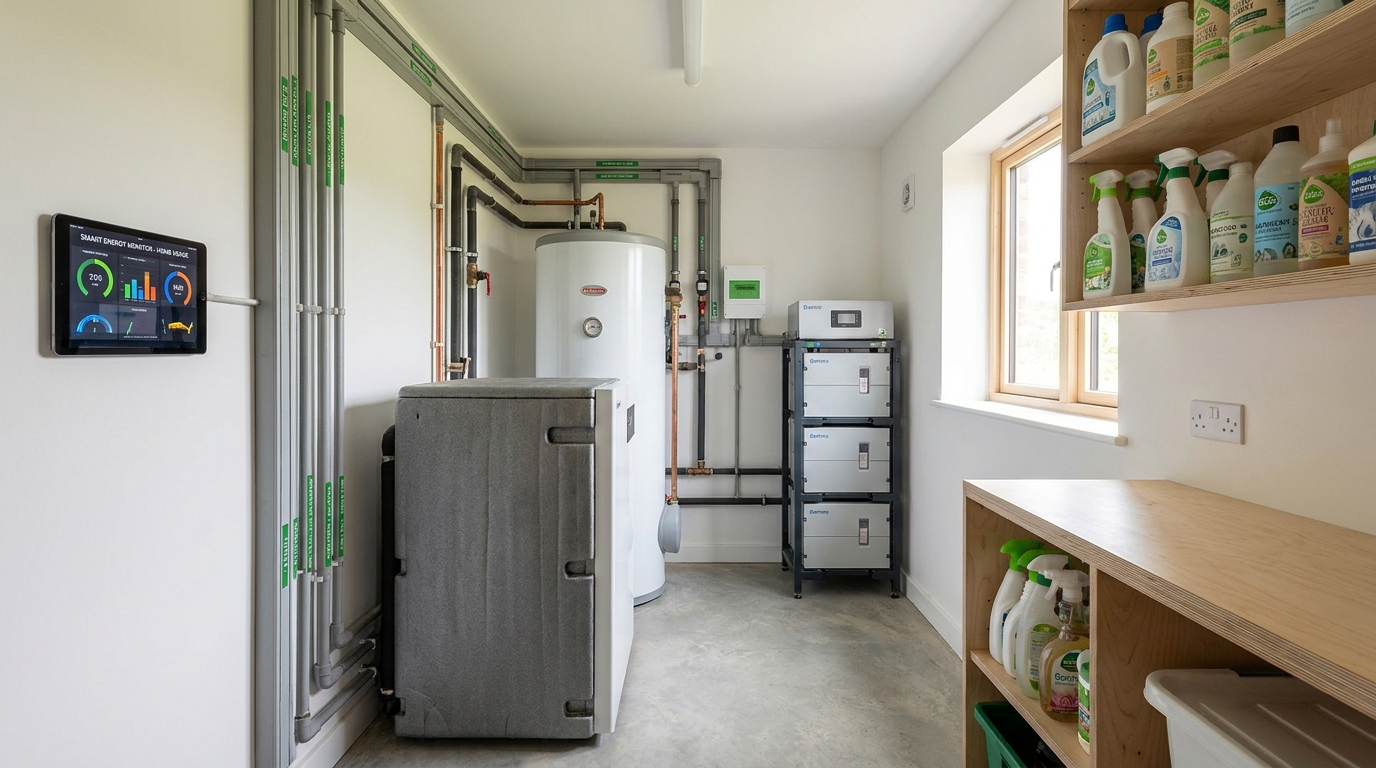
These systems can range from simple smart thermostats to more comprehensive energy dashboards that track solar production, battery status, hot water demand, indoor temperatures, humidity, and appliance loads. The goal is not to make home life more complicated. The goal is to let software handle routine optimization while giving residents enough visibility to make better long-term choices.
There is a quiet sustainability benefit here that is often overlooked. Homes do not become more efficient only through major renovations. They also become more efficient when controls reduce unnecessary run times, prevent overheating or overcooling, and help equipment operate at the right intensity. Incremental savings may seem modest month to month, but over years they become meaningful, especially when layered with better building envelopes and electrified systems.
Advanced Insulation: The Hidden Upgrade with Outsized Impact
For many homes, the most important sustainability improvements are the ones nobody notices after installation. Insulation is a clear example. It lacks the visibility of solar panels, but it often delivers some of the strongest performance gains because it directly reduces heating and cooling demand. In Canada, this is especially important because NRCan states that 70 percent of the energy used in the residential and commercial or institutional buildings sector is for heating.
That single statistic should shape almost every conversation about green home upgrades. If heating dominates building energy use, then reducing heat loss is not a side issue. It is central. This is where space-inspired materials become especially useful because they were developed to control heat flow in highly demanding environments where thermal stability matters tremendously.
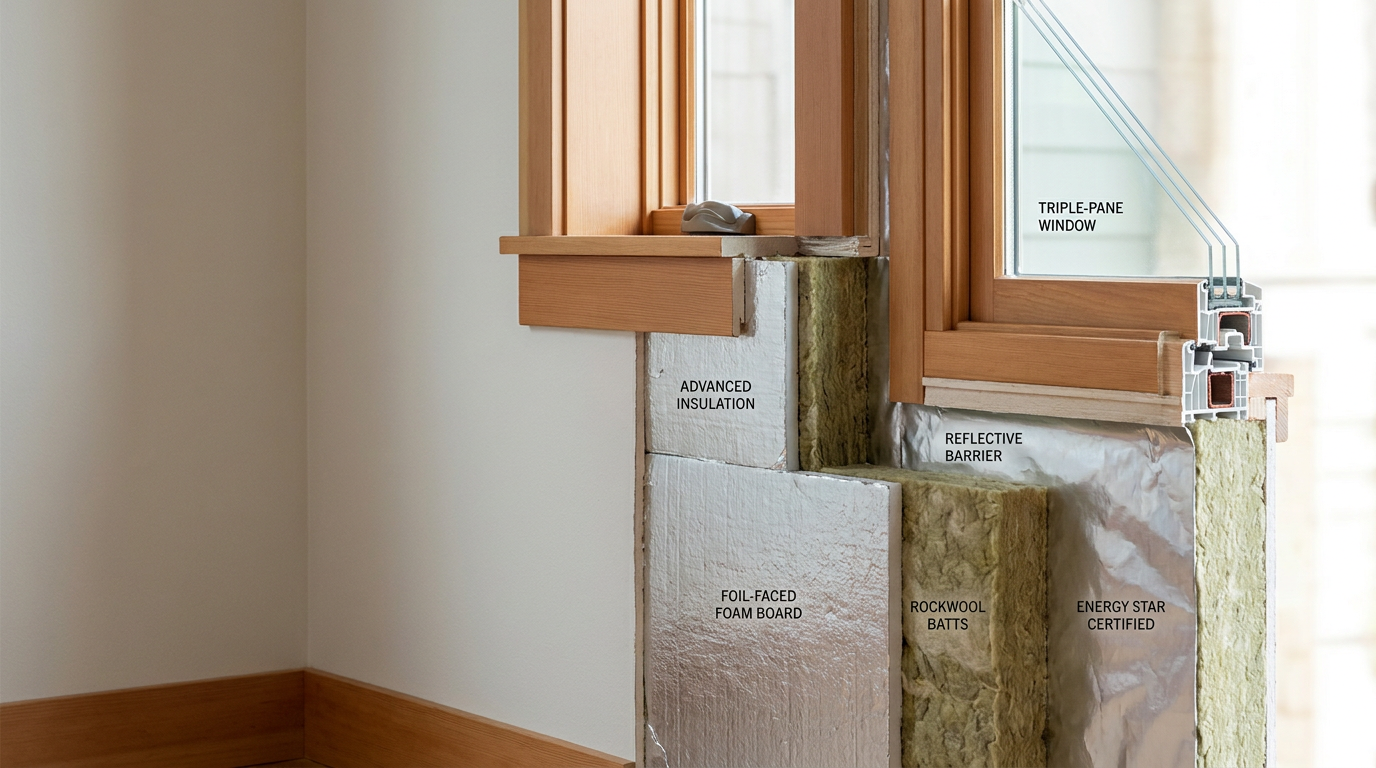
NASA has highlighted reflective insulation and related advanced materials as examples of technologies with broader Earth applications. In homes, these can appear as reflective barriers, high-performance wraps, or specialized insulation products that improve thermal resistance while fitting into tight cavities. Aerogel-based materials are particularly interesting because they can provide strong insulation performance in thinner profiles, which makes them attractive in retrofit situations where interior space is limited.
That matters in real renovations. Older homes often have narrow wall assemblies, awkward basement conditions, thermal bridges around framing, or limited room to upgrade from the inside without sacrificing usable floor area. In those situations, slimmer high-performance materials can unlock improvements that would otherwise feel too disruptive. They may not always be the cheapest option upfront, but they can be the most practical where space constraints are non-negotiable.
Reflective Insulation and Thermal Control
Reflective materials are compelling because they address radiant heat transfer, which complements the work done by bulk insulation. In a building envelope, managing heat movement is not just about stuffing more material into a wall. It is about understanding how conduction, convection, and radiation all influence comfort and energy demand. Space technologies helped advance that systems view because thermal management in spacecraft requires multiple layers of protection, each serving a specific purpose.
In homes, reflective barriers can be useful in attics, roof assemblies, and certain wall systems when installed appropriately for the climate and assembly type. They are not magic, and they should never be treated as a substitute for solid insulation and air sealing. But as part of a layered strategy, they can help reduce unwanted heat gain or loss and improve overall envelope performance.
Aerogel and High-Performance Retrofits
Aerogel has long held a certain fascination because of its ultra-light structure and impressive insulating properties. In residential settings, it is still more specialized than standard batt or blown insulation, but it illustrates an important shift in building materials. We are moving toward products that provide more performance in less space, which is precisely the kind of efficiency challenge space research has always confronted.
For homeowners, this can matter most in difficult retrofit zones such as rim joists, masonry walls, older window surrounds, and mechanical spaces. When conventional insulation is bulky or hard to install well, a higher-performance material may be worth considering. The right choice depends on cost, installation quality, moisture management, and compatibility with the rest of the assembly, but the principle is encouraging: advanced materials can make deep efficiency upgrades more achievable in real-world homes.
High-Performance Windows and the Space Logic of Comfort
Windows are another area where precision engineering and material innovation can transform home performance. Although the average homeowner may not connect modern glazing systems to space-age design, the underlying challenge is similar. How do you admit light, maintain visibility, and still control heat transfer effectively. In both buildings and space applications, the answer lies in advanced coatings, better seals, and careful thermal design.
In homes, efficient windows reduce drafts, improve interior comfort near exterior walls, and help lower heating and cooling loads. They also support passive solar design when chosen and placed thoughtfully. South-facing glazing can help capture winter sun in colder climates, while shading and selective coatings help prevent overheating in summer. This is not a glamorous upgrade in the way some technologies are marketed, but it often changes the lived experience of a room dramatically.
Good windows also make other systems work better. When perimeter comfort improves, homeowners are less likely to overheat the entire house just to compensate for one cold zone near the glass. That means heating systems can operate more efficiently, smart thermostats can maintain steadier setpoints, and energy savings become easier to lock in. Once again, the lesson is that sustainability works best when components reinforce one another rather than acting as isolated fixes.
Solar Thermal and the Overlooked Opportunity in Heating
When people hear the word solar, they usually picture electricity generation. Yet solar thermal systems deserve attention too, especially in conversations about hot water and heating support. Because heating represents such a large share of building energy use in Canada, any technology that can offset part of that demand should be considered carefully and without bias toward trendier solutions.
NRCan reports that Canada has an estimated 544,000 square metres of solar collectors in operation, displacing around 38,000 tonnes of carbon dioxide annually. This shows that solar thermal is not theoretical. It is already functioning in the real world, even if it receives less attention than photovoltaic systems. Depending on the home, climate, and system design, solar thermal can contribute to domestic hot water and in some cases support space heating strategies.
The broader lesson is that sustainability should not be reduced to a single technology category. A greener home may include PV, but it may also include solar hot water, superior insulation, efficient glazing, and electrified equipment coordinated through smart controls. Space-inspired design teaches us to value integrated systems, not just standout components. A high-performing home is built the same way: by layering technologies that each solve part of the problem.
Phase-Change Materials and Thermal Storage at Home
One of the more intriguing areas of advanced material science is thermal storage, including phase-change materials that absorb and release heat as they shift between states. While these materials still feel more specialized than standard insulation, they are relevant to the future of home sustainability because they help smooth temperature swings and reduce peak demand. That kind of thermal balancing is very much in the spirit of space engineering, where managing extremes is fundamental.
In a residential context, phase-change materials may be integrated into walls, ceilings, panels, or other components to store heat when temperatures rise and release it later when conditions cool. The idea is elegant because it helps a home work with natural and mechanical heat flows rather than constantly fighting them. In climates with large daily temperature variations, that can support comfort and reduce energy use.
These materials are not yet universal in mainstream renovation, but interest is growing because they offer a compact way to add performance without major structural change. As manufacturers improve product availability and cost, they may become a more common part of retrofit packages, particularly in projects aiming for low-energy or net-zero-ready standards. They are a useful reminder that sustainability is not only about generating clean power. It is also about managing heat intelligently.
Electrification, Heat Pumps, and the Importance of Working as a System
The strongest sustainable homes increasingly rely on electrification, especially when paired with efficiency upgrades and renewable power. Heat pumps are central to that shift because they can deliver heating and cooling far more efficiently than many conventional systems. On their own, heat pumps are not a NASA spinoff story in the narrow sense, but they fit naturally into the space-age sustainability framework because they depend on the same values of efficiency, thermal control, and systems optimization.
What matters most is how these technologies interact. A heat pump in a drafty, poorly insulated home may still outperform old equipment, but it will not reach its full potential. Pair that same heat pump with air sealing, better windows, advanced insulation, and smart controls, and the whole house begins to behave differently. Demand drops, indoor comfort stabilizes, and the home becomes easier to power with rooftop solar or lower-carbon electricity from the grid.
This is one of the most important takeaways for homeowners deciding where to invest. The future is not about collecting disconnected green products. It is about designing a coherent home energy ecosystem. Some households will start with insulation and air sealing. Others may begin with a roof replacement and solar installation. Others may prioritize a heating system upgrade. The sequence can vary, but the logic should stay connected.
Low-Impact Materials and Durability as Sustainability
Another space-age lesson that translates well to housing is the value of durability. In extreme environments, materials must last, perform consistently, and resist failure under stress. Homes benefit from the same principle. A product that lasts longer, requires less maintenance, and retains performance over time often reduces environmental impact even if its sustainability story is less obvious at first glance.
This is where embodied carbon and material lifespan enter the conversation. Sustainable building is not only about operational energy. It also involves the energy and emissions associated with making, transporting, installing, and replacing materials. If a higher-performance product prevents frequent replacement, improves resilience, or reduces the amount of material needed overall, that can meaningfully improve its long-term environmental profile.
Lightweight composites, advanced coatings, and precision-manufactured components all have roles to play here. Some may trace part of their lineage to aerospace research or manufacturing methods adapted from high-performance industries. For homeowners, the practical question is simple: does this material help the home last longer and work better with less upkeep. If the answer is yes, it belongs in the sustainability conversation.
Common Misconceptions About Space-Age Sustainability
A few misconceptions tend to hold people back from engaging seriously with these ideas. The first is that space-age sustainability must be expensive and futuristic. In reality, many space-derived innovations have already filtered into ordinary products, and homeowners may be using them without realizing it. Better insulation, more efficient solar panels, improved sensors, and durable materials often look like standard home upgrades because they have become part of mainstream practice.
The second misconception is that solar is impractical in Canada. NRCan’s numbers tell a more nuanced story. Solar generation is already significant, rooftop potential is substantial, and many Canadian cities compare well internationally for solar resources. The right answer is not that solar works everywhere equally. It is that solar deserves project-specific evaluation rather than blanket dismissal.
The third misconception is that sustainable housing begins and ends with solar panels. This is rarely true. Because heating accounts for such a large share of building energy use, insulation, air sealing, efficient equipment, and control systems often deliver the largest and most immediate gains. Solar can be transformative, but it is most effective when the home itself has already become more efficient.
A final misconception is that every innovation tied to NASA appears as a branded consumer product. NASA’s own definition of a spinoff makes clear that these are commercialized products incorporating NASA technology or expertise, which means the route to market can be indirect. Manufacturers, suppliers, and adjacent industries often translate specialized research into materials and products that become broadly accessible over time.
How to Bring Space-Age Sustainability Into Your Own Home
The most effective way to apply these ideas is to start with a calm, structured assessment of how your home currently performs. That usually means looking at energy bills, building age, insulation levels, air leakage, window condition, heating equipment, and roof suitability for solar. A professional energy audit can help identify priorities, but even a basic review can reveal where the biggest opportunities lie.
From there, it helps to think in layers. The first layer is demand reduction, which includes insulation, air sealing, and high-performance windows where needed. The second layer is system efficiency, such as heat pumps, smart thermostats, and better hot water equipment. The third layer is clean energy generation and storage, including rooftop PV, batteries, and possibly solar thermal depending on the project. When these layers are tackled in a deliberate order, the results are more durable and more cost-effective.
It is also worth approaching sustainability as a long-term design strategy rather than a single purchase. A homeowner may not be ready for a whole-house transformation this year, but they can still choose the next roof, window, or mechanical replacement in a way that keeps future upgrades open. That kind of planning is often where the best results come from. It reduces regret, avoids incompatible decisions, and gradually builds a home that is more resilient and lower impact.
A Practical Upgrade Path
-
Assess how the home uses energy today, especially where heat is being lost and which systems are aging or inefficient.
-
Improve the building envelope first where possible through air sealing, insulation upgrades, and targeted window improvements.
-
Add or upgrade smart controls to better understand energy patterns and reduce unnecessary heating and cooling.
-
Plan for electrification with efficient heating and hot water systems that can work well with future solar generation.
-
Evaluate rooftop solar, battery storage, or solar thermal based on the home’s structure, energy use, and local utility conditions.
-
Choose durable, high-performance materials during any renovation so sustainability is built into the home’s long-term fabric.
The Real Future of Sustainable Homes Is Already Here
There is something reassuring about the idea that the future of greener living does not require us to wait for perfect inventions. Many of the most promising solutions are already available. They simply need to be understood as part of a coherent whole. Space exploration has helped accelerate technologies that are now ordinary enough to install on a roof, hide behind drywall, or monitor from a phone, and that quiet normalcy is part of their strength.
Natural Resources Canada’s data on solar potential and heating demand, NASA’s record of commercial spinoffs, and the IEA’s continued emphasis on building efficiency all point in the same direction. The path to more sustainable homes is not built from fantasy. It is built from better envelopes, smarter systems, cleaner energy, and materials that perform exceptionally well under pressure. In other words, it is built from the practical side of innovation.
For homeowners, builders, and renovators, that should feel encouraging rather than overwhelming. Space-age sustainability does not ask you to turn your house into a machine. It invites you to make thoughtful upgrades that reduce waste, improve comfort, and support resilience over time. A home can be elegant, efficient, and future-ready without becoming complicated. In many cases, the smartest improvements are the ones that simply make daily life feel easier and more stable.
If there is a lesson worth carrying forward from space-inspired design, it is that constraints can lead to better solutions. Our homes face real constraints too, from energy costs to climate pressures to aging building stock. Yet those challenges also create an opening to build better. And often, the tools to do so are already within reach.



No Comment! Be the first one.