



There is something instantly soothing about walking into a beautiful resort. The air feels softer, the lighting is flattering, the bedding looks irresistible, and every detail seems to whisper that you can finally exhale. What makes that feeling so memorable is not only luxury in the obvious sense. It is the experience of being cared for by your surroundings. The room supports rest, comfort, privacy, and ease. The wonderful news is that you do not need a beachfront villa or a major renovation to bring that feeling home.
Table Of Content
- What Resort-Inspired Interiors Really Mean Today
- Start with Light, Because Atmosphere Begins There
- Use Natural Materials to Create Quiet Luxury
- Create a Hotel-Style Bedroom That Truly Supports Rest
- Turn the Bathroom into a Spa-Inspired Retreat
- Design Living Spaces for Ease, Not Performance
- Bring in Nature with a Biophilic Mindset
- The Power of Small Wellness Zones
- How to Style for Quiet Luxury Without Looking Themed
- Practical Resort-Style Upgrades for Renters and Smaller Homes
- A Room-by-Room Checklist for Creating the Feeling
- Why This Style Resonates So Deeply Right Now
- Final Thoughts: Create the Vacation Feeling You Actually Need
Today, resort-inspired interiors are less about dramatic themes and more about creating a personal sanctuary through intentional, sensory design. This modern approach fits beautifully with larger trends in wellness-first interiors, quiet luxury, and hospitality-inspired living. Instead of filling a room with palm motifs and glossy statement pieces, the goal is to shape a home that feels edited, breathable, restorative, and deeply comfortable. It is a lifestyle approach that values atmosphere as much as appearance. Research and current design guidance support this shift. Studies have linked access to daylight at home with improved circadian alignment, better sleep, and stronger mental well-being in healthy adults. Biophilic interior design, which brings nature into the home through materials, plants, light, and pattern, is also associated with meaningful well-being benefits. When these ideas are applied to daily living spaces, they help explain why a room can feel more peaceful, more grounding, and more replenishing even when the changes are fairly simple.
In practical terms, creating a resort-style home means thinking about how each room feels at different times of day. It means asking whether your bedroom truly supports deep rest, whether your bathroom helps you slow down, and whether your living room gives you somewhere to read, gather, or unwind without visual noise. It is not about perfection. It is about comfort, softness, rhythm, and care. With the right choices in lighting, layout, materials, and finishing touches, almost any home can begin to feel like a gentle escape.
This guide will show you how to build that feeling step by step. Whether you live in a family house, a city condo, or a rental apartment, the principles are adaptable. You can transform an entire home gradually or start with a single corner and let the effect ripple outward. The most successful resort-inspired spaces are not the most expensive ones. They are the ones that make everyday life feel more restful, more beautiful, and more generously lived.
What Resort-Inspired Interiors Really Mean Today
One of the biggest misconceptions about resort style is that it has to look themed. Many people picture tropical prints, dramatic wicker furniture, and vacation references that can feel forced at home. In reality, the most current version of resort-inspired design is much quieter and much more refined. It is rooted in sensory comfort, natural textures, privacy, and an atmosphere that feels gently luxurious rather than performative.
That shift matters because modern homeowners across Canada and North America are increasingly drawn to spaces that feel protective and personal. Recent home trend coverage has highlighted the return of separate rooms, retreat-like corners, spa bathrooms, tactile materials, and cozy zones that help people switch off. This reflects a broader desire for homes that support emotional well-being, not only visual impact. A resort-inspired home is really a home sanctuary in disguise.
Another misconception is that open-concept living automatically feels high-end. Open layouts can be beautiful, but they are not always the most restful. Hospitality-inspired living often relies on subtle zoning, privacy, and a sense of transition from one activity to another. Even in a small apartment, a reading chair by a lamp, a bench near a window, or a bedroom with room-darkening curtains can create the feeling of stepping into a retreat.
Most importantly, resort style is not purely aesthetic. The look matters, but so do the invisible layers that shape your experience of the room. Harsh lighting can make even a beautiful space feel tense. Poor acoustics can make a large room feel draining. Thin bedding, visual clutter, and awkward furniture placement can all work against the calm you are trying to create. The true luxury lies in how a space supports your body and mind.
Modern resort-inspired design is not about pretending you are on vacation. It is about designing your home so everyday life feels softer, calmer, and more restorative.
Start with Light, Because Atmosphere Begins There
If there is one change that makes a space feel instantly more resort-like, it is lighting. Beautiful resorts understand that light shapes mood from morning to night. Daylight in the morning feels energizing and expansive, while warm ambient light in the evening tells the body it is safe to slow down. Research on circadian health and human-centric lighting suggests that these rhythms matter at home as well, influencing sleep, visual comfort, and emotional balance.
The first priority is to make the most of natural light. Pull heavy furniture away from windows, use mirrors to gently reflect brightness deeper into the room, and consider lighter window treatments where privacy allows. Sheer curtains can soften harsh sun while still preserving a sense of openness. If your home tends to feel dim, choose finishes and textiles that lift light rather than absorb it, such as warm whites, soft sand tones, pale oak, and textured neutrals.
In bedrooms, however, the equation changes slightly. A hotel-style bedroom should feel bright and fresh during the day, but cocooning at night. That is where blackout or room-darkening window treatments become especially valuable. They help support rest and create the satisfying sense of closure that great hospitality spaces do so well. Pair them with layered bedside lighting so the room feels intimate in the evening rather than uniformly bright.
Electric lighting should always be layered. A resort-like room rarely depends on one harsh ceiling fixture. Instead, it combines ambient light for overall glow, task lighting for reading or grooming, and accent lighting for softness and depth. Table lamps, wall sconces, shaded floor lamps, and dimmers are all useful tools here. Warm-toned bulbs generally create a more flattering, restful mood, especially after sunset.
Try to notice where glare is creeping into your daily life. A bathroom mirror with sharp overhead lighting may be practical, but not relaxing. A living room with one bright central fixture can flatten every texture in the space. Good resort-inspired lighting feels gentle on the eyes. It invites you to linger. It also helps expensive materials, soft fabrics, and natural textures reveal their beauty in a way that feels effortless.
Use Natural Materials to Create Quiet Luxury
When people talk about luxury interiors, they often focus on cost. But the feeling of luxury is just as closely tied to materiality. A resort-inspired home feels rich because it engages the senses through touch, warmth, and subtle variation. Natural materials like wood, linen, cotton, stone, jute, wool, rattan, and clay carry a grounded quality that instantly softens a room. They are not flashy, yet they create depth and calm.
Research on biophilic environments repeatedly points to the restorative value of nature cues indoors. That can include actual plants, but it also includes materials and patterns that remind us of the natural world. Wood grain, tactile woven surfaces, slubby linen, handmade ceramics, and stone finishes all contribute to a space that feels more organic and emotionally settling. These materials invite contact. They are meant to be lived with rather than merely admired from a distance.
For a modern resort aesthetic, it helps to keep the palette restrained. Think warm whites, soft taupe, oat, sand, mushroom, muted olive, pale clay, and weathered wood. This does not mean your home must be colorless. It means using color in a gentle, cohesive way so the eye can rest. A quieter palette also allows texture to take the lead, which is often what makes a room feel elevated and layered rather than busy.
Look for rounded forms and softened edges wherever possible. A curved lounge chair, a round side table, or a sculptural lamp can make a room feel more welcoming. Recent trend coverage has also emphasized tactile layering and handmade details, both of which fit beautifully with the resort approach. Even something as simple as replacing shiny synthetic pillows with linen or boucle versions can shift the mood of a room immediately.
Editing matters just as much as adding. A resort-style interior should feel collected, not crowded. Leave breathing room on surfaces. Choose fewer objects with more presence. Let a ceramic vase, a stack of books, a beautiful tray, or a branch of greenery do the work of five smaller accessories. Luxury often looks calm because it is not trying too hard.
Create a Hotel-Style Bedroom That Truly Supports Rest
The bedroom may be the most important space in a resort-inspired home because it is where the promise of restoration becomes real. A beautiful bedroom is lovely, but a bedroom that genuinely helps you sleep better is transformative. This is where hospitality design and wellness design overlap in the most meaningful way. The room should feel serene, uncluttered, private, and physically comfortable at every level.
Start with bedding because it has an outsized emotional effect. Crisp sheets, breathable fabrics, a supportive pillow arrangement, and a duvet that feels plush without being heavy can make an ordinary room feel instantly more luxurious. Layering is important here. Instead of one flat bed covering, think in terms of sheets, a duvet, a coverlet or quilt, and a soft throw folded near the foot of the bed. These layers create visual fullness and practical comfort.
Color should stay especially calm in the bedroom. Whites, creams, taupes, misty greys, and muted earth tones all work beautifully. If you love darker shades, use them softly through accents or natural wood rather than turning the room visually heavy. The goal is to create a cocoon, not a cave. Upholstered headboards, woven rugs, and substantial curtains can all help absorb sound and increase that sense of gentle enclosure.
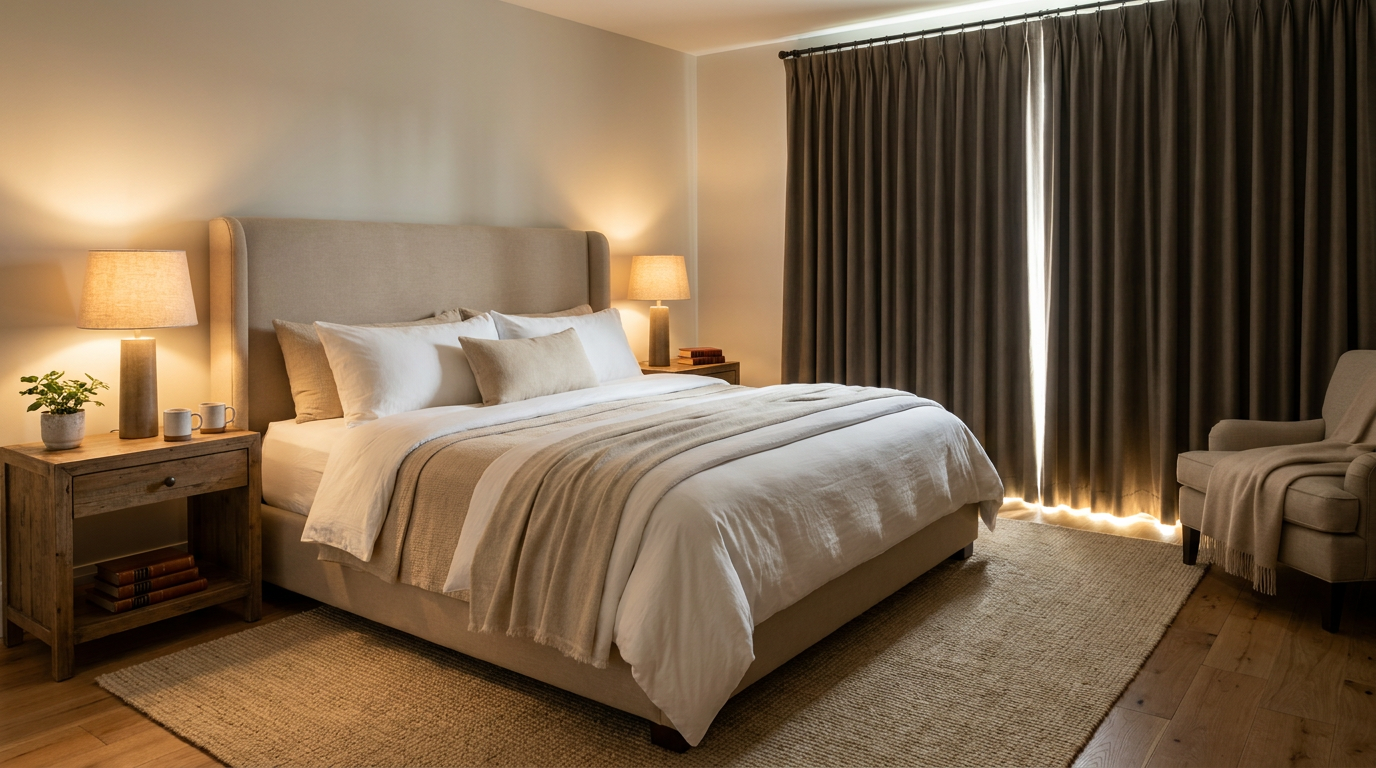
Do not underestimate the value of bedroom acoustics. Resorts often feel quiet because sound is softened through fabrics, rugs, padded surfaces, and thoughtful separation. If your bedroom echoes or collects noise from other parts of the home, simple changes such as a larger rug, heavier drapery, and better sealing around doors can improve the feeling dramatically. Rest is never only visual.
Bedside ritual also matters. Create symmetry if it suits your room, but more importantly, make the space useful and calming. A warm lamp, a carafe of water, a small dish for jewelry, and a drawer or tray to hide the visual mess of charging cords can make the room feel cared for. If you have space, a bench, chaise, or reading chair can elevate the room further by giving it the layered functionality of a suite rather than just a sleeping area.
Turn the Bathroom into a Spa-Inspired Retreat
A spa-inspired bathroom is one of the most accessible ways to bring resort living into daily life. You do not need a freestanding tub or a complete renovation to create the effect. In many homes, the bathroom becomes more luxurious simply through better textiles, softer lighting, cleaner surfaces, and a more intentional sensory experience. The key is to make the room feel restorative instead of purely functional.
Begin with towels, bath mats, and robes if possible. Plush, absorbent textiles in white, ivory, stone, or muted neutral shades instantly evoke a hospitality feel. They also create visual consistency, which makes the room feel more elevated. A wooden stool, a tray for bath products, a beautiful soap dispenser, and a few neatly chosen containers can turn countertop clutter into a calm arrangement.
Lighting is crucial in the bathroom because this room often suffers from the harshest conditions in the house. If you can, add side lighting near the mirror or swap cold bulbs for warmer ones that still provide enough clarity for grooming. Candlelight, or the safe look of soft battery-operated versions, can shift the room from rushed to restful in moments. The goal is to offer yourself options for both daytime function and evening decompression.
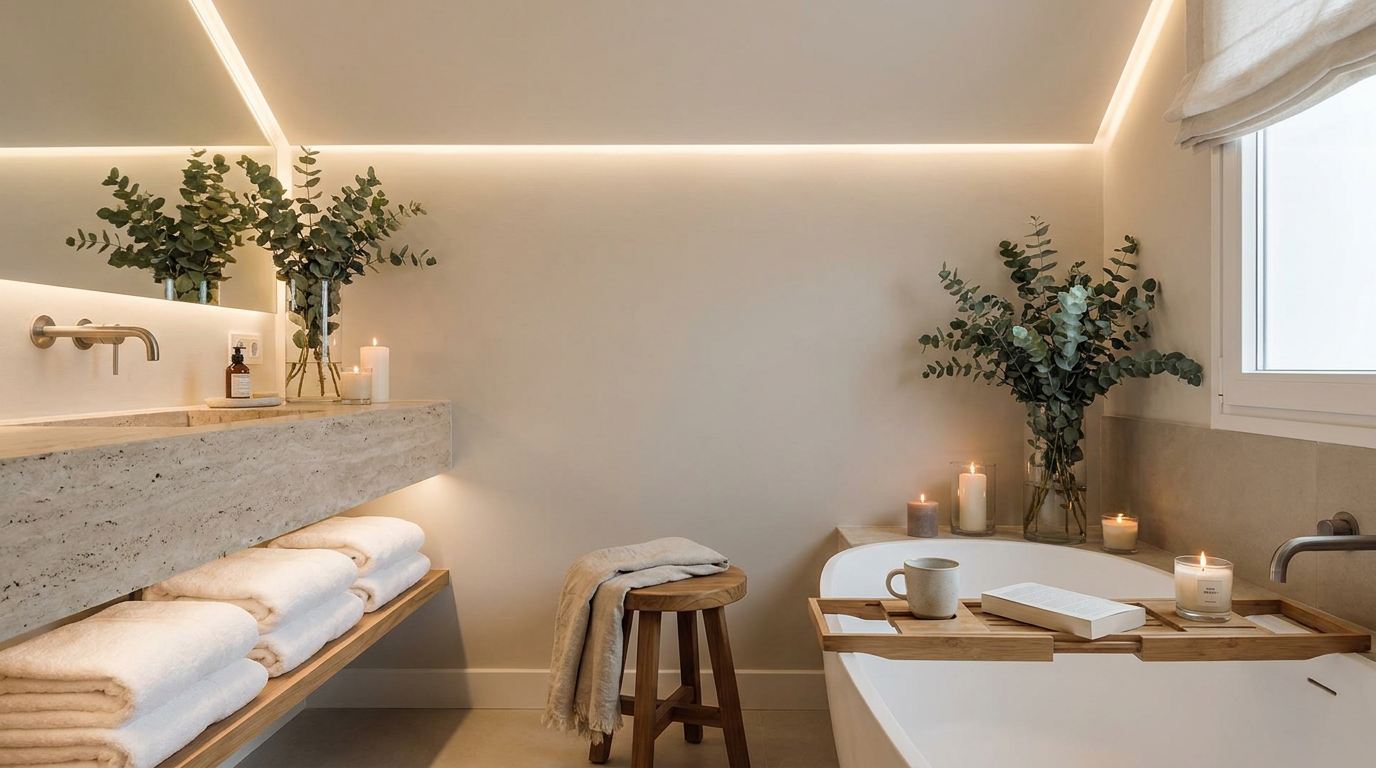
Scent is another powerful design layer that often gets overlooked. Resorts understand that fragrance creates memory and atmosphere at once. In a home bathroom, eucalyptus, cedar, soft citrus, neroli, lavender, and tea-inspired scents can all feel clean and grounding without becoming overwhelming. Keep it subtle. A beautiful home does not need to announce itself loudly. It should simply feel fresh and cared for.
If your bathroom is small, focus on consistency rather than size. Matching bottles, coordinated towels, one healthy plant if light allows, and surfaces that stay mostly clear can create an unexpectedly high-end effect. Consider what you see first when you enter. If the room immediately offers calm rather than clutter, it is already moving in a spa-like direction.
Design Living Spaces for Ease, Not Performance
In many homes, the living room carries too much pressure. It is expected to host, entertain, relax, store things, and look perfect all at once. But resort-inspired living asks a different question. How can this room make everyday life feel easier and gentler? Once you approach it that way, the design becomes less about impressing and more about supporting real comfort.
Start by reconsidering the layout. Furniture should invite conversation and repose, not merely fill the floor plan. Pull seating into a more intimate arrangement when possible, even in larger rooms. If the space is open concept, use rugs, lighting, or a console table to define softer zones. This supports the growing preference for spaces that feel more private and purpose-driven, even without full walls.
Deep seating, soft upholstery, textured pillows, and natural fiber rugs all contribute to the gentle luxury that defines resort-inspired interiors. Look for a balance between structure and softness. A sofa should feel supportive but still welcoming enough for naps, reading, or long evenings with family. Coffee tables and side tables should allow for practical rituals like setting down tea, displaying fresh flowers, or keeping a candle and a book within reach.
Visual clutter tends to undermine resort calm very quickly. This does not mean your living room must feel sparse or impersonal. It means that storage should work quietly in the background so the room can breathe. Baskets, closed cabinets, lidded boxes, and edited shelving displays are all helpful. When less is visible, texture and light have room to become the stars.
Consider the emotional rhythm of the room, too. Does it have one corner that invites stillness, perhaps near a window or bookshelf? Does it encourage a slower pace in the evening through lamp light instead of overhead glare? Is there something natural in the room, whether that is a leafy plant, a bowl of branches, a linen drape, or a wood surface that has visible grain? These are small cues, but together they tell the nervous system that this is a place to settle.
Bring in Nature with a Biophilic Mindset
Biophilic design has become one of the most meaningful frameworks for creating restorative interiors, and it fits naturally within the resort-inspired home. At its heart, biophilic design is about strengthening our connection to nature inside built environments. Research suggests that these nature-linked cues can support well-being, which helps explain why even modest natural elements can make a room feel more peaceful and alive.
The most obvious way to do this is through plants, but plants are only one piece of the story. Views of greenery, natural daylight, water imagery, botanical forms, wood grain, stone surfaces, woven textures, and earth-based color palettes all contribute to the effect. You do not need to turn your home into a jungle. In fact, restraint often feels more sophisticated. One large plant with sculptural presence can do more for a room than many scattered small ones.
Choose natural materials where your body touches them most often. A wood bedside table, linen sheets, cotton towels, a wool throw, a stone tray in the bathroom, or a woven basket in the living room can all create a more grounded sensory environment. These choices feel especially powerful because they are encountered through daily rituals rather than simply viewed from afar.
If you love art, consider pieces that suggest landscape, water, sky, or organic pattern rather than highly stimulating imagery in every room. The resort-inspired approach is not anti-personality. It simply favors visuals that support ease rather than constant alertness. Rooms that evoke nature often feel expansive and reassuring, even in urban settings.
Fresh air and indoor air quality also deserve a place in the conversation. Whenever climate and safety allow, open windows to circulate air and refresh the atmosphere. If your home is sealed for long stretches, an air purifier, houseplants, and regular textile cleaning can all help maintain that fresh, hotel-like feeling. A resort-style home should not only look clean. It should feel breathable.
The Power of Small Wellness Zones
One of the most useful ideas in current home design is the rise of the dedicated wellness corner. This matters because many people assume they need an entire home makeover to create a sanctuary. In reality, a single thoughtfully designed zone can change the emotional tone of your whole day. A resort-inspired nook gives you a place to read, journal, stretch, meditate, sip coffee, or simply pause between obligations.
This is especially valuable in small homes, shared homes, and rentals. A compact armchair, a floor lamp, a side table, a throw, and a plant can transform an unused corner into a retreat. The point is not to replicate a hotel lounge exactly. It is to create a pocket of intentional stillness that feels separate from work, chores, and digital noise. Once a space is assigned to calm, your body begins to recognize it as such.
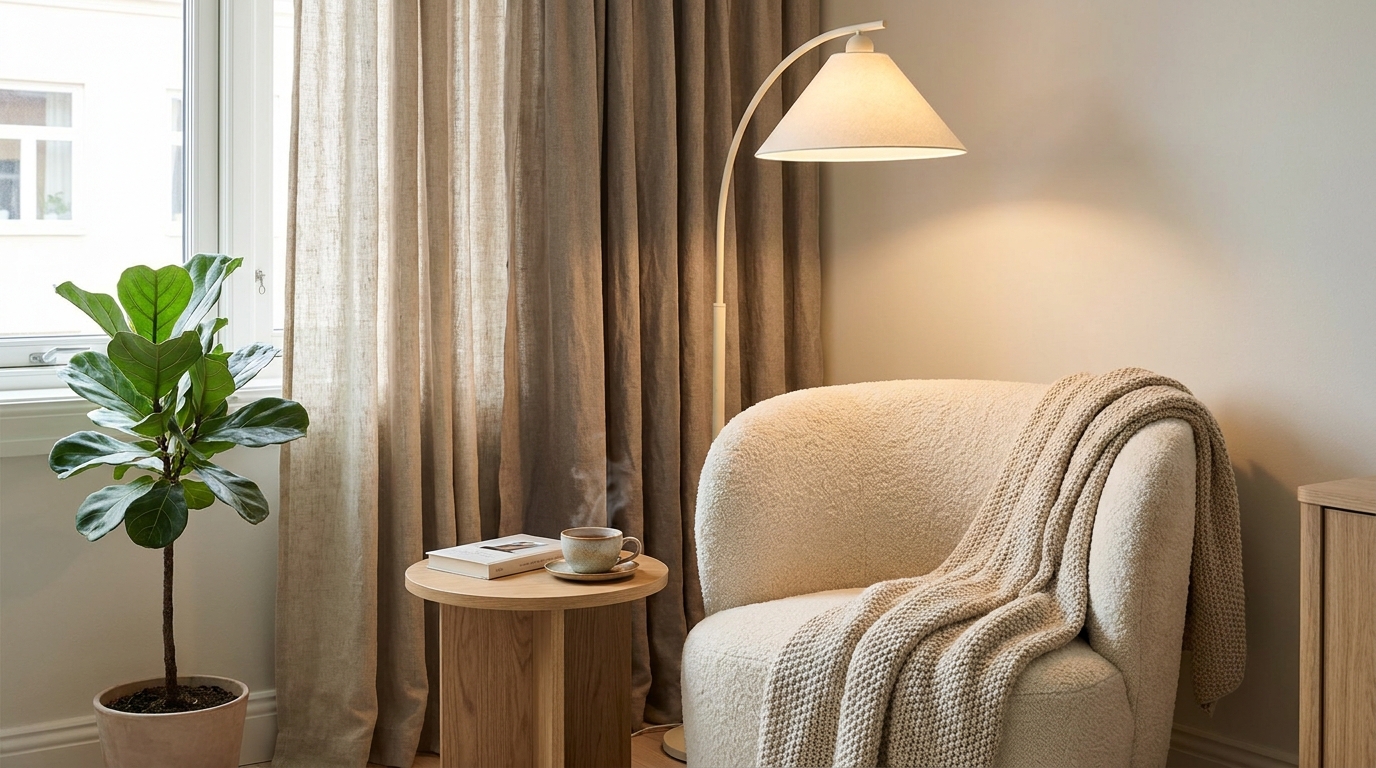
A beverage station is another lovely hospitality-inspired touch. This could be a simple tray with a kettle, tea tins, mugs, and sparkling water in a bedroom suite area or a living room console. It creates a sense of being looked after, and that feeling is central to resort living. The small rituals we support at home often matter more than the larger design gestures.
Wellness zones are also a smart way to introduce privacy into more open spaces. A screen, curtain, bookcase, or rug can define a retreat without requiring renovation. This aligns beautifully with the current move away from fully exposed, all-purpose rooms and toward more layered, human-centered zoning. People want homes that allow both connection and retreat.
How to Style for Quiet Luxury Without Looking Themed
Quiet luxury is one of the best style languages for a resort-inspired home because it prioritizes quality, comfort, and understatement. Instead of chasing obvious trend markers, it focuses on pieces that feel timeless, tactile, and refined. This is exactly why resort-like spaces often age well. They are not trying to be dramatic. They are trying to be deeply livable.
To achieve this, choose a few hero elements in each room and let them breathe. In a bedroom, that might be a beautifully made bed, full curtains, and elegant lamps. In a living room, it might be a substantial sofa, a textured rug, and one oversized plant. In a bathroom, it could be plush towels, a stone-toned palette, and a tray with carefully chosen products. Limiting the number of focal points helps the room feel calm and expensive at once.
Styling should be sensory rather than busy. Think folded throws, stacked books, a ceramic vessel, a linen table runner, or a wood bowl filled with citrus. Avoid over-accessorizing every surface. Resort spaces rarely feel cluttered because they leave room for the eye to rest. This makes even ordinary objects feel more intentional.
If you love collecting decor, rotate pieces seasonally instead of displaying everything at once. This preserves personality while preventing the visual fatigue that can work against a sanctuary feeling. It also lets your home evolve gently over time, much like a boutique hotel that refreshes through texture and atmosphere rather than constant reinvention.
Practical Resort-Style Upgrades for Renters and Smaller Homes
The best thing about this design approach is how adaptable it is. You do not need custom millwork, oversized rooms, or luxury renovation budgets to create a resort feel. Many of the highest-impact changes are portable, affordable, and easy to implement. They work particularly well in condos, apartments, and starter homes where square footage may be limited but comfort still matters deeply.
If you are working with a tight budget, start with textiles. Better sheets, fluffier towels, an upgraded duvet, a textured blanket, and curtains that hang properly can change the mood of a room dramatically. Lighting is the next smart investment. Table lamps, dimmable bulbs, and warmer light sources often provide more emotional return than decorative accessories alone.
Mirrors are another useful tool in small spaces because they help amplify light and create a greater sense of openness. Pair them with a consistent neutral palette so the home feels cohesive from room to room. This visual continuity is what often makes boutique hospitality spaces feel polished. The eye moves smoothly through them without interruption.
Plants, scent, and decluttering offer major impact for very little cost. A clean kitchen counter with one tray for essentials, a bedroom without visible laundry piles, or a bathroom with decanted products can all feel elevated. Resort style thrives on the idea of fewer but better. Even one beautifully maintained area can inspire the rest of the home to follow.
For renters, focus on what can move with you. Freestanding storage, peel-and-stick wallpaper in calm textures, portable lighting, quality bedding, and furniture that creates zones rather than relying on architectural changes are all excellent strategies. A sanctuary is not defined by ownership. It is defined by how intentionally you shape the life happening inside the space.
A Room-by-Room Checklist for Creating the Feeling
If you want to bring all of these ideas together, it helps to think in terms of sensory layers rather than shopping categories. Ask what each room needs in order to feel more restful, more breathable, and more cared for. The answers often become surprisingly clear once you stop thinking about trends and start thinking about lived experience.
- Light: Maximize daylight, soften glare, and add warm layered lighting for evening comfort.
- Texture: Introduce linen, cotton, wood, stone, wool, and woven materials that create tactile richness.
- Layout: Create zones for rest, reading, bathing, or conversation rather than one visually overworked space.
- Sound: Add rugs, drapery, upholstery, and soft surfaces that reduce echo and increase calm.
- Scent: Use subtle, clean fragrances that support memory and relaxation.
- Editing: Remove visual clutter and keep only objects that feel useful, beautiful, or grounding.
- Nature: Bring in plants, daylight, earth-based colors, and organic forms to support biophilic comfort.
- Ritual: Support daily habits with trays, beverage stations, bedside essentials, and wellness corners.
Seen this way, a resort-inspired home is not a formula. It is a set of emotional design principles that can be interpreted in many styles, from coastal minimalism to modern rustic to soft contemporary. The common thread is that the home feels nurturing. It offers beauty, but it also offers relief.
Why This Style Resonates So Deeply Right Now
There is a reason hospitality-inspired living feels especially appealing at the moment. Many people are craving homes that can buffer stress, support sleep, and create moments of quiet pleasure throughout ordinary routines. The idea of a home sanctuary is not indulgent in a frivolous sense. It is a thoughtful response to the pace and noise of modern life.
That is why the most compelling resort-inspired interiors are never just decorative exercises. They are designed around well-being. They borrow from biophilic design, sensory design, and human-centric lighting because these approaches recognize that rooms affect us physically and emotionally. A home can either scatter our attention or gather us back to ourselves. Good design helps with the latter.
It is also why this look works across budgets and home types. People are not simply chasing glamour. They are looking for meaningful comfort. A soft lamp glow, a cleaner bedside table, a plush towel, a quieter corner, or a room that finally feels breathable can all have a surprisingly powerful effect. Luxury, in this sense, is not excess. It is the absence of friction.
Final Thoughts: Create the Vacation Feeling You Actually Need
Transforming your home into a resort-style oasis does not require dramatic architecture or endless spending. It begins with noticing what makes you feel restored when you are away and then translating those qualities into your own daily environment. Light that flatters rather than glares. Textures that comfort rather than stimulate. Rooms that support privacy, softness, and simple rituals. These are the real building blocks of the experience.
The beauty of resort-inspired interiors is that they invite you to care for your home in a more human way. Instead of asking whether a room looks impressive, you begin asking whether it helps you breathe easier, sleep better, and enjoy small pauses more fully. That shift changes everything. A sanctuary is not something you visit once or twice a year. With a little intention, it can become the backdrop of your everyday life.
If you start anywhere, start with the room that most needs relief. Upgrade the bedding. Add a lamp. Clear a surface. Bring in a plant. Hang the curtains higher. Put your towel on a hook that feels deliberate. Create one beautiful corner and let the feeling teach you what to do next. Little by little, your home can begin to offer the same sense of welcome that the best resorts do so effortlessly. Only this time, it will be yours.



No Comment! Be the first one.