



Essential Heat Pump Maintenance for Better Energy Efficiency and Longer System Life
Heat pumps have become an increasingly important part of efficient, lower-impact home comfort. They can heat and cool from a single system, they support electrification goals, and when they are working properly, they can deliver impressive efficiency compared with many conventional heating options. Still, one of the most common misconceptions is that because a heat pump is electric, it needs very little attention. In reality, simple routine care plays a major role in how well the system performs over time.
Table Of Content
- Why Heat Pump Maintenance Matters More Than Many Homeowners Realize
- The Homeowner Mindset: What You Can Do and What You Should Leave Alone
- Start With the Filter: The Highest-Value Maintenance Step
- How to Check and Clean or Replace a Filter
- Protect Airflow Indoors: Vents, Returns, and Clear Circulation
- What to Look for Around Indoor Vents
- Keep Coils and Grilles Visibly Clean
- Outdoor Unit Care: Clean Space Means Better Performance
- A Simple Outdoor Cleanup Routine
- Winter Heat Pump Maintenance in Cold Climates
- How to Clear Snow and Ice Safely
- Check the Condensate Drain for Obvious Problems
- Use Your Thermostat in a Heat Pump-Friendly Way
- A Practical Monthly and Seasonal Maintenance Rhythm
- Common Mistakes That Quietly Reduce Heat Pump Efficiency
- When Maintenance Is Not Enough
- Signs to Schedule Professional Service Soon
- Annual Professional Maintenance Still Matters
- The Broader Value of Maintenance in a More Efficient Home
- Final Thoughts: Small Habits, Lasting Payoff
The good news is that the most valuable maintenance tasks are usually the least complicated. You do not need specialized tools or technical HVAC training to check a filter, clear leaves from around an outdoor unit, or make sure supply vents are not blocked by furniture. These small steps matter because heat pumps depend on clean surfaces and steady airflow. When airflow is restricted or components get dirty, the system has to work harder, use more electricity, and absorb more wear.
Authoritative guidance from ENERGY STAR and the U.S. Department of Energy consistently points to the same core issue. Dirt, blocked airflow, and neglected filters are among the most common reasons heat pumps lose efficiency and suffer premature failure. DOE guidance notes that airflow problems can reduce system efficiency by up to 15 percent. That is a meaningful loss for something that can often be improved with a few minutes of attention each month.
This article focuses on the homeowner tasks that are safe, practical, and worth doing. We will cover monthly filter checks, indoor airflow habits, outdoor unit cleanup, seasonal winter care, condensate drain observation, and thermostat practices that support efficiency. We will also look at the signs that tell you maintenance is no longer enough and that a professional service visit is the better next step.
The simplest principle of heat pump maintenance is this: keep air moving freely, keep accessible surfaces clean, and let trained professionals handle refrigerant, electrical, and internal mechanical work.
Why Heat Pump Maintenance Matters More Than Many Homeowners Realize
A heat pump does not create heat in the same way a furnace burns fuel. Instead, it moves heat from one place to another. That process is efficient, but it also depends on a few conditions staying in balance. Air needs to flow properly across the indoor and outdoor coils. Filters need to stay clean enough to avoid choking off circulation. Coils need to transfer heat effectively. Drainage needs to work so moisture does not collect where it should not.
When one of those basics slips, the system often still runs. That is what makes neglect easy. A homeowner may assume everything is fine because cool air still comes out in summer or heat still arrives in winter. But performance can quietly decline before it becomes obvious. The heat pump may run longer to do the same job, indoor temperatures may drift, humidity may feel less controlled, and electricity bills may gradually rise.
ENERGY STAR specifically advises homeowners to inspect, clean, or change heat pump air filters once a month. It also warns that dirty filters can increase energy costs and damage equipment, potentially leading to early failure. That is not a dramatic edge case. It is one of the most common and preventable causes of reduced HVAC performance in homes.
There is also a sustainability case for maintenance that feels refreshingly practical. If you chose a heat pump for lower energy use and a cleaner home energy profile, routine upkeep protects that investment. Proper maintenance helps the system deliver the efficiency advantage it was designed to provide. In simple terms, caring for the unit helps you get the environmental and financial value you expected when it was installed.
The Homeowner Mindset: What You Can Do and What You Should Leave Alone
It helps to think of heat pump maintenance in two categories. The first is homeowner care, which includes routine visual checks, filter cleaning or replacement, keeping airflow pathways open, wiping down accessible grilles, removing outdoor debris, and checking for obvious drainage issues. These tasks are low risk and high value. They can often be done with basic household supplies and a little consistency.
The second category is professional service. This includes refrigerant checks, electrical testing, internal component diagnostics, deep coil servicing when access is limited, blower or compressor repairs, and any work that involves opening sealed sections of the system. Annual professional tune-ups are still recommended by ENERGY STAR and DOE because a technician can measure performance and spot issues that are not visible from the outside.
This distinction matters because good DIY care should make your system healthier, not put it at risk. If a maintenance task involves uncertainty, force, wiring, or sealed components, it belongs in the professional category. A calm, practical maintenance routine works best when it stays within safe boundaries.
Start With the Filter: The Highest-Value Maintenance Step
If you only remember one task from this article, let it be this one. Check your heat pump filter every month. Depending on your system, the filter may need a light cleaning, a full replacement, or less frequent action during periods of lighter use. The key is not to guess. Look at it regularly and respond to what you see.
A filter captures dust and airborne particles before they can collect on internal components. That helps protect indoor air quality and system performance at the same time. But as dust builds up, the filter becomes a source of resistance. Airflow drops, the blower works harder, and conditioned air has a harder time moving through the system. Over time, that adds up to longer run times and more strain on the equipment.
Because DOE notes that airflow problems can reduce efficiency by up to 15 percent, filter care is one of the simplest ways to protect your utility bill. It is also one of the easiest tasks to overlook because filters are usually hidden behind a panel or grille. A recurring monthly reminder on your phone can be surprisingly effective here.
How to Check and Clean or Replace a Filter
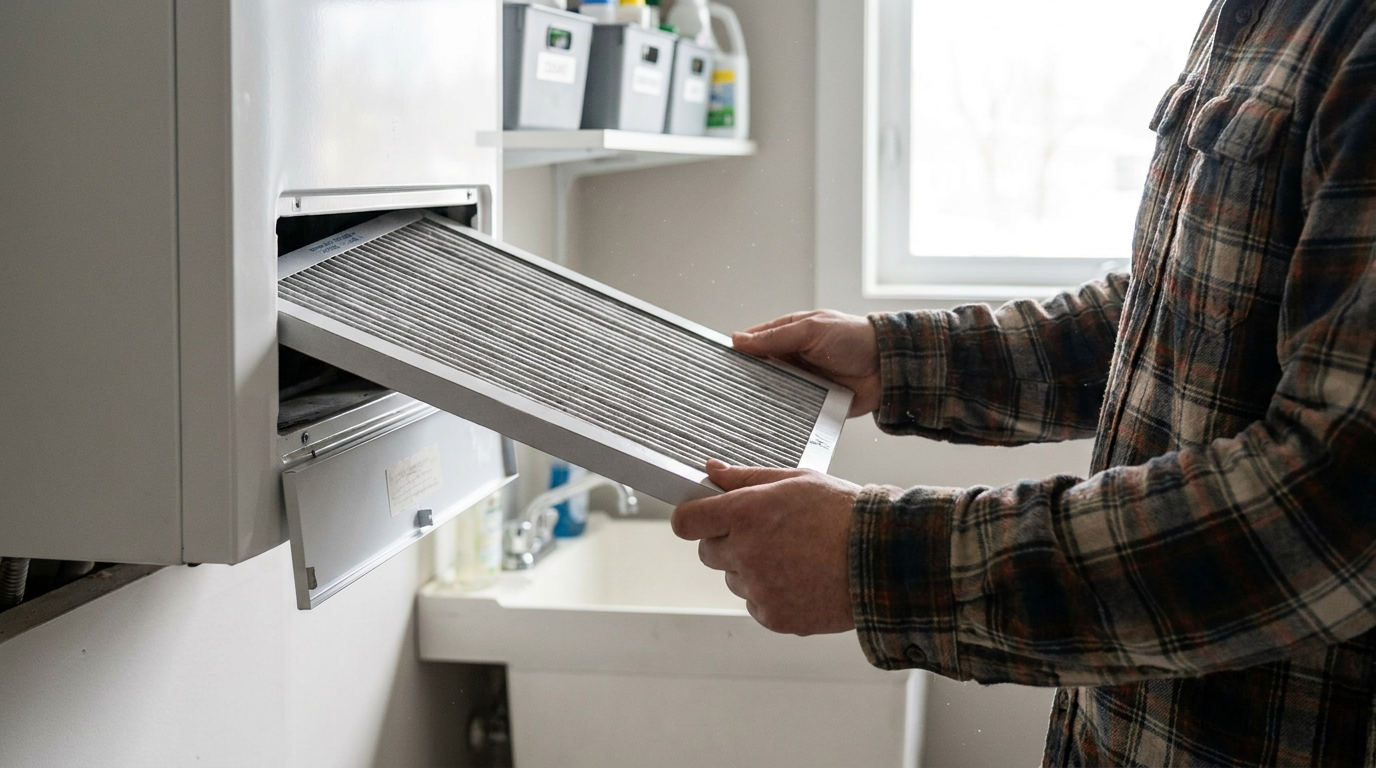
Before touching the filter, turn off the system at the thermostat. If your manufacturer instructions say to shut power at the unit, follow that guidance as well. Open the access panel carefully and slide the filter out. If it is a disposable filter, inspect it against the light. If it looks visibly dusty or clogged, replace it with the correct size and type recommended for your system.
If your system uses a washable filter, rinse it gently according to manufacturer directions and allow it to dry fully before reinstalling it. Putting a damp filter back in place can create moisture problems and may encourage unwanted buildup. Reinsert the filter in the correct direction, making sure any airflow arrow aligns properly with the system design.
Do not assume a filter is fine because it has not reached a certain number of days. Homes with pets, renovation dust, wildfire smoke exposure, pollen-heavy seasons, or higher occupancy may need more frequent attention. The monthly check matters because it responds to real conditions rather than a generic timeline.
Protect Airflow Indoors: Vents, Returns, and Clear Circulation
Even a clean filter cannot do its job if airflow is restricted elsewhere. Heat pumps perform best when air can move freely through return grilles, supply vents, and the rooms themselves. It is common for airflow to be reduced by furniture, rugs, curtains, or dust buildup on grilles, especially in busy homes where layouts evolve over time.
Walk through your home every season and look at the vents with fresh eyes. A sofa pushed over a return grille, a bed skirt covering a vent, or a storage basket placed in front of a wall register can quietly reduce circulation. The system will continue trying to heat or cool the home, but it may take longer and distribute comfort less evenly.
This is one reason maintenance can feel more like housekeeping than mechanical work. A well-performing heat pump depends on a clear path for air. That path starts at the return, moves through the system, and ends at the supply registers. Keeping those points open is simple, but it has an outsized impact on comfort.
What to Look for Around Indoor Vents
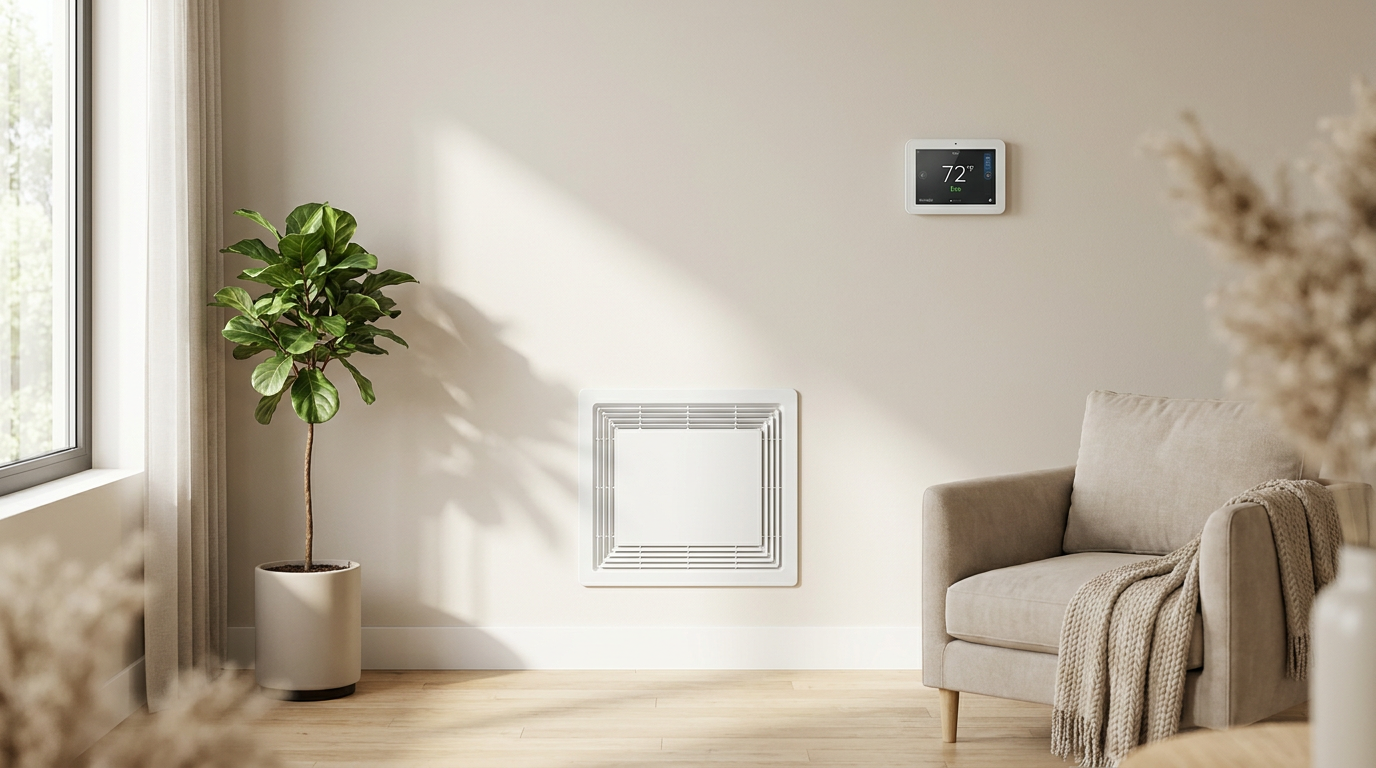
Dust buildup on grilles is normal, but heavy accumulation can signal that cleaning is overdue. Wipe accessible vent covers gently with a soft cloth or vacuum brush attachment. Make sure furniture is not pressed against return grilles and that drapes are not covering supply outlets. In rooms that feel stuffy or unevenly heated, first confirm that vents are open and unobstructed before assuming the heat pump itself is at fault.
If your home uses ductless mini split indoor heads, the same principle applies in a different form. Keep the area around each indoor unit clear so the fan can move air freely into the room. Avoid placing shelving, tall plants, or decorative items where they interfere with intake or discharge airflow.
Keep Coils and Grilles Visibly Clean
ENERGY STAR notes that dirty coils reduce heat transfer, which causes a heat pump to run longer, increases energy costs, and can shorten equipment life. That statement gets to the heart of efficiency. Heat transfer is the job. When coil surfaces are coated with dirt, the system becomes less effective at exchanging heat and has to spend more time and electricity compensating for that loss.
For homeowners, the important qualifier is visibly clean where accessible. You do not need to disassemble your equipment. But if the outdoor grille is covered in cottonwood fluff, leaves, or dust, or if the indoor unit exterior is visibly dirty, gentle cleaning can help preserve performance. The goal is not perfection. The goal is to prevent accumulation from turning into insulation where heat exchange should be happening.
Always follow manufacturer guidance first. In many cases, a soft brush or vacuum with a brush attachment can remove loose debris from accessible exterior surfaces. Use a light touch. Heat pump fins can bend easily, and excessive force can create new airflow problems instead of solving old ones.
Outdoor Unit Care: Clean Space Means Better Performance
The outdoor unit works in every season, and its environment has a direct effect on efficiency. Leaves, grass clippings, windblown debris, weeds, and general dirt can gather around it over time. ENERGY STAR recommends keeping both indoor and outdoor units clear of dust, snow, leaves, and other debris. This is not just about neatness. Outdoor airflow is essential to heat exchange.
As a rule, look for clear space around the unit rather than allowing landscaping or stored items to crowd it. Trim back plants and shrubs, remove leaf piles, and avoid stacking tools, bags, or seasonal items nearby. If a fence or screen was added for visual reasons, make sure it still allows the recommended clearance for airflow based on the manufacturer instructions.
A quick visual check after storms is especially useful. High winds can push debris against the coil surface or collect materials under the unit. If something looks packed in tightly or beyond light homeowner cleaning, that is a reasonable time to call for service rather than poking too aggressively at delicate fins.
A Simple Outdoor Cleanup Routine
Choose a dry day and turn the system off before cleaning. Remove loose leaves, twigs, and debris from around the base of the unit. Gently clear visible material from the grille or exterior coil area using your hands, a soft brush, or a vacuum with care. If grass or weeds are growing too close, trim them back to restore open space around the equipment.
Try to build this into your seasonal rhythm. A spring cleanup helps before cooling season, and a fall cleanup removes leaves before winter performance becomes important. In many homes, those two sessions plus a few quick checks in between are enough to keep the outdoor unit in much better condition.
Winter Heat Pump Maintenance in Cold Climates
For homeowners in Canada and colder parts of the United States, winter maintenance deserves special attention. Cold-climate heat pumps are designed to work year-round, and many perform remarkably well at low temperatures. But they still depend on clear airflow around the outdoor unit. Snow and ice buildup can restrict performance and contribute to frost-related issues.
Guidance for cold-weather operation emphasizes keeping the unit unobstructed and preserving clearance around it. Snow should not be allowed to pile up against the sides or block the intake and discharge areas. If airflow is compromised, the system can lose efficiency and may spend more time managing frost. That can lead to poorer comfort and more energy use during the very months when performance matters most.
Some homes in snow-prone areas also use mounting approaches or snow stands that elevate the unit above expected snow depth. If your home already has this type of setup, regular clearing is still important. If it does not, that is a useful topic to discuss during a future professional service visit or system upgrade consultation.
How to Clear Snow and Ice Safely
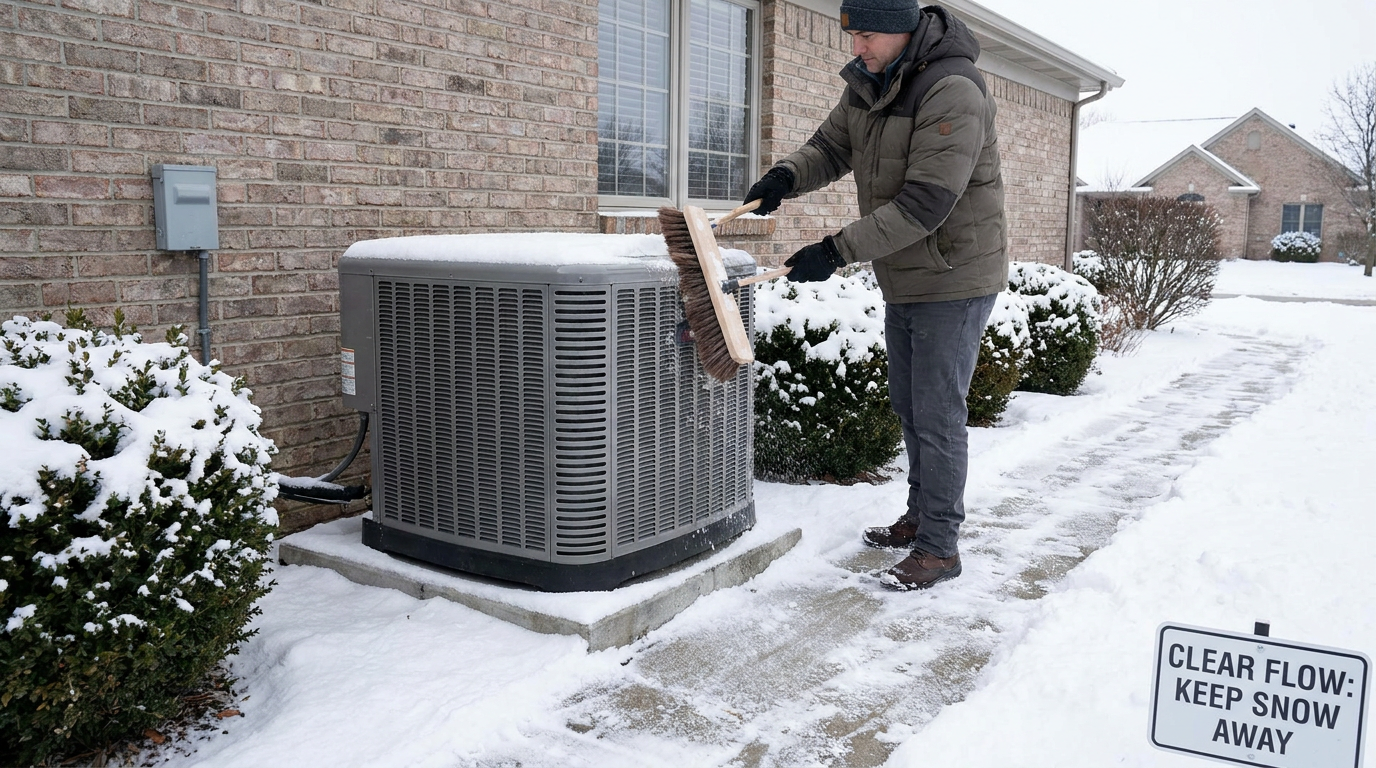
Use a soft broom or your hands with gloves to remove light snow from around the unit. Avoid sharp tools, metal shovels, or aggressive chipping that could damage fins or casing. The aim is to restore space and airflow, not to scrape every surface spotless. If you see thick ice buildup that does not resolve through normal operation, that is usually a sign to stop and seek professional advice rather than forcing the issue.
It is also helpful to understand that some frost can be normal in winter conditions. Heat pumps often use defrost cycles to manage this. What matters is whether frost or ice becomes persistent, heavy, or performance-limiting. If the unit repeatedly ices over or airflow remains blocked after normal clearing, maintenance has moved beyond the DIY category.
Check the Condensate Drain for Obvious Problems
Heat pumps remove moisture during cooling operation, and that moisture needs a clear drainage path. A condensate drain that becomes blocked can lead to water backing up, dampness near the indoor unit, or system interruptions in some cases. While deeper drain servicing may belong to a technician, homeowners can still watch for visible warning signs.
Look around the indoor unit or air handler for unexpected moisture, staining, or standing water. If your system has an accessible drain line outlet, confirm that it is not visibly clogged with debris or algae. You are not trying to perform a technical repair here. You are simply checking that water appears to be leaving the system as intended and that nothing obvious is impeding that process.
Because moisture problems can affect finishes, indoor air quality, and equipment performance, this is one of those small checks that can prevent larger headaches. If you repeatedly notice dampness or drainage issues, it is wise to arrange service promptly instead of waiting for a more serious overflow or shutdown.
Use Your Thermostat in a Heat Pump-Friendly Way
Maintenance is not only about cleaning. It is also about how you operate the system from day to day. ENERGY STAR advises that heat pumps are designed to be used steadily rather than with frequent setpoint changes or unnecessary mode switching. This is a different mindset from the one many people learned with older heating systems.
Homeowners sometimes assume that turning the temperature up and down aggressively throughout the day will save energy. With a heat pump, that strategy can work against efficiency, especially if it triggers backup heating in some system types or simply forces the unit to recover from larger temperature swings. A steadier setpoint often supports better comfort and more efficient operation.
This does not mean you can never make adjustments. It means thoughtful, moderate changes are usually better than constant tinkering. If your system includes smart controls or a dual-fuel setup, use those features according to manufacturer or installer guidance. The most important habit is avoiding the reflex to flip modes and temperatures repeatedly in search of instant results.
A Practical Monthly and Seasonal Maintenance Rhythm
One reason maintenance gets skipped is that homeowners imagine it as a large project. In reality, the best routine is light, consistent, and easy to remember. Instead of waiting until something feels wrong, attach a few quick checks to the natural rhythm of the month and the seasons. That spreads the effort out and makes each task feel manageable.
Here is a simple homeowner maintenance rhythm that fits most homes and most modern heat pump designs:
- Every month: check the air filter, look at indoor vents and returns, and do a quick visual scan around the outdoor unit.
- Each spring: clear winter debris, trim vegetation, inspect visible outdoor surfaces, and make sure airflow paths are open before warmer weather arrives.
- Each summer: confirm the condensate drainage area looks normal and keep supply and return grilles clean and unobstructed.
- Each fall: remove leaves, verify outdoor clearance, and prepare for winter by checking that the unit will not be buried by nearby objects or seasonal storage.
- Each winter: clear snow buildup as needed and watch for persistent icing or airflow restrictions around the outdoor unit.
- Once a year: schedule professional maintenance even if everything appears to be working well.
This type of routine is not only good for efficiency. It can also reduce the stress of homeownership by making system care feel predictable. A few minutes of observation each month often catches issues while they are still small.
Common Mistakes That Quietly Reduce Heat Pump Efficiency
Many efficiency losses come from ordinary habits rather than major equipment failures. The first is ignoring the filter until airflow feels noticeably weak. By that point, the system may already have been running inefficiently for weeks. Monthly checks are easier on the system than emergency replacements after heavy buildup.
The second is allowing the outdoor unit to disappear into the landscape. Shrubs grow, leaves gather, snow drifts shift, and what looked like adequate clearance at installation can become restricted over time. A heat pump needs breathing room in every season, not just on the day it was set in place.
The third is overmanaging the thermostat. Frequent changes can create inefficiencies and make comfort harder to judge accurately. If rooms feel inconsistent, it is often wiser to inspect filters and airflow first before assuming the answer is more aggressive thermostat adjustment.
The fourth is treating visible dirt as harmless because the unit still runs. Heat pumps are resilient, but dirty coils and blocked grilles reduce heat transfer and raise energy use. If the goal is a comfortable, lower-impact home, maintenance should support performance before there is a breakdown.
When Maintenance Is Not Enough
Routine homeowner care can solve many simple efficiency issues, but it does have limits. A well-maintained heat pump should not make persistent unusual noises, lose heating or cooling performance suddenly, ice over repeatedly, or show signs of electrical trouble. Those are service issues, not cleaning issues.
If you notice poor airflow that does not improve after filter replacement and vent clearing, it is time for a technician. The same applies if energy bills spike without an obvious explanation, if the unit cycles strangely, or if water appears repeatedly around indoor components. These signs suggest a deeper problem that deserves proper diagnosis.
It is also wise to call for help if you are unsure how to access a component safely or if your manufacturer instructions are unclear. There is no virtue in turning a routine check into an avoidable repair. Calm, informed restraint is part of good maintenance too.
Signs to Schedule Professional Service Soon
- Repeated icing that does not clear with normal operation
- Weak heating or cooling after basic filter and airflow checks
- Unusual buzzing, rattling, grinding, or persistent vibration
- Visible water leakage or recurring condensate drain problems
- Outdoor fan issues or airflow that seems abnormally low
- Sudden increases in energy use without clear seasonal cause
- Frequent thermostat adjustments needed to maintain comfort
Annual Professional Maintenance Still Matters
Even if you are attentive with filters and seasonal cleanup, an annual tune-up remains worthwhile. A professional can inspect refrigerant performance, verify electrical connections, test components, clean areas you cannot safely reach, and assess whether the system is operating within expected ranges. That level of inspection complements homeowner care rather than replacing it.
Think of routine DIY maintenance as preserving day-to-day conditions and professional service as checking the deeper health of the system. Together, they offer the best chance of protecting comfort, efficiency, and equipment life. This is especially valuable in homes that rely heavily on heat pumps year-round or in colder climates where winter performance matters deeply.
The Broader Value of Maintenance in a More Efficient Home
Heat pumps are now central to many conversations about lower-carbon housing, electrification, and long-term energy resilience. But the success of those ideas depends on real-world operation inside ordinary homes. A high-efficiency system that is neglected will not deliver the same results as one that is used and maintained thoughtfully.
That is why maintenance deserves to be seen not as a chore, but as part of a practical home strategy. A clean filter, an unobstructed outdoor unit, and a sensible thermostat approach are not dramatic upgrades. Yet they support lower bills, more stable comfort, and slower equipment wear. In many households, these quiet habits deliver a surprisingly strong return.
There is also something reassuring about the kind of maintenance heat pumps usually need from homeowners. Most of it is visual, straightforward, and achievable. You do not need to become an HVAC expert to make meaningful improvements. You simply need to protect airflow, keep surfaces from becoming burdened with debris, and know when to bring in professional support.
Final Thoughts: Small Habits, Lasting Payoff
Essential heat pump maintenance is less about technical complexity and more about consistency. Check the filter every month. Keep vents open. Clear debris from the outdoor unit. Watch for snow and ice in winter. Notice whether moisture is draining properly. Use your thermostat with a steady hand rather than constant adjustments.
These are modest actions, but they align closely with the best guidance from ENERGY STAR and the U.S. Department of Energy. They help preserve heat transfer, support airflow, reduce wasted energy, and ease the strain that leads to early wear. For homeowners looking to lower bills and make more sustainable choices without adding unnecessary complexity, this is one of the most practical places to start.
A well-maintained heat pump rewards attention with better efficiency, better comfort, and a longer useful life. In a home that is meant to feel both responsible and livable, that is exactly the kind of progress worth making.



No Comment! Be the first one.