



Transform Your Bedroom: Elegant Design Ideas for a Serene Retreat
The bedroom has always held a special place in the home, yet today it carries a deeper purpose than simple privacy or decoration. It is where the body softens, the mind quiets, and the rituals of rest begin. In a culture that moves quickly and demands constant attention, the bedroom has become one of the most meaningful rooms to design well. A beautiful bedroom is no longer only a visual indulgence. It is also a practical investment in comfort, mood, and overall well-being.
Table Of Content
- The Modern Bedroom as a Sanctuary
- Start With the Mood You Want to Feel
- A Calm Color Palette With Depth and Warmth
- The Bed as the Visual and Emotional Anchor
- Symmetry, Proportion, and the Quiet Discipline of Layout
- Storage as a Design Feature, Not an Afterthought
- Lighting That Supports Rest and Ritual
- Temperature, Ventilation, and Air Quality Belong in the Design Conversation
- Noise Reduction and the Softening Power of Textiles
- Personalization Without Visual Chaos
- Choosing Materials That Age Gracefully
- Common Bedroom Design Mistakes That Disturb Serenity
- How to Build Your Own Serene Bedroom Retreat
- The Lasting Appeal of a Bedroom Designed for Rest
That shift has changed the language of interior design. The most compelling bedrooms are not necessarily the most ornate or trend-driven. They are the ones that feel composed, personal, and restorative. Research increasingly supports what many designers have long understood intuitively: light, noise, air quality, temperature, and clutter all influence how a bedroom functions. In other words, serenity is not a vague aesthetic ideal. It is something that can be built through thoughtful choices in layout, materials, lighting, storage, and atmosphere.
This is where elegance becomes especially powerful. French-inspired design has a way of making a room feel polished yet intimate, refined yet lived in. It favors symmetry, graceful lines, tactile fabrics, and a restrained sense of beauty that never feels overstated. When those qualities are blended with North American preferences for comfort, practicality, and multifunctionality, the result is a bedroom that feels both luxurious and deeply usable. It can be romantic without being fragile, and tailored without feeling cold.
In this guide, we will explore how to create a bedroom that supports better rest while expressing a strong sense of style. From calming palettes and layered textiles to ventilation, sound control, and well-chosen furniture, each element contributes to a more peaceful retreat. The goal is not to imitate a showroom or chase a passing trend. It is to shape a room that feels quietly sophisticated, personally meaningful, and wonderfully serene at the end of every day.
The Modern Bedroom as a Sanctuary
For many households, the bedroom has become a sanctuary in the truest sense of the word. It is no longer treated as a room to be furnished after the living spaces are complete. Instead, it is often one of the first places people want to improve because it affects daily life so directly. A calm bedroom can influence how one falls asleep, how one wakes, and even how one feels during the hours in between. This makes bedroom design both emotional and functional.
Authoritative sleep guidance consistently recommends a bedroom that is dark, quiet, cool, and comfortable. These principles align beautifully with timeless interior design. Blackout drapery can look sumptuous, upholstered surfaces can soften noise, and layered lighting can support the gentle transition from day to evening. A refined bedroom is not separate from a restful one. In fact, the most successful spaces often merge the two so seamlessly that design and wellness become inseparable.
Recent research has also made the connection clearer. A 2023 observational actigraphy study found that higher bedroom levels of particulate matter, temperature, carbon dioxide, and noise were each associated with lower sleep efficiency. This is a useful reminder that design choices should address not only how a room looks, but also how it behaves. Ventilation, thermal comfort, and acoustic softness deserve the same attention as the bed frame or the color on the walls.
A serene bedroom is not defined by how much it contains, but by how carefully each element supports calm.
When we begin with this understanding, luxury becomes more intelligent. It is not simply a matter of expensive finishes or decorative abundance. It is the pleasure of entering a room that feels balanced, breathable, and beautifully edited. True bedroom luxury is deeply sensory. It can be felt in the hush of thick curtains, the coolness of crisp linen, the glow of a dimmed lamp, and the visual relief of a room that knows when to stop.
Start With the Mood You Want to Feel
Before selecting furniture or paint, it is worth asking a more intimate question: How should this room feel at night, and how should it feel in the morning? A bedroom can be moody and enveloping, bright and airy, romantic and cocooning, or quietly minimal. There is no single formula for serenity, but there should be emotional clarity. Rooms that feel unresolved often contain too many competing intentions. Perhaps the palette is calm but the storage is chaotic, or the furniture is elegant but the lighting is harsh. The mood should guide every decision.
French elegance offers a helpful framework because it values atmosphere as much as composition. The room is not treated as a collection of isolated products. It is considered as a whole, where fabric, proportion, finish, and light all participate in the final impression. This approach can be adapted beautifully for modern homes by focusing less on replication and more on translation. You do not need gilded paneling or an antique apartment ceiling to capture the essence. You need softness, discipline, proportion, and a few exquisite details.
At the same time, North American living often calls for practical adjustments. Bedrooms may need to support storage, apartment living, seasonal bedding, or more compact footprints. A serene room must still work. This is why the most successful interiors blend elegance with utility rather than treating them as opposites. The room should feel graceful while accommodating daily habits with ease.
A Calm Color Palette With Depth and Warmth
Color is one of the most immediate ways to shape the emotional tone of a bedroom. Soft luxury palettes continue to resonate because they provide visual calm without looking flat. Warm whites, greige, taupe, stone, mushroom, muted sand, pale olive, dusty rose, and smoky blue all work beautifully in bedrooms when handled with restraint. These colors have a certain tenderness to them. They recede gently rather than demanding attention, allowing the body and mind to settle.
The key is to avoid sterility. A room meant for rest should not feel like a blank box. The secret to a serene neutral palette is layering undertones and textures so that the scheme remains rich and dimensional. An ivory wall can sit beside oatmeal drapery, flax linen bedding, a walnut nightstand, and a wool rug in stone tones. None of these elements need to shout, yet together they create complexity and warmth. This is often where luxury lives most elegantly, in nuance rather than contrast.
French-inspired bedrooms tend to excel at this kind of subtle orchestration. The palette is rarely loud, but it is never dull. There may be a faded blue velvet cushion, a pale plaster wall, or antique brass hardware that catches the light softly. These details provide character without disrupting serenity. For a more contemporary interpretation, keep the palette tonal and introduce depth through tactile variation rather than bright accents.
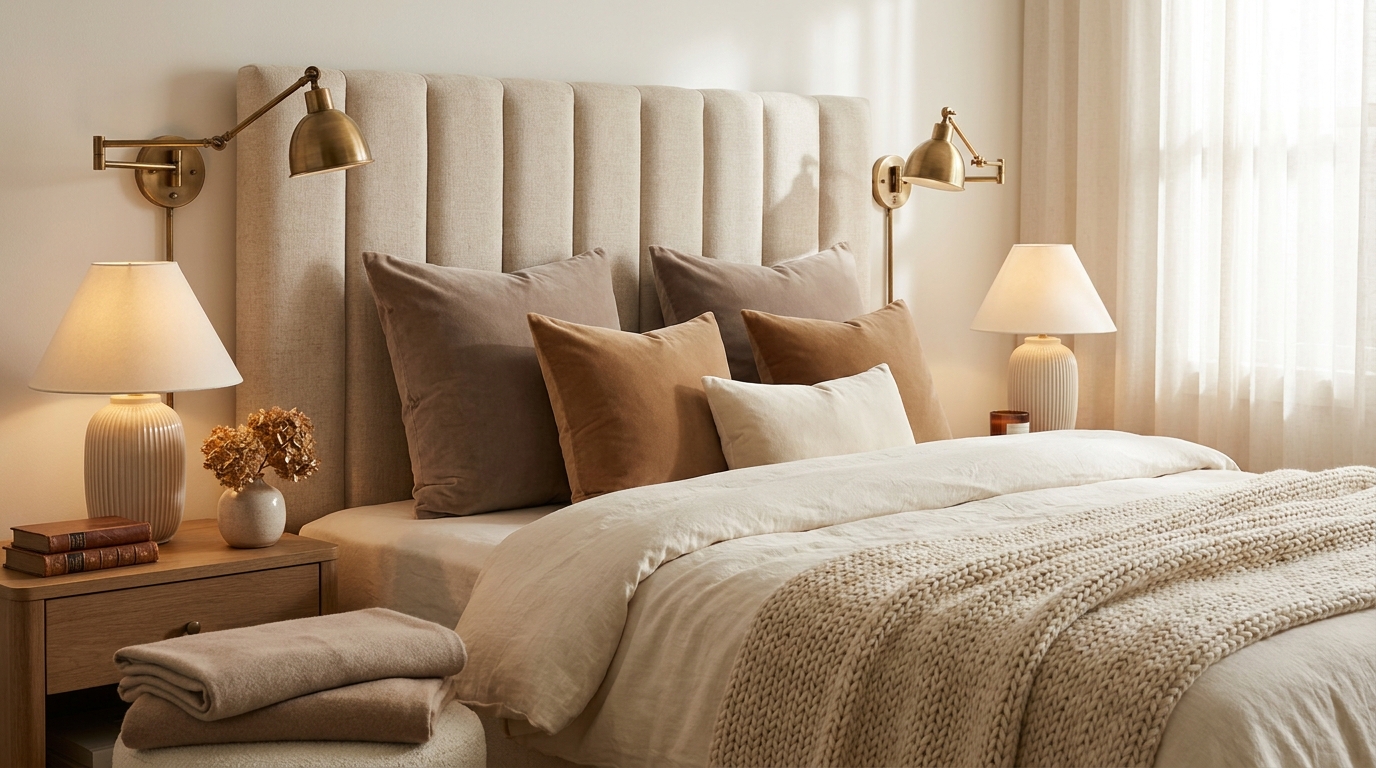
If you are unsure where to begin, consider building the palette in layers. Start with a gentle wall color, then choose the largest upholstered or textile surfaces in related tones. Add one or two grounding elements in wood, aged metal, or a deeper fabric. Finally, edit carefully. A restful palette works best when it is consistent and controlled. Too many accent colors can fracture the sense of calm that the bedroom needs most.
The Bed as the Visual and Emotional Anchor
In any bedroom, the bed naturally becomes the focal point, but in a serene retreat it also acts as the emotional anchor. This is where proportion and material matter most. A well-scaled bed instantly gives the room presence, while an upholstered headboard adds softness, comfort, and a sense of enclosure. French-inspired forms often favor graceful curves, tailored edges, and a slightly romantic silhouette. These details can make a room feel cultivated without becoming theatrical.
In the primary bedroom at 216 Duncan Rd, the headboard is taken to full height, with channel-tufted upholstered panels wrapping the entire wall behind the bed.
Bedding deserves equal attention because it influences both appearance and lived experience. Linen remains especially compelling for serene bedrooms because it breathes beautifully and develops character over time. Cotton percale offers cool crispness, while velvet, brushed wool, and matelassé can be introduced in smaller amounts for depth and seasonal comfort. The bed should invite rest before one even touches it. That invitation comes from layering, but not excess. A bedroom should not feel buried under decorative pillows that have nowhere to go at night.
Instead, think of the bed as a composition. Begin with breathable foundational layers, then add a quilt or coverlet for texture and finish with a few carefully chosen cushions in tones that echo the room. The result should feel effortless. Elegance in a bedroom often comes from bedding that appears sumptuous yet unforced, as though every fold belongs there naturally.
Beyond aesthetics, comfort remains essential. Many people still assume that sleep quality depends mainly on the mattress, but the broader sleep environment plays a vital role. Temperature, light, noise, and air quality all affect rest. This does not diminish the importance of a supportive mattress and quality pillows. It simply places them within a more holistic vision of bedroom design, one in which the bed is part of a larger sensory landscape.
Symmetry, Proportion, and the Quiet Discipline of Layout
One of the hallmarks of French elegance is symmetry, and in the bedroom it brings immediate calm. Matching bedside tables, balanced lighting, and a centered bed can make a room feel quietly ordered. This does not mean every bedroom must be perfectly mirrored, especially if architecture or storage needs make that impractical. Rather, it suggests that visual equilibrium helps the mind relax. Rooms that feel lopsided or congested often create subtle tension, even when their furnishings are beautiful individually.
Begin with circulation. There should be enough room to move comfortably around the bed, access storage, and open doors or drawers without friction. If the room is smaller, avoid overfurnishing it in pursuit of luxury. A serene bedroom is edited. It is better to choose fewer, better-scaled pieces than to fill every corner. This addresses a common misconception that a stylish bedroom must be highly decorative or densely furnished. In reality, the most restful rooms often leave space for air, light, and movement.
When possible, position the bed so that it feels anchored by the architecture rather than drifting in the room. A headboard against the strongest wall usually creates the best sense of stability. If there is room, place bedside tables at similar heights and use lighting that frames the bed gracefully. This subtle discipline gives even a modest bedroom a sense of intention. It also allows decorative elements, such as an antique mirror or a sculptural bench, to feel more powerful because they are not competing with disorder.
Storage as a Design Feature, Not an Afterthought
Clutter is one of the quickest ways to undermine a peaceful bedroom. Even beautifully chosen decor can lose its effect when surfaces are crowded with clothing, cables, papers, and stray objects. This is why hidden storage and furniture with integrated function have become such important elements of modern bedroom design. They answer a practical need while preserving visual calm. In smaller homes, condos, and urban apartments, this approach can transform how the room feels.
Consider beds with discreet drawers, benches with concealed compartments, or nightstands that close fully rather than exposing every item. A dresser can be more than a storage piece. It can also serve as a decor anchor, topped with a lamp, a ceramic object, a framed photograph, or a restrained arrangement of flowers. The aim is not austerity. It is curation. Everything visible should feel chosen rather than leftover.
North American furniture trends support this shift toward practicality with elegance. Market growth in bedroom furniture has been driven in part by multifunctional pieces, customization, and sustainability preferences. Readers increasingly want furnishings that justify their footprint and age well. This aligns perfectly with a serene luxury philosophy. The room becomes more refined not by adding more, but by selecting pieces that perform beautifully over time.
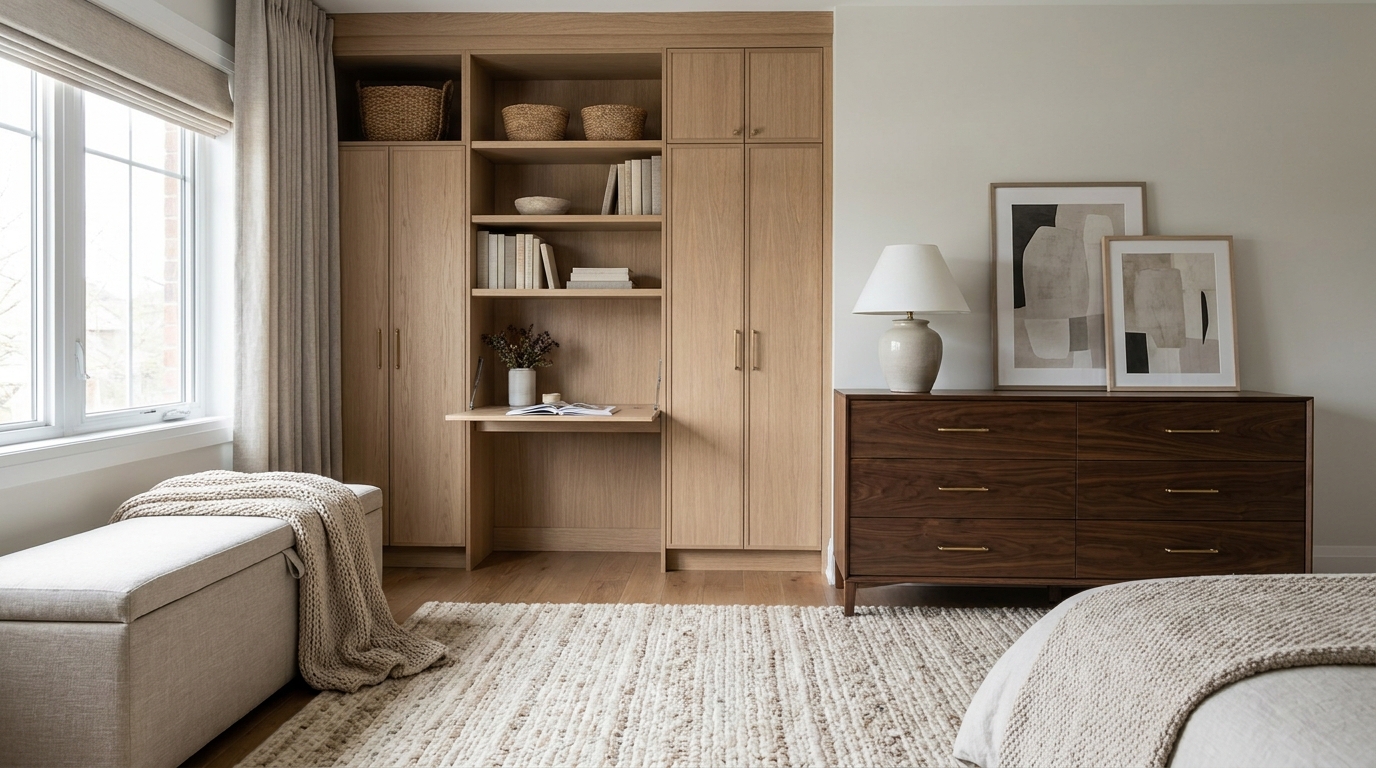
If storage is limited, think vertically and discreetly. Tall wardrobes painted to blend with the wall, under-bed compartments, or wall-mounted sconces that free the nightstand surface can all contribute to a cleaner look. The room should never feel as if organization has interrupted beauty. In a well-designed bedroom, organization becomes part of beauty.
Lighting That Supports Rest and Ritual
Lighting is one of the most underrated elements of bedroom design, yet it shapes both mood and sleep readiness. A bedroom lit only by one bright overhead fixture rarely feels serene. Instead, use layered lighting that responds to different moments of the day. Soft ambient lighting, focused reading light, and low accent light each play a role. Dimmable fixtures are especially valuable because they allow the room to shift gradually from active to restful.
This is also where circadian sensitivity becomes important. Screens and bright light in the evening can disrupt the body’s natural rhythms, so bedroom lighting should encourage gentler transitions. Warm bulbs, shaded lamps, and bedside sconces create a more flattering and comforting atmosphere than cold, overly bright light. The bedroom should not resemble an office or a retail display. It should glow rather than glare.
Window treatments matter just as much as artificial light. Authoritative guidance consistently reinforces the value of a dark sleep environment, making blackout drapery or well-fitted shades a practical design choice. Fortunately, they can also be beautiful. Layering sheer curtains with heavier drapes creates softness during the day and darkness at night. It is a perfect example of how wellness and elegance can support one another seamlessly.
For readers in urban environments, light pollution can be a hidden challenge. Streetlights, illuminated signs, and neighboring buildings can all disturb sleep. Investing in thoughtful light control is therefore not only decorative. It is part of designing a room that truly serves the body. Few luxuries feel as immediate as closing a curtain and allowing the room to become beautifully still.
Temperature, Ventilation, and Air Quality Belong in the Design Conversation
Many people decorate a bedroom with care but pay little attention to the invisible conditions that shape sleep. Yet temperature and air quality can have a measurable impact on comfort and rest. Sleep-health resources often cluster around a bedroom temperature of roughly 16 to 20 degrees Celsius, or about 60 to 67 degrees Fahrenheit, though personal preference and bedding choices matter. What is important is the understanding that an overly warm room is not automatically cozier for sleep. In many cases, a cooler environment is more supportive.
Ventilation deserves equal attention, especially in newer homes or dense urban settings. A field study found that opening windows or doors reduced bedroom carbon dioxide and was associated with differences in sleep parameters compared with closed conditions. This does not mean every climate or season allows open-window sleeping, but it does underscore the value of breathable design. Operable windows, well-maintained HVAC systems, clean filters, and materials that do not trap stale air all contribute to a healthier room.
Textiles and finishes can support this effort as well. Natural fibers such as linen, cotton, and wool tend to regulate temperature more gracefully than overly synthetic options. Low-VOC paints and furnishings can also reduce unwanted chemical load in the room, which is increasingly relevant to readers who see sustainability and wellness as connected concerns. A serene retreat should feel fresh, not sealed or heavy.
In practical terms, this means thinking beyond decor. Is the radiator too close to the bed? Does the room become stuffy at night? Are heavy drapes blocking needed airflow during the day? Beautiful interiors become truly luxurious when they account for the unseen. The quiet comfort of a room with balanced temperature and clean air is impossible to fake.
Noise Reduction and the Softening Power of Textiles
A quiet bedroom supports deeper rest, and design can help achieve that far more effectively than many realize. If you live in a city, near traffic, or in a shared household, the room may need acoustic softness to feel restorative. Rugs, upholstered headboards, lined drapery, and even padded benches can absorb sound and reduce echo. These elements also happen to add texture and richness, which makes them doubly valuable.
There is a refined pleasure in a bedroom that sounds soft. Hard, reflective surfaces may look sleek, but too many of them can make a room feel emotionally chilly. By contrast, fabric-lined spaces tend to feel more intimate and forgiving. This is one reason serene bedrooms often rely on layers of textile rather than sharp visual contrast. The softness is both visible and audible.
If external noise is an issue, small design adjustments can help. A large area rug under the bed anchors the room while reducing sound reflection. Full-length drapery quiets the window wall. A book-lined or upholstered wall opposite the bed can soften the room further. None of these choices need to compromise style. In fact, they often make the space feel more complete.
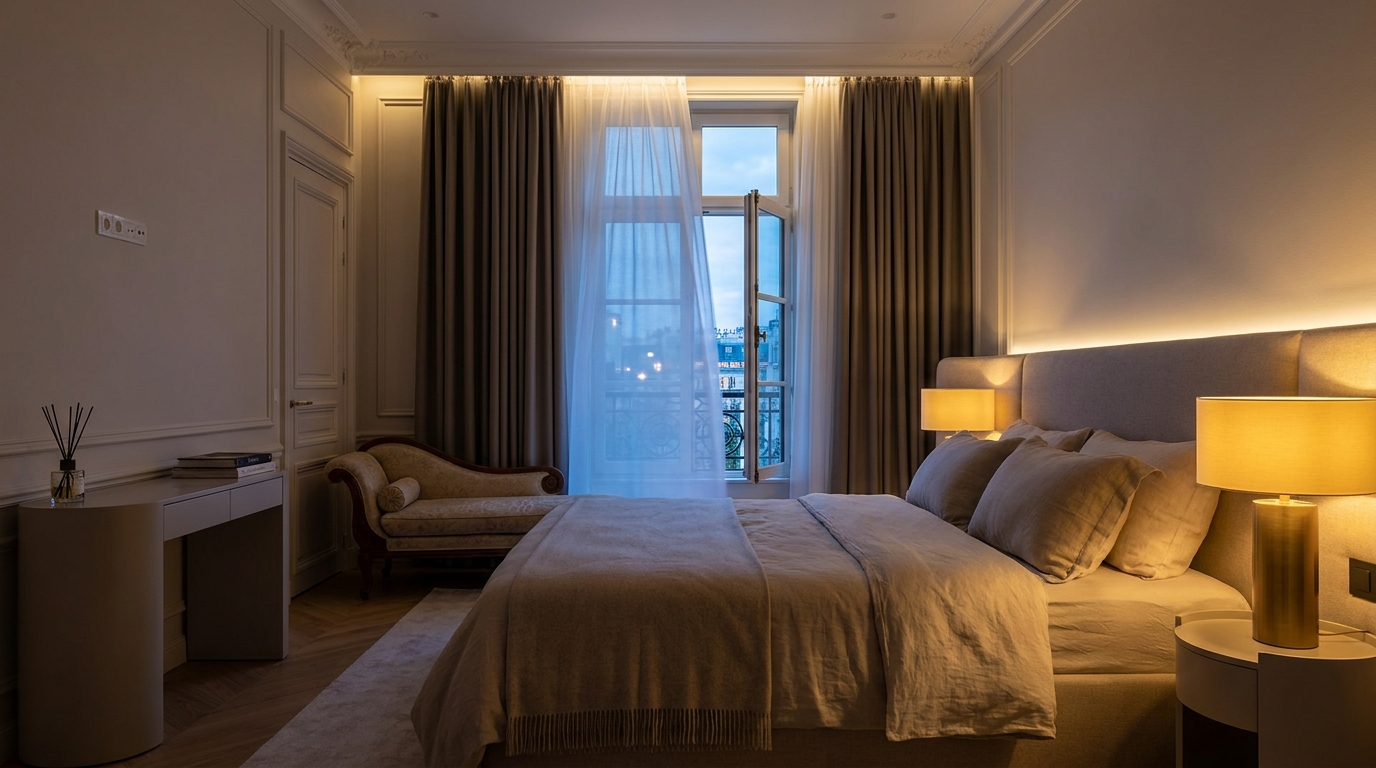
Technology should also be addressed honestly. Bedrooms filled with televisions, charging stations, blinking devices, and visible cords can feel overstimulating. This is not simply a matter of visual clutter. Electronic stimulation and blue light can interfere with sleep routines. If screens remain in the room, they should be integrated discreetly and used thoughtfully. Serenity often begins where excess stimulation ends.
Personalization Without Visual Chaos
Luxury should never erase personality. One of the most persistent misconceptions in bedroom design is that all elegant rooms must look nearly identical, as though serenity requires anonymity. In truth, the most memorable bedrooms have an individual point of view. They include art with emotional resonance, a vintage chair inherited from family, books that are actually read, or colors that carry cultural memory. What matters is not sameness. It is coherence.
This is where cultural fusion styling can be especially beautiful. A bedroom might include French-inspired symmetry and linen drapery alongside Lebanese attention to pattern, craftsmanship, and atmosphere. A carved side table, a handwoven throw, or a small object with personal history can deepen the room’s story. The result feels more intimate than a fully trend-based interior because it reflects a lived identity rather than a generic ideal.
To keep personalization serene, edit with intention. Rather than scattering meaningful objects everywhere, give them room to breathe. A single framed sketch above the dresser can say more than an overcrowded gallery wall. A patterned textile at the foot of the bed can add soul without overwhelming the palette. The goal is to let the room feel personal in whispers, not noise.
When a bedroom reflects the person who inhabits it, rest often comes more easily. Familiarity can be deeply calming. It allows the room to become not just attractive, but reassuring. That feeling is one of the quietest forms of luxury.
Choosing Materials That Age Gracefully
In a room meant for everyday restoration, materials should reward use rather than resist it. This is why timeless bedrooms often rely on finishes that age gracefully. Solid wood gains character, linen softens beautifully, brass develops depth, and wool retains warmth and substance. These materials are not only aesthetically rich. They also support a more sustainable and long-term approach to design, which is increasingly important in the North American market.
Bedroom furniture remains a major category across North America, and interest continues to grow around sustainability, customization, e-commerce access, and multifunctional design. Yet the wisest purchases are not always the most dramatic. In a serene bedroom, quality is felt in the stability of a nightstand, the weight of a drawer, the touch of natural fabric, and the way a finish responds to light over time. This kind of quality may be quieter than trend-driven consumption, but it is far more enduring.
If budget is a concern, prioritize what the body interacts with most directly. Invest in bedding, a supportive mattress, quality curtains, and a few foundational furniture pieces. Decorative accessories can evolve gradually. A serene room rarely needs to be completed in one shopping moment. Often, it becomes more beautiful through slow, attentive layering.
Common Bedroom Design Mistakes That Disturb Serenity
Even well-intentioned bedrooms can lose their calming effect when certain design habits take over. The good news is that these mistakes are easy to recognize and often easy to correct. In many cases, the room does not need more decoration. It needs subtraction, refinement, or a better alignment between aesthetics and comfort.
- Overdecorating the room. Too many accessories, colors, or furniture pieces can create visual fatigue. A serene bedroom should feel edited and spacious, even if the footprint is modest.
- Ignoring light and noise. Sleep comfort is not created by bedding alone. Poor blackout coverage, bright electronics, and echoing surfaces can all compromise rest.
- Choosing style over function. A beautiful bedside table that stores nothing, or a chair that only collects clothes, adds frustration instead of elegance. Practicality enhances calm.
- Using harsh overhead lighting. Bedrooms need layered, dimmable light that flatters the space and supports evening routines.
- Letting work and sleep zones blur. If a desk must remain in the bedroom, define it carefully and keep it visually separate so the room still reads primarily as a place of rest.
- Neglecting air flow and thermal comfort. A stuffy or overheated room can undermine even the most beautiful design scheme.
Correcting these issues often transforms the room more dramatically than buying new decor. Serenity is rarely about grand gestures. It is usually the result of better decisions, repeated gently across the space.
How to Build Your Own Serene Bedroom Retreat
If the process feels overwhelming, simplify it into a sequence. Begin with the essentials that most affect comfort and sleep, then add the aesthetic layers that create emotional richness. This approach keeps the room grounded in function while allowing beauty to unfold gradually and with confidence.
- Start by assessing the room’s sleep conditions, including light, noise, temperature, and ventilation.
- Choose a calm, cohesive palette with warmth and tonal depth.
- Select a bed and headboard that feel substantial, comfortable, and visually grounding.
- Add layered bedding in breathable natural fibers.
- Incorporate storage that hides clutter and protects clear surfaces.
- Use layered, dimmable lighting with warm bulbs and thoughtful bedside illumination.
- Introduce a few personal objects or cultural details that give the room intimacy.
- Edit relentlessly until the room feels spacious, balanced, and complete.
This structure is useful because it prevents a common decorating trap: adding beauty before solving discomfort. Once the room sleeps well, it becomes much easier to make it look exquisite. The atmosphere settles naturally because the design is working on every level.
The Lasting Appeal of a Bedroom Designed for Rest
Trends will continue to evolve, but the desire for a bedroom that feels restorative is unlikely to disappear. In fact, it may become even more central to how people think about home. As wellness-led interiors gain importance, the bedroom stands out as the room where design can have one of the most intimate effects on daily life. It is where beauty can serve the body directly, and where refinement can become a form of care.
The most elegant bedrooms understand this balance. They do not confuse luxury with excess, nor simplicity with plainness. They use color quietly, texture generously, and light thoughtfully. They allow French-inspired grace to meet practical comfort, and they respect the invisible conditions that make sleep possible. In doing so, they create spaces that feel deeply personal and profoundly calm.
To transform your bedroom into a serene retreat is not simply to decorate it more beautifully. It is to design a better ending to each day and a gentler beginning to the next. In that sense, the bedroom becomes more than a room. It becomes a ritual space, a refuge, and one of the most meaningful expressions of how we wish to live.


No Comment! Be the first one.