



Rental property can be an exceptional wealth building tool, but profitable investing is rarely as simple as buying a unit, collecting rent, and waiting for appreciation. In today’s market, the difference between a strong asset and an underperforming one often comes down to underwriting discipline, financing structure, tax planning, and operational execution. Investors who rely on optimistic rent assumptions or broad market headlines often discover that gross income and actual profit are very different things.
Table Of Content
- Why Rental Profits Are Won in the Underwriting Stage
- The Core Metrics Every Rental Investor Should Track
- Gross Rent Multiplier
- Cap Rate
- Cash on Cash Return
- DSCR and Financing Resilience
- Vacancy, Maintenance, and Capital Expenditure Reserves
- How to Underwrite a Rental Property Conservatively
- The Market Has Changed: What Higher Vacancy Means for Investors
- Turnover Strategy, Tenant Retention, and Revenue Quality
- Financing Structure Can Make or Break Profitability
- Tax Planning: Where Many Investors Misjudge Returns
- Regulation Is Local, and Local Rules Shape Profit
- Value Add Strategies That Improve Profit Without Overreaching
- Monthly Asset Management: The Discipline That Protects Returns
- Common Pitfalls That Erode Rental Investment Profitability
- A Practical Framework for Choosing Better Rental Deals
- Final Thoughts: Profit Comes From Precision
That distinction matters even more in Canada and across North America as rental conditions normalize from the extreme tightness seen in recent years. Vacancy rates have risen, rent growth has moderated, and financing has become more sensitive to rate movements and refinancing assumptions. At the same time, turnover rents in many markets continue to create revenue opportunities, which means tenant retention strategy and unit positioning now matter as much as acquisition price.
This guide is designed to help investors evaluate rental properties with greater precision and manage them with a clear eye on long term profitability. Rather than chasing the highest advertised rent or the most aggressive appreciation story, the focus here is on durable performance. Strong rental investing is about buying well, financing carefully, budgeting honestly, complying locally, and tracking results month after month.
For general readers, the most important mindset shift is this: the best rental investment is not always the property with the highest rent, the newest finishes, or the fastest past appreciation. It is the property that can withstand vacancy, repairs, rate changes, and regulatory friction while still producing acceptable returns. That is the standard serious investors use, and it is the standard that protects capital.
Profitable rental investing is not built on rent growth alone. It is built on disciplined underwriting, resilient cash flow, and operations that hold up under pressure.
Recent market data supports this more conservative approach. Canada’s purpose built rental apartment vacancy rate rose from 1.5 percent in 2023 to 2.2 percent in 2024, while average two bedroom rent growth slowed to 5.4 percent after 8.0 percent in 2023. CMHC later reported that the average vacancy rate for purpose built rental apartments in major Canadian CMAs rose to 3.1 percent in 2025. That does not mean rental housing is no longer attractive. It means investors need more realistic assumptions than they could get away with during unusually tight market conditions.
There is also an important nuance in the rent data. CMHC reported that rent growth on turnover units reached 23.5 percent in 2024. That figure highlights why turnover strategy can materially affect income. However, it should not encourage investors to underwrite every building as though large mark to market gains are automatic. Local rules, unit condition, demand quality, and tenant retention costs all influence how much of that upside is actually achievable.

Why Rental Profits Are Won in the Underwriting Stage
Most rental investment outcomes are set before the first tenant moves in. Acquisition discipline determines your margin of safety, your financing options, and your ability to absorb shocks. If you overpay, underestimate repairs, or finance too aggressively, no amount of optimistic property management can fully repair the economics of a weak deal.
Underwriting is the process of translating a property from a sales story into a financial reality. It means replacing promotional assumptions with conservative ones. A listing might highlight current rents, future upside, and neighborhood demand, but a strategic investor asks harder questions. What is the realistic stabilized occupancy? What is the reserve requirement for maintenance and capital expenditures? How sensitive is the debt service to refinancing conditions? How much of the projected upside depends on turnover that local tenancy rules may delay?
Investors often make the mistake of treating recent market appreciation as proof of future rental performance. The two are related, but they are not the same. A property can appreciate while producing weak cash flow, and a cash flowing asset can struggle with value growth if the market overbuilt or tenant demand softens. The best opportunities usually combine a sensible basis, durable demand, and enough operational flexibility to improve income over time.
Buying below replacement cost, when possible, can improve long term resilience. If the acquisition price is meaningfully below what it would cost to build comparable product, the asset may hold value better in weaker phases of the cycle. This does not eliminate risk, but it can provide a strategic cushion, especially in markets where new development remains expensive and supply takes time to deliver.
The Core Metrics Every Rental Investor Should Track
A disciplined investor does not rely on one headline number. Rental properties should be evaluated through a stack of metrics that reveal income quality, financing resilience, and return on capital. Each metric tells a different part of the story, and together they help investors distinguish a good looking property from a good investment.
Gross Rent Multiplier
The gross rent multiplier, or GRM, compares the purchase price to gross annual rent. It is useful as a quick screening tool because it gives investors a sense of how aggressively a property is priced relative to income. Still, it should never be used in isolation because it ignores taxes, insurance, maintenance, vacancy, and financing. A low GRM may look attractive until hidden operating costs erode the advantage.
Cap Rate
The capitalization rate measures net operating income relative to purchase price. It remains one of the most widely used metrics in real estate because it helps compare assets on an unlevered basis. A cap rate can show whether a property is priced richly or reasonably, but context matters. A lower cap rate may be justified in a stronger submarket with better tenant quality and lower risk, while a higher cap rate may signal genuine opportunity or simply reflect operational and neighborhood challenges.
To calculate cap rate accurately, net operating income should include a realistic vacancy allowance and honest operating expenses. Investors often overstate cap rates by using current rents that are not sustainable or by excluding reserves. The result is a number that flatters the deal rather than informs the decision. A better habit is to use stabilized income and normalized expenses, even if that produces a less exciting headline return.
Cash on Cash Return
Cash on cash return measures annual pre tax cash flow relative to the actual cash invested. This metric matters because leverage changes the investor’s return profile. A property with an average cap rate may still generate a strong cash on cash return if financed well. The opposite is also true. An apparently attractive acquisition can produce weak equity returns if debt costs, renovations, and closing expenses consume too much capital.
In practical terms, this is the metric that tells investors how effectively their dollars are working. It is especially useful when comparing a rental purchase with other opportunities such as private credit, equities, or another property in a different market. Since capital is finite, returns need to be measured against the full cost of entry, not just the purchase price.
DSCR and Financing Resilience
The debt service coverage ratio, or DSCR, measures how comfortably a property’s net operating income covers its annual debt obligations. It is one of the clearest indicators of financing resilience. A weak DSCR leaves little room for vacancy, repairs, tax increases, or higher renewal rates at refinance. A stronger DSCR gives the property more breathing room and makes the investment less dependent on perfect execution.
This matters in the current rate environment. The Bank of Canada’s policy rate was 2.25 percent as of July 15, 2026 after a series of cuts in 2025 and 2026, but borrowing risk has not disappeared. Investors still need to stress test debt assumptions because mortgage rates, lender spreads, and refinance conditions can shift. If a deal only works under an ideal rate scenario, it does not truly work.
Vacancy, Maintenance, and Capital Expenditure Reserves
Vacancy allowance should not be a symbolic percentage inserted to satisfy a spreadsheet template. It should reflect local market conditions, asset quality, unit type, and turnover risk. With Canadian vacancy rates rising from prior lows, investors should underwrite more conservatively than they did during the tightest part of the cycle. Even a market with strong long term demand can produce short term softness if new supply arrives or tenant affordability weakens.
Maintenance and capital expenditure reserves are equally important. Day to day repairs, appliance replacements, common area wear, roofing, and mechanical systems all consume cash. One of the most common errors among first time investors is assuming that if a seller recently renovated the units, reserve requirements can be ignored. In reality, every building ages, every system deteriorates, and every year of ownership carries future capital obligations.
How to Underwrite a Rental Property Conservatively
Conservative underwriting is not about pessimism. It is about protecting returns from avoidable surprises. The objective is to model a deal that still performs acceptably if several variables move against you at once. That may mean using slightly lower rents than the market leaders, slightly higher expenses than the seller reports, and a vacancy rate that reflects current conditions rather than peak cycle assumptions.
A practical underwriting sequence starts with market rent, but then adjusts for unit quality, concessions, tenant profile, and lease rollover. If the building’s rents appear below market, investors need to ask why. Is there upside through renovation and turnover, or are the units simply inferior in size, layout, light, parking, or location? If asking rents in nearby buildings are higher, determine whether those rents are actually being achieved after incentives and whether those properties are directly comparable.
Next, build an operating expense model that includes property tax, insurance, utilities where applicable, routine repairs, professional fees, cleaning, turnover costs, and administrative overhead. Then include a separate reserve for larger capital items. This is where many pro formas become unrealistic, because sellers and brokers often present expenses as though the building will require only basic maintenance and no significant reinvestment. That is rarely how ownership works in practice.
Finally, stress test the financing. Model your annual cash flow at the expected mortgage rate and again at a higher rate. Run the same exercise with elevated vacancy and a modest repair spike. If the property moves from acceptable to fragile under mild stress, the acquisition deserves a second look. Good rental assets do not need to be perfect, but they should be able to absorb ordinary operational friction.
- Start with realistic in place rent and separate actual income from aspirational upside.
- Apply a vacancy allowance based on current local conditions, asset quality, and turnover risk.
- Use normalized operating expenses rather than seller optimized figures.
- Include maintenance reserves and a capital expenditure allowance.
- Model financing with rate sensitivity and refinance risk in mind.
- Check DSCR, cap rate, and cash on cash return under both base case and stress case scenarios.
The Market Has Changed: What Higher Vacancy Means for Investors
The recent rise in vacancy rates across Canada changes the underwriting playbook. When vacancy sat near exceptionally low levels, many investors could assume rapid lease up, minimal downtime, and annual rent momentum. That environment rewarded speed and optimism. A higher vacancy backdrop requires more selectivity, especially in submarkets where new supply is competing for the same tenant base.
CMHC’s data shows that the market has not collapsed, but it has normalized. That is an important difference. Moderating rent growth and rising vacancy create a wider dispersion between strong assets and weak ones. Buildings with durable locations, efficient unit layouts, well maintained common areas, and professional operations are more likely to outperform. Properties that relied on scarcity alone may struggle to maintain occupancy or justify aggressive rent targets.
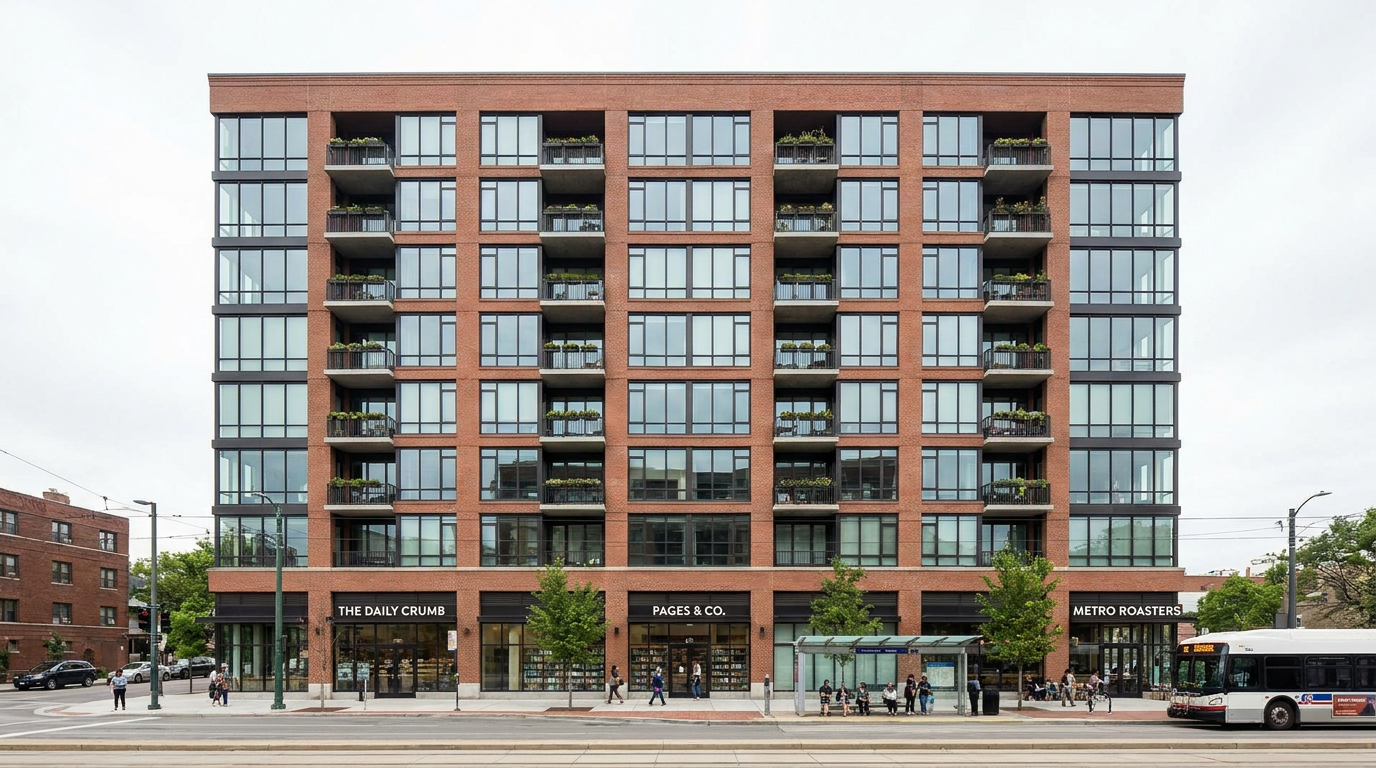
This is why neighborhood selection matters so much. Investors should prioritize areas with diversified employment, transit access, household formation, and services that support long term tenant demand. A flashy emerging area may offer upside, but durable neighborhoods often provide steadier occupancy and better downside protection. In a less frenzied rental environment, quality of location becomes more visible in the numbers.
Supply should also be examined carefully. New inventory can improve the overall health of a market while creating near term pressure on rents, concessions, and absorption. If multiple new projects are delivering nearby, an investor should consider whether their target property remains competitive on finish quality, amenities, and price point. Occupancy risk is rarely market wide in a uniform way. It is often concentrated in properties that sit in the middle, neither premium enough to command top rent nor affordable enough to defend demand.
Turnover Strategy, Tenant Retention, and Revenue Quality
One of the more important insights from recent Canadian rental data is that turnover can be a significant revenue event. With turnover units experiencing 23.5 percent rent growth in 2024, investors can see why some operators focus intensely on suite upgrades, market positioning, and release strategy. But high turnover potential does not automatically mean high profitability. Every move out creates friction costs, downtime risk, marketing expense, cleaning, and potential repair work.
Strong operators know when to prioritize retention and when to embrace turnover. If a reliable tenant is paying slightly below current market and causes minimal operating friction, retaining that tenant may produce a better net outcome than forcing a vacancy to chase a higher top line rent. If the gap to market is substantial and local rules allow a legitimate repositioning strategy over time, then turnover may unlock meaningful value. The point is to compare the net economics of both paths rather than assuming one is always better.
Tenant retention is often underestimated as a profit strategy. Renewals reduce marketing costs, minimize vacancy loss, and lower wear associated with frequent move ins and move outs. In a market where vacancy is higher than it was in 2023, predictable occupancy becomes more valuable. Retention also gives investors a smoother revenue base, which supports cash flow stability and may strengthen financing metrics.
That said, retention should not mean neglect. Buildings that communicate poorly, delay maintenance, or let common areas deteriorate often suffer avoidable turnover. Many investors chase value through acquisition, but value is also protected through operations. Fast response times, preventative maintenance, and respectful tenant relations can preserve occupancy and reduce legal disputes. Those habits may not appear dramatic in a sales brochure, but they often show up clearly in net operating income.
Financing Structure Can Make or Break Profitability
Financing is not a background detail. It is a return driver. In leveraged rental acquisitions, the capital stack determines monthly carrying costs, equity efficiency, and the margin for error if income softens. Two investors can buy similar properties and end up with very different outcomes depending on loan terms, amortization, insured versus uninsured financing, and refinance timing.
Canadian investors in particular need to stay informed on CMHC insured lending rules and premium changes, especially for small rental loans and multi unit properties. For insured small rental loans in Canada, the maximum purchase price or lending value, or as improved value, must be below $1,000,000. That threshold can influence deal selection, leverage, and whether a property fits an investor’s intended financing approach. Even when a property qualifies, insurance premiums and underwriting standards directly affect monthly costs and total return.
A lower rate is not always the only objective. Amortization length, prepayment flexibility, renewal exposure, and the lender’s view of vacancy and debt coverage all matter. A loan that looks cheap upfront may become restrictive later if prepayment penalties are severe or if the term creates refinancing pressure at the wrong time. Sophisticated investors evaluate debt not just by current cost but by how well it matches the business plan.
For example, a value add acquisition with planned suite upgrades may require financing that accommodates staged improvements and temporary vacancy. A stabilized long hold property may benefit from a different structure focused on predictable cash flow and renewal certainty. Matching debt to strategy is one of the clearest signs of mature investing. When financing and operations are aligned, profitability becomes easier to protect.
Tax Planning: Where Many Investors Misjudge Returns
Tax treatment is one of the most misunderstood elements of rental investing. Many owners focus heavily on purchase price and rent but pay far less attention to how income will be reported, which expenses are deductible, and how capital costs affect after tax returns. This can lead to overstated profit expectations, especially in the first years of ownership when repair and improvement spending tends to be highest.
According to Canada Revenue Agency guidance, rental income is generally reported using the accrual method, and reasonable expenses incurred to earn rental income can be deducted. That sounds straightforward, but the details matter. The major distinction is between current expenses and capital expenses. Current expenses such as ordinary repairs are usually deductible in the year incurred, while improvements generally need to be capitalized and claimed over time through capital cost allowance, or CCA.
This distinction can materially alter cash flow planning. If an investor assumes that a substantial unit upgrade will be fully deductible immediately, their after tax projections may be overstated. In reality, those costs may need to be added to the capital base and recognized gradually. Good recordkeeping is essential, not only to support deductions but also to avoid confusion when multiple projects overlap between repair and improvement categories.
There is also a broader classification issue. Depending on the facts, income may be treated as rental income or business income. Investors should not assume that every property activity is automatically viewed the same way. The level of services provided, the nature of operations, and the ownership structure may affect tax treatment. Since after tax profitability determines real investor returns, tax planning should be integrated into the acquisition analysis rather than addressed after closing.
Pre tax cash flow tells you whether the property works operationally. After tax cash flow tells you what you actually keep.
Regulation Is Local, and Local Rules Shape Profit
One of the most expensive mistakes rental investors make is assuming that rental strategy is uniform across Canada or North America. It is not. Rent increase limits, notice periods, vacancy rules, short term rental restrictions, and eviction procedures vary by province, territory, and municipality. That means the same operational plan can produce very different results depending on where the property is located.
For example, Ontario requires at least 90 days’ written notice before a rent increase, while British Columbia requires three full months’ written notice. Those details affect timing, cash flow planning, and the execution of any renewal strategy. More broadly, each province and territory has its own framework for rent increases and tenancy rights. Investors who ignore these differences often overestimate how quickly they can move income or reposition units.
Regulatory screening should happen before a letter of intent is submitted. Investors need to understand whether there are annual increase caps, how vacancy decontrol functions, what restrictions apply to short term rentals, and how notice and enforcement procedures work in practice. This is not just a legal checklist. It is part of underwriting because regulation shapes revenue flexibility and operating risk.
Operational compliance also protects reputation and time. Disputes, penalties, and procedural mistakes are expensive. Even when an investor is legally entitled to pursue an action, a process error can delay execution and create avoidable cost. Well run portfolios treat compliance as part of asset management, not as an afterthought for crisis moments.
Value Add Strategies That Improve Profit Without Overreaching
In a moderating rental growth environment, value add strategies become more important. The most reliable forms of value creation often come from improving operating efficiency rather than assuming aggressive market appreciation. This can include targeted suite upgrades, utility optimization, better leasing systems, amenity repositioning, expense renegotiation, and preventative maintenance that reduces emergency repair costs.
Not every renovation creates a return. The goal is to invest where tenant demand supports measurable rent lift or where operating savings are durable. Cosmetic improvements that exceed what the submarket will pay for may impress on a walk through but disappoint financially. Strategic upgrades tend to be practical, durable, and aligned with what local renters actually value, such as in suite laundry, improved lighting, fresh flooring, secure entry, or energy efficient appliances.
Operational value add can be just as powerful. Better collections processes, tighter vendor management, clearer leasing communication, and monthly performance review can all expand margins. Investors sometimes underestimate how much money leaks through poor process rather than poor market conditions. The best operators know that small inefficiencies across dozens of units compound quickly over a year.

Value add also needs an honest cost of capital analysis. If upgrades are financed with expensive debt or if they create too much vacancy during execution, the return may disappoint even when rents rise. This is why improvement plans should be phased, measured, and reviewed against actual leasing outcomes. Good operators test assumptions, then scale what works.
Monthly Asset Management: The Discipline That Protects Returns
Acquiring a rental property is only the start. The investors who consistently outperform are those who review performance monthly and adjust quickly when numbers drift. Effective asset management translates the original underwriting into a living operating plan. It asks whether occupancy, collections, repairs, and renewals are tracking as expected, and if not, what needs to change.
A monthly review should cover gross scheduled rent, actual collected income, delinquency, occupancy, turnover, average days vacant, maintenance spend, capital spend, and net operating income variance against budget. Debt service and DSCR should also be revisited regularly, particularly when rates or refinance assumptions shift. This process keeps investors close to the business rather than relying on quarterly or annual hindsight.
Tracking should not be limited to problems. It should also identify positive patterns that can be repeated. If a certain renovation package leases faster, if a pricing strategy reduces vacancy loss, or if a maintenance vendor consistently lowers call backs, those insights should become part of standard operations. Strong portfolios are built through repeatable decisions, not isolated wins.
For self managing owners, this level of review can feel demanding, but it is essential. For those using a property manager, the same discipline still applies. Delegating operations does not eliminate the need for ownership oversight. Investors should expect clear reporting, performance accountability, and strategic recommendations, not just rent collection and maintenance dispatch.
Common Pitfalls That Erode Rental Investment Profitability
Many rental investing mistakes are predictable. They happen because investors rush to close, anchor too heavily on optimistic scenarios, or underestimate friction in operations, taxation, and regulation. The good news is that most can be avoided with a more disciplined framework.
- Confusing gross rent with profit. Rent looks attractive on paper, but vacancy, taxes, insurance, repairs, management, financing, and reserves all reduce what the investor keeps.
- Overpaying because of projected upside. Future rent growth is valuable only if it is realistic, legal, and net of turnover and improvement costs.
- Ignoring DSCR. Weak debt coverage can turn a decent building into a stressful investment when rates rise or occupancy slips.
- Underbudgeting reserves. Buildings always require maintenance and periodic capital spending, even when they appear recently updated.
- Misclassifying expenses for tax purposes. Not every repair or upgrade is immediately deductible, and poor assumptions distort after tax returns.
- Assuming rental rules are the same everywhere. Local notice requirements, increase limits, and tenant protections directly affect strategy and timing.
- Relying only on appreciation. A property can gain value while producing weak or negative cash flow, which creates pressure if the market changes.
A Practical Framework for Choosing Better Rental Deals
When comparing opportunities, investors should return to a simple strategic test. Is the property in a neighborhood with durable tenant demand? Can it be financed with acceptable debt coverage? Does it produce positive cash flow after realistic operating expenses and reserves? Is the rent upside credible under local law and market conditions? Does the business plan still hold under stress?
If the answer to most of those questions is yes, the property deserves serious attention. If multiple answers depend on best case outcomes, the deal is weaker than it appears. This framework helps investors avoid being distracted by cosmetic appeal or broker language that emphasizes potential without quantifying risk.
It is also useful to compare the deal to alternatives using both current and forward returns. Some investors chase high yield assets in weaker areas, while others accept very low yields in prime neighborhoods because they expect appreciation. Both can work in certain cases, but each has tradeoffs. The right choice depends on capital costs, risk tolerance, management capacity, and investment horizon. Strategic investing is not about one universal formula. It is about selecting a structure that aligns return expectations with operational reality.
Final Thoughts: Profit Comes From Precision
Rental investing remains one of the most effective ways to build long term wealth, but today’s market rewards precision more than momentum. Rising vacancy, moderating rent growth, local regulation, and financing sensitivity mean investors need stronger underwriting and tighter operations than they did in the most compressed rental markets. The edge now comes from disciplined analysis, not broad enthusiasm.
The strongest rental portfolios are usually built by investors who stay conservative at purchase and proactive in management. They model realistic vacancy, classify expenses correctly, understand tenancy law, reserve for future capital needs, and monitor performance every month. They treat financing as strategy, not background paperwork. They know that tenant retention and turnover execution are both financial decisions. Most importantly, they recognize that stable, repeatable profit matters more than headline rent.
If you want to maximize your profits from rental investments, start by evaluating every property as though the market could become slightly more competitive, financing slightly more expensive, and repairs slightly more frequent than expected. If the deal still works, you may have something durable. In real estate, that durability is often what turns a decent investment into a truly strategic one.



No Comment! Be the first one.