



Land banking has a certain appeal that draws in new investors quickly. The basic idea sounds simple enough: buy land in the right place, hold it over time, and benefit when its value rises. Compared with owning a rental property, it can look cleaner, quieter, and easier to manage because there are no tenants to screen, no leaking roofs to fix, and no appliances to replace. For beginners who want real estate exposure without the daily demands of active property management, that simplicity can be very attractive.
Table Of Content
- What Land Banking Actually Means
- Why Beginners Find Land Banking Attractive
- The Core Misconceptions That Cost Beginners Money
- How Wealth Is Created in Land Banking
- Start With Planning and Legal Due Diligence, Not Price
- A Practical Framework for Evaluating a Land Parcel
- Step 1: Identify the growth story
- Step 2: Confirm permitted use and future use potential
- Step 3: Review access, servicing, and site constraints
- Step 4: Compare nearby land sales and active market evidence
- Step 5: Estimate all carrying costs conservatively
- Step 6: Define your exit before you buy
- Understanding Carrying Costs and Return Pressure
- Policy Risk Is Real and Increasingly Relevant
- How Infrastructure and Transit Can Change Land Value
- Land Banking Versus Other Real Estate Investments
- What a Strong Beginner Deal Often Looks Like
- Common Red Flags to Watch Closely
- A Beginner Friendly Buying Process
- The Role of Patience, Time Horizon, and Discipline
- Final Thoughts: Land Banking as a Strategic Wealth Tool
- Quick Reference Checklist for Beginners
Yet land banking is often misunderstood. It is not a shortcut to fast wealth, and it is not passive in the way many people assume. While vacant land may have fewer operational headaches than an apartment or house, the success of the investment depends on careful research, disciplined underwriting, and a realistic view of how cities grow. In practice, land banking is a long-duration strategy where returns usually come from future appreciation rather than present income, which means every holding cost and every regulatory risk matters.
This guide is designed to demystify land banking for beginners. It focuses on practical steps, not hype, and explains how to think about location, zoning, infrastructure, carrying costs, liquidity, and policy risk before making a purchase. If you understand one principle from the start, let it be this: the land itself is only part of the story. The real investment case is shaped by what the land can legally become, who may want it later, and whether the local market has a credible path to future value growth.
What Land Banking Actually Means
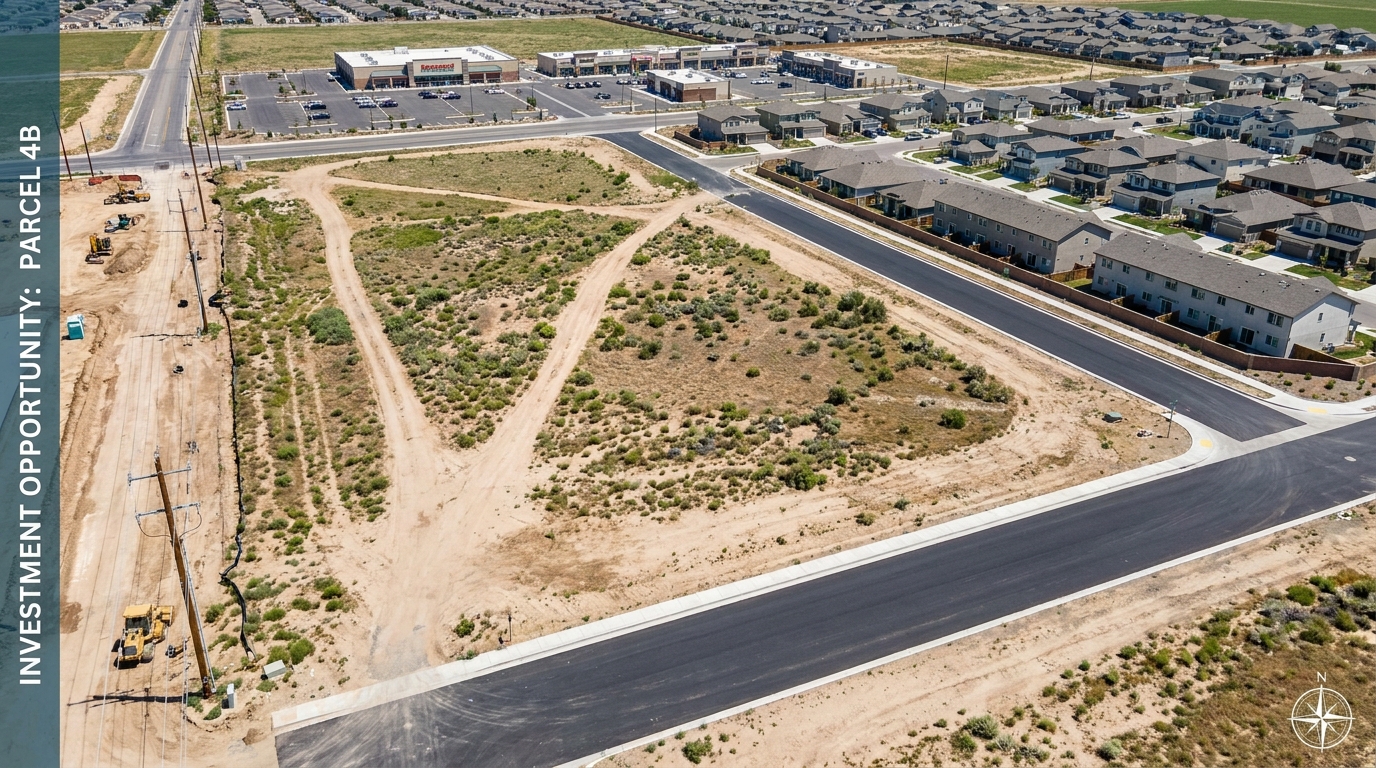
Land banking is the strategy of acquiring land and holding it for long term appreciation rather than immediate development or current rental income. Investors buy parcels they believe will become more valuable as surrounding areas expand, infrastructure improves, zoning evolves, or future development opportunities emerge. The return thesis is tied to timing, scarcity, planning policy, and local growth rather than cash flow from day one.
That distinction matters. A rental property can generate monthly income while also appreciating over time, which gives the investor two sources of return. Land banking usually offers only one, and that is future resale value. If appreciation takes longer than expected or never materializes in the way the buyer assumed, the investment can underperform for years because there is little or no income to offset taxes, interest, and legal costs.
For that reason, beginners should think of land banking as a strategic holding position, not a productivity asset. It can be easier to own in an operational sense, but it is often harder to evaluate properly. A house can be compared by bedrooms, condition, rents, and recent sales. Raw or vacant land requires a deeper look into official plans, zoning rules, servicing availability, environmental constraints, and actual demand for future development land in that specific corridor.
Why Beginners Find Land Banking Attractive
There are valid reasons new investors become interested in land banking. The first is simplicity of ownership. In many cases, the land sits quietly while the investor monitors growth patterns and planning changes. There are no tenants, no property manager, and usually no urgent repairs. That can make the strategy feel more manageable for someone entering real estate for the first time.
The second reason is the appeal of leverage to long term urban growth. Many metropolitan regions across Canada and North America continue to face housing supply pressure, infrastructure expansion, and outward suburban development. When public investment supports roads, transit, utilities, or employment centers, nearby land can experience a material increase in perceived and actual future value. Investors are often trying to position themselves ahead of that curve.
The third reason is psychological. Owning land feels tangible and permanent. Many first time buyers assume this makes it safer than other speculative assets. But that assumption needs correction. Land is tangible, but the value thesis is still highly speculative if it depends on future rezoning, future servicing, future subdivision approval, or future market demand that does not yet exist. Tangibility does not remove risk. It simply changes where the risk sits.
The Core Misconceptions That Cost Beginners Money
One of the biggest misconceptions is that any vacant parcel near a growing city is a good investment. In reality, proximity alone means very little if there is no practical path to development or improved use. A site may look promising on a map and still remain constrained by environmental setbacks, poor road access, restrictive zoning, lack of sewer and water servicing, or an official plan that does not support the buyer’s assumptions.
Another common mistake is treating land banking as if it were a low-maintenance version of rental investing. The low-maintenance part may be true operationally, but the economic model is different. Most land banking deals do not produce monthly income. This means the investor must carry the property using personal cash flow or financing capacity while waiting for appreciation. If that wait extends beyond expectations, the financial drag becomes significant.
Beginners also routinely underestimate how illiquid land can be. Selling a house or condo is usually easier because there is a wider buyer pool and clearer comparable pricing. Raw land often takes longer to sell, requires a more specialized buyer, and may involve negotiation over matters like access, servicing, zoning potential, and surveys. Illiquidity is not just a technical risk. It affects your ability to exit, refinance, or reposition when market conditions change.
In land banking, the key question is rarely what the parcel is worth today. The better question is what specific event, change, or approval could make it worth materially more tomorrow.
How Wealth Is Created in Land Banking
Land banking creates wealth when land value rises faster than the total cost of holding the asset over time. That sounds straightforward, but the drivers of appreciation are very specific. In most successful cases, value grows because the market begins to see a more profitable or more probable future use for the parcel. That could be caused by rezoning, municipal growth boundaries shifting, new transit investment, stronger nearby housing demand, or servicing improvements that unlock development feasibility.
For example, a parcel outside a currently built-up area may become more valuable if a municipality expands nearby roads, extends utilities, or signals future residential growth in its official plan. A site close to an employment node may gain appeal if new workers increase housing demand in the area. Land near transit can benefit if planners support higher density uses around stations or major corridors. None of these outcomes are automatic, but all of them are examples of how external decisions and market changes can create land value uplift.
The investor’s task is to identify a parcel where that future uplift is both plausible and underappreciated. That requires local market reading, patient timing, and conservative assumptions. The best opportunities often come from seeing not just where growth is happening now, but where planning policy, infrastructure, and demand are likely to converge later. It is a strategic exercise grounded in evidence, not guesswork.
Start With Planning and Legal Due Diligence, Not Price
A beginner’s first instinct is often to scan listings and compare prices. That is the wrong starting point. With land banking, cheap land is not necessarily good land, and expensive land is not necessarily overpriced. Before evaluating any asking price, you need to know what the parcel can legally be used for, what restrictions apply, and what realistic path exists for future enhancement.
Begin with the official plan and zoning review. The official plan tells you how the municipality sees long term land use in that area. Zoning tells you what uses are currently permitted. These are not the same thing. A parcel may be designated for future growth in broad planning terms but still be zoned in a way that limits current development options. Understanding that distinction helps prevent costly assumptions.
Then verify physical and legal access. Does the parcel front a public road, or is access dependent on an easement? Are utilities nearby, and if not, what would servicing require? Is subdivision even realistic? Are there environmental constraints such as wetlands, floodplain issues, protected habitats, soil instability, or contamination concerns? These questions can determine whether a promising parcel is investable or functionally trapped.

A Practical Framework for Evaluating a Land Parcel
Beginners need a repeatable process. Land investing becomes far less intimidating when you break it into a disciplined framework. Instead of asking whether a parcel feels promising, ask whether it passes a sequence of tests that connect legal feasibility, market positioning, and financial endurance.
Step 1: Identify the growth story
Every worthwhile land banking deal needs a credible growth story. That story might involve suburban expansion, a future transit corridor, a nearby employment hub, an industrial logistics trend, or a municipality’s effort to increase housing supply. Your investment should connect to a visible driver of demand rather than a vague belief that land always goes up over time.
Read municipal plans, transportation announcements, infrastructure proposals, and major development applications in surrounding areas. Study where builders are already active. Watch where roads are being widened, where schools and services are being added, and where local governments want growth to occur. If no coherent growth story exists, the land may simply be vacant, not valuable.
Step 2: Confirm permitted use and future use potential
Current zoning affects present usability, while official planning documents shape future possibility. A parcel that is currently agricultural, rural, or low-density may still have long term upside if municipal plans indicate expansion or intensification. But that upside should never be assumed casually. Rezoning, subdivision, and servicing approvals can take years and may not succeed at all.
Ask planning professionals or municipal staff how the parcel is viewed in the local planning framework. Look at comparable sites nearby and see whether similar lands have received approvals. If the value thesis depends entirely on a major change in land use, then your risk level is much higher than a beginner may first realize.
Step 3: Review access, servicing, and site constraints
A good location is not enough if the parcel lacks practical development fundamentals. Access to roads, water, sewer, drainage, electricity, and other infrastructure can be decisive. Some parcels sit close to growth but remain unattractive because the cost to service them is too high or because physical constraints reduce their usable area.
Site shape matters too. Irregular parcels, steep topography, fragmented legal descriptions, and partial constraints can lower flexibility and future marketability. A clean, accessible, appropriately sized parcel in a path of growth is usually more attractive than a technically larger site with hidden limitations.
Step 4: Compare nearby land sales and active market evidence
Vacant land does not have the same pricing transparency as homes, but comparable analysis still matters. Review recent nearby land sales that share similar zoning, access, and future potential. If those exact comparisons are not available, work outward by adjusting for differences in servicing, frontage, and development context. Focus on what informed buyers have actually paid, not just what sellers hope to receive.
It is also useful to monitor listings that have sat on the market for long periods. Stale listings can reveal where sellers overestimated demand or misjudged pricing. This helps you understand not just value, but liquidity. In land banking, the ability to eventually sell is as important as the thesis for buying.
Step 5: Estimate all carrying costs conservatively
Carrying costs are where many beginner projections fail. Property taxes, financing interest, legal fees, title costs, due diligence reports, and closing expenses all affect your real return. In Ontario, acquisition economics can be influenced by land transfer tax under the Land Transfer Tax Act. In British Columbia, speculation and vacancy tax rules in designated areas can materially change the economics of holding underused property. These are not side notes. They can alter the entire viability of a deal.
Build a realistic annual budget and test how long you can hold the land if nothing happens for several years. Include a margin for surprises. If the investment only works under optimistic assumptions or a very short holding period, it is probably too fragile for a beginner strategy.
Step 6: Define your exit before you buy
Every land parcel should be purchased with a clear idea of who the likely future buyer will be. Is the eventual buyer another investor, a local builder, a developer assembling land, a business user, or a household looking for a custom build site? Your exit strategy influences what features matter most and how liquid the parcel may be later.
It also shapes your holding timeline. If the value thesis depends on developers entering the area, ask what conditions would need to exist first. If the parcel is best suited to end-user housing, ask whether nearby services and approvals support that market. Buying without a clear exit profile turns long term investing into open ended speculation.
Understanding Carrying Costs and Return Pressure
One reason land banking can disappoint inexperienced investors is that dormant assets still cost money. Property taxes may seem manageable in the first year, but over a long hold they compound. Interest expenses become substantial if the property is financed. Legal costs, appraisals, surveys, environmental work, and planning consultations can add up long before any gain is realized.
Because land typically generates little or no income, these costs are paid out of pocket. That creates return pressure. If you spend years carrying a parcel, the eventual sale price must be high enough not only to exceed your purchase price, but also to cover all accumulated expenses and compensate you for the time value of your capital. This is why a parcel with strong appreciation potential can still produce mediocre investment results if purchased too aggressively or held under heavy financing.
Beginners should model a base case, a conservative case, and a stress case. The base case assumes normal appreciation and expected holding costs. The conservative case assumes slower growth and higher costs. The stress case assumes little appreciation for an extended period. If the stress case would place you under financial strain, the investment may be too speculative for your current stage.
Policy Risk Is Real and Increasingly Relevant
Real estate investors often focus on market trends while underweighting public policy. In land banking, that can be a serious mistake. Municipalities and provinces are increasingly scrutinizing speculative holding, vacant property, and underused residential assets, especially in markets struggling with housing affordability. Policy changes can reshape return profiles even when the underlying land remains physically unchanged.
British Columbia offers a clear example with its speculation and vacancy tax in designated areas, designed to discourage vacant housing and speculation. While the exact application depends on the asset type, use, and area, the broader lesson is that governments can and do influence holding economics. Other local taxes, servicing rules, development charges, or growth management policies may also affect long term land values.
This does not mean policy risk should scare investors away from land banking altogether. It means due diligence must extend beyond the parcel boundary. You are not just buying land. You are buying into a regulatory environment, and that environment can change. Smart investors monitor not only market growth, but also the political and planning mood around growth.
How Infrastructure and Transit Can Change Land Value
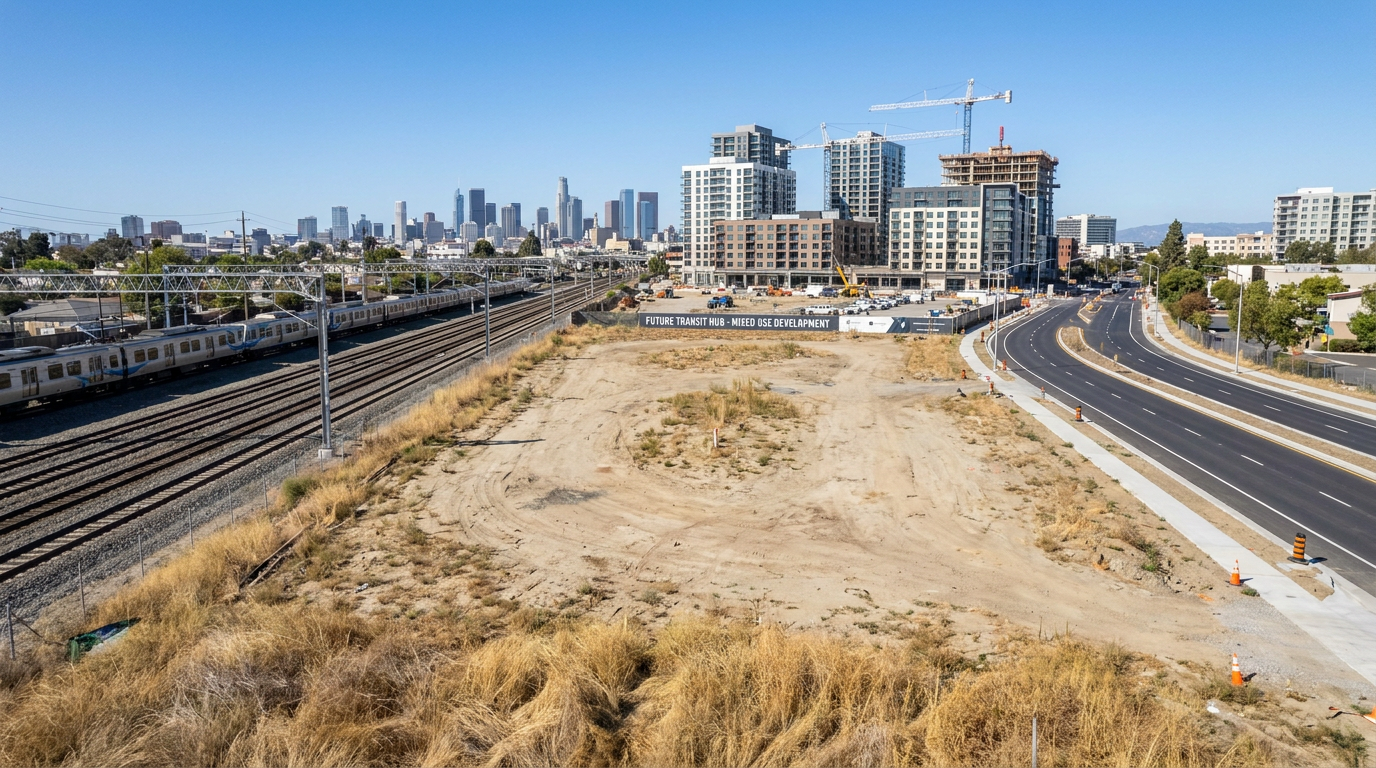
Infrastructure-led growth is one of the strongest themes in modern land banking. New transit lines, highway improvements, utility expansions, logistics corridors, and public institutions can all influence how land is perceived and used. A parcel that once seemed peripheral may become strategic once travel times improve or density policies shift around new stations and major corridors.
Transit-oriented development has become especially important in many markets. When municipalities encourage higher density near transit, land close to those nodes can gain new relevance. Investors often seek future development land in areas where public investment may unlock private value. The attraction is understandable, but the same caution applies: a nearby transit project alone does not guarantee profitable appreciation unless planning policy and local demand align.
Infrastructure can also create value indirectly by expanding employment and services. New industrial parks, hospitals, campuses, and commercial hubs can raise nearby housing demand, which in turn affects development land values. The beginner investor should learn to track these growth signals systematically, because they often reveal future opportunity earlier than simple price charts do.
Land Banking Versus Other Real Estate Investments
Before committing capital to land, it is worth comparing the strategy with other forms of real estate exposure. A rental property may offer current cash flow, leverage, and clearer valuation benchmarks, but it requires active management and has operating complexity. A REIT or diversified real estate fund can provide easier access, instant diversification, and greater liquidity, but with less control over asset selection and timing.
Farmland funds and other institutional-style land vehicles can also provide land-related exposure without requiring direct parcel level due diligence from the investor. For beginners, these alternatives may sometimes offer a better balance of risk, liquidity, and administrative simplicity. Land banking should be chosen because it fits your objectives and risk tolerance, not because it sounds more passive than rental ownership.
The right choice depends on your financial position and timeline. If you need income, direct land banking is usually a poor fit. If you want long term capital appreciation and can absorb years of low liquidity and ongoing carrying costs, it may deserve a place in your strategy. But the comparison should be honest. Opportunity cost matters.
What a Strong Beginner Deal Often Looks Like
A strong beginner land banking opportunity usually has a few consistent features. It is located in a market with credible growth indicators rather than vague optimism. It has straightforward legal access, understandable zoning, and no obvious fatal flaw in servicing or environmental conditions. Its holding costs are manageable relative to the investor’s income and reserves. Most importantly, the value thesis does not rely on fantasy level assumptions.
That does not mean perfect certainty. Land banking will always involve waiting and ambiguity. But there is a difference between uncertainty that is reasonable and uncertainty that is reckless. A disciplined beginner deal might involve land near a known expansion corridor with nearby development activity, visible infrastructure improvements, and planning documents that support long term growth, even if the exact timing remains uncertain.
By contrast, a weak beginner deal often depends on rumors, distant hope, or emotionally driven assumptions such as “the city will eventually get here.” Cities do not expand evenly, and some parcels remain overlooked for decades. The more your thesis depends on broad imagination rather than specific planning and market evidence, the less investable the parcel becomes.
Common Red Flags to Watch Closely
Several warning signs deserve immediate caution. Unclear road access is one of them. If a parcel looks attractive but relies on disputed, private, or poorly documented access, future marketability may be impaired. Another red flag is a major gap between the seller’s narrative and the municipality’s planning reality. If the marketing language talks about imminent development potential while official documents do not support that view, trust the documents.
High holding costs relative to your budget are another concern. A parcel that forces you into aggressive financing or thin liquidity reserves is dangerous, especially in a strategy with no regular income. Environmental uncertainty, drainage issues, servicing limitations, and complex title matters also warrant deeper investigation. Beginners should not attempt to price these risks casually.
Finally, be cautious when the only justification for buying is scarcity. Yes, land is finite. But scarce does not always mean valuable, and valuable does not always mean liquid. Scarcity only helps when the parcel has a use, a buyer base, and a realistic path to stronger future demand.
A Beginner Friendly Buying Process
If you are serious about pursuing land banking, structure your process carefully. Start by defining your target geography, budget, and holding period. Then create a short list of areas with visible growth drivers such as population expansion, infrastructure investment, employment growth, or planning support for future housing or mixed use development. Work from data outward, not from listings inward.
Once you identify a candidate parcel, gather municipal planning documents, tax information, title details, surveys, and any available environmental or servicing records. Speak with local planners, land use professionals, or experienced brokers who know the corridor. Verify assumptions directly whenever possible. This stage is where many weak deals reveal themselves, which is exactly why patience pays.
Before making an offer, build your underwriting model. Estimate purchase costs, taxes, legal fees, financing expenses, annual carrying costs, and a realistic sale horizon. Use conservative assumptions for appreciation and resale liquidity. If the numbers still make sense and the planning thesis remains intact, then and only then should price negotiation become the focal point.
The Role of Patience, Time Horizon, and Discipline
Land banking rewards patience more than activity. Many of the drivers that create value operate slowly through planning cycles, infrastructure budgeting, demographic trends, and regulatory approvals. Beginners who expect quick gains often become frustrated or make poor decisions by overpaying for “story” parcels that are years away from practical relevance.
A strong time horizon is therefore essential. You should be financially and psychologically prepared to hold through periods when little appears to be happening. During that time, your job is to monitor municipal changes, maintain your cost discipline, and reassess whether the original thesis is strengthening or weakening. Patience without monitoring is passive. Patience with analysis is strategy.
Discipline also means knowing when not to buy. Real wealth in land banking often comes less from finding magical hidden gems and more from avoiding flawed parcels that tie up capital for years. Saying no to weak opportunities is one of the most profitable habits a beginner can develop.
Final Thoughts: Land Banking as a Strategic Wealth Tool
Land banking can play a valuable role in a long term wealth plan, especially for investors who want exposure to real estate growth without the operational demands of income property ownership. But it is not simple just because the asset sits vacant. The true work happens before purchase, in the research, planning review, cost modeling, and realistic assessment of future demand.
The most successful beginner mindset is cautious optimism. Be open to opportunity, but insist on evidence. Study zoning, official plans, access, servicing, taxes, financing, and policy environment with the same seriousness you would apply to any major capital decision. Understand that returns usually depend on appreciation, not monthly cash flow, and that carrying costs can erode gains if the thesis takes too long to play out.
If you approach land banking with patience, local knowledge, and conservative underwriting, it can become more than a speculative idea. It can become a strategic way to participate in future growth. The key is not chasing any vacant parcel that seems affordable. The key is identifying land where planning reality, market demand, and financial endurance align well enough to turn time into value.
Quick Reference Checklist for Beginners
-
Define your objective clearly. Decide whether you are investing for long term appreciation, future development optionality, or strategic exposure to a specific growth corridor. Without a clear objective, it becomes difficult to judge whether a parcel truly fits your plan.
-
Review official plan and zoning documents before focusing on asking price. Confirm what is permitted today and what future land use direction the municipality signals. This is foundational to the entire investment thesis.
-
Verify legal access, servicing context, and physical constraints. A parcel with weak access or major servicing obstacles may look cheap for good reason. Always assess practicality alongside location.
-
Estimate all carrying costs conservatively. Include property taxes, financing, legal fees, acquisition taxes, due diligence expenses, and any local vacancy or speculation related considerations that may apply in your jurisdiction.
-
Study nearby land transactions and real market demand. Focus on comparable parcels, active builder interest, and local development patterns rather than broad assumptions about city growth.
-
Plan for illiquidity. Assume selling may take longer than expected and that buyer demand may be narrower than it is for finished residential property. Build enough financial flexibility to hold through slow periods.
-
Define the future buyer before you purchase. Whether the likely exit is to a developer, another investor, or an end user, your parcel should make sense to that audience based on size, location, access, and planning context.
-
Use professionals when the complexity rises. Lawyers, planners, surveyors, and experienced land brokers can help prevent expensive mistakes. Expert input is often far cheaper than fixing a bad acquisition.
Land banking is not about buying dirt. It is about buying future possibility with discipline, patience, and a clear understanding of risk.


No Comment! Be the first one.