



Waterfront real estate occupies a rare position in the investment landscape. It is part hard asset, part lifestyle product, and part status symbol. For ambitious buyers, that combination is exactly what makes the category compelling. A well-selected waterfront property can deliver a level of personal enjoyment that few other investments can match, while also benefiting from structural scarcity, prestige-driven demand, and long-term pricing power in the right market.
Table Of Content
- Why Waterfront Real Estate Continues to Attract Luxury Investors
- The Investment Logic Behind Waterfront Pricing Power
- Not All Waterfront Is the Same: Understanding the Major Asset Types
- Oceanfront Properties
- Lakefront Properties
- Riverfront and Marina-Adjacent Properties
- Luxury Lifestyle and Investment Performance: Why the Combination Matters
- What the Market Is Telling Us Right Now
- Climate Risk Has Moved to the Center of Waterfront Underwriting
- How to Evaluate a Waterfront Property Like an Investor
- The Rental Income Question: Opportunity With Important Limits
- Common Misconceptions Investors Should Avoid
- Financing, Insurance, and the True Cost of Ownership
- What Makes a Waterfront Property a Strong Long-Term Hold
- Final Thoughts: Buy Prestige, But Underwrite Precision
That said, waterfront investing is often misunderstood. The presence of water alone does not make a property a superior investment. In luxury real estate, the strongest outcomes usually come from disciplined underwriting, sharp local market knowledge, and a clear view of risks that can erode returns over time. A lakefront retreat with year-round access and resilient infrastructure may prove more durable than an exposed oceanfront home in a high-risk storm corridor, even if the latter commands more attention at first glance.
Waterfront real estate is a hybrid investment that combines scarcity-driven pricing power with lifestyle-driven demand, which is why the most sophisticated investors treat it differently from typical residential purchases. Because shoreline inventory is fixed, well-positioned properties benefit from long-term scarcity premiums that new construction cannot replicate elsewhere. Lifestyle utility, including privacy, boating access, and entertaining space, sustains demand even when financing conditions tighten, since owners often value personal use as much as financial return. A third driver is differentiation: a property with legal frontage, protected views, and deep-water dock access has few true substitutes, which supports pricing power over time. Sophisticated investors weigh these strengths against appreciation potential, liquidity, maintenance costs, insurance complexity, regulatory constraints, and climate resilience with equal seriousness. In other words, the modern waterfront investor is not simply buying scenery. They are buying a specific location, a specific risk profile, and a specific long-term thesis.
This guide explores how luxury waterfront real estate creates opportunity, where the value actually comes from, what risks deserve close attention, and how to evaluate the category with the precision it demands. For investors who want both prestige and performance, the right waterfront purchase can be a standout asset. The key is knowing how to separate a beautiful property from a strategically sound one.
Investment takeaway: The smartest waterfront strategy today is not to buy any home by the water. It is to buy the right waterfront asset in the right micro-market, with the right resilience profile, at the right basis.
Why Waterfront Real Estate Continues to Attract Luxury Investors
Luxury markets have always rewarded what is difficult to replicate. Waterfront real estate fits that principle perfectly because shoreline inventory is finite. A city can densify. A neighborhood can expand. A building can be renovated or replaced. What cannot be newly manufactured is a prime stretch of shoreline with direct access, unobstructed views, and enduring desirability. That scarcity is one of the central reasons waterfront properties often maintain strong luxury appeal across market cycles.
Research has consistently shown that waterfront homes command a meaningful premium relative to non-waterfront properties, though the size of that premium varies by market, property type, and timing. Zillow’s waterfront research found that U.S. waterfront homes historically sold at a major premium versus non-waterfront homes, with the national premium in its analysis reaching more than double the value of homes overall in 2014 before fluctuating over time. For investors, that does not guarantee automatic appreciation, but it does confirm a consistent market reality: buyers are often willing to pay materially more for direct access to water and the lifestyle attached to it.
Luxury demand also tends to be less purely transactional in this segment. Buyers are often motivated by privacy, boating access, entertaining potential, family legacy, and the emotional pull of a rare location. That matters because emotionally compelling assets can retain demand even when financing conditions become tighter. In trophy markets where buyer pools are cash-rich and internationally mobile, waterfront properties may hold pricing strength longer than broader market averages suggest.
Recent luxury market reporting from firms such as Knight Frank and Forbes Global Properties has reinforced this point. Waterfront remains one of the most demanded segments of high-end real estate, especially where inventory is constrained and buyer demand is driven by lifestyle. In practical terms, this means top-tier waterfront homes are often evaluated not only as residences, but also as long-duration stores of value with prestige characteristics.
The Investment Logic Behind Waterfront Pricing Power
To understand waterfront investment potential, it is useful to look beyond aesthetics and focus on what supports value over time. The first driver is scarcity premium. Because shoreline supply is fixed, exceptional parcels can become increasingly valuable as surrounding areas mature, infrastructure improves, and affluent demand deepens. Scarcity is especially powerful in markets where zoning restricts new development or where lot sizes, dock rights, and view corridors are heavily protected.
The second driver is lifestyle utility. A waterfront property is rarely purchased for shelter alone. It offers outdoor recreation, private entertaining, wellness benefits, visual tranquility, and in many cases an identity that aligns with high-net-worth living. That lifestyle component broadens the value proposition. The owner may use the property personally, hold it as a second home, lease it selectively, or position it as a legacy asset for family use over generations.
The third driver is differentiation within the luxury market. Inland luxury homes may compete with numerous alternatives that offer similar square footage, design quality, and neighborhood positioning. A waterfront property with legal frontage, protected views, and deep-water dock access may have very few real substitutes. When substitution risk is low, pricing power generally improves.
However, none of these strengths eliminate the need for financial discipline. Waterfront properties often produce lower cash yield than investors initially expect because acquisition costs, maintenance demands, insurance expenses, and seasonality can be substantial. This is why many buyers treat waterfront more as an appreciation and capital preservation play than a pure cap rate investment. The strongest returns often come from buying exceptional assets in resilient locations and holding them through multiple market phases rather than trying to maximize short-term income alone.
Not All Waterfront Is the Same: Understanding the Major Asset Types
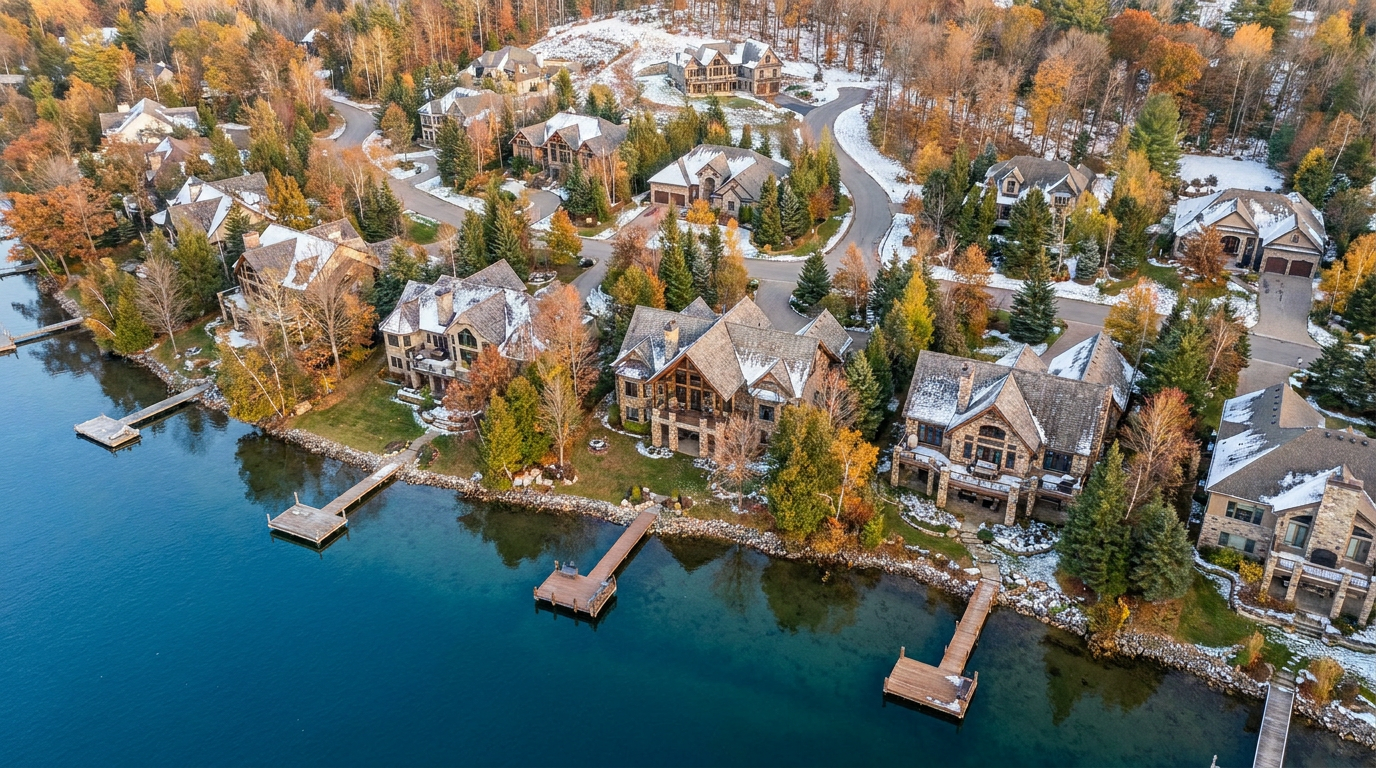
One of the most common mistakes in this category is treating all waterfront as one uniform investment class. In reality, oceanfront, lakefront, riverfront, bayfront, canal, and marina-adjacent properties can behave very differently. Each has its own demand profile, maintenance burden, regulatory framework, and climate exposure. Investors who fail to appreciate those differences often misprice risk.
Oceanfront Properties
Oceanfront real estate carries some of the strongest prestige value in global luxury markets. It offers dramatic views, direct beach access in select cases, and a trophy quality that appeals to status-driven buyers. In prime destinations, this segment can attract international capital and outperform broader market sentiment because scarcity and visibility are so powerful. For investors seeking iconic assets, oceanfront is often the highest-profile category.
At the same time, oceanfront properties usually require the most rigorous climate and insurance analysis. Exposure to storm surge, saltwater corrosion, shoreline erosion, and stricter building requirements can materially increase operating costs. Maintenance schedules are often more intensive, and the pool of lenders or insurers may narrow in higher-risk zones. Oceanfront can be exceptional, but it demands a premium level of diligence.
Lakefront Properties
Lakefront assets frequently offer a more balanced mix of lifestyle and risk. In well-serviced four-season markets, they can support both personal use and strong second-home demand. Investors often find lakefront particularly attractive when properties have reliable year-round access, modern utilities, and a broad appeal that extends beyond summer occupancy. These assets may be less vulnerable to the extreme exposure associated with open-coast locations, although flood, ice, and drainage issues still matter.
Lakefront investment performance can vary sharply based on water quality, recreational use, local tourism depth, and the exclusivity of the shoreline. A premium lake with strict development controls may behave more like a trophy market, while a secondary recreational lake may offer lower entry cost and better rental yield potential. The distinction is critical because it shapes both exit strategy and holding expectations.
Riverfront and Marina-Adjacent Properties
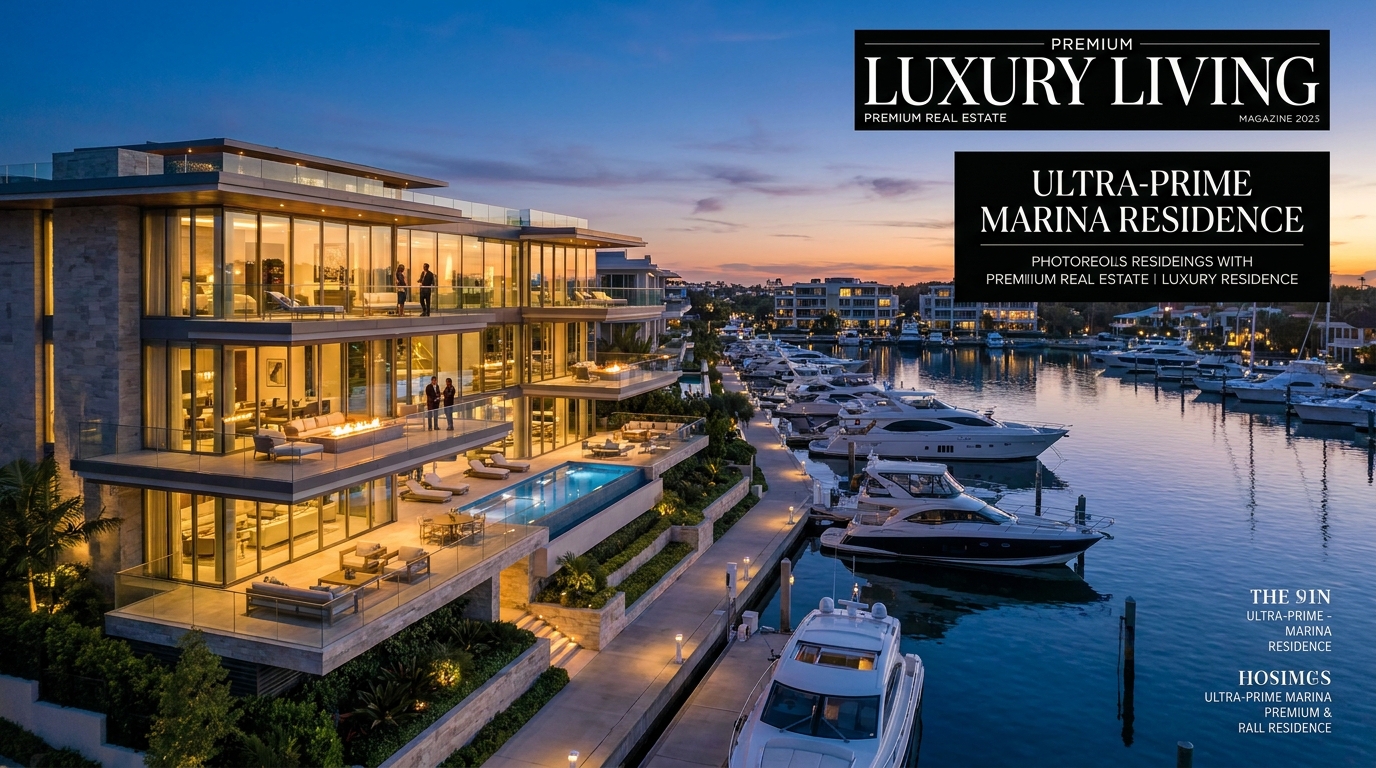
Riverfront homes and marina-oriented residences can create a compelling middle ground between luxury positioning and practical access. In urban or near-urban settings, riverfront living often appeals to buyers who want water views without fully remote second-home dynamics. Marina properties can attract boating enthusiasts and investors who value convenience, walkability, and service infrastructure.
These asset types should be analyzed with attention to navigability, water level variability, legal dock rights, and surrounding commercial activity. A visually attractive property without meaningful access rights may underperform a less dramatic property with fully protected marina privileges. Investors should remember that the economics of waterfront are often defined more by functional access than by photographs alone.
Luxury Lifestyle and Investment Performance: Why the Combination Matters
The strongest waterfront opportunities tend to sit where luxury lifestyle demand and investment fundamentals reinforce each other. This is important because some assets perform well financially but offer little emotional resonance, while others create emotional excitement yet struggle to justify their carrying costs. Waterfront stands out when both dimensions align.
Consider what drives buyer competition in this segment. Privacy matters. Entertaining capacity matters. Dock access matters. Year-round usability matters. So does the quality of the surrounding community, from dining and golf to marinas, airports, and concierge-level services. Luxury waterfront buyers are not simply paying for square footage. They are paying for a seamless experience, and properties that deliver that experience consistently tend to attract stronger bids and broader demand.
From an investment perspective, lifestyle value also supports holding confidence. An owner who uses the property personally may tolerate lower short-term yield because the asset provides direct utility in addition to financial potential. This can reduce pressure to sell in weaker market periods. Over time, that owner behavior can support price resilience in premium waterfront enclaves, especially when supply remains constrained.
There is also a branding effect. Trophy waterfront assets occupy a unique place in the luxury ecosystem because they signal permanence, access, and social positioning. In the highest tier of the market, that symbolic value matters. While investors should never pay any price solely for prestige, it is worth recognizing that status-supported demand can influence liquidity and long-term desirability in ways conventional valuation models do not fully capture.
What the Market Is Telling Us Right Now
The current waterfront investment story is more selective than in previous cycles. Demand remains robust in structurally constrained luxury markets, but buyers are increasingly discriminating about risk, resilience, and total cost of ownership. The market is no longer rewarding every property with a shoreline address equally. It is rewarding assets that combine scarcity with practical defensibility.
One major trend is the growing preference for turnkey, resilient homes. Buyers are showing more interest in properties with upgraded drainage, storm-hardening features, elevated systems, modern foundations, and durable materials that reduce future capital expenditure. In a premium segment where convenience matters, a home that has already addressed key resilience issues often commands stronger attention than a similarly located property that still requires major adaptation work.
Another important trend is the reevaluation of risk-adjusted opportunity across different waterfront types. Some investors are looking more closely at lakefront and riverfront markets that offer lower exposure profiles than highly storm-prone coastal locations. Others continue to pursue ultra-prime oceanfront holdings, but do so with a sharper focus on engineering quality, floodplain positioning, and insurance viability. The result is a more sophisticated market in which location quality and risk class are increasingly inseparable.
Luxury reporting also suggests that affluent buyers are viewing premier waterfront real estate less as a pure income asset and more as a long-duration store of value. That framing matters because it shifts the conversation from simple yield metrics toward durability, prestige, and replacement scarcity. For investors with a long horizon, this perspective can be rational, provided the property has been underwritten with realistic assumptions about climate, maintenance, and resale demand.
Climate Risk Has Moved to the Center of Waterfront Underwriting
No serious discussion of waterfront investing is complete without addressing climate risk. Public institutions including CMHC and the Bank of Canada have made it clear that climate-related physical risks are becoming increasingly relevant to housing finance, insurance, operating costs, and asset values. CMHC has stated that property-level residential flooding is occurring more frequently across Canada, and that catastrophe risk insurance plays an important role in housing market stability. For waterfront investors, that is not a theoretical point. It is an underwriting reality.
The Bank of Canada has also warned that climate-related physical risks can raise operating costs, input costs, insurance premiums, and direct damage to assets. In practical terms, that means investors must incorporate more than purchase price and projected appreciation into their models. They must understand floodplain mapping, erosion risk, changing weather patterns, setbacks, infrastructure vulnerability, and insurer appetite for the specific location and structure under review.
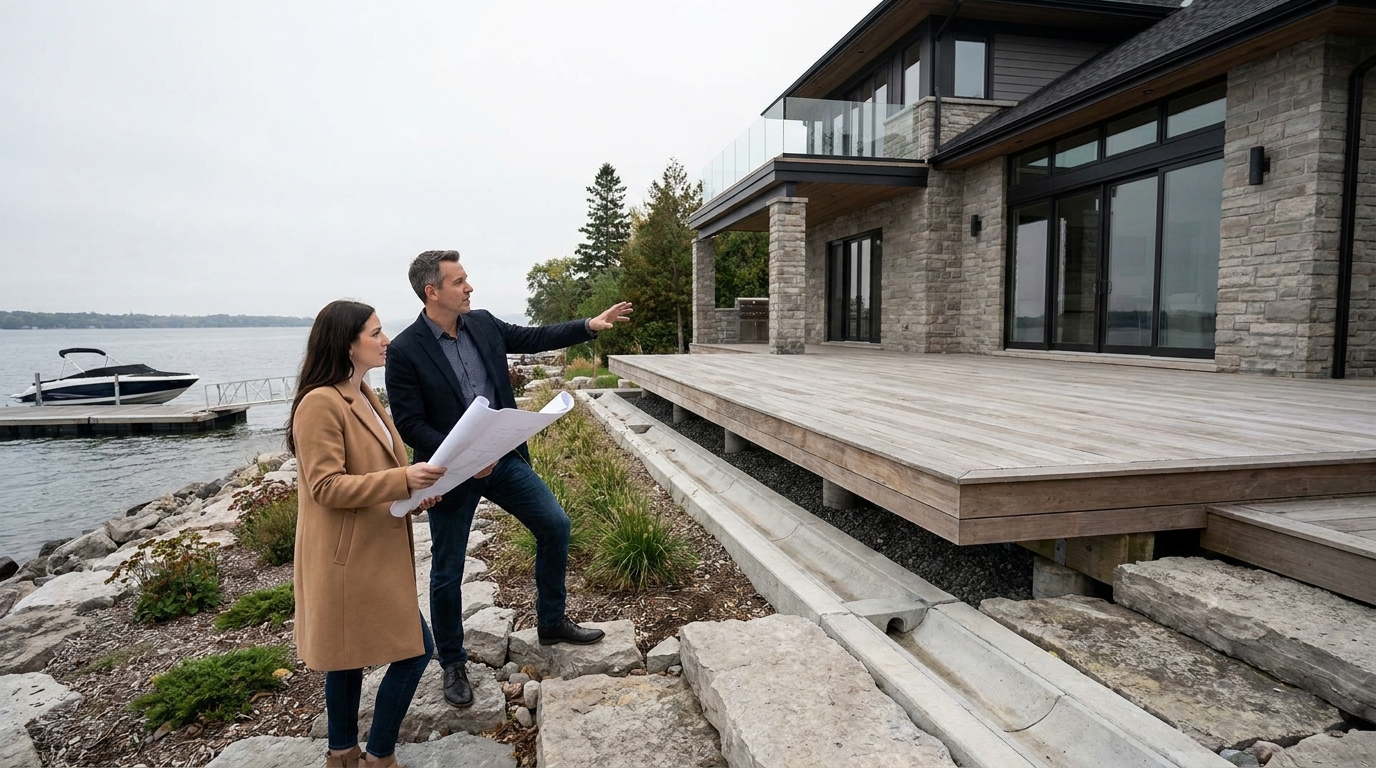
This does not mean waterfront investing has become unattractive. It means that quality has become more technical. A well-engineered waterfront home with elevated living systems, strong drainage, quality shoreline protection, durable materials, and favorable site conditions may offer a far stronger risk-adjusted proposition than a more glamorous property in a vulnerable zone. Today, resilience is not just a defensive feature. It is part of premium value.
Investors should also recognize that climate risk can affect liquidity. If insurance becomes harder to obtain, if lenders tighten standards, or if buyers become more cautious about exposed locations, resale demand may narrow. The best strategy is to anticipate these issues before acquisition rather than reacting to them after closing. Waterfront investing rewards foresight, and climate due diligence is now central to that discipline.
How to Evaluate a Waterfront Property Like an Investor
A luxury waterfront purchase should begin with a micro-market analysis, not a view from the deck. National housing data can provide context, but waterfront pricing is highly local. Two homes on the same body of water can perform very differently depending on shoreline quality, legal access, privacy, depth, dock rights, year-round livability, and municipal restrictions. Investors who rely on broad market averages risk overlooking the factors that actually drive value.
Start with the basics of physical and legal usability. Confirm legal frontage, riparian rights where relevant, dock permits, depth for boating, seasonal water level patterns, and setback requirements. Examine whether the property’s access is direct, shared, or merely visual. A beautiful view without practical access may support lifestyle appeal, but it may not deserve the same valuation multiple as a property with protected water use rights.
Next, assess the infrastructure that supports long-term ownership. Review drainage systems, retaining walls, shoreline stabilization, foundation condition, septic or utility capacity, road access, winter usability, and any recent resilience retrofits. Waterfront ownership often exposes weaknesses faster than inland ownership does. Deferred maintenance near water tends to become expensive quickly, and investors should budget accordingly.
Then move to income and exit considerations. If the property may be rented, analyze local seasonality, occupancy trends, nightly rate potential, management fees, and short-term rental regulations. If the property is more likely to be a long-term hold or personal-use asset, focus on buyer demographics, replacement scarcity, and historical resale liquidity. Different waterfront assets justify different strategies, but every strategy should be explicit from day one.
The following framework is useful when screening opportunities:
- Location quality: Evaluate the prestige, accessibility, and long-term desirability of the specific shoreline and surrounding community.
- Water utility: Measure actual access, dock capability, navigability, privacy, and frontage quality rather than relying on marketing language.
- Risk class: Review floodplain maps, erosion exposure, storm history, and likely future insurance conditions.
- Holding costs: Model taxes, maintenance, dock upkeep, landscaping, security, utilities, and specialized repairs realistically.
- Exit profile: Consider who the likely future buyer is and whether the asset will remain attractive under evolving climate and regulatory standards.
The Rental Income Question: Opportunity With Important Limits
Many investors are drawn to waterfront properties because of the potential to offset carrying costs through rental income. In some markets, that can work well. Luxury vacation demand is often strongest around water, particularly where boating, beaches, ski access, golf, or seasonal tourism create a broad visitor economy. Premium nightly rates can be achievable, and the property’s visual appeal can enhance marketability.
Yet rental performance should never be assumed. Seasonality can sharply reduce annual occupancy, and management expenses can be substantial in remote or service-intensive locations. High-end renters expect immaculate upkeep, fast response times, hotel-like amenities, and frictionless arrival experiences. Meeting those expectations requires real operational infrastructure, whether through a professional manager or a strong in-house system.
Regulation is another critical variable. Short-term rental rules can change quickly, especially in areas balancing tourism demand with local housing pressures. Licensing caps, occupancy limits, taxation, and neighborhood restrictions can all reduce net yield. Investors should verify what is permitted today and consider how policy risk could affect future income assumptions.
Ultimately, waterfront rental economics often come down to a tradeoff between cap rate and appreciation. Some secondary markets may offer better cash flow but less trophy appeal. Some ultra-prime markets may produce modest income yet exceptional long-term desirability. The right choice depends on the investor’s objective, but clarity is essential. A waterfront property should be purchased for the strategy it truly supports, not the strategy one hopes it will support.
Common Misconceptions Investors Should Avoid
Waterfront real estate carries a certain mythology, and that mythology can distort decision-making. One common misconception is that waterfront properties always outperform inland homes. The truth is more selective. Returns vary significantly by geography, asset type, regulatory environment, and climate exposure. Some waterfront properties appreciate dramatically over time, while others struggle under high carrying costs or constrained buyer pools.
Another misconception is that all waterfront means oceanfront. In reality, the economics of a lake cottage, a riverfront condominium, a marina residence, and an exposed coastal estate are fundamentally different. Each category has different maintenance realities, different rental patterns, and different resale audiences. Treating them as interchangeable is a costly analytical mistake.
Investors also often assume that scenic views automatically translate into resale strength. Views matter, but functionality matters more than many realize. Access, legal frontage, protected docks, year-round roads, and flood resilience may influence value more directly than aesthetics alone. A less dramatic but better positioned property can outperform a spectacular home with weak practical fundamentals.
Finally, there is the belief that rental income will absorb all the extra costs of ownership. In many cases, it will not. Management fees, repairs, insurance, vacancy, furnishing standards, and marketing expenses can significantly reduce net income. Waterfront investments can be highly rewarding, but they are not passive by default. They require active strategy and disciplined oversight.
Financing, Insurance, and the True Cost of Ownership
Luxury investors often focus on acquisition price and expected upside, but the durability of a waterfront thesis depends just as much on financing terms and annual carrying costs. Insurance underwriting has become especially important. In higher-risk areas, premiums can rise meaningfully, exclusions may increase, and insurer availability may tighten. This affects not only annual expense but also future marketability, since the next buyer will face the same underwriting environment.
Lenders are paying closer attention as well. Properties in vulnerable flood or storm zones may require additional documentation, reserves, or borrower strength. Some markets remain very liquid for cash buyers, but financed transactions can become more complex when risk factors are elevated. For investors, this means that financing should be considered part of the asset’s long-term competitiveness, not just a closing detail.
Maintenance should also be modeled conservatively. Salt air, moisture, wind exposure, dock wear, landscaping demands, and mechanical system stress all tend to increase ongoing costs. A waterfront property with poor drainage or aging shoreline protection can quickly move from desirable to capital-intensive. Premium assets deserve premium maintenance, and wise investors budget for that reality from the outset.
Before closing, it is worth building a full ownership model that includes taxes, utilities, staffing or management, insurance, capital reserve assumptions, seasonal upkeep, and anticipated resilience upgrades. The goal is not to avoid cost. The goal is to ensure the cost structure is justified by the asset’s strategic value, use case, and exit profile.
What Makes a Waterfront Property a Strong Long-Term Hold
The best long-term waterfront investments usually share a few defining characteristics. They sit in markets with durable demand drivers such as proximity to wealth centers, easy access from major cities, strong recreational appeal, and limited competing inventory. They offer practical functionality such as reliable access, protected views, quality frontage, and modernized infrastructure. And they are positioned to remain relevant as buyer expectations evolve around sustainability and resilience.
Strong waterfront assets also tend to have a broad luxury audience. A property that appeals only to a narrow niche may produce a dramatic first impression, but narrower appeal can limit liquidity at resale. By contrast, a home that balances privacy, design quality, waterfront usability, and manageable risk often attracts a deeper buyer pool. In investment terms, broad desirability is a powerful form of downside protection.
It is equally important to think in terms of future-proofing. Investors should ask whether the property will still be viewed as competitive ten years from now. Will its access rights remain clear. Will its infrastructure still meet buyer expectations. Will its climate resilience profile support insurance and financing. Waterfront is a long-duration asset class, and the best acquisitions are those that remain compelling under stricter future standards, not just current ones.
For many ambitious investors, this is why waterfront continues to deserve serious attention. When chosen well, these assets can combine emotional utility, scarcity, and enduring luxury demand in a way few property categories can replicate. The opportunity is real, but it belongs to investors who approach the segment with sophistication rather than assumption.
Final Thoughts: Buy Prestige, But Underwrite Precision
Waterfront real estate can be one of the most rewarding corners of the luxury market. It offers a rare blend of prestige, lifestyle enrichment, and long-term value potential that continues to attract high-net-worth buyers across North America and globally. Scarcity supports the category. Lifestyle demand elevates it. In the best cases, both forces work together to create durable pricing power over time.
Still, the modern market is clear about one thing: not every waterfront property deserves a premium investment thesis. Climate risk, insurance complexity, maintenance intensity, and regulatory constraints all matter more today than they did a decade ago. The old assumption that proximity to water automatically guarantees superior performance is too simplistic for current conditions.
The real opportunity lies in precision. Investors who identify the right micro-market, the right property type, the right resilience profile, and the right exit path can secure assets that function as both luxury residences and long-horizon stores of value. That is where waterfront becomes truly compelling. Not as a fantasy purchase, but as a strategic acquisition grounded in data, discipline, and selective ambition.
For buyers willing to do that work, waterfront real estate remains one of the most distinctive opportunities in luxury investing. The view may open the conversation, but the numbers, the risk controls, and the local intelligence are what justify the decision.



No Comment! Be the first one.