



Luxury urban districts are no longer a niche real estate product or a branding exercise built around a single tower. They are increasingly becoming a city-building strategy that combines premium housing, hospitality, office space, curated retail, public amenities, and mobility access into a concentrated urban environment. In the strongest examples, these districts do not simply sell square footage. They sell proximity, convenience, experience, identity, and a highly managed version of urban life that appeals to both residents and investors.
Table Of Content
- Why Luxury Urban Districts Are Gaining Strategic Importance
- From Prestige Towers to Premium Urbanism
- The Demand Side: Why Affluent Households Are Moving Back to Urban Cores
- Why Mixed Use Is the Core of the Luxury District Model
- Luxury Districts as Infrastructure Catalysts
- The Canadian Context: Growth, Pricing, and Feasibility
- Public Realm as a Value Engine
- The Sustainability Question
- Affordability, Inclusion, and the Risk of Urban Polarization
- What Future Cities Can Learn From Luxury Urban Districts
- A Vision for the Next Generation of Urban Growth
This shift matters because major metropolitan regions are under growing pressure to accommodate population growth, attract capital, and deliver a livable urban experience on limited land. Statistics Canada reported that Toronto’s census metropolitan area surpassed 7 million people and Vancouver’s exceeded 3 million in the 2024 subprovincial population estimates. Those numbers are not just demographic milestones. They signal an ongoing intensification of demand for central, accessible, amenity-rich neighborhoods where daily life can happen with less dependence on the car and more connection to jobs, culture, and services.
Luxury urban districts sit at the intersection of that demand and the realities of modern development economics. They often emerge in places where land is scarce, infrastructure is established, and city leaders want to channel growth toward transit-served areas. They can elevate the urban experience, generate significant tax revenue, and help a city compete globally for talent and investment. At the same time, they can intensify affordability pressure, reshape neighborhood identity, and raise important questions about who benefits from high-value urban transformation.
To understand why luxury urban districts are rising now, it is important to see them not as isolated enclaves but as systems embedded within larger urban trends. They reflect changing consumer expectations, evolving planning policy, the growing importance of sustainability, and the strategic need for cities to make more productive use of central land. They also reveal a deeper truth about the future of cities. The premium urban neighborhood is increasingly becoming a laboratory for how density, mobility, public realm, and capital come together in the next generation of metropolitan growth.
The real value of a luxury urban district is not only what is built inside the property line. It is how that district changes the surrounding city, influences infrastructure priorities, and redefines what people expect from urban living.
That is why the conversation has moved beyond luxury branding alone. What is emerging now is something closer to premium urbanism, a model in which exclusivity is paired with walkability, complete communities, wellness, sustainability, and high-quality shared spaces. In the best cases, these districts are not just expensive places to live. They are highly intentional urban environments that shape future development patterns far beyond their boundaries.
Why Luxury Urban Districts Are Gaining Strategic Importance
The rise of luxury urban districts is closely tied to the economics of growth in major metropolitan areas. As cities expand, the most accessible and amenity-rich land becomes more valuable. This pushes development toward places where infrastructure already exists and where higher density can support the cost of land acquisition, construction, and public realm upgrades. In that context, luxury uses often become a leading edge of redevelopment because they can absorb high costs more readily than lower-margin forms of housing or retail.
That dynamic is especially visible in Canadian markets. CMHC housing supply reporting shows that rising land prices are pushing apartment and condominium development farther from downtown cores in some cities. Yet central land remains strategically important because it offers proximity to employment clusters, major institutions, cultural assets, and transit. Luxury urban districts become one of the few development formats capable of unlocking that land at scale, particularly when paired with mixed-use programming and public investment.
For city builders, these districts offer several advantages. They can bring underused sites back into productive use, support higher property assessments, and create concentrated areas of economic activity. They can attract international capital, strengthen tourism, and encourage employers to locate near prestigious mixed-use hubs. They also have a symbolic function, projecting a message about the city’s ambition, design quality, and ability to deliver complex urban transformation.
Still, strategic importance should not be confused with automatic public benefit. A luxury district can create enormous value, but whether that value is broadly shared depends on planning policy, infrastructure delivery, housing mix, and the treatment of surrounding communities. The difference between a successful urban district and an exclusive enclave lies in governance as much as in architecture.
From Prestige Towers to Premium Urbanism
One of the biggest misconceptions about luxury development is that it is mainly about height, views, and expensive finishes. In reality, the strongest luxury urban districts are not defined by a single building type. They are defined by a complete urban proposition. This includes mixed-use density, fine-grained street activity, access to transit, quality landscape design, cultural programming, and a public realm that feels safe, elegant, and active throughout the day.
Transit-oriented development has become central to this shift. U.S. federal planning guidance commonly defines transit-oriented development as compact, mixed-use development within easy walking distance of transit stations, typically about one half-mile. The environmental and economic logic is straightforward. Concentrating jobs, housing, retail, and services around transit can reduce car dependence, support efficient land use, and create more walkable neighborhoods. In luxury districts, this principle adds a new layer to the premium offer. The resident is not just buying a home. The resident is buying frictionless access to the wider city.
That changes the nature of luxury itself. In previous eras, luxury residential development often emphasized privacy, gated access, and separation from everyday urban complexity. Today, high-end buyers and renters increasingly value curated urban immersion. They want a polished version of city life where groceries, dining, fitness, work, culture, and mobility are all within reach. As a result, the district matters as much as the dwelling unit. The neighborhood experience becomes part of the luxury product.
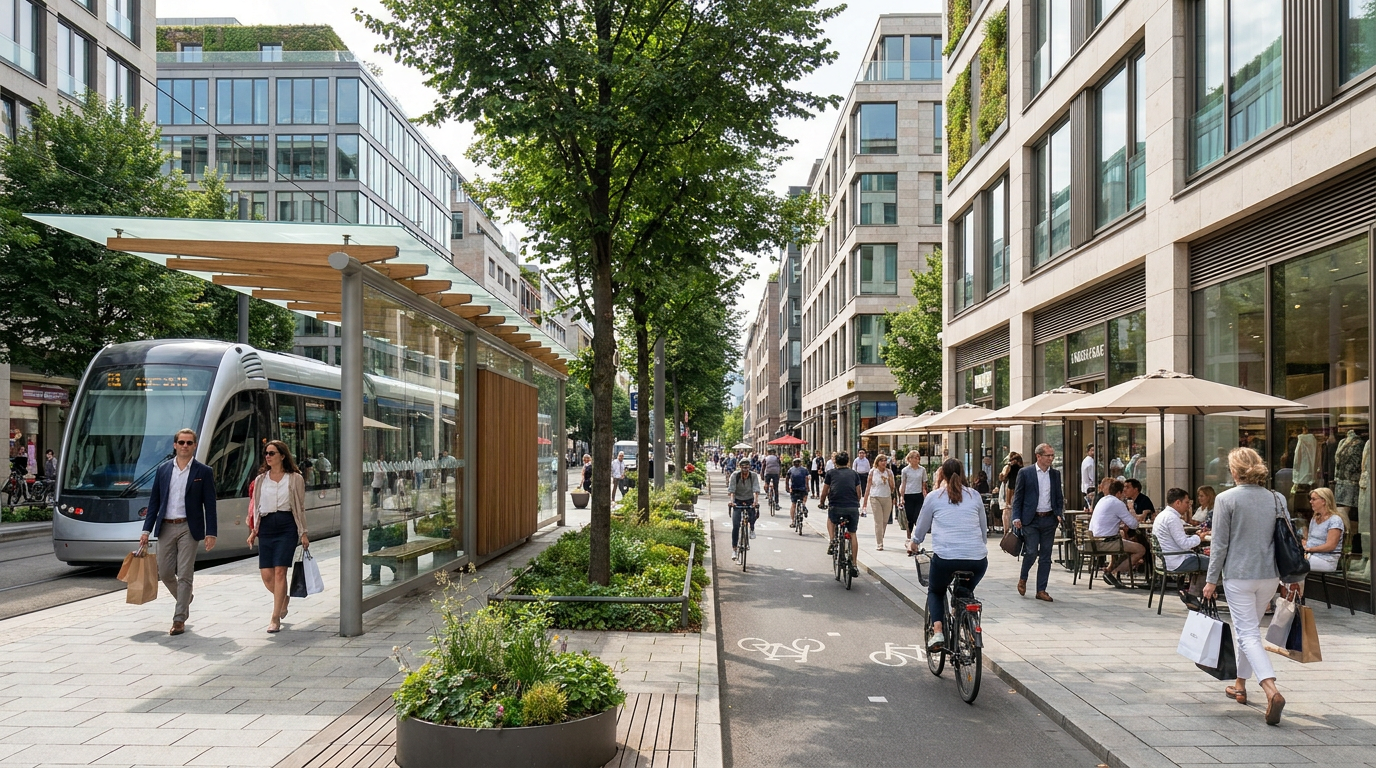
This is where the language of premium urbanism becomes useful. It captures the fact that exclusivity alone is no longer enough to justify long-term district value. The premium district of the future must also deliver livability, environmental credibility, and public-facing quality. It must feel connected rather than isolated, active rather than sterile, and durable rather than trend-driven. In many cases, the luxury district is succeeding not because it withdraws from the city, but because it offers a more highly resolved version of urban life.
Developers have recognized that streetscape, programming, and mobility now shape sales as much as interior design. A district with a strong public square, a direct transit connection, and a carefully managed retail mix can command a different kind of market power. It becomes a destination, not just an address. That distinction matters because destinations hold value more resiliently over time than isolated real estate products.
The Demand Side: Why Affluent Households Are Moving Back to Urban Cores
Research helps explain why luxury urban districts have gained so much momentum in downtown and near-downtown areas. An NBER working paper found that as the incomes of higher-income households rise, demand for neighborhoods with luxury urban amenities also rises. More affluent residents move downtown, redevelopment accelerates, and neighborhood composition changes over time. This pattern is not simply about status. It reflects a preference for urban convenience, social access, and lifestyle density that suburban formats often cannot replicate.
ULI’s work on high-end neighborhoods reinforces this point by describing them as in-town residential locations with high home values and apartment rents, generally lower density, more historic, and more walkable than many other urban areas. That is an important reminder that luxury districts do not always appear as clusters of brand-new skyscrapers. Some of the strongest premium urban environments are layered places where heritage fabric, adaptive reuse, and carefully inserted infill combine to create character and scarcity.
In Canada, this trend is particularly relevant because the largest metropolitan areas continue to absorb population growth and concentrate economic opportunity. Even though growth rates may moderate from recent peaks, the structural demand for central neighborhoods remains strong. Young professionals, globally mobile households, downsizers, and investors all place value on access to transit, employment, entertainment, and services. In that environment, the premium district becomes a high-demand urban format capable of attracting several buyer and tenant profiles at once.
There is also a psychological dimension to demand. In periods of uncertainty, well-located urban real estate can be seen as a store of value. Buyers may pay a premium not only for finishes or views, but for confidence in the district’s long-term relevance. A transit-served mixed-use neighborhood with strong amenities and civic investment often feels more durable than a purely speculative edge location. That perception reinforces pricing power and strengthens the district’s market identity.
Why Mixed Use Is the Core of the Luxury District Model
Luxury urban districts work best when they are built as ecosystems rather than as monocultures. Premium housing on its own can create value, but it rarely sustains the level of vibrancy and resilience needed for long-term district success. Mixed-use programming changes that. When residential, office, hotel, retail, dining, wellness, and entertainment uses are combined, the district gains multiple demand drivers and a fuller daily rhythm.
That rhythm is critical for placemaking. A district that is active only in the evening or only during office hours will struggle to create the perception of completeness that premium urban buyers increasingly expect. By contrast, a neighborhood with morning commuter activity, lunchtime foot traffic, afternoon retail, evening dining, and weekend leisure use feels alive and self-reinforcing. That sense of sustained activity is both an amenity and an economic asset.
Mixed-use design also gives developers and cities more flexibility over time. As market conditions shift, a district with diverse uses can adapt more effectively than a single-purpose development. If one segment softens, another may remain strong. This matters in a period when condo demand, financing conditions, and construction costs can move quickly. CMHC’s 2025 analysis of condominium apartment market risks in Toronto and Vancouver highlights the sensitivity of these markets to demand changes. A well-balanced district is better positioned to weather those shifts.
At the urban scale, mixed use supports better land productivity. It allows central sites to do more for the city by concentrating activity in places already served by infrastructure. It can reduce trip lengths, improve transit viability, and justify investment in streetscape, parks, and civic amenities. In this sense, luxury districts can become engines of intensification, not merely symbols of exclusivity.
Luxury Districts as Infrastructure Catalysts
One of the most important but underappreciated aspects of luxury urban districts is their relationship to infrastructure. High-value development often creates the financial and political conditions for major improvements to transit access, utilities, streets, public spaces, and community amenities. In some cases, these upgrades are directly funded through development charges, negotiated benefits, or partnerships. In others, the prospect of significant tax revenue and economic activity helps justify public investment that might otherwise be delayed.
From a city strategy perspective, this can be highly advantageous. Concentrating growth in central, transit-oriented locations allows municipalities to leverage existing infrastructure more efficiently than greenfield expansion. It can also support complete streets, pedestrian improvements, and district energy or sustainability initiatives that are more difficult to deliver in dispersed formats. When luxury districts are planned properly, they can become demonstration zones for higher standards in urban design and service delivery.
There is, however, a balance to be struck. Infrastructure should not be upgraded only where the highest-income residents or the highest-margin projects are located. If premium districts consistently receive better transit integration, better streetscape treatment, and better maintenance than surrounding neighborhoods, the city risks reinforcing inequality through the built environment. The strategic challenge is to use luxury-led investment as a catalyst for broader urban improvement rather than a mechanism for selective enhancement.
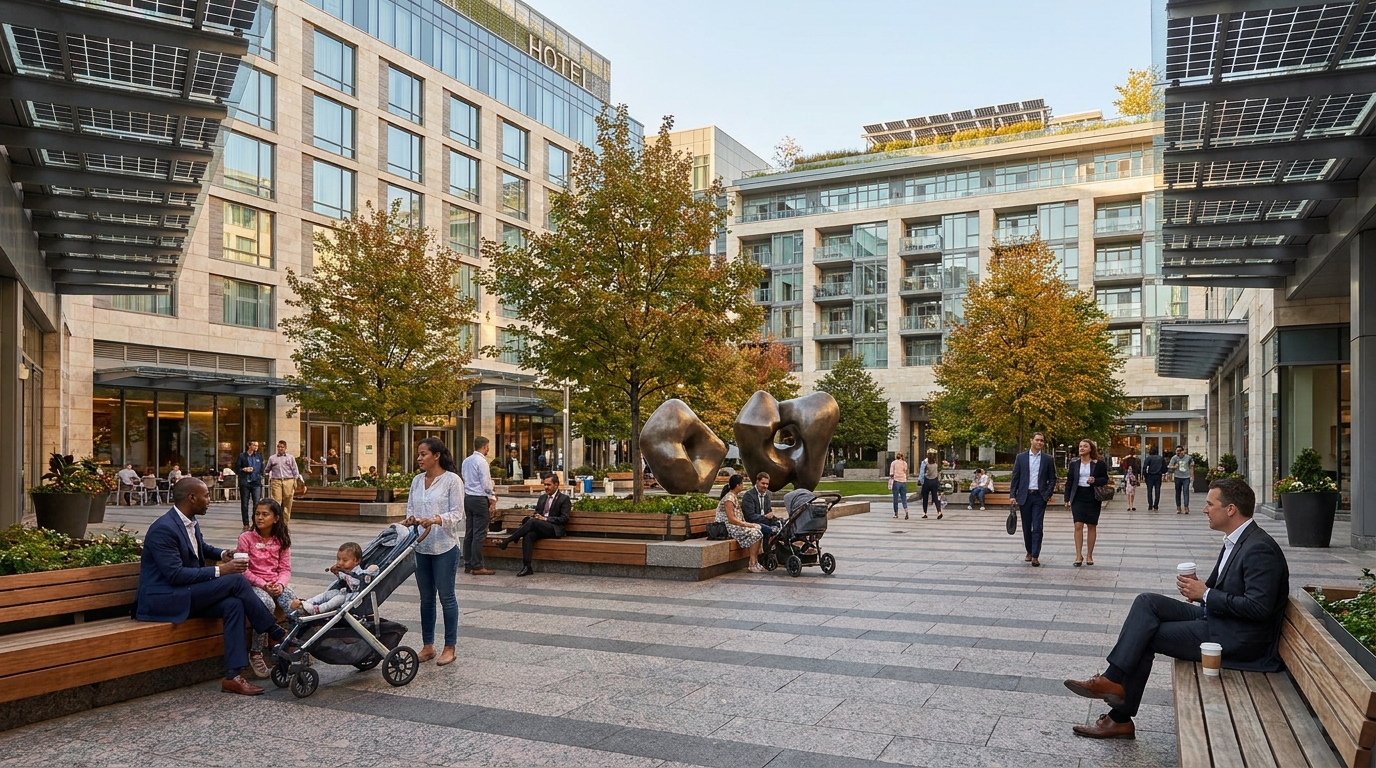
When that balance is achieved, the district can have spillover effects that extend well beyond its boundaries. Adjacent properties may redevelop, mobility patterns may shift, and nearby commercial corridors may strengthen. Over time, what began as a premium node can help anchor a larger area of urban regeneration. This is one reason luxury districts matter in future-city thinking. They can influence the geography of growth far more than their footprint suggests.
The Canadian Context: Growth, Pricing, and Feasibility
In Canada, the story of luxury urban districts cannot be separated from the realities of the condominium and apartment market. Condos remain one of the primary vehicles for delivering high-density urban housing, including premium product in core locations. Statistics Canada reported that new condominium prices were at or near record highs in several major census metropolitan areas in the second quarter of 2025, including Montréal, Ottawa, and Edmonton, while Toronto, Vancouver, and Victoria remained below earlier 2022 record highs. This pricing environment shows both the strength and complexity of urban demand.
On one hand, elevated pricing indicates that well-located urban housing still commands substantial value. On the other, cooling sales and slower construction in some markets suggest that demand cannot be taken for granted at every price point. Feasibility has become more challenging as construction costs, financing costs, and development timelines have increased. That means luxury districts must be planned with greater precision. Product mix, phasing, absorption, and use diversification all matter more than they did in a lower-cost environment.
The economics of land are especially important. As central land becomes more expensive, developers may be pushed toward larger, more ambitious schemes in order to justify acquisition and servicing costs. This can accelerate the creation of district-scale projects rather than stand-alone buildings. At the same time, it raises the stakes. If the market weakens or approvals take too long, a premium district can become exposed to serious financial risk. Luxury demand is strong, but it is not immune to macroeconomic conditions.
For policymakers, the implication is clear. If cities want central intensification and mixed-use district building, they need approval systems, infrastructure coordination, and zoning frameworks that align with development reality. Poor policy coordination can undermine even the most strategically located sites. Strong policy coordination can help transform a difficult urban parcel into a productive neighborhood that supports housing, jobs, and public benefit.
Public Realm as a Value Engine
One of the defining features of successful luxury urban districts is that they invest heavily in the public realm. This includes sidewalks, landscaping, lighting, seating, public art, plaza design, weather protection, and carefully managed interfaces between buildings and streets. These are not cosmetic extras. They are central to how value is created and sustained. In a premium district, the quality of space between buildings is often as important as the buildings themselves.
That is because affluent urban demand is increasingly experience-based. Buyers and tenants are paying for ease of movement, social visibility, aesthetic quality, and the comfort of everyday routines. A district that feels elegant, intuitive, and safe can command loyalty and pricing power in ways that a purely private luxury product cannot. The public realm becomes part of the operating logic of the district, not just a design layer.
Planning documents across North America increasingly emphasize pedestrian-oriented frontages, mixed-use density near transit, and walkable urban design. This aligns closely with what premium urban districts are trying to deliver. It also reveals a broader convergence between market demand and planning objectives. Cities want compact, transit-supportive growth. Luxury developers want environments that feel distinctive, convenient, and desirable. Public realm quality is where those interests often meet.
Of course, public realm excellence should not be reserved for premium districts alone. Yet it is often these projects that prove what is possible when design, management, and long-term investment align. The lesson for future cities is not that every neighborhood should become luxury-oriented. It is that every neighborhood benefits when streets, parks, and public interfaces are treated as essential urban infrastructure rather than leftover space.
The Sustainability Question
Luxury districts are increasingly marketed through the language of sustainability, wellness, and reduced-car living. In principle, this makes sense. Dense mixed-use development near transit can support lower transportation emissions, more efficient land use, and a lifestyle that depends less on long commutes. District-scale planning can also enable better stormwater management, green building systems, energy efficiency, and shared amenities that reduce resource duplication.
But sustainability should not be assumed simply because a project is expensive or well branded. Premium branding can easily mask environmental underperformance if actual building operations, mobility choices, and district infrastructure do not support the claims being made. A true sustainable luxury district needs measurable outcomes. It should support walking, cycling, and transit in real terms. It should perform well on energy and water use. It should create durable buildings and public spaces that age well rather than requiring constant cosmetic replacement.
The best examples of premium urbanism understand that environmental quality and market quality can reinforce one another. Residents increasingly value natural light, air quality, access to green space, and the ability to move through daily life without relying on a private vehicle for every trip. Those features are both sustainable and desirable. They strengthen the district’s long-term competitiveness while aligning with broader urban climate goals.
This is especially relevant for future-city planning because the next generation of growth cannot rely on outdated assumptions about mobility and land consumption. If luxury districts become test beds for better urban performance, they can help normalize a higher standard across the market. If they merely use sustainability as a marketing device, their long-term public value will be limited.
Affordability, Inclusion, and the Risk of Urban Polarization
No serious discussion of luxury urban districts can avoid the affordability question. High-end development can generate tax revenue, intensify central land use, and improve the public realm, but it can also increase surrounding land values and accelerate displacement pressure. If affordability policies are weak or absent, the benefits of premium district creation may be captured narrowly while long-standing residents and businesses face growing barriers to staying in place.
This is where many public debates become oversimplified. Luxury districts are not inherently harmful, but neither are they automatically inclusive. Their effects depend on the broader planning framework. Inclusionary housing policies, rental replacement rules, community benefits, transit investment, and protections for local businesses can all shape whether district growth contributes to a healthier urban fabric or to a more polarized one. The project alone does not determine the outcome. The governing system does.
There is also a broader symbolic issue. Cities that appear to build only for the top end of the market risk losing public trust, especially during housing shortages. Even if premium districts play a useful role in economic development, they need to exist within a visible and credible strategy for broader housing supply. That means luxury development should be understood as one component of urban growth, not the entire answer.
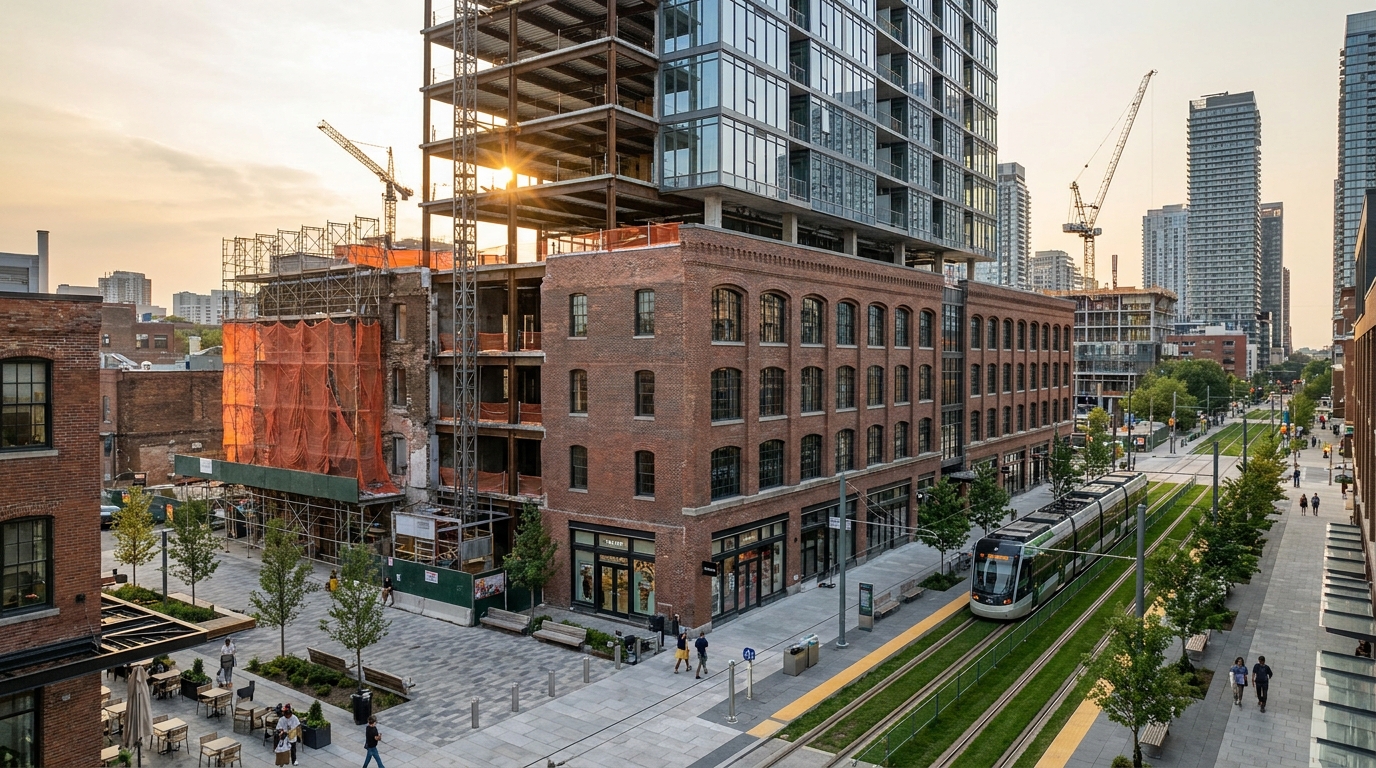
From a strategic perspective, the goal should be to harness the strengths of luxury district investment while mitigating its exclusionary effects. That means capturing value for public benefit, requiring a more complete housing ecosystem, and ensuring that district improvements connect outward rather than stopping at the edge of the premium zone. A future city cannot be truly successful if its best urbanism is available only to a narrow segment of the population.
What Future Cities Can Learn From Luxury Urban Districts
Luxury urban districts matter because they reveal where urban development is heading. They show that the market increasingly values walkability, mixed use, public space, and transit access alongside design quality and private amenity. They demonstrate that central land remains enormously strategic even as costs rise. And they illustrate how district-scale thinking can unlock more complex forms of city building than isolated parcels can achieve on their own.
There are several lessons future cities can draw from this model.
- First, the district is becoming the unit of competition. Cities no longer compete only through individual landmarks. They compete through complete neighborhoods that offer a coherent urban experience.
- Second, mobility is part of luxury. Transit access, walkability, and reduced dependence on cars are now premium features, not just planning ideals.
- Third, public realm quality is economic infrastructure. Well-designed streets and plazas are not ornamental. They shape value, safety, and long-term market resilience.
- Fourth, mixed use increases adaptability. Districts with diverse uses are better able to withstand market shifts and support around-the-clock vitality.
- Fifth, inclusion must be planned, not assumed. Without policy guardrails, premium growth can intensify inequality rather than strengthen the broader city.
These lessons apply far beyond luxury real estate. Mid-market development, transit corridor intensification, adaptive reuse strategies, and suburban retrofits can all benefit from the same principles of completeness, connectivity, and public-facing design. In that sense, the luxury district can serve as a useful prototype, even for places targeting very different demographics and price points.
The challenge for urban leaders is to separate the transferable urban logic from the exclusivity of the product. What makes many luxury districts successful is not simply that they are expensive. It is that they are integrated, curated, and strategically connected to the city around them. If planners can apply those principles more broadly, the benefits can extend far beyond premium enclaves.
A Vision for the Next Generation of Urban Growth
Looking ahead, luxury urban districts are likely to become even more important in major metropolitan areas where population growth, land scarcity, and global competition continue to intensify. Toronto, Vancouver, and Montréal will remain central to this conversation, but the underlying logic applies to any city trying to absorb growth while improving quality of life and strengthening economic performance. The premium district is not just a response to wealth. It is a response to urban complexity.
In practical terms, the most compelling districts of the future will be those that align market ambition with civic purpose. They will combine high-quality architecture with fine-grained walkability. They will pair residential density with employment and hospitality uses. They will treat public space as a core asset, not an afterthought. They will leverage transit access and reduce the need for routine car dependence. And they will be planned within a broader framework that addresses housing diversity, infrastructure equity, and neighborhood continuity.
That is the real opportunity in this trend. Luxury urban districts can help cities compete globally, but their deeper value lies in what they teach us about successful urban form. They show that people are willing to pay for convenience, beauty, access, and a sense of belonging within a well-structured neighborhood. Those are not niche aspirations. They are increasingly universal urban expectations.
If future cities are to grow sustainably and intelligently, they will need more than density alone. They will need complete communities that work economically, socially, and spatially. Luxury urban districts will not solve every urban challenge, and they should never be confused with a full housing strategy. But as a model of integrated development, they offer important insight into how cities can intensify without losing quality, how land can be used more productively, and how the next era of urban growth can be shaped with greater intention.
In the end, the rise of luxury urban districts is not merely a story about wealth. It is a story about how cities assign value to land, mobility, experience, and public life. It is a story about where growth goes, who benefits from it, and what kind of urban future we choose to build. For planners, developers, and civic leaders, that makes these districts far more than premium addresses. They are signals of the city to come.


No Comment! Be the first one.