


Economic zones are geographic areas where governments concentrate infrastructure investment, streamlined approvals, and coordinated land strategy in order to accelerate development that would otherwise stall. They are often discussed as if they are simple tax tools, but that framing is too narrow for the realities of modern city building. In practice, economic zones have become one of the most strategic ways to organize growth, coordinate public investment, and improve the feasibility of major development sites. For urban planners, housing agencies, infrastructure authorities, and private developers, the real value of a zone lies in its ability to bring certainty to places that would otherwise remain stalled by fragmented servicing, unclear approvals, or weak market confidence. When designed well, a zone does not merely attract capital. It changes the risk profile of land, turning marginal or underused sites into viable locations for mega developments, housing supply, and long-term urban growth.
Table Of Content
- What Economic Zones Really Mean in Modern Development
- Why Mega Developments Depend on Coordinated Growth Frameworks
- Canada’s Infrastructure and Housing Context Makes Economic Zones More Relevant
- The Real Drivers of Value Inside an Economic Zone
- Infrastructure Concentration
- Regulatory Certainty
- Servicing Capacity
- Coordinated Land Strategy
- How Economic Zones Affect Land Value, for Better and for Worse
- From Tax Incentives to Delivery Frameworks
- Housing Supply, Affordability, and the Role of Zone-Based Growth
- Governance Determines Whether Zones Deliver Broad Public Value
- What Planners and Developers Should Ask Before Advancing a Zone Strategy
- The Strategic Future of Economic Zones in North American Cities
- Conclusion
That matters most in the context of mega developments, where timing, scale, and infrastructure cost can determine whether a vision becomes a delivered community or an indefinitely deferred plan. Large sites require a level of coordination that ordinary parcel-by-parcel development rarely achieves on its own. Roads, utilities, transit, schools, parks, stormwater systems, and phasing strategies all need to align. Economic zones create a structured geography within which those decisions can be integrated, accelerated, and connected to measurable outcomes such as housing starts, job creation, serviced land supply, and long-term tax base growth.
Across North America, and especially in Canada, the concept is evolving. It no longer refers only to export processing, customs advantages, or industrial tax breaks. Today, zone-based strategies include innovation districts, transit-oriented growth areas, logistics corridors, federally influenced housing lands, and place-based infrastructure programs that unlock strategic development areas. The policy language may differ, but the underlying logic is consistent: focus public action in a defined geography so private investment can move faster and more productively. This shift is especially relevant in an era when housing affordability, infrastructure deficits, and urban growth management are colliding.
The strategic question is not whether economic zones can stimulate growth. The more important question is how they should be structured so growth is durable, equitable, and financially rational. A zone that offers incentives without servicing can disappoint. A zone that accelerates land speculation without affordability conditions can deepen housing stress. A zone that fast-tracks approvals but ignores schools, healthcare, and transit can create underperforming communities. The strongest zones are not incentive maps. They are delivery frameworks.
This article examines how economic zones influence mega developments and urban land value through a strategic lens. It looks at what these zones really are, why they matter for large-scale housing and mixed-use projects, how Canadian infrastructure and housing policy is reinforcing the model, and what planners and developers should watch when designing or participating in zone-led growth. For anyone engaged in city building, the lesson is clear: economic zones are most powerful when they coordinate infrastructure, certainty, and land strategy in a way that turns ambitious plans into buildable reality.

What Economic Zones Really Mean in Modern Development
The term economic zone can describe several different planning and policy structures. It may refer to enterprise zones, special economic zones, innovation districts, free trade areas, port-adjacent logistics clusters, or provincially designated growth corridors. In a traditional sense, many of these zones were associated with tax relief or trade facilitation. In the current North American development environment, however, their role has broadened considerably. They are increasingly used to combine land use direction, public investment, servicing commitments, and regulatory clarity within a specific geography.
This broader interpretation is important because most major development challenges are not solved by tax policy alone. Large urban expansion areas often struggle because utilities are undersized, roads are incomplete, transit is uncertain, environmental approvals are fragmented, and market participants do not know when density rights will translate into actual buildable capacity. A modern economic zone seeks to reduce these frictions. It signals that a government has identified a place as strategically important and is prepared to align approvals, infrastructure, and sometimes capital to accelerate delivery.
Research from the OECD reinforces this shift. Modern zone-based policy is no longer limited to narrow customs or manufacturing enclaves. It increasingly includes regulatory experimentation, regional restructuring, and the creation of fully serviced urban areas. That is a significant change for developers and planners because it means the zone itself becomes a mechanism for city shaping. It can support industrial clusters, mixed-use centers, housing growth, transit-oriented nodes, or major brownfield transformations depending on local objectives.
For the general public, a useful way to think about economic zones is this: they are places where governments deliberately reduce uncertainty and concentrate investment in order to make growth happen faster and more effectively. That does not guarantee success. Demand still matters. Execution still matters. Governance still matters. But a well-structured zone improves the conditions under which a difficult or strategic site can transition from concept to construction.
Economic zones work best when they are treated as delivery frameworks rather than simple incentive districts. The real advantage is not only what they offer on paper, but how they align infrastructure, approvals, and land economics in practice.
Why Mega Developments Depend on Coordinated Growth Frameworks
Mega developments are unusually sensitive to timing and coordination. A small infill site may be able to proceed with limited off-site investment and a relatively contained entitlement process. A large master-planned district cannot. It often depends on trunk infrastructure, transportation upgrades, phased utility capacity, community services, and a sequenced release of land. That complexity is exactly why economic zones can be so influential. They create a governance and investment structure large enough to match the scale of the project.
In practical terms, this means a zone can shorten entitlement timelines, reduce infrastructure risk, and improve financing confidence. Lenders, institutional investors, and development partners are more likely to support a major site when they can see a credible framework for roads, water, wastewater, transit, and public amenities. Certainty is not just a planning benefit. It is a financial asset. In many cases, the difference between a stalled mega development and a viable one comes down to whether those enabling conditions are clearly organized and publicly backed.
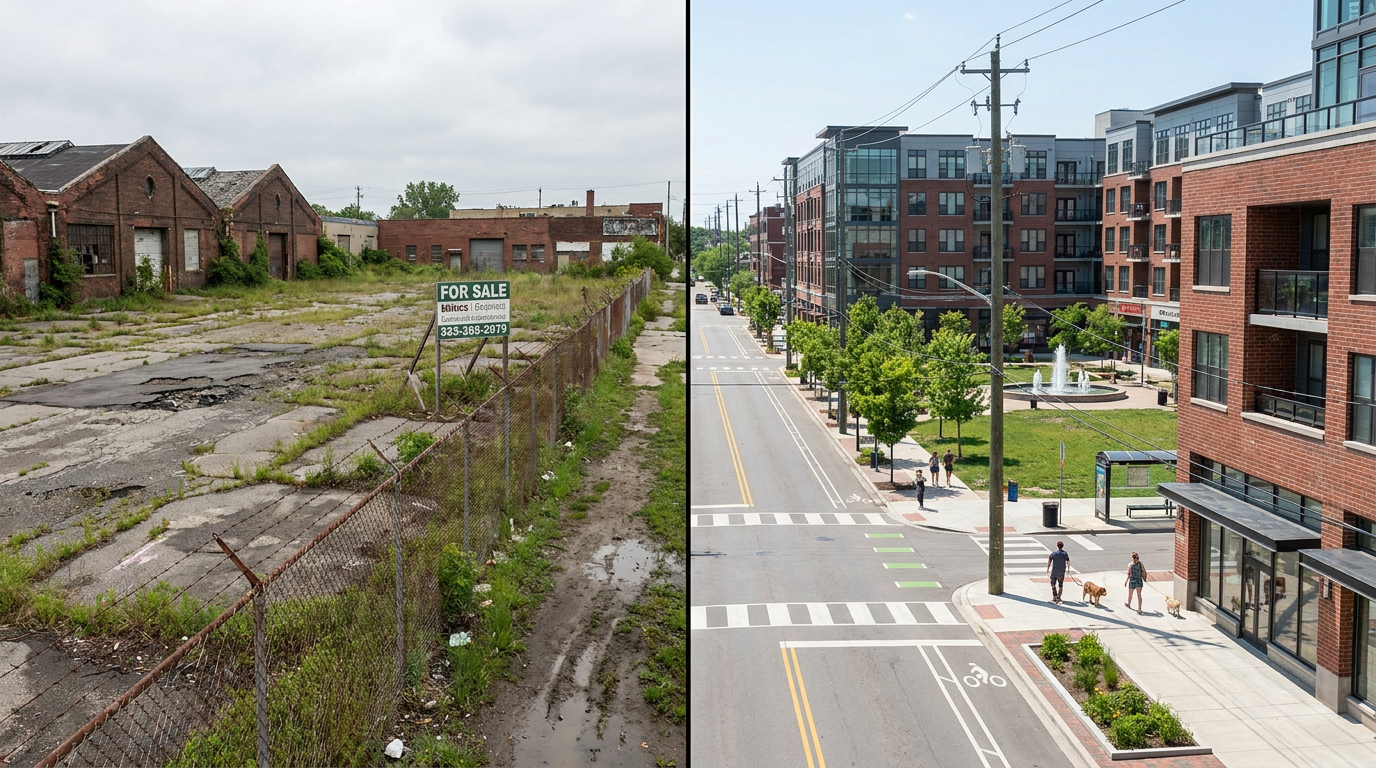
There is also a land optimization dimension. Many large parcels are underused not because they lack location value, but because their transition costs are too high relative to current revenue potential. Economic zones can help bridge that gap by concentrating servicing commitments and clarifying future use. A site that appears marginal as fragmented industrial land or low-density fringe land may become highly viable once the public sector confirms infrastructure sequencing, density expectations, and mobility investments. The zone does not create all of the value, but it helps unlock latent value that was trapped by uncertainty.
For large housing projects, this is increasingly relevant. Cities across Canada and the United States are under pressure to increase supply, but many of the sites capable of delivering substantial numbers of homes require major up-front coordination. These are not one-building opportunities. They are district-scale opportunities, often on former industrial land, public land, transit corridors, or peripheral growth areas. Without a framework that links servicing to delivery, housing targets remain theoretical. Economic zones offer one of the clearest ways to move from aspiration to implementation.
Canada’s Infrastructure and Housing Context Makes Economic Zones More Relevant
Canada does not operate under one singular national special economic zone model, yet the country’s policy direction increasingly reflects the same logic. Public investment is being used in more targeted ways to unlock growth, enable housing supply, and accelerate strategic development areas. That makes the Canadian context especially important for understanding how economic zones can function even when they are not formally labeled as such. The structure may be different, but the place-based development strategy is unmistakable.
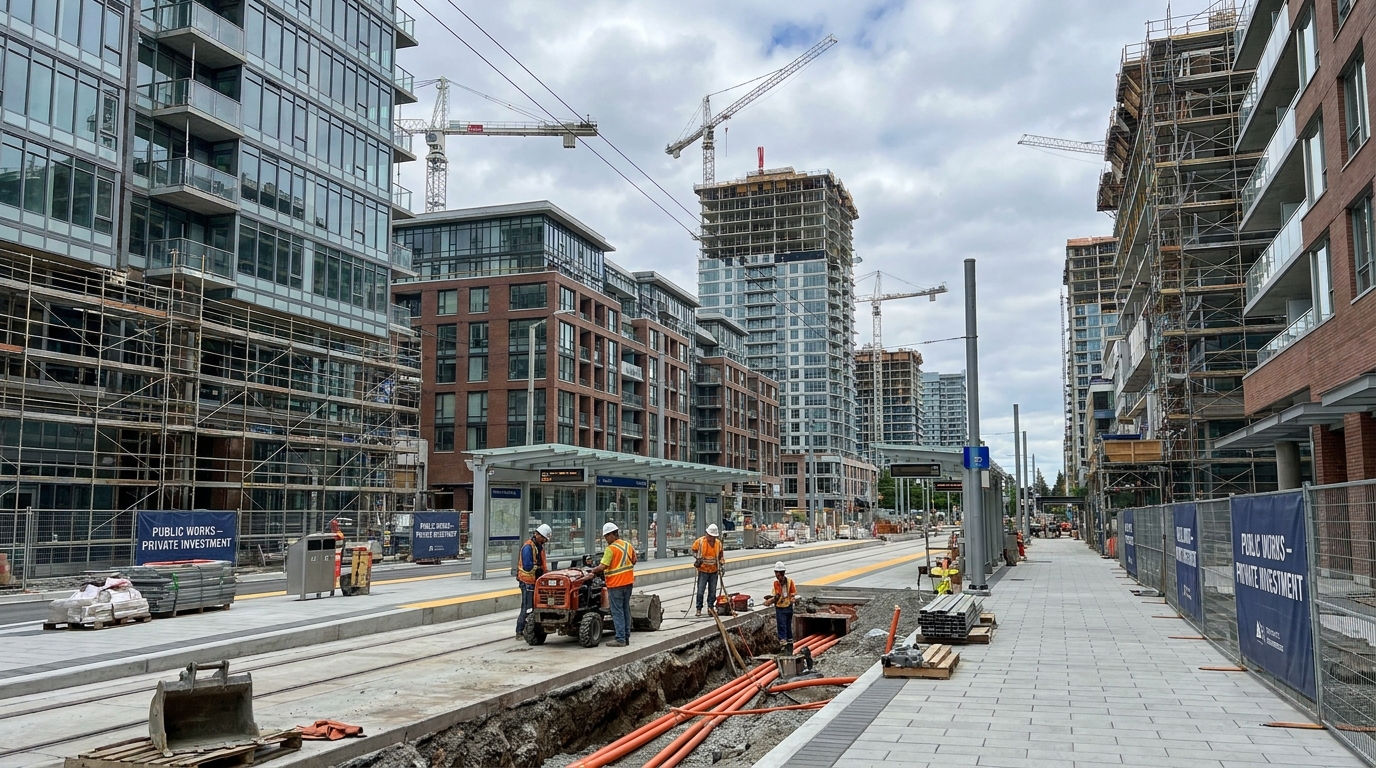
One major signal is the scale of federal infrastructure investment. Canada’s Investing in Canada Plan committed more than CAD 180 billion over 12 years, and the government reports that over CAD 168 billion has already been invested across more than 100,000 projects, with 93 percent completed or underway. Those numbers matter because they show that public capital is increasingly being mobilized not as an isolated public works exercise, but as a foundation for broader economic and urban outcomes. Infrastructure spending in this context is not only about maintenance. It is about enabling growth.
The Build Communities Strong Fund deepens that direction. Starting in 2026 to 2027, the fund provides CAD 51 billion over 10 years, including CAD 17.2 billion through its provincial and territorial stream for infrastructure linked to housing, post-secondary education, and healthcare. This is a critical development for planners and developers because it reinforces the principle that growth needs enabling systems, not only zoning permissions. If housing is expected at scale, then roads, pipes, transit, and social infrastructure must be planned with the same urgency.
Another important layer is Build Canada Homes, which is framed as a flexible and results-driven federal approach. It emphasizes the deployment of public capital, accelerated development on federal lands, and support for industrialized methods such as factory-built housing, mass timber, building information modeling, and rapid assembly techniques. For mega developments, this points toward a new operating environment in which governments may not simply regulate growth from a distance. They may actively shape delivery by using land, financing tools, and procurement strategies to make high-volume housing and mixed-income communities more feasible.
Taken together, these policies suggest that Canada is moving toward a more integrated model of urban growth delivery. While the terminology may focus on housing, infrastructure, and federal lands rather than classic zone language, the strategic effect is similar. Defined places receive concentrated public attention so development barriers can be removed, timelines can be shortened, and outcomes can be tied to measurable supply and community objectives. For major projects, this is exactly the terrain in which economic zone thinking becomes most useful.
The Real Drivers of Value Inside an Economic Zone
There is a common misconception that the value of an economic zone begins and ends with tax incentives. In reality, the most effective zones derive value from four interrelated drivers: infrastructure concentration, regulatory certainty, servicing capacity, and coordinated land strategy. If these drivers are present, a zone can significantly alter the economics of a development site. If they are absent, nominal incentives may do little more than produce headlines.
Infrastructure Concentration
Infrastructure is often the binding constraint on growth. A site may have excellent regional access and strong long-term demand, yet still remain unbuildable because major utility upgrades have not been funded or scheduled. When a zone concentrates public infrastructure spending in a defined geography, it lowers one of the largest development risks. It also helps synchronize private investment decisions because market participants know where and when the public sector intends to support growth.
This concentration effect is especially valuable for phased mega developments. Rather than relying on piecemeal servicing or speculative assumptions, the project can be planned around known trunk investments and mobility improvements. That changes absorption strategies, financing structures, and construction sequencing. It can also improve public confidence because residents can see that growth is being paired with the physical systems required to support it.
Regulatory Certainty
Time is a major cost in development, particularly at scale. Delays in approvals, changing policy direction, appeals, and unclear conditions can erode returns long before construction begins. Economic zones can reduce this exposure by establishing clear rules, dedicated review pathways, or predefined growth objectives. Developers still need to meet standards, but they do so within a more predictable framework.
For municipalities, regulatory certainty can be just as beneficial. It allows staff to align environmental review, transportation planning, density expectations, and public benefits with a coherent geographic strategy. Instead of reacting project by project, the city can manage cumulative impacts and service needs across an entire district. That leads to better governance and more credible delivery timelines.
Servicing Capacity
Servicing capacity deserves separate attention because zoning rights often exceed actual infrastructure readiness. A site may be designated for growth but constrained by water pressure, wastewater limits, power supply, stormwater systems, or school capacity. Economic zones become meaningful when they connect future land use to real service delivery. This is one reason why fast approvals alone are not enough. If the pipes, transit, schools, and healthcare systems are not planned, the project may technically be approved yet functionally stalled.
From a strategic standpoint, serviced land is one of the most valuable forms of urban supply. It is not just land that can someday be developed. It is land that can move into active production within a credible timeframe. In housing markets facing chronic shortages, increasing serviced land supply may be one of the most important contributions an economic zone can make.
Coordinated Land Strategy
Even with strong infrastructure and supportive policy, land fragmentation can undermine a zone’s effectiveness. Large growth areas often involve multiple owners, uneven expectations, and speculative pricing behavior. That is why land assembly, value capture tools, development conditions, and in some cases public ownership are so important. A zone should not simply raise expectations. It should shape the terms under which value is realized.
This is especially relevant because OECD research notes that tax benefits in enterprise-zone style programs can be capitalized into land values. In simple terms, some of the intended benefit may flow to landowners through higher prices rather than to the development itself or to end users. For housing projects, that can erode affordability and feasibility. The lesson is straightforward: if governments want a zone to deliver public outcomes, they must think carefully about how land value uplift is managed.
How Economic Zones Affect Land Value, for Better and for Worse
Any serious discussion of economic zones must deal with land value. When a government designates a place for focused investment and reduced uncertainty, land prices tend to respond. In many cases, that is precisely the point. Higher land values can reflect greater productivity, improved market confidence, and the unlocking of sites that were previously dormant. For municipalities, this can eventually expand the tax base and support long-term fiscal health. For owners, it can validate patient investment. For cities, it can signal momentum in strategic districts.
Yet rising land value is not automatically a policy success. If appreciation happens too early or too sharply, it can undermine the very development outcomes the zone was meant to support. Speculative behavior can make land assembly harder. Affordable housing targets can become more difficult to finance. Existing businesses or residents may face pressure before replacement infrastructure or community protections are in place. A zone that boosts land prices without controlling delivery conditions can create political and economic friction instead of productive growth.
This is why the best zone strategies include mechanisms to manage value capture and timing. These may include phased release of density rights, public land ownership, servicing conditions, inclusionary requirements, development agreements, anti-speculation measures, or coordinated assembly processes. The objective is not to suppress value. It is to ensure that value gains translate into actual urban outcomes such as housing, jobs, infrastructure, and public amenities.
For developers, this means understanding that land strategy is as important as vertical design or financing. The economics of a major site can change dramatically if neighboring owners begin pricing in speculative assumptions based on zone designation alone. For public agencies, it means recognizing that a policy win on paper can become a delivery challenge on the ground if value uplift is not tied to performance. Zones can create wealth, but whether that wealth becomes built form or merely inflated expectations depends on governance.
From Tax Incentives to Delivery Frameworks
One of the clearest trends in zone-based policy is the movement away from narrow tax relief toward integrated delivery systems. This change reflects a broader reality in city building: most complex projects are constrained by multiple factors at once. A tax break may improve margins, but it does not build a sewer main, fund a transit station, or settle intergovernmental responsibilities. Governments are increasingly recognizing that if they want large-scale growth, they need mechanisms that coordinate these moving parts within a place-based strategy.
This is why modern economic zones are often tied to infrastructure commitments, public-private partnerships, and explicit performance outcomes. Rather than simply designating an area and hoping private capital responds, public agencies now focus more on implementation logic. What servicing is needed first. What approvals can be streamlined. What affordability or employment targets must be met. What institutions will govern phasing, monitor delivery, and manage disputes. These are the questions that determine whether a zone creates durable value.
For mega developments, this integrated approach is far more useful than a purely incentive-driven model. Large projects need coordinated action across agencies, utilities, transportation departments, school boards, and in many cases provincial or federal funding programs. A zone can provide the umbrella under which those decisions are aligned. It creates an organizing structure for sequencing capital and policy in ways that de-risk private participation without surrendering public objectives.
The broader lesson is that successful zones are not shortcuts around planning. They are more disciplined forms of planning. They require stronger evidence, clearer governance, and better accountability because the stakes are higher. If a government is going to concentrate benefits and investment in a defined geography, it must be able to explain what outcomes the zone will deliver and how those outcomes will be measured over time.
Housing Supply, Affordability, and the Role of Zone-Based Growth
The housing conversation gives economic zones a new urgency. In high-demand markets, the question is not only where new homes can be approved, but where they can be delivered at scale and within infrastructure constraints. This distinction is crucial. Many cities have theoretical capacity in planning documents, but not all of that capacity is serviced, financeable, or near the transit and civic systems that support daily life. Economic zones can help close that gap by directing attention to places where housing production can be meaningfully accelerated.
That acceleration matters because large housing gains often come from district-scale redevelopment and planned communities, not from isolated projects alone. Former industrial lands, government-owned sites, transit corridors, suburban growth areas, and logistics-adjacent mixed-use districts all have potential. But each requires upfront alignment across land, capital, infrastructure, and approvals. Zone-based frameworks create a way to package those elements together. They do not solve affordability by themselves, but they can improve the supply conditions necessary for affordability strategies to function.
Still, supply without structure can create uneven outcomes. If a zone primarily increases land values and market-rate absorption while failing to protect affordability, it may deliver units without delivering access. That is why measurable conditions matter. Housing starts, tenure mix, affordability targets, transit access, school capacity, and climate resilience should all be part of the zone conversation. In Canada especially, where housing affordability and infrastructure capacity are central concerns, the strongest case for economic zones is when they are tied to real performance metrics rather than broad promises.
Build Canada Homes points to another emerging opportunity. As governments support industrialized construction methods such as factory-built housing and mass timber, zones can become platforms for scalable delivery. A major project that combines serviced land, predictable approvals, public capital participation, and modern construction systems may be able to deliver housing faster and with greater cost control than conventional fragmented development patterns. That is not automatic, but it is strategically significant. It suggests that future mega developments may rely not only on better land policy, but also on more industrialized housing production within place-based growth frameworks.
Governance Determines Whether Zones Deliver Broad Public Value
No economic zone succeeds on designation alone. Governance is what converts strategic intent into real development outcomes. That includes who controls phasing, who funds infrastructure, how value uplift is shared, what standards projects must meet, and how competing priorities are resolved over time. Without strong governance, even a well-located and well-funded zone can drift into fragmented execution, political conflict, or underdelivery.
At a minimum, governance should define clear roles among municipalities, higher levels of government, infrastructure providers, landowners, and private developers. It should also establish how performance will be measured. If the purpose of a zone is to support growth, then metrics should reflect that purpose in tangible terms. Examples include housing starts, serviced acres delivered, transit ridership access, industrial job creation, affordability outcomes, emissions resilience, and completion of major public works. The more precise the metrics, the easier it becomes to distinguish a productive zone from a symbolic one.
Distributional effects also need careful attention. Economic zones can generate jobs, raise municipal revenues, and justify investments in utilities and civic infrastructure. But they can also produce uneven gains if displacement is ignored, if land speculation absorbs the benefits, or if affordability is treated as a secondary issue. For communities already under pressure, zone-led growth can feel extractive unless public benefits are visible, enforceable, and delivered early enough to build trust.
This is where strategic planning must remain grounded. The purpose of growth is not only to maximize density or land value. It is to produce functioning urban environments that expand opportunity. Good governance ensures that the zone is not just efficient for capital, but useful for the city. That means balancing speed with accountability, flexibility with standards, and investment attraction with inclusive outcomes.
What Planners and Developers Should Ask Before Advancing a Zone Strategy
For professionals working on large sites, the right questions matter more than the label applied to the area. Calling something an economic zone does not make it effective. The strategic test is whether the framework changes delivery conditions in a meaningful way. Before advancing a zone-based approach, planners and developers should assess several core dimensions of readiness and impact.
- Is there real market demand for the uses being promoted? A zone cannot manufacture durable demand where none exists. It can improve feasibility and accelerate investment, but only if the market fundamentals are credible.
- What infrastructure constraints are currently blocking growth? Identifying the true bottlenecks is essential. If water, wastewater, transit, or social infrastructure are the limiting factors, the zone must address them directly.
- How will land value uplift be managed? If designation simply raises prices, delivery may become harder. Tools such as land assembly, development conditions, and value capture should be considered from the outset.
- What public outcomes will justify concentrated support? Housing supply, affordability, employment, climate resilience, and fiscal growth should be explicit, measurable, and tied to implementation.
- Who governs the zone over time? Clear institutional responsibility is critical for phasing, conflict resolution, infrastructure coordination, and accountability.
These questions may sound technical, but they reflect a simple principle: zones should solve real development problems. If the answer to each question is strong, the zone can become a powerful platform for growth. If the answers are vague, the strategy may generate heat without delivering much light. In a market where capital is cautious and infrastructure is expensive, discipline matters.
The Strategic Future of Economic Zones in North American Cities
Looking ahead, economic zones are likely to become even more important as cities confront simultaneous pressures around housing, competitiveness, climate resilience, and infrastructure modernization. Large-scale growth cannot be managed effectively through isolated site decisions alone. It requires coordinated geographies where public and private action can be aligned with long-term urban objectives. That is the strategic future of economic zones: not as isolated policy experiments, but as engines of structured metropolitan transformation.
We should expect these zones to become more sophisticated. More of them will likely integrate transit-oriented development, green infrastructure, public land strategies, and industrialized housing delivery. More will be measured against outcomes rather than promises. More will be expected to demonstrate how value created by public action is shared with communities through affordability, services, and resilient design. In short, the next generation of zones will be judged not by the existence of incentives, but by the quality of places they help produce.
For Canada, this evolution aligns with broader infrastructure and housing policy. As public capital is increasingly used to unlock development and support supply, zone-based thinking offers a practical way to connect funding, land, and urban outcomes. For developers, the implication is clear: understanding public investment strategy is now central to understanding land strategy. For planners, the challenge is to ensure that growth frameworks are not only efficient, but equitable and durable. For both, the opportunity is substantial.
Economic zones are not a magic solution. They cannot replace market demand, responsible governance, or sound urban design. But when carefully structured, they can do something extremely valuable: they can turn strategic intent into coordinated action. In mega developments, where scale amplifies both risk and opportunity, that coordinating function may be the difference between stalled potential and real city building. The places that grow well in the coming decades will not simply attract investment. They will organize it.
Conclusion
Economic zones deserve to be understood as more than tax-advantaged districts. In the context of mega developments, they are strategic tools for synchronizing infrastructure, approvals, land economics, and public priorities within a defined geography. Their greatest strength lies in reducing uncertainty and creating the serviced, governed, and investable conditions that large projects need in order to proceed.
That is why they matter so much now. Canada’s infrastructure and housing direction shows increasing reliance on place-based public investment to unlock development, accelerate housing delivery, and strengthen long-term urban capacity. The success of these efforts will depend on whether governments and developers treat zones as real delivery frameworks rather than symbolic designations. Incentives alone are not enough. Roads, pipes, transit, land strategy, and affordability conditions all have to move together.
For urban planners and developers, the strategic lesson is straightforward. If the goal is to spur growth and optimize land value, the most effective economic zones will be those that align public capital with measurable outcomes and disciplined land governance. When that alignment is achieved, zones can unlock dormant sites, support major housing supply, and help shape more resilient, productive, and complete communities. In an era defined by constrained affordability and rising complexity, that kind of coordination is not optional. It is the foundation of credible growth.



No Comment! Be the first one.