

Scarborough’s Military Trail Corridor Shows What Housing Supply Looks Like in Motion
Drive along Military Trail in eastern Scarborough right now and you can watch two stages of the same housing story unfold on opposite sides of the road. On one side, a project is nearly finished. On the other, a project is just beginning. That sequencing is not an accident. It is exactly how a healthy development pipeline is supposed to work, and it is worth pausing on.
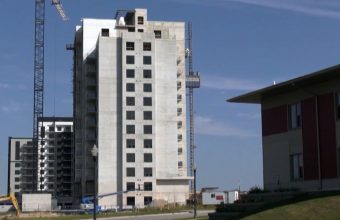
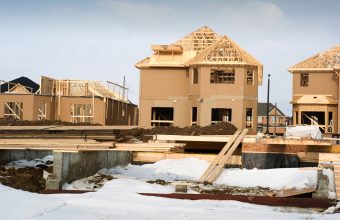
Altree Developments, working with Kohn Partnership Architects, is completing Highland Commons at Military Trail and Kingston Road in Port Union: two eight-storey buildings standing 32.5 metres and delivering 539 condominium units. Across the street at Military Trail and Morrish Road in Highland Creek, the same architect and developer have broken ground on 1650 Military Trail, an eight-storey, 31.9 metre purpose-built student rental residence that will add 101 units. Excavation for a two-level underground garage is well advanced there, a tower crane has just gone up, and the P1 slab is poured with formwork rising for the walls and columns to come.
What matters here is not the cladding or the crane, it is the model. A developer with an established site, an established design partner, and momentum in the neighbourhood is rolling straight from completion into the next phase of supply. That is how land value compounds and how a corridor like Military Trail, once defined by low-density suburban lots, gradually becomes a genuine transit-adjacent housing node. Highland Commons brings ownership stock to a stretch of Scarborough that has needed it. 1650 Military Trail answers a different but equally pressing demand: purpose-built rental housing for students, a segment of the market that is chronically underbuilt across the Greater Toronto Area.
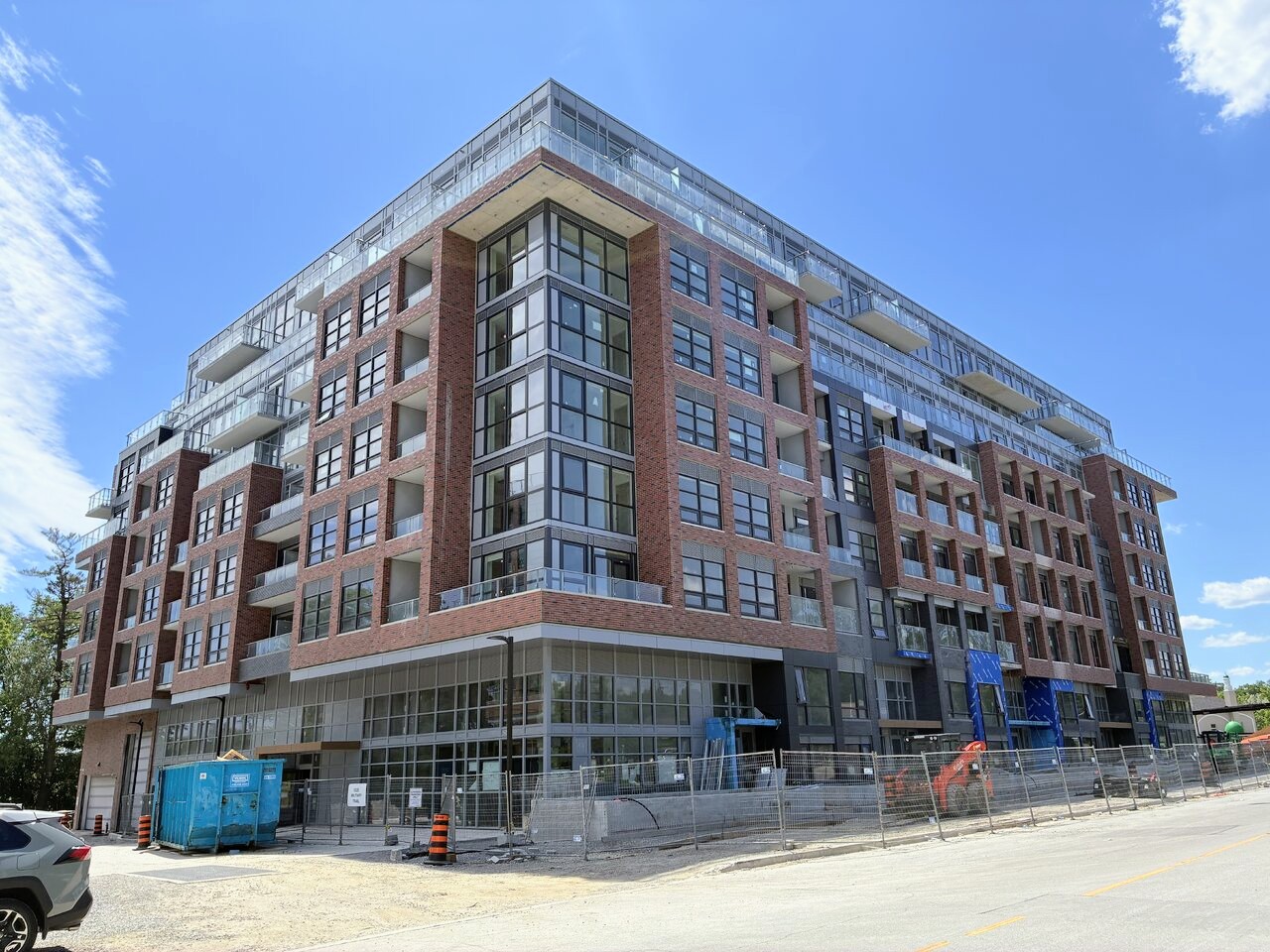
Two sides of the same street, two stages of the same supply pipeline. That is what disciplined land strategy actually looks like on the ground.
The dual scale of these projects also says something about how developers are reading demand along secondary corridors near the University of Toronto Scarborough campus. Student rental buildings are not a speculative bet, they follow enrollment and proximity, and pairing one directly across from a nearly finished condominium project spreads risk while keeping construction logistics and design continuity in one place. For a market still working through supply shortfalls, that kind of sequential land use, rather than isolated one-off projects, is the pattern city builders should want to see more of.
Neither building alone changes Scarborough’s housing trajectory. Together, tracked over more than a year of visible progress, they show what steady intensification actually requires: patient capital, a developer willing to commit to a corridor rather than a single site, and municipal groundwork that lets one project’s completion become another’s construction start. That is the long view worth watching as both buildings reach their respective finish lines.
Source: UrbanToronto