


For many homeowners, sustainable building can sound more complicated than it needs to be. The conversation often jumps quickly to futuristic products, expensive custom homes, or highly technical certification systems, which can make the entire topic feel distant from an ordinary renovation. In reality, some of the most useful low-impact choices are surprisingly familiar. They show up in insulation, wall finishes, flooring, cabinetry, and wood-based structural elements that can fit into a thoughtful remodel just as easily as they can into a new build.
Table Of Content
- What Are Bio-Materials in Home Building?
- Why Bio-Materials Matter Beyond Sustainability Labels
- The Most Practical Bio-Materials for Everyday Homeowners
- Cellulose Insulation
- Cotton, Sheep’s Wool, Hemp, and Straw-Based Insulation
- Wood Fiber Insulation Boards
- Cork Products
- Wood and Engineered Wood Products
- Mass Timber
- Where Bio-Materials Make the Most Sense in a Renovation
- How to Evaluate Bio-Materials Without Getting Lost in Marketing
- A Practical Screening Checklist
- Common Misconceptions About Bio-Materials
- How to Start Small and Build Confidence
- Bio-Materials, Comfort, and the Feeling of Home
- The Balanced Takeaway
Bio-materials are part of that practical middle ground. These materials are made partly or wholly from renewable biological feedstocks such as wood, agricultural residues, cork, hemp, straw, cotton, and other plant or fiber based inputs. Their appeal is not only environmental. When chosen well, bio-materials can also contribute to comfort, acoustic performance, moisture balance, and a warm, natural aesthetic that many homeowners already want.
This matters because the environmental footprint of housing is not only about heating and cooling bills. A growing share of attention is going toward embodied carbon, which includes the emissions associated with extracting, manufacturing, transporting, and installing building materials. Canada has placed increasing policy emphasis on this area. The federal Greening Government Strategy calls for reducing embodied carbon in major construction projects by 30 percent starting in 2025, and the Canada Green Buildings Strategy also includes low-carbon building materials as part of a broader national approach to greener buildings.
For homeowners, though, the most important question is simpler. What can I actually use in my own home that is realistic, code-compliant, durable, and worth the investment? This guide focuses on that practical question. We will look at what bio-materials are, why they matter, where they are most useful in everyday homes, and how to begin with achievable upgrades rather than all-or-nothing thinking.
Good sustainable design is rarely about choosing the most novel material. More often, it is about choosing the right material for the right part of the house, with durability, comfort, and long-term value in mind.
There is also good reason to pay attention now. Canada’s 2024 audit on greening building materials found that construction and construction-material emissions account for 11 percent of the country’s total emissions. That is a meaningful number. It reinforces the idea that responsible housing decisions are not only about better appliances and lower utility costs, but also about the materials that shape walls, roofs, floors, and finishes over decades of use.
At the same time, this is not a case for using anything labeled natural or bio-based without asking hard questions. A material can be renewable and still be processed intensively, transported long distances, installed poorly, or perform badly in a wet assembly. The best outcomes come from a balanced view. Bio-materials can be excellent choices, but they should be selected with the same care as any other building product, using performance, climate suitability, maintenance, safety, and whole-life impact as the real benchmarks.
What Are Bio-Materials in Home Building?
In simple terms, bio-materials are materials derived from biological sources. In construction, that often means products based on wood, paper fiber, agricultural waste, grasses, cork, hemp, straw, cotton, or wool. Some are used in relatively raw forms, while others are processed into insulation batts, rigid boards, floor tiles, panels, engineered wood, finishes, or composite products. Their common thread is that they rely partly or entirely on renewable feedstocks rather than purely mineral or fossil-fuel-derived inputs.
That renewable origin is one reason they attract interest, but it is not the only one. Many bio-materials require less manufacturing energy than conventional alternatives, and some can store carbon during their service life. The U.S. Department of Energy notes that bio-based chemicals and materials can replace certain petroleum or natural-gas-derived products while sometimes requiring less energy during production. That can make a noticeable difference when materials are selected at scale, especially in envelope assemblies and interior fit-outs.
Still, the term bio-materials covers a wide range of products with very different performance profiles. Cellulose insulation behaves differently from cork flooring. A mass timber beam belongs to a different category than a low-VOC plant-based wall coating. Homeowners benefit from thinking less about a broad label and more about specific uses. Which material works well in an attic, which one fits an interior floor, and which one belongs in a high-moisture space are much better questions than asking whether bio-materials as a whole are good or bad.
It is also helpful to distinguish between structural and non-structural applications. Structural bio-materials include products like solid wood framing and mass timber. Non-structural options include insulation, acoustic panels, underlayments, wall finishes, cabinetry components, and flooring. For most homeowners, non-structural uses are the easiest and most accessible place to begin because they can be integrated into routine renovation work without redesigning the entire home.
Why Bio-Materials Matter Beyond Sustainability Labels
One of the biggest shifts in green building is the recognition that operating energy is only part of the story. Better windows, air sealing, and efficient HVAC systems still matter tremendously, but the environmental impact of the materials themselves has become impossible to ignore. This is where embodied carbon enters the conversation. A product may help reduce energy use over time, but if it carries a very high manufacturing footprint, that should still be part of the decision.
Bio-materials are often discussed because they can lower embodied carbon compared with more emissions-intensive alternatives. Some also support circular economy goals by making use of recycled feedstocks or renewable harvest cycles. For example, cellulose insulation is typically made from recycled paper and has a very high recycled content, generally around 82 to 85 percent. That makes it one of the most accessible and established bio-based retrofit materials on the market for homeowners.
There are also quality-of-life benefits that deserve more attention. Many homeowners are motivated less by carbon accounting than by the feeling of a house. They want rooms that are quieter, walls that do not feel cold, finishes that seem calmer and more natural, and spaces that avoid harsh chemical odours. Several bio-based products align well with those goals. Depending on the product and assembly, they can offer useful thermal performance, sound absorption, and moisture buffering that contributes to indoor comfort.
That said, better comfort does not happen by default. Moisture control remains essential. The U.S. Department of Energy notes that wet insulation loses thermal resistance significantly, which is especially important when working with fiber-based insulation systems. A beautifully intentioned material can underperform if the house has poor air sealing, bulk water intrusion, or the wrong vapor control strategy. In other words, sustainability never replaces building science. It has to work with it.
The Most Practical Bio-Materials for Everyday Homeowners
When homeowners hear about bio-materials, they sometimes imagine that every part of the house must change at once. In practice, the most sensible approach is to focus on categories where the products are proven, available, and compatible with common renovation goals. In North American homes, that usually means starting with insulation, interior finishes, wood-based products, and selected flooring or acoustic elements.
Cellulose Insulation
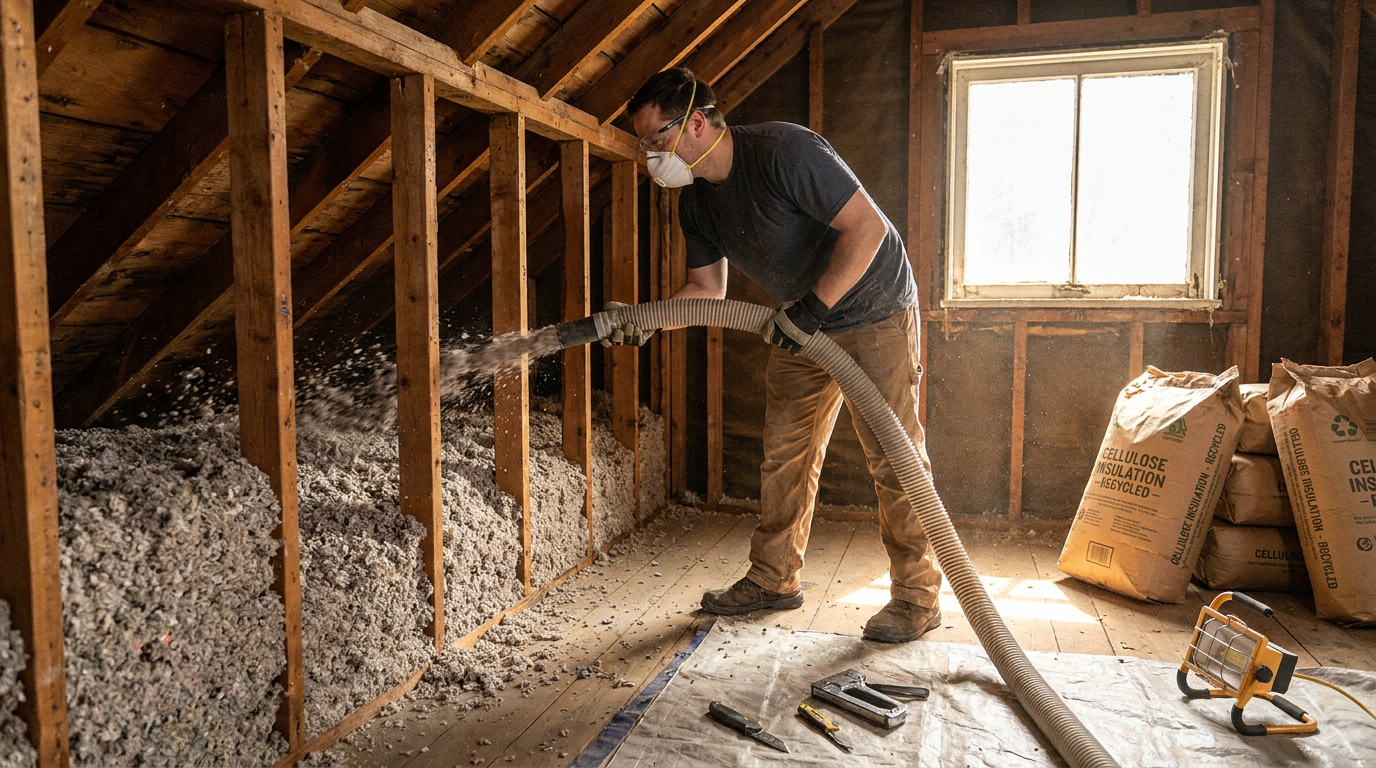
Cellulose insulation is one of the clearest entry points. It is widely recognized, relatively accessible, and especially useful in attics, wall retrofits, and sound-control applications. Because it is made primarily from recycled paper, it offers a rare combination of familiar installation pathways and meaningful recycled content. For homeowners who want a practical first step into lower-impact materials, cellulose is often the strongest candidate.
Its performance advantages are not limited to sustainability. Properly installed cellulose can help reduce air movement within assemblies, improve acoustic separation, and deliver strong thermal performance in retrofit situations where filling irregular cavities matters. It is often blown into attic spaces or dense-packed into wall cavities, which makes it useful in older homes that need performance upgrades without a full structural rebuild. For many renovation projects, it is easier to specify than more novel alternatives.
As with any insulation, details matter. Installers need to manage settling risk, ensure correct density, and coordinate with air sealing work. Roof leaks, wet basements, or poor flashing should be resolved before insulation upgrades are treated as the final solution. If moisture issues are ignored, even a well-intentioned material can become part of a larger durability problem.
Cotton, Sheep’s Wool, Hemp, and Straw-Based Insulation
The U.S. Department of Energy identifies natural-fiber insulation materials such as cotton, sheep’s wool, straw, and hemp as viable options. Hemp insulation is still uncommon in the U.S. market, but interest is growing because these materials align with broader demand for low-impact and lower-emission building products. They are often considered in custom projects, healthy-home renovations, and spaces where homeowners are prioritizing natural content and indoor comfort.
Each of these materials comes with its own trade-offs. Some are easier to source than others. Some are sold as batts, while others appear in more specialized panel or composite systems. Pricing can be higher than conventional insulation, and contractor familiarity may vary depending on region. For that reason, these products are often best approached as targeted upgrades rather than default whole-house specifications unless your design and builder team has direct experience with them.
The attraction is understandable. These insulation materials can feel more aligned with a healthy-materials approach, and some homeowners prefer them when renovating bedrooms, offices, nurseries, or small additions. If you are interested, ask not only about R-value and cost, but also about local code acceptance, fire treatment, pest resistance, moisture tolerance, and manufacturer documentation. The best product is the one that is both environmentally thoughtful and technically dependable in your climate.
Wood Fiber Insulation Boards
Wood fiber boards are drawing more attention in high-performance building circles because they can provide insulation, exterior sheathing functions, and vapor-open characteristics in certain assemblies. While not as mainstream as cellulose in many North American retrofit markets, they represent an important category of bio-based envelope products. They can be especially appealing in projects where designers want to support drying potential while improving thermal continuity.
For homeowners, wood fiber is most likely to appear in deeper renovation projects or custom new builds rather than a basic weekend upgrade. It tends to require a more integrated design process because it interacts with weather barriers, cladding systems, and fastening strategies. That makes it a strong option for people already planning a major exterior renovation, such as residing a house or rebuilding wall assemblies as part of an energy retrofit.
Cork Products
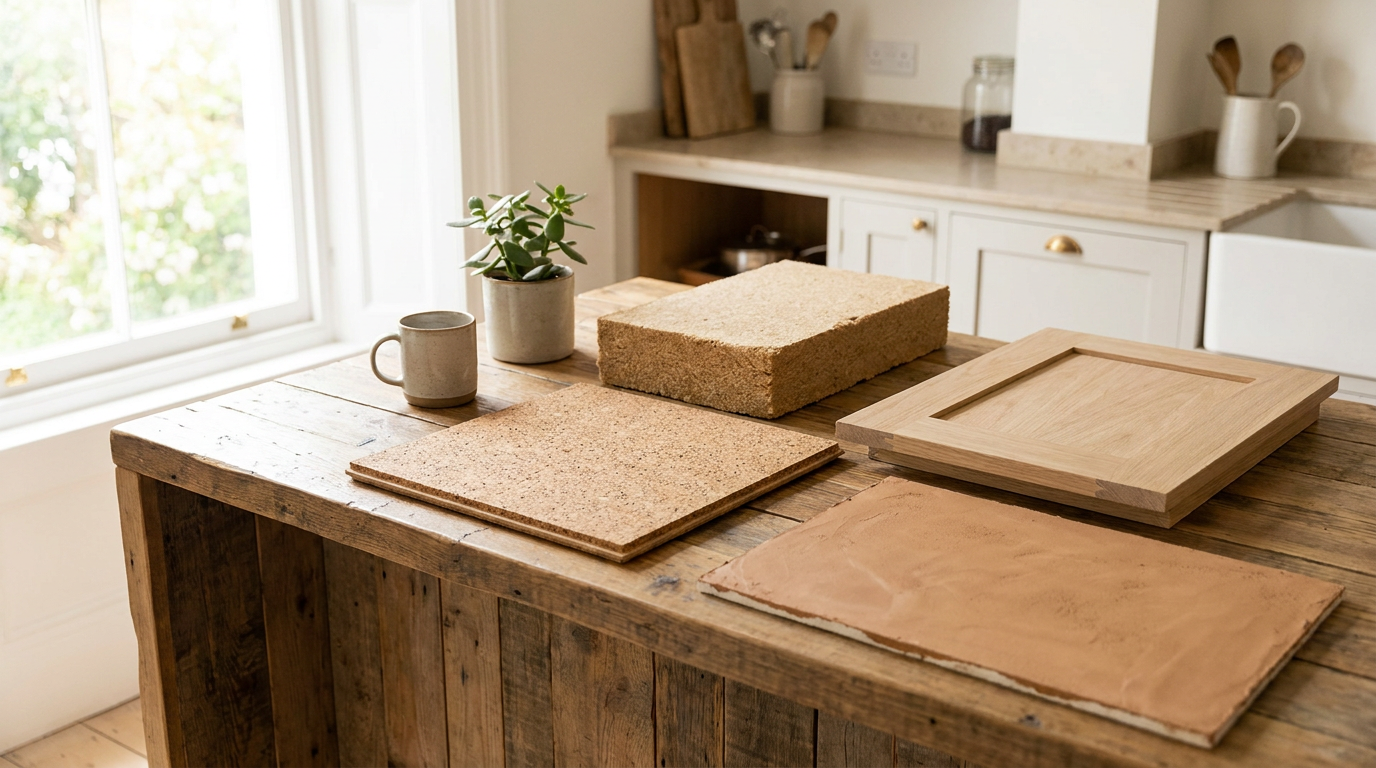
Cork is one of the most approachable bio-materials from an interior design perspective. It can be used in flooring, wall panels, acoustic applications, and underlayment systems. Homeowners often appreciate it because it combines a warm visual texture with a softer feel underfoot and useful sound-dampening qualities. In homes where comfort and noise reduction are priorities, cork can be an elegant and highly livable choice.
Cork also shows how sustainability and aesthetics do not need to compete. It brings natural character into a room without feeling rustic or overly thematic. In modern interiors, it can read as subtle, refined, and calm. In family homes, it can also be practical, particularly in spaces where resilience, warmth, and a less echo-prone environment are valuable.
Wood and Engineered Wood Products
Wood remains one of the most established bio-materials in residential construction, from framing and sheathing to flooring, cabinetry, millwork, and panel products. The practical conversation here is not whether wood belongs in a home, because it already does in most cases. The better questions involve sourcing, certification, adhesive content, durability, and whether a project can use wood strategically to reduce reliance on more emissions-intensive materials.
For interior renovations, this might mean selecting responsibly sourced wood flooring, lower-emitting cabinetry, or durable wood finishes that age well and avoid frequent replacement. For additions or custom projects, it could mean using engineered wood systems that are optimized for performance and material efficiency. The advantage of wood is that it sits comfortably between familiar and forward-looking. It is both traditional and central to many low-carbon design strategies.
Mass Timber
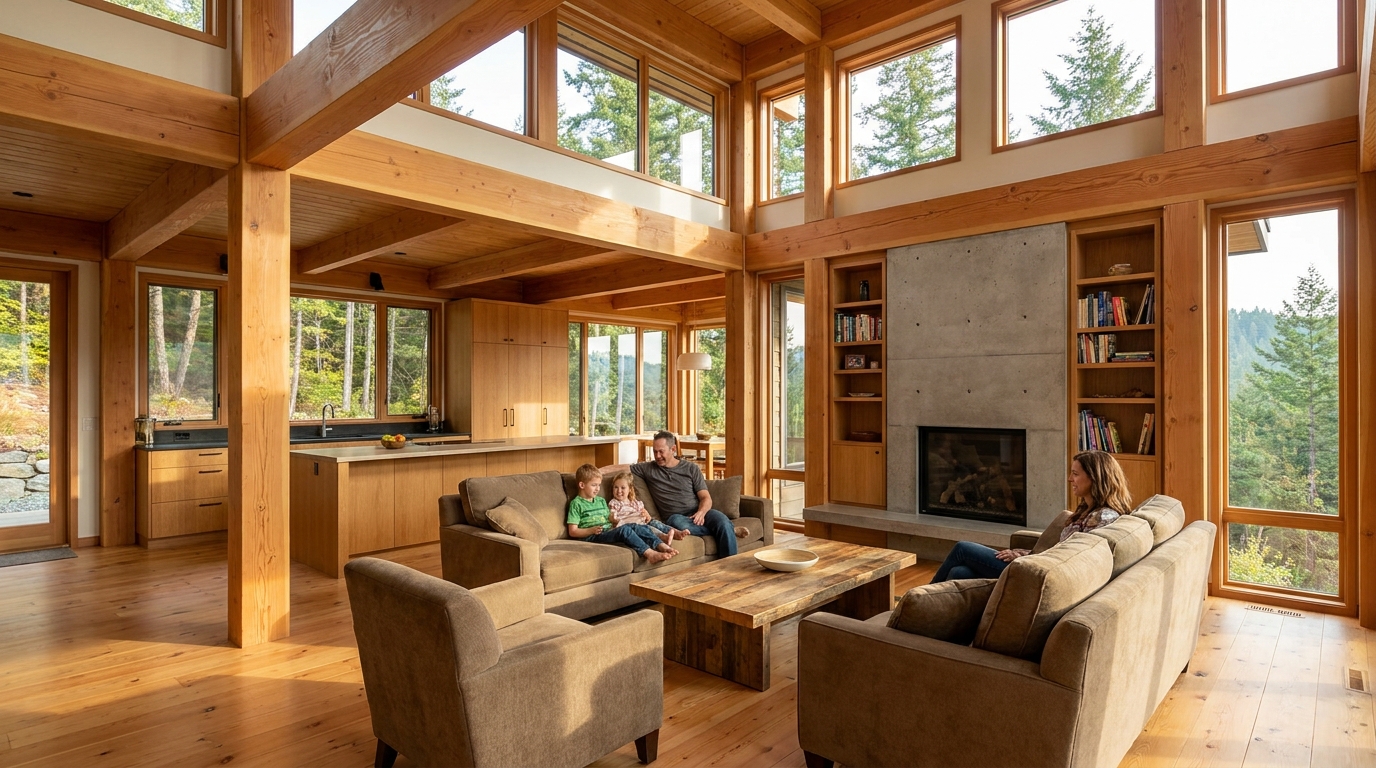
Mass timber is one of the most visible bio-material trends in Canadian construction. Natural Resources Canada describes it as a preferred option for low-carbon construction and notes its increasing use across the country. It is praised for its potential to sequester carbon dioxide, its energy efficiency, and its fire-resistant performance when designed appropriately in large structural sections. For the general public, mass timber often serves as the image of what modern sustainable construction can look like.
For everyday homeowners, however, it is important to place it in context. Mass timber is usually not the first material someone swaps into a modest bathroom remodel. It is more realistic in custom homes, rear-lane houses, major additions, loft-style renovations, or visible interior structural features where exposed wood becomes part of the architectural language. If you are planning a substantial project and want a low-carbon structural strategy with strong visual appeal, mass timber may be worth discussing with your architect or builder.
It is also a reminder that sustainability can be beautiful. Exposed timber ceilings, beams, and panels often create spaces that feel calm, tactile, and timeless. For many people, that emotional quality matters. A material that supports lower-impact construction while also making a room more welcoming has a kind of practical elegance that is often missing from sustainability conversations.
Where Bio-Materials Make the Most Sense in a Renovation
Not every renovation needs a dramatic material overhaul. In fact, the smartest projects usually begin by identifying a few areas where bio-materials can make an immediate and measurable difference. The building envelope is often the first place to look, because insulation and air sealing affect both comfort and energy use. Since the opaque envelope influences a substantial share of building energy demand, upgrades in attics, walls, and roofs can have outsized impact.
Attics are especially good candidates. They are relatively accessible, energy losses are often significant, and cellulose insulation can be installed with a straightforward retrofit process in many homes. Wall retrofits are also worth considering when siding is being replaced or interiors are already open for other reasons. This is where cellulose or selected natural-fiber insulation products may fit naturally into a larger scope of work.
Interior finish upgrades are another sensible pathway. If you are already replacing flooring, repainting, redoing millwork, or improving acoustics in a home office or family room, adding materials like cork, responsibly sourced wood, or lower-emitting plant-based finish systems can be a seamless decision rather than an extra project. In these cases, the sustainability benefit comes not from adding complexity but from making slightly better choices within work you were already planning to do.
Additions and major remodels offer the broadest opportunity. When walls, roofs, and structure are being reconsidered, homeowners can evaluate everything from wood fiber sheathing to engineered wood systems and mass timber features. This is also the point at which whole-building life-cycle assessment becomes more valuable, because larger material choices begin to shift the project’s overall footprint in a more substantial way.
How to Evaluate Bio-Materials Without Getting Lost in Marketing
One of the challenges in this category is that material marketing can be very polished. Terms like natural, green, low-impact, and renewable are appealing, but they are not enough on their own. The National Research Council of Canada emphasizes life-cycle assessment and carbon accounting for construction materials for a reason. The best decisions come from comparing alternatives by whole-life impact rather than relying on a label.
That means asking practical questions. How is the material sourced? How far does it travel? What is its expected service life? What adhesives, treatments, or additives are used? Can it tolerate your local climate, especially if you live in a cold, wet, or highly variable region? Does the product have third-party testing for fire performance, emissions, thermal performance, and moisture behavior? These questions may not sound glamorous, but they are far more useful than generalized sustainability claims.
A homeowner does not need to become a building scientist to make good choices, but it helps to use a simple evaluation framework. Start with the function of the material, then look at durability, health considerations, code compliance, embodied impact, and cost. In many cases, a modestly greener option that performs reliably for decades is the better choice than a highly renewable product that is difficult to source, unfamiliar to installers, or vulnerable to failure in your assembly type.
A Practical Screening Checklist
- Function first: Be clear about whether the product is meant for insulation, structure, acoustic control, finish, or moisture management.
- Climate fit: Confirm that the material works in your local temperature and humidity conditions.
- Moisture strategy: Ask how the assembly handles leaks, vapor movement, and drying potential.
- Code and safety: Verify fire ratings, approvals, and installer familiarity.
- Whole-life value: Compare durability, replacement cycles, and maintenance demands along with carbon claims.
- Health and comfort: Consider emissions, odor, acoustic performance, and tactile qualities.
- Availability: Choose products that your contractor can source and install properly within your timeline and budget.
Common Misconceptions About Bio-Materials
There are a few persistent misunderstandings that are worth clearing up. The first is that bio-based automatically means carbon-neutral. It does not. Sourcing, land use, processing, transportation, durability, and end-of-life all influence real impact. A renewable feedstock is promising, but it is not the whole story.
The second misconception is that bio-materials are only for new builds or highly customized homes. That is simply not true. Some of the most practical products in this category, especially cellulose insulation and selected wood-based materials, are highly relevant to retrofit and renovation work. Homeowners can make meaningful progress without rebuilding from scratch.
A third misconception is that natural materials are inherently safer or more durable than synthetic ones. Safety and resilience depend on the specific product formulation and the overall assembly design. Fire resistance, pest resistance, and moisture performance are all design questions, not assumptions. A high-performing conventional product may be better than a poorly detailed bio-based one, and vice versa.
Finally, some people assume that choosing bio-materials means accepting a more rustic or unconventional appearance. In reality, many of today’s most refined interiors rely heavily on natural wood, cork, mineral finishes, and plant-based textures precisely because they feel calm and elevated. Sustainability does not require a specific aesthetic. It can support everything from understated modernism to classic family homes.
How to Start Small and Build Confidence
If you are curious about bio-materials but not ready for a major construction project, the best approach is to start where the choice is easiest. An attic insulation upgrade is often a strong first move, especially if your home is older, drafty, or uncomfortable through seasonal extremes. Cellulose can provide a meaningful performance improvement while introducing a lower-impact material into the house in a practical way.
If your next project is more visual, flooring or interior finish upgrades may be the better gateway. Cork flooring in a bedroom, office, or playroom can improve both comfort and sound quality. Responsibly sourced wood millwork or cabinetry can bring warmth and durability to a kitchen or living area. In these spaces, bio-materials become part of daily experience, not just hidden technical components.
For larger renovations, work with a design and construction team that understands both sustainability and building science. Ask them to compare material options using whole-life logic rather than isolated claims. A team that can explain moisture management, air sealing, embodied carbon, and durability in plain language is far more valuable than one that simply promises a green result.
- Good first projects: attic insulation, select wall retrofits, cork flooring, acoustic upgrades, low-emitting wood finishes
- Good medium-scope projects: residing with upgraded sheathing, deeper energy retrofits, cabinetry replacement, home office or basement comfort improvements
- Best for larger projects: mass timber features, custom additions, full envelope redesigns, advanced low-carbon structural strategies
Bio-Materials, Comfort, and the Feeling of Home
One reason bio-materials deserve a place in mainstream housing conversations is that they connect environmental responsibility with everyday comfort. Homeowners do not live inside carbon spreadsheets. They live inside rooms that can feel quiet or echoing, dry or stuffy, warm or drafty, restful or overstimulating. Material choices shape those experiences in ways that are easy to overlook during planning and impossible to ignore once the renovation is complete.
Natural and fiber-based materials often have a tactile softness and visual warmth that synthetic alternatives struggle to replicate. That does not make them automatically superior, but it does help explain their growing appeal. In a time when many homes are asked to function as offices, retreats, classrooms, and gathering spaces at once, materials that support calm and comfort have real value.
There is also a psychological dimension to using materials that feel more connected to natural systems. A cork floor, exposed timber beam, or well-finished wood wall can make a home feel grounded and enduring. For some households, that quality matters as much as technical performance. Sustainable choices are more likely to last when people genuinely love living with them.
The Balanced Takeaway
Bio-materials are not a cure-all, and they do not need to be. Their real strength is that they offer homeowners a practical way to align renovation choices with lower embodied carbon, healthier interiors, and better comfort without turning a home project into a philosophy lesson. In many cases, the smartest applications are also the simplest: cellulose in the attic, cork underfoot, durable wood where it will age gracefully, and advanced structural wood systems when a larger project makes them viable.
The most useful mindset is neither skeptical dismissal nor unquestioning enthusiasm. It is informed selectivity. Use bio-materials where they perform well, where they suit the climate and assembly, and where they bring long-term value to the home. Ask good questions, respect moisture and fire safety, and compare products based on whole-life impact rather than branding alone.
For homeowners who want to build or renovate more thoughtfully, that is encouraging news. Sustainable material choices do not have to begin with dramatic gestures. They can begin with one room, one upgrade, or one specification that does a little better on comfort, durability, and environmental responsibility all at once. Over time, those practical decisions add up to homes that feel not only greener, but genuinely better to live in.
And that may be the most compelling reason to explore bio-materials now. They invite a more integrated way of thinking about home improvement, one where sustainability is not separate from beauty, comfort, or common sense. It becomes part of the everyday logic of building well, choosing carefully, and creating spaces that can support both people and the wider environment for years to come.

No Comment! Be the first one.