



Reusing materials at home can seem like a small decision, but in practice it is one of the most effective ways to reduce waste, stretch your budget, and build a home that feels more personal. It shifts the focus away from constant replacement and toward making better use of what already exists. In many cases, the result is not only more sustainable but also more beautiful, because reused materials tend to bring texture, history, and individuality that brand-new items often lack.
Table Of Content
- Why material reuse deserves more attention at home
- Start with a reuse mindset, not a perfect project list
- Give existing furniture a second life
- Ideas for furniture reuse that feel intentional
- Reuse jars, containers, and packaging with more elegance
- Reclaimed wood can bring warmth and purpose
- Cabinets, doors, fixtures, and hardware are often more reusable than people expect
- Places to source and redirect renovation materials
- Textiles are one of the easiest materials to repurpose well
- Borrow, rent, and share instead of owning every material or tool
- Repair is often the bridge that makes reuse possible
- How to make reused materials look cohesive, not cluttered
- What to consider before reusing materials
- A room-by-room approach to reuse at home
- Why this small habit has bigger environmental value
- Conclusion: creativity is what makes reuse stick
Creative ways to reuse materials in your home include refinishing solid wood furniture instead of replacing it, turning glass jars and tins into pantry or bathroom storage, incorporating reclaimed wood into shelving, headboards, and accent walls, and salvaging cabinets, doors, hardware, and light fixtures from renovations rather than sending them to landfill. Textiles such as old sheets, towels, and sweaters can become cleaning cloths, cushion covers, or patchwork throws, while borrowing or sharing tools through a tool library reduces the need to buy items used only occasionally. Resources like Habitat ReStore make it easier to source secondhand materials or donate what you no longer need. These small, mostly low-cost choices can be applied one room at a time, so reuse never has to feel like an all-or-nothing renovation project.
This matters more than ever. Statistics Canada reported that 27.5 million tonnes of non-hazardous waste were disposed of in 2024, and households were responsible for 11.1 million tonnes, or 40.3 percent of that total. Canada also diverted 8.6 million tonnes of waste through recycling and composting systems in 2024, but that number does not fully capture reuse, because reused products such as refurbished electronics, reused glass bottles, and clothing sent for reuse are excluded from that diversion scope. In other words, reuse is a meaningful part of waste reduction, even when it is not always visible in the numbers we see.
That gap is important because many people still think of sustainability mostly in terms of recycling. Recycling has a role, but reuse sits higher up the waste hierarchy because it keeps an item in service without the extra energy, transport, and processing required to turn it into something else. Canada.ca frames this within the circular economy, which emphasizes redesigning, reducing, reusing, repairing, refurbishing, remanufacturing, repurposing, and recycling. That broader lens is useful in the home, where some of the most practical environmental choices are also the most ordinary ones.
This article explores creative ways to reuse materials in your home without making the process feel complicated or all-consuming. The goal is not to turn every reader into a full-time DIY expert. It is to show that a few thoughtful habits and project ideas can keep good materials in use longer, reduce unnecessary purchases, and help your home feel layered, intentional, and quietly resourceful.
Material reuse is not about settling for less. At its best, it is about seeing value more clearly and designing a home that reflects care, function, and imagination.
Why material reuse deserves more attention at home
When people hear the word reuse, they sometimes picture temporary fixes or mismatched rooms filled with castoffs. That perception misses the point. Reuse can be highly practical, deeply stylish, and completely mainstream. It can look like refinishing a solid wood dresser instead of replacing it, turning an old door into a headboard, installing salvaged brass hardware in a renovated bathroom, or using attractive glass containers for pantry storage instead of buying new organizers.
There is also a strong economic case. The U.S. Environmental Protection Agency has long emphasized that source reduction and material reuse are among the most functional ways to save natural resources, protect the environment, and save money. That is easy to understand at the household level. Every time you reuse something successfully, you reduce the need to buy a replacement, and you avoid sending a useful item into the waste stream before its life is truly over.
Reuse also supports a more flexible relationship with home improvement. Instead of waiting for a perfect budget or a complete room makeover, you can improve your space in stages. A reused shelf, a repaired lamp, or a refinished table may not transform a room overnight, but these decisions accumulate. Over time, they create a home that feels more considered and more aligned with long-term values.
In Canada, one of the most useful real-world examples of this approach is Habitat ReStore. Habitat for Humanity Canada says there are more than 100 ReStore locations across the country, and they accept and resell new and used furniture, appliances, décor, and home improvement building materials. Profits support local Habitat homebuilding, which means reuse can have both environmental and community benefits. For homeowners and renters alike, that creates a practical pathway for sourcing good materials and responsibly passing items on.
Start with a reuse mindset, not a perfect project list
The easiest way to make reuse part of your home is to shift how you evaluate objects. Instead of asking, “Do I still want this in its current form,” it helps to ask, “What else could this become,” “Can it be repaired,” or “Could someone else use it better than I am using it now.” That small change often reveals opportunities that are easy to miss when we think only in terms of keeping or discarding.
A reuse mindset also means looking at materials separately from the object they currently belong to. A scratched table may still offer a beautiful hardwood top. A dated cabinet may have excellent hinges and drawer slides. A worn-out towel may be finished as a bath towel but still perfect for cleaning cloths. This kind of thinking is at the core of circular economy design because it focuses on value retention rather than simple disposal.
It helps to begin in one room rather than across the entire home. Kitchens, laundry areas, entryways, and storage closets often contain the most obvious opportunities because they collect packaging, containers, tools, and durable goods that are used every day. Once you get used to seeing what can be repurposed, the process becomes less about extra effort and more about better habits.
Give existing furniture a second life
Furniture is one of the best places to begin because many older pieces are structurally sound even when they look tired. A solid wood dresser, side table, dining chair, or bookshelf can often be transformed with cleaning, sanding, paint, stain, new hardware, or a simple repair. Compared with buying new furniture, this usually costs less and keeps a bulky item out of landfill for much longer.
One common misconception is that reused furniture only works in rustic or eclectic interiors. In reality, it can fit almost any style. A vintage dresser painted in a soft matte finish can feel calm and contemporary. Reupholstered dining chairs in a neutral fabric can work beautifully in a modern condo. A refinished oak table can anchor a minimalist room with warmth and substance.
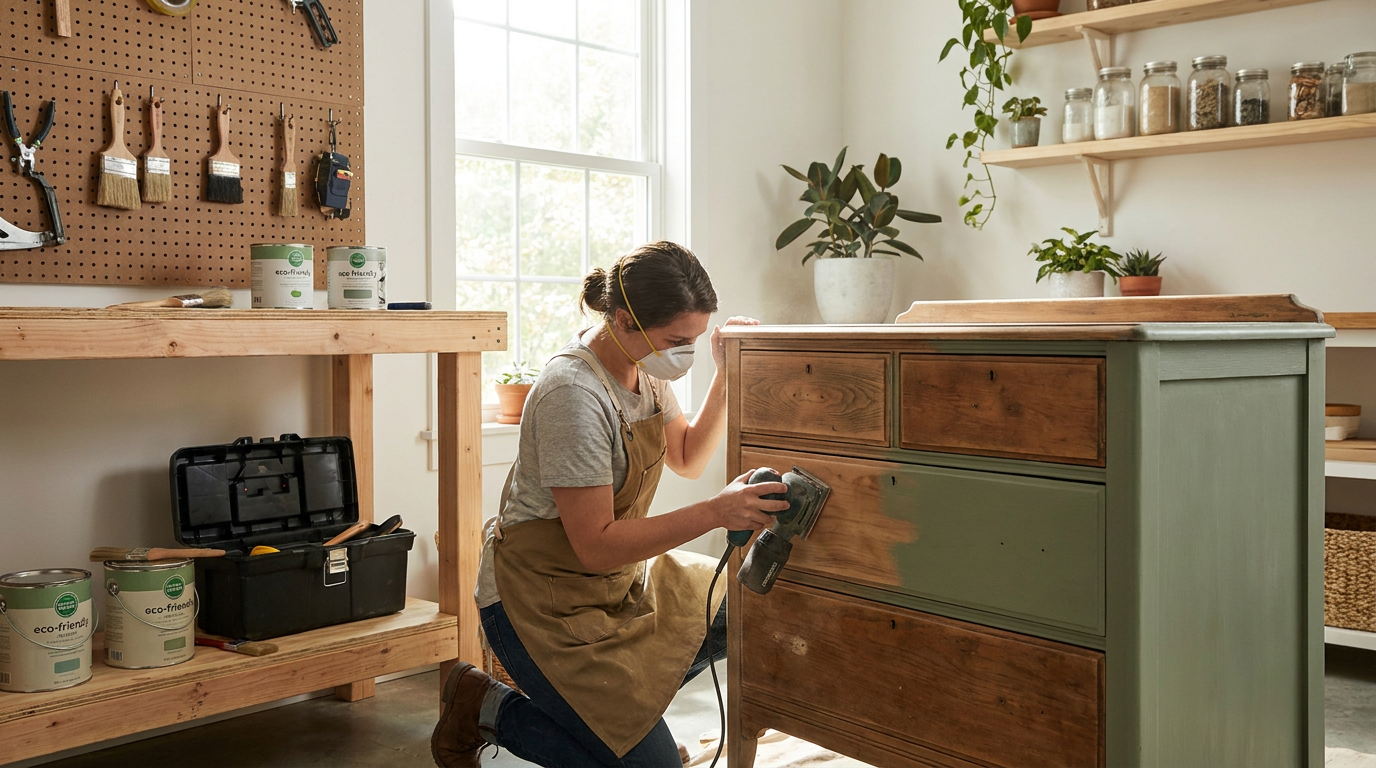
There are several practical ways to approach furniture reuse. You can restore a piece close to its original appearance if the material quality is worth preserving. You can also repurpose it entirely, such as turning a small dresser into an entryway console or converting a bedside table into a plant stand. Even minor updates such as replacing knobs, adjusting legs, or lining drawers can make an older piece feel fresh again.
If a piece is no longer right for your home, reuse still applies. Selling it, donating it, or offering it through a local marketplace extends its useful life beyond the first owner. EPA guidance supports this distinction clearly. Furniture reaches end of life only after primary use and reuse by secondary owners, which is a helpful reminder that a product’s story does not end when you decide to move it out of your own space.
Ideas for furniture reuse that feel intentional
- Turn an outdated hutch top into open wall shelving for a kitchen or office.
- Use an old trunk as a coffee table with hidden storage.
- Convert a wooden ladder into a blanket rack or bathroom towel display.
- Repaint mismatched side chairs in one colour palette to create a cohesive dining set.
- Use a small cabinet as a bathroom vanity if the dimensions and plumbing layout allow.
Reuse jars, containers, and packaging with more elegance
Container reuse is one of the simplest household habits to adopt, yet it can be surprisingly transformative. Glass jars from pasta sauce, jam, or pickles can become pantry storage, hardware organizers, vases, candle holders, or bathroom containers for cotton rounds and bath salts. Durable tins can store tea, sewing supplies, or charging cords. Sturdy boxes can be wrapped or labeled for tidy shelf storage.
What makes this effective is that it reduces two forms of consumption at once. You avoid throwing away a usable container, and you reduce the need to buy a new organizing product. In a home where storage systems can quickly become expensive, this is one of the most accessible forms of sustainability because it is immediate, low-risk, and easy to personalize.
To make reused containers feel less improvised and more integrated, consistency matters. Remove labels fully, choose a limited range of sizes where possible, and add simple labels if the containers will hold dry goods or household supplies. A clean row of matching or coordinated jars often looks more refined than many store-bought systems because the materials are honest and functional.
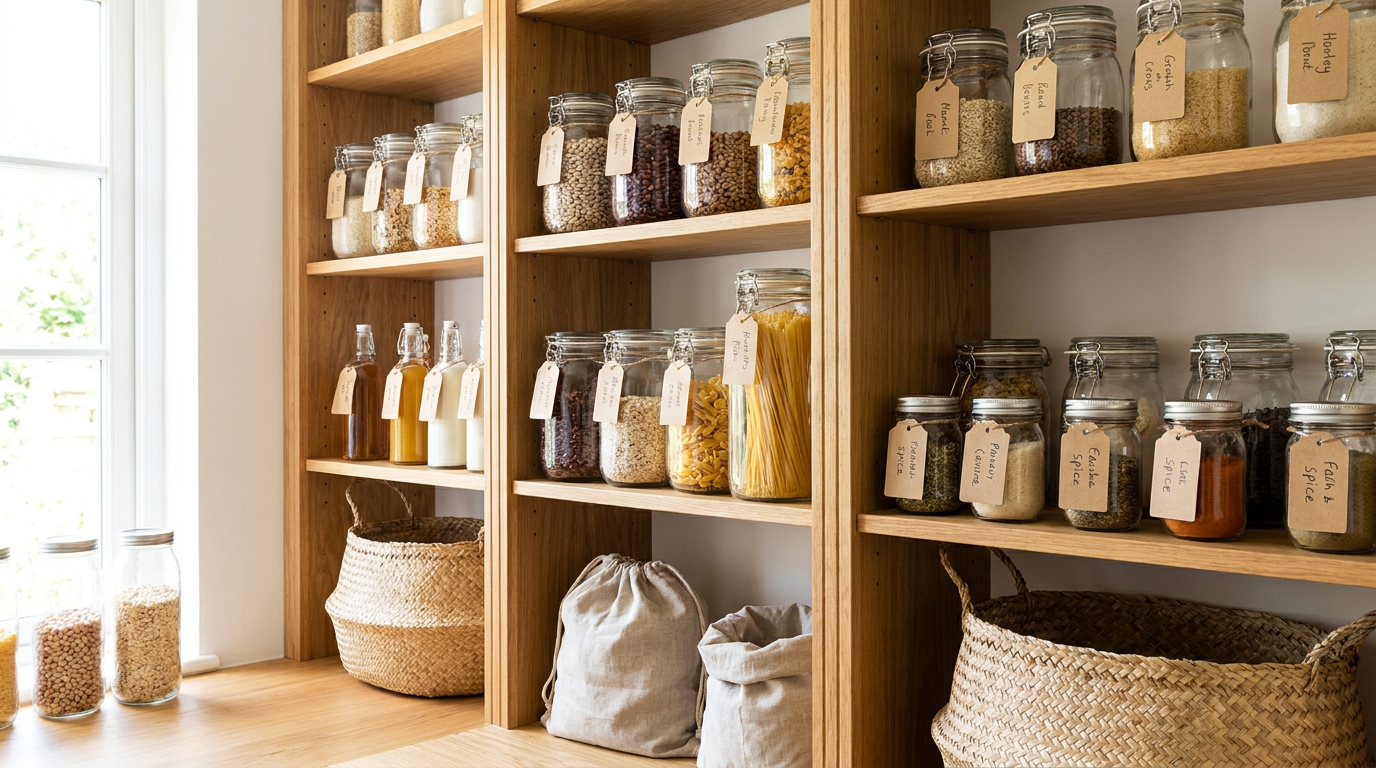
There is also room for creativity here. Wide-mouth jars can become herb planters on a sunny sill if drainage is handled carefully with stones and smaller nursery pots. Attractive bottles can hold homemade cleaning solutions or watering stems for plant propagation. Shipping boxes can be cut down into drawer dividers. These are small acts, but together they create a home that uses materials more fully before letting them go.
Reclaimed wood can bring warmth and purpose
Few materials are as versatile in home reuse projects as reclaimed wood. Wood from old shelves, pallets, barn boards, unused furniture, and renovation offcuts can often be transformed into headboards, floating shelves, hooks, picture ledges, benches, tray bases, or wall accents. The appeal is not only environmental. Reclaimed wood introduces grain variation, patina, and subtle imperfections that make a room feel layered and real.
That said, reclaimed wood should be approached carefully. Not every source is suitable for indoor use, especially if the wood may have been treated, contaminated, or structurally compromised. For projects inside the home, it is worth confirming where the material came from and whether it is safe to cut, sand, and seal. Clean, dry, stable boards are the best starting point.
One of the most practical applications is simple shelving. A reclaimed board paired with sturdy brackets can become a kitchen shelf, an office display shelf, or a narrow ledge in a hallway for keys and mail. This is the kind of project that does not demand advanced skill, but it still demonstrates the core value of reuse by turning leftover material into lasting function.
Another option is combining reused wood with new components. For example, an old tabletop can be mounted on a modern metal base, or reclaimed boards can be used as drawer fronts within a newly built cabinet system. This approach is especially useful for people who want a polished result while still preserving and showcasing older materials.
Cabinets, doors, fixtures, and hardware are often more reusable than people expect
Home renovations can generate an enormous amount of waste, much of it avoidable. Cabinets, doors, light fixtures, sinks, tiles, mirrors, and hardware are frequently removed because of style changes rather than because they have stopped functioning. When these components are still in good condition, they represent one of the biggest opportunities for practical reuse in the home.
This is where deconstruction becomes more valuable than demolition. A careful removal process protects materials so they can be reused onsite, sold, donated, or repurposed elsewhere. Canada’s circular economy framing supports this logic directly. Reuse and repurposing are not side ideas to sustainability. They are central strategies for retaining material value.
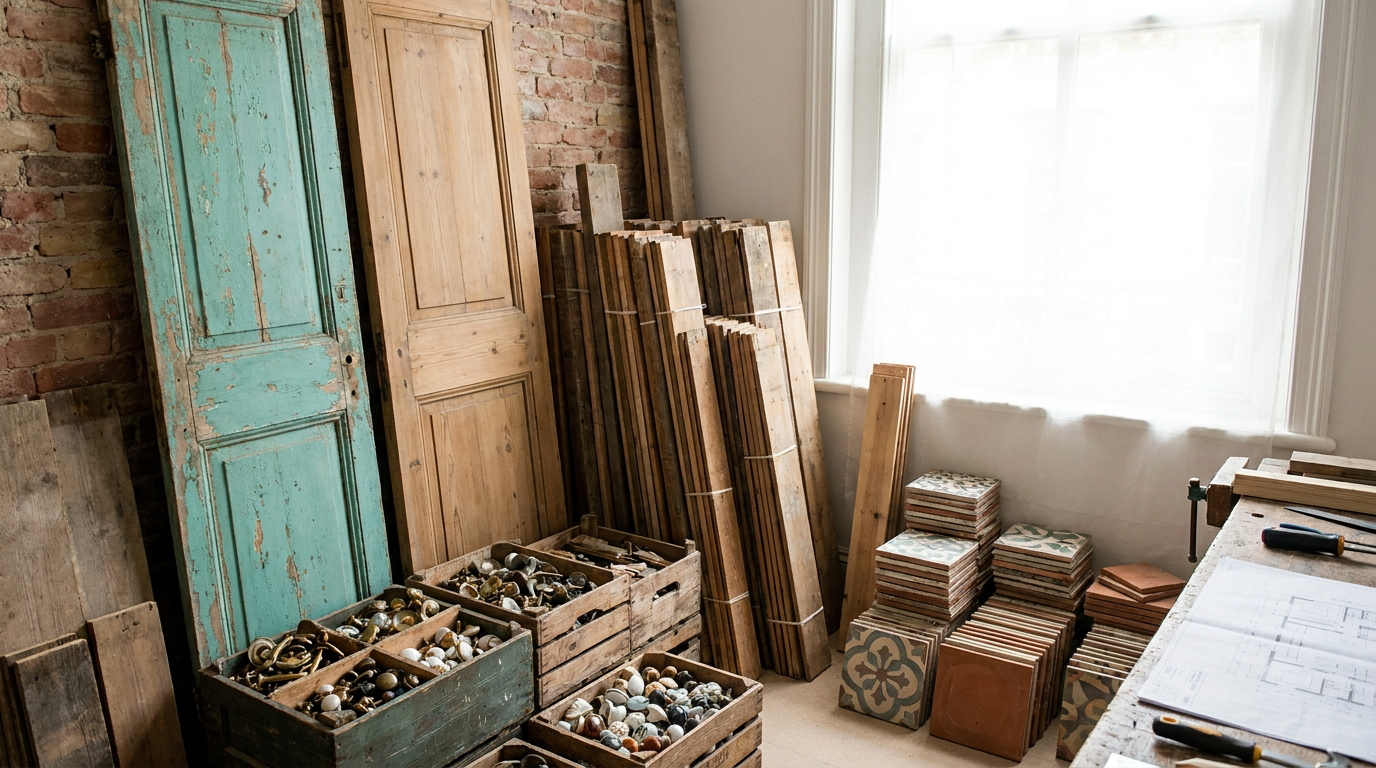
Kitchen cabinets can sometimes be repainted and rehung rather than discarded. Upper cabinets removed during a renovation can be reused in a garage, mudroom, basement, or laundry area where perfect aesthetics matter less than durable storage. Interior doors can become tabletops, sliding barn-style features, or decorative wall panels. Old knobs, pulls, and hinges can be cleaned and reused on furniture, built-ins, or even as hooks.
Lighting is another overlooked category. A dated fixture may need rewiring or a new shade, but that does not necessarily mean it should be thrown away. Many older fixtures are made with better materials than some new budget options, and a few targeted updates can make them feel current again. As always, safety should come first, especially with electrical components. If there is uncertainty, have a qualified professional assess the item before reinstallation.
Places to source and redirect renovation materials
Habitat ReStore is one of the most practical Canadian resources for both buying and donating reusable building materials and home goods. Because ReStore locations resell appliances, furniture, décor, and renovation materials, they can be useful whether you are searching for a replacement sink, affordable cabinets, vintage hardware, or a responsible place to donate what you are removing. Beyond convenience, there is a larger benefit. Habitat for Humanity Canada notes that ReStore profits support local homebuilding, so material reuse can support affordable housing as well as waste reduction.
Local salvage yards, architectural reuse businesses, and neighbourhood marketplaces can also be useful. Contractors sometimes know where reusable materials are in demand, and some communities host swap events or building material exchanges. The broader point is that renovation waste does not need to be the default outcome. With a little planning, many materials can stay in circulation.
Textiles are one of the easiest materials to repurpose well
Fabric is everywhere in the home, and much of it has a long second life once its original use is over. Old sheets can become cleaning cloths, dust covers, drawer liners, or simple sewing projects. Worn towels can be cut into reusable rags. Sweaters can be turned into cushion covers. Denim can become storage pockets, patchwork throws, or durable aprons for gardening and workshop tasks.
This is a category where perfection matters least. A cloth used for cleaning does not need to look new. A patchwork textile item can celebrate visible mending rather than hide it. Reuse becomes especially approachable here because the threshold for success is often very low. If the item performs a useful function and delays disposal, it is already delivering value.
For readers interested in home décor, textile reuse can also be surprisingly elegant. Vintage scarves can be framed as wall art. Linen remnants can become napkins. A well-loved quilt that is too delicate for daily use can be displayed as a seasonal wall hanging. These choices preserve materials while also preserving memory, which is one reason reused homes often feel warmer and more grounded than spaces filled entirely with new purchases.
If certain textiles are still in good wearable or household condition, direct reuse through donation is often preferable to cutting them up for secondary uses. EPA guidance encourages donating unused clothing and other durable goods, and that principle applies here as well. Keep the highest-value next use in mind. If someone can use an item as intended, that usually preserves more value than immediately downcycling it into rags.
Borrow, rent, and share instead of owning every material or tool
One of the most overlooked forms of material reuse is shared access. In many households, the waste issue is not only what we throw away but what we buy for short-term use and then store indefinitely. Tool libraries, lending groups, and neighbour-to-neighbour sharing reduce the demand for new products while making home projects more affordable and more realistic.
Canada.ca includes tool libraries among its examples of circular economy practices, and that is a useful reminder that reuse is not limited to objects already inside your home. It can also mean participating in systems that keep useful items circulating through many homes. A power sander, tile cutter, carpet cleaner, folding chairs, or even extra planters may be far more useful as shared community resources than as rarely used personal purchases.
This idea extends to furniture as well. Temporary needs, such as furnishing a guest room, hosting an event, or setting up a short-term rental space, can sometimes be met through borrowing, secondhand purchasing, or staged reuse rather than buying all-new items. These choices often feel minor in the moment, but they help normalize a more circular pattern of consumption over time.
Repair is often the bridge that makes reuse possible
Many home items are not thrown out because they are beyond repair. They are discarded because the repair seems inconvenient, unfamiliar, or not immediately visible as an option. A chair with a loose leg, a lamp with damaged wiring, a drawer that sticks, or a toaster with a replaceable part may all be recoverable with basic attention or professional help. Repair keeps materials in use and often restores function with less cost than replacement.
Repair cafés and community fix-it events can be especially helpful if you are not sure where to start. They provide a low-pressure environment where people can learn practical skills and assess whether an item is worth saving. Even when a repair is not successful, the process can improve future decisions by showing which products are designed for longevity and which are effectively disposable.
Thinking this way also influences what you buy next. Once you begin valuing reuse, repairability becomes a more important purchasing criterion. You may gravitate toward furniture with replaceable parts, appliances with service support, and materials that can be refinished rather than thrown away. That is one of the quiet strengths of material reuse. It changes not only what happens at the end of a product’s life, but what we choose at the beginning.
How to make reused materials look cohesive, not cluttered
One concern many readers have is aesthetic consistency. They like the idea of reuse, but they worry the result will feel chaotic. This is understandable, especially in smaller homes where every visual element has a strong presence. The good news is that reused materials do not need to match perfectly to feel cohesive. They need a clear relationship.
Colour is one of the easiest tools. Painting several unrelated items in complementary tones can create unity quickly. Texture is another. Reclaimed wood, brushed metal, woven baskets, and clear glass often work well together because they share a natural, understated quality. Repetition also helps. Using the same finish for hardware across different reused pieces can tie a room together more effectively than buying everything from one collection.
It can also help to balance reused statement pieces with simpler surroundings. A vintage cabinet, reclaimed shelf, or repurposed door tends to stand out more beautifully when walls, flooring, and soft furnishings remain calm and restrained. This keeps the home feeling intentional rather than overloaded. Reuse works best when it is curated, not when every surface becomes a project at once.
What to consider before reusing materials
Practical sustainability is still practical first. Not every material should be reused, and not every object deserves unlimited effort. Safety, hygiene, structural integrity, and indoor air quality all matter. Upholstered items may not be worth keeping if they contain mould, pests, or odours that cannot be resolved. Damaged electrical fixtures should be inspected. Painted surfaces in older homes may require caution if lead is a possibility. Water-damaged wood products can warp or deteriorate in ways that make them unsuitable for reuse.
It is also worth considering whether a project supports your actual lifestyle. Reuse should not become a storage burden where potentially useful items accumulate indefinitely without a plan. A healthy rule is to keep only what has a clear next use, a realistic repair path, or a near-term donation route. Otherwise, the home can start holding material in limbo rather than putting it to work.
When in doubt, think in terms of highest and best use. Can the item be reused as-is. Can it be repaired with a reasonable amount of effort. Can it be donated to a person or organization that will use it fully. Could a place like Habitat ReStore redirect it effectively. If the answer to all of these is no, then recycling or disposal may be the appropriate next step. The goal is not to save everything. It is to save what still has meaningful value.
A room-by-room approach to reuse at home
If you want to put these ideas into practice, it can be helpful to think room by room. In the kitchen, focus on jars, pantry containers, stools, shelves, and cabinet hardware. In the living room, look at side tables, lamps, baskets, textiles, and frames. In bedrooms, consider dressers, linens, headboards, and storage benches. In bathrooms, small cabinets, mirrors, and towel-to-rag conversions often make the most sense. In utility spaces, almost any sturdy storage piece can have a second life.
For renovations, try planning a reuse audit before demolition begins. Walk through the space and identify what can stay, what can move elsewhere in the home, what could be donated, and what might be sold. This simple exercise often changes the scope of what you remove and how you budget. Instead of assuming replacement, you start by evaluating retention and adaptation.
Households that do this consistently often find that reuse becomes part of how the home evolves. Rooms become more responsive to changing needs because materials are seen as flexible assets rather than one-time purchases. That mindset can reduce waste quietly over many years while producing spaces that feel more grounded and less disposable.
Why this small habit has bigger environmental value
At first glance, reusing a table, a jar, or a cabinet door may seem too minor to matter against the scale of national waste. But that perspective can be misleading. Household waste accounts for a significant share of what is disposed of in Canada, and the decisions that shape that waste stream happen one item at a time. Because reuse is often undercounted in diversion data, its role can be easy to underestimate. Yet it is exactly the kind of action that reduces pressure on extraction, manufacturing, packaging, transport, and disposal all at once.
It also supports a healthier cultural shift. For years, sustainability messaging has focused heavily on recycling, which can make waste reduction feel like something that happens after consumption. Reuse changes the sequence. It asks us to preserve value before waste is created. That is why circular economy language increasingly emphasizes reuse, repair, repurposing, and product life extension alongside recycling. These strategies are not merely alternatives. In many cases, they are better first steps.
There is a quieter emotional value as well. Homes built entirely on replacement can start to feel temporary, as though everything is waiting for its next update. Reused materials interrupt that pattern. They tell a story of care, adaptation, and continuity. They remind us that a well-made object can remain useful through changing tastes and changing households. That sense of continuity is not only sustainable. It is deeply human.
Conclusion: creativity is what makes reuse stick
The most successful reuse habits are rarely driven by guilt. They are driven by imagination, practicality, and the satisfaction of making something work well again. When you see an old shelf as future storage, a dated cabinet as a laundry room upgrade, or a glass jar as everyday organization, sustainability becomes less abstract and more integrated into normal life. That is what makes it durable.
If you are just beginning, start small. Choose one category this week, perhaps furniture, pantry storage, or textiles, and identify a single item that can be repaired, repurposed, donated, or reused in place. Then notice how that decision changes the way you look at the rest of your home. Most often, the habit grows naturally from there.
Creative material reuse is not about creating a perfect zero-waste home overnight. It is about making better use of what already exists, keeping useful goods in circulation longer, and building a home with more character and less unnecessary waste. In a time when households generate a significant share of the waste stream, that is not a small gesture. It is a practical, elegant way to live more lightly while making your space feel more like your own.


No Comment! Be the first one.