



There is something deeply satisfying about a home that seems to understand you. Not in a flashy or futuristic way, but in a gentle, practical sense that makes daily life feel smoother. The lights soften in the evening, the temperature is just right when you wake up, and the house settles into a quieter rhythm when everyone leaves for the day. This is the real appeal of AI-powered home automation. It is not simply about owning smart devices. It is about creating a home that supports your routines, respects your energy, and brings a little more calm into ordinary life.
Table Of Content
- Why AI Home Automation Feels So Different
- The Smart Thermostat: Small Device, Big Lifestyle Upgrade
- Comfort That Follows Real Life
- Lighting, Mood, and the Emotional Texture of Home
- AI and the Gentle Art of Reducing Household Stress
- Energy Efficiency Without the Feeling of Sacrifice
- A Home That Learns Without Taking Over
- Wellness at Home: Air Quality, Sleep, and Everyday Ease
- Privacy, Trust, and Choosing Smart Technology Wisely
- From Standalone Gadgets to a More Thoughtful Home System
- Common Misconceptions About AI Home Automation
- How to Begin Without Overcomplicating Your Home
- The Future of Smart Home Living Is More Human, Not Less
- Final Thoughts
AI-powered home automation is a system of connected smart devices—thermostats, lighting, sensors, and dashboards—that use artificial intelligence to learn a household’s routines and adjust automatically rather than waiting for manual commands. Instead of following a fixed schedule, these systems recognize patterns such as when the home is empty, when residents are asleep, or when someone is on their way back, and respond in real time: warming a room before waking hours, dimming lights as evening approaches, or shifting into an energy-saving mode when no one is present. The result is a home that requires less day-to-day management while still supporting comfort and reducing wasted energy. For homeowners, the real benefit is not novelty but relief: fewer small decisions to track, a more consistent indoor environment, and a home that quietly adapts to real life instead of demanding constant oversight.
For many homeowners, the conversation around smart homes has focused too heavily on technical specifications. People hear terms like algorithms, sensors, integrations, and machine learning, then assume the whole category is complicated or only meant for luxury properties. In reality, the most meaningful benefit of AI in the home is often emotional. It can reduce the small, repetitive decisions that quietly drain us, help spaces feel more comfortable at the right moments, and make the home itself feel more responsive rather than demanding.
That lifestyle shift matters. Home is where we rest, gather, focus, recover, and connect. When technology helps those experiences feel easier, it becomes more than a gadget. It becomes part of a healthier rhythm for everyday living. AI-powered systems can support comfort, improve energy efficiency, and even offer peace of mind, all while working quietly in the background.
This is especially relevant now, as homes are expected to do more than ever. They are offices, family hubs, wellness spaces, and places of restoration. A home that can intelligently manage temperature, lighting, occupancy, and energy use has the potential to feel less chaotic and more nurturing. The joy of home automation lies in that subtle transformation, where your space starts to feel like it is caring for you, too.
The best smart homes do not feel high-tech. They feel calm, intuitive, and beautifully easy to live in.
Why AI Home Automation Feels So Different
Traditional home technology often asked homeowners to do more. You programmed it, checked it, adjusted it, and tried to remember whether you had set everything correctly. AI changes that relationship. Instead of waiting for commands alone, smart systems can learn habits, recognize occupancy patterns, respond to your location, and adapt settings over time. That means the home starts behaving less like a machine that needs oversight and more like an environment that quietly cooperates with your lifestyle.
One of the most powerful benefits is the reduction of what many people now call cognitive load. These are the tiny decisions and reminders that fill modern life. Did I turn the heat down before leaving? Are the lights still on upstairs? Will the house feel freezing when we get back? Did I forget to switch the fan or a connected appliance off? None of these tasks are dramatic on their own, but together they add friction to the day. AI-driven automation helps remove that friction by handling routine adjustments automatically and intelligently.
Emotionally, this creates a noticeable difference. A responsive home feels reassuring. It can support better mornings by warming rooms before you wake, gentler evenings by dimming lights as the day winds down, and more restful absences by shifting into energy-saving settings when no one is home. Over time, these little moments shape the overall feeling of the house. It becomes less about management and more about comfort.
There is also a confidence that comes from being able to check or adjust your home remotely. Whether you are commuting, traveling, or simply in bed and too cozy to get up, remote access creates a new kind of ease. It is not indulgent. It is practical, and in many households, it quickly becomes one of those conveniences people cannot imagine living without.
The Smart Thermostat: Small Device, Big Lifestyle Upgrade
If there is one place to begin with AI-powered home automation, it is often the thermostat. Heating and cooling shape the emotional experience of a home more than people sometimes realize. Temperature affects sleep, focus, comfort, mood, and even how welcoming a room feels. A home that is too warm, too cold, or unevenly heated can feel draining. A home that stays balanced with less effort feels instantly more livable.
Natural Resources Canada notes that space heating represents almost two thirds of home energy use in Canada. That makes heating control one of the most meaningful smart-home upgrades for both practical savings and daily comfort. Rather than asking homeowners to constantly tweak settings, smart thermostats can learn preferences, recognize when the household is asleep or away, and adjust automatically. ENERGY STAR also points to features such as geofencing, remote control, schedule learning, and usage insights, all of which help a home feel more responsive and less wasteful.
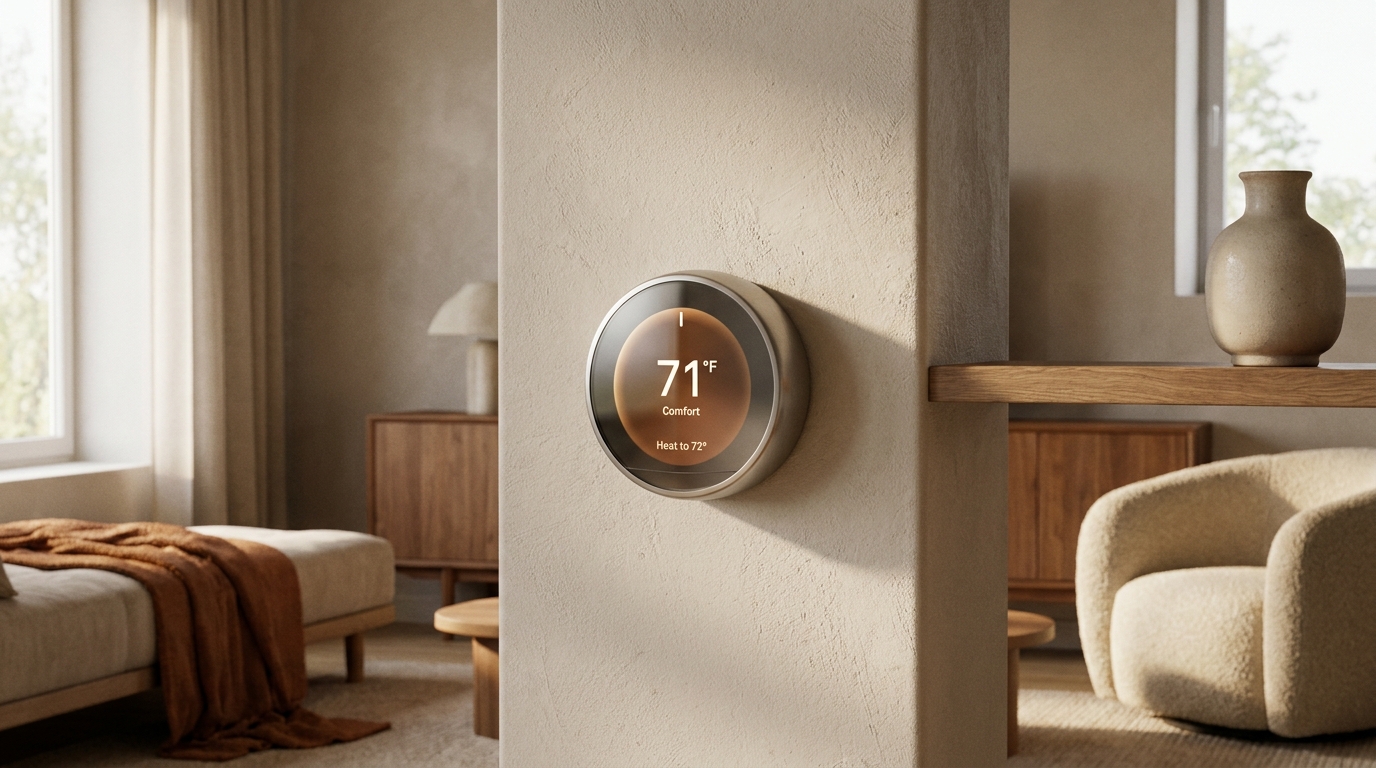
What makes this so valuable is not only the technology itself but what it removes from your day. You no longer have to remember to lower the heat when leaving for work or worry about returning to a chilly house after dinner out. The thermostat can use occupancy sensing or your phone’s location to make those changes for you. That creates a home that feels attentive. It is a small shift, but a deeply pleasant one.
There is a financial benefit as well. According to ENERGY STAR, certified smart thermostats save the average household about 8% on heating and cooling bills, or around $50 per year, with higher savings in some homes. In colder climates, where heating plays such a major role in energy use, those savings can feel especially meaningful. NRCan also states that lowering a home’s temperature by 1°C over eight hours can save about 2% on heating energy consumption. That simple fact helps illustrate why automated setbacks during sleep or away hours can make such a practical difference.
There is something psychologically comforting about knowing your home is making thoughtful choices in the background. It is not simply saving money. It is reducing waste while preserving comfort. That balance matters because many people resist energy-saving habits when they feel like a sacrifice. AI makes the process gentler. Instead of asking you to endure discomfort for the sake of efficiency, it helps your home coordinate comfort and conservation more gracefully.
Comfort That Follows Real Life
One of the biggest differences between a basic programmable thermostat and a smart thermostat is flexibility. A programmable model follows the schedule you set until you manually change it. A smart thermostat can adapt. It may recognize that your weekdays have shifted, that you tend to come home early on Fridays, or that certain rooms need different support during a cold snap. This responsiveness makes the home feel more aligned with real life, which is rarely perfectly scheduled.
ENERGY STAR highlights geofencing as a valuable feature, allowing the thermostat to respond when household members leave or return. In everyday terms, that means the home can quietly shift into energy-saving mode when no one is there and begin restoring comfort before arrival. It is a wonderful example of invisible convenience. You do not need to think about the transition because the house is already doing it for you.
NRCan recommends winter settings of about 17°C when sleeping or away and 20°C when awake and at home for energy savings and comfort. A smart thermostat can make those transitions seamless. Instead of asking everyone in the family to remember temperature rules, the home itself carries part of that responsibility. The result is less tension between comfort and discipline, which is often where sustainable habits tend to fail.
Lighting, Mood, and the Emotional Texture of Home
While temperature shapes physical comfort, lighting shapes emotional atmosphere. AI-powered lighting systems can do far more than switch bulbs on and off with an app. They can learn patterns, respond to occupancy, soften brightness at night, and support routines that make the home feel calmer and more beautiful. When used thoughtfully, smart lighting becomes part of how a home nurtures energy in the morning and relaxation in the evening.
Think about the difference between entering a dark house after work and arriving to a softly lit hallway and kitchen. One feels abrupt. The other feels welcoming. Or consider the relief of not having to remind children to turn lights off in every room, or the comfort of pathways that illuminate automatically during nighttime hours. These are small moments, yet they add emotional richness to the way a home is experienced.
AI can also support what many designers now refer to as circadian lighting, where brightness and warmth shift in ways that better suit the body’s natural rhythms. In the morning, cooler and brighter light can encourage alertness. In the evening, warmer and dimmer settings can help signal rest. While no lighting system alone transforms wellness, these gentle cues can support a home atmosphere that feels more balanced and restorative.
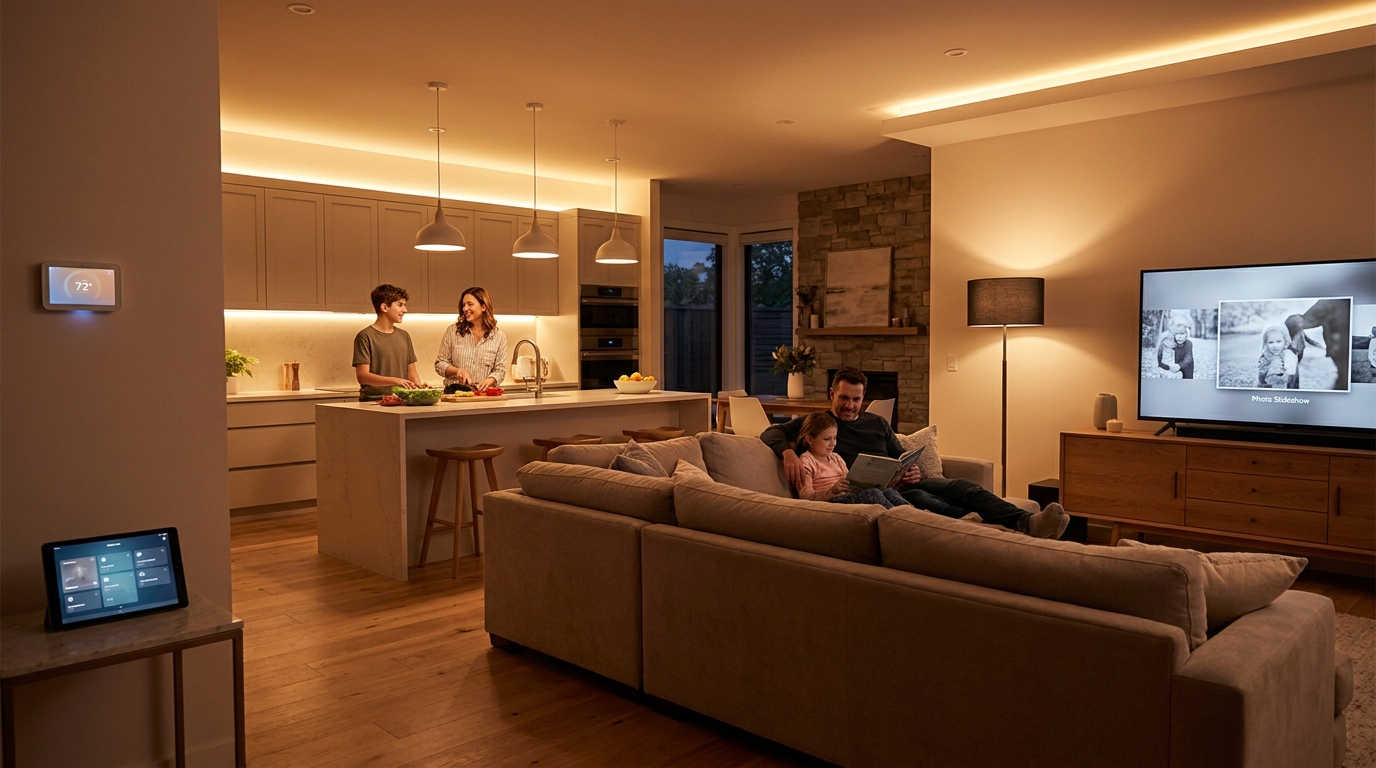
For busy households, lighting automation also reduces the number of interruptions in the day. Occupancy-based control, which is part of the ENERGY STAR Smart Home Energy Management Systems specification, helps ensure lights respond to whether spaces are actually being used. That saves energy, but it also spares you from the low-level frustration of managing every lamp and overhead fixture manually. The best version of smart living is often this simple: fewer repetitive tasks and a better feeling in the room.
AI and the Gentle Art of Reducing Household Stress
One of the most overlooked benefits of AI-powered living spaces is stress reduction. We often think of household stress in dramatic terms such as major repairs, bills, or emergency issues. But much of home-related stress is subtle. It lives in reminders, chores, repetitive checks, and the persistent mental energy required to keep everything running smoothly. Technology that helps manage those background tasks can make a real difference to how the home feels emotionally.
Consider what happens when automation is layered thoughtfully into daily routines. The thermostat adjusts itself. The lights respond to use and time of day. A dashboard offers a simple view of energy use. Notifications appear only when something actually needs attention. You stop carrying the home entirely in your head. Instead of being the constant manager of your environment, you become more of a participant in it. That shift is where much of the joy lies.
This is particularly meaningful for families, caregivers, and anyone balancing a full schedule. Homes are full of moving parts, and the responsibility often falls unevenly. AI cannot replace care or organization, but it can make domestic life feel lighter. It helps create a sense that the house is cooperating with your efforts rather than adding to your workload.
In that way, home automation supports more than convenience. It supports emotional bandwidth. It gives people back small pieces of attention, which can then be spent on rest, relationships, or simply enjoying the space they worked hard to create.
Energy Efficiency Without the Feeling of Sacrifice
There has long been an assumption that energy-conscious living must feel restrictive. Lower the heat, turn everything off, track every habit, and perhaps accept a less comfortable home in exchange. AI home automation offers a more appealing path. It allows households to be more efficient without constantly thinking about efficiency. That is an important difference because lasting habits are easier to maintain when they fit naturally into life.
Smart thermostats are the clearest example, but they are increasingly part of broader smart home energy management systems. These systems may include occupancy sensing, connected thermostats, user feedback on energy use, low standby power, and a simple dashboard that helps homeowners understand where energy is going. The point is not to turn the house into a command center. It is to make energy decisions easier, clearer, and less intrusive.
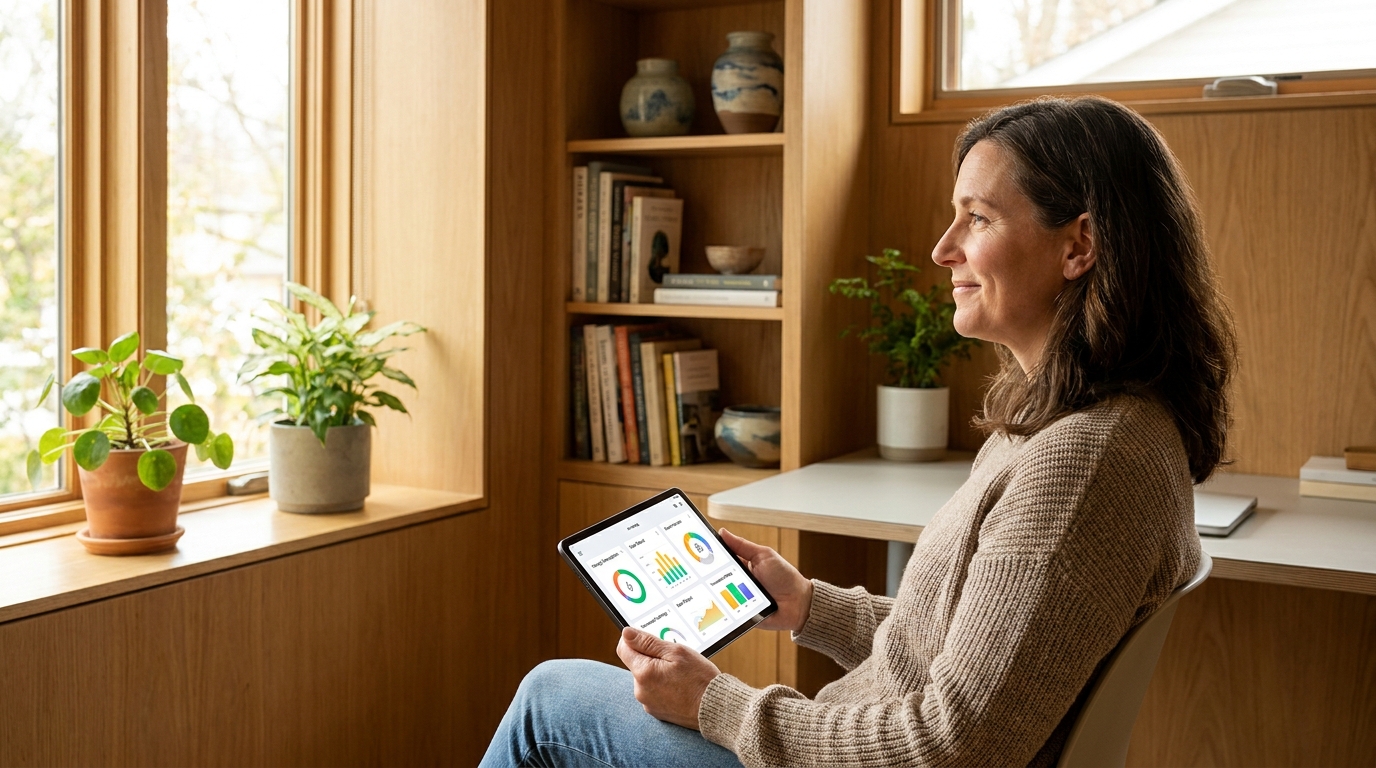
When homeowners can see useful patterns, they often make better choices without feeling pressured. Perhaps you notice that weekday heating spikes because the system stays in comfort mode too long after everyone leaves. Perhaps you realize evening lighting is more efficient than expected, while an old appliance is the real drain. AI-supported insights make the invisible visible, and that can feel empowering rather than overwhelming when presented well.
There is also a growing connection between AI-enabled controls and major home upgrades such as heat pumps. In Canada, smart controls are increasingly discussed alongside electrification improvements and retrofit programs. NRCan’s Canada Greener Homes Initiative has even listed a $50 grant amount for replacing a manual thermostat with a programmable or smart or adaptive thermostat when paired with another eligible retrofit measure. While that incentive is modest, it reflects something bigger: smart controls are no longer niche accessories. They are part of a mainstream conversation about better, cleaner, more resilient homes.
A Home That Learns Without Taking Over
Some homeowners hesitate because they worry AI means surrendering control. In practice, the best smart home systems do not take over your household. They support it. You still set preferences, choose comfort ranges, decide what data to share, and adjust automations as your life changes. Good automation should feel like a trusted assistant, not an overbearing manager.
This distinction matters because every household is personal. Some people want full routines built around sleep, work, and school schedules. Others prefer just a few thoughtful conveniences such as remote temperature control, occupancy-based lighting, or alerts if something unusual happens. AI home automation is at its best when it adapts to the household rather than asking the household to adapt to the technology.
Wellness at Home: Air Quality, Sleep, and Everyday Ease
As conversations about wellness move more deeply into home design, AI-powered systems have found a natural place there. Wellness is not only about spa bathrooms or meditation corners. It is also about how the home supports sleep, breathing, temperature comfort, and emotional calm. AI can contribute meaningfully in each of these areas by helping the environment stay more stable and responsive.
Indoor air quality is one example. Connected home systems may pair with ventilation or filtration solutions to help homeowners monitor conditions and respond more intelligently. While many households first adopt smart technology for convenience, they often begin to appreciate these wellness benefits over time. Better temperature consistency at night can improve sleep comfort. More intentional evening lighting can support winding down. Better air awareness can make the home feel fresher and more cared for.
There is also value in the predictability that automation brings. Human nervous systems respond well to environments that feel safe and steady. A home that is consistently comfortable, softly lit, and well managed creates fewer daily irritations. That may sound simple, but simplicity has a profound effect on quality of life. Comfort is not superficial. It shapes how we recover from stress and how much we enjoy being at home.
When AI is used well in the home, the result is not spectacle. It is a steadier, softer, more supportive everyday experience.
Privacy, Trust, and Choosing Smart Technology Wisely
No conversation about AI-powered living spaces is complete without acknowledging privacy and trust. For many homeowners, this is the point where interest meets hesitation. People want the benefits of a more responsive home, but they also want to feel confident about how their information is being collected, stored, and shared. That concern is not unreasonable. It is an important part of making good decisions.
NIST’s work around artificial intelligence emphasizes that trustworthy AI should be designed to enhance quality of life, while its smart-home privacy research shows just how central privacy and security concerns are to adoption. The encouraging news is that convenience and privacy are not mutually exclusive. Reputable smart home products offer settings, permissions, and controls that allow users to decide how much information is shared and how the system behaves.
There is also a common misconception that smart devices automatically mean your personal usage data is being handed over broadly. ENERGY STAR has noted that the federal government does not receive personally identifiable information or individual usage data from users of certified smart thermostats. That reassurance matters, although homeowners should still take responsibility for reading privacy policies, updating passwords, enabling secure authentication, and choosing brands with a credible reputation for security.
In lifestyle terms, trust is part of comfort. A home only feels truly supportive when the people inside it feel respected. That is why thoughtful adoption matters. Start with devices that solve a real problem, buy from reputable companies, review app permissions, and use the privacy settings available to you. Smart living should make you feel more at ease, not more exposed.
From Standalone Gadgets to a More Thoughtful Home System
One of the most important trends in this space is the move away from isolated devices toward more integrated systems. A single smart bulb or thermostat can be useful, but the real magic often happens when devices communicate with one another in a simple, coordinated way. The thermostat knows when the house is empty. The lighting responds to occupancy and time of day. A dashboard translates usage into understandable feedback. The whole home begins to behave more cohesively.
This integrated approach aligns beautifully with the way people actually live. Homes are not a collection of disconnected moments. They are ecosystems of routines. Morning warmth, school departures, work hours, dinner prep, nighttime winding down, and sleeping all create patterns. AI is especially helpful when it supports those patterns holistically rather than solving just one small issue at a time.
Related concepts such as demand response, time-of-use electricity pricing, heat pump controls, connected appliances, voice assistants, and home resilience all fit into this broader vision. In some areas, smart systems can even help households respond to shifts in energy demand or pricing, quietly favoring more efficient timing without major lifestyle disruption. For homeowners, this means technology is becoming more context-aware and more useful in the background.
It also means design matters more than ever. The most successful AI-powered living spaces are not cluttered with visible tech. They are warm, beautiful, and easy to inhabit. Technology works best when it fades into the atmosphere of the home and allows comfort to take center stage.
Common Misconceptions About AI Home Automation
As interest grows, so do assumptions. Some of them prevent homeowners from exploring technology that could genuinely improve daily life. It helps to clear away a few of the most common myths so that smart home decisions can be made with more confidence and less noise.
-
It is only about convenience. Convenience is part of the story, but not the whole story. AI home automation can reduce mental effort, improve consistency in comfort, support energy savings, and help the home feel calmer and more attuned to your routines.
-
Smart thermostats are the same as programmable thermostats. They are related, but not identical. A programmable thermostat follows a schedule you enter. A smart thermostat can learn preferences, use geofencing, provide remote access, and adjust more dynamically over time.
-
Smart homes are only for luxury properties. In reality, many of the most practical upgrades are modest and widely accessible. A smart thermostat, occupancy-based lighting, or a simple energy dashboard can make a meaningful difference in ordinary family homes, condos, and smaller spaces.
-
Every smart home saves the same amount. Savings vary based on climate, equipment, home size, insulation, and household habits. The value is real, but it is not identical for everyone. Thoughtful setup matters.
-
AI in the home automatically compromises privacy. Good products are built with user controls and security practices in mind. Privacy requires attention, but it is not incompatible with comfort and automation.
How to Begin Without Overcomplicating Your Home
The loveliest way to approach home automation is slowly. You do not need to transform your entire house overnight or build a fully synchronized system from day one. In fact, the most satisfying upgrades usually begin with one area of daily friction. If mornings feel uncomfortable, start with a smart thermostat. If evenings feel harsh or chaotic, start with lighting scenes. If energy costs feel mysterious, begin with a device or platform that offers clearer insights.
Before buying anything, think about the emotional result you want. Do you want the house to feel warmer when you wake up? More restful at night? Easier to leave and return to? More efficient without constant monitoring? These questions lead to better decisions than shopping by feature list alone because they keep the focus where it belongs: on your lived experience of home.
It can also help to choose products that are known for interoperability and ease of use. As connected homes become more mainstream, homeowners are increasingly paying attention to systems that work well together and can grow over time. The goal is not to create a complicated network of apps and devices. The goal is a home that feels simpler, even as it becomes smarter.
- Start with comfort: A smart thermostat is often the most practical first step.
- Focus on one routine: Morning comfort, evening lighting, or away-mode energy savings are excellent places to begin.
- Choose reputable brands: Look for strong privacy settings, clear user controls, and trusted certifications.
- Keep the setup human: Automation should reflect your household’s rhythms, not force entirely new ones.
- Review and refine: The best systems improve over time as you notice what truly helps.
The Future of Smart Home Living Is More Human, Not Less
For all the discussion around artificial intelligence, sensors, and connected devices, the most exciting future for smart homes is surprisingly human. It is not about making houses feel robotic. It is about making them feel more supportive, more intuitive, and more emotionally intelligent in the ways that matter. A home that gently adjusts to your needs can create more room for rest, hospitality, focus, and joy.
This is why the conversation around AI-powered living spaces is evolving. It is no longer just about gadgets or novelty. It is about wellness, energy awareness, design integration, resilience, and quality of life. The technology is becoming more sophisticated, but the purpose is becoming simpler: to help homes serve the people who live in them more beautifully.
That may mean lower heating and cooling bills. It may mean a softer transition into evening. It may mean fewer arguments over the thermostat, less wasted energy in empty rooms, or greater peace of mind while traveling. These are not dramatic cinematic moments. They are better everyday moments, and often that is exactly what makes them valuable.
When a home supports you well, you feel it in subtle ways. You relax faster. You move through routines with less resistance. You spend less time managing the environment and more time enjoying it. AI-powered home automation, at its best, offers this kind of living: not colder or more mechanical, but warmer, calmer, and quietly more joyful.
Final Thoughts
Home has always been about more than walls, finishes, and square footage. It is about how a space holds your life. AI-powered home automation offers a thoughtful new layer to that experience, one that can help the home feel more comfortable, more efficient, and more emotionally generous. From smart thermostats that learn your rhythms to lighting that supports rest and occupancy sensing that reduces waste, the real promise of the smart home is not complexity. It is ease.
For homeowners who care about atmosphere, wellness, and the simple pleasure of a home that works beautifully, this technology is worth seeing through a different lens. It is not only a technical upgrade. It is a lifestyle one. And when chosen with care, it has the potential to make everyday living feel not just smarter, but lighter and more deeply enjoyable.



No Comment! Be the first one.