

10 Easy Ways to Conserve Water at Home Without Sacrificing Comfort
Water conservation can sound like a big commitment, but in everyday life it is often built from small decisions that are easy to repeat. A shorter shower, a repaired leak, a full dishwasher load, or a more efficient fixture may seem minor on its own, yet these choices add up quickly across weeks, months, and years. For most households, the goal is not to live with less comfort. The goal is to remove waste that does not add anything meaningful to daily life.
Table Of Content
- Why Easy Water Conservation Matters More Than People Think
- 1. Fix Leaks as Soon as You Notice Them
- 2. Shorten Your Shower by Just a Few Minutes
- 3. Upgrade to a Water-Efficient Showerhead
- 4. Turn Off the Tap While Brushing, Shaving, or Scrubbing
- 5. Install Faucet Aerators and Efficient Bathroom Fixtures
- 6. Run Only Full Loads in the Dishwasher and Washing Machine
- 7. Be Smarter About Kitchen Water Use
- 8. Rethink Toilet Water Use and Upgrade Older Models When Needed
- 9. Keep a Reusable Pitcher or Bottle of Cold Water in the Fridge
- 10. Learn Your Water Use Patterns and Track Small Changes
- Common Myths About Conserving Water at Home
- Myth 1: Low-flow fixtures always feel weak
- Myth 2: Small drips do not matter
- Myth 3: Water conservation requires expensive renovations
- Myth 4: Only outdoor watering really matters
- How Water Conservation Supports a More Resilient Home
- A Simple Routine to Start This Week
- Final Thoughts
That is an important distinction because many people still assume saving water means inconvenience. In reality, modern home water conservation is often practical, low cost, and almost invisible once a new routine is in place. Health Canada has noted that simple changes to household habits and equipment can reduce water use in the home by up to 40%, which is a reminder that modest actions can have a substantial effect. If you are looking for a more sustainable home, water is one of the clearest places to start.
There is also a broader reason this matters. In Canada, household water demand has grown faster than population, and federal environmental indicators have pointed to the ways climate change is affecting the water cycle and long-term water availability. Water conservation is not only about a monthly bill. It also touches infrastructure pressure, energy use, resilience during dry periods, and the resources required to heat and deliver water into our homes.
For most North American households, the biggest opportunity is indoors. EPA WaterSense materials say about 70% of household water use happens inside the home, with bathrooms making up the largest indoor share. That means the most effective changes are often simple bathroom and kitchen habits, supported by a few well-chosen upgrades. The good news is that these are some of the easiest home maintenance improvements you can make.
This guide walks through 10 easy ways to conserve water at home, with a focus on everyday actions that nearly anyone can implement. None of them require a major renovation. Most can be started today, and several will save both water and energy at the same time.
Why Easy Water Conservation Matters More Than People Think
Water is so available in most homes that it can be easy to treat it as an unlimited utility. You turn a handle, press a lever, or start a machine, and clean water arrives immediately. Because the process feels effortless, the waste can be almost invisible. A dripping faucet sounds minor. An extra few minutes in the shower feels harmless. Running a half-full dishwasher seems like a small exception. Across a household, though, these habits quietly become patterns.
What makes home water conservation especially worthwhile is that the benefits extend beyond water itself. Every gallon of hot water that is not used also reduces the energy needed to heat it. Every avoided leak can reduce wear on fixtures, trim moisture risk, and lower utility costs. In that sense, water conservation is not only an environmental choice. It is also a smart maintenance habit and a practical part of running a healthier, more efficient home.
Good water conservation is rarely about sacrifice. In most homes, it is about noticing where water is wasted and replacing that waste with better habits or better-performing fixtures.
It is also worth addressing a few common misconceptions. One is that only outdoor watering really matters. Outdoor use can be significant in some seasons, but the largest routine opportunities in many homes are found indoors, especially in bathrooms and kitchens. Another misconception is that low-flow fixtures always perform poorly. Modern efficient fixtures are designed to maintain usability while reducing unnecessary water use, and many homeowners find there is little to no comfort tradeoff once they switch.
1. Fix Leaks as Soon as You Notice Them
If there is one water-saving action that combines simplicity, cost effectiveness, and maintenance value, it is fixing leaks promptly. A small drip can seem too minor to worry about, especially if it does not interfere with everyday use. But leaks can waste a surprising amount of water over time, and they may also signal worn parts that could lead to bigger plumbing issues later. A quiet toilet leak is especially easy to miss because it may not be visible at all.
Start by checking the most common trouble spots in your home. Look at bathroom faucets, kitchen faucets, showerheads, under-sink connections, and exposed supply lines around toilets and washing machines. Pay attention to subtle signs such as staining, mineral buildup, moisture under cabinets, or the sound of water running when no fixture is on. If your water bill suddenly rises without a clear reason, a hidden leak should move to the top of your list.
Toilets deserve special attention because they can leak internally without obvious puddles. A dye tablet test or even a few drops of food colouring in the tank can help you see whether water is seeping into the bowl between flushes. If color appears in the bowl without flushing, the flapper or fill mechanism may need adjustment or replacement. These parts are usually inexpensive, and replacing them is often a straightforward DIY task.
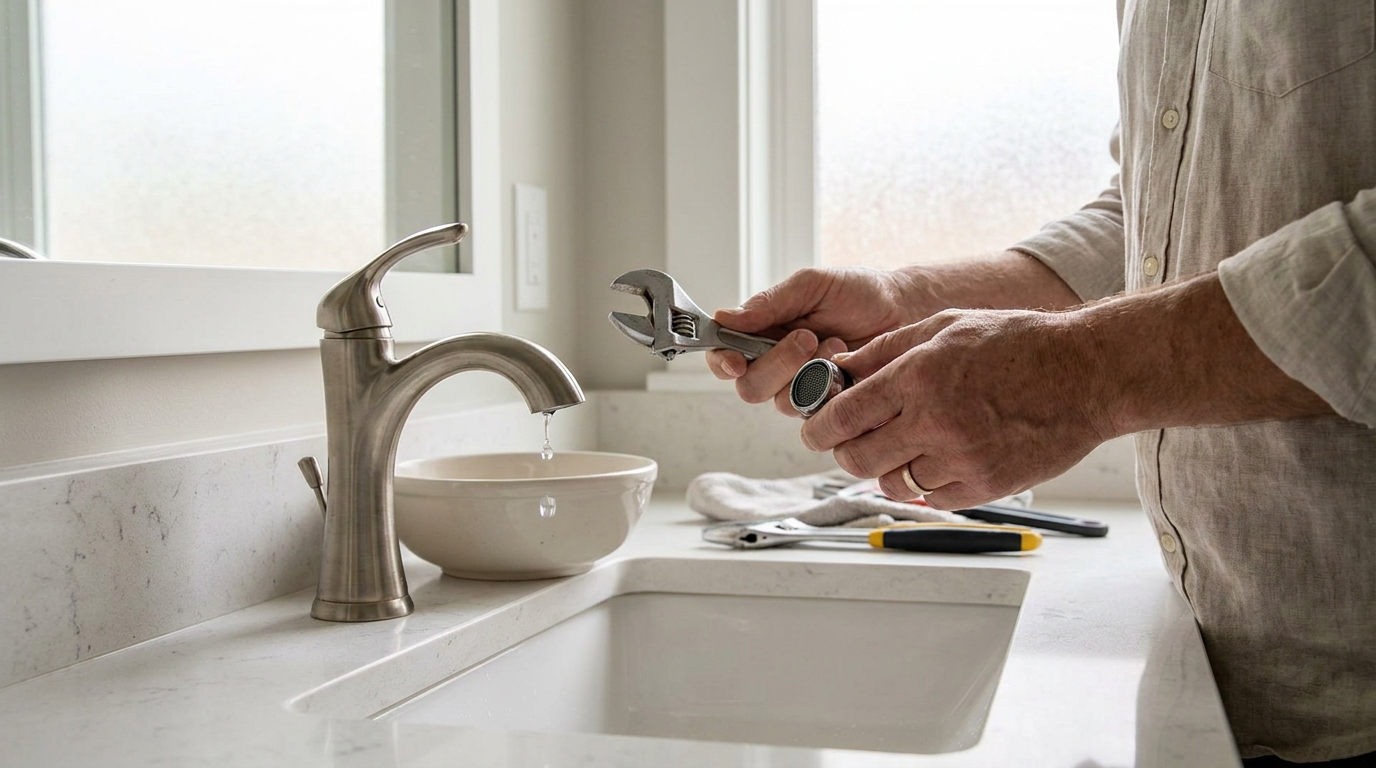
Fixing leaks quickly helps in three ways. It conserves water, protects surfaces from moisture damage, and gives you a more accurate picture of your real household usage. If your goal is practical sustainability, leak detection is one of the best places to begin because it removes waste without asking anyone in the home to change their comfort level.
2. Shorten Your Shower by Just a Few Minutes
Showers are one of the clearest examples of a habit that feels small but adds up quickly. In many households, showering is a daily routine, and a few extra minutes each time can create substantial water and energy use over the course of a year. The encouraging part is that you do not need to cut your shower in half to make a difference. Even trimming a few minutes can have a meaningful effect.
This is especially relevant because shower water is often heated. That means every minute saved reduces both water consumption and the energy required to warm it. For households trying to manage utility costs while also making lower-impact choices, showers sit at the intersection of comfort, efficiency, and sustainability. It is one of the easiest places to save without any renovation at all.
A practical approach is to choose one simple limit that feels realistic. You might reduce a 12-minute shower to 9 minutes or a 10-minute shower to 8 minutes. Using a timer, a playlist with a set length, or a bathroom clock can help make the habit feel less abstract. The aim is not to rush unpleasantly. It is simply to notice where extra water is being used without adding much value.
If multiple people live in your home, consistency matters more than perfection. A household-wide agreement to keep showers a little shorter often works better than one person attempting a dramatic change. Over time, this becomes one of those quiet efficiencies that lowers water use without making the home feel any less comfortable.
3. Upgrade to a Water-Efficient Showerhead
If you want a set-and-forget upgrade with strong long-term value, a water-efficient showerhead is one of the best options available. EPA WaterSense reports that replacing one showerhead with a WaterSense-labeled model can save an average family about 2,900 gallons of water per year. Because less hot water is used, that change can also reduce energy bills. Few upgrades are this simple while delivering benefits in two utility categories at once.
There is a lingering perception that an efficient showerhead must mean weak pressure or an unsatisfying experience. That may have been closer to the truth years ago, but it is not a reliable assumption now. Modern efficient showerheads are designed to maintain a comfortable spray pattern and solid performance while limiting unnecessary flow. For many homeowners, the difference is barely noticeable in use, but clearly noticeable on utility statements over time.
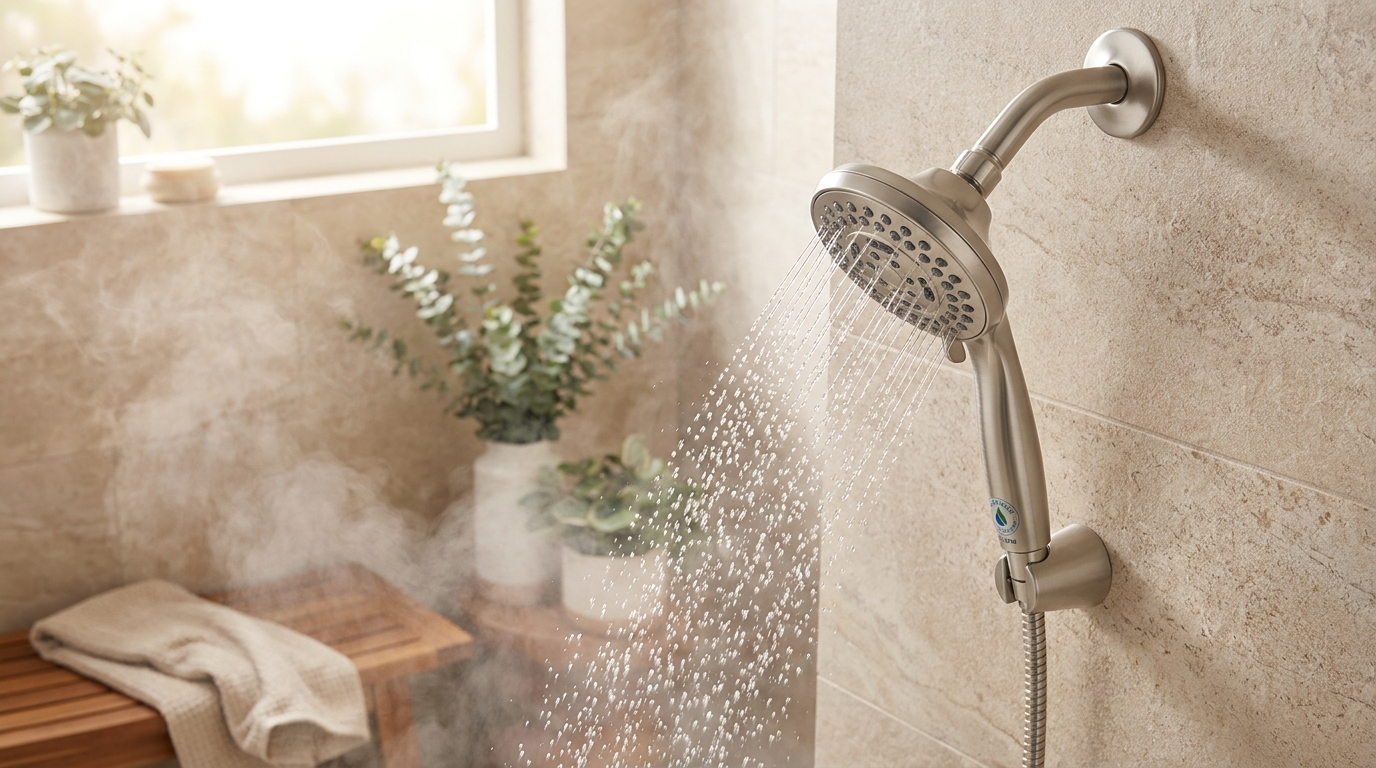
Choosing a labeled product also simplifies shopping. Rather than comparing every technical detail on your own, you can look for established efficiency standards that balance water savings with expected performance. If you live in an older home with original or outdated fixtures, this swap can be particularly worthwhile because older showerheads often use substantially more water than current efficient models.
Installation is often manageable for a confident DIY homeowner, especially if the existing shower arm is in good condition. In many cases, it involves little more than unscrewing the old head, applying thread seal tape if needed, and attaching the new unit. It is a modest project with a surprisingly durable payoff.
4. Turn Off the Tap While Brushing, Shaving, or Scrubbing
Some water-saving advice has become so familiar that people stop taking it seriously, but this one remains genuinely effective. A bathroom faucet can run at about 2 gallons per minute, according to EPA materials, which means letting it flow during brushing, shaving, or face washing can waste more than most people realize. Because these moments feel short, the water use tends to go unnoticed. Repeating them daily makes them significant.
The easiest version of this habit is simply to use water when you need water, and not in between. Wet the toothbrush, turn the tap off, brush, and then turn it back on to rinse. The same logic applies to shaving, hand washing steps that do not require a continuous stream, and kitchen prep where ingredients can be rinsed all at once instead of under running water for longer than necessary.
This change matters partly because it asks so little from you. There is no installation cost, no shopping list, and no waiting period. It is a pure habit adjustment, which makes it one of the fastest ways to start conserving water immediately. If you are trying to build momentum with sustainability at home, this is a useful early win.
It can also help to think of this habit as mindful use rather than restriction. Water should be available when it serves a purpose. The conservation opportunity lies in eliminating the moments when it is flowing simply because no one has stopped it.
5. Install Faucet Aerators and Efficient Bathroom Fixtures
Faucet aerators are a small upgrade that often deliver outsize value. These compact attachments screw onto the end of many faucets and reduce water flow while maintaining a usable stream. They mix air into the flow, which helps preserve a sense of pressure at the point of use. For sinks that are used many times each day, that subtle reduction can produce steady savings over time.
Bathrooms are especially good candidates because they are high-frequency spaces. Between hand washing, brushing teeth, grooming, and general cleaning, bathroom faucets are used often and usually in short bursts. Efficient fixtures help make each of those moments a little less water intensive without requiring any behavior change from the people using them.
If you are planning a fixture replacement anyway, this is a smart time to prioritize efficiency. Modern faucets and toilets are far better than older models at balancing water savings with reliable performance. That balance matters because conservation works best when it is integrated into normal life. If a fixture performs well, the sustainable choice becomes the easy choice.
For homeowners who are reluctant to make visible changes, aerators are particularly appealing because they are inexpensive and discreet. Once installed, they are easy to forget about, which is often exactly what you want from a good efficiency upgrade. It keeps working in the background while your household routines stay more or less the same.
6. Run Only Full Loads in the Dishwasher and Washing Machine
It is a common assumption that washing smaller loads more often must be more efficient because each cycle seems manageable. In reality, many appliances use a set amount of water per cycle, so running them partially filled can waste water compared with waiting for a full load. This is particularly relevant for dishwashers and clothes washers, both of which are major indoor water users in many homes.
Running full loads does not mean overstuffing a machine, which can reduce cleaning performance and lead to repeated cycles. It means using the appliance close to its intended capacity so each wash does more useful work per gallon of water used. In practical terms, this usually means a little planning. You may need to wait an extra day before starting a load, but that small delay often produces better efficiency with no real loss of convenience.
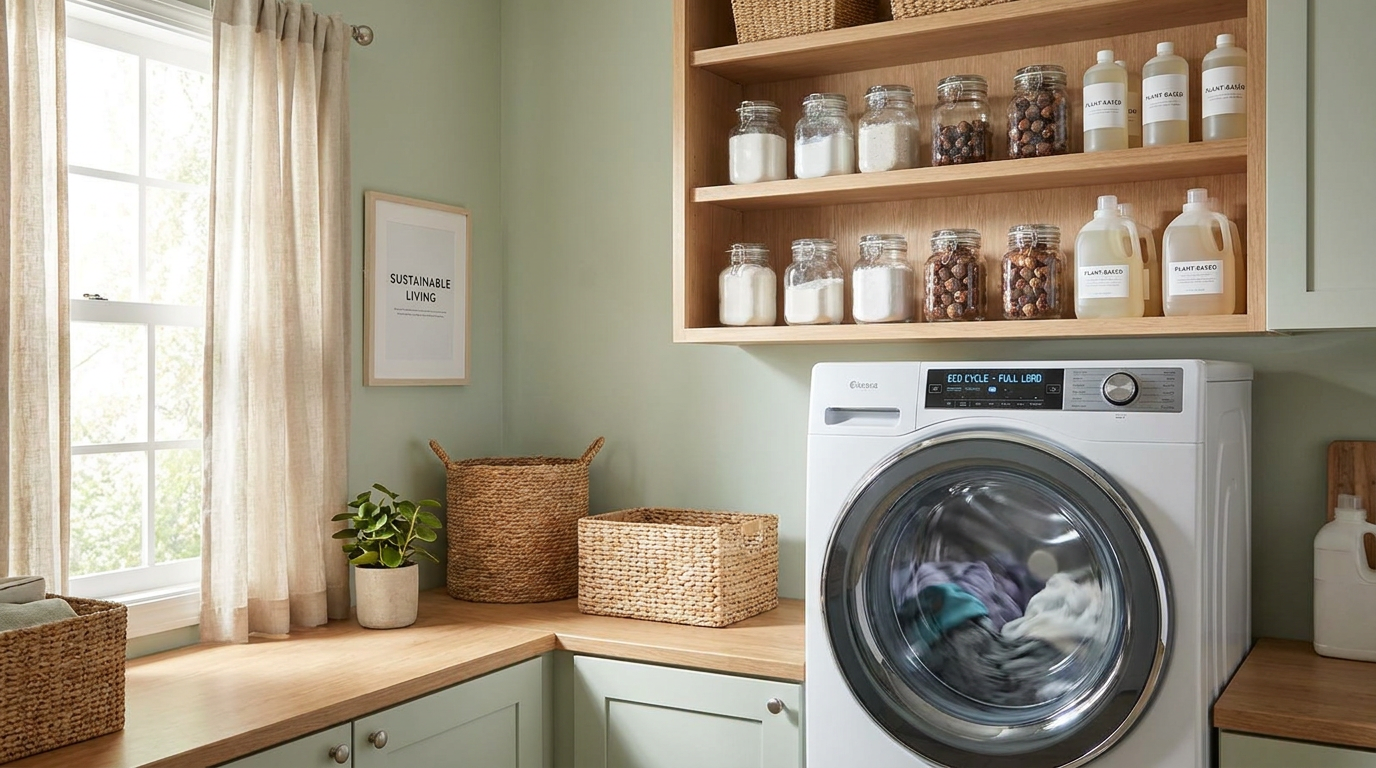
Laundry is also an important part of the water-energy conversation because warm and hot cycles use energy as well as water. When possible, washing with cold water and running full loads can reduce utility use on two fronts. Many fabrics also hold up well with cooler washing, making this a gentle choice for clothing as well as a more efficient one for the home.
If your appliances are older and replacement is on the horizon, choosing high-efficiency models can strengthen these savings further. But even without new machines, the full-load habit is easy to adopt and immediately useful. It is a simple example of how conservation often comes down to timing rather than sacrifice.
7. Be Smarter About Kitchen Water Use
The kitchen is a high-activity space, and because many tasks happen quickly, water can be used less carefully than intended. Rinsing produce under a constantly running stream, washing a few dishes with the tap left on, or thawing food under flowing water can all become routine sources of waste. None of these habits seem dramatic, yet they can contribute meaningfully to overall household use.
A more efficient kitchen approach starts with containment. Washing produce in a bowl, soaking stuck-on cookware instead of scrubbing it under running water, and using the sink basin more strategically can all reduce unnecessary flow. If you wash dishes by hand, filling part of the sink or using a dishpan is usually more water conscious than letting the faucet run continuously.
EPA materials note that leaving the tap open while washing dishes can waste significant water. That detail is useful because it reframes dishwashing from a routine chore into a clear efficiency opportunity. If your dishwasher is in good condition, it may also be more water efficient to run a full dishwasher load than to wash the same quantity of dishes by hand under a running tap.
Kitchen conservation also ties neatly into food habits and planning. Cooking with intention, cleaning up in batches, and avoiding unnecessary re-washing of lightly used items can all help. These are not dramatic lifestyle changes. They are simply refinements that make the kitchen calmer, more efficient, and less wasteful.
8. Rethink Toilet Water Use and Upgrade Older Models When Needed
Toilets account for a substantial share of indoor household water use, which means even modest improvements can have a meaningful impact. If your toilet is functioning well, the first priority is making sure it is not leaking. Silent toilet leaks are one of the easiest ways to lose water without realizing it. Once that is ruled out, the next question is age and efficiency.
Older toilets often use significantly more water per flush than newer high-efficiency models. If you are planning a bathroom refresh or replacing a failing unit, choosing an efficient toilet is one of the clearest ways to conserve water without changing daily habits at all. The performance of modern designs has improved considerably, so efficiency does not have to come at the cost of reliability.
For households not ready to replace a toilet, there are still practical ways to reduce unnecessary flushing. Avoid using the toilet as a wastebasket for tissues or other disposable items that belong in the trash. This keeps water use aligned with actual sanitary needs and also tends to be better for plumbing over time.
Because toilets are used frequently by every member of the household, even small improvements here have a multiplier effect. A better flapper, an efficient fill valve, or a replacement unit may not feel glamorous, but these are exactly the kinds of behind-the-scenes decisions that make a home more sustainable and more thoughtfully maintained.
9. Keep a Reusable Pitcher or Bottle of Cold Water in the Fridge
One of the simplest water-saving tricks in the kitchen has nothing to do with cleaning. Many people let the tap run for a while just to get colder drinking water. That water often goes straight down the drain, especially in warmer weather or in homes where pipes take longer to cool. Keeping a reusable pitcher or filled bottle in the refrigerator avoids that waste entirely.
This is a small shift, but it is elegant because it improves convenience at the same time. Cold drinking water is already available when you want it, which means there is less waiting and less temptation to run the faucet longer than necessary. In homes with children or busy routines, that kind of convenience can make the habit more likely to stick.
There is also a broader lesson in this tip. Water conservation often works best when it is designed into the home environment. If the most convenient option is also the most efficient one, people do not need to rely on willpower. A fridge pitcher is a simple example of making the better choice easier by default.
You can apply the same thinking elsewhere in the home. Preparing what you need in advance, whether that is drinking water, a dish basin, or a laundry schedule, tends to reduce impulse water use. Good conservation is often less about doing less and more about planning slightly better.
10. Learn Your Water Use Patterns and Track Small Changes
One of the most underrated conservation tools is awareness. Households with water meters, smart leak alerts, or even just a close eye on monthly bills often make better decisions because they can see the effect of their habits. In Canada, metered systems have become an important lens for understanding real-world conservation behavior, and this reflects a simple truth. People tend to manage what they can measure.
You do not need sophisticated technology to benefit from this principle. Start by checking your water bill for seasonal changes, unusual spikes, or consistently high use. If your home has a meter, you can experiment with simple checks, such as reading it before and after a day when no unusual water use occurs. If the number changes when no one has used water, you may have a hidden leak.
Tracking can also be motivating. When you install an efficient showerhead, begin running full laundry loads, or fix a toilet leak, seeing lower use over time reinforces that the effort was worthwhile. This matters because water conservation can otherwise feel abstract. Measurement turns it into something visible and practical.
For households interested in future-ready sustainability, this awareness can also open the door to broader ideas such as smart leak detection, fixture upgrades, or eventually safe water reuse systems where allowed and appropriate. You do not need to start there. But understanding your current baseline makes every next step more informed.
Common Myths About Conserving Water at Home
Myth 1: Low-flow fixtures always feel weak
This is one of the most persistent concerns, and it prevents many people from trying upgrades that could help immediately. In practice, modern efficient fixtures are designed to preserve usability while reducing excess flow. Spray design, aeration, and pressure management have improved significantly, and many homeowners are surprised by how normal an efficient fixture feels in everyday use.
Myth 2: Small drips do not matter
A slow leak feels visually minor, but water waste is cumulative. The problem is not just the drip you see in one moment. It is the fact that the drip continues every hour of the day until it is repaired. That makes leaks one of the least visible but most unnecessary forms of household water waste.
Myth 3: Water conservation requires expensive renovations
Some larger upgrades can certainly help, but many of the most effective actions cost very little or nothing at all. Turning off taps between uses, shortening showers, running full appliance loads, and fixing minor leaks are all highly practical. Conservation becomes much more approachable when you stop imagining it as a construction project and start seeing it as a series of manageable decisions.
Myth 4: Only outdoor watering really matters
Outdoor use can be important, especially in summer, but indoor use remains a major opportunity in many homes. EPA WaterSense says about 70% of household water use is indoors, with bathrooms leading the way. That means everyday bathroom and kitchen routines deserve as much attention as lawn care, if not more.
How Water Conservation Supports a More Resilient Home
There is a quiet resilience in a home that uses water thoughtfully. Lower demand means less strain on household systems, less energy spent on hot water, and fewer surprises from neglected leaks or inefficient fixtures. It also positions a household better in a time when climate variability and pressure on infrastructure are becoming more visible topics across Canada and beyond.
On a global level, the importance of conservation becomes even clearer. The World Health Organization notes that safe and sufficient domestic water is essential for hygiene, health, and well-being, and it also reports that more than 2 billion people live in water-stressed countries. Most households are not solving that challenge alone, of course, but home conservation is part of a larger culture of responsible use. It reflects the idea that an abundant service should still be treated with care.
In practical terms, using less water at home can also help normalize better building choices. Efficient showerheads, high-performance appliances, leak monitoring, and thoughtful fixture selection are all part of the same long-term mindset. They suggest that comfort and resource awareness do not need to compete. A well-run home can support both.
A Simple Routine to Start This Week
If the full list feels like too much to tackle at once, begin with a short sequence. First, check for visible faucet and toilet leaks. Second, shorten each shower by two minutes. Third, stop running the tap while brushing teeth or washing dishes unnecessarily. Fourth, wait for full dishwasher and laundry loads. Fifth, if your showerhead is older, put an efficient replacement on your next home shopping list.
This kind of staged approach tends to work better than trying to overhaul every habit overnight. It keeps the process calm and practical, which is often what allows it to last. Sustainable decisions are most powerful when they fit comfortably into daily life rather than feeling like a temporary burst of effort.
Over time, you may decide to build on these basics with aerators, fixture replacements, or more advanced leak detection. But you do not need to begin with a perfect system. Most homes improve one decision at a time, and water conservation is a particularly good example of that. The easiest actions are often the ones that matter most because they are the ones people continue doing.
Final Thoughts
Conserving water at home is one of the most accessible ways to make a household more sustainable. It does not require a dramatic lifestyle shift, and it does not need to feel restrictive. In many cases, it simply means noticing where water is being used without purpose and replacing that waste with better habits or better fixtures.
The 10 ideas in this guide work because they are practical. Fix leaks. Take slightly shorter showers. Choose efficient fixtures. Turn taps off when they are not needed. Run full loads. Use the kitchen more deliberately. Track your use. These are ordinary actions, but that is exactly their strength. They fit naturally into the rhythm of home life.
As water availability, infrastructure pressure, and utility costs become more important concerns, these everyday choices start to carry more weight. They support comfort, reduce waste, and create a home that feels thoughtfully managed rather than merely functional. That is often what real sustainability looks like in practice. It is not dramatic. It is steady, intelligent, and built into the decisions we make every day.


No Comment! Be the first one.