



There is something deeply restorative about living near the water. A lake, river, or ocean view changes the rhythm of daily life in subtle but meaningful ways. Morning coffee feels slower, evenings feel softer, and even an ordinary afternoon can take on a peaceful quality when the breeze moves through grasses and light reflects across the shoreline. Designing a waterfront outdoor space is really about honoring that feeling while making sure the space works beautifully for the realities of weather, water, and long term care.
Table Of Content
- Why waterfront design should begin with the shoreline itself
- Seeing resilience as part of luxury
- Planning outdoor rooms that support the view and the lifestyle
- Designing for comfort in sun, wind, and changing weather
- Choosing furniture that feels beautiful and truly belongs outdoors
- Creating outdoor dining that feels effortless
- Landscaping that feels lush, polished, and shoreline friendly
- How rain gardens, bioswales, and grading improve both beauty and performance
- Living shorelines and natural buffers as part of the outdoor experience
- Clearing up common waterfront design misconceptions
- Materials, surfaces, and details that support an easier outdoor life
- Designing atmosphere through lighting, scent, sound, and softness
- Maintenance that protects the feeling of ease
- Permits, rules, and why local expertise matters
- Bringing it all together in a space that truly restores you
- Quick design principles to keep in mind
The most successful waterfront outdoor spaces are never just decorative. They are thoughtfully layered environments that bring together comfort, functionality, and a strong sense of place. A terrace, lounge area, path, or garden bed should not only look lovely from the house but also help protect the shoreline, manage runoff, and create a stable, welcoming setting for gathering and rest. That balance between lifestyle and resilience is what turns a pretty backyard into a lasting retreat.
Across North America, homeowners, designers, and environmental agencies are increasingly embracing the idea that shoreline design is a form of protection as much as a style choice. Guidance from organizations such as NOAA, the EPA, and Parks Canada points toward nature-based strategies like living shorelines, native plant buffers, rain gardens, and gentle grading because these approaches can reduce erosion, support habitat, filter runoff, and preserve scenic beauty at the same time. In other words, the most relaxing waterfront spaces are often the ones that work in harmony with the landscape instead of trying to overpower it.
This is welcome news for anyone who wants an outdoor space that feels calm, elegant, and easy to live in. A naturalized shoreline does not have to feel messy, rustic, or unfinished. With the right materials, thoughtful planting, and a clear design plan, it can feel every bit as polished as a formal garden while offering more softness, more movement, and often more long term value. When beauty and function are allowed to support one another, the result is a space that feels both luxurious and deeply grounded.
In this guide, we will explore how to create a dream waterfront outdoor space that invites relaxation while responding intelligently to the conditions of life by the water. From furniture and layout to shoreline planting, drainage, and atmosphere, every layer matters. The goal is not simply to build a backyard that looks good for one season, but to create a place that continues to feel joyful, protective, and restorative for years to come.
Why waterfront design should begin with the shoreline itself
When people imagine designing an outdoor space, they often think first about seating, dining, or decorative planting. On a waterfront property, however, the shoreline is the true foundation of the design. It shapes the view, influences how water moves across the property, affects maintenance, and determines how stable and welcoming the outdoor experience will feel over time. Starting with the shoreline is not the most glamorous part of the process, but it is one of the most important.
NOAA defines living shorelines as stabilization systems that use natural materials such as plants, sand, rock, or oyster shells to reduce erosion and provide habitat. That definition matters because it reframes shoreline treatment as something more nuanced than simply installing a hard barrier. Rather than cutting the landscape off from the water, a living shoreline creates a softer transition that can absorb energy, hold soil in place, and support ecological health while still looking beautiful from the patio or dock.
EPA guidance also supports this broader view, noting that living shorelines can improve water quality, enhance habitat, sequester carbon, reduce flooding and erosion impacts, and are often more resilient and lower maintenance than hard bulkheads or seawalls. That idea challenges one of the most common misconceptions in waterfront design, which is that harder always means stronger. In many locations, hard walls can reflect wave energy in ways that contribute to adjacent erosion or require costly repair over time, while a thoughtfully designed natural edge can adapt more gracefully to changing conditions.
Parks Canada adds another valuable perspective by emphasizing that naturalized shorelines reduce visual impact and maintain natural character. For homeowners who care deeply about how a property feels, this is a meaningful point. The shoreline is not just an engineering problem. It is part of the emotional atmosphere of the home. A softer edge with native grasses, flowering plants, stone, and gentle contours often feels calmer and more visually integrated than an abrupt line of concrete or timber.
A dream waterfront space is not only about the view you see from your chair. It is also about the shoreline choices quietly protecting that moment of peace.
Of course, no single shoreline solution works everywhere. NOAA stresses that the right approach depends on local wave energy, slope, tidal range, soils, and site conditions. A quiet inland lake will behave differently from an exposed coastal property, and a riverfront lot has its own set of seasonal patterns. This is why waterfront design should begin with observation and, when needed, professional guidance. The most beautiful plans are often the ones that respond honestly to the land instead of forcing a one size fits all idea onto it.
Seeing resilience as part of luxury
There is a growing shift in how people think about high end outdoor living. Luxury is no longer only about expensive finishes or dramatic features. Increasingly, it is about ease, longevity, wellness, and a stronger connection to the natural environment. On a waterfront property, resilience is part of that story. A space that remains functional after heavy rain, feels stable underfoot, protects views, and supports the shoreline is more comfortable to live with and more enjoyable season after season.
This way of thinking also makes financial sense. NOAA has cited research showing that coastal habitat restoration in the Gulf of Mexico can yield an average of $3.50, and in some cases more than $7.00, in flood reduction benefits for every $1.00 spent. NOAA also notes that protected and restored coastal habitat can increase nearby residential home values by about 10 percent, with an average benefit of $19,000 per home in some contexts. While every property is different, these findings reinforce the idea that natural infrastructure is not a compromise. It can be an investment in both beauty and long term value.
For homeowners, this creates a more encouraging design mindset. Protecting a shoreline does not mean giving up style. It means choosing forms of beauty that also carry the space through storms, seasonal changes, and years of use. A layered native planting bed can be more elegant than a thin strip of lawn. A rain garden can become one of the prettiest features in the yard. A gently sloped path bordered by grasses can feel more serene than a heavily engineered edge.
The most welcoming waterfront spaces often share one emotional quality. They feel settled. Nothing appears to be fighting the site. The furniture suits the climate, the planting belongs to the place, and the transitions from house to terrace to shoreline feel natural. That sense of ease is one of the clearest signs that aesthetics and functionality have truly been blended well.
Planning outdoor rooms that support the view and the lifestyle
A waterfront yard usually has one spectacular asset, which is the view. But a great view alone does not create a usable outdoor space. To feel relaxing in everyday life, the yard needs a clear plan for how people will move, gather, lounge, dine, and quietly spend time alone. Thinking in terms of outdoor rooms can help bring structure without losing the open feeling that makes a waterfront property special.
Start by identifying your core experiences. You may want a morning coffee corner that catches the first light, a dining space for summer evenings, a shaded lounge for reading, and a lower level seating area closer to the water. Each of these zones should feel purposeful, but they should also remain visually connected. The flow matters. Paths should feel intuitive, surfaces should be comfortable underfoot, and each area should allow the eye to travel easily toward the water.
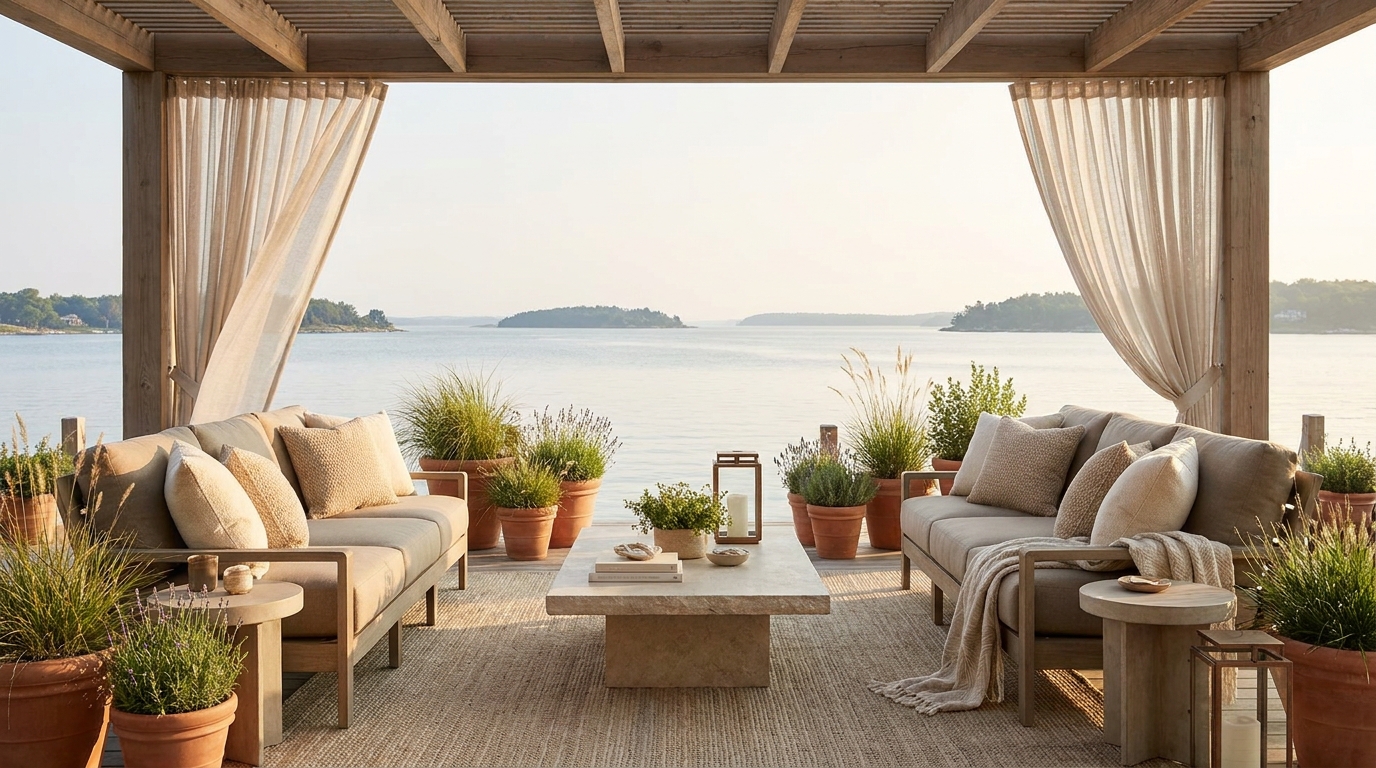
One of the best ways to preserve that openness is to keep major sight lines low and uncluttered. Choose furniture profiles that do not block the horizon. Use planting in layered heights, placing lower material near the most important view corridors and taller grasses or shrubs where privacy or wind protection is needed. This allows the garden to feel lush without making the water disappear behind it.
It also helps to think about emotional pacing. A waterfront space should not reveal everything at once. A path can widen into a seating nook. A pergola can frame the water like a picture. A simple bench placed at the edge of a planting bed can create a moment of pause between the house and the shoreline. These small transitions make the landscape feel intentional and calming, almost like moving through a beautifully designed home.
Designing for comfort in sun, wind, and changing weather
Waterfront properties are often more exposed than inland lots, which means comfort depends heavily on how you manage sun, wind, and moisture. Without some protection, even the prettiest chair can go unused. Begin by studying where the sun falls at different times of day and where breezes are strongest. This will help determine whether a pergola, umbrella, retractable shade, or partial screen is needed in your main gathering areas.
Windbreaks deserve special attention because they can dramatically improve comfort without feeling heavy. The best windbreaks are often layered and semi transparent rather than solid. Native shrubs, ornamental grasses suited to the site, open slatted screens, or carefully placed small trees can soften gusts while still preserving light and view. The goal is not to eliminate the breeze entirely, since that movement is part of the appeal of waterfront living, but to make it gentler and more livable.
Rain should also be part of the design conversation. Well placed covered areas allow the space to remain useful in changing weather. A roofed porch, pavilion, or simple overhang near the house can become a transitional space where outdoor life continues even when the forecast is less than perfect. This adds a kind of quiet luxury to the home because it supports more spontaneous use of the landscape.
Choosing furniture that feels beautiful and truly belongs outdoors
Furniture is often where the dream of waterfront living becomes tangible. It is what invites people to linger, stretch out, host friends, or sit alone with a book. But waterfront conditions can be demanding, so furniture needs to do more than look attractive on a showroom floor. It should be comfortable, low maintenance, durable in moisture and sun, and visually calm enough to support the setting rather than compete with it.
Materials matter here. Teak, powder coated aluminum, marine grade polymer, and high quality all weather wicker are popular for good reason. They hold up well in humid, breezy, or salty environments and tend to age more gracefully than materials that are not designed for exposure. Cushions should use outdoor performance fabrics that resist fading and dry quickly. If possible, include discreet storage for pillows and throws so pieces can be protected when not in use.
In terms of style, waterfront spaces often feel best when the palette is restrained and tactile. Soft neutrals, sandy tones, weathered wood, stone, and muted greens allow the water and sky to remain the stars. This does not mean the design has to be bland. Texture becomes the luxury element. Woven chairs, slubbed fabrics, ceramic side tables, and natural wood grain bring richness without visual noise.
Furniture arrangements should encourage both conversation and contemplation. A classic pairing is one larger group seating area for family and guests, along with smaller, more intimate spots placed strategically for a private view or a moment of solitude. Deep lounge chairs angled toward the water are especially effective. They instantly signal that the point of the space is to slow down.
Creating outdoor dining that feels effortless
Dining by the water has a special charm, but it works best when practical details are considered in advance. Place the main dining area close enough to the house or outdoor kitchen to make serving easy, yet far enough away to enjoy the setting. Choose a table surface that can handle sun and moisture, and select chairs that remain comfortable for long meals. If the space is very exposed, heavier pieces often feel more stable and secure in windy conditions.
Lighting can completely change the mood of a dining area. Soft overhead string lights, lanterns, wall sconces, or subtle landscape uplighting create warmth without overpowering the natural atmosphere. The best evening lighting on a waterfront property is gentle and layered. It should make people feel held by the space while still allowing the darkness of the water and sky to remain part of the experience.
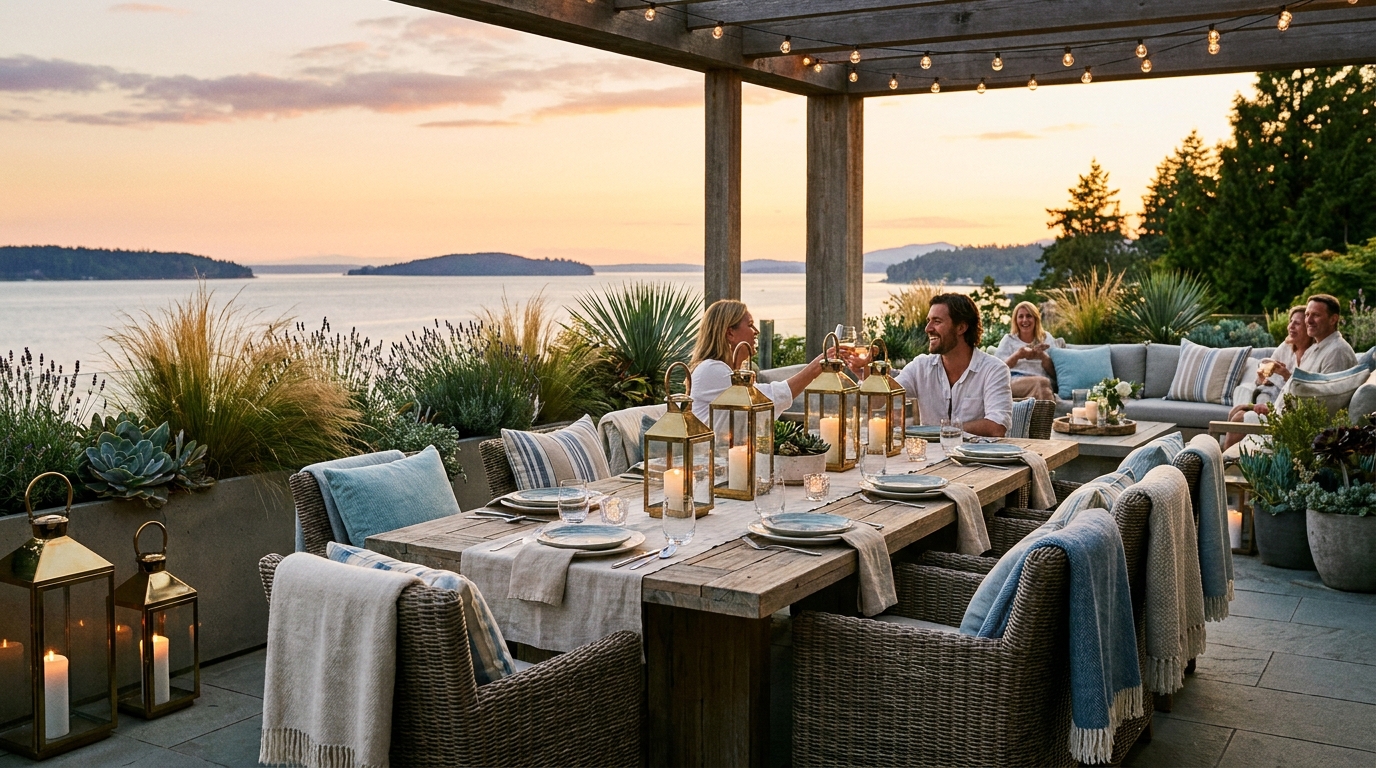
To keep the area feeling relaxed, avoid overcrowding it with too many accessories. A beautiful outdoor table does not need much beyond good proportions, a few textural linens, and perhaps a low centerpiece that does not interrupt views. The water already provides the atmosphere. The design should simply support it.
Landscaping that feels lush, polished, and shoreline friendly
One of the biggest misconceptions in waterfront landscaping is that there is a choice between beauty and practicality. In reality, the most satisfying waterfront gardens are often those that perform well. Native and site adapted plants are central to this because they are naturally suited to local soils, wind, moisture, and in some coastal areas salinity. That makes them easier to maintain and more useful in supporting shoreline stability.
Native wetland and shoreline plants can create a refined, layered look when arranged intentionally. Think of the planting palette the way you would think about textiles in a room. You need variation in height, softness, form, and seasonal interest. Grasses can provide movement and structure. Flowering perennials add color and pollinator value. Shrubs can define edges and create shelter. Low groundcovers help knit everything together while reducing exposed soil.
Parks Canada notes that naturalized shorelines can control erosion, filter runoff, provide habitat, and maintain landscape character. That final point is especially helpful from a design perspective. A waterfront garden does not need to mimic a wild field to be ecologically beneficial. It can be edited, repeated, and clearly composed so that it feels elegant from every angle. Repetition of plant masses, tidy path edges, strategic stone placement, and defined transitions all help communicate intention.
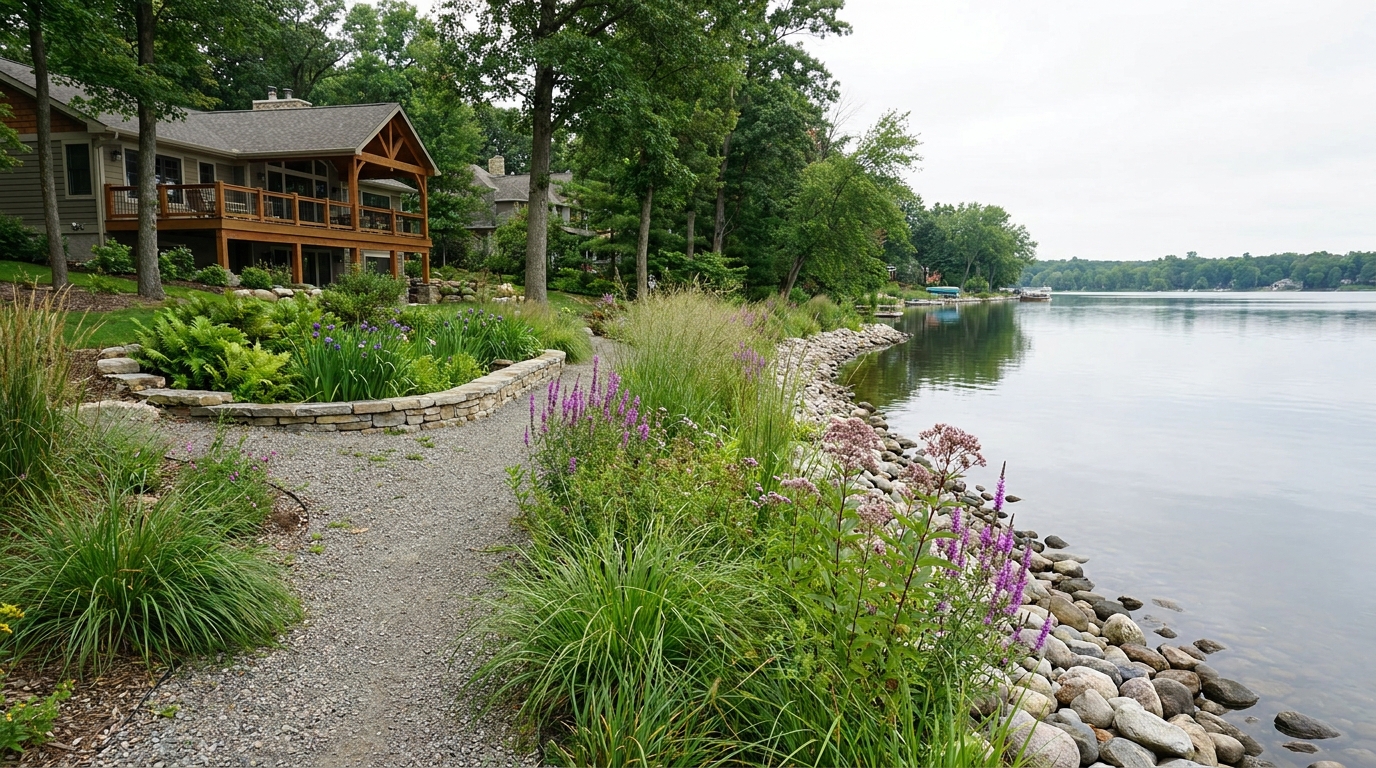
If you love a more manicured look, try concentrating the neatest detailing closer to the house and allowing the shoreline zone to become gradually softer and more natural. This creates an emotional transition from domestic space to living landscape. It also tends to feel more harmonious than carrying a formal lawn all the way to the water’s edge, which can look abrupt and often contributes little to erosion control or runoff filtering.
How rain gardens, bioswales, and grading improve both beauty and performance
Canada’s flood wise landscaping guidance recommends rain gardens, bioswales, rocks, and proper grading as practical ways to direct water away from homes and reduce erosion. In a waterfront setting, these features can be integrated beautifully into the overall design. Instead of treating drainage as an afterthought, consider it one of the design layers that makes the space feel more complete and secure.
A rain garden can be one of the most attractive elements in the yard. Placed thoughtfully, it can collect runoff from roofs, patios, or sloped lawn areas and allow water to soak into the ground more slowly. With moisture loving native plants, it becomes a lush, textural planting bed that looks intentional rather than purely utilitarian. During storms, it quietly does important work. On sunny days, it simply looks like a beautiful part of the garden.
Bioswales can also soften the landscape while guiding water movement. These shallow, planted channels help direct runoff and can be edged with stone or grasses for a graceful look. Proper grading around patios, paths, and sitting areas is equally important because it helps prevent puddling, slippery surfaces, and water movement toward the house. These are not the glamorous details people usually photograph, yet they are essential to whether a waterfront outdoor space feels carefree or constantly problematic.
Living shorelines and natural buffers as part of the outdoor experience
A living shoreline can be one of the most meaningful design decisions on a waterfront property because it affects both the daily experience and the long term health of the site. Depending on conditions, this may include marsh plantings, coir logs, stone, sand fill, oyster shell elements in certain coastal regions, or other natural materials that stabilize the edge while preserving a softer relationship between land and water. While the technical configuration should be determined by site conditions and local expertise, the lifestyle benefit is easier to describe. The space simply feels more alive, more textured, and more integrated with nature.
Riparian buffers are another important concept. These planted areas along the shoreline help hold soil, filter runoff, and support wildlife. They can also create a beautiful frame for the water. Rather than seeing a buffer as a restriction, it helps to think of it as one of the most atmospheric parts of the property. The movement of grasses, the sound of reeds in wind, and the seasonal color of native plants add richness that a bare shoreline cannot offer.
This is also where the idea of wildlife friendly design becomes especially rewarding. Pollinators, birds, and beneficial insects often return when shoreline vegetation improves. For many homeowners, that living quality becomes part of what they treasure most about being near the water. The landscape begins to feel less like a static backdrop and more like a gently changing environment that supports daily wellbeing.
Clearing up common waterfront design misconceptions
Because waterfront properties can feel vulnerable, many homeowners assume the safest path is the hardest and most heavily built one. Yet hard seawalls and bulkheads are not always the best answer. In some settings, naturalized and living shoreline approaches can provide better ecological function and, according to EPA guidance, may be more resilient and lower maintenance over time. The key is suitability to the site, not simply choosing the most rigid option available.
Another common misconception is that waterfront landscaping should be primarily decorative. In truth, it should also manage runoff, address erosion, respond to wind, and support shoreline stability. This does not make the design less beautiful. It simply makes beauty more intelligent. A waterfront garden is at its best when it looks graceful while quietly solving problems.
Some people also worry that native or naturalized shorelines will appear messy or low end. This is largely a design issue, not a plant issue. A thoughtful native planting plan can look highly refined when arranged with repetition, clear edges, and balanced composition. The result often feels more sophisticated than overly ornamental schemes because it reflects the spirit of the place instead of ignoring it.
Materials, surfaces, and details that support an easier outdoor life
Beyond planting and furniture, the hardscape materials you choose will shape how the waterfront space feels to walk through and maintain. Natural stone, high quality pavers, gravel paths, and weather resistant wood or composite decking are all common choices, but the right material depends on the site and the desired mood. In general, it helps to select finishes that look better with a little weathering rather than worse. Waterfront life is easier when surfaces age gracefully.
Slip resistance is important, especially around docks, steps, and areas that stay damp. Textured stone and matte finishes tend to feel more secure than polished surfaces. Drainage between materials should also be carefully considered so rainwater does not pool in gathering spaces. Again, these details may seem quiet, but they contribute enormously to how relaxed the space feels in real use.
Consider how each material relates to the broader setting. Pale stone can reflect light beautifully near the water. Warm wood tones create softness against blue and green surroundings. Gravel can provide a pleasing crunch underfoot and a casual, coastal character when used in the right areas. The most successful material palettes usually stay limited and cohesive, allowing texture and proportion to do the work.
Designing atmosphere through lighting, scent, sound, and softness
Relaxation is not created by layout alone. It also comes from atmosphere, and that atmosphere is shaped by sensory details. Lighting should feel warm and subdued, revealing paths, steps, and gathering areas without washing out the night sky or the reflective quality of the water. Low path lights, discreet uplighting on trees or sculptural grasses, and lanterns near seating areas can create a layered evening mood that feels intimate and serene.
Scent is another often overlooked layer. Depending on your region, herbs, native flowering plants, and subtle fragrant shrubs can gently enrich the experience without overwhelming it. The soundscape matters as well. In some places, grasses and reeds moving in the breeze are enough. In others, a small water feature near the house can soften road noise before the natural sounds of the shoreline take over farther out in the yard.
Softness is essential. Cushions, outdoor rugs, throws for cool evenings, and even the visual softness of planting can make a space feel emotionally welcoming. The goal is to create an outdoor setting that supports deep exhale energy. It should feel like the most restorative room in the home, just open to the sky.
Maintenance that protects the feeling of ease
No outdoor space feels luxurious if it constantly asks for urgent attention. This is why low maintenance design is so important on waterfront properties. Choosing native and site adapted plants, durable furniture, and surfaces that handle moisture well reduces the day to day burden of care. It also allows the homeowner to spend more time enjoying the space instead of managing it.
Maintenance in a waterfront landscape should include seasonal checks on drainage paths, shoreline plant health, erosion signs, furniture condition, and any structures near the water. A naturalized space still benefits from stewardship. Plants may need editing, invasive species may need removal, and mulch or stone edges may need refreshing. But when the design is aligned with the site, these tasks usually feel more manageable and less constant than fighting against the conditions.
It can be helpful to create a simple annual care rhythm. Spring might be for inspecting grading and refreshing gathering spaces. Summer might focus on light pruning and irrigation checks. Autumn can be a moment to store textiles, protect furniture, and review how the shoreline performed during seasonal weather. This steady, calm approach supports the same emotional ease that good design is meant to create.
Permits, rules, and why local expertise matters
One practical truth of waterfront design is that shoreline work is often regulated. Depending on your location, municipal, provincial, state, or federal approvals may be needed for grading, planting, retaining structures, docks, shoreline stabilization, or work near wetlands and habitat areas. This may sound intimidating, but it is really a reminder that waterfront properties are part of larger ecological systems and community planning efforts.
Because NOAA and other authorities emphasize that site conditions matter, it is wise to work with local professionals when significant shoreline changes are involved. Landscape designers, shoreline specialists, civil engineers, and environmental consultants can help assess slope, runoff, erosion risk, and suitable materials. They can also guide the permitting process and help ensure that what looks good on paper will perform well in real conditions.
Far from limiting creativity, this step can make the final result stronger. The best waterfront spaces tend to emerge from collaboration between lifestyle vision and site knowledge. That balance often leads to designs that are more elegant, more lasting, and more responsible.
Bringing it all together in a space that truly restores you
Your dream waterfront outdoor space does not need to be the grandest one on the shoreline. It simply needs to feel deeply attuned to the way you want to live and to the realities of the water beside it. When the seating is comfortable, the views are protected, the planting belongs to the place, and the shoreline is cared for with intention, the whole property starts to feel more peaceful. There is less strain in the landscape and more joy in using it.
The most inspiring waterfront spaces blend aesthetics with functionality so naturally that it becomes hard to separate the two. A rain garden is beautiful because it is lush and purposeful. A native buffer is elegant because it moves with the wind and protects the land. A terrace feels luxurious not just because it is stylish, but because it remains dry, stable, and welcoming after the weather changes. This is the kind of design that supports real life.
If you are planning your own waterfront retreat, start with the feeling you want the space to hold. Perhaps it is quiet, family warmth, barefoot ease, or a sense of escape at the end of a full day. Then let every decision, from shoreline strategy to furniture fabric, serve that emotional goal while respecting the site. In the end, the dream is not only to live near the water. It is to create a place where the water can be enjoyed with comfort, calm, and confidence.
Quick design principles to keep in mind
- Begin with the shoreline. Protecting and stabilizing the edge is foundational to long term beauty and comfort.
- Design in outdoor rooms. Create spaces for lounging, dining, and quiet reflection while keeping view corridors open.
- Choose native and site adapted plants. They support resilience, reduce maintenance, and can still feel polished and high end.
- Use green infrastructure beautifully. Rain gardens, bioswales, and proper grading can become attractive design features.
- Prioritize durable materials. Furniture and finishes should handle sun, moisture, and wind with grace.
- Think atmospherically. Lighting, texture, softness, and sound all shape how restorative the space feels.
- Respect local conditions and rules. Waterfront solutions should respond to site specific factors and permitting requirements.
A waterfront home offers a rare chance to create an outdoor life that feels both elevated and deeply natural. When you approach the space with sensitivity, restraint, and a willingness to let function guide beauty, the result is often more lovely than anything purely decorative could have been. It becomes a place where resilience feels graceful, where gatherings feel easy, and where everyday moments by the water carry the kind of calm that lingers long after you step back inside.

No Comment! Be the first one.