



There is something deeply magnetic about the idea of living above the city. A penthouse is not simply an apartment on a higher floor, nor is it only a larger home with better finishes. At its best, penthouse living offers a different emotional experience of home, one shaped by light, privacy, calm, and the quiet confidence that comes from occupying a rare and carefully positioned space. For many people, the real appeal is not just prestige, though prestige is undeniably part of the story. It is the feeling of stepping inside and sensing that the world below has softened, while your home remains open, luminous, and beautifully your own.
Table Of Content
- What Makes a Penthouse Feel Different
- The Emotional Appeal of Living Above It All
- Why Views, Light, and Outdoor Space Matter So Much
- The Prestige of the Penthouse and Why It Endures
- Penthouse Living in the Context of North American Cities
- Designing a Penthouse That Feels Luxurious to Live In
- Creating Rooms That Support Real Life
- Wellness as the New Language of Luxury
- The Role of Service, Amenities, and Branded Living
- Entertaining, Family Life, and Everyday Rituals
- Common Misconceptions About Penthouse Living
- The Tradeoffs to Consider Before You Buy
- How to Create a Luxurious Penthouse Atmosphere Wherever You Are
- Final Thoughts on the Meaning of Penthouse Living
In luxury markets across North America, penthouses have long held a special place. They are often the signature residences in a building, prized for their height, panoramic views, generous terraces, and premium level of privacy. Yet what makes penthouse living so compelling today is not only exclusivity. It is the way these homes align with the lifestyle desires of modern buyers, especially those seeking wellness, convenience, thoughtful service, and an environment that supports both entertaining and restoration. The penthouse has evolved from a status symbol into something more layered and personal: a sanctuary in the sky.
That shift matters because luxury itself has changed. Today, many homeowners want their spaces to do more than impress guests. They want their homes to help them breathe more deeply, sleep better, think more clearly, and enjoy daily routines with greater ease. Research on residential wellbeing supports the value of natural light, privacy, views, and access to outdoor space, all of which are closely associated with the penthouse lifestyle. When those qualities come together with elevated design and service, the result is a home that can feel emotionally spacious as well as physically beautiful.
This guide explores what truly sets penthouse living apart. From the serenity created by daylight and skyline views to the prestige of top-floor exclusivity, from wellness design to practical tradeoffs, penthouse life is best understood as an experience rather than a floor plan. It is about how a home feels in the morning, how it holds you at the end of the day, and how it allows everyday life to unfold with more grace, comfort, and perspective.
Penthouse living is not only about being above the city. It is about feeling gently removed from its noise while staying connected to its energy, beauty, and possibility.
What Makes a Penthouse Feel Different
The word penthouse carries a certain glamour, but the true distinction lies in the lived experience. Most penthouses sit on the highest floor or among the uppermost levels of a building, often with layouts that feel more customized than standard units. They tend to offer broader sightlines, fewer shared walls, more generous ceiling heights, and a level of separation from the bustle of daily building traffic. That sense of remove can be surprisingly meaningful. Even in a vibrant city center, a penthouse can feel hushed and composed in a way that is difficult to replicate on lower floors.
Views are central to the experience, of course, but they do more than frame a beautiful skyline. They create visual breathing room. Looking out over open horizons, water, architecture, or changing weather can make home feel expansive, even meditative. Research on housing and mental wellbeing has suggested that inadequate natural light and poor views may be associated with worse mental health outcomes, while increased daylight at home can improve circadian alignment, sleep, vitality, and overall mood. In that sense, a penthouse is not only visually dramatic. It can also support a calmer and more restorative way of living.
Privacy is another defining layer. Luxury buyers increasingly value privacy as a premium, and penthouses often satisfy that desire through location, scale, and design. Fewer neighboring sightlines, private elevator access in some buildings, and larger setbacks from the street all contribute to a sense of retreat. You may still be in the center of a major urban core, but you are not immersed in every passing sound, crowd, or interruption. That subtle distance often becomes one of the most treasured parts of the lifestyle.
There is also a symbolic dimension that should not be ignored. Penthouses are widely regarded as trophy residences in luxury real estate because they are rare and often highly individualized. They tend to be among the most expensive and recognizable homes in a building, and they carry a certain cultural prestige. Yet the most appealing penthouses are not those that rely only on grandeur. They are the ones that combine prestige with comfort, beauty with livability, and exclusivity with a genuine sense of ease.
The Emotional Appeal of Living Above It All
One of the most powerful aspects of penthouse living is how it can influence emotion. The best homes change not only what we see but how we feel, and penthouses are especially well suited to that quiet transformation. There is an immediate softness that can come from entering a light-filled top-floor residence after navigating the pace of the city. The act of rising, whether by private elevator or a discreet upper-level corridor, creates a transition. By the time you arrive home, the day already feels more contained and manageable.
Serenity is often the emotional quality people mention first, and with good reason. Natural light pours more freely into higher-level homes, especially those with expansive windows or multiple exposures. That daylight does more than flatter finishes and brighten rooms. Studies on residential environments have found that daylight access can support better sleep, healthier circadian rhythms, stronger vitality, and improved mental health. In practical terms, that can mean gentler mornings, more energized afternoons, and a home that feels naturally in sync with the body.
Acoustic comfort also shapes the emotional atmosphere. While penthouse living is not automatically silent, a well-designed top-floor home often enjoys less street noise and fewer layers of disturbance than homes lower in the building. Sound insulation, strong construction, thoughtful building management, and distance from traffic all contribute to a more peaceful daily experience. That calm backdrop can make ordinary rituals feel almost ceremonial. Morning coffee tastes better when paired with quiet. A bath feels more restorative when the outside world recedes. Even work-from-home hours can feel more focused and grounded.
Prestige adds another emotional note, though not always in the obvious way. True prestige is not only about impressing other people. It can also be about living in a way that feels aligned with your aspirations, values, and quality of life. A penthouse often carries a sense of arrival, but the richest form of arrival is internal. It is the comfort of knowing you have created a home that protects your peace, supports your routines, and reflects the life you want to inhabit.
Why Views, Light, and Outdoor Space Matter So Much
A penthouse without a meaningful relationship to light and views may still be expensive, but it will not deliver the full emotional promise of the lifestyle. What elevates these homes is the combination of openness and intimacy. Floor-to-ceiling windows can invite the sky indoors, while thoughtful layouts preserve a sense of comfort rather than exposure. The best penthouses feel bright but not harsh, expansive but not impersonal. Their beauty lies in the balance.
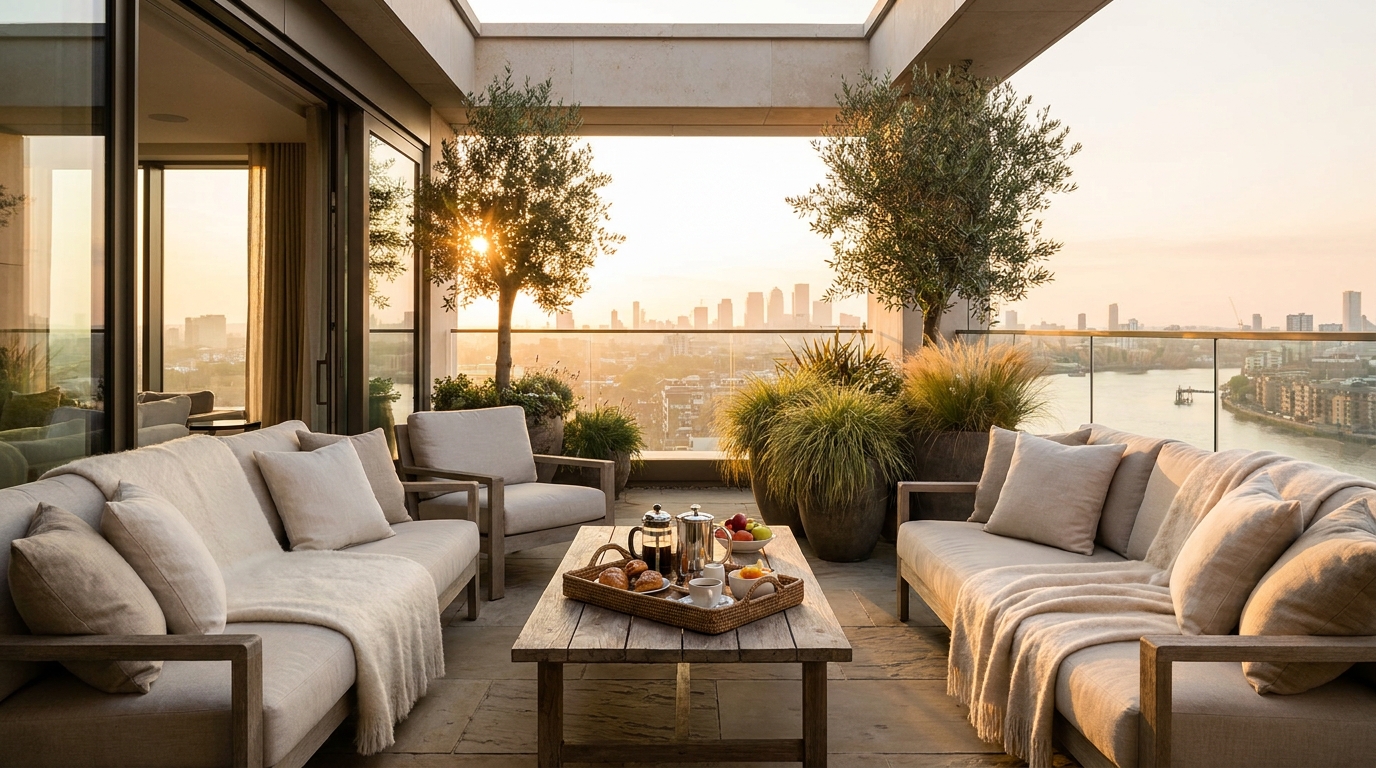
Private outdoor space is one of the most beloved features in this category. A terrace transforms a home from a beautiful urban residence into a layered lifestyle experience. It becomes a morning refuge, an evening entertaining area, a container garden, a reading corner, or simply a place to stand barefoot and watch the weather move through the city. In luxury living, indoor-outdoor space has become increasingly important, especially as buyers seek homes that support both wellness and sociability. A terrace offers freedom, freshness, and a type of private connection to the outdoors that feels especially precious in dense metropolitan environments. Kingsgate Luxury Homes has built that same sense of private outdoor retreat into its custom residences — see how a private balcony was woven into the design of Inside 1 Silvergrove Rd.
Research on apartment design and mental wellbeing has found that stronger implementation of daylight, privacy, ventilation, private open space, storage, and communal design requirements is linked to significantly higher positive mental wellbeing. Those findings give real substance to what many penthouse residents describe instinctively. When your home has airflow, light, room to breathe, and a sense of visual release, life inside it often feels smoother and more grounded. That is not indulgence for its own sake. It is environmental comfort with emotional consequences.
Views also have a surprisingly practical role in daily life. They can shape the rhythm of a home, offering visual cues that help structure the day. Morning sun across the skyline, changing clouds in the afternoon, city lights at dusk, and darkness settling slowly beyond the glass all add texture to ordinary hours. Instead of feeling sealed off from the world, a penthouse allows you to witness it from a more composed vantage point. That perspective is one reason these homes so often feel both energizing and peaceful at once.
The Prestige of the Penthouse and Why It Endures
In real estate, few categories carry the same symbolic weight as the penthouse. It has long represented the pinnacle of urban luxury, not merely because it occupies the top of the building, but because it tends to be singular. Penthouses are often fewer in number, more customized in layout, and positioned as the most desirable residences in a development. Luxury real estate coverage in 2025 and 2026 continues to highlight penthouses as a major prestige category, especially as affluent buyers seek homes that are not only expensive but genuinely distinctive.
Part of that prestige comes from rarity. In a typical high-rise, there may be many elegant units, but only one or a handful of penthouses. That scarcity creates emotional and market value. It gives the home a story, a sense of being exceptional within its own context. Buyers are often drawn to that uniqueness because it offers a form of identity. A penthouse can feel less like a numbered residence and more like a signature home, with proportion, outlook, and finishes that separate it from the rest of the building.
Another reason prestige endures is that luxury has become more experiential. Across North America, high-end buyers increasingly expect hotel-style services and wellness amenities such as concierge support, housekeeping, spa programming, curated social spaces, and private terraces. In that world, the penthouse is not just a unit. It is part of a broader ecosystem of ease and attentiveness. Prestige is no longer defined only by marble and square footage. It is equally shaped by time saved, friction removed, and the feeling of being beautifully cared for in your own home.
Still, there is a graceful way to think about prestige that feels more modern and less performative. The most compelling penthouse lifestyle is not about excess for display. It is about living with a greater degree of intention, calm, and quality. Prestige becomes meaningful when it is woven into daily comfort, from a well-managed building to a private sunrise on the terrace to a dining room that glows at dusk while the city sparkles below.
Penthouse Living in the Context of North American Cities
Penthouses are closely tied to major metropolitan areas, and in Canada this relationship is especially clear. Statistics Canada reported in its 2011 housing data that Toronto, Vancouver, and Montréal accounted for 53.5 percent of Canadian households living in condominiums. That concentration helps explain why penthouse living is most strongly associated with dense urban centers where vertical housing, skyline views, and amenity-rich buildings are part of the residential landscape. These cities create the conditions in which top-floor luxury becomes both possible and deeply desirable.
At the same time, the market context has become more nuanced. CMHC reported that housing construction remained strong overall in 2025, reaching 259,000 units, but the mix shifted in some markets away from condominium high-rises and toward record levels of purpose-built rentals. CMHC also reported that between 2022 and the first quarter of 2025, total condominium apartment sales fell 75 percent in Toronto and 37 percent in Vancouver, while inventories rose and prices softened in those markets. For readers interested in penthouse living, this offers an important reminder: these homes exist within broader market cycles, financing conditions, and local supply dynamics.
That does not diminish the appeal of penthouses. It simply means they should be understood as both lifestyle purchases and market-specific assets. Availability and pricing can vary dramatically depending on the city, the neighborhood, the age and reputation of the building, and future development nearby. In some places, a penthouse may command extraordinary premiums because view corridors are protected and true top-floor inventory is limited. In others, new supply or softer condo conditions may influence value in different ways.
For buyers, this context can actually be empowering. A penthouse is an emotional purchase, but it should still be approached with clarity. Understanding the local condo market, the development pipeline, and the difference between a genuinely rare penthouse and a unit simply marketed with that label can help ensure the lifestyle lives up to the promise. Luxury is always sweetest when it is chosen thoughtfully.
Designing a Penthouse That Feels Luxurious to Live In
Once inside a penthouse, what creates true luxury is not sheer decoration. It is atmosphere. The most elegant penthouse interiors today lean toward calm minimalism, personalization, and exceptional materials rather than excessive ornament. Design trends noted by luxury property coverage include clean, light-filled interiors, strong emphasis on views, and a flexible approach that allows residents to shape the space around their routines. This shift makes sense because penthouse living is at its best when the home feels serene rather than overstimulating.
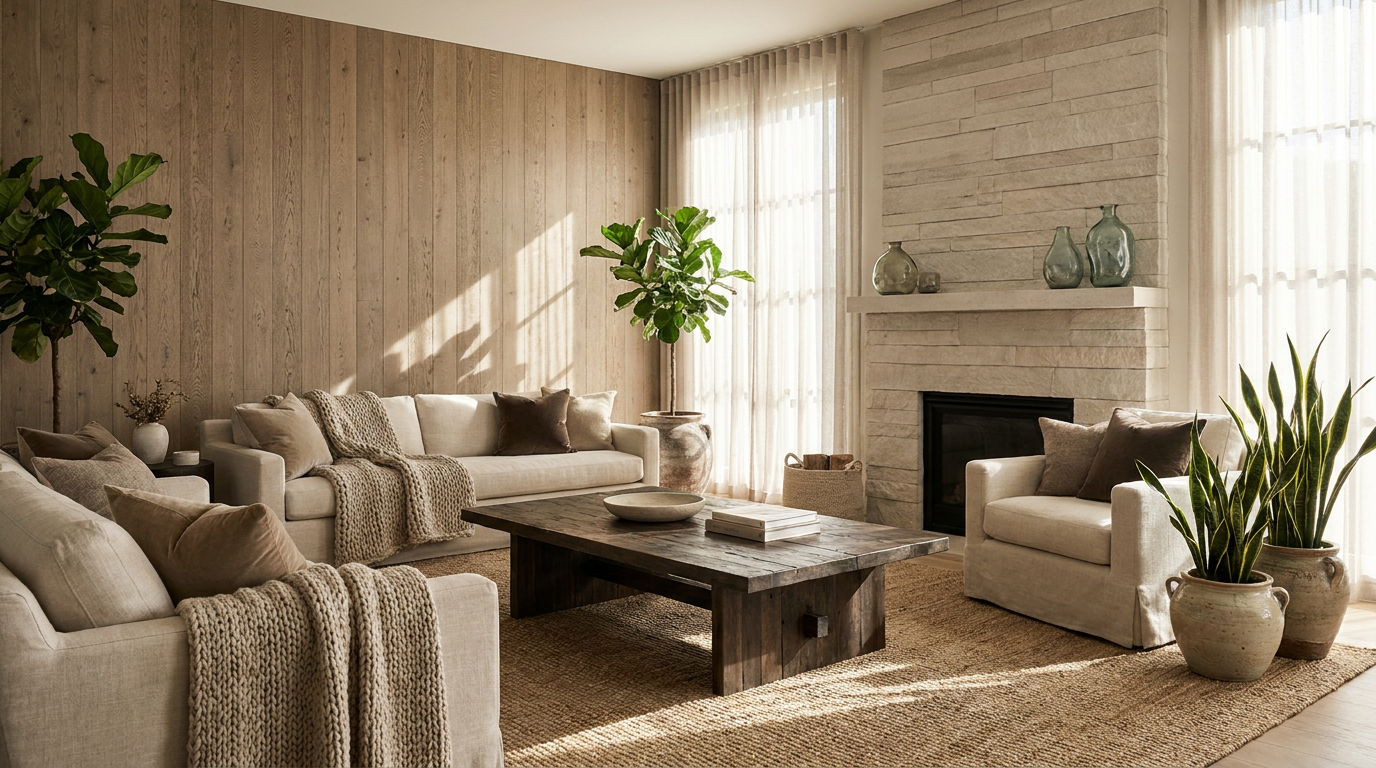
A thoughtful palette often begins with softness. Warm neutrals, tactile fabrics, natural stone, brushed metals, pale woods, and quietly sculptural forms allow the view to remain part of the design story. If the skyline is dramatic, the interiors do not need to shout. Instead, they can create a beautiful frame for light and landscape. The result is a home that feels polished yet restful, sophisticated yet deeply livable. This is where luxury becomes emotional rather than merely visual.
Biophilic design is especially powerful in penthouses because it balances the high-rise context with natural warmth. Indoor trees, potted herbs, textural linens, natural fibers, and organic materials can soften architectural lines and bring the outdoors inward. Even small gestures, like a stone side table near a sunlit reading chair or a row of grasses on the terrace, can deepen the sense of calm. In a home elevated above street level, nature becomes something intentionally curated and especially precious.
Lighting deserves equal care. Circadian-friendly lighting, layered illumination, dimmable fixtures, and warm evening tones can support the body’s natural rhythms, especially in homes where daylight is abundant. Good lighting should not flatten a room or overpower the night view. It should make the home feel adaptable across moods and moments, from a bright, energizing morning kitchen to a softly lit sitting area that invites conversation after dinner.
Creating Rooms That Support Real Life
One of the most appealing current trends in penthouse living is the rise of multi-functional spaces. Luxury homeowners want rooms that can entertain beautifully, but they also want homes that support remote work, family time, wellness routines, and solitude. A successful penthouse often includes spaces that transition gracefully from one purpose to another. A dining area may host an intimate dinner party one night and serve as a sunlit work zone the next morning. A den may function as a media lounge, reading room, or private office depending on the season of life.
This flexibility does not need to feel utilitarian. On the contrary, when done well, it enhances the sense of ease. Custom cabinetry can conceal office equipment. Sliding panels or drapery can soften larger open-plan areas. Built-in banquettes can create cozy corners within expansive layouts. What matters is that the home feels intentional, not rigid. Penthouse living should offer freedom, and that freedom is often expressed through spaces that evolve with your needs.
Storage is also more luxurious than people often realize. Clutter interrupts serenity, and in a home built around openness and views, hidden organization is essential. Walk-in wardrobes, beautifully designed utility rooms, discreet pantry space, and integrated millwork all help preserve the visual quiet that makes penthouses so appealing. True luxury is often what you do not see.
Wellness as the New Language of Luxury
If there is one idea reshaping penthouse living today, it is wellness. Homeowners increasingly want residences that support mental clarity, physical comfort, and everyday restoration. In luxury buildings, that may mean concierge wellness programming, fitness studios, spa access, and full-service amenities. Inside the penthouse itself, it often appears in more personal and intimate ways: a meditation corner by the window, a spa-style bathroom, a steam shower, an infrared sauna, or simply a bedroom designed for quiet and deep sleep.
This trend reflects a broader cultural shift. People are spending more care and attention on the emotional quality of home life, and luxury real estate has responded. The penthouse, with its privacy, light, and spatial flexibility, is particularly well suited to this evolution. Rather than treating wellness as a separate zone, many of today’s most appealing penthouses weave it into the entire atmosphere of the home. Materials feel grounding. Airflow is considered. Acoustics matter. Outdoor space is used for yoga, reading, gardening, or evening resets. The home becomes a partner in feeling well.
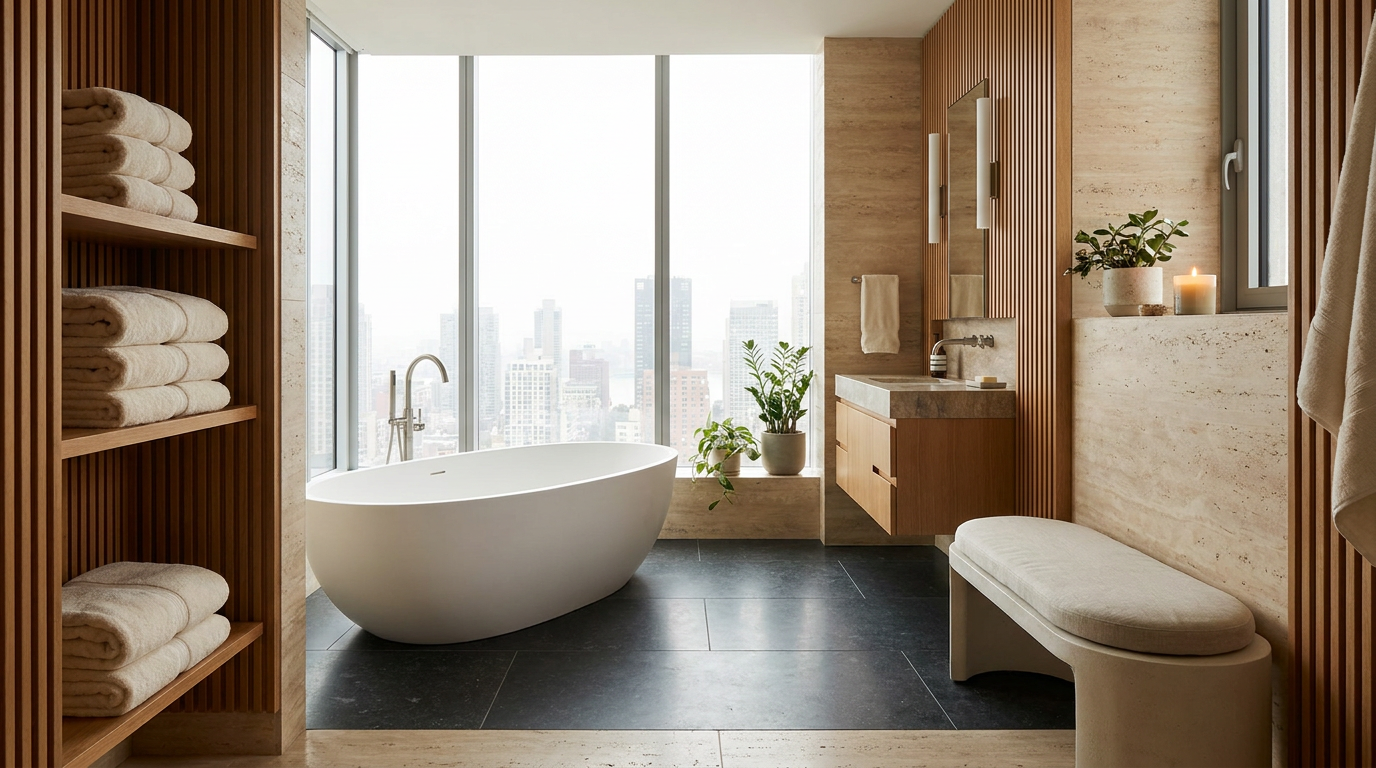
Spa-like bathrooms play a starring role in this story. A freestanding tub placed near a view, layered natural textures, warming floors, soft towels, and flattering light can transform a functional room into a true retreat. The same can be said for bedrooms that prioritize softness, darkness, acoustic privacy, and a calm visual field. Wellness architecture is rarely loud. It works through comfort, rhythm, and the quiet removal of friction.
Even entertaining can be wellness-oriented when the home is designed with intention. A penthouse that flows effortlessly between kitchen, dining area, living room, and terrace creates a low-stress social environment. Guests feel relaxed, hosts feel present, and the evening unfolds without congestion or noise. This is a subtler and more sophisticated version of luxury, one rooted in ease rather than spectacle.
The Role of Service, Amenities, and Branded Living
Another defining feature of the penthouse lifestyle is the building itself. A beautiful residence can be diminished by poor management, weak security, or inconsistent maintenance, while an excellent building can make daily life feel seamless. Full-service concierge living is now central to many luxury buyers’ expectations, and it is one reason some penthouses feel more elevated than others even when their square footage is similar. Service shapes mood. It shapes convenience. It shapes how much attention you must give to logistics instead of life.
In North American luxury markets, hotel-style service has become increasingly influential. Residents may seek valet, housekeeping, package management, private dining support, pet services, wellness programming, or resident lounges that feel more like members’ clubs than standard condo amenities. Branded residences have also gained traction, especially among buyers drawn to consistency, hospitality standards, and a recognizable lifestyle identity. In these settings, the penthouse is often the crown jewel of an already highly curated living experience.
That said, the right amenity mix is personal. Some homeowners value privacy above all and want a discreet, well-run building with understated service. Others love the idea of social spaces, screening rooms, spas, and private event support. The best approach is to think about your actual routines. Which services would genuinely lighten your days? Which amenities would enrich your weekends? Luxury is most satisfying when it feels useful, not simply impressive on paper.
Security and reliability deserve special mention. Elevator performance, staff professionalism, building upkeep, and reserve planning all influence whether a penthouse truly feels carefree. Prestige can be undermined quickly by management issues. When evaluating penthouse living, the building ecosystem matters almost as much as the residence itself.
Entertaining, Family Life, and Everyday Rituals
Although penthouses are often associated with glamorous parties and skyline dinners, their greatest strength may be how beautifully they hold everyday life. Yes, these homes can be extraordinary for entertaining. Open living areas, dramatic views, chef-friendly kitchens, and generous terraces make hosting feel polished and memorable. Yet what often surprises people is how intimate a penthouse can feel when designed well. Instead of being cold or ceremonial, it can become the warm center of family routines, quiet evenings, and simple pleasures.
For families, a penthouse can offer a strong sense of containment and comfort. Better privacy, thoughtful zoning between public and private rooms, and access to amenity-rich buildings can support both togetherness and independence. Children may enjoy the excitement of city living while still having peaceful sleeping areas and room for homework, play, or creative activities. Parents may appreciate secure access, concierge support, and terraces that bring a bit of outdoor freedom into urban life. The emotional value lies in making city living feel softer and more human.
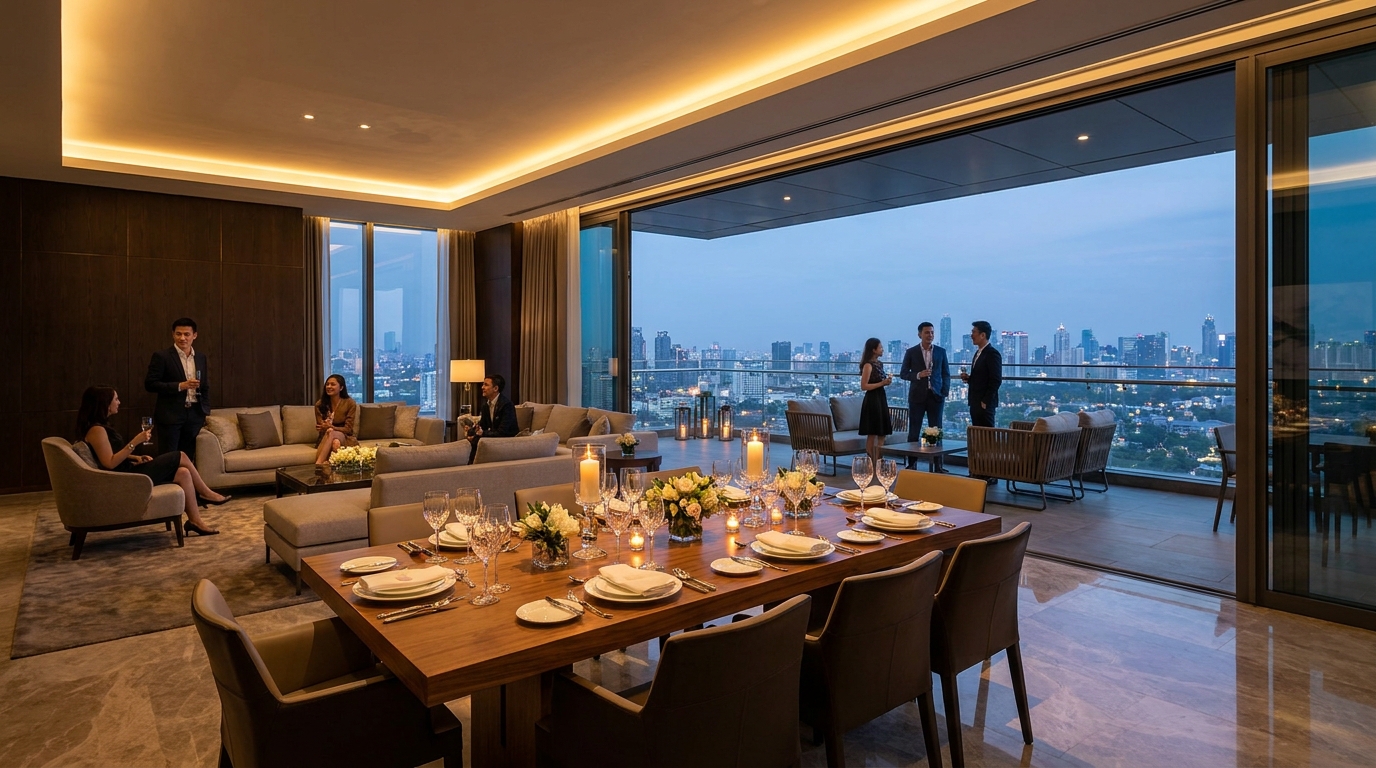
Entertaining in a penthouse also tends to be more atmospheric than performative. Guests arrive with anticipation, of course, but what they remember is often the feeling. Sunset reflecting off glass towers. A candlelit table near open terrace doors. Music carrying gently through a calm, uncluttered interior. The view becomes part of the evening, but the home itself creates the mood. In this way, penthouse living supports hospitality in the richest sense. It allows people to gather beautifully and comfortably at once.
Daily rituals matter just as much. A window seat for reading at dawn, a terrace herb garden, an evening bath after work, a soft lamp glowing beside a late dinner, these are the details that make luxury sustainable. A penthouse is most rewarding when it enhances ordinary life, not only special occasions.
Common Misconceptions About Penthouse Living
One of the most persistent misconceptions is that a penthouse is simply a larger apartment. In reality, the value usually comes from a more nuanced combination of rarity, privacy, views, terraces, premium positioning, and access to a high-service building ecosystem. Some penthouses are expansive, but others are valuable because they offer a singular relationship to light, openness, and exclusivity. The emotional experience can matter as much as the square footage.
Another misconception is that all penthouses are equally exclusive. In practice, the label can be used quite loosely. Some are true top-floor signature residences with customized layouts and extraordinary outdoor space. Others may be upper-floor units branded as penthouses for marketing purposes. Buyers should look closely at the floor level, layout uniqueness, ceiling height, terraces, privacy, elevator access, and how the building positions the unit within its overall hierarchy.
It is also worth challenging the assumption that penthouse living is always effortless. While many top-floor homes do feel quieter and more serene, quality varies widely. Acoustic privacy depends on construction. Elevators must be reliable. Roof-level exposure can create issues related to heat, wind, and maintenance. Future neighboring development can also affect views over time. A beautiful listing is only the beginning of the story.
Finally, a penthouse does not guarantee better investment performance. Market cycles, local demand, financing conditions, and supply all influence resale outcomes. In cities where condominium conditions have softened, even trophy residences can be affected by broader dynamics. That does not make penthouse ownership unwise. It simply reinforces the importance of approaching it as both a lifestyle decision and a carefully evaluated purchase.
The Tradeoffs to Consider Before You Buy
Every luxury choice comes with practical considerations, and penthouse living is no exception. The most obvious tradeoff is cost. Purchase prices are typically much higher than those of standard units in the same building, and carrying costs such as property taxes, condo fees, insurance, and maintenance can also be substantial. In some cases, the premium reflects genuine rarity and long-term desirability. In others, buyers need to assess whether the lifestyle advantages justify the additional expense.
Climate and exposure are worth thinking about too. Top-floor homes can experience more direct sunlight, more wind on terraces, and in some buildings, more heating or cooling demands. A well-designed penthouse will address these factors through glazing, shading, insulation, and mechanical systems, but they should never be assumed away. Outdoor spaces are wonderful, though their year-round usability depends heavily on design details such as screening, heating elements, covered zones, and durable materials.
Maintenance responsibility can also feel different in a penthouse, especially when large terraces, specialty finishes, or custom systems are involved. Even in full-service buildings, more distinctive homes often require more thoughtful upkeep. The reward is a more personalized living environment, but the commitment should be recognized. Luxury feels best when it is supported properly.
If you are evaluating a penthouse seriously, it helps to review a few essentials before falling in love with the view.
- Study the building’s management quality, financial health, and reserve planning.
- Ask about future developments that could affect views, privacy, or noise.
- Assess elevator access, security, and how many units share your level.
- Understand terrace maintenance obligations and any restrictions on design changes.
- Consider seasonal light, heat exposure, and how the home feels at different times of day.
- Think honestly about how you live, entertain, work, and rest.
These practical questions do not diminish the romance of penthouse living. They protect it. When luxury is chosen with clear eyes, it becomes more enjoyable, more lasting, and far more personal.
How to Create a Luxurious Penthouse Atmosphere Wherever You Are
Not everyone who loves the penthouse lifestyle will live in a true penthouse, and that is perfectly fine. What matters most is understanding the qualities that make these homes feel so special, then translating them into your own environment where possible. The emotional essence of penthouse living can be recreated through light, softness, order, and intentionality. Luxury begins with how a space supports you.
Start by opening the home visually. Keep window areas clear, use reflective materials thoughtfully, and choose furnishings that allow light to travel. If you have access to any outdoor space, no matter how modest, treat it like a true extension of the home. Comfortable seating, greenery, lanterns, and layered textures can transform a balcony or terrace into a restorative retreat. The goal is not to imitate scale. It is to cultivate atmosphere.
Next, focus on sensory calm. Improve acoustic comfort with rugs, drapery, upholstered furniture, and soft finishes. Choose a restrained palette that feels soothing and cohesive. Introduce natural materials and a few living plants to create warmth and connection. Consider your lighting in the evening and shift away from harsh overhead brightness toward layered lamps and dimmable fixtures. These choices support the same emotional qualities that make penthouses feel elevated.
Finally, protect your routines. Luxury often lives in the ability to enjoy a peaceful morning, a comfortable workday, and a graceful evening at home. Whether that means a carefully styled coffee corner, a deeply comfortable bed, or a bathroom that feels a little more spa-like, the point is to create moments of sanctuary. The penthouse ideal is not only about architecture. It is about designing daily life with care.
Final Thoughts on the Meaning of Penthouse Living
Penthouse living continues to hold our imagination because it brings together two desires that rarely coexist so elegantly: the wish to be connected to the energy of the city and the wish to be sheltered from its intensity. It offers height, yes, but also perspective. It suggests prestige, but increasingly it delivers something more lasting than status alone. At its best, it provides serenity, privacy, beauty, and a home that supports the emotional rhythms of modern life.
In a time when luxury is being redefined around wellbeing, service, and meaningful daily experience, the penthouse feels especially relevant. It reflects a growing understanding that comfort is not superficial and that the atmosphere of home has real consequences for mood, rest, relationships, and quality of life. Natural light, open views, private outdoor space, and thoughtful design are not merely aesthetic advantages. They are the ingredients of a more restorative way to live.
Of course, not every penthouse fulfills this promise equally. The building, the market, the management, and the design all matter. But when those elements align, the result can be remarkable. A penthouse becomes more than a residence. It becomes a personal sanctuary, an elevated stage for everyday life, and a quiet declaration that luxury should feel as good as it looks.
Perhaps that is why penthouse living remains so aspirational. It is not only about being on top. It is about coming home to a space where the light is better, the noise is softer, the air feels freer, and the world opens outward in front of you. In that sense, the true luxury of a penthouse is not distance from life. It is a more beautiful way of inhabiting it.

No Comment! Be the first one.