



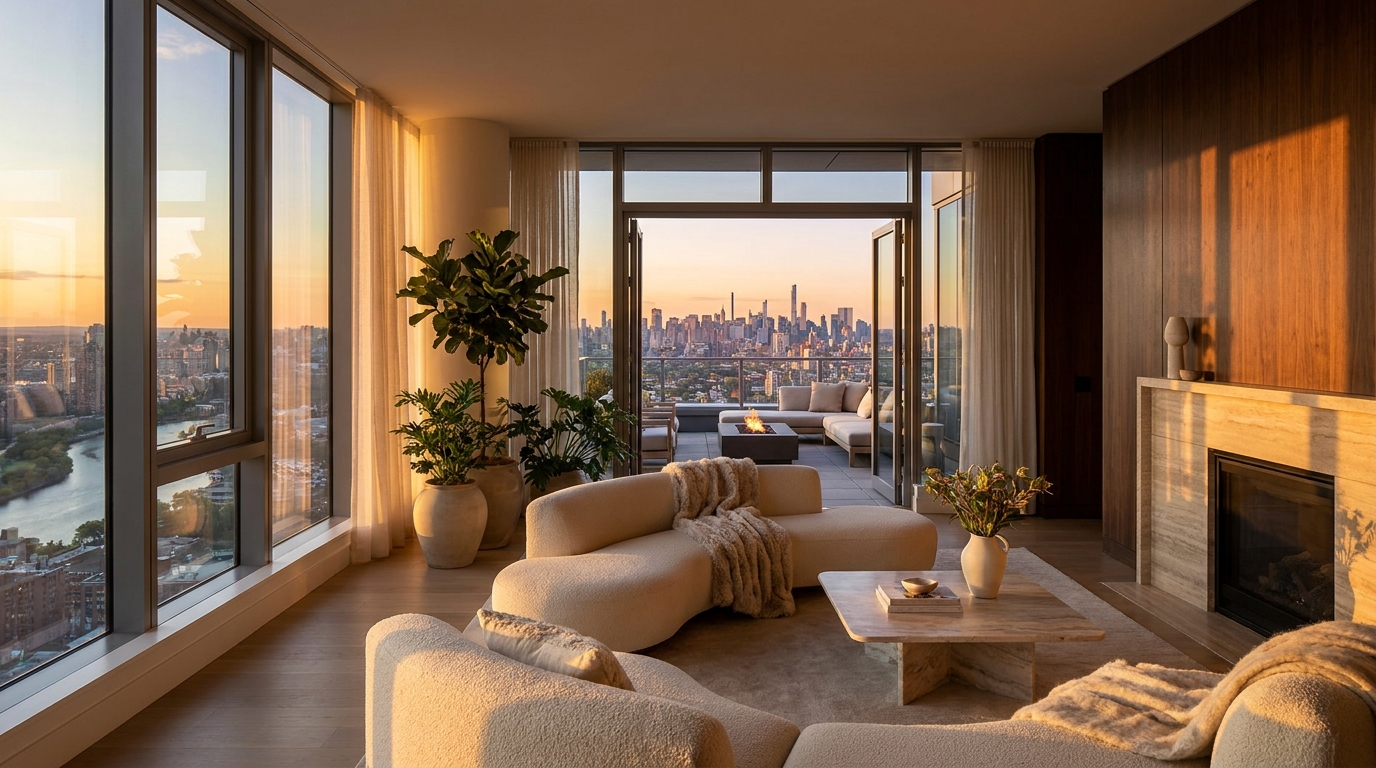
There was a time when sustainable design was too often framed as a compromise, as though environmental responsibility belonged to a separate visual language of worthy restraint rather than genuine beauty. Today, that idea feels entirely outdated. The most compelling interiors are increasingly those that pair visual refinement with material intelligence, creating rooms that feel as graceful as they are conscientious. In this new design landscape, sustainability is not a limitation. It is a mark of discernment.
Table Of Content
- Why Sustainable Materials Belong in Elegant Interiors
- Understanding the New Language of Material Sophistication
- Wood: The Warmest Expression of Low Carbon Luxury
- Stone, Mineral Surfaces, and the Art of Responsible Restraint
- Recycled Glass and Terrazzo: A Polished Approach to Circular Design
- Recycled Metal and the Refined Language of Utility
- Cork: Softness, Comfort, and an Understated Modernity
- Low Emitting Finishes and the Invisible Luxury of Healthy Air
- How to Read Certifications and Material Disclosures with Confidence
- Common Misconceptions About Sustainable Interior Materials
- Designing for Longevity: The Most Elegant Sustainability Strategy
- How to Build a Sustainable Materials Palette That Still Feels Luxurious
- A Practical Checklist for Selecting Sustainable Interior Materials
- The Future of Interiors Is Measured, Beautiful, and Conscious
To choose sustainable materials well is to think beyond surface appearance and ask more meaningful questions about origin, longevity, indoor air quality, repairability, and embodied carbon. It is to understand that elegance is not simply about what looks luxurious on installation day, but what continues to feel relevant, healthy, and enduring years later. A beautifully finished room gains depth when its materials carry a story of responsible sourcing, careful manufacture, and lasting performance.
That shift is especially significant in Canada and across North America, where low carbon construction, circular design, and healthier interiors are becoming central to the way buildings are conceived. Natural Resources Canada estimates that the embodied carbon associated with new homes and buildings built each year in Canada is approximately 11 to 13 Mt CO2e. That figure reminds us that sustainability begins long before a building is occupied. It begins with what we choose to bring into it.
Sustainable materials in interior design are materials chosen for more than their surface appearance, for responsible sourcing, durability, repairability, indoor air quality, and lower embodied carbon across their full life cycle. In practice, this includes FSC certified wood and reclaimed timber, recycled glass and recycled metal, cork, low carbon mineral plasters, and finishes verified as genuinely low emitting rather than simply labeled green. None of these choices ask a room to look rustic or unfinished. Some of the most elegant materials available today are also among the most responsible, and pairing them thoughtfully produces an interior language that feels warm, intelligent, layered, and genuinely modern. Sustainability, understood this way, is not a stylistic constraint. It is a more complete definition of quality, one that considers what a material is made from, how long it will last, and how it will feel to live with years after installation.
This guide explores how to incorporate sustainable materials into your interior design projects without sacrificing beauty. It is an invitation to see sustainability not as a trend, but as a timeless design philosophy rooted in quality, atmosphere, and care.
Why Sustainable Materials Belong in Elegant Interiors
Luxury has always been associated with rarity, craftsmanship, and permanence, yet contemporary luxury is evolving. Increasingly, it is defined not by excess, but by precision. A carefully sourced oak veneer, a reclaimed timber beam with a graceful patina, or a mineral plaster wall that deepens in character over time can feel far more sophisticated than a room filled with materials chosen only for novelty. Sustainable interiors align with this more mature understanding of beauty.
There is also a practical intelligence to sustainable specification that naturally supports elegance. Materials that are durable, repairable, and less likely to date quickly tend to create spaces with visual calm and architectural integrity. When a designer favors materials with honest texture and enduring performance, the result often feels more grounded and more luxurious because it resists the hurried cycle of replacement that cheapens so many interiors.
Environmental responsibility further enhances that sense of quality. The Government of Canada’s green buildings strategy is increasing focus on lower embodied carbon materials, recycled content, and performance based design, including a target of a 30 percent reduction in embodied carbon for major construction projects starting in 2025. While these policies are directed at larger project frameworks, they influence the broader market and reinforce an important principle for residential and commercial interiors alike. Better materials are no longer a niche preference. They are becoming part of the standard of excellence.
Sustainability, when expressed through beautiful materials, becomes less about sacrifice and more about stewardship.
This is why sustainable interiors feel so timely. They answer multiple desires at once. They satisfy the wish for tactile richness, the need for healthier indoor environments, and the growing expectation that design should account for its broader impact. In a truly elegant room, these concerns do not compete. They collaborate.
Understanding the New Language of Material Sophistication
To create a sustainable interior with confidence, it helps to move beyond simplistic labels and understand the vocabulary shaping contemporary materials. Terms such as embodied carbon, circular design, low emitting materials, design for disassembly, EPDs, and HPDs are no longer reserved for technical reports. They are becoming part of the designer’s aesthetic toolkit because they reveal how a material behaves across its entire life cycle.
Embodied carbon refers to the greenhouse gas emissions associated with extracting, manufacturing, transporting, installing, maintaining, and disposing of a material. This matters profoundly in interiors because renovations and fit outs can involve significant material turnover. A surface may look polished and current, yet still carry a heavy environmental burden if it relies on high impact extraction, energy intensive processing, or constant replacement.
Circular design expands the conversation further. It asks whether a material can be reused, repaired, or disassembled gracefully at the end of its first life. This is one reason reclaimed and salvaged materials have become so compelling in sophisticated interiors. They do not merely reduce waste. They introduce provenance, depth, and individuality that new materials often struggle to replicate.
Transparency is equally important. LEED v4 and v4.1 have helped push the industry beyond vague green claims by emphasizing low emitting materials and disclosure tools such as Environmental Product Declarations and Health Product Declarations. For homeowners and designers, this means a more credible way to compare products. Rather than relying on marketing language alone, one can ask for measurable information about emissions, ingredients, and environmental performance.
Wood: The Warmest Expression of Low Carbon Luxury
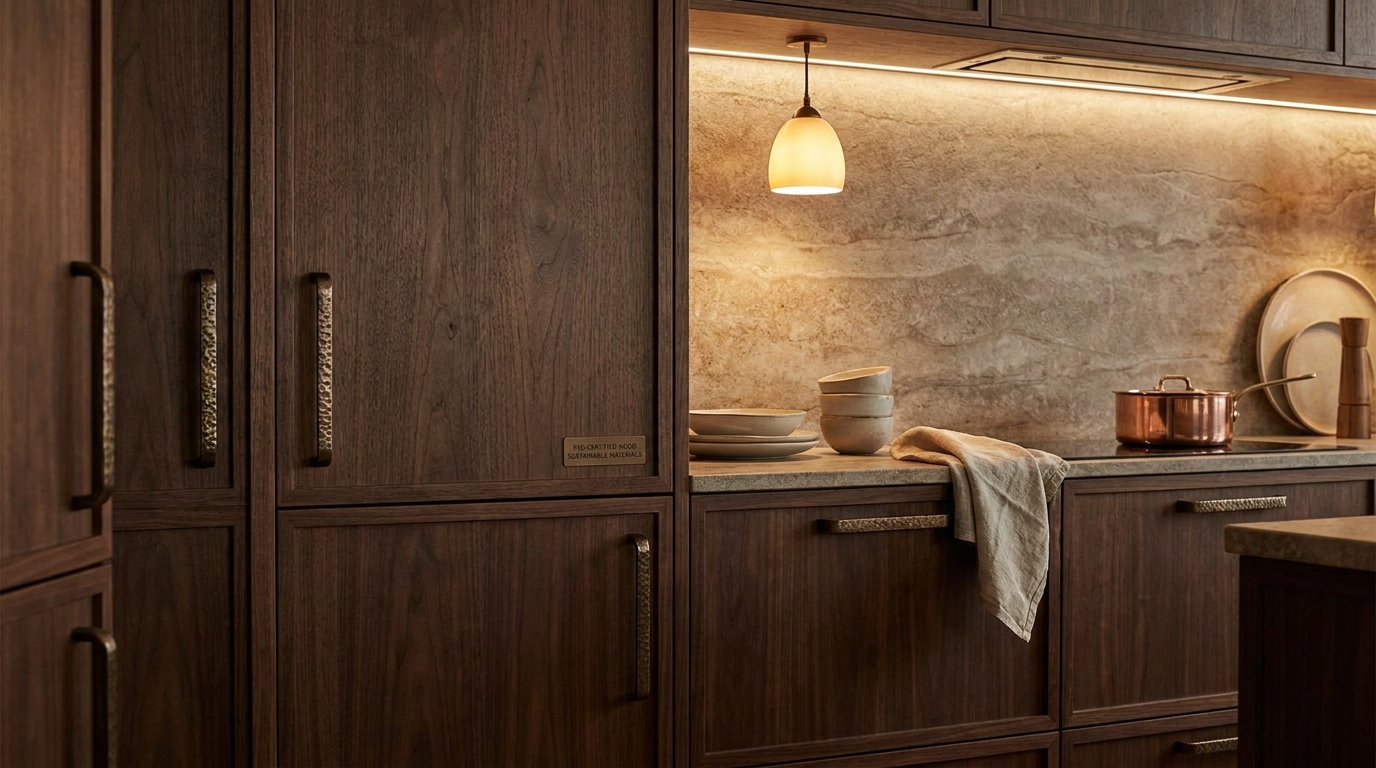
Few materials communicate comfort and refinement as naturally as wood. Its grain, warmth, and quiet variation lend interiors a sense of calm that synthetic substitutes rarely achieve. From cabinetry and flooring to paneling and furniture, wood remains one of the most versatile ways to introduce sustainable sophistication into a home.
In Canada, wood carries particular relevance in the conversation around low carbon design. Natural Resources Canada identifies wood as a preferred option for low carbon and green construction, while mass timber is increasingly seen as part of the country’s low carbon building future. Though mass timber is often discussed at the architectural scale, its rise has also elevated the design reputation of wood more broadly. Today, timber is associated not only with rustic charm, but with some of the most advanced and visually refined spaces being built.
For interior applications, FSC certified wood is one of the most accessible and meaningful choices. FSC certification is widely recognized as a standard for responsible forest management, helping verify that wood and paper products come from responsible sources. In practical terms, that means a client can select oak cabinetry, walnut shelving, or ash flooring with greater confidence about the stewardship behind the material.
The beauty of FSC certified wood lies in its flexibility. It can be tailored to nearly any design language, whether the room calls for pale Scandinavian softness, rich contemporary depth, or classic architectural formality. A satin finish on white oak can feel airy and understated, while dark stained walnut introduces a more dramatic elegance. Sustainability here does not dictate a style. It simply improves the integrity of the choice.
Reclaimed wood offers another, deeply seductive possibility. Salvaged wood recovered from construction, renovation, and demolition is already being reused in Canada for furniture, cabinetry, feature walls, flooring, and other interior applications. It brings character that cannot be manufactured convincingly, from small nail marks and weathered grain to subtle tonal shifts created by age. In a refined interior, these qualities feel less rough than poetic.
Used thoughtfully, reclaimed timber can anchor a room without overwhelming it. A single dining table, custom vanity, or paneled wall may be enough to introduce history and texture. When paired with crisp plaster, restrained upholstery, and elegant lighting, salvaged wood reads as elevated rather than rustic. It becomes a material of memory shaped into a contemporary setting.
Stone, Mineral Surfaces, and the Art of Responsible Restraint
Natural stone has a timeless place in interior design because it carries an innate sense of permanence. Marble, limestone, slate, and granite can bring luminosity, gravity, or softness depending on their finish and application. Yet stone is also a material that benefits from thoughtful restraint. Sustainability in this category is often less about avoiding stone entirely and more about using it intentionally, specifying durable formats, and selecting suppliers that provide transparency around sourcing and fabrication.
One of the most refined approaches is to use stone where its qualities matter most. A bathroom vanity top, fireplace surround, or kitchen backsplash can deliver visual impact while limiting excess. This selective use not only helps manage cost and environmental burden, but also preserves the sense of luxury. When stone is everywhere, it can lose its emotional force. When it is used precisely, it feels precious and architectural.
Low carbon mineral based finishes deserve equal attention. Limewash, clay plasters, and mineral plasters introduce softness, depth, and subtle movement to walls in a way that standard paint often cannot. Their appeal lies in their atmosphere. Light drifts across them beautifully, creating a room that feels layered and quietly artisanal. In sustainable interiors, they offer a compelling alternative to heavily processed decorative surfaces.
These finishes are particularly effective in bedrooms, hallways, and living areas where visual serenity matters. Their tonal variation supports a timeless aesthetic because they are less tied to fashion than highly saturated or artificially uniform wall treatments. They also harmonize beautifully with wood, linen, and brushed metals, making them ideal for interiors that seek both elegance and environmental awareness.
Recycled Glass and Terrazzo: A Polished Approach to Circular Design
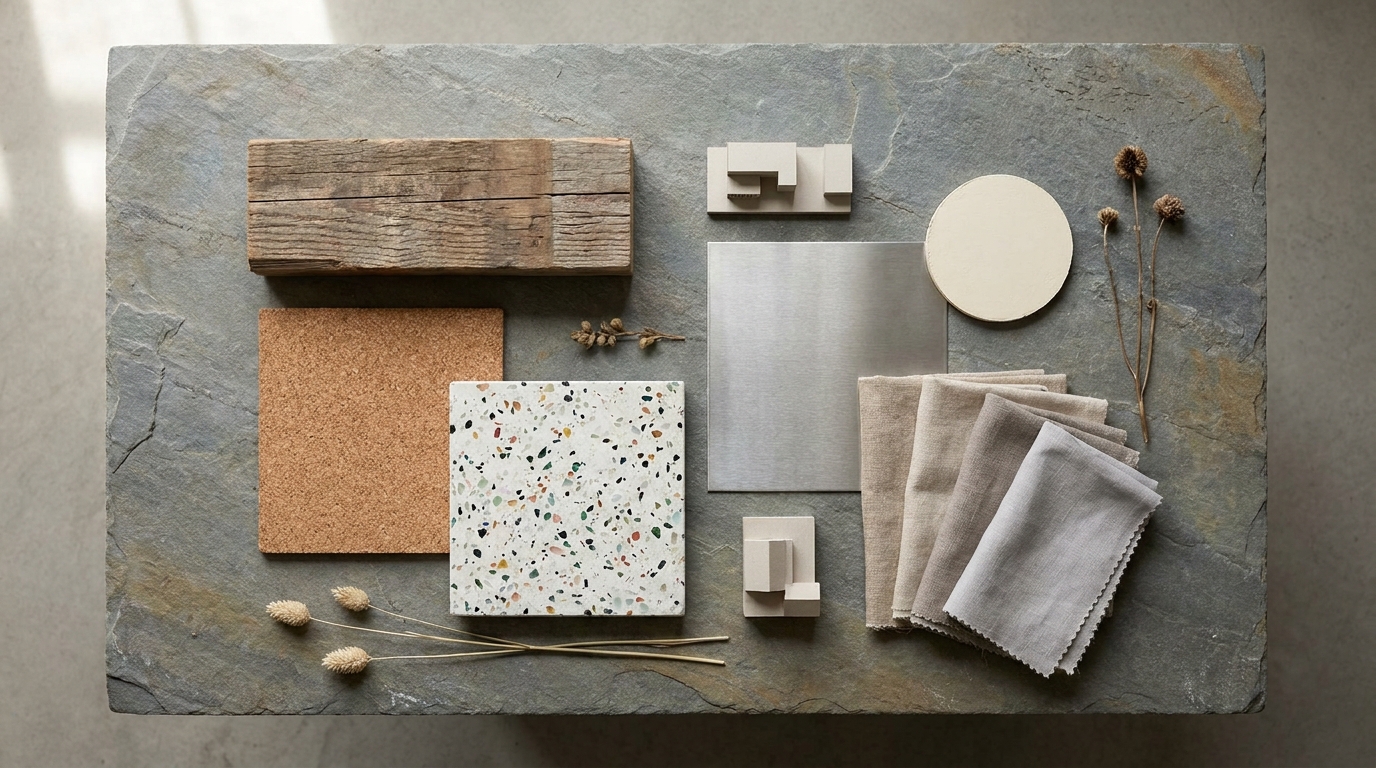
Recycled content can be exquisite when handled with design maturity. Recycled glass surfaces, for instance, can introduce translucency, sparkle, and visual freshness to kitchens, bathrooms, and decorative accents. Depending on the composition, they may appear quiet and stony or more jewel like and expressive. The key is curation. In a sophisticated interior, the tones and aggregate size should support the overall palette rather than shout for attention.
Terrazzo with recycled aggregate is another material enjoying a deserved renaissance. While terrazzo has historic roots, its contemporary applications feel newly relevant because they combine durability with circular thinking. Recycled glass, stone fragments, or other reclaimed aggregate can be embedded into a polished surface that feels both playful and architectural. In entryways, powder rooms, countertops, or custom furniture details, terrazzo can introduce pattern without sacrificing refinement.
What makes recycled glass and terrazzo particularly attractive is their relationship to longevity. They are not novelty materials meant for short term effect. Properly specified, they are durable, easy to maintain, and visually distinctive without being fragile. This balance between beauty and endurance is central to sustainable elegance.
For designers who worry that recycled content will look overtly ecological, these materials offer reassurance. Their sustainability can remain almost invisible to the eye while still contributing meaningfully to a lower impact material story. This quiet intelligence is often the most luxurious gesture of all.
Recycled Metal and the Refined Language of Utility
Metal has always brought clarity and precision to interiors. It sharpens edges, frames transitions, and adds a subtle sense of permanence to furniture, hardware, lighting, and architectural details. Recycled metal extends those qualities into a more responsible design framework. Whether in steel, aluminum, brass, or other alloys, recycled metal can often deliver the same visual sophistication as virgin material while reducing demand for new extraction and processing.
In the home, metal appears in countless small but important places. Cabinet pulls, plumbing fixtures, shelving supports, table bases, partition frames, and lighting components all contribute to the visual rhythm of a room. When these elements are selected with care, they elevate the entire interior. A brushed recycled metal finish can feel restrained and luxurious, especially when contrasted against natural wood or soft matte plaster.
There is also something conceptually elegant about choosing recycled metal. It reflects a belief that utility can be beautiful and that industrial processes can participate in a more circular future. The material does not need to advertise its ethics. Its integrity is enough.
Cork: Softness, Comfort, and an Understated Modernity
Cork is often mentioned in sustainable design conversations, but it is worth rescuing from stereotype. It is not only a casual or bohemian material. In the right context, cork can appear exceptionally polished. Its warm, velvety texture and subtle patterning make it an attractive option for flooring, wall panels, acoustic treatments, and underlayment in spaces where comfort matters.
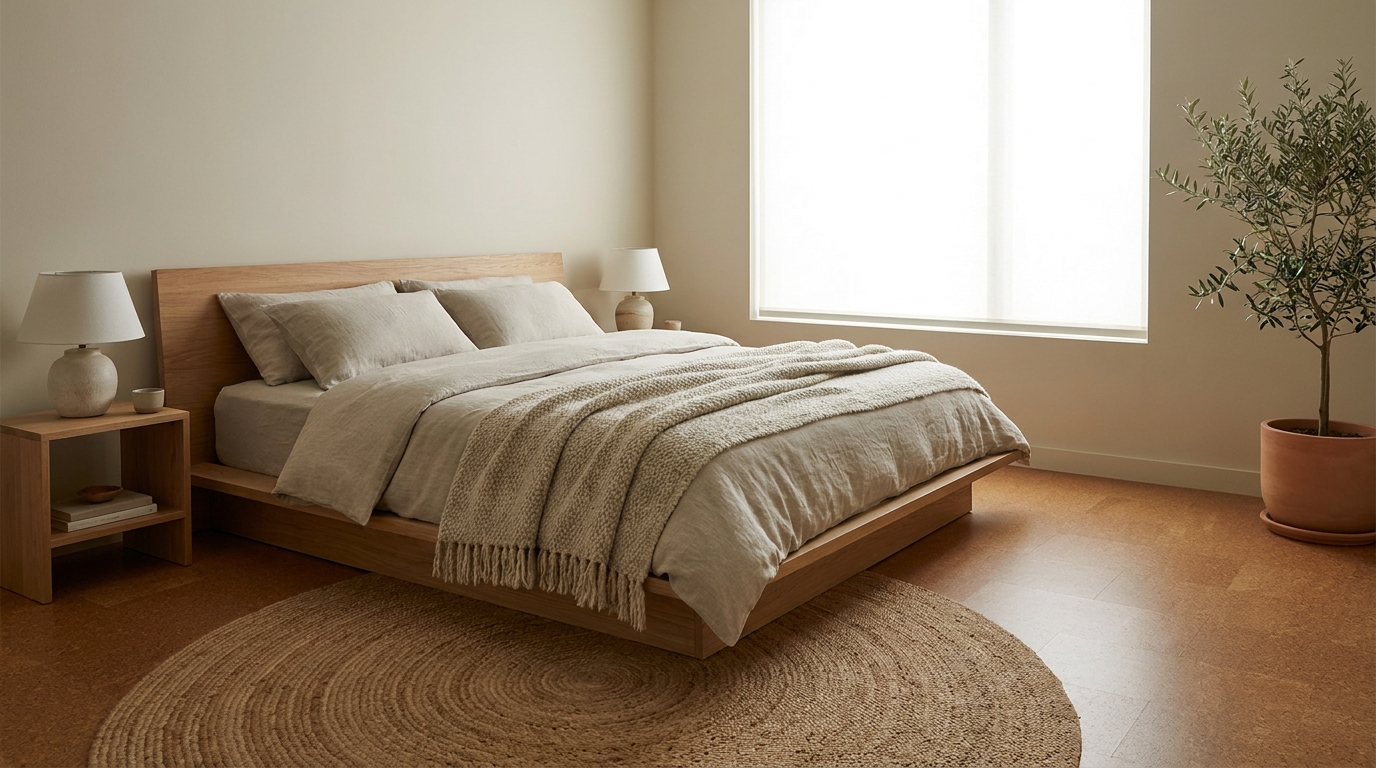
One of cork’s greatest strengths is sensory. It softens footfall, absorbs sound, and introduces a gentle warmth that many hard surfaces lack. In a bedroom, library, or quiet workspace, this quality can transform atmosphere. The room feels more serene, more intimate, and more considered. These are deeply luxurious traits, even if they are not always described that way.
Cork also supports a broader understanding of sustainable performance. Beauty is not only visual. It is acoustic, tactile, and experiential. A room that sounds calmer and feels gentler underfoot often reads as more expensive because it has been designed for comfort at a deeper level.
Low Emitting Finishes and the Invisible Luxury of Healthy Air
Perhaps the most overlooked aspect of interior material selection is what we cannot immediately see. Paints, sealants, adhesives, engineered wood products, flooring systems, and textiles all contribute to indoor air quality. In elegant interiors, this matters enormously because true comfort should include ease of breathing, reduced odor, and a sense of wellbeing that lingers long after installation is complete.
The language around low VOC products can be confusing, and this is where sophistication requires skepticism. The U.S. EPA notes that some products labeled low VOC can still contain volatile organic chemicals, meaning the claim alone should not be treated as a guarantee of health or strong emissions performance. This is a crucial distinction for anyone designing a home that is meant to feel both luxurious and genuinely healthy.
Rather than relying on front label marketing, designers should look for recognized certification, emissions testing, and transparent documentation. LEED v4 emphasizes low emitting materials and disclosure tools, while programs such as EPA Indoor AirPlus promote low emission materials, low VOC paints, carpets, and low formaldehyde wood products. These frameworks help move specification from vague promise to evidence based confidence.
In practical terms, this means asking better questions. Is the cabinetry made with low formaldehyde composite wood? Has the paint or finish been tested for emissions rather than only VOC content? Are adhesives and sealants appropriate for healthier indoor environments? These details may seem technical, yet they profoundly shape the lived experience of a room.
There is a special elegance in an interior that smells clean rather than chemical, that feels calm from the first day of occupancy, and that supports wellness without fanfare. This is sustainability at its most intimate. It serves the body as beautifully as the eye.
How to Read Certifications and Material Disclosures with Confidence
One of the reasons sustainable design has matured so significantly is that designers now have more tools for evaluating products objectively. This does not mean every project requires a full technical analysis, but it does mean that responsible selection can be more credible than simply following trends.
Among the most useful markers are the following:
- FSC certification for wood and paper products, indicating responsible forest management and sourcing.
- Environmental Product Declarations or EPDs, which summarize environmental impacts based on life cycle assessment data.
- Health Product Declarations or HPDs, which provide information about product ingredients and potential health considerations.
- Low emitting materials documentation, often aligned with LEED or other recognized emissions standards.
- Project specific life cycle data, especially for larger renovations or new builds where embodied carbon is a meaningful concern.
These tools matter because green labels alone are not enough. A product can appear sustainable in marketing imagery while revealing very little about sourcing, chemistry, or carbon impact. Transparency helps distinguish thoughtful design from decorative messaging.
For homeowners, the lesson is simple. Ask your designer, contractor, or supplier not only whether a material is sustainable, but why. Ask what supports that claim. The answers will often reveal whether the selection is merely fashionable or genuinely informed.
Common Misconceptions About Sustainable Interior Materials
Several myths still prevent people from embracing sustainable materials with enthusiasm. The first is that sustainable design looks rustic, improvised, or visually compromised. In reality, some of the most polished interiors today are built around reclaimed wood, mineral finishes, recycled aggregate terrazzo, and responsibly sourced timber. These materials often feel richer because they possess depth and authenticity.
The second misconception is that recycled content alone defines sustainability. Recycled content can be valuable, but it is only one part of the picture. Embodied carbon, sourcing practices, maintenance requirements, durability, repairability, and end of life options all matter. A material that lasts beautifully for decades may be a better choice than one that appears green on paper but must be replaced quickly.
The third misconception is that low VOC means non toxic or healthy. As the EPA has noted, this is not always the case. Indoor air quality depends on multiple factors, including actual emissions, installation methods, ventilation, and the interaction of many products within one space. Healthy design requires nuance, not slogans.
Another common assumption is that sustainable choices begin and end with bamboo or cork. While both can be useful, the category is much broader. FSC wood, reclaimed timber, low carbon mineral finishes, recycled glass, recycled metal, and carefully chosen low emitting products all deserve a place in the conversation. The best choice depends on application, climate, local availability, craftsmanship, and the kind of longevity the space requires.
Designing for Longevity: The Most Elegant Sustainability Strategy
If there is one principle that unites beautiful sustainable interiors, it is longevity. A room that remains useful, relevant, and appealing over many years is inherently more responsible than one designed around rapid replacement. This is where timeless aesthetics and environmental thinking align almost perfectly.
Longevity begins with proportion and restraint. Materials should be chosen not simply because they are popular, but because they age well. Natural wood, matte stone, mineral plaster, linen, wool, and brushed metals tend to mature gracefully. They gather character rather than wear out aesthetically. This quality reduces the pressure to renovate for purely cosmetic reasons.
It also means designing for maintenance and repair. Slipcovered seating, refinishable wood floors, replaceable hardware, and cabinetry that can be repainted or refronted all support a longer life cycle. In kitchens and bathrooms especially, this foresight can significantly reduce future waste and cost. A sustainable interior is not only beautiful at handover. It is adaptable over time.
Design for disassembly is another increasingly relevant concept. When possible, using systems and assemblies that can be removed, updated, or reused more easily contributes to circular design. This principle may sound technical, but it often translates into better detailing and more intelligent planning. Elegance, after all, is frequently a result of how well something has been thought through.
How to Build a Sustainable Materials Palette That Still Feels Luxurious
Creating a cohesive sustainable interior is less about filling a room with obviously green products and more about composing a palette with balance. Begin by choosing one or two foundational materials that carry most of the visual identity of the space. FSC certified oak flooring, reclaimed walnut millwork, or a lime plaster wall finish can establish the tone immediately. From there, supporting elements should reinforce the atmosphere rather than compete with it.
Contrast is essential. A warm timber surface becomes more elegant beside cool stone or muted metal. A textured mineral wall reads more beautifully when paired with crisp upholstery or smooth glass. Sustainability does not ask for sameness. It invites material dialogue. Rooms feel richer when each finish contributes something distinct, whether softness, structure, warmth, reflection, or acoustic comfort.
Color also deserves care. Many sustainable materials are naturally subtle, which is part of their charm. Soft neutrals, earthy greys, chalky whites, olive undertones, warm charcoals, and mineral beiges tend to complement wood, stone, cork, and recycled surfaces beautifully. This does not require a bland interior. It simply favors tonal sophistication over restless contrast.
Finally, let craftsmanship remain visible. Sustainable luxury is rarely about gloss for its own sake. It is about joinery, texture, finish quality, and restraint. The room should feel considered enough that the materials can speak quietly. When they do, the effect is memorable.
A Practical Checklist for Selecting Sustainable Interior Materials
When evaluating materials for a home or design project, it can help to use a structured lens. The following questions create a strong foundation for decision making:
- What is the material made from, and where does it come from?
- Is there trusted certification or transparent documentation such as FSC, EPDs, or HPDs?
- What is the likely embodied carbon impact relative to alternatives?
- Will the material age gracefully, or is it likely to feel dated quickly?
- How durable is it in this specific application?
- Can it be repaired, refinished, or reused later?
- What does it contribute to indoor air quality?
- Does it support the overall visual language of the home in a timeless way?
These questions help connect ethics with aesthetics. They encourage a more layered form of decision making, one that respects both the planet and the sensory experience of living well.
The Future of Interiors Is Measured, Beautiful, and Conscious
The future of sustainable materials is moving toward greater precision. The industry is shifting from broad storytelling alone to measurable carbon accounting, whole building life cycle assessment, and increasingly robust procurement standards. Canada’s federal policy direction, including the expansion of embodied carbon requirements and the inclusion of structural and reinforcement steel in updated assessments, reflects this momentum. Even when homeowners are not dealing directly with federal frameworks, the market effects are meaningful. Better information is becoming more available, and better choices are becoming easier to specify.
Yet even as data grows more important, the emotional dimension of interiors remains unchanged. People still want homes that feel calm, personal, beautiful, and enduring. The real achievement of today’s sustainable materials movement is that it no longer asks us to choose between conscience and atmosphere. The best materials now offer both.
That is why sustainability has become such a sophisticated design position. It honors the idea that a home should not only look exquisite, but also be composed with thoughtfulness. It values provenance as much as polish. It appreciates patina, transparency, health, and repairability as forms of luxury in their own right.
To embrace sustainable materials is, in the end, to embrace a more complete vision of elegance. One that extends beyond appearance and into responsibility. One that sees beauty not as a fleeting surface, but as a relationship between craftsmanship, wellbeing, and time.
For designers, homeowners, and anyone shaping a space, this is an inspiring moment. The palette of sustainable materials is richer than ever. The knowledge behind specification is growing. And the interiors that result can be every bit as refined as the most traditional expressions of luxury, perhaps even more so, because their beauty is grounded in care.
When sustainability is treated not as an obligation but as an art of choosing well, the home becomes more than stylish. It becomes graceful, intelligent, and enduring.

No Comment! Be the first one.