



Regenerative neighborhoods are becoming one of the most useful ways to think about the future of sustainable communities. The idea sounds ambitious at first, but the underlying principle is surprisingly practical. Instead of simply trying to reduce damage, regenerative design asks how a neighborhood can restore ecological health, strengthen social ties, and improve daily life at the same time. It is a more active and more hopeful approach to planning, design, and stewardship.
Table Of Content
- What Is a Regenerative Neighborhood?
- Why Regenerative Neighborhoods Matter Now
- The Core Elements of Regenerative Neighborhood Design
- Low-Carbon Mobility and Walkable Access
- Nature-Based Solutions and Blue-Green Infrastructure
- Energy Efficiency and District-Scale Thinking
- Water-Sensitive Design
- Local Food Systems and Productive Landscapes
- Social Inclusion, Equity, and Stewardship
- How to Measure Whether a Neighborhood Is Truly Regenerative
- Case Study: Vancouver’s Southeast False Creek and Olympic Village
- Case Study: Toronto and Region Conservation Authority’s SNAP Program
- Common Misconceptions About Regenerative Neighborhoods
- Practical Steps for Residents, Planners, and Community Leaders
- The Future of Sustainable Communities Is Regenerative
For many people, sustainability has long felt like a checklist of restrictions or expensive technologies. Regenerative neighborhoods offer a different frame. They focus on creating places where streets stay cooler during heat waves, stormwater is managed more naturally, people can walk to everyday essentials, biodiversity has room to recover, and residents feel a stronger sense of belonging. In this sense, regeneration is not an abstract planning theory. It is a practical way to shape neighborhoods that are healthier, more resilient, and more enjoyable to live in.
This shift matters because communities across Canada and North America are now facing multiple pressures at once. Housing affordability, climate adaptation, public health, infrastructure costs, and environmental degradation are no longer separate issues. They are deeply connected. A neighborhood with safe walking routes, shade trees, diverse housing, and better water management often performs better across all of those challenges than one designed around isolated land uses and heavy car dependence.
The good news is that regenerative neighborhoods are not reserved for new high-profile developments. In fact, some of the most meaningful progress can happen in ordinary places through steady retrofits and community-led improvements. A suburban street can add trees and bioswales. An apartment block can introduce shared gardens and better energy systems. A local business district can become more walkable and climate resilient. The point is not perfection. The point is building a healthier relationship between people, infrastructure, and local ecosystems over time.
This guide explores what regenerative neighborhoods really mean, why they matter, and how residents, planners, and local institutions can put the concept into practice. It also looks at successful case studies, including Vancouver’s Southeast False Creek and Olympic Village, as well as the Toronto and Region Conservation Authority’s Sustainable Neighbourhood Action Program. These examples show that regeneration is not a niche idea. It is increasingly becoming a mainstream strategy for sustainable community design, resilience planning, and long-term urban wellbeing.
What Is a Regenerative Neighborhood?
A regenerative neighborhood is a community designed and managed to actively restore ecological health, strengthen social ties, and improve daily life, going beyond simply reducing environmental harm. It improves the systems it depends on, including local ecology, water cycles, climate resilience, social inclusion, and community health. Where a conventional sustainable neighborhood focuses on consuming less energy or producing less waste, a regenerative neighborhood asks a deeper question: how can this place leave its land, water, biodiversity, and community stronger than before? In practice, that means reducing greenhouse gas emissions, managing stormwater more effectively, supporting biodiversity, improving thermal comfort during extreme heat, increasing access to daily needs without requiring a car, and strengthening community cohesion. These are not just environmental wins; they are quality-of-life outcomes that make neighborhoods more stable and resilient over the long term.
That does not mean trying to return a neighborhood to a pre-development condition. This is a common misconception. In practice, regeneration means creating a new and healthier balance that works for today’s climate, infrastructure, population, and social realities. It recognizes that cities and suburbs are already built environments, and the challenge is to improve how they function rather than erase what exists.
Another misconception is that regenerative neighborhoods are mostly about high-tech buildings or expensive eco-districts. Technology can certainly help, especially in areas such as energy efficiency, district energy, and water management. But many of the most effective regenerative strategies are much simpler. Tree canopy expansion, native planting, local food growing, safer walking routes, mixed-use land patterns, and community stewardship often have a major impact because they work at the level of everyday life.
Regeneration is not about doing slightly less harm. It is about creating neighborhoods that restore ecological function, improve human wellbeing, and become more resilient with time.
This broader framing aligns with major planning and sustainability institutions. UN-Habitat defines urban regeneration as a process that should improve affordability, access to services, resident involvement, local economic development, public space quality, and environmental performance. UNEP similarly describes integrated urban design as a combination of place-making, transportation, housing, health, and biodiversity rather than a series of isolated systems. In Canada, federal climate and adaptation policy increasingly emphasizes nature-based solutions, urban forests, wetlands, and climate-resilient community design as central tools for mitigation and adaptation.
Why Regenerative Neighborhoods Matter Now
Regenerative neighborhoods matter because cities and suburbs can no longer afford to solve one problem at a time. The street that lacks shade is also more vulnerable to heat stress. The neighborhood without safe walking routes often has higher transportation emissions and weaker local social life. The paved area that sheds water too quickly may face more flooding during heavy storms. A fragmented planning approach tends to multiply costs and missed opportunities. Regenerative design brings these issues together in a more practical way.
Climate change is one of the clearest reasons this approach is gaining momentum. As temperatures rise and extreme weather becomes more frequent, neighborhoods need better cooling, stronger stormwater management, and more flexible public space. Nature-based solutions such as urban trees, rain gardens, wetlands, and permeable surfaces can address several needs at once. They absorb and slow water, reduce urban heat, improve habitat, and create more attractive public environments.
Public health is another major driver. Neighborhood design has a direct influence on how people move, interact, and recover from stress. Streets that feel safe to walk, parks that include shaded seating, and local destinations within easy reach all contribute to healthier routines. Residents are more likely to be active, spend time outdoors, and build social connections when the neighborhood supports those habits naturally.
There is also a strong economic case for regeneration. Infrastructure that works with natural systems can reduce long-term maintenance and adaptation costs. Compact and mixed-use neighborhoods can support local businesses and reduce transportation burdens for households. Well-designed public spaces often increase neighborhood appeal and civic pride without depending solely on large capital projects. In this sense, regenerative design is not just environmentally responsible. It is also financially and socially strategic.
Perhaps most importantly, regenerative neighborhoods offer a more inclusive vision of sustainability. They invite residents into the process rather than treating them as passive users of expert-designed systems. Stewardship, co-design, local participation, and long-term monitoring are not side topics. They are part of how regeneration actually works. When people help shape and care for their environment, the neighborhood tends to perform better and feel more rooted in local needs.
The Core Elements of Regenerative Neighborhood Design
Although every community is different, regenerative neighborhoods tend to share a common set of design and governance principles. These elements are practical, scalable, and relevant for both new developments and retrofit projects. The strongest neighborhoods do not treat them as separate checkboxes. They combine them into an integrated system that supports resilience and everyday livability.
Low-Carbon Mobility and Walkable Access
One of the most visible features of a regenerative neighborhood is the ability to meet daily needs without relying heavily on a private vehicle. This does not mean eliminating cars entirely. It means designing so that walking, cycling, and transit are safe, convenient, and attractive for many common trips. When schools, shops, parks, and services are easier to reach on foot or by bike, emissions tend to fall and neighborhood life becomes more active.
Walkability also improves social cohesion in subtle ways. People notice one another more often, local businesses get more street-level activity, and public space becomes more meaningful when it is not dominated by fast traffic. Safer crossings, traffic calming, shaded sidewalks, bike storage, and transit-oriented design are all relatively familiar strategies. Their power comes from how they work together.
Nature-Based Solutions and Blue-Green Infrastructure
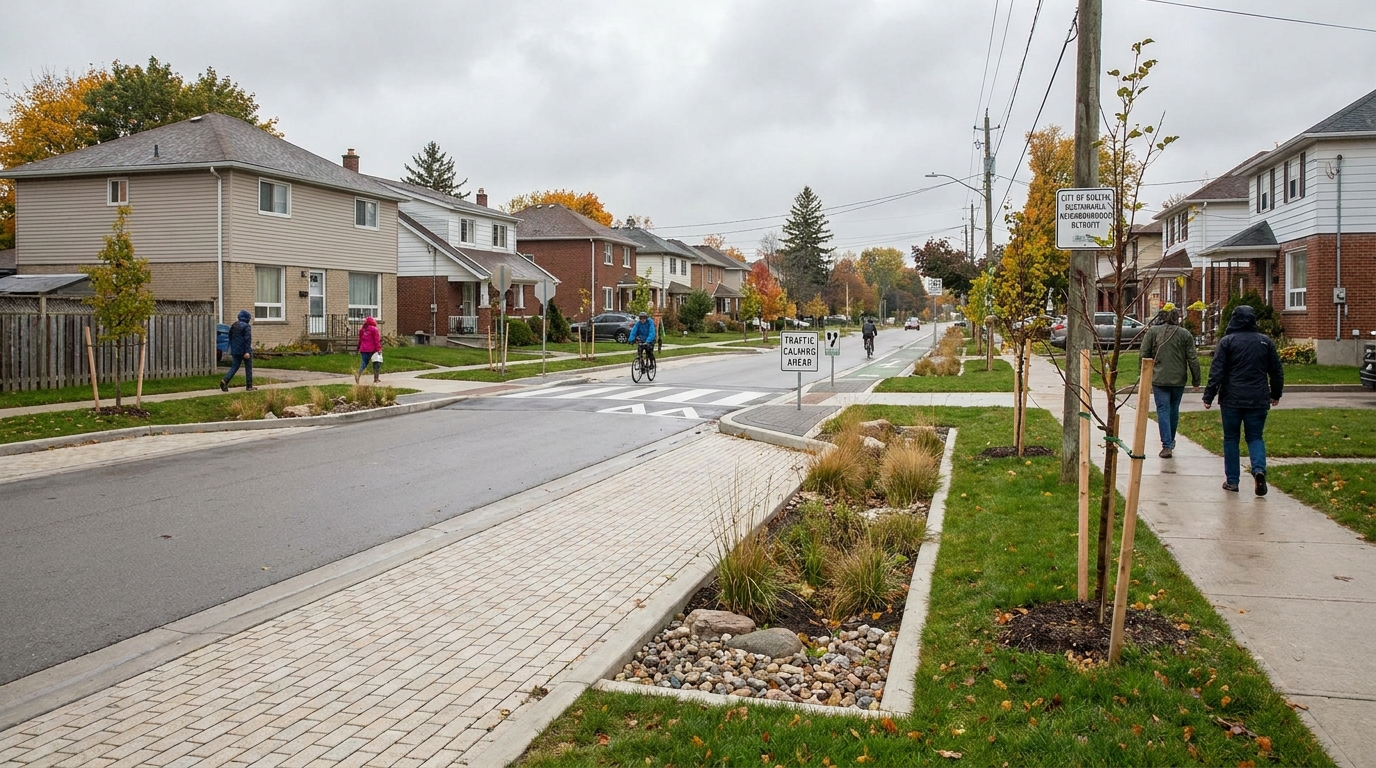
Nature-based solutions are at the heart of regenerative planning. They include urban forests, bioswales, rain gardens, wetlands, green roofs, permeable paving, and native planting strategies that help neighborhoods function more like healthy ecosystems. These interventions are often described as green infrastructure or blue-green infrastructure because they address both vegetation and water systems together.
In practical terms, this means using landscapes to manage heat, water, habitat, and public comfort. A rain garden is not only decorative. It can slow stormwater runoff, reduce pressure on drainage systems, and create pollinator habitat. A dense tree canopy is not only pleasant to look at. It can lower surface temperatures, improve air quality, and make walking more comfortable during summer heat. These measures bring visible benefits while also strengthening resilience in less obvious ways.
Energy Efficiency and District-Scale Thinking
Buildings remain a critical part of regenerative neighborhoods, but the most effective approach often goes beyond individual structures. Energy efficiency, passive design, electrification, and renewable energy all matter, yet regenerative planning also looks at systems shared across the neighborhood. District-scale energy planning can improve efficiency, lower emissions, and support long-term resilience, especially in denser mixed-use areas.
That said, regeneration should not be reduced to technology. Better insulation, high-performance envelopes, and lower-carbon heating systems are valuable, but they work best when combined with land use, mobility, and public realm improvements. A highly efficient building in an isolated, overheated, car-dependent neighborhood may perform well on one metric while failing on several others. Regenerative design tries to align the whole picture.
Water-Sensitive Design
Water-sensitive design is another essential component. Traditional urban development often treats stormwater as a waste product to be moved away as quickly as possible. Regenerative neighborhoods take a different approach. They try to slow, absorb, filter, and reuse water where possible, reducing flood risk while improving ecological function.
This can include rainwater harvesting, green roofs, bioswales, infiltration areas, restored stream edges, and public landscapes designed to accommodate heavy rainfall. As climate patterns become less predictable, these strategies help neighborhoods adapt more gracefully. They also create opportunities for educational and visible forms of sustainability that residents can understand and support.
Local Food Systems and Productive Landscapes
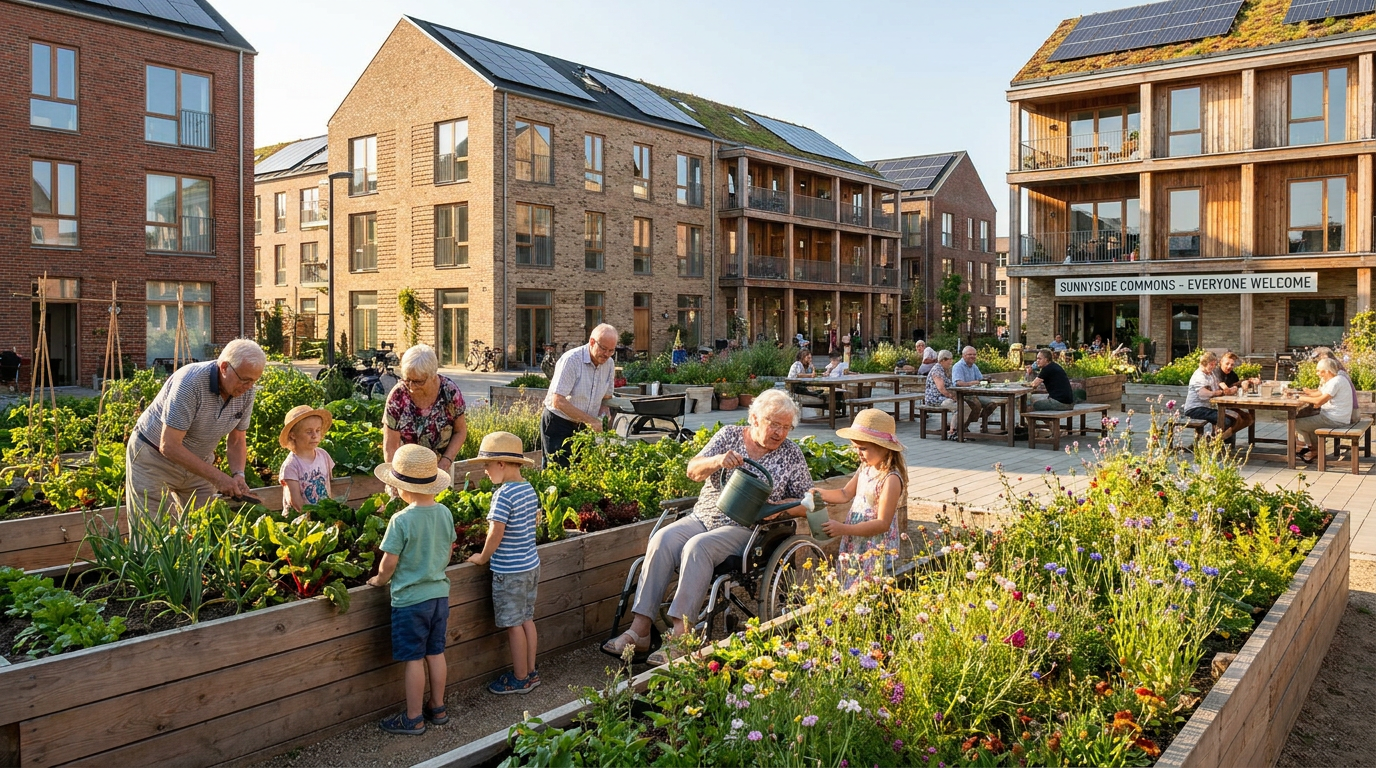
Regeneration is not only about reducing resource use. It is also about restoring productive relationships within the neighborhood. Community gardens, edible landscapes, rooftop growing areas, and local food networks can play a meaningful role here. They improve access to fresh food, support local stewardship, and turn underused land into spaces of learning and connection.
These interventions are often modest in scale, but they can have an outsized social effect. Gardening spaces bring neighbors together across age groups and cultural backgrounds. They offer visible evidence that sustainability is something people can participate in directly. In many neighborhoods, food-growing initiatives become a gateway to broader conversations about biodiversity, soil health, and climate resilience.
Social Inclusion, Equity, and Stewardship
No neighborhood can be truly regenerative if it improves ecological performance while excluding the people who live there. Equity and inclusion are central to the concept. This means access to services, affordability, comfortable public spaces, and opportunities for residents to shape local priorities. It also means recognizing that some communities face greater climate risks or have historically received less investment in basic infrastructure and public amenities.
Stewardship is where social and ecological goals meet. Neighborhood regeneration is usually strongest when local governments, businesses, institutions, and residents co-design projects and monitor outcomes over time. Community-led planting, maintenance partnerships, block-level adaptation plans, and local education programs all help create a sense of ownership. Without stewardship, even well-designed interventions can lose momentum. With it, small projects often become the foundation for wider change.
How to Measure Whether a Neighborhood Is Truly Regenerative
Because regeneration can sound broad or idealistic, measurement matters. A neighborhood does not become regenerative simply because it has a few solar panels or a community garden. The concept is strongest when it is tied to clear outcomes across environmental, social, and economic dimensions. This makes progress visible and helps communities prioritize what actually works.
Some of the most useful metrics include greenhouse gas emissions, walkable access to daily needs, tree canopy coverage, biodiversity indicators, stormwater performance, heat reduction, housing affordability, transit access, and public health measures. Social indicators such as resident participation, local stewardship, and perceptions of safety and belonging can also reveal whether regeneration is producing real community value.
A multi-outcome approach is especially important because neighborhood systems are interconnected. A street tree program, for example, may support cooling, biodiversity, stormwater control, walkability, and mental wellbeing all at once. A mixed-use infill project may reduce transportation emissions while also improving access to services. Measuring only one result can understate the broader impact.
This is also where public agencies and conservation authorities have an important role. Science-based neighborhood planning helps communities move beyond general aspirations. Baselines, targets, and long-term monitoring make it easier to refine strategies over time. In practice, regeneration is less about achieving a perfect label and more about building a credible process of continuous improvement.
- Start with local conditions such as heat exposure, flooding risk, mobility gaps, biodiversity loss, and housing needs.
- Set measurable goals that reflect both environmental and social outcomes.
- Design interventions that solve more than one problem at once.
- Involve residents and local institutions early so the plan reflects lived reality.
- Monitor progress over time and adjust based on what the neighborhood actually needs.
Case Study: Vancouver’s Southeast False Creek and Olympic Village
Vancouver’s Southeast False Creek is often cited as one of Canada’s leading examples of sustainable neighborhood development. Planned to house roughly 10,000 to 12,000 people, it was designed around mixed uses, transit-oriented principles, green infrastructure, and a strong public realm. While not usually described as a perfect regenerative model, it offers a very practical example of how multiple sustainability systems can be integrated at the neighborhood scale.
The development’s Olympic Village district is particularly well known for combining rainwater harvesting, green roofs, urban agriculture, and native or drought-tolerant planting. These features matter not because they are visually impressive on their own, but because they work as part of a broader neighborhood strategy. Water, landscape, transportation, and housing were considered together, creating a place where environmental performance is embedded in daily life.
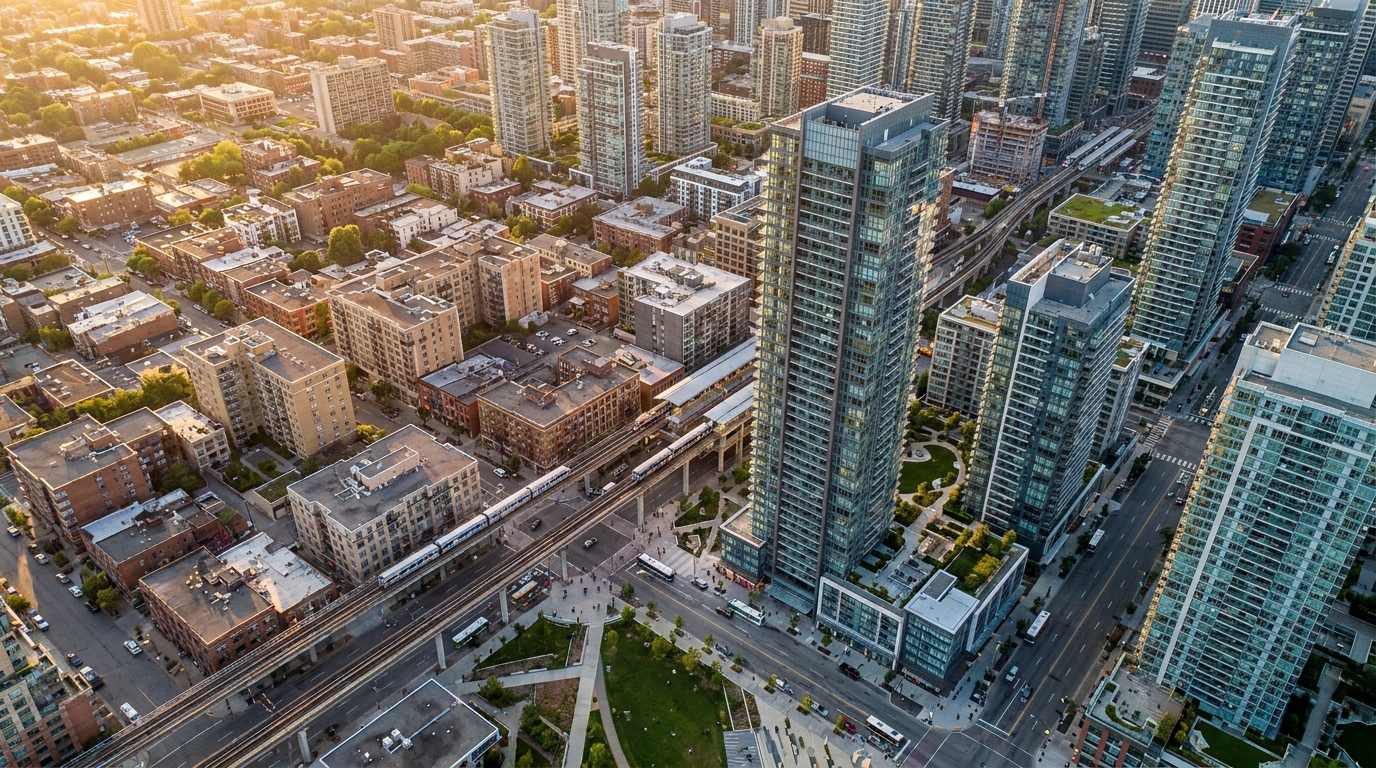
Another important lesson from Southeast False Creek is density done thoughtfully. Compact, mixed-use neighborhoods can support transit, local services, and more efficient infrastructure while also creating lively public spaces. When density is paired with quality streetscapes, planting, and public access to the waterfront, it becomes easier to see how sustainability and livability can reinforce one another rather than compete.
It is also useful to be realistic about what the case study represents. Southeast False Creek and Olympic Village are not a final answer to regenerative urbanism. They are examples of how regenerative principles can be translated into planning decisions that produce measurable improvements. They show that neighborhoods do not need to choose between ecological goals and urban vitality. With strong planning, they can support both.
Case Study: Toronto and Region Conservation Authority’s SNAP Program
For many readers, the Toronto and Region Conservation Authority’s Sustainable Neighbourhood Action Program, or SNAP, may be the more relatable model. Rather than focusing on a signature new development, SNAP works at the scale of existing neighborhoods. It uses a science-based process with local stakeholders to create area-specific action plans that improve resilience, health, and sustainability. That is important because most of the neighborhoods that need regeneration are already built.
SNAP demonstrates the value of tailoring interventions to local conditions. A neighborhood may need better stormwater management, improved tree canopy, safer walking routes, energy retrofits, or stronger community programming. Instead of applying a one-size-fits-all template, the approach builds a practical roadmap based on environmental data, infrastructure needs, and community priorities. This makes regeneration feel less theoretical and more achievable.
The program also highlights a central truth about regenerative neighborhoods. Lasting change depends on collaboration. Conservation authorities, municipalities, utilities, local institutions, and residents all have roles to play. A retrofit strategy can only work if it is grounded in both technical analysis and local participation. This is where stewardship becomes a form of infrastructure in its own right. Without it, even well-funded plans may struggle to produce lasting benefits.
SNAP is especially valuable because it shows that ordinary suburban and urban neighborhoods can evolve through cumulative improvements. A more resilient future does not require waiting for a blank site or a landmark redevelopment. It can begin with practical upgrades, neighborhood partnerships, and a long-term commitment to better ecological and social performance.
Common Misconceptions About Regenerative Neighborhoods
One of the biggest misconceptions is that regenerative neighborhoods are only possible in new, high-budget developments. In reality, retrofit projects may deliver the greatest overall impact because they improve the places where most people already live. Existing neighborhoods often have roads to redesign, lawns to naturalize, underused public land to activate, and buildings that can be upgraded over time. Regeneration is often incremental rather than dramatic.
Another misconception is that neighborhood greening is mostly aesthetic. Trees, wetlands, and native planting certainly improve visual quality, but their function goes much deeper. They reduce heat, support biodiversity, absorb stormwater, improve comfort, and can even influence mobility by making walking and cycling more appealing. Treating these systems as decoration misses much of their value.
Some people also assume that regeneration means turning back the clock to a pre-development landscape. In practice, neighborhoods need to serve current residents, infrastructure systems, and economic realities. The aim is not reversal. It is repair and improvement. Regeneration creates a healthier social-ecological system within present-day constraints.
There is also a tendency to overestimate the role of advanced technology and underestimate the value of low-tech action. District energy, smart systems, and high-performance buildings are useful tools, but many of the most durable improvements come from policy, landscape design, and community organization. Sidewalks, shade trees, public seating, local stewardship, and water-sensitive streets can be transformative because they shape how a place functions every day.
Practical Steps for Residents, Planners, and Community Leaders
The path to a regenerative neighborhood usually begins with observation. What happens on the street during a heat wave. Where does water collect during a heavy storm. Which daily needs require a car trip. Where are the empty or neglected spaces that could be made useful. Communities that understand their local patterns are better positioned to choose interventions that matter.
For residents, practical action can start small but still be meaningful. Joining a local tree planting effort, supporting traffic calming, helping establish a community garden, or advocating for native landscaping all contribute to broader regeneration. Residents can also push for better maintenance of public green space and more transparent local planning processes. Participation matters because neighborhood systems are shaped by both physical design and ongoing civic attention.
For planners and municipalities, the challenge is to integrate rather than isolate. Transportation, stormwater, biodiversity, housing, and public health should be considered together whenever possible. Policies that support mixed-use development, gentle density, green infrastructure, and safe active transportation are often foundational. So are budgeting and maintenance structures that treat nature-based solutions as core infrastructure rather than optional extras.
For schools, businesses, and local institutions, regeneration can become part of daily operations. Campuses can reduce paved areas and add habitat. Commercial sites can improve shade, stormwater management, and pedestrian access. Community organizations can host workshops and stewardship days that make climate resilience visible and collaborative. The most successful neighborhoods often have many small leaders rather than one central authority doing everything alone.
- Map local challenges and assets so interventions respond to real neighborhood conditions.
- Prioritize nature-based solutions that address heat, water, habitat, and public comfort together.
- Improve walkability and cycling safety to reduce car dependence and support healthier routines.
- Support mixed-use and transit-oriented patterns so more daily needs are close to home.
- Build stewardship into every project through co-design, education, and local maintenance partnerships.
- Track outcomes over time so the neighborhood can learn, adapt, and improve.
The Future of Sustainable Communities Is Regenerative
Across Canada and North America, regenerative neighborhood design is moving from a niche sustainability concept toward a mainstream strategy for climate resilience, public health, and better urban living. This shift is visible in the growing use of nature-based solutions, the rise of neighborhood retrofit programs, and stronger attention to biodiversity, equity, and heat adaptation in public policy. Communities are beginning to recognize that better neighborhoods are not just greener. They are more connected, more adaptable, and more capable of supporting everyday life.
What makes regenerative neighborhoods so compelling is their practicality. They do not require waiting for a perfect master plan or a fully new district to be built. They can begin with ordinary streets, familiar public spaces, and local partnerships. A bioswale, a safer crossing, a planted courtyard, a community garden, or a well-designed retrofit may seem modest on its own. Over time, however, these interventions can change how a neighborhood performs and how people feel within it.
Regeneration also offers a more balanced and reassuring way to talk about sustainability. It is not about pressure, purity, or idealized visions that feel out of reach. It is about making places function better for real people under real conditions. That means cooler streets, cleaner water, easier daily mobility, stronger ecological systems, and more meaningful participation in shaping the places we call home.
For residents, planners, and local leaders, the message is encouraging. Regenerative neighborhoods are not a distant model reserved for specialists. They are built through design, governance, and stewardship working together over time. The most important step is simply to begin with a clear local understanding of what needs to be restored, what can be improved, and who should help lead the work.
In the years ahead, the neighborhoods that thrive will likely be the ones that do more than sustain themselves. They will be the places that actively replenish what urban life too often depletes, from soil and shade to trust and public space. That is the promise of regenerative neighborhood design. It is not only a vision for greener communities. It is a practical framework for building stronger, healthier, and more resilient places for everyday life.


No Comment! Be the first one.