



Luxury housing developments occupy a powerful place in the public conversation about cities. They are easy to see, easy to debate, and often impossible to ignore. Whether they appear as branded condominium towers, architecturally ambitious mixed-use districts, or exclusive low-rise enclaves in high-value neighborhoods, these projects become symbols of growth, wealth, and changing urban priorities. For some observers, they represent confidence in a city’s future. For others, they reflect an increasingly divided housing market where the most visible new supply is aimed at the top of the income ladder.
Table Of Content
- What Defines a Luxury Housing Development
- Why Luxury Housing Is Concentrated in Major Urban Markets
- How Luxury Housing Can Support Urban Growth
- The Risks: Affordability Pressure, Displacement, and Social Imbalance
- Luxury Housing in the Context of Canada’s Supply Challenge
- Why Supply Composition Matters More Than Headlines
- What a balanced urban housing pipeline should include
- The Cost Structure Behind Luxury Development
- Planning Tools That Can Align Luxury Growth With Community Need
- Luxury Housing, Transit, and Urban Form
- What Stakeholders Should Be Asking
- A More Mature View of Luxury Housing and City Growth
The truth is more complex than either of those views. Luxury housing developments can contribute meaningfully to urban growth by activating underused land, supporting construction employment, strengthening the municipal tax base, and helping finance ambitious redevelopment sites. In many cases, premium pricing is what makes difficult urban projects feasible, especially where land costs, development charges, design requirements, and financing conditions are already pushing total project costs higher. Yet those same developments can intensify affordability concerns if they dominate the local pipeline, displace lower-cost housing, or reshape neighborhoods without delivering broader public benefit.
That complexity matters more than ever in Canada and across North America. The housing challenge is not simply that cities need more homes. It is that they need the right mix of homes in the right places, supported by infrastructure and delivered through a planning system that can respond to both market demand and community need. CMHC estimates that Canada would need roughly 430,000 to 480,000 new housing units annually over the next decade to restore affordability to 2019 levels, a pace far above current construction norms. At the same time, recent market data show that housing starts are shifting, with stronger purpose-built rental activity and weaker ownership condo pipelines in some high-cost markets.
This is where luxury development becomes a strategic issue rather than a cultural talking point. The key question is not whether luxury housing should exist. High-income households will continue to seek premium homes in global cities, and developers will continue to respond to that demand where the economics support it. The real question is whether luxury projects are being planned and governed in a way that strengthens the broader housing ecosystem. Cities that answer that question well can capture growth, improve infrastructure use, and encourage mixed-income outcomes. Cities that answer it poorly risk producing visible investment alongside worsening inequality.
What Defines a Luxury Housing Development
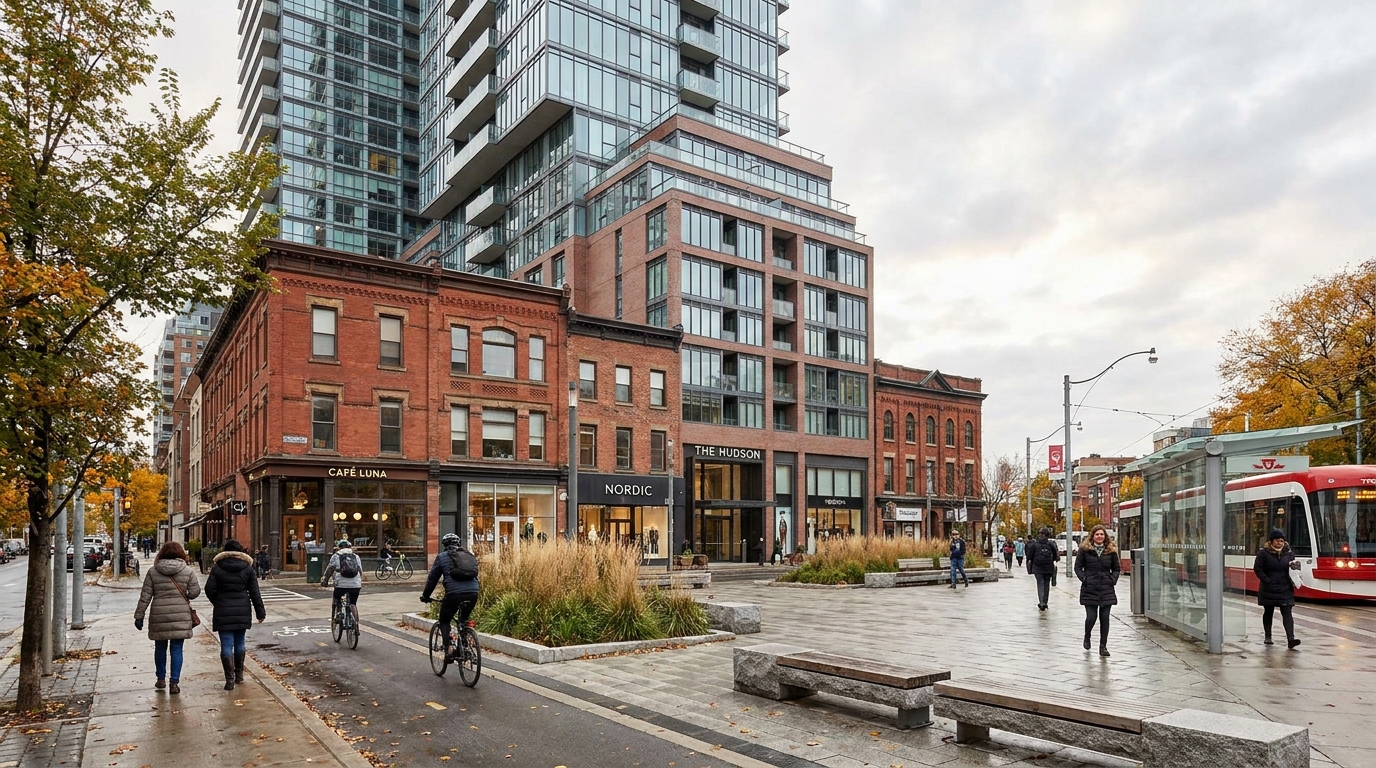
Luxury housing is often described in simplistic terms, but in practice it is defined by a combination of location, design, pricing, amenities, and brand positioning. A home becomes luxury not just because it is expensive, but because it commands a premium relative to its market through a package of features that buyers are willing to pay for. That package may include iconic architecture, concierge services, wellness amenities, larger floorplans, custom finishes, private outdoor space, waterfront or skyline views, advanced smart-home systems, or proximity to elite urban districts. In major metropolitan areas, scarcity of land and prestige of address can matter as much as the building itself.
Luxury developments also differ from conventional market housing in how they are financed and marketed. They are often designed around buyers with significant equity, international mobility, or strong income security. That makes the segment more resilient than the broader housing market during certain slowdowns. North American research has repeatedly shown that premium demand in large metro areas remains strong because wealthy households continue to place a high value on central location, lifestyle quality, and long-term asset preservation. In that sense, luxury housing is not just shelter. It is also a form of urban real estate positioning.
Still, it is important to avoid a common misconception. Luxury housing is not the same thing as housing supply that improves affordability for the average household. It can add units to the market, reduce competition at the top end, and support broader development activity, but it rarely addresses core affordability pressures on its own. Statistics Canada’s core housing need framework is especially useful here because it reminds us that affordability is measured in practical terms. Households are considered in core housing need when their home falls below standards of adequacy, suitability, or affordability, and they would need to spend 30 percent or more of their income to obtain acceptable alternative housing.
That distinction matters because many public debates blur together all forms of new construction. From a planning perspective, supply is essential, but supply composition matters just as much as supply volume. A skyline full of premium towers can coexist with rising core housing need if lower-income households, moderate-income families, and renters do not have access to housing that fits their means and needs.
Why Luxury Housing Is Concentrated in Major Urban Markets
Luxury housing developments are overwhelmingly concentrated in major cities because that is where the economics align. Large metropolitan areas generate higher land values, stronger demand premiums, deeper investor interest, and greater access to services and cultural amenities. According to NAHB analysis, homes in large metro areas command premiums of roughly 60 percent over similar homes in non-metro regions. That gap helps explain why luxury development clusters in urban cores, waterfront districts, transit-rich corridors, and high-profile redevelopment sites rather than dispersing evenly across the landscape.
Urban land scarcity plays a central role in this pattern. When land becomes expensive, every square foot must generate enough value to justify acquisition, approvals, servicing, and construction costs. In that context, higher-margin products become more attractive. If development charges are significant, interest rates are elevated, and project timelines are uncertain, developers may lean toward luxury or upper-market units because they provide a better chance of covering total costs. CMHC research has noted that development charges can represent a substantial portion of the cost of a new housing unit in some Canadian cities, and those costs are often passed on to buyers or renters.
Approval complexity adds another layer. High-rise and high-density projects, including many luxury buildings, typically take longer to move from permit issuance to housing starts than lower-rise forms. CMHC has observed that high-rise structures often require roughly 9 to 15 months between permit issuance and starts, compared with about 2 to 10 months for single-detached homes. Those delays matter because time is a cost. The longer a project spends in approvals, carrying costs, redesign, consultation, and financing uncertainty, the greater the pressure to pursue products with stronger margins.
This helps explain why luxury housing can persist even when the broader market weakens. It is not simply a matter of preference. It is also a result of how city economics, regulations, and risk allocation shape what is feasible to build. In expensive urban markets, many sites become financially difficult to develop as workforce or entry-level housing without some combination of public subsidy, density support, inclusionary incentives, lower charges, or faster approvals.
How Luxury Housing Can Support Urban Growth
Luxury developments can play a constructive role in city building when they are integrated into a broader growth strategy. One of their clearest contributions is land activation. In many cities, prominent redevelopment sites are expensive, contaminated, complex, or infrastructure-dependent. Premium units can help absorb those costs and unlock projects that might otherwise remain parking lots, vacant parcels, obsolete commercial space, or underperforming industrial land. In that sense, luxury development can be a catalyst for urban regeneration.
Another benefit is fiscal. New high-value residential projects expand the municipal tax base, and that can help cities support public services over time. While the relationship is not always simple, especially where service expansion is needed, luxury developments generally increase assessed value significantly. They may also support local business activity by adding residents with spending power to mixed-use districts. When planned carefully, that spending can help sustain retail streets, restaurants, cultural venues, and neighborhood services that benefit a broader population.
Luxury housing can also help support major infrastructure-oriented growth areas. Transit-oriented development often requires density to justify both public and private investment. On some sites, especially around new stations or large master-planned districts, premium residential components can improve project feasibility and help finance high-quality streetscapes, parks, public realm improvements, and structured parking solutions. The result can be a more complete urban environment than would otherwise be possible if the site remained underdeveloped.
There is also an employment dimension. Large luxury projects support jobs across the construction and development chain, from planning and architecture to engineering, trades, project management, materials supply, marketing, and property operations. In periods when broader market activity is uneven, resilient luxury demand can keep parts of the industry moving. That does not solve housing affordability, but it does contribute to economic momentum in urban regions.
Luxury housing can be a productive part of urban growth when cities treat it as one component of a balanced housing system rather than as a standalone solution to supply and affordability.
Some luxury projects also create opportunities for cross-subsidy within larger sites. Premium units may help finance community amenities, office space, affordable housing set-asides, public plazas, childcare space, or environmental remediation. This is particularly relevant in mixed-use master plans where the most profitable components support investments that have broader civic value. The important point is not that all luxury development creates these outcomes, but that it can when policy, site design, and negotiation are aligned.
The Risks: Affordability Pressure, Displacement, and Social Imbalance
The positive case for luxury housing should not obscure the risks. The most common concern is that high-end development can intensify affordability pressure in neighborhoods already under strain. This can happen directly if luxury projects replace lower-cost rental buildings, small commercial uses, or older ownership stock that was more accessible to moderate-income households. It can also happen indirectly by changing price expectations in the area, attracting speculative investment, and accelerating neighborhood repositioning.
That does not mean every luxury development causes displacement, and it is important to avoid simplistic conclusions. More high-end development does not automatically produce gentrification in every setting. Context matters. A luxury tower on a former parking lot next to rapid transit has a different social effect than a luxury redevelopment that removes older rental stock in a low-vacancy neighborhood. But if municipal safeguards are weak, luxury-led reinvestment can widen the gap between who a neighborhood was built for and who it is increasingly becoming affordable to.
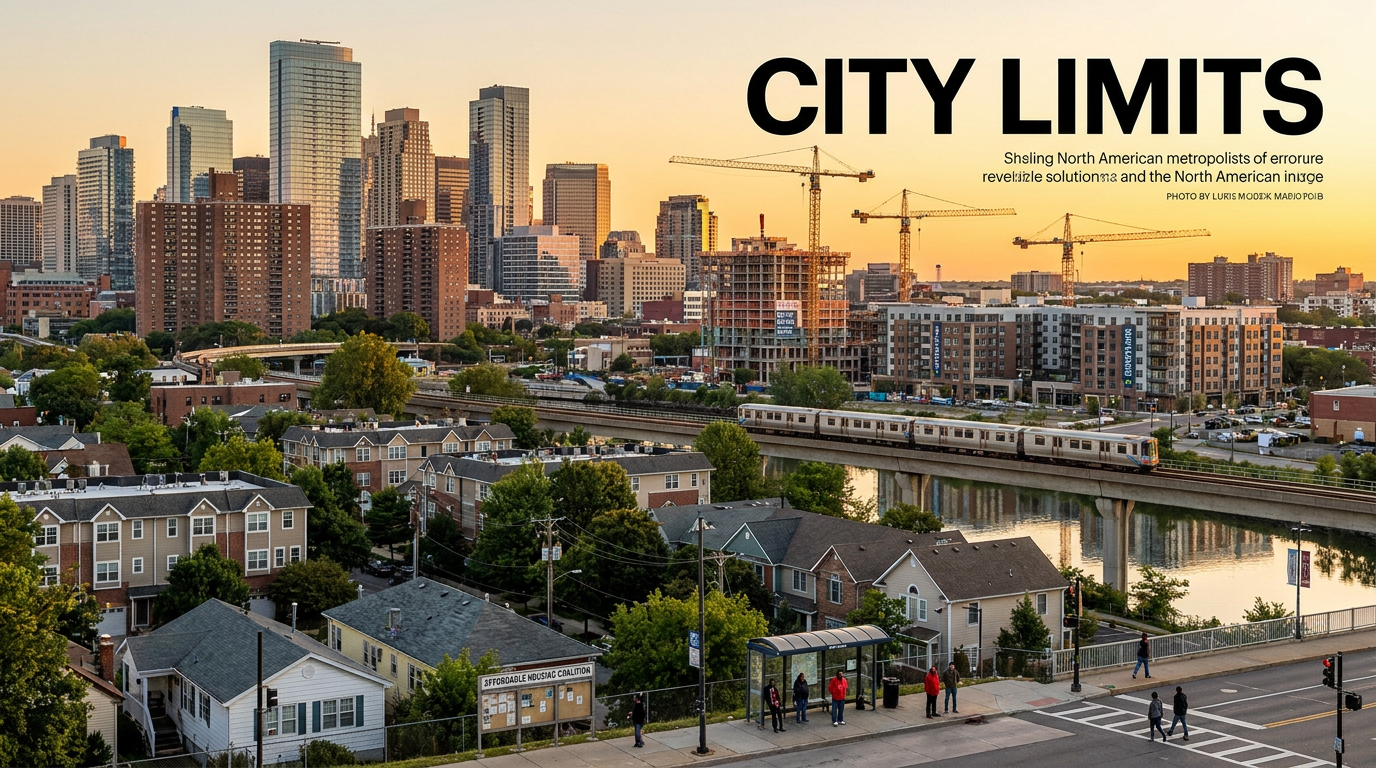
There is also a symbolic dimension that influences public trust. When residents see cranes, new towers, and record prices while their own housing options become less secure, they may reasonably conclude that the city is growing in ways that exclude them. That perception can fuel resistance to new development generally, even though the deeper issue is not growth itself but the type of growth being delivered. A city that builds predominantly premium housing sends a signal about whose needs are most effectively being served by the market.
Socio-economic disparities are particularly visible when luxury projects cluster in areas with strong public investment but limited affordability requirements. Transit extensions, waterfront renewal, and downtown revitalization can create significant land value uplift. If that uplift is captured almost entirely in private pricing while housing need persists nearby, cities risk deepening inequality through their own growth decisions. The challenge is not whether value creation is occurring. The challenge is whether part of that value is being redirected toward shared community benefit.

Luxury Housing in the Context of Canada’s Supply Challenge
Canada’s housing conversation is increasingly shaped by scale. CMHC’s estimate that the country needs approximately 430,000 to 480,000 new homes per year over the next decade to restore affordability to 2019 levels illustrates how far current output remains from what is required. That gap is not merely numerical. It reflects years of underbuilding relative to population growth, changing household formation, and concentrated demand in high-opportunity regions. In that environment, every housing segment matters, but not every housing segment serves the same purpose.
Recent construction trends reinforce that point. CMHC reported that housing starts rose in 2025 and that purpose-built rental starts reached the second-highest level since 1990. In Toronto, purpose-built rental starts exceeded condominium apartment starts for the first time, reflecting a meaningful shift in the composition of new supply. Missing-middle construction also remained historically high, particularly in infill locations near transit. These changes suggest that the market and policy environment are beginning to respond to the need for a more functional range of housing options.
At the same time, condominiums have dominated a substantial share of construction nationally since 2012, replacing the earlier era when single-detached homes accounted for most housing starts. That transition reflects the economics of land scarcity and urban intensification. Yet it also highlights a major planning lesson. Higher density alone is not enough. If dense development is concentrated too heavily in investor-oriented or luxury product, cities may increase unit counts without meaningfully improving affordability, family suitability, or housing stability for a broad population.
Luxury projects therefore need to be understood as one layer within a much larger supply system. They can contribute units, tax revenue, jobs, and urban intensity, but they do not remove the need for purpose-built rentals, co-operative housing, family-sized apartments, missing-middle forms, and deeply affordable homes. Cities facing serious housing pressure cannot afford to rely on a single segment to solve a multi-dimensional problem.
Why Supply Composition Matters More Than Headlines
Public discussions often reduce housing policy to a single question: are we building enough? That question is important, but it is incomplete. A healthier housing market depends on whether homes match the needs of actual households across income, tenure, age, and household structure. A city can post impressive construction numbers and still undersupply the forms that matter most to long-term affordability and neighborhood resilience.
For example, a pipeline dominated by luxury one-bedroom condominiums may add visible density but still leave major gaps in family-sized rentals, student housing, senior-friendly apartments, entry-level ownership, and missing-middle homes. NAHB data showing a growing share of new three-bedroom homes in the U.S. points to a broader market truth that functionality matters. People need homes that fit their lives, not simply units that add to a count. In large urban centres, that means planning for a mix that includes studios and one-bedrooms, but also larger rental apartments, townhomes, stacked flats, and adaptable units for multigenerational households.
Luxury housing has a place in this ecosystem, particularly where demand is deep and project economics are difficult. But from a city-building perspective, the objective should be balance. Growth is strongest when high-end product exists alongside mid-market rental, affordable housing, missing-middle supply, and ownership options that create mobility across household life stages. Without that balance, the housing ladder breaks down and residents become trapped, either unable to enter the market or unable to move within it.
What a balanced urban housing pipeline should include
- Purpose-built rental housing across income levels
- Ownership condominiums in a range of sizes and price points
- Missing-middle housing such as multiplexes, townhomes, and mid-rise infill
- Family-sized units near schools, parks, and transit
- Affordable and supportive housing protected through long-term policy tools
- Luxury housing where it helps unlock land, density, and broader site improvements
A strategic city does not ask whether one segment should replace another. It asks whether each segment is contributing appropriately to long-term urban resilience. That is the standard luxury development should be measured against.
The Cost Structure Behind Luxury Development
To understand why luxury housing continues to appear in difficult markets, it is necessary to look at cost structure. Land is expensive in the most desirable urban locations, and acquiring a site often requires paying for current income, future potential, and competitive scarcity all at once. Add servicing, development charges, consultant costs, financing, municipal requirements, construction inflation, and building code complexity, and the financial pressure becomes significant before a shovel even reaches the ground.
In that environment, developers make rational product decisions. Higher design standards, better materials, larger amenity packages, and premium finishes increase cost, but they can also support much higher achievable pricing. This is one reason luxury and branded residential products emerge in prime markets. They are not simply lifestyle offerings. They are responses to a cost environment that rewards margin. Where approvals are slow and carrying costs accumulate, that logic becomes stronger.
CMHC research on land-use regulation and development delays is especially relevant here. When approval systems are uncertain, fragmented, or prolonged, they shape not only how much gets built but what gets built. A development environment that is difficult for all housing types often pushes builders toward the segments best able to absorb delay and fees. If public policy wants more attainable housing in high-value areas, it cannot focus only on mandates. It must also address process, timing, and cost.
This does not mean reducing standards or abandoning public benefits. It means recognizing that the feasibility equation matters. If cities want projects that include affordable units, family-sized layouts, rental tenure, and public amenities, they need approval systems and financial frameworks that make those outcomes realistic. Otherwise, luxury products will continue to dominate the sites where only the highest margins can justify development.
Planning Tools That Can Align Luxury Growth With Community Need
The most effective planning frameworks do not treat luxury housing as either inherently harmful or inherently beneficial. Instead, they shape it. That begins with inclusionary zoning, where local conditions support it. By requiring or incentivizing a portion of units to be affordable in certain developments, cities can link high-value growth areas to more inclusive outcomes. The details matter, including tenure, duration, geographic scope, and feasibility testing, but the principle is sound: where significant land value is being created, some of that value can help address housing need.
Faster approvals for mixed-income and rental projects are another critical tool. If complex projects that include affordable components face the same or greater delay than straightforward luxury proposals, the policy signal is backwards. Cities should make it easier, not harder, to deliver the housing forms they most need. That can include as-of-right density in transit-rich areas, simplified approvals for infill, clearer design standards, and coordinated review processes that reduce uncertainty.
Development charges also deserve careful attention. These charges fund essential infrastructure, but when they become too heavy or poorly structured, they can undermine project viability or be passed on through higher housing costs. A more strategic approach may involve phasing, exemptions, rebates for desired housing types, or linking charges more explicitly to long-term growth outcomes. The goal is not to remove growth-related contributions. The goal is to ensure they do not unintentionally make balanced housing delivery harder.
Municipalities can also negotiate community benefits more effectively on major luxury-led sites. That may include public realm improvements, childcare facilities, non-market housing contributions, parkland enhancements, or preservation of existing affordable units nearby. In some cases, luxury development can function as an engine for broader district transformation, but only if cities capture part of the value created and convert it into durable public benefit.
The planning challenge is not to stop premium development. It is to ensure that premium development helps cities grow in a way that is more inclusive, more functional, and more resilient over time.
Luxury Housing, Transit, and Urban Form
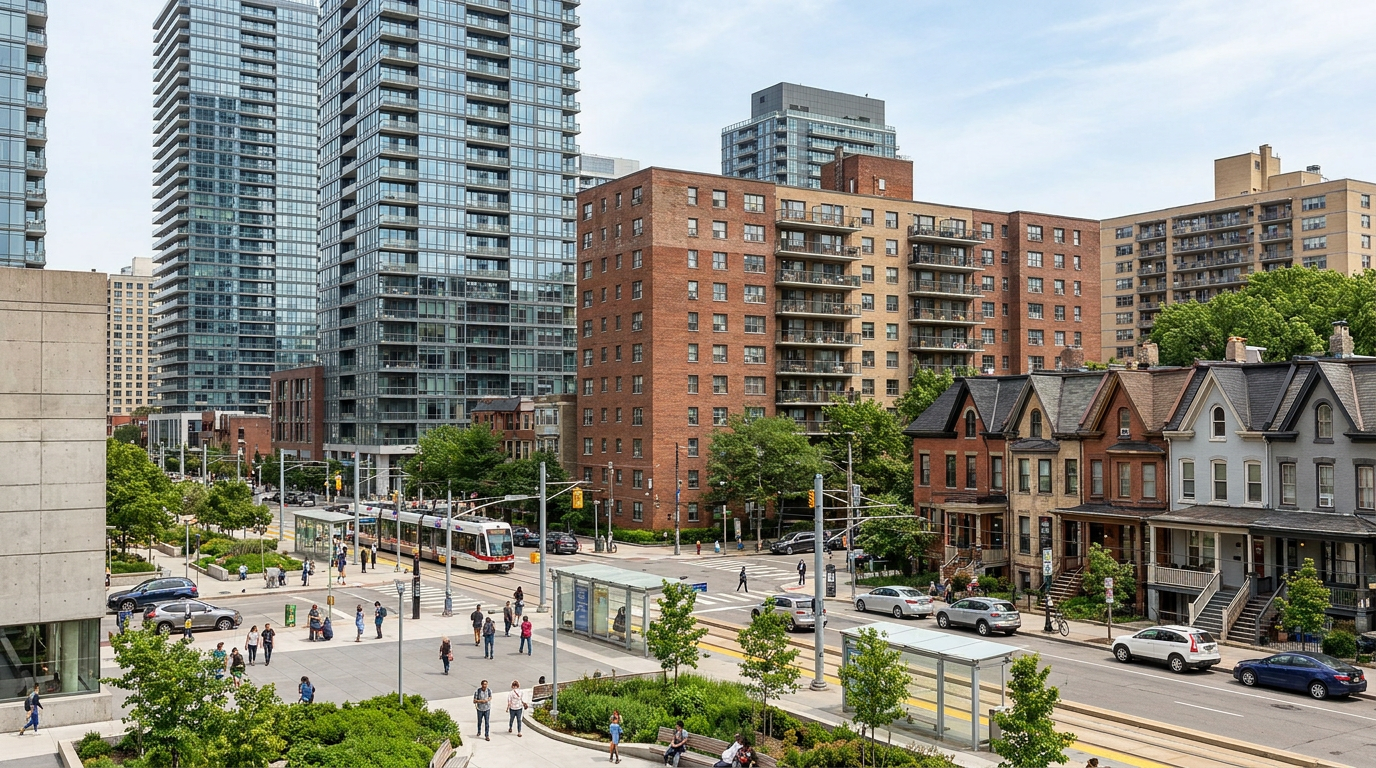
One of the more constructive roles luxury development can play is in shaping better urban form. High-demand households often want walkable, amenity-rich, centrally located neighborhoods. That preference can support denser development near jobs, services, and transit, reducing pressure for outward sprawl. When luxury projects are built in transit-oriented nodes, they can add ridership, support retail concentration, and reinforce compact growth patterns that are better aligned with infrastructure efficiency and climate goals.
However, this outcome depends heavily on execution. A luxury tower that is physically dense but functionally isolated, with little street activation and weak integration into the surrounding neighborhood, does less for urban quality than a mixed-use project with active frontages, public space, and genuine pedestrian connectivity. Density needs to be paired with good urbanism. Otherwise, cities may gain height without gaining much community value.
There is also an opportunity here for better land use around major public investments. If a city is investing billions in rapid transit, it makes sense to intensify around those stations. But if only luxury housing is viable at those nodes, then the public value of transit access becomes concentrated among higher-income households. A stronger planning approach combines premium development with rental housing, family-sized units, and affordability requirements so that transit-rich living is not restricted to the top end of the market.
What Stakeholders Should Be Asking
For developers, planners, investors, and residents, the most useful lens is strategic rather than ideological. Luxury housing is not a substitute for affordability policy, but it is not automatically a planning failure either. Its impact depends on context, governance, and what else is being built around it. Stakeholders should ask whether a luxury project is activating appropriate land, supporting transit and infrastructure, adding to the tax base, and contributing to a healthier housing mix. They should also ask whether it is displacing lower-cost stock, narrowing neighborhood access, or absorbing planning attention that should be directed toward more inclusive forms of supply.
Several practical questions can help frame that assessment.
- Is the project located on underused land or does it replace existing lower-cost housing?
- Does it support transit-oriented growth and efficient infrastructure use?
- Are there affordable, rental, or family-sized components included or enabled elsewhere through value capture?
- Does the approval framework reward mixed-income outcomes or mainly favor high-margin delivery?
- Will the project strengthen local services, public space, and neighborhood vitality for a broad range of residents?
These are the questions that turn a polarized housing debate into a city-building conversation. They shift the focus from whether luxury development is morally acceptable to whether it is functionally advancing public goals.
A More Mature View of Luxury Housing and City Growth
Cities do not grow well when they rely on simplistic narratives. Luxury housing developments are neither the villains of every affordability crisis nor the heroes of every urban renewal story. They are one part of a much larger system shaped by land economics, regulation, infrastructure, financing, and social priorities. In some places, they can help unlock difficult sites, deliver density near transit, and finance meaningful public improvements. In other places, they can amplify exclusion and accelerate a local market away from the households that most need stable access to housing.
The broader lesson is clear. Urban growth is healthiest when it is measured not only in skyline change, investment volume, or unit counts, but also in accessibility, stability, and long-term community resilience. A city can welcome premium investment while still insisting on inclusive outcomes. In fact, the strongest cities do exactly that. They understand that prosperity without housing access is fragile, and that development without balance eventually produces social and political strain.
Luxury housing will remain part of the urban future because demand for premium living in major metropolitan areas is real and persistent. The planning challenge is to place that demand within a framework that serves wider public goals. That means faster pathways for mixed-income housing, more support for rental and missing-middle forms, better use of inclusionary tools, and stronger alignment between land value creation and community benefit. It also means recognizing that supply strategy must be intentional. Building more is essential, but building the right mix is what ultimately shapes whether growth is equitable and durable.
For stakeholders in real estate, planning, and development, that is the central takeaway. Luxury housing developments matter, but they should be evaluated as part of the full housing ecosystem. If they help cities add density, improve infrastructure use, unlock land, and support broader affordability strategies, they can be a productive component of urban growth. If they proceed without those connections, they may add impressive buildings while leaving the underlying housing challenge unresolved. The future of urban growth depends on understanding the difference.

No Comment! Be the first one.