



Housing affordability has moved from being a social policy concern to becoming one of the most important investment filters in real estate. Across Canada and much of North America, the core issue is no longer simply whether home prices are high, but whether households can carry housing costs relative to income, borrowing costs, taxes, and daily living expenses. The imbalance is structural: the OECD has found that real house prices in Canada have outpaced real disposable incomes by about 60% since the Global Financial Crisis, and that statistic alone shows why affordability cannot be treated as a temporary fluctuation. It is a structural imbalance, and structural imbalances tend to reshape portfolios more profoundly than cyclical price swings. For investors, this shift changes how markets should be evaluated, how risk should be priced, and where future returns are likely to come from.
Table Of Content
- Why housing affordability is now a core investment theme
- Understanding the metrics that matter most
- Why supply remains the defining constraint
- Demographic shifts are reinforcing affordability pressure
- The misconception investors must avoid
- Investment strategies built for an affordability-constrained market
- 1. Prioritize purpose-built rental and multifamily housing
- 2. Focus on workforce housing and middle-income renters
- 3. Target transit-oriented and employment-linked locations
- 4. Look closely at secondary markets with real economic depth
- 5. Embrace smaller units, adaptive reuse, and efficient formats
- 6. Underwrite conservatively and stress-test for policy change
- How to use economic indicators as a forward-looking investment framework
- What tomorrow’s winning portfolios may look like
- Final thoughts
- Key investor takeaways
The current environment is defined by a difficult combination of elevated prices, higher financing costs, and supply that remains too limited in many key markets.
This matters because real estate investment performs best when it aligns with durable demand. Today, durable demand is increasingly concentrated in rental housing, workforce-oriented product, smaller and more efficient units, and locations where population growth continues to outstrip available supply. Investors who continue to rely only on the old formula of broad price appreciation may find the landscape less forgiving. Investors who read affordability correctly, by focusing on incomes, vacancy, household formation, and policy direction, are more likely to position capital where demand remains resilient.
This article looks closely at the housing affordability crisis through an investment lens. It examines the economic indicators that matter most, the demographic shifts influencing the next decade, the policy environment that could affect market outcomes, and the specific real estate strategies that appear best suited to tomorrow’s conditions. The goal is not to reduce affordability to a headline. The goal is to understand how affordability is changing market behavior and how sophisticated investors can respond.

Why housing affordability is now a core investment theme
Affordability is often discussed emotionally, but investors should approach it analytically. A market can show strong price growth and still be unhealthy from an affordability standpoint. Likewise, a market with moderate rents or stable prices can still offer strong investment value if local incomes, household demand, and supply conditions support occupancy and steady cash flow. Affordability is therefore not about finding the cheapest market. It is about finding the most sustainable relationship between housing costs and local economic capacity.
Canadian housing data makes the scale of the issue difficult to ignore. CMHC reports that about 1.7 million households, roughly 11.1% to 11.2% of Canadian households, were in core housing need in 2022. Among renter households, 20% were in core housing need, and 89% of those cases were affordability-related. Statistics Canada also reported that more than one in five Canadian households were living in unaffordable housing in 2022 using the common benchmark of spending more than 30% of income on shelter costs.
These numbers tell investors several things at once. First, demand for lower-cost rental options remains deep and persistent. Second, severe affordability stress can limit the practical ceiling for rent growth in certain submarkets because tenants simply run out of room in their budgets. Third, the most investable opportunities are likely to be found in assets serving essential housing demand rather than purely aspirational ownership demand. When affordability deteriorates, the market does not stop functioning. It reprices demand toward necessity-based formats.
In the United States, the pattern is different in detail but similar in direction. Federal Reserve reporting in 2025 found that households moving in 2023 or 2024 faced larger mortgage payments than earlier movers, a direct reflection of higher home prices and mortgage rates. NAHB estimated in 2024 that 66.6 million U.S. households, or 49% of the total, could not afford a $250,000 home at prevailing conditions. For a North American investor, the message is clear. Affordability stress is not a local anomaly. It is a continental theme driven by the cost of capital, limited supply, and income pressure.
Affordability is not only a social issue. It is a portfolio-selection filter. In a constrained market, assets tied to essential demand, middle-income renters, and supply-limited locations are often more durable than assets dependent on aggressive price appreciation.
Understanding the metrics that matter most
One of the biggest mistakes in real estate investing is relying too heavily on headline price trends. Price growth can tell part of the story, but it does not tell investors whether the market can support those prices. In an affordability-constrained cycle, stronger decisions come from watching the variables beneath the headline. That includes income growth, mortgage payment burdens, rent-to-income ratios, vacancy rates, absorption trends, and the local construction pipeline.
The widely used 30%-of-income benchmark remains a useful starting point. CMHC and Statistics Canada continue to use it as a core affordability reference, though both also emphasize broader concepts such as housing hardship and core housing need. Investors should think of the 30% threshold not as a perfect rule but as a warning signal. When a large share of households exceeds it, the market may still show demand, but that demand is becoming fragile. Fragile demand can create turnover risk, collection risk, policy pressure, and eventually weaker pricing power.
Vacancy rate is another essential metric. In theory, tight vacancy supports rent growth and occupancy. In practice, extremely low vacancy can also indicate under-supplied and politically sensitive markets where affordability pressure is escalating. That can produce near-term revenue strength, but it can also trigger rent controls, development mandates, taxes, or tenant protection measures that alter the return profile. Investors need to distinguish between healthy tightness and dysfunctional scarcity.
Wage growth is equally important. A market with moderate rent growth and strong wage gains may actually be improving in affordability terms, even if nominal rents are rising. Conversely, a market with flat wages and rising housing costs may look strong on a revenue chart while weakening fundamentally. Real estate performs over time when household income can support the cost structure of the asset base. Without that support, pricing power eventually faces resistance.
The construction pipeline deserves close attention as well. Housing starts matter, but completions, timing, location, and unit mix matter more. CMHC expected housing starts to decline in 2024 because of the lagged effect of higher interest rates, then recover in 2025 and 2026. Later reporting showed that 2024 starts in centers with populations over 10,000 reached 227,697 units, up 2% from 2023, while 2025 activity strengthened further, especially in rental construction. Investors should read this carefully. Rising starts do not guarantee restored affordability. Supply must arrive in the right place, in the right format, and at a price point the market can absorb.
Why supply remains the defining constraint
Affordability is often described as a pricing issue, but in most major markets it is fundamentally a supply issue shaped by financing conditions, zoning limitations, approval delays, infrastructure bottlenecks, and labor constraints. Even when policymakers acknowledge the problem, housing takes time to deliver. This lag is why affordability can remain stressed for years even after construction activity begins to improve.
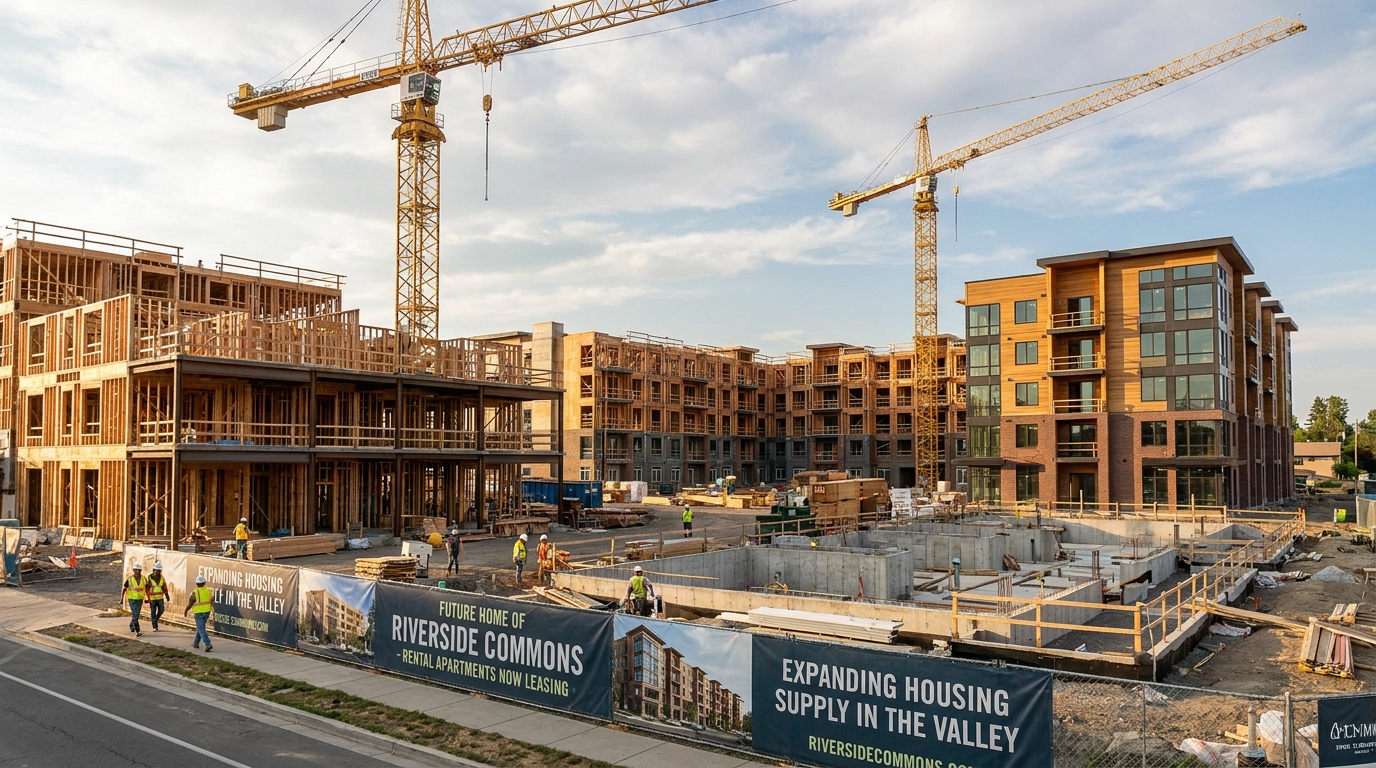
Canada offers a useful example. Purpose-built rental construction has become a central supply theme, and recent growth in housing starts has been driven significantly by rental projects. This is a meaningful shift because rental stock is critical in a market where many households are priced out of ownership. Yet CMHC continues to describe rental conditions as tight, which underscores a key point for investors. New supply is helping, but it is not yet sufficient to rebalance the market quickly.
Supply limitations also create segmentation opportunities. Not all neighborhoods, municipalities, or asset classes are equally constrained. In some urban cores, land scarcity and entitlement complexity make new delivery difficult, which can support existing multifamily assets. In selected secondary markets, however, development conditions may be more favorable, allowing investors to enter earlier in the supply cycle. The most strategic capital will often flow where demand is growing faster than supply, but where supply is still feasible enough to avoid permanent dysfunction.
This is where investors need to be disciplined. A supply shortage can create value, but it can also create political and operational risk. Markets suffering severe affordability stress are more likely to see intervention. Smart investors do not simply ask whether supply is tight. They ask whether local policy supports enough future supply to stabilize long-term returns without destroying near-term occupancy. That distinction is central to tomorrow’s investment strategy.
Demographic shifts are reinforcing affordability pressure
Affordability does not exist in isolation from demographics. Population growth, immigration, household formation, urban job concentration, and lifestyle shifts all shape how housing demand appears on the ground. In Canada, immigration and population growth continue to support rental demand, especially in major metropolitan regions and the stronger secondary markets that orbit them. When population expands faster than housing stock, affordability naturally deteriorates unless supply elasticity improves.
Younger households are particularly important in this context. Many first-time buyers are delaying ownership because mortgage qualification has become more difficult and monthly carrying costs have increased sharply. This extends the renter lifecycle and deepens demand for well-located multifamily assets. Investors who understand this dynamic will not treat renting as a temporary holding pattern. In many markets, renting is becoming a longer-term tenure choice forced by affordability realities and reinforced by labor mobility.
There is also growing demand for what is often called missing-middle housing. This includes duplexes, triplexes, townhomes, low-rise apartments, and other moderate-density formats that fit between detached homes and high-rise towers. These asset types can be more attainable for residents and often more efficient to deliver than larger luxury projects. They also align with the needs of middle-income renters and households who want access to employment centers without paying premium core pricing.
Another important demographic factor is household composition. Smaller households, aging populations, and more flexible living arrangements all support demand for smaller, efficient, and amenity-conscious units. Investors who continue to underwrite based on older assumptions about average household size or ownership progression may misread demand. Tomorrow’s housing market will be shaped as much by unit fit and affordability as by square footage.
The misconception investors must avoid
One of the most common misconceptions is that affordability means low prices. That is too simplistic. A home can be inexpensive on paper and still unaffordable if financing costs are high, wages are weak, insurance and taxes are elevated, or commuting costs are excessive. Investors should therefore assess total housing burden rather than focusing only on purchase price or nominal rent.
Another misconception is that more housing starts automatically solve affordability. Starts are only the beginning of the delivery process. Projects can be delayed, resized, repriced, or completed into product categories that do little to address the deepest part of demand. A market can post strong development numbers while still failing to serve middle-income renters and first-time buyers. For investors, that means headline construction growth should always be tested against completion schedules, affordability targets, and local absorption.
There is also a tendency to read high rent growth as evidence of a superior market. Sometimes that is true. Often it is just a sign of severe shortage and tenant stress. If rent growth runs too far ahead of income growth, the market may become more exposed to turnover, arrears, regulatory backlash, or softening in the lower-quality stock. Strong investment markets are not simply the ones with the fastest rent growth. They are the ones where rent levels remain supportable.
Finally, affordability pressure is not only a major city issue. Many secondary markets now face similar challenges because they attracted migration from more expensive urban centers without adding enough supply. That creates a different type of opportunity. Investors who study local economies, university presence, healthcare employment, industrial growth, and infrastructure plans can often identify secondary markets where demand is durable but the pricing gap versus major metros still leaves room for better risk-adjusted returns.
Investment strategies built for an affordability-constrained market
The strongest investment strategies in this cycle are those that work with affordability pressure rather than against it. That means focusing on essential housing demand, realistic rent levels, supply-aware market selection, and product formats that can be delivered efficiently. In practical terms, investors should think less about speculative upside and more about durable occupancy, resilient cash flow, and the long-term relevance of the asset within its local housing ecosystem.
1. Prioritize purpose-built rental and multifamily housing
Purpose-built rental stands out as one of the most compelling themes in Canadian housing today. Demand is supported by affordability barriers in ownership, demographic growth, and low vacancy in many urban and suburban markets. In addition, policy support has increasingly favored rental supply through financing incentives, tax treatment adjustments, and faster attention from municipalities under pressure to expand housing availability.
For investors, multifamily assets offer a clearer alignment with where households are being pushed by current conditions. That does not mean every rental project is attractive. The key is rent level positioning, operating efficiency, and local wage support. Properties targeting the upper end of the market may still perform in select nodes, but broad demand depth is strongest in mid-market and workforce-oriented segments.
2. Focus on workforce housing and middle-income renters
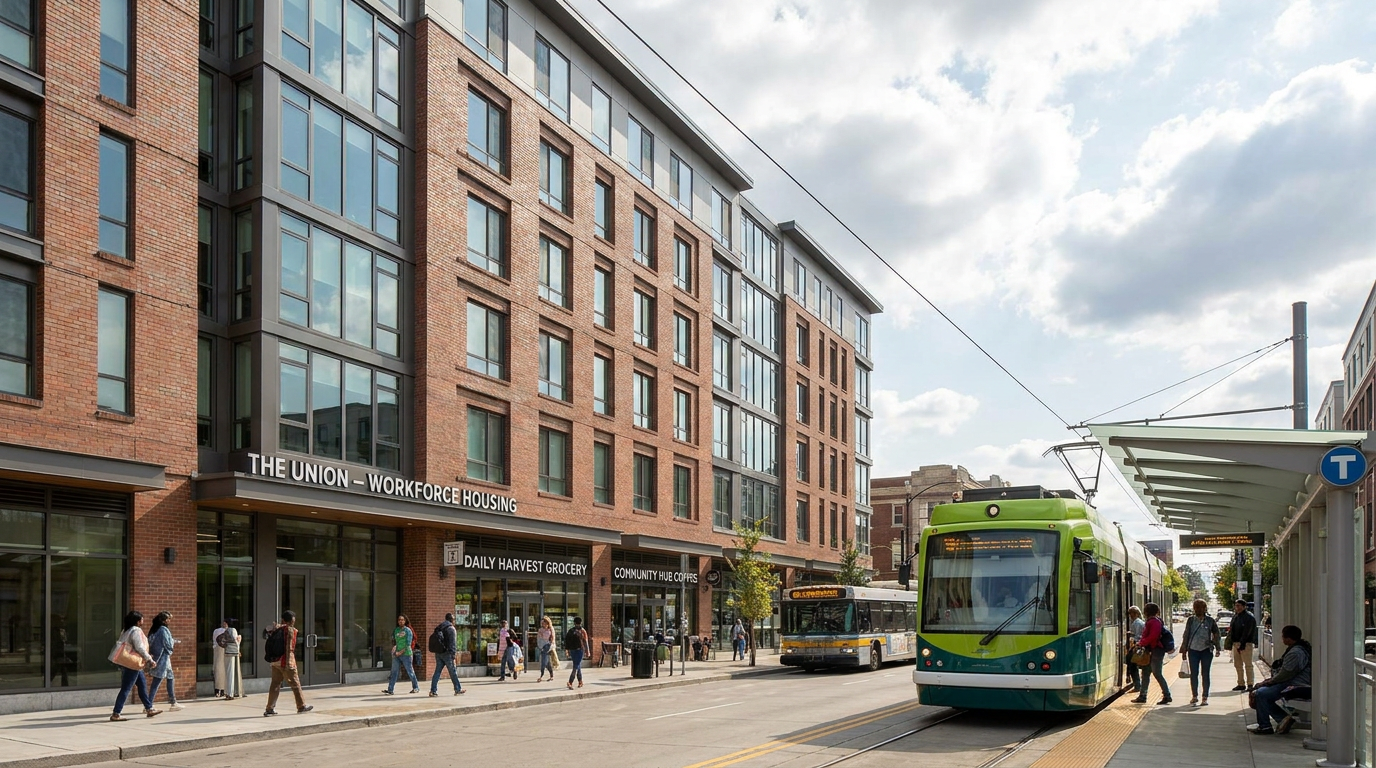
Workforce housing is increasingly important because it serves the broad middle of the market that is most affected by affordability erosion. This includes healthcare workers, teachers, service professionals, municipal employees, logistics staff, and office workers who need access to employment hubs but cannot comfortably absorb luxury rents or ownership costs. Assets serving this segment tend to sit closer to essential demand, which can support occupancy even in slower economic periods.
The investment case here is based on durability rather than glamour. Middle-income renters are a large and stable pool, and they are often underserved in cities where new construction skews high-end. Investors who can acquire, reposition, or develop housing that fits this segment may benefit from consistent demand and less reliance on aggressive price assumptions. In a market shaped by affordability stress, serving the middle well is often a stronger long-term strategy than chasing the top.
3. Target transit-oriented and employment-linked locations
Location remains central, but affordability changes what counts as a prime location. In a high-cost environment, access to transit and employment can be just as valuable as prestige. Households balancing rent, transportation, and daily expenses often prioritize total lifestyle cost rather than just neighborhood branding. A unit near transit, jobs, and services can be meaningfully more affordable in real terms than a cheaper unit with long commuting costs.
This creates a strong case for transit-oriented development and acquisition near major employment nodes. Investors should pay close attention to infrastructure commitments, station-area planning, and mixed-use intensification corridors. These areas often attract policy support, steady renter demand, and stronger long-term liquidity because they sit at the intersection of affordability and convenience.
4. Look closely at secondary markets with real economic depth
Secondary markets should not be approached as simple affordability spillover plays. The best opportunities are in markets with real job creation, population inflow, educational institutions, healthcare infrastructure, and manageable supply pipelines. If a market is cheaper but lacks economic momentum, affordability alone will not produce strong returns. If a market has both relative affordability and solid economic depth, it may outperform as households and employers look beyond the most expensive metropolitan cores.
Investors should also distinguish between secondary markets that are still early in their growth cycle and those that have already repriced sharply. The former may offer more room for yield compression and rental expansion. The latter may still perform, but only if local income growth and continued migration justify current valuations. Affordability makes secondary markets attractive, but discipline still matters.
5. Embrace smaller units, adaptive reuse, and efficient formats
As affordability becomes more strained, the market often rewards efficiency. Smaller units, well-designed suites, and layouts that maximize livability per square foot can serve demand more effectively than oversized product with inflated rent thresholds. Investors should not confuse smaller with inferior. In many urban markets, efficient design is becoming a core affordability feature and a driver of stronger absorption.
Adaptive reuse is another strategy worth watching. Office, retail, and underused commercial properties may offer conversion opportunities in selected markets, particularly where zoning, building form, and local incentives align. Not every asset can be converted economically, but the concept is increasingly relevant as cities search for faster ways to add supply. Investors with redevelopment capability may find attractive entry points where conventional ground-up delivery is too slow or expensive.
6. Underwrite conservatively and stress-test for policy change
Affordability stress increases the probability of policy intervention. That can include rent regulations, development charges, affordability requirements, tax changes, or new tenant protections. Investors do not need to avoid these markets, but they do need to underwrite them honestly. Return assumptions should be tested against slower rent growth, longer approval timelines, rising operating costs, and compliance obligations.
Conservative underwriting is not a defensive mindset. It is a professional one. In affordability-sensitive markets, the winners are often those who build enough margin for uncertainty while still aligning with durable demand. A strategy that only works under perfect assumptions is unlikely to be the strategy that performs best over the next decade.
How to use economic indicators as a forward-looking investment framework
Investors need a practical framework for turning affordability data into real decisions. The most useful approach is to combine macro indicators with micro-market signals. At the macro level, monitor central bank policy, mortgage rates, inflation, wage growth, immigration trends, and national housing starts. At the micro level, focus on vacancy, absorption, new supply by unit type, rent-to-income ratios, transit access, and local employment composition.
A disciplined market screen can help prioritize opportunities. Start by identifying geographies where population and household formation are growing faster than available supply. Then measure whether local wages can support current and projected rent levels. From there, examine the construction pipeline to understand whether incoming supply is likely to relieve pressure or simply fill the premium end of the market. Finally, map policy direction to determine whether the municipality is enabling new delivery or creating friction.
Investors should also watch for mismatches between demand and product type. A market may appear well supplied in condo inventory while remaining under-supplied in purpose-built rental. Another may be adding units rapidly but in locations poorly suited to the households driving demand. The investment edge often comes from seeing these mismatches earlier than the broader market. Affordability analysis is valuable precisely because it pushes investors beyond surface-level readings.
For long-term holders, the critical question is whether local balance can be restored fast enough to stabilize both tenants and returns. If incomes are rising, supply is expanding responsibly, and policy is becoming more efficient, a market can remain highly investable even if it starts from a stressed affordability position. If incomes are stagnant, approvals are slow, and costs remain elevated, affordability stress may deepen and create a more volatile operating environment.
What tomorrow’s winning portfolios may look like
The next generation of successful real estate portfolios is likely to look more grounded, more operational, and more selective than the last one. Rather than being built mainly on broad market appreciation, stronger portfolios may increasingly be built around income durability, affordability alignment, and supply intelligence. This is a subtle but important shift. It favors investors who understand housing as infrastructure for daily life, not merely as a trade on rising values.
In practical terms, that points toward multifamily exposure, workforce housing, transit-linked locations, and carefully chosen secondary markets. It also points toward operators who can manage costs well, maintain tenant retention, and deliver product that reflects how households actually live under budget pressure. Design, location, and unit mix become more important when affordability is tight because residents are making more deliberate trade-offs.
There will still be opportunities in ownership-oriented strategies, particularly in markets where incomes are growing, borrowing conditions improve, and supply remains constrained. But the margin for error is smaller. Speculative assumptions about rapid appreciation are less reliable when affordability is already stretched and policy scrutiny is rising. The more durable path is to align with segments where need is visible, measurable, and persistent.
For investors, this is ultimately an argument for precision. The affordability crisis is not a reason to retreat from housing. It is a reason to become more selective about what kind of housing to own, build, finance, or reposition. Capital that understands the difference between stressed demand and sustainable demand will be better placed to capture returns while navigating the policy and economic realities of the years ahead.
Final thoughts
Housing affordability is one of the clearest signals in today’s real estate market, and investors who ignore it risk misreading both opportunity and danger. The data across Canada and North America points to a common conclusion. Demand remains strong, but it is being redirected by the combined weight of high prices, elevated financing costs, and limited supply. In that environment, the best-performing strategies are likely to be those that serve essential housing needs and fit the economic lives of real households.
The market does not need more optimism. It needs sharper interpretation. Investors should treat affordability as a disciplined framework for assessing where pricing power is durable, where policy support is likely, and where demand can remain stable through changing cycles. That means watching wages as closely as rents, supply pipelines as closely as sales comps, and household formation as closely as headline prices.
Tomorrow’s strongest housing investments will not simply be located in expensive markets or fast-growing cities. They will be located in the right segments of those markets, where incomes, supply conditions, and demographic demand still create room for sustainable performance. In a period defined by affordability pressure, strategy matters more than momentum. The investors who recognize that early will be in the best position to navigate the crisis and capitalize on what comes next.
Key investor takeaways
-
Read affordability as a structural signal. Housing costs relative to income, not just nominal prices, should shape market selection and underwriting assumptions.
-
Focus on essential demand. Purpose-built rental, workforce housing, smaller units, and transit-linked assets are positioned closer to durable need than speculative ownership plays.
-
Track the right indicators. Vacancy, wage growth, household formation, construction pipelines, and rent-to-income stress provide better insight than headline appreciation alone.
-
Respect supply complexity. More starts do not automatically restore affordability. Delivery timing, location, and product mix are what matter.
-
Underwrite for resilience. Affordability pressure can support occupancy, but it can also invite policy change. Conservative assumptions remain a competitive advantage.



No Comment! Be the first one.