Why the Greenest Stone Is the One You Can Trace
Natural stone has a reassuring permanence. A granite counter, marble floor, or limestone wall can last for generations, which is one reason these materials continue to appeal to designers and homeowners. But as ArchDaily recently explored in its reporting on stone’s journey from quarry to countertop, the sustainability story of stone begins long before it arrives in a kitchen or lobby. It begins with extraction, land disturbance, water use, transport, labor conditions, and whether anyone can clearly explain where the material came from.
For eco-minded readers, this is an important shift. We often think of green building through insulation values, heat pumps, solar panels, or low-VOC finishes. Those matter. But the embodied impact of materials also shapes a home’s environmental footprint. Stone is not manufactured in the same way as plastics or composites, yet it is still part of an industrial supply chain. Quarrying can remove vegetation, alter drainage patterns, fragment habitat, generate dust and waste, and leave landscapes permanently changed if rehabilitation is weak or absent.
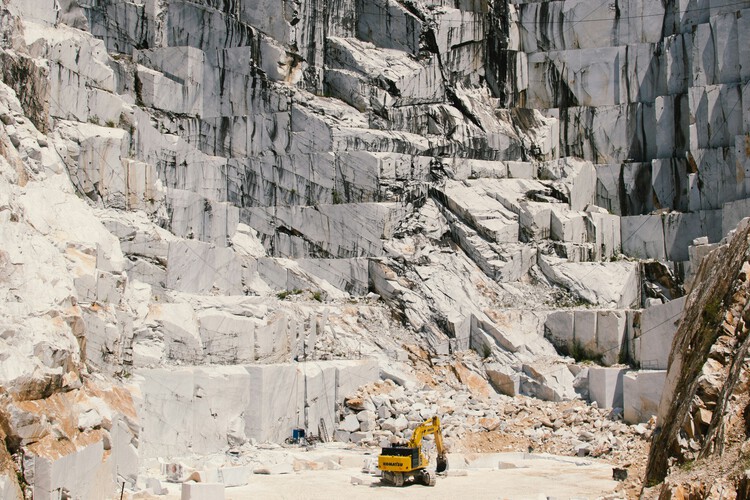
This does not mean natural stone has no place in sustainable design. In some applications, it can be a durable, repairable, and long-lived material with a lower replacement cycle than many trend-driven finishes. A countertop that lasts 40 years is very different from one replaced every decade. Stone also has thermal mass, which can support passive comfort strategies when used thoughtfully in floors or interior walls. The issue is not simply whether stone is “good” or “bad.” The better question is whether it is responsibly sourced, appropriately used, and designed to remain valuable over time.
Traceability is where the conversation becomes practical. A homeowner choosing stone can ask for the quarry location, fabricator information, chain-of-custody details, and any available Environmental Product Declaration. Designers and builders can look for suppliers aligned with the Natural Stone Sustainability Standard, which considers energy use, water management, waste handling, site reclamation, biodiversity, and social responsibility. These details help separate a beautiful surface from a genuinely accountable material choice.
A durable material is only sustainable when its origin, impact, and future use are part of the decision.
Transportation also deserves attention. A locally or regionally quarried stone may carry fewer transport emissions than an exotic slab shipped across continents, though the full impact still depends on extraction practices and processing energy. Reclaimed stone is often an excellent option, especially for flooring, paving, fireplace surrounds, landscape walls, and vanities. Salvaged slabs and offcuts can reduce demand for newly extracted material while bringing character that new products often try to imitate.
For new builds and renovations, the most sustainable approach is usually restraint. Use stone where its durability and performance make sense, not simply where it signals luxury. Specify standard slab sizes to reduce waste. Ask fabricators how remnants are handled. Choose timeless finishes over highly polished or fashion-led selections that may feel dated quickly. If the material can be maintained, repaired, reused, or eventually removed intact, its environmental value improves.
The takeaway is simple and achievable: do not stop at the showroom label. When considering natural stone, ask where it came from, how it was extracted, how far it travelled, and what will happen to it at the end of its first use. Better material choices are not only about what we see in the finished home. They are also about the landscapes we choose to acknowledge.
Source: ArchDaily