Toronto’s Housing Recovery Is Becoming More Selective
Toronto real estate is no longer moving as one market. It is splitting by price band, property type, and seller motivation. For investors, that matters more than the headline sales rebound.
As reported by The Globe and Mail, TD economist Rishi Sondhi sees demand returning in the Greater Toronto Area, helped by shrinking listings and better alignment between buyer and seller expectations. His view is that the market is not yet tight, but the balance is improving enough to support firmer prices in 2027.

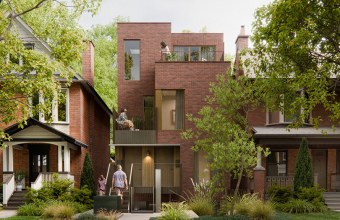
The investable signal is not simply that sales are rising. It is where they are rising. Activity is strongest in the $1-million to $1.5-million bracket, the range that often captures entry-level single-family homes in Toronto’s established and transitional neighbourhoods. That price band remains supported by scarcity, family demand, and the long-term preference for land over air space.
By contrast, the sub-$1-million condo market remains softer. Many buyers are still waiting for further price discovery, especially where investor-owned units face weaker rent-to-carry economics. Lower condo completions later this year may reduce resale pressure, but that does not automatically restore pricing power. Investors should distinguish between a supply slowdown and a demand recovery.
The high end tells a different story. The Globe and Mail highlights examples where luxury homes required significant price cuts before transacting, including a Lytton Park property that ultimately sold far below its original asking price. In the ultra-luxury segment, fewer buyers appear willing to absorb uncertainty, and some sellers are exiting Canada rather than rotating into another local property.
The opportunity is not in chasing the rebound. It is in identifying the price bands where demand is real and supply is thinning.
That divide creates a practical acquisition framework. Investors looking for resilience may find better long-term fundamentals in land-based assets near transit, schools, and employment corridors, particularly where end-user demand remains deep. Investors hunting discounts may find negotiation room in higher-priced homes, but liquidity risk is greater and holding periods may need to be longer.
Mortgage renewals remain a risk factor, but the forced-selling narrative looks overstated for now. A Bank of Canada warning that roughly 10 per cent of GTA borrowers renewing in 2027 may struggle to qualify has attracted attention, yet TD’s view is that most borrowers will renew with existing lenders. Distress may rise at the margin, but not necessarily enough to flood the market.
The larger supply story may be the opposite. If condo completions slow, owners hold back listings, and sellers refuse to transact below target prices, available inventory could tighten even without a powerful economic backdrop. That is the kind of environment where prices can firm gradually, especially in desirable low-rise segments.
For KG Invest readers, the takeaway is discipline. Toronto is showing early signs of recovery, but not broad strength. Underwrite by segment, not citywide averages. Prioritize liquidity, replacement value, rental depth, and seller motivation. The next phase of the market will reward investors who can read the spread between cautious sentiment and tightening supply.
Source: The Globe and Mail