What AppFolio’s Board Reset Signals for Property-Tech Investors
For landlords, managers, and real estate investors, the next efficiency gain may not come from a better cap rate or a cheaper mortgage. It may come from software that removes friction from leasing, payments, maintenance, resident services, and back-office administration.
That is why AppFolio matters. The company sits at the intersection of property management, artificial intelligence, and recurring software revenue. Its recent governance changes and index removal are not property market news in the traditional sense, but they are relevant to anyone watching how technology is reshaping operating margins across residential real estate.
According to Simply Wall St, AppFolio has seen two long-serving directors, including its chairman, retire from the board. Diya Jolly and Michael Yang have been appointed as new Class I directors, while Winifred Webb has been named Lead Independent Director. The refresh comes alongside new committee assignments effective June 29, 2026.
The appointments are worth noting. Jolly, currently Chief Product and Technology Officer at Xero, brings experience in SaaS product development and digital workflows. Yang brings a software investment and operating background. For a company whose investment case depends increasingly on AI-native property management tools, this is not cosmetic governance. It points to a board being shaped around product depth, automation, and vertical software execution.
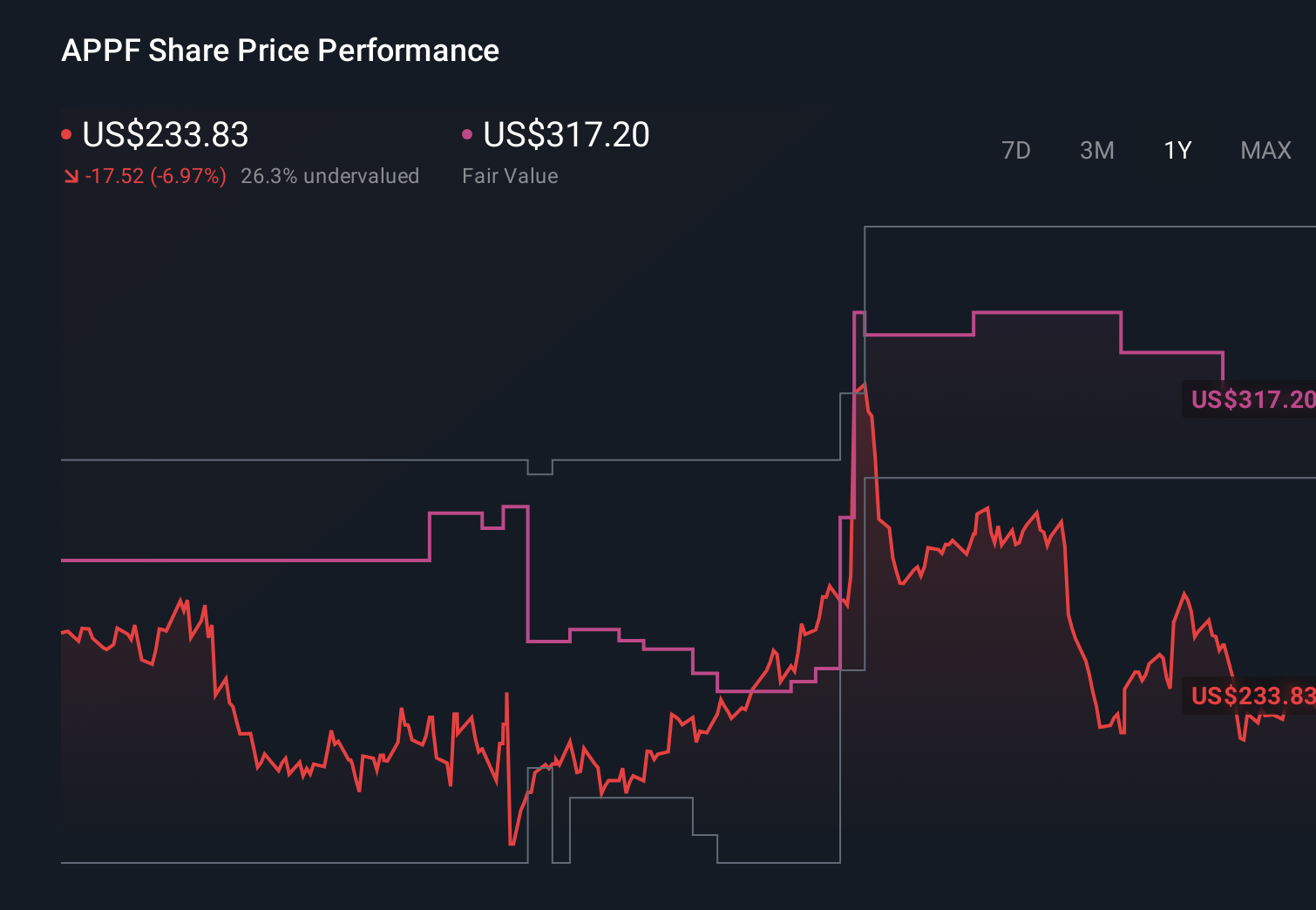
The second development is more technical, but still important. AppFolio has been removed from the Russell 1000 Defensive and Russell 1000 Growth-Defensive indexes. Index removals can affect near-term trading because passive and rules-based funds may need to adjust their holdings. This does not necessarily change the company’s operating outlook, but it can influence liquidity, ownership mix, and short-term share price behaviour.
For investors, the central question remains unchanged: can AppFolio convert AI enthusiasm into durable revenue growth and higher earnings? Simply Wall St notes a narrative projecting revenue of $1.6 billion and earnings of $275.8 million by 2029. That implies annual revenue growth of 16.3 percent and an earnings increase of roughly $123.8 million from today’s level.
The real test is whether AI can become a pricing engine, not just a product feature.
That distinction matters. Property management software is attractive because it can embed itself deeply into daily operations. Once a landlord, multifamily operator, or third-party manager relies on a platform for rent collection, resident communication, accounting, maintenance coordination, and analytics, switching becomes costly. If AppFolio’s AI tools raise productivity and justify higher-value services, average revenue per user can rise without needing dramatic geographic expansion.
The risk is competition. AI-enabled workflows are quickly becoming standard across software markets. AppFolio must defend its position against both specialist property-tech companies and broader SaaS providers that may push into real estate operations. Investors should also watch whether premium product adoption remains strong enough to support valuation expectations.
For real estate investors, the broader takeaway is clear. Technology is becoming part of asset performance. The operators who automate faster may reduce administrative drag, respond to residents more efficiently, and protect margins in tighter rental markets. AppFolio’s board refresh suggests the company understands that the next phase of property management will be won through product execution, not simply market presence.
Source: Simply Wall St