
Yonge and Roselawn Shows Midtown’s Next Development Test: Rental Density That Must Carry the Street
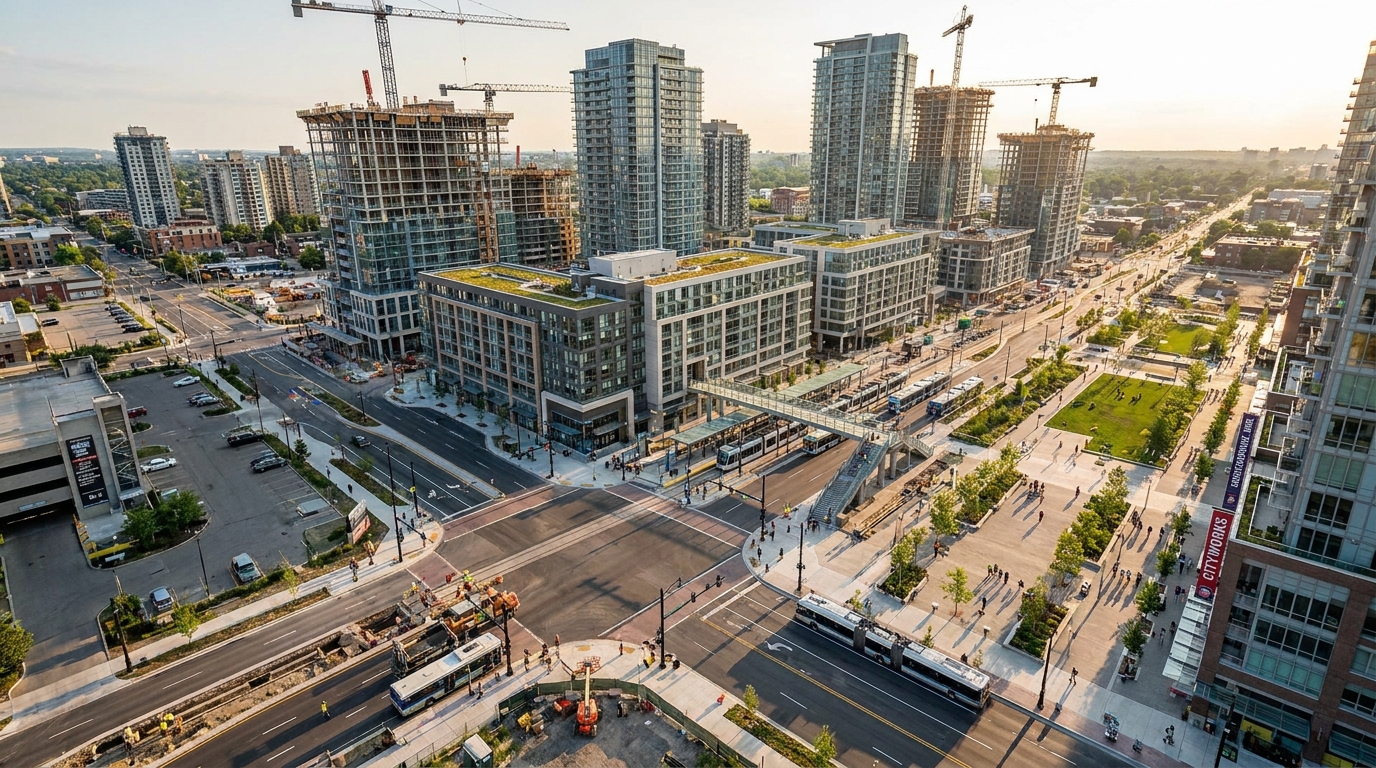
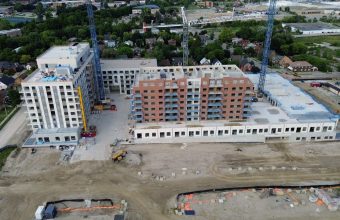
The rise of Yonge and Roselawn is not simply another construction milestone in Midtown Toronto. It is a signal about where serious rental supply is still feasible, and what form that supply is now taking along high-value transit corridors. As UrbanToronto reports, KingSett Capital’s 25- and 31-storey rental towers are moving above a substantial seven-storey mixed-use podium just north of Eglinton, roughly 450 metres from the interchange of Line 1 and the future Eglinton Line 5.
That geography matters. Midtown remains one of Toronto’s clearest examples of transit-supported intensification colliding with political sensitivity, servicing pressure, land cost, and design expectations. The area has already absorbed years of debate over height, shadow, school capacity, road congestion, and the pace of infrastructure delivery. Yet the fundamentals remain difficult to ignore. When a site sits within walking distance of two rapid transit lines, a lower-density outcome becomes harder to justify from a city-building perspective.
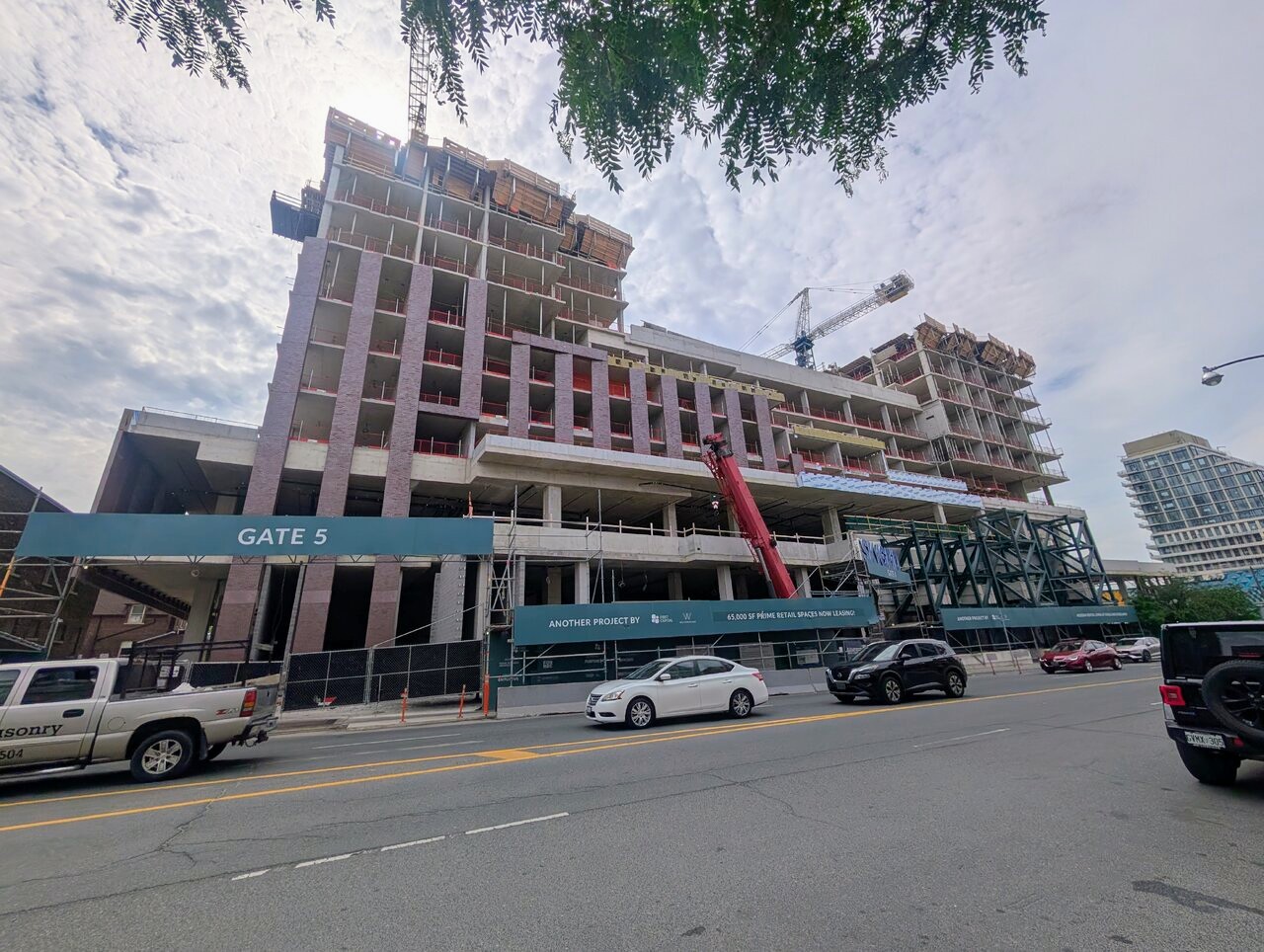
The project’s 636 market-rate rental units point to a broader shift in how institutional capital is reading Toronto’s housing market. Purpose-built rental is no longer a niche counter-cycle play. It is becoming a core long-duration asset class, particularly where transit access, population growth, and limited land supply create durable demand. The transfer of the project from First Capital to KingSett following the larger portfolio transaction with Choice Properties REIT also reflects a market reality: complex urban mixed-use sites increasingly require balance sheet strength, patience, and the ability to manage entitlement, construction, leasing, and long-term operations.
The podium is the strategic piece. Seven storeys of mixed-use massing, heritage facade retention, commercial frontage, amenity space, step-backs, and cladding detail all speak to the modern bargain between density and context. Toronto is not simply asking developers to add units. It is asking them to rebuild the public edge, preserve parts of the existing street identity, support retail continuity, and absorb urban design complexity at the base of the tower. That has direct feasibility implications. Better podiums cost more, phase more slowly, and require tighter coordination, but they also determine whether intensification strengthens or weakens the corridor.
In transit-rich Midtown, the development question is no longer whether density belongs. The question is whether the built form can convert density into a stronger urban district.
Yonge Street north of Eglinton is moving toward a different urban role. It is less a traditional main street with isolated redevelopment sites and more a layered growth corridor where rental housing, retail, heritage expression, and transit access must operate together. That creates opportunity, but also raises the bar. Developers looking at comparable sites need to underwrite not only height and unit count, but frontage performance, construction staging, heritage risk, podium articulation, and the cost of delivering a complete mixed-use base.
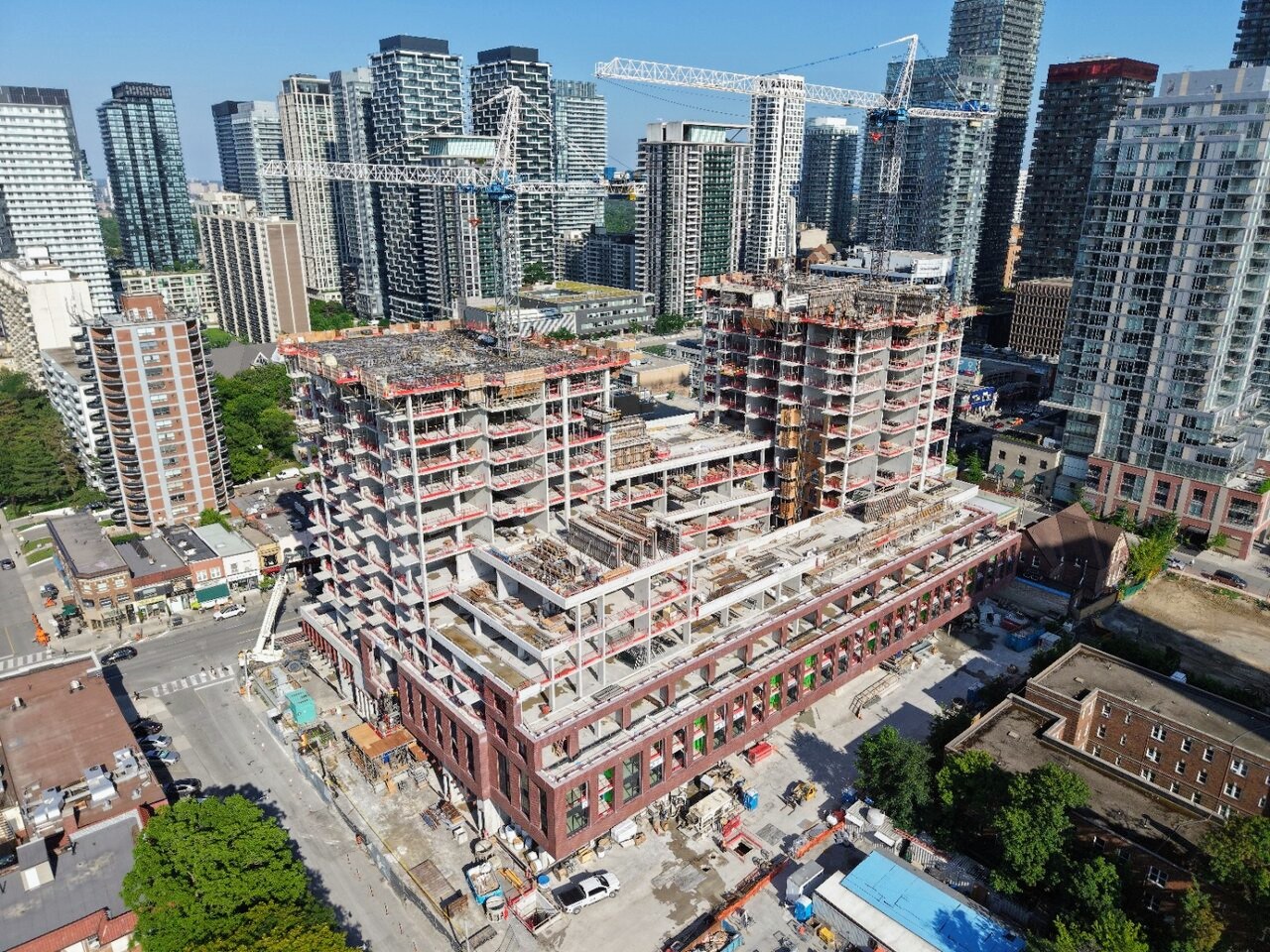
The construction progress is also a reminder that approvals are only one part of supply delivery. Excavation, crane installation, podium formation, facade retention, envelope work, and tower cycle time all sit between policy ambition and actual homes. For a city under housing pressure, every completed rental project near rapid transit becomes a test of execution capacity. The market can absorb density in the right locations, but only if planning frameworks, capital markets, utilities, and construction systems can keep pace.
For developers, planners, and institutional investors, Yonge and Roselawn should be watched as more than a Midtown rental project. It is a case study in the next generation of Toronto intensification: large-scale rental beside major transit, backed by institutional ownership, shaped by podium urbanism, and constrained by the realities of building in an established corridor. The sites that follow will face the same equation. The winners will be those who understand that land value here is created not only by height, but by integration.
Source: UrbanToronto