
Woodbine GO Station: A Transit Bet That Will Reshape Northwest Toronto’s Growth Map
Every major city eventually reaches a point where its transit network has to be rebuilt to match its ambitions, not its history. Toronto is at that point along the Kitchener GO Line, and the shovels are now in the ground. Construction has moved into a major phase at Woodbine GO Station, a roughly 170 million dollar project rising at 555 Rexdale Blvd, next to Woodbine Racetrack along Highway 27. For anyone who tracks how infrastructure investment shapes land value, this is a project worth watching closely.
The new station will sit between the existing Etobicoke North and Malton stations, and it is designed to replace Etobicoke North outright. That station, the province has noted, simply cannot handle the ridership growth expected along this corridor. Replacing rather than expanding a station is a significant planning decision. It signals that officials are building for a future demand curve, not just patching today’s capacity gap.
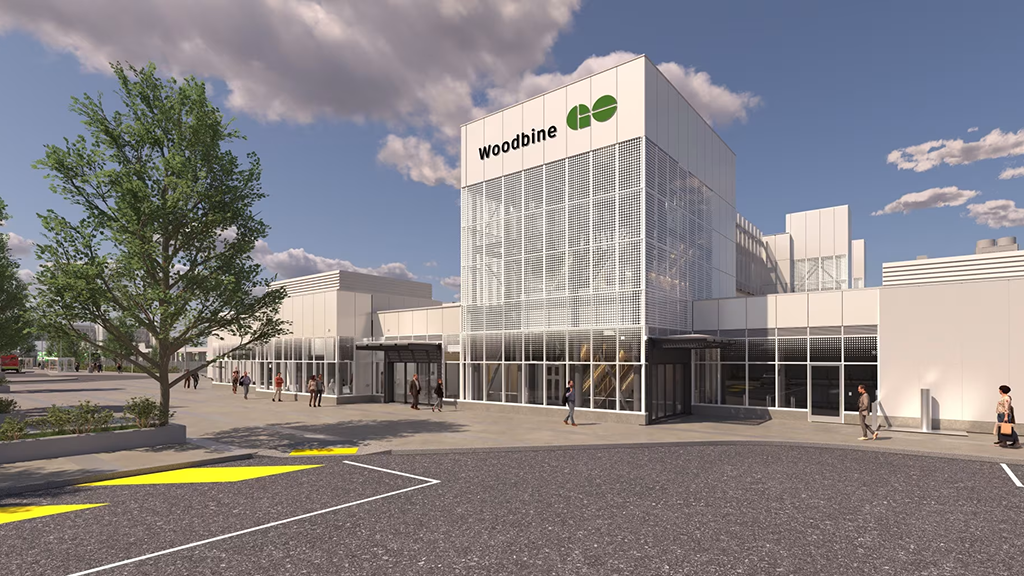
Site clearing, grading, and excavation began last year, followed by temporary track separation and two access bridges that cleared the way for the platform work now underway. Once complete, Woodbine will offer island platforms, a bus loop linking riders to local transit, dedicated GO parking, pedestrian bridges, and fully accessible, barrier-free facilities. It will connect commuters to the Kitchener GO Line, the Union-Pearson Express, and regional service across Toronto, York Region, Brampton, and Mississauga.
This is precisely the kind of project that reshapes a growth map long before the ribbon is cut. Stations with direct UP Express connectivity and multi-region GO access tend to become anchors for intensification. Land near Highway 27 and the Woodbine Racetrack lands has already drawn attention as a redevelopment zone, and a fully accessible, high capacity transit hub only strengthens the case for higher density housing, mixed use nodes, and employment space nearby. Municipalities and developers reading this correctly will start positioning land holdings and rezoning applications around the station’s timeline now, not after completion.
Development is never just about land. It is about timing, access, infrastructure, policy, demand, and the future identity of a community.
What makes this project a stronger signal than most is the deliberate choice to retire an undersized station rather than stretch it further. That is a long term commitment, not a stopgap. For the northwest corridor of Toronto, a region long overshadowed by downtown intensification stories, Woodbine GO represents the kind of infrastructure catalyst that tends to precede a wave of housing and commercial planning activity. The communities paying attention now will be the ones best positioned when that wave arrives.
Source: Construct Connect