



Climate Migration Planning: Adaptation & Resilience Guide
Climate migration is often discussed as if it belongs to a distant future or a different part of the world. In reality, it is already influencing how people think about where they live, what kind of housing they can rely on, and how communities prepare for disruption. Across Canada and North America, wildfires, floods, extreme heat, sea-level rise, coastal erosion, and permafrost thaw are affecting not only landscapes but also mobility decisions. Some households leave temporarily after a disaster, some relocate gradually over several years, and others remain in place while adapting their homes and routines to changing conditions.
Table Of Content
- Why climate migration planning matters now
- Understanding climate migration as adaptation, not failure
- The housing dimension of climate migration
- What resilient housing planning should include
- Community-led planning and local resilience
- What strong community planning looks like
- Managed retreat and planned relocation when risk becomes too high
- How individuals and households can prepare
- A practical household checklist
- What municipalities and policymakers should prioritize
- Key policy priorities for a resilient response
- Equity, dignity, and the human side of adaptation
- The path forward for climate migration planning
Climate migration planning is the practice of preparing housing, infrastructure, and public services for the reality that climate hazards increasingly shape where and how people can safely live. It is not simply about moving people from one place to another; it is about reducing harm, expanding choices, and helping communities stay safe and functional under stress. When climate pressures combine with rising housing costs, weak infrastructure, health risks, and economic uncertainty, migration can become more likely. With thoughtful planning, however, communities can reduce forced displacement, support dignified relocation where needed, and strengthen resilience for both current residents and newcomers. Effective climate migration planning treats mobility as a spectrum, ranging from temporary evacuation and seasonal movement to voluntary relocation and, in the highest-risk areas, planned retreat, rather than treating every case as a single, sudden crisis.
The evidence strongly supports this more practical framing. The World Bank’s Groundswell analysis projects that climate change could force up to 216 million people to move within their own countries by 2050 across six world regions if development and climate action fall short. The Intergovernmental Panel on Climate Change, or IPCC, also emphasizes that climate hazards are increasingly driving involuntary migration and displacement, while noting that migration can sometimes function as adaptation when people have agency and support. For planners, homeowners, local governments, and community organizations, the key lesson is clear: climate migration should be treated as an adaptation and resilience challenge, not only as a crisis of displacement.
In Canada, that approach is reflected in the country’s first National Adaptation Strategy, which describes climate change as a whole-of-society issue affecting every region. The strategy links resilience to infrastructure, health, nature, economic stability, and disaster preparedness. It also recognizes that some communities, especially northern, coastal, Indigenous, and otherwise vulnerable regions, face disproportionate exposure to climate impacts. By connecting climate migration planning to housing, land use, public services, and community leadership, the conversation becomes more useful and more grounded in real decisions.
This article explores how climate migration planning can work in practice. It looks at the realities of climate-linked mobility, common misconceptions, and the strategies individuals, communities, and policymakers can use to prepare. The goal is not to dramatize displacement or promise simple answers. It is to show that resilience can be built through practical, collaborative, and well-designed choices that protect people’s dignity while improving long-term housing and community stability.
Why climate migration planning matters now
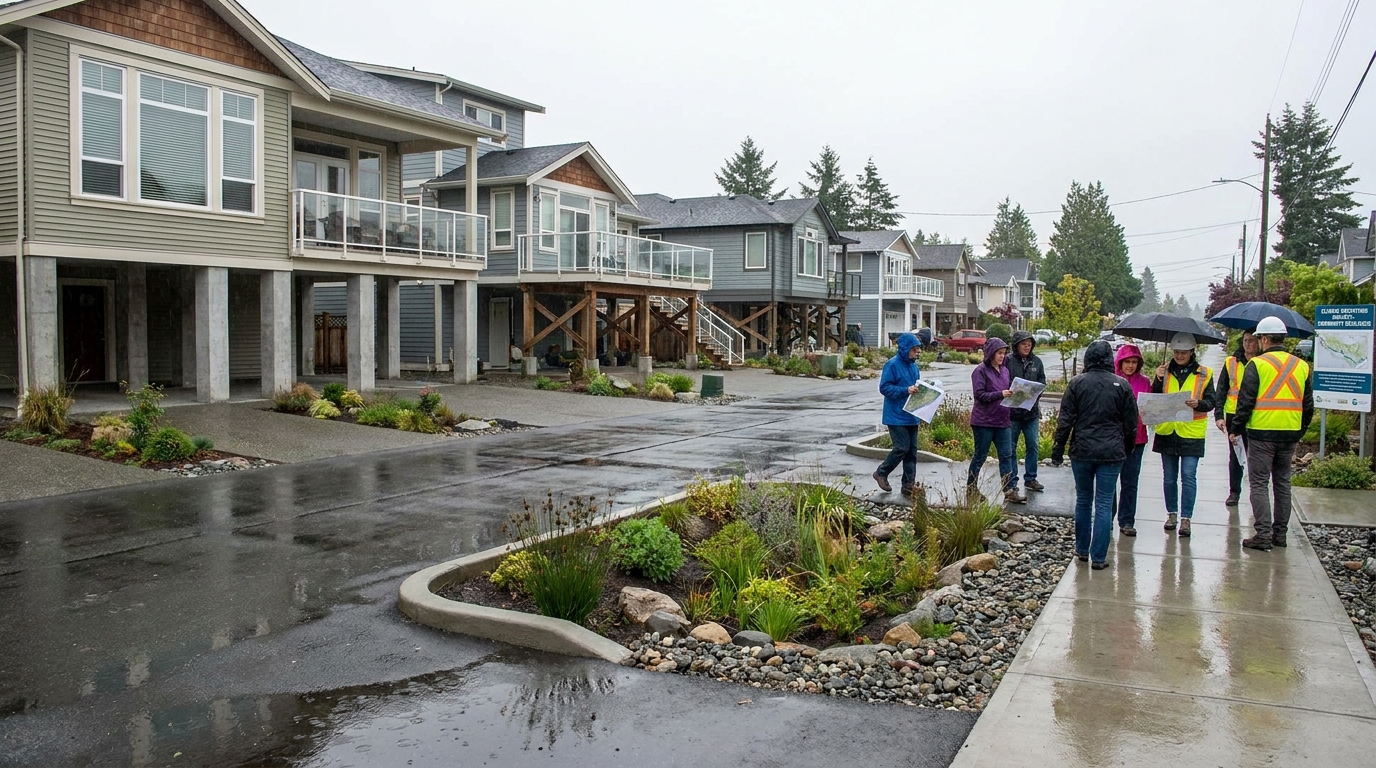
Climate migration planning matters now because the drivers are no longer abstract. Flooding is damaging homes and transport networks. Wildfires are causing repeated evacuations and long-term smoke exposure. Extreme heat is straining health systems and making certain housing types unsafe for vulnerable residents. Coastal erosion and sea-level rise are pressuring shorefront communities, while permafrost thaw in northern regions threatens roads, buildings, and essential infrastructure. These impacts do not affect everyone equally, but together they reshape how communities weigh safety, affordability, and permanence.
One of the most important insights from recent research is that climate-related mobility is usually internal, often gradual, and almost always influenced by several factors at once. A family may leave because a wildfire destroyed housing stock, but they may also be responding to insurance costs, job loss, school disruption, or health concerns. A senior may relocate from a heat-vulnerable apartment not because of one extreme weather event, but because repeated summers become impossible to manage. This means planning cannot focus only on dramatic evacuations. It also has to address the slower movement of households adjusting to repeated climate stress.
That distinction helps correct one of the most common misconceptions surrounding climate migration. It is not primarily an international surge of people crossing borders due to a single environmental cause. The International Organization for Migration has emphasized that climate change, food insecurity, and mobility are interlinked, and climate is rarely the sole driver of migration decisions. In practical terms, this means local governments, housing providers, social service agencies, and regional planners all have a role in understanding climate migration as part of ordinary public planning.
Another reason this issue matters now is that displacement often compounds existing vulnerability. Research by the Canada Mortgage and Housing Corporation, or CMHC, on flooding and housing loss in New Brunswick found that climate-related residential displacement can deepen housing insecurity, especially for socially and economically vulnerable people. When a household is already struggling with rent, access to insurance, disability, language barriers, or precarious employment, a flood or fire is not just a temporary disruption. It can push them into prolonged instability, debt, or unsafe living conditions.
Seen this way, climate migration planning is really about preserving choice. The less prepared a community is, the more likely mobility becomes reactive, chaotic, and unequal. The better prepared a community is, the more likely people can remain safely where they are, move temporarily with support, or relocate in a planned way if risks become too high. Good planning does not eliminate difficult decisions, but it improves the conditions under which those decisions are made.
Understanding climate migration as adaptation, not failure
There is a tendency to treat migration as proof that adaptation has failed. Sometimes that is true, especially when people are forced to leave with little warning, no financial safety net, and no realistic path home. Yet that is not the whole story. The IPCC makes an important distinction by recognizing migration as one possible adaptation strategy among several. Under the right conditions, moving can reduce exposure to climate risk, support livelihoods, and improve long-term safety. Under the wrong conditions, however, migration can become maladaptive, increasing poverty, disconnection, and vulnerability.
This more balanced view is useful because it lowers the temperature of the conversation. People do not need to choose between two extremes, either assuming everyone will stay in place forever or assuming every climate impact leads inevitably to permanent displacement. In reality, climate mobility exists on a spectrum. It can include temporary evacuation, seasonal movement, labor migration, voluntary relocation, planned retreat, or permanent internal displacement. Policy responses should reflect that complexity rather than forcing a single narrative.
Planning for climate migration works best when it expands options. Sometimes resilience means helping people stay safely in place. Sometimes it means supporting temporary movement. Sometimes it means enabling dignified relocation before repeated disasters make that choice far more painful.
It is also important to resist alarmist ideas that climate migrants inherently pose a security threat. The IPCC has noted that there is little empirical evidence showing climate migrants create a major security risk at the state or international level. That matters because fear-based language can distort policy. It can encourage exclusion, reactive enforcement, or stigma instead of investment in housing, infrastructure, and coordinated support. Communities need facts, not dramatic framing, to plan well.
Thinking of migration as adaptation also encourages better timing. If local leaders wait until a place is already in crisis, every decision becomes more expensive and more emotionally difficult. By contrast, early planning can protect social ties, preserve access to services, and create realistic pathways for people who may eventually choose or need to move. This is especially relevant in places facing chronic flood exposure, severe erosion, recurrent wildfire risk, or infrastructure loss tied to thawing permafrost.
The housing dimension of climate migration
Housing is where climate migration becomes immediate and personal. A climate hazard becomes a mobility issue when a home is damaged, uninsured, unsafe to occupy, or too costly to retrofit. It also becomes a mobility issue when receiving communities do not have enough affordable, resilient housing for people arriving after a disaster or gradual relocation. For this reason, any serious climate migration planning framework has to start with housing supply, housing quality, and housing stability.
Canada’s aging housing stock is increasingly vulnerable to extreme weather. Older homes may lack flood protection, heat resilience, backup power, fire-resistant materials, or effective insulation. Apartment buildings without adequate cooling can become dangerous during heat waves, especially for older adults and medically vulnerable residents. In flood-prone areas, housing may face repeated damage even when the structure remains technically habitable. Over time, this creates a pattern where the least resilient homes are often occupied by the households with the fewest resources to adapt.
There is also a strong equity dimension here. A homeowner with savings and insurance may be able to repair, elevate, retrofit, or relocate. A renter may have none of those options. After a climate event, renters can face abrupt displacement, lost possessions, rent increases, or the permanent loss of affordable units. If a municipality does not have tenant protections, emergency accommodation plans, and pathways into stable replacement housing, climate impacts can quickly intensify inequality.
That is why resilient housing policy should be understood as climate migration prevention and climate migration readiness at the same time. Better building standards, retrofit programs, cooling protections, flood resilience measures, and wildfire-smart design can reduce forced movement by helping people stay safely housed. At the same time, communities need temporary housing options, relocation assistance, and clear rebuilding rules for people who cannot return or should not rebuild in high-risk areas.
Recent federal housing and climate initiatives increasingly connect these issues. Programs linking retrofits, affordability, and adaptation are a sign that housing policy is beginning to reflect climate realities. This is a constructive shift because it acknowledges that resilience is not only about physical protection. It is also about whether people can remain housed through disruption, recover without financial ruin, and access decent shelter if they need to move.
What resilient housing planning should include
At the local and regional level, climate migration-aware housing planning should include several linked measures. First, communities need detailed risk mapping that identifies homes and rental buildings most exposed to flooding, fire, heat, erosion, or infrastructure failure. Second, they need a prioritized retrofit strategy that focuses on the most vulnerable residents, not only the most visible properties. Third, they need temporary housing pathways that can be activated quickly after disasters without pushing people into prolonged shelter stays or unsafe arrangements.
Fourth, receiving communities need to assess whether they have the housing capacity to absorb new residents. This includes rental vacancy, modular housing options, accessible units, and supportive housing for people with health or mobility needs. Fifth, local governments should coordinate with insurers, social service agencies, and community organizations to identify where insurance retreat or unaffordable premiums may trigger displacement before a formal disaster occurs. These warning signs often reveal where housing stress is about to become mobility stress.
Community-led planning and local resilience
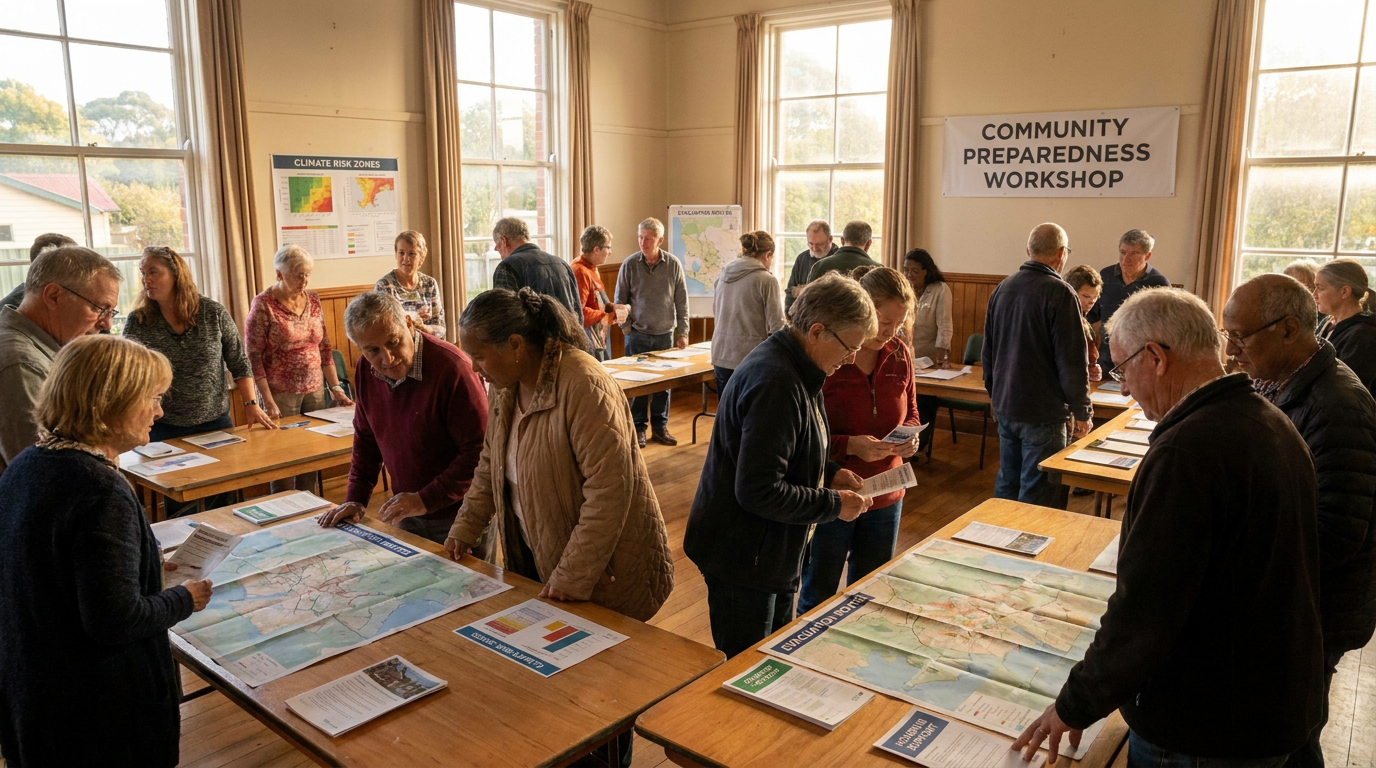
One of the strongest themes in Canadian adaptation policy is that climate resilience requires collaboration across governments and communities. That is especially true for climate migration planning because mobility does not follow neat administrative lines. People may evacuate from one municipality, stay temporarily in another, work in a third, and rely on health or social services spread across a region. If each jurisdiction plans in isolation, gaps quickly appear. If they plan together, communities can coordinate housing, transportation, emergency response, and long-term support far more effectively.
Community-led planning is especially important because local residents often understand risk in ways that maps alone cannot capture. They know which roads wash out first, which apartment buildings overheat, which neighborhoods lose power fastest, and which residents are least likely to self-evacuate. They also understand social realities that shape adaptation choices, including trust in institutions, cultural attachment to place, family networks, and access to transportation. These details can determine whether a plan works in practice or remains a report on a shelf.
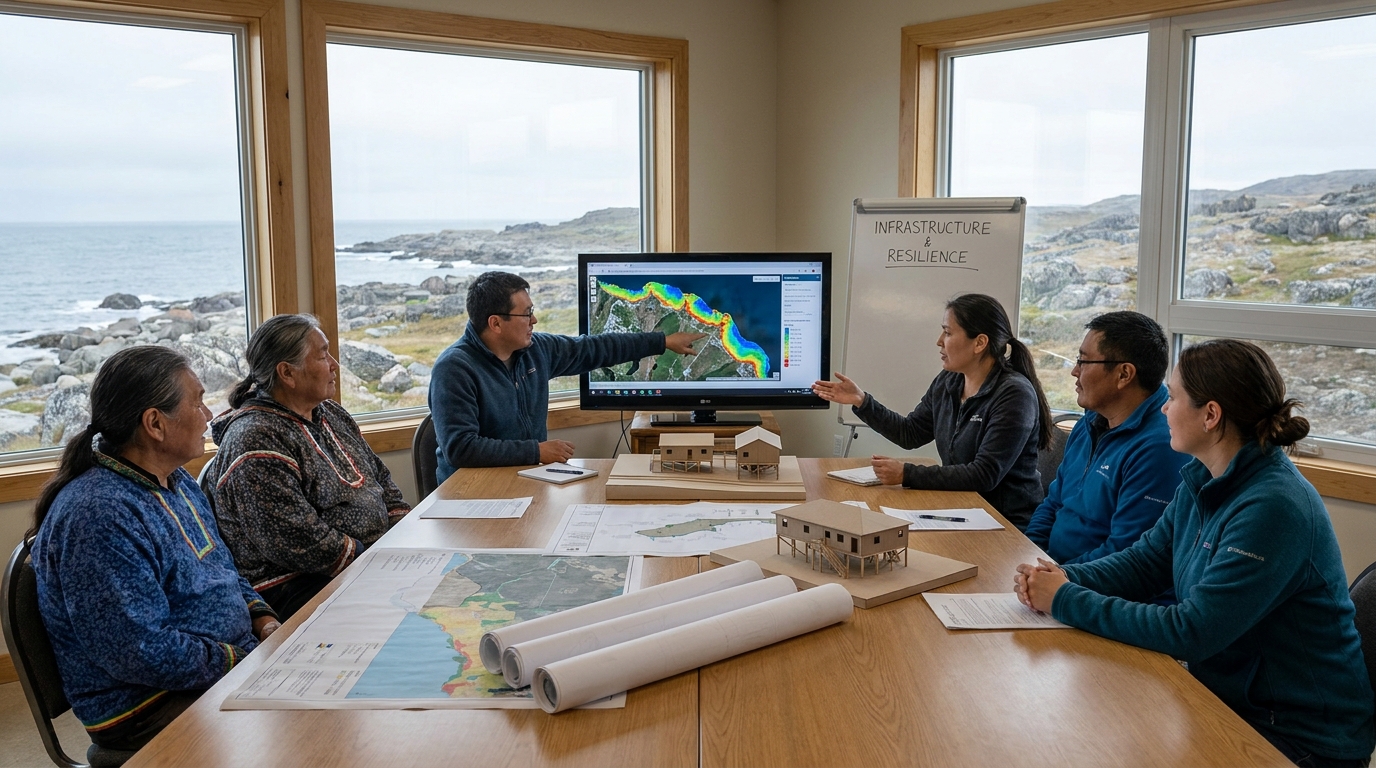
For Indigenous communities, this principle is even more significant. Canada’s National Adaptation Strategy includes a target that by 2030 all northern and Indigenous communities should have the resources to develop or access culturally appropriate tools and information to address climate risks. That language matters because adaptation is not only technical. It also involves land relationships, governance, cultural continuity, and self-determination. Planning for climate mobility in northern and Indigenous contexts must be led in ways that respect these realities rather than imposing outside assumptions.
Community resilience also depends on trusted communication. People are more likely to prepare for change when information is clear, consistent, and relevant to their daily lives. Abstract warnings about climate migration may feel overwhelming or impersonal. Specific local guidance on home retrofits, evacuation routes, cooling centres, tenant rights, backup power, and floodplain changes is more actionable. Over time, this kind of communication builds the foundation for larger conversations about managed retreat or planned relocation if those become necessary.
Receiving communities deserve equal attention. Towns and cities that welcome people displaced by climate impacts need support long before arrivals accelerate. Schools, clinics, transit, housing systems, and community organizations can all come under strain if population shifts are ignored. Planning for climate migration therefore includes preparing destination communities to absorb change in a way that is inclusive and sustainable rather than reactive.
What strong community planning looks like
Strong local planning is iterative rather than one-time. Climate risk changes over time, data improves, infrastructure ages, and population patterns shift. Municipal adaptation plans should be reviewed regularly and connected to land-use bylaws, infrastructure budgets, emergency management systems, and housing strategies. Scenario planning can help communities think through multiple futures rather than relying on one static forecast.
It is also useful when planning processes include voices that are often left out of formal consultations. Renters, youth, seniors, people with disabilities, low-income households, migrant workers, and community health providers all bring essential perspectives. Their experience can reveal hidden weaknesses in evacuation planning, public communication, and recovery systems. Climate migration planning becomes far more humane and effective when it is built around real lived conditions rather than idealized assumptions.
Managed retreat and planned relocation when risk becomes too high
Some places can be protected and adapted in place. Others may eventually face risks that make continued occupation unsafe, unaffordable, or technically unrealistic. In those cases, managed retreat and planned relocation become part of the climate resilience toolkit. These terms can sound severe, but at their best they are about reducing long-term harm through timely, organized, and participatory transitions.
Managed retreat refers broadly to moving people, assets, or infrastructure away from high-risk areas over time. Planned relocation usually refers to a more deliberate process of helping people or communities move to safer places with support. Both approaches can be emotionally difficult because they involve attachment to home, memory, livelihood, and identity. Yet delaying these conversations can be more damaging than having them early and carefully.
What often makes relocation traumatic is not the act of moving itself, but the absence of planning. When households are forced to decide after repeated disasters, under financial pressure, with limited housing alternatives, and without trusted support, relocation feels like loss compounded by chaos. By contrast, when communities discuss thresholds for action in advance, identify safer land, secure funding, and preserve social networks, transition can happen with greater dignity and continuity.
Policy design matters here. Buyout programs, land swaps, relocation grants, infrastructure sequencing, and replacement housing all shape whether retreat is fair or exclusionary. If lower-income households are pressured to leave while wealthier property owners retain more support, the process deepens injustice. If receiving areas do not have services or housing, relocation can simply move vulnerability from one place to another. This is why planned relocation should be integrated with housing policy, transportation planning, social services, and economic development rather than treated as a narrow emergency measure.
Adaptation does not always mean defending every place indefinitely. In some locations, resilience means investing in safety and continuity while helping people transition away from repeated, compounding risk.
For many local governments, even beginning this discussion can feel politically sensitive. Yet public trust often improves when leaders are honest about changing risk. People generally understand that climate impacts are intensifying. What they need is transparency about options, timelines, responsibilities, and support. Managed retreat should never be framed as abandonment. It should be framed as a structured effort to protect lives, preserve dignity, and avoid greater harm later.
How individuals and households can prepare
Climate migration planning is often discussed at the policy level, but households also need practical steps. Preparation does not mean assuming you will have to leave. It means understanding your risks and building flexibility. For homeowners and renters alike, a good first step is to learn the specific hazards affecting your area, whether those are floods, wildfire smoke, extreme heat, erosion, or infrastructure instability. Local risk maps, insurance updates, and municipal adaptation plans can provide a clearer picture than national headlines.
Households can then translate that information into realistic decisions. Some actions are physical, such as improving drainage, adding fire-resistant landscaping, sealing air leaks, or securing backup cooling. Others are administrative, such as reviewing insurance coverage, documenting possessions, storing key records safely, and understanding lease protections or mortgage terms after a disaster. These may seem like small details, but they make a major difference if disruption occurs.
Social preparation matters just as much. People with strong local networks often recover more effectively because they know where to get help, who may need assistance, and how to share information quickly. Neighbors can coordinate check-ins during heat waves, support evacuation plans for residents with limited mobility, and share knowledge about safe routes or temporary accommodation. Resilience is rarely individual in practice. It is built through relationships.
For households considering long-term relocation, planning ahead is often more empowering than waiting for a crisis. That might involve researching safer neighborhoods, assessing transit and job access, comparing housing costs, or talking openly as a family about thresholds for moving. A person living in a repeatedly flooded area may decide that one more severe event, one insurance change, or one major health issue would trigger relocation. Defining those thresholds in advance can reduce stress and help families act more deliberately.
A practical household checklist
-
Identify your main local climate risks using official maps and local experience.
-
Review whether your home is resilient to heat, smoke, flood, fire, and power outages.
-
Check your insurance coverage and understand exclusions, deductibles, and renewal risks.
-
Store copies of key documents and maintain an emergency contact and evacuation plan.
-
Learn your rights as a renter or homeowner after a disaster, including local support programs.
-
Build local support networks with neighbors, relatives, and community organizations.
-
Consider your long-term mobility options before a crisis forces a rushed decision.
What municipalities and policymakers should prioritize
For policymakers, climate migration planning should begin with a simple principle: do not wait for displacement to become visible before preparing for it. By the time households are moving at scale, many of the most affordable interventions have already been missed. The strongest public response combines prevention, preparedness, and support for mobility where necessary. That means investing in safer housing and infrastructure while also preparing systems that can accommodate temporary and permanent movement.
Land-use planning is one of the most powerful tools available. Municipalities can update zoning, building rules, and infrastructure priorities to steer future development away from high-risk areas. This is not always politically easy, especially where property values and local tax bases are involved. Still, continuing to build or intensify housing in places facing repeated hazard exposure can create much larger social and financial costs over time. Prevention is often less visible than post-disaster rebuilding, but it is usually more responsible.
Emergency management systems also need to evolve beyond short-term evacuation. Communities should plan for the full arc of displacement, including temporary shelter, medium-term housing, school continuity, mental health support, replacement of documents, and integration into receiving communities. Repeated evacuation without longer-term housing stability can wear people down and increase the likelihood of permanent displacement under poor conditions. Better continuity planning can reduce that harm significantly.
Data coordination is another priority. Federal, provincial, territorial, municipal, and Indigenous governments often collect different types of information on hazards, housing, infrastructure, and population change. Bringing those datasets together can help identify hotspots where climate risk and social vulnerability overlap. This is especially important in regions where high exposure coincides with limited housing supply, weak infrastructure, or high levels of poverty. Good data does not solve the problem on its own, but it helps decision-makers act earlier and more precisely.
Funding should also reflect the reality that resilience is not only a capital works issue. Communities need support for staffing, public engagement, local partnerships, legal planning, temporary housing systems, and culturally appropriate adaptation tools. The National Adaptation Strategy and Adaptation Action Plan both point toward iterative updates and collaboration across jurisdictions. In practice, that means climate migration planning should be embedded across departments, not isolated in emergency management alone.
Key policy priorities for a resilient response
-
Integrate climate risk into housing, zoning, transportation, and infrastructure planning.
-
Expand retrofit and resilience funding for vulnerable homes and rental buildings.
-
Create clear temporary housing and relocation pathways after disasters.
-
Support receiving communities with housing, services, and long-term funding.
-
Develop equitable buyout, retreat, and planned relocation programs where risk is persistent.
-
Partner with Indigenous governments and local organizations from the beginning of planning.
-
Track displacement, housing stress, and insurance changes as early warning indicators.
Equity, dignity, and the human side of adaptation
Any discussion of climate migration planning has to recognize that not everyone starts from the same place. Some people are highly mobile and financially flexible. Others are rooted by culture, caregiving, disability, income, immigration status, or limited access to transportation. Some people are trapped in high-risk places because they cannot afford to move, while others are displaced from lower-risk places because they cannot afford to stay. Climate planning that ignores these differences may look efficient on paper but fail in human terms.
This is why equity should not be treated as a secondary concern. It is central to whether adaptation works. A flood barrier that protects a wealthy district while leaving low-income rental housing exposed is not a balanced resilience strategy. A retreat program that offers buyouts to owners but little support to renters is incomplete. An evacuation plan that assumes everyone owns a car is not truly a plan for the full community.
Dignity also matters in how climate migration is discussed. People moving because of climate pressures are not passive symbols of crisis. They are workers, parents, neighbors, tenants, elders, and young people trying to make sound decisions under changing conditions. Language that treats them as a burden or a threat does not just misrepresent the evidence. It can also make practical planning harder by undermining trust and cooperation.
One of the most reassuring aspects of the research is that many of the right responses are already familiar. Affordable housing, stronger building standards, better transit, community health support, local partnerships, and transparent governance all make climate migration outcomes better. This means communities do not need to invent resilience from scratch. They need to align existing systems more deliberately with climate risk and mobility realities.
The path forward for climate migration planning
Climate migration planning is ultimately about readiness, not resignation. It asks communities to look honestly at how climate hazards are changing everyday life and to respond before disruption becomes crisis. In many places, the best strategy will be to help residents remain safely where they are through retrofits, infrastructure improvements, public health measures, and smarter land use. In others, mobility will become part of the picture, whether through temporary evacuation, gradual household relocation, or structured retreat from areas facing repeated loss.
What matters most is that these responses are planned, collaborative, and grounded in dignity. The strongest evidence from Canada and global institutions points in the same direction: climate-related mobility is real, often internal, and deeply shaped by housing, inequality, governance, and local support systems. That means the most effective response is not panic. It is practical adaptation that connects climate science to housing policy, emergency planning, and community resilience.
There is no single template that fits every region. A coastal town facing erosion, a city managing extreme heat, a wildfire-prone suburb, and a northern community dealing with permafrost thaw will each need different solutions. Yet the core principles remain steady. Build safer housing. Use better data. Plan across jurisdictions. Support receiving communities. Respect Indigenous leadership. Create pathways for relocation when necessary. And above all, treat climate migration as a challenge that can be shaped by wise choices rather than a fate that simply arrives.
If there is a hopeful message in this topic, it is that adaptation becomes more achievable when it is translated into everyday decisions. A resilient home, a well-designed municipal plan, a trusted community network, and a fair relocation program may not sound dramatic. But these are exactly the kinds of choices that reduce forced displacement and help communities stay intact through change. In that sense, planning for climate migration is not only about movement. It is about building places and systems that can carry people forward with greater safety, stability, and care.


No Comment! Be the first one.