



Quality control in construction management is not paperwork for its own sake. It is the practical work of making sure a project is built the way it was intended, with the right materials, in the right sequence, to the right standard. Whether the job is a homeowner finishing a basement or a contractor delivering a commercial building, the basic goal is the same. The work needs to match the plans, meet code, perform properly, and avoid expensive corrections later. When quality control is weak, construction problems usually do not stay small. A framing error can affect drywall, cabinets, doors, flooring, and trim. A missed waterproofing detail can stay hidden for months and then become a mold, rot, or warranty issue. A poorly documented material substitution can create confusion, delays, and disputes. Good quality control catches problems when they are still manageable, before they turn into rework, schedule damage, and unnecessary cost.
Table Of Content
- What Quality Control Means in Construction Management
- Why Quality Control Matters for Cost, Schedule, and Scope
- Why Quality Control Is Also a Safety Issue
- Proactive Quality Control Versus Reactive Quality Control
- Practical Quality Control Methods for DIY Homeowners
- A Simple Homeowner Quality Control Workflow
- Practical Quality Control Methods for Construction Professionals
- The Role of Documentation and Document Control
- Common Misconceptions About Quality Control
- Best Practices That Improve Construction Quality Over Time
- A Practical Quality Control Checklist Mindset
- How Digital Tools Are Changing Quality Control
- What Successful Quality Control Looks Like at Project Closeout
- Final Thoughts
This matters because construction is full of moving parts. Drawings, specifications, trade coordination, procurement, inspections, and site conditions all have to line up. ISO defines a quality management system as a set of processes and responsibilities that help organizations consistently meet requirements and improve performance. In construction, that idea becomes very practical. It means planning the work clearly, checking the work at the right time, documenting what was verified, and correcting issues before the next trade builds over them.
For both DIY homeowners and professionals, the biggest mistake is treating quality as something checked only at the end. By the final walkthrough, much of the most important work is already hidden behind finishes. If the framing is off, the flashing is wrong, or the mechanical rough in is incomplete, paint and trim will not fix it. Quality control works best when it is built into the project from the start and carried through every major milestone.
Good construction quality is not luck. It comes from clear standards, timely verification, solid documentation, and the discipline to stop small problems before they become expensive ones.
That is why quality control should be understood as both a technical process and a management habit. It protects the owner, supports the trades, reduces callbacks, and improves schedule reliability. It also supports safety and compliance, because many quality failures are tied directly to unsafe conditions, poor sequencing, or incomplete coordination. In practical terms, quality control is one of the simplest ways to protect a construction project from avoidable failure.
What Quality Control Means in Construction Management
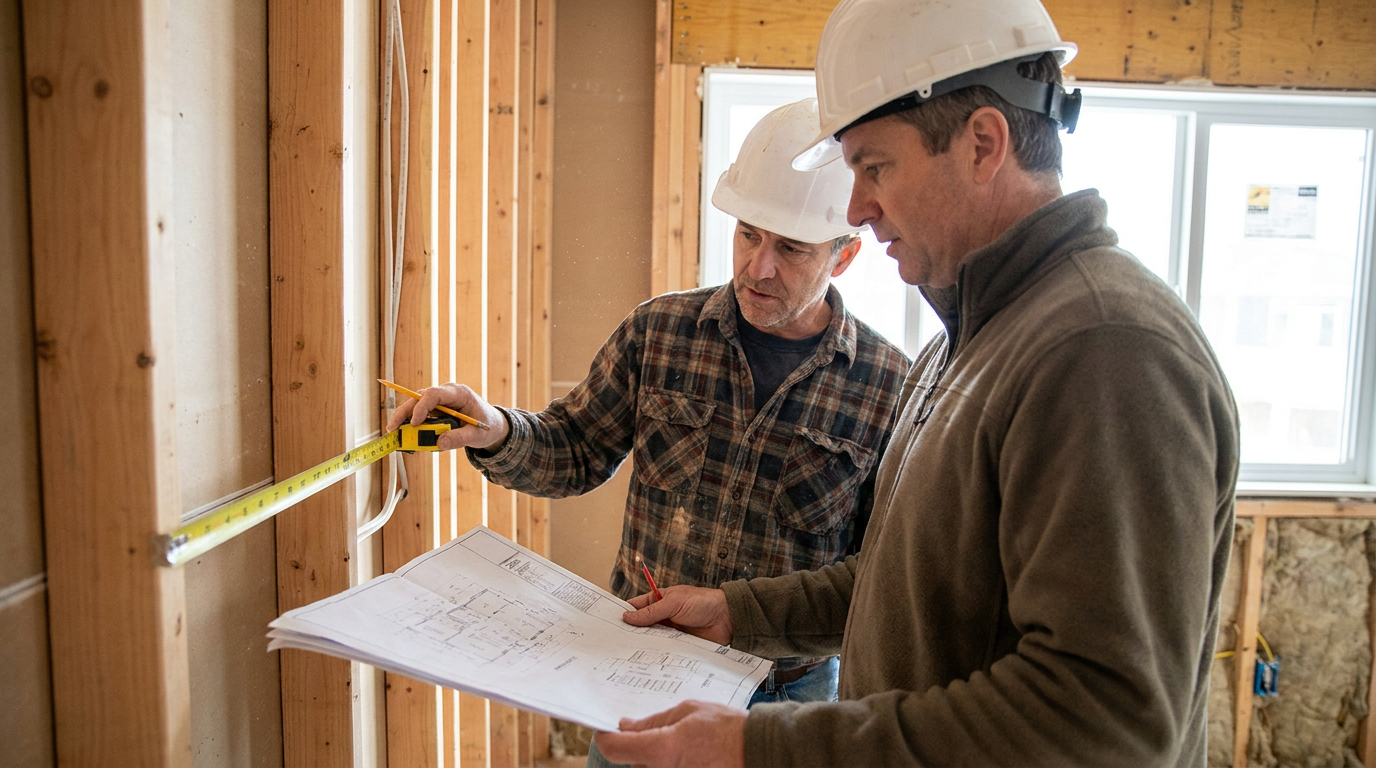
In construction, quality control is the process of verifying that work and materials meet the agreed requirements. Those requirements come from several places, including drawings, specifications, building codes, manufacturer instructions, engineering details, contract documents, and approved submittals. Quality control is about checking actual field conditions against those requirements. It is not a vague idea of doing good work. It is specific, measurable, and tied to documented standards.
It helps to separate quality control from quality assurance. Quality assurance is the system that is meant to prevent defects, such as training, procedures, document control, planning, and approved workflows. Quality control is the verification side, including inspections, tests, measurements, and deficiency tracking. In other words, quality assurance sets up the process, and quality control checks whether the process is producing acceptable results.
Construction management needs both. A team may have strong procedures on paper, but if no one verifies dimensions, material types, moisture conditions, or installation details in the field, defects can still slip through. On the other hand, a team that only reacts with inspections at the end will spend too much time finding problems after the best moment to fix them has passed. The strongest projects use quality assurance to create order and quality control to confirm results.
ISO 9001 remains the most widely used quality management standard in the world, with more than one million certificates issued across 189 countries. It applies to construction as well as many other industries. ISO 10006 also gives guidance specific to quality management in projects, including the use of project quality plans and project level processes. For most readers, the practical takeaway is simple. Quality should be planned like any other part of the job, not left to chance or personal memory.
Why Quality Control Matters for Cost, Schedule, and Scope
One of the clearest reasons to take quality control seriously is rework. Rework means labor and materials spent correcting something that should have been done properly the first time. Industry reporting has repeatedly pointed to rework as a major cost driver, with estimates reaching up to 20 percent of project cost and up to 30 percent of time on commercial jobs. Other construction sources place rework between 2 percent and 20 percent of total contract value. The exact percentage depends on the project, but the message is consistent. Defects discovered late are costly.
Rework hurts more than the correction itself. It often causes schedule stacking, where one trade has to return after another trade has already started. That creates lost productivity, congestion, damaged finishes, and friction between subcontractors. It also affects procurement, because replacement materials may have lead times that were never in the original schedule. On occupied projects, rework can disrupt operations and strain client relationships.
Quality control also protects scope clarity. When a project is not checked against approved documents, people start making assumptions. Field crews may improvise. Owners may believe one thing was included while the contractor believes another. Small inconsistencies can become change order disputes. Clear verification, signoff points, and photo documentation reduce this confusion because the team can show what was approved, what was installed, and when it was checked.
Budget protection is another direct benefit. Many people see inspections and checklists as extra overhead, but that view misses the larger cost picture. A twenty minute check on framing layout can prevent a week of corrective work later. Verifying waterproofing before tile installation can avoid a full demolition and rebuild. Reviewing a submittal carefully can prevent the wrong product from being delivered and installed. Quality control is not just a technical function. It is a risk reduction and profit protection function.
Why Quality Control Is Also a Safety Issue
Construction quality and construction safety are closely connected. Poorly installed supports, incomplete temporary bracing, incorrect fasteners, missing firestopping, or unsafe sequencing are not just quality defects. They can create direct hazards. This is especially important in high risk scopes such as demolition, abatement, roofing, excavation, and structural work, where a mistake in planning or execution can affect both compliance and worker safety.
Canadian Centre for Occupational Health and Safety guidance emphasizes that workplace inspections are an essential part of a health and safety program. That lines up well with quality control practice in construction. Structured inspections, risk assessments, and pre work planning help teams verify that critical conditions are in place before work proceeds. For demolition and hazardous material work, CCOHS stresses pre work risk assessment, utility locate and de energization, safe work plans, and engineer certified procedures where needed. Those are quality actions as much as they are safety actions.
For homeowners, the same principle applies on a smaller scale. Hiring the right trade, checking licenses where required, confirming code related details, and documenting hidden work before walls are closed can reduce the chance of unsafe conditions being left behind. You do not need a full corporate system to benefit from quality control. You need a disciplined habit of checking the important things at the right time.
Proactive Quality Control Versus Reactive Quality Control
Reactive quality control waits until something looks wrong or fails inspection. Proactive quality control plans checks before work starts, during installation, and before concealment. The difference is significant. Reactive quality control usually costs more because the work is already in place and may already affect downstream trades. Proactive quality control is cheaper because it catches the issue at the earliest practical point.
The strongest construction teams think in terms of hold points and verification milestones. A hold point is a stage where the work does not proceed until a specific check has been completed. For example, insulation should not cover an area until rough in work has been inspected. Concrete should not be poured until formwork, reinforcement, embeds, and dimensions have been verified. Waterproofing should be checked before finishes go over it. These are practical examples of controlling quality by sequencing decisions around verification.
This approach also helps communication. If everyone knows when checks will happen, there is less guesswork in the field. Crews can prepare properly, supervisors can schedule inspections, and owners can understand why some tasks need signoff before the project moves on. It creates order in an industry that is often pressured by time and changing site conditions.
Practical Quality Control Methods for DIY Homeowners
Homeowners do not need to copy the full QA/QC system of a large commercial contractor, but they should borrow the same principles. The first is to define scope clearly before work begins. That means knowing what is being built, which materials are expected, who is responsible for permits, what the finish level is, and how changes will be handled. Many quality problems begin long before construction starts because expectations were never written down clearly.
The second practical method is material verification. When products arrive, compare them to the quote, contract, or approved selection sheet. Check model numbers, dimensions, finish types, and quantities. Many defects on small projects are not installation problems at all. They start with the wrong item being delivered, accepted, and installed without anyone noticing until much later.
The third method is basic measurement discipline. Measuring twice is still one of the most useful quality habits in construction. Check layouts before cuts are made and before assemblies are fixed in place. On home projects, this is especially important for framing openings, cabinet runs, tile layouts, stair dimensions, and plumbing fixture locations. A small measurement error in rough work can become a visible problem at the finish stage.
Another strong homeowner practice is photographing hidden work before it is covered. Take clear photos of framing, insulation, wiring, plumbing, and backing locations. These photos help with future repairs, warranty questions, and simple peace of mind. They also create a record of what was actually in the wall or ceiling before drywall or finishes went on. If there is a concern later, that record can save time and guesswork.
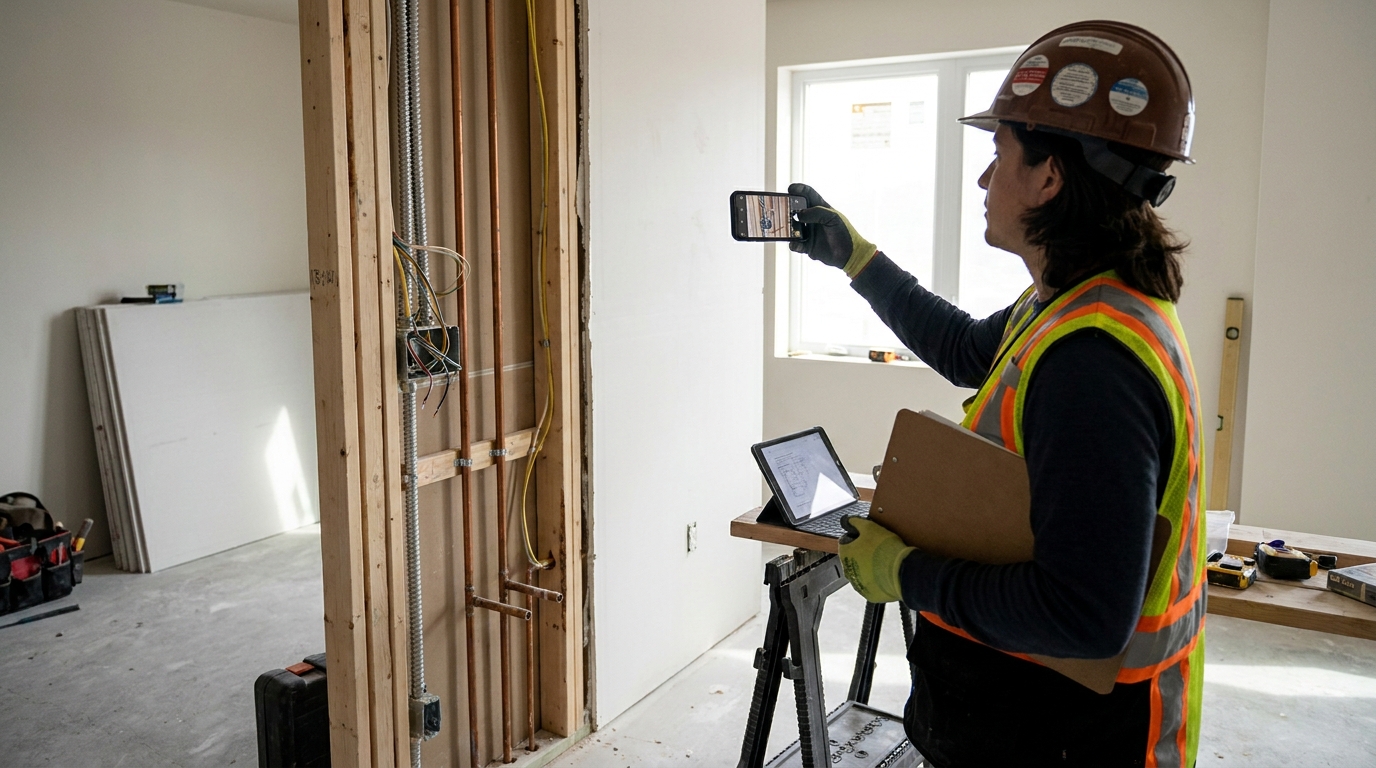
Homeowners should also schedule independent inspections at major milestones when the project scope justifies it. That might include foundation work, framing, roofing, waterproofing, or final mechanical rough in. Municipal inspections matter, but they are not always a substitute for a quality review focused on your specific project details. A private inspector, engineer, or experienced consultant can sometimes catch issues that a general code inspection does not cover in depth.
Finally, keep documentation organized. Save plans, permits, invoices, product data sheets, warranty information, and dated site photos in one folder. If there is a dispute later, good records are often the difference between a manageable conversation and a drawn out conflict. Quality control is not only about looking at the work. It is also about being able to prove what the work was supposed to be and what was actually done.
A Simple Homeowner Quality Control Workflow
For a typical renovation, a homeowner can follow a basic sequence that keeps quality manageable without becoming overwhelming. Start by confirming the scope, material selections, and permit requirements. Before each phase begins, review what success looks like and what must be checked before the next phase starts. During the job, walk the site regularly, ask questions early, and document hidden work. Before making final payment, verify that deficiencies are corrected, manuals and warranties are received, and any required inspections are closed out.
This process is simple, but it addresses the most common causes of trouble on small projects. It reduces misunderstandings, creates natural pause points for verification, and gives the homeowner a more active role in protecting the work. Good trades generally appreciate clarity, because it reduces surprises and helps everyone finish the project with fewer callbacks.
Practical Quality Control Methods for Construction Professionals
Professional construction teams need a more structured system because they are dealing with more complexity, more contractual responsibility, and more coordination between trades. One of the first quality control tools is a project specific quality plan. This should define critical standards, documentation requirements, inspection points, testing responsibilities, acceptance criteria, and who has authority to sign off each stage. ISO 10006 supports this project based approach, which is well suited to construction management.
Submittal review is another major control point. Before materials and systems are ordered, the team should verify that proposed products meet the design intent, specifications, code requirements, and coordination needs. This includes dimensions, performance ratings, accessories, lead times, and compatibility with adjacent systems. Weak submittal review creates downstream problems that are much harder to fix in the field.
Mockups and first article inspections are especially effective on finishes, façade work, specialty assemblies, and repeated details. A mockup lets the team review workmanship, tolerances, sequencing, and appearance before full production starts. A first article inspection does something similar by checking the first completed example of a repeated task. This is often cheaper and faster than allowing an entire floor or elevation to be built incorrectly and then corrected later.
Trade coordination meetings remain one of the most practical quality tools on any job. Construction is fragmented by nature. Mechanical, electrical, plumbing, structural, envelope, and finish work often intersect in tight spaces and fast moving sequences. A coordination meeting allows foremen and supervisors to identify conflicts before they become field improvisation. Better coordination usually means better quality because crews are working from clearer assumptions and more realistic constraints.

Hold points, checklists, and field inspections should be tied to the work plan, not treated as separate administrative tasks. If a pour is scheduled, the pre pour checklist needs to be completed before the truck arrives. If envelope work is underway, flashing and membrane details should be checked while they are still visible. If drywall closure is planned, all hidden systems and backing should be verified first. This keeps quality control aligned with production instead of chasing it after the fact.
Testing also plays a role where required. Depending on the project, that may include concrete testing, compaction testing, air or water infiltration testing, weld inspection, firestopping inspection, or commissioning activities for building systems. Testing is not a replacement for supervision. It is one part of verification. A failed test often signals a broader process issue that needs root cause review, not just a local patch.
The Role of Documentation and Document Control
Many quality problems are really document control problems. Teams build from outdated drawings, miss revised details, install based on verbal instructions, or fail to capture approved changes. In a busy site environment, even a good crew can make the wrong decision if the current information is not easy to access. Strong document control reduces this risk by making sure the field is working from the latest approved documents.
That includes drawings, specifications, requests for information, site instructions, change directives, submittals, shop drawings, testing reports, and inspection records. A common data environment or organized digital file system can make a major difference here. Recent industry reporting has highlighted greater use of AI assisted document search, common data environments, and preconstruction analytics to reduce errors and rework. The technology is useful, but only if the team uses it consistently and keeps records current.
Field photos are another underused part of quality documentation. A well dated photo log can show conditions before concealment, progress by area, delivered materials, mockups, deficiencies, and corrected work. This is valuable during closeout, warranty work, and dispute resolution. In many cases, a simple image taken at the right moment is more useful than a vague memory months later.
Common Misconceptions About Quality Control
One common misconception is that quality control is only for large commercial projects. In reality, the basic principles apply to every construction job. A bathroom renovation, deck build, or garage addition can suffer from the same types of errors seen on larger projects. The scale changes, but the need for verification does not. Homeowners and small contractors benefit from simple checklists, milestone inspections, and disciplined documentation.
Another misconception is that inspections alone equal quality. Inspections are important, but they are only one part of a broader system. If planning is poor, materials are wrong, sequencing is rushed, and documents are unclear, inspections will end up finding symptoms instead of preventing causes. Real quality control starts earlier with preconstruction planning, constructability review, and clear acceptance standards.
A third misconception is that a final walkthrough can catch everything. It cannot. Many of the most serious defects are hidden behind finishes or buried in system performance issues that only show up later. Waterproofing, structural connections, rough in coordination, and substrate preparation all need to be checked before the next layer covers them. Waiting until the end is one of the most expensive habits in construction management.
There is also a persistent belief that quality control only adds cost. The better way to look at it is that quality control reallocates effort toward prevention instead of correction. It costs less to inspect a layout than to relocate installed work. It costs less to review a submittal than to replace a noncompliant product after installation. It costs less to document hidden conditions than to open finished surfaces later just to see what is there.
Best Practices That Improve Construction Quality Over Time
Quality control works best when it is tied to continuous improvement. Each project creates lessons about recurring mistakes, coordination gaps, procurement issues, and unclear details. Teams that capture those lessons and feed them into future planning usually see better results over time. This is where quality control starts to move beyond defect finding and becomes part of organizational learning.
Preconstruction is a strong place to start. Constructability reviews, scope clarification, lead time analysis, and coordination planning can remove many quality risks before anyone arrives on site. This matters even more in a market affected by inflation and supply chain volatility, where substitutions, delays, and procurement pressure can create more opportunity for mistakes. Better preconstruction usually means fewer rushed decisions later.
Lean construction ideas can also help. When workflows are planned carefully and handoffs between trades are clear, there is less waste and less opportunity for damage or confusion. Quality improves when crews are not constantly working around unfinished tasks, missing materials, or unplanned congestion. In that sense, quality control is tied directly to production stability.
Commissioning is another related concept, especially for larger or more technical buildings. Commissioning verifies that systems such as HVAC, controls, electrical, and life safety perform as intended. It extends quality thinking into operational performance, not just visual finish. A building can look complete and still fail to function properly if system level verification is weak.
A Practical Quality Control Checklist Mindset
Not every project needs the same checklist, but every project needs a checklist mindset. The key is to identify what must be true before the next step happens. That might include dimensions, moisture conditions, slope, fastening patterns, approved materials, equipment clearances, or protection of completed work. Checklists are effective because they reduce reliance on memory, especially in repetitive or fast moving work.
For homeowners, the checklist might be short and focused on major milestones. For professionals, it may be trade specific and linked to hold points, testing requirements, and closeout items. What matters is that the checklist reflects real field conditions and is actually used. A perfect checklist sitting in a binder does nothing. A simple checklist used consistently will prevent a surprising number of errors.
It is also important to make checklists practical and readable. Crews should understand what is being checked and why. Supervisors should know who signs off each item and what happens if it fails. If a deficiency is found, the team should correct it, document the correction, and verify that the problem does not repeat elsewhere. That last step is critical. One defect is often a warning sign of a broader process issue.
How Digital Tools Are Changing Quality Control
Construction quality control is becoming more digital, and that can be a real advantage when used properly. Tablets, field apps, cloud based document systems, and digital punch lists allow teams to record observations quickly and share them with the right people. Common data environments reduce the risk of building from outdated information. AI assisted document search can help teams find relevant details faster, especially on large projects with heavy drawing and specification sets.
Digital tools also improve accountability. A deficiency can be tagged to a location, assigned to a person, linked to a photo, and tracked to closure. That is more reliable than scattered emails or handwritten notes that get lost. Digital records also support trend analysis. If one trade has repeated quality issues in the same category, management can respond with better training, clearer mockups, or tighter supervision.
Still, technology does not replace judgment. A tablet cannot tell whether a sequencing decision makes sense in the field, and software cannot substitute for trade knowledge. The best results come when digital tools support experienced people who understand how buildings go together. Quality control remains a hands on management function, even when the records are stored in the cloud.
What Successful Quality Control Looks Like at Project Closeout
At closeout, good quality control produces a project that is easier to hand over, easier to operate, and less likely to generate disputes. Deficiencies are smaller and fewer because they were addressed along the way. Documentation is organized. Testing and inspection records are available. Warranties, manuals, and as built information are complete. The owner receives a building or renovation that matches expectations more closely because expectations were checked throughout the job.
Punch lists still matter, but they should be the last layer of quality control, not the main system. A punch list is best used for minor incomplete items, finish corrections, and final touch ups. If the project relies on the punch list to discover major concealed defects, the quality process has already failed upstream. Strong construction management treats closeout as confirmation, not a rescue mission.
Final Thoughts
The importance of quality control in construction management comes down to one practical truth. It is far easier to prevent defects than to repair them after the work is covered, occupied, or paid for. That applies to homeowners managing a renovation and to professionals delivering complex projects. The tools may differ in scale, but the principles stay the same: define the standard clearly, verify the work at the right time, document what was checked, and correct issues before they spread.
Quality control protects cost, schedule, scope, safety, and trust. It reduces rework, improves coordination, and creates a more predictable path to project success. In a construction environment shaped by labor pressure, supply chain volatility, and growing technical complexity, that kind of discipline matters more than ever. If there is one habit worth strengthening on any project, it is the habit of checking the work before the next step hides the truth.
For homeowners, that may mean clearer scope notes, better records, and milestone inspections. For professionals, it means stronger preconstruction, better submittal review, field verification, hold points, testing, and digital tracking. Either way, quality control is not an optional layer added at the end. It is part of how well built projects are actually delivered.



No Comment! Be the first one.