



Interior design has always lived at the intersection of imagination and making. A room begins as an idea, perhaps a sketch, perhaps a feeling, and gradually becomes a lived environment through materials, proportions, craftsmanship, and care. Today, that process is undergoing a profound evolution. Digital fabrication is changing how designers conceive, test, customize, and produce interiors, allowing a digital model to move directly toward a physical object with greater precision and far less manual translation than traditional workflows often required.
Table Of Content
- What Is Digital Fabrication in Interior Design?
- Why Interior Designers Are Embracing It Now
- From Concept to Prototype to Finished Piece
- Where Digital Fabrication Shows Its Greatest Strength
- Common Interior Applications
- The New Luxury of Personalization
- Accessibility Beyond the Large Studio
- Technology and Craftsmanship Are Not Opposites
- The Sustainability Question, Handled Honestly
- How Digital Workflows Improve Collaboration
- Misconceptions Worth Leaving Behind
- Key Misconceptions and the Reality Behind Them
- What This Means for the Future of Home
- Bridging Innovation and Human Experience
What makes this shift especially compelling is not simply the machinery itself. It is the way technology is opening new creative territory while also bringing custom design within closer reach of smaller studios, local fabricators, and homeowners. Tools such as CNC routers, laser cutters, robotic fabrication systems, and 3D printers are enabling interior designers to produce forms and details that would once have demanded significant time, high costs, or highly specialized manufacturing infrastructure. In many cases, they also make it easier to refine a design, prototype it quickly, and adapt it to the realities of site conditions.
There is a certain elegance in this new relationship between code and craft. Digital fabrication does not need to erase the hand of the maker. In its best form, it supports it. Precision can be delegated to the machine where repetition or complexity demands it, while material judgment, finishing, assembly, and aesthetic sensibility remain deeply human. This balance is why digital fabrication has become one of the most influential forces in design innovation today, particularly in interiors, where every project is shaped by both personal taste and spatial constraints.
For designers, this means a richer design language and stronger continuity from concept to execution. For homeowners, it means custom solutions that feel more attainable and more personal. For the broader industry, especially across North America, it suggests a future where local production, small batch customization, and digitally informed craftsmanship can coexist beautifully. To understand its impact, it helps to begin with the fundamentals of what digital fabrication actually is and why it matters so much to the spaces we inhabit.
What Is Digital Fabrication in Interior Design?
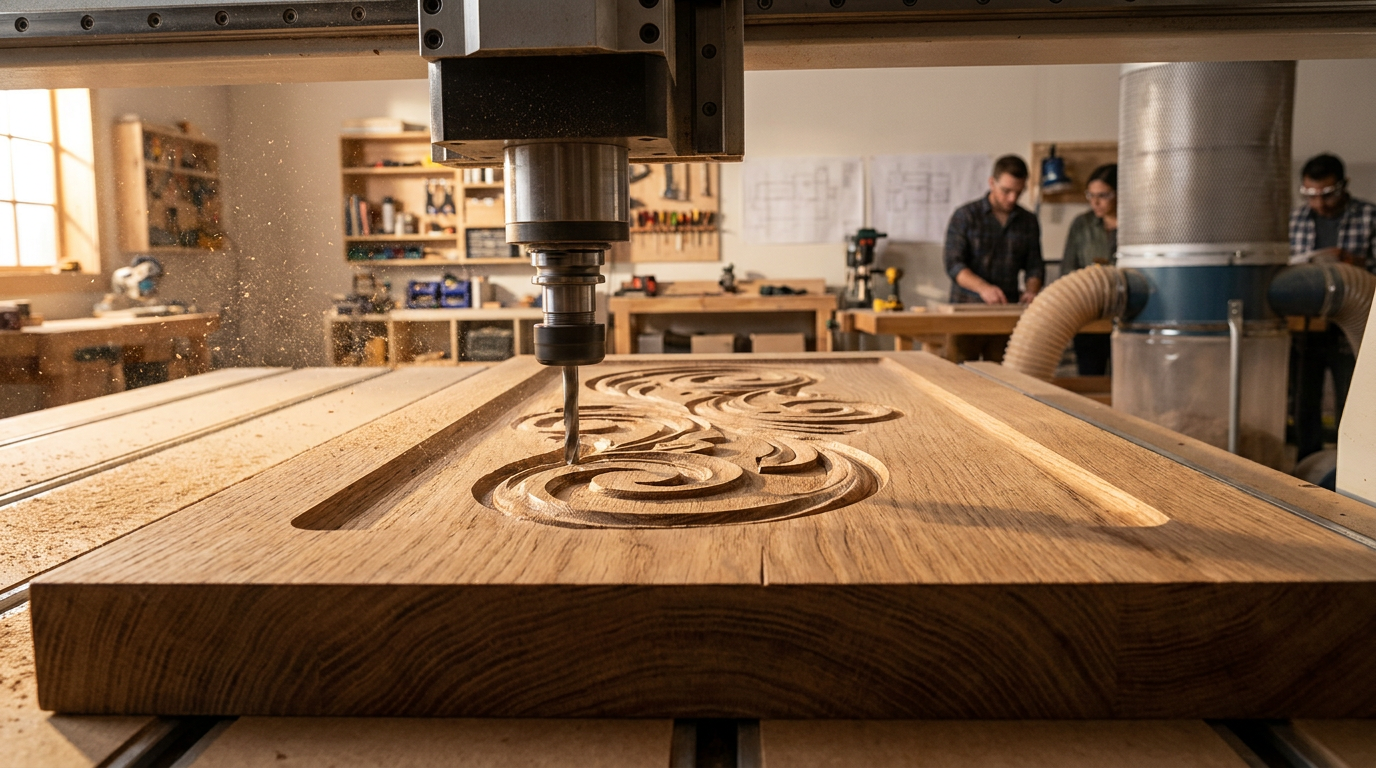
At its core, digital fabrication is a workflow in which digital data directly drives manufacturing equipment. A designer develops a concept in CAD software or another digital modeling environment, and that file becomes the basis for production. Instead of redrawing, manually templating, or translating details several times across different stages, the digital model can inform cutting paths, tool movements, dimensions, and assembly logic more directly. This reduces friction between idea and outcome. In the context of interior design, that workflow can apply to an astonishing range of elements. Bespoke cabinetry, reception desks, stair systems, room dividers, acoustic wall treatments, lighting components, decorative screens, furniture, hardware prototypes, and even highly sculptural statement pieces can be developed using digital fabrication methods. The result is not merely efficient production. It is the possibility of creating pieces that respond exactly to a room, a client, or a design narrative.
Research in architecture and construction has consistently shown that digital fabrication expands form freedom. In simple terms, it makes complex geometries more feasible. Curved surfaces, intricate patterns, layered components, and nonstandard assemblies become far more practical when software and fabrication equipment are aligned. This is particularly meaningful in interiors, where dimensions are rarely abstract. Walls are imperfect. Existing structures are idiosyncratic. Clients ask for highly specific features. Digital tools make this complexity easier to manage.
It is also important to clarify a common misunderstanding. Digital fabrication is not the same thing as 3D printing alone. 3D printing is one branch of a much broader ecosystem. CNC milling can shape wood, composites, and certain metals with exceptional precision. Laser cutting can produce finely patterned screens, templates, and sheet-based components. Robotic systems can assist in larger scale or repetitive operations. Together, these processes form a versatile language of making that can be tailored to the needs of an interior project.
Why Interior Designers Are Embracing It Now
Interior design has always been a deeply customized profession, even when budgets or schedules pushed projects toward standard products. Every site differs. Every client imagines home differently. Every brand, in the case of hospitality or commercial space, seeks a distinct atmosphere. The growing appeal of digital fabrication lies in its ability to support this desire for individuality without forcing every custom piece into an entirely handcrafted and time intensive process.
One of the strongest reasons designers are embracing digital fabrication is the rise of customization at scale. Industry examples from Autodesk have highlighted furniture and interior design as especially strong use cases for mass customization, where variation does not require starting from zero each time. A stair, railing, partition, shelving system, or millwork package can be parameterized and adjusted for different dimensions or conditions while remaining production ready. This is a subtle but important shift. Personalization no longer has to undermine manufacturability.
That possibility is changing the economics of creativity. Traditional custom work often required expensive tooling, repeated manual setup, or a level of labor that made unique pieces available only to clients with generous budgets. Digital fabrication can reduce some of those barriers in low volume production by minimizing the need for separate molds, jigs, or duplicated drafting efforts. It does not make every project inexpensive, but it often makes bespoke work more practical than it once was.
The timing also reflects broader cultural changes. Clients increasingly want homes that feel expressive rather than generic. They are looking for millwork that fits an awkward niche perfectly, a dining table dimensioned for the way their family actually lives, or a wall feature that feels uniquely theirs. As personalization becomes a defining force across design industries, digital fabrication offers a refined answer. It creates a path toward custom interiors that feel intentional rather than improvised.
From Concept to Prototype to Finished Piece
One of the most transformative aspects of digital fabrication is how it compresses the journey between design development and physical testing. In a traditional workflow, the distance between drawing and object could be considerable. A designer would sketch or draft a concept, then rely on multiple rounds of interpretation through fabricators, workshops, and installers. With digital fabrication, that process becomes more continuous. A file can move into a prototype quickly, be revised, and return to production with far less delay.
This accelerated iteration is especially valuable in interiors because scale and tactile experience matter so much. A beautiful drawing does not always become a beautiful object. Proportions can feel different in person. Joinery details may need refinement. Surface patterns may read too densely at room scale. A quick prototype, whether produced through 3D printing, laser cutting, or CNC machining, allows designers to test these questions before committing fully to fabrication.
The advantage is not simply speed for its own sake. It is confidence. When a designer can physically assess a component early, the final installation is less likely to suffer from awkward surprises. Homeowners benefit because they can understand a design more concretely before it is built. Fabricators benefit because the digital file carries clearer intent. Contractors benefit because coordination becomes more precise. In this way, digital fabrication strengthens the continuity of the entire design process.
Recent research on digital fabrication emphasizes the importance of shared data, interoperability, and digital threads that connect design intent with fabrication logic. That phrase may sound technical, yet its effect is easy to understand. Instead of information fragmenting across sketches, shop drawings, verbal clarifications, and site improvisation, the project can retain greater consistency from one stage to the next. In the layered world of interior design, where architects, designers, consultants, fabricators, and installers all interact, that continuity is invaluable.
Where Digital Fabrication Shows Its Greatest Strength
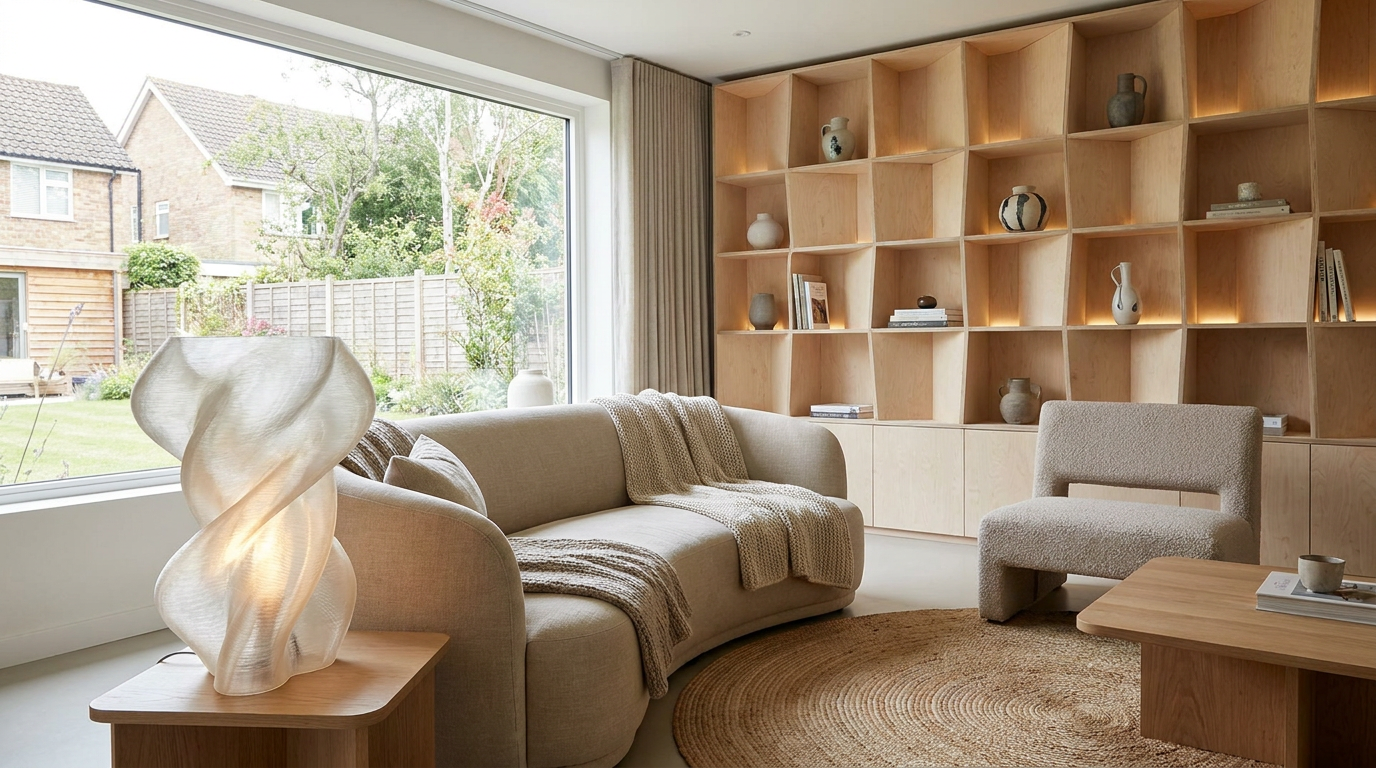
Some categories within interior design are particularly well suited to digital fabrication because they involve repetition, precise fitting, geometric complexity, or a desire for variation. Custom millwork is among the most obvious examples. Built in shelving, wardrobes, kitchen components, media units, and integrated storage systems all benefit from digital precision, particularly in homes where dimensions deviate from standard modules. CNC fabrication can help these elements fit more accurately while supporting a cleaner production workflow.
Decorative wall panels and partitions are another powerful application. Intricate patterns that might be prohibitively time consuming by hand can be laser cut or CNC milled with extraordinary control. Yet the result need not feel cold or industrial. Pattern, shadow, and texture remain deeply atmospheric. A digitally fabricated screen can be as poetic as a hand carved one, especially when material selection and finishing are thoughtfully handled.
Furniture design is also being redefined by this shift. According to Autodesk, personalization has become a defining force in furniture, with CAD and CAM workflows helping designers keep custom pieces production ready. This matters because furniture is one of the most intimate expressions of living. A bench that follows the curve of a bay window, a dining table adapted to a narrow urban footprint, or a sideboard designed around a client’s collection can now be produced with greater agility and accuracy.
Lighting presents yet another exciting frontier. With additive manufacturing and hybrid fabrication methods, designers can explore shades, diffusers, and sculptural forms that balance technical performance with visual delicacy. Even if the final piece includes traditional handcrafted finishing, digital fabrication opens the first door. It allows form to become more experimental while remaining achievable.
Common Interior Applications
- Custom cabinetry and built in storage tailored to nonstandard spaces
- Parametric wall panels, screens, and acoustic treatments
- Bespoke furniture produced in short runs or as one off commissions
- Stair components, railings, and partition systems requiring repeated variation
- Lighting fixtures and decorative elements with sculptural geometry
- Prototypes for hardware, fixtures, and material assemblies before final production
The New Luxury of Personalization
Luxury in interiors is increasingly defined not only by expensive materials, but by relevance, fit, and individuality. A truly considered space feels as though it could belong to no one else. Digital fabrication supports this sensibility beautifully because it gives designers the technical means to respond to highly specific needs without losing control of quality or detail. The room becomes more personal, and that intimacy is often the most luxurious element of all.
Mass customization may sound contradictory at first, yet it captures one of the most meaningful transformations in contemporary design. Rather than producing one standard item for everyone, designers can create flexible systems that adapt gracefully. A shelving concept can change height, width, rhythm, and finish according to each project. A partition can alter its pattern density based on privacy needs or light conditions. The language remains cohesive, but the outcome becomes singular.
For homeowners, this represents a quiet democratization of custom design. Not every client is commissioning a fully bespoke estate. Many are simply trying to make ordinary rooms work better and feel more beautiful. A narrow alcove might become a precisely fitted home office. An entry wall could become a storage and display composition tailored to daily rituals. A child’s room may gain furniture scaled to the family’s exact needs. Digital fabrication helps transform these practical requests into elegant, feasible solutions.
In this sense, technology becomes a bridge rather than a barrier. It translates desire into precision. It allows an emotional brief, more warmth, more order, more personality, more fluidity, to become a built response. That is why digital fabrication resonates so strongly with interior design. The field has always been about making life visible in space, and these tools expand how delicately that can be done.
Accessibility Beyond the Large Studio
Another significant reason digital fabrication matters today is accessibility. There was a time when advanced fabrication seemed reserved for major manufacturers, research institutions, or high budget architectural experiments. That perception is now outdated. As hardware and software become more affordable and easier to use, smaller design firms, local workshops, educational labs, and makerspaces are participating in the same broader ecosystem of custom creation.
This shift is especially important for homeowners and emerging designers. A client no longer needs access to industrial scale production to create a one of a kind room divider, shelving unit, lamp, or table detail. In many cities, local fabrication studios can work directly from digital files or collaborate with designers to refine them. The result is a more localized and responsive model of production, one that feels more intimate than ordering anonymous catalog pieces from distant supply chains.
For North America, and particularly Canada, this trend aligns with a broader manufacturing and innovation landscape that continues to support advanced production capacity. While national economic data does not isolate interior fabrication as a category, it does affirm that these technologies belong to a substantial and evolving industrial ecosystem. The real design story lies in how that ecosystem becomes useful at a smaller, more human scale. A regional fabricator, a neighborhood maker lab, or a custom millwork shop can become a creative partner rather than merely a supplier.
Accessibility also has a cultural effect. It encourages experimentation. Young designers can prototype ideas with less risk. Homeowners can engage more actively in the design process. Craftspeople can integrate digital tools into their own practice without abandoning their identity. This broadening of participation is one of the most hopeful aspects of digital fabrication. It suggests that innovation need not be exclusive to be sophisticated.
Technology and Craftsmanship Are Not Opposites
Perhaps the most persistent misconception surrounding digital fabrication is that it replaces craftsmanship. In reality, the most compelling interiors produced through digital means often depend on handwork at crucial stages. Machines can cut, print, and shape with great exactitude, but they do not select timber for its character, sand a surface to the right tactile softness, adjust a finish to suit the light in a room, or make the nuanced aesthetic judgments that transform a component into a meaningful object.
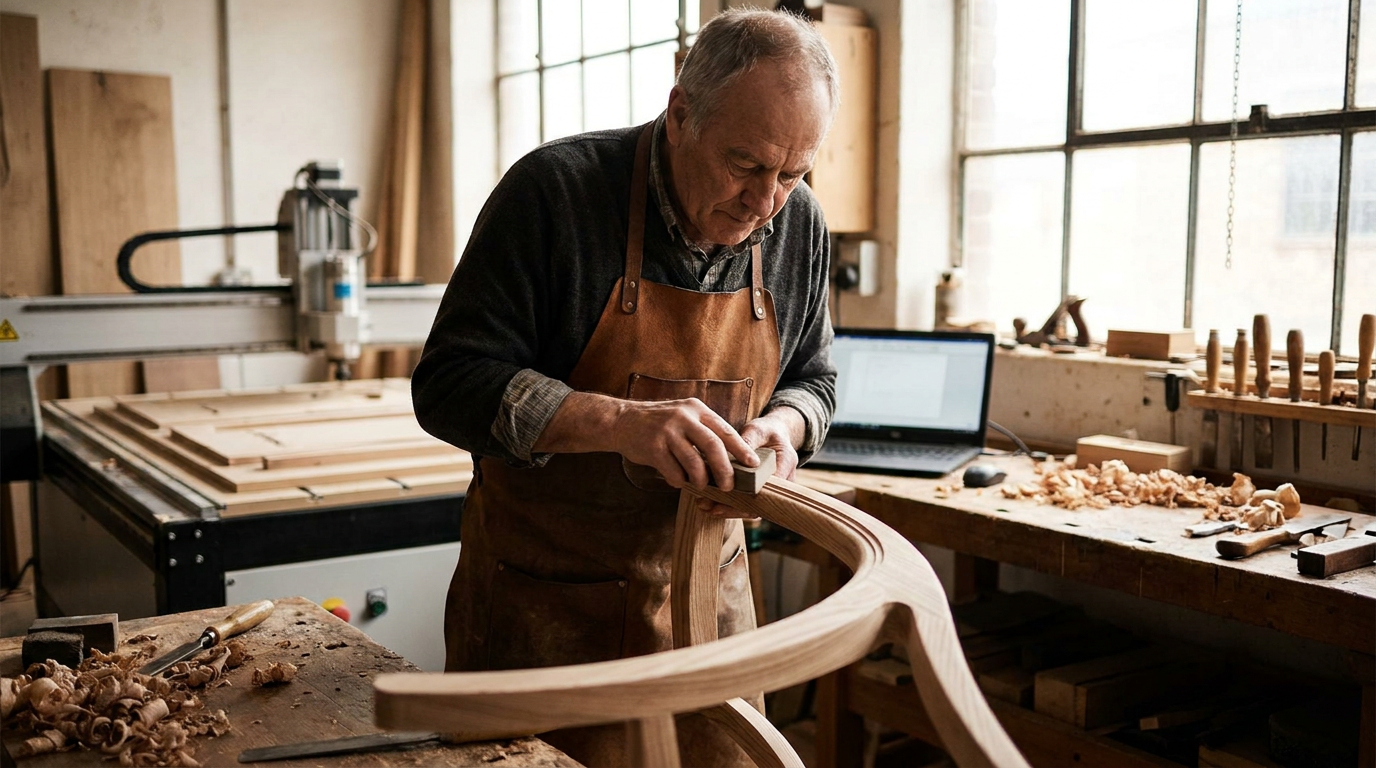
This is why the idea of post digital craftsmanship has become so relevant. In this approach, digital precision handles repetitive, difficult, or highly geometric tasks, while human expertise remains central to finishing, assembly, adaptation, and design refinement. It is less a replacement than a redistribution of labor toward each method’s strengths. The machine offers consistency. The artisan offers sensitivity.
There is something deeply contemporary about this partnership. It respects tradition without freezing it in nostalgia. It welcomes innovation without surrendering to sterility. A CNC milled wood panel can still be hand stained and waxed to reveal warmth. A laser cut metal screen can still be patinated or assembled with care. A 3D printed mold can support the creation of a handcrafted cast object. These layered processes often yield results that feel richer than either method alone.
Digital fabrication is most powerful not when it imitates the hand, but when it works in harmony with it, allowing precision and artistry to meet in the same object.
For interior designers, this balance is essential. Rooms must feel lived, not merely engineered. They must hold atmosphere, texture, and human presence. The finest digitally fabricated interiors do exactly that. They bring technological intelligence into service of emotional and sensory experience.
The Sustainability Question, Handled Honestly
Digital fabrication is often associated with efficiency, and in many cases that association is justified. More accurate cutting paths can reduce some forms of waste. Rapid prototyping can prevent costly errors later in production. Low volume manufacturing can avoid the need for expensive tooling that is only useful for a single run. Localized production may reduce dependence on long and complex supply chains. All of these are meaningful advantages.
Still, a nuanced conversation is necessary. Digital fabrication is not automatically greener, cheaper, or faster in every situation. Environmental and economic outcomes depend on material choice, scale, machine energy use, post processing requirements, transportation, and whether the project genuinely suits a digital workflow. Research has cautioned that early stage decisions matter greatly. A poorly considered digitally fabricated object can still be wasteful.
For interior designers, this means sustainability begins at the design stage, not the machine stage. Choosing durable materials, simplifying unnecessary complexity, designing for repair or disassembly, and coordinating dimensions carefully all influence environmental performance. In many cases, the most responsible use of digital fabrication is not to produce more things, but to produce better things, with greater fit, longer life, and less redundancy.
There is also an emotional sustainability to consider. Interiors that are deeply personal and well made are often kept longer, valued more, and discarded less readily than disposable standardized items. If digital fabrication helps create pieces that clients genuinely cherish, it contributes to a slower and more intentional domestic culture. That may be one of its most understated forms of impact.
How Digital Workflows Improve Collaboration
Interior design rarely unfolds in isolation. Even the most intimate residential project requires coordination between multiple actors, including designers, architects, engineers, fabricators, contractors, installers, and clients. Misalignment between these participants can lead to delays, budget strain, or disappointing results. One of the operational strengths of digital fabrication lies in how it can improve collaboration through shared digital information.
BIM, CAD, CAM, and other interconnected tools help maintain continuity between what is designed and what is fabricated. If dimensions shift, design files can be updated with greater clarity. If a custom fixture must coordinate with electrical conditions, that logic can be embedded earlier in the process. If a millwork package needs site specific adjustments, digital workflows can reduce the need to reinvent every drawing from scratch. This continuity can be especially valuable in renovations, where existing conditions often complicate otherwise straightforward solutions.
Research increasingly points to co design, data consistency, and shared task structures as important aspects of advanced fabrication workflows. For general audiences, this translates into a simpler truth. Better information leads to better making. When designers and fabricators work from aligned digital models, the finished interior is more likely to reflect the original intention. Precision becomes a means of preserving beauty.
Cloud based collaboration, along with emerging tools such as AR and VR, is likely to deepen this effect further. Clients may soon review custom elements in immersive visual form before they are produced. Fabricators may identify conflicts earlier. Designers may refine details in real time with input from multiple stakeholders. The process becomes more fluid, and ideally more graceful.
Misconceptions Worth Leaving Behind
As with any rapidly evolving field, digital fabrication attracts assumptions that can obscure its real value. Some people still imagine it belongs only to large factories or elite projects. Others assume it is synonymous with futuristic plastic objects or that it eliminates the need for skilled labor. These ideas miss the quiet sophistication of what is actually happening in interior design.
The reality is much more balanced and much more interesting. Digital fabrication can support both modest and ambitious projects. It can produce warm, tactile, highly material outcomes rather than cold uniformity. It can coexist with artisanal methods instead of displacing them. And while it may save time or cost in some scenarios, its deepest contribution is often not economy alone, but possibility. It allows spaces to be more tailored, more expressive, and more intelligently made.
Key Misconceptions and the Reality Behind Them
- It is only for big factories. Many local fabricators, makerspaces, and small studios now use digital tools effectively.
- It replaces craftsmanship. In the best projects, digital precision and hand finishing are complementary.
- It only means 3D printing. The field also includes CNC milling, laser cutting, robotic fabrication, and hybrid methods.
- It is always cheaper. Cost effectiveness depends on project type, quantity, materials, and workflow choices.
- It does not belong in interiors. In fact, interiors are one of its strongest applications because they demand customization and precision.
What This Means for the Future of Home
If the last era of interiors was shaped by mass retail and standardized choices, the next may be defined by a gentler form of personalization. Not extravagance for its own sake, but thoughtful adaptation. Rooms that fit more beautifully. Furniture that answers real patterns of life. Architectural details that reflect both context and character. Digital fabrication is helping make that future possible because it narrows the distance between imagination and execution.
It is also changing the visual identity of interiors. As computational and parametric design become more common, designers can explore pattern, rhythm, curvature, and modular logic in ways that feel both contemporary and deeply intentional. Yet this does not mean homes must become experimental galleries. The most enduring use of digital fabrication may lie in subtle refinement, a built in niche that fits exactly, a custom panel that softens sound while enriching texture, a lighting element that feels sculptural without overwhelming a room.
For homeowners, the future may involve a more collaborative role in the making of their spaces. Rather than choosing only from finished products, they may participate in configuring dimensions, finishes, and forms. Rather than accepting the compromises of standardized furniture, they may commission pieces adapted to their rooms and routines. In this sense, digital fabrication makes creativity more accessible not because it simplifies taste, but because it expands the means of expressing it.
For designers, the opportunity is equally profound. Mastery will no longer mean choosing between tradition and technology. It will mean understanding how to orchestrate both. The designer of the future may need fluency not only in aesthetics and planning, but also in digital workflows, material behavior, fabrication logic, and collaboration across disciplines. That is not a loss of artistry. It is an expansion of it.
Bridging Innovation and Human Experience
The most beautiful interiors are never about novelty alone. They are about how a space supports life, frames memory, and creates atmosphere. Digital fabrication matters not because it is advanced, but because it can serve those human goals with greater intelligence and nuance. It allows rooms to become more precise without becoming rigid, more expressive without becoming impractical, and more personalized without becoming inaccessible.
There is a quiet poetry in watching a digital file become a physical object that feels warm to the touch, beautifully proportioned, and perfectly at home in its setting. That transformation captures the essence of contemporary design. We live in a time when the virtual and the material are no longer separate worlds. In interiors, they are increasingly part of one continuous creative process.
As this field continues to evolve, the most exciting possibilities will likely emerge not from machines alone, but from the relationships they enable. Relationships between designers and fabricators, between homeowners and custom solutions, between precision and atmosphere, between innovation and heritage. Digital fabrication, at its finest, is not a departure from the soul of interior design. It is a sophisticated new instrument for expressing it.
That is why its impact feels so significant. It expands design freedom, improves coordination, supports localized production, and opens the door to richer customization. Yet beyond all these operational advantages, it offers something more enduring. It helps create interiors that feel more truly made for the people who inhabit them. In the end, that is the most transformative kind of innovation any space can hold.

No Comment! Be the first one.