



10 Easy Ways to Reduce Noise in Your Home for a Quieter, More Peaceful Living Space
There is something deeply comforting about walking into a home that feels calm. The air seems softer, your shoulders relax, and even everyday routines like reading on the sofa, helping with homework, or getting ready for bed feel more manageable. When a space is full of traffic sounds, neighbor noise, humming appliances, echoing rooms, and constant interruptions, that sense of ease can be surprisingly hard to hold onto. A quieter home does not just sound better. It often feels better too.
Table Of Content
- Why home noise feels so draining
- How sound moves through a home
- 1. Start by finding the noisiest weak spots
- 2. Seal gaps around doors with weatherstripping and sweeps
- 3. Caulk and seal around windows and trim
- 4. Use thick curtains for softness, privacy, and a calmer mood
- 5. Add rugs and soft flooring layers to cut echo and impact noise
- 6. Bring in upholstered furniture, pillows, and fabric layers
- 7. Use bookcases and dense furniture against shared or noisy walls
- 8. Quiet the bedroom with a sleep-focused sound routine
- 9. Reduce the noise your home creates from the inside
- 10. Rearrange rooms to match the soundscape you actually have
- What to expect from affordable noise reduction
- A simple tiered plan if you want to start this weekend
- How quiet supports well-being at home
- Final thoughts
That connection between noise and well-being is not only emotional, although the emotional side matters very much. Health authorities including the World Health Organization and Health Canada have noted that environmental noise is associated with sleep disturbance, stress, annoyance, reduced well-being, and, over time, broader health concerns. Nighttime noise is especially important because even sounds that do not fully wake you can still disturb sleep and interrupt the body’s ability to recover. In other words, reducing noise is not simply a style preference or a luxury project. It can be a meaningful comfort upgrade for your daily life.
The good news is that you do not need to gut your walls or invest in expensive construction to notice a difference. Many of the most useful noise-reduction ideas are affordable, approachable, and easy to try over a weekend. Some work by blocking sound, especially around gaps and openings. Others work by absorbing sound, which helps reduce harsh echo and makes a room feel quieter and more settled. The most effective homes usually combine both approaches in small, thoughtful ways.
This guide focuses on ten practical methods that are realistic for homeowners, renters, families, and anyone looking for a calmer place to land at the end of the day. Some are nearly free. Some are modest upgrades that also improve warmth and energy efficiency. All of them support the same goal, which is to create a home that feels softer, more private, more restorative, and easier to enjoy.
Before we begin, it helps to remember one important truth. Noise reduction is not the same as full soundproofing. Thick curtains, rugs, and pillows can absolutely improve comfort, but they will not completely erase loud traffic or a barking dog outside. Stronger results usually come from a layered strategy that includes sealing leaks, adding softer surfaces, and placing denser materials where they can help most. That realistic expectation is actually empowering because it means small changes still matter. You do not need perfection to experience more peace.
A quieter home is not only about reducing what you hear. It is about making more room for rest, conversation, concentration, and the subtle feeling of being able to exhale.
Why home noise feels so draining
Many people assume noise is only a problem when it becomes extremely loud, but that is not how most of us experience it at home. Often it is the repeated, low-level intrusions that wear us down over time. The car stereo outside the bedroom window, footsteps above the ceiling, a constantly buzzing vent, the television in the next room, dogs barking on and off through the evening, or hallway sounds that reach you just as a child is falling asleep can all chip away at comfort. These sounds may seem small in isolation, but the nervous system notices them.
Another reason noise feels so tiring is that some sounds are more emotionally charged than others. Health Canada notes that meaningful sounds, even at relatively low levels, can be enough to disturb people at night. That means a siren in the distance might be less disruptive to you than a phone notification, a neighbor’s late-night conversation, or a door shutting in the hallway. We tend to react more strongly to sounds our brains interpret as important, unpredictable, or intrusive. This is why two homes with similar sound levels can feel very different to live in.
Research around nighttime traffic noise and sleep continues to reinforce the value of a quiet bedroom. Recent studies and reviews have linked nocturnal noise exposure with poorer self-reported sleep quality, changes in blood pressure, and physiological stress responses. While a simple rug will not solve a major traffic issue by itself, creating a quieter sleep environment through several small changes can still make nights feel more restorative. That is especially valuable in busy households where true silence is not always possible.
How sound moves through a home
If you have ever wondered why one room feels much louder than another, it usually comes down to how sound enters and travels. Airborne sound moves through gaps around doors and windows, through thinner walls, and through any opening that lets air pass. Vibrations can also travel through floors, ceilings, framing, and shared walls. Then, once sound enters a room, hard surfaces such as bare floors, glass, painted walls, and empty corners bounce it back around, making voices, television audio, and daily activity feel sharper and more echoey.
That is why the most useful DIY improvements tend to fall into three simple categories. The first is sealing openings, because even small cracks can let in more sound than people expect. The second is softening the room so there is less reflection and reverberation. The third is adding density and thoughtful placement through furnishings and layout. Once you understand those pathways, it becomes much easier to prioritize where to spend your effort.
1. Start by finding the noisiest weak spots
The easiest and most affordable first step is simply paying close attention. Instead of treating your whole home as equally noisy, walk through each room and notice when the sound is worst, where it seems to come from, and what kind of sound it is. Is it traffic through the bedroom window, voices under the apartment door, a clattering kitchen that echoes, or a shared wall that carries television noise from next door. Identifying the source saves time and helps you choose a fix that actually fits the problem.
Try this at different times of day. Morning may reveal a rattling HVAC vent or school traffic outside, while nighttime may make hallway sounds or upstairs footsteps feel more intrusive. If you live with children or pets, certain rooms may become louder during playtime while others need better quiet in the evening. This kind of awareness is simple, but it shapes everything that follows.
You can make this process feel manageable by asking yourself three questions. Where is the noise entering, what surfaces make it bounce around, and when does it matter most. A bedroom may need the strongest overnight attention, while a home office may need a softer, more focused acoustic feel during the day. Once you know your priorities, every small improvement becomes more effective.
2. Seal gaps around doors with weatherstripping and sweeps
One of the most overlooked sources of indoor noise is the ordinary gap around a door. If light, air, or drafts can move through it, sound can too. This is especially common with front doors, apartment entry doors, bedroom doors, and doors opening to garages or hallways. Adding weatherstripping around the frame and a door sweep at the bottom is a low-cost change that can noticeably reduce noise infiltration while also improving comfort in cooler or hotter seasons.
Door sealing is especially helpful for the kinds of sounds that feel personal and disruptive, such as hallway voices, television noise from another room, or kitchen activity reaching a sleeping child. It will not make a hollow-core interior door behave like a studio wall, but it can soften the sharp edges of daily sound and create more privacy. For many homes, that slight improvement is exactly what makes a room feel easier to use and enjoy.

If you rent, look for removable or easy-to-install products that do not require permanent alterations. Adhesive weatherstripping, draft stoppers, and simple sweeps can often be installed with minimal tools. For homeowners, upgrading seals on exterior doors can serve two purposes at once by lowering both unwanted sound and unwanted drafts. It is a small project with a very satisfying return.
3. Caulk and seal around windows and trim
Windows are one of the biggest pathways for outside noise, especially in urban areas, along busy roads, or in neighborhoods with active foot traffic. While replacing windows can be expensive, sealing the edges around existing frames is much more accessible. Small gaps in trim, aging caulk, and air leaks around the sash can all let in more sound than you might expect. A careful sealing job is not glamorous, but it is one of the smartest early upgrades for an affordable noise-reduction plan.
This is also where the overlap between comfort, energy savings, and quiet becomes especially appealing. Draft sealing can make a room feel cozier in winter, more controlled in summer, and less exposed to the outside world year-round. That emotional effect matters. A well-sealed room tends to feel more sheltered, which is often exactly what people are craving when they say they want a calmer home.
If your budget allows a little more, temporary interior window film or tighter-fitting window treatments may help improve the sense of insulation, although their impact on sound varies. The biggest point is not to expect miracles from one decorative layer alone. Stronger window comfort usually comes from a combination of sealing, covering, and reducing reflective surfaces in the room itself.
4. Use thick curtains for softness, privacy, and a calmer mood
Heavy curtains are often one of the first ideas people try, and for good reason. They are attractive, easy to add, and they can make a room feel immediately warmer and quieter. What they do best is reduce reflected sound inside the room while softening some exterior noise, especially higher-frequency sound. They also improve visual privacy, which adds to that cocooning effect many people want in bedrooms and living spaces.
It is important to be realistic about what curtains can do. Even thick, lined panels do not fully soundproof a room. If air and sound are coming through gaps around the window frame, sealing those leaks will usually matter just as much as hanging fabric. Still, curtains are absolutely worthwhile because they contribute to a layered acoustic environment that feels gentler and less exposed.
From a design perspective, this is one of the loveliest upgrades because it supports both function and atmosphere. Floor-length curtains with generous fullness can make a room feel more finished, more restful, and more intentionally designed. In spaces that receive a lot of street noise, they also add a psychological sense of separation from the outside world, which can be deeply soothing at the end of a busy day.
5. Add rugs and soft flooring layers to cut echo and impact noise
Hard flooring may look crisp and beautiful, but it tends to reflect sound rather than absorb it. That is why rooms with wood, tile, or laminate floors often feel louder, especially when children are playing, chairs are moving, or voices are bouncing around. A large area rug with a quality pad underneath can make an immediate difference in how a space sounds and feels. It softens footsteps, reduces echo, and helps take the edge off daily activity.
In apartments, upstairs rooms, nurseries, and family living spaces, rugs are one of the most accessible ways to reduce impact noise and improve comfort. They will not stop all structural vibration from traveling to rooms below, but they can lessen some of the harshness and create a quieter surface for everyone. Layering textiles also changes the emotional temperature of a room. The whole space feels less brittle and more settled.
If you are choosing where to start, focus on the room where voices seem loudest or where the floor itself contributes most to the noise. Living rooms, bedrooms, hallways, and children’s play areas usually benefit first. For a bedroom, an area rug under the bed adds not only acoustic softness but also a lovely sense of warmth during the first few minutes of the morning, which is a small luxury that can quietly transform routine.
6. Bring in upholstered furniture, pillows, and fabric layers
One of the gentlest ways to improve acoustics is to simply make a room feel more lived in. Upholstered sofas, fabric dining chairs, throw pillows, wall textiles, and layered bedding all absorb some sound and reduce the sharp reverberation that happens in rooms full of hard surfaces. This is especially useful in open-plan spaces or minimally furnished rooms that look airy but sound harsher than expected.
Health Canada specifically mentions soft surfaces such as rugs, pillows, and cloth wall hangings as practical ways to help reduce sleep disruption and improve indoor sound comfort. The effect is not total sound blocking, but it is meaningful. If your home feels noisy even when there is not an obvious outside source, harsh reflection may be part of the problem. Soft furnishings can make everyday sounds feel rounder and less intrusive.
This is also where noise reduction becomes beautifully aligned with comfort-focused design. A textured throw at the end of the bed, a padded headboard, a linen bench, or fuller window coverings do more than decorate. They support a room that feels emotionally gentler. For anyone creating a home centered on wellness, softness is not just visual. It is acoustic too.
7. Use bookcases and dense furniture against shared or noisy walls
When noise comes through a shared wall, furniture placement can help more than many people realize. A tall bookcase filled with books, baskets, and objects adds density to the wall and can slightly reduce how much sound seems to pass into the room. It is not a true soundproofing system, but it is a practical and attractive improvement, especially in condos, townhouses, apartments, and homes with media rooms or children’s bedrooms on the other side of a wall.
Think of this as a gentle way of adding mass without construction. Dense furniture positioned strategically can make a wall feel more buffered and can also absorb some sound energy within the room. This works particularly well when paired with a rug, curtains, and sealed gaps elsewhere. Layering is what makes affordable noise control effective.
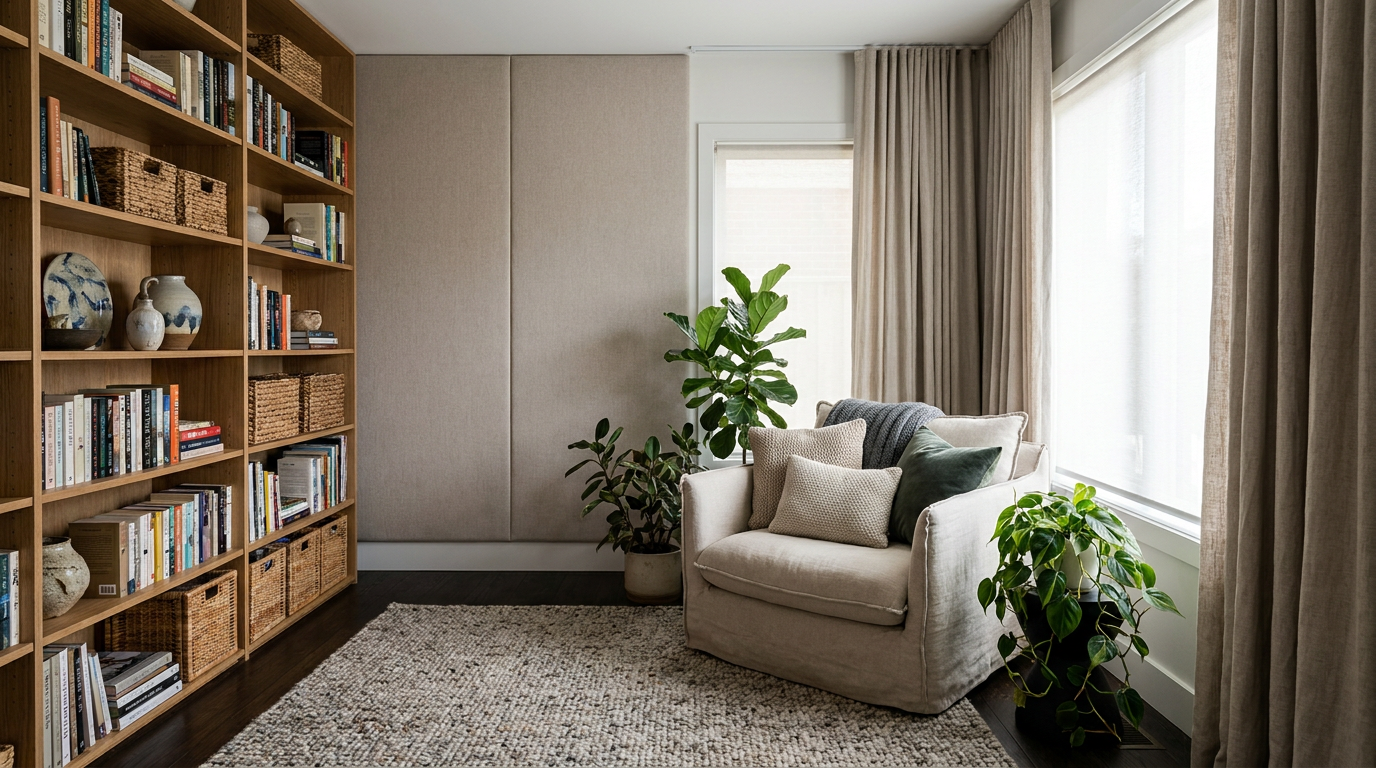
If you are arranging a nursery, office, or reading nook next to a noisy neighbor wall, choose the most substantial storage piece you have and place it there first. Even a dresser or wardrobe can help create a greater sense of separation. Beyond the acoustic benefit, this often improves the room psychologically because the wall no longer feels as exposed.
8. Quiet the bedroom with a sleep-focused sound routine
Because nighttime noise is so closely tied to rest and recovery, the bedroom deserves special attention. This is often the room where even minor changes feel most rewarding. If outside sounds or household noise tend to disturb sleep, begin by sealing the most obvious leaks, then add softness through curtains, bedding, a rug, and upholstered elements if possible. Next, reduce internal disruptions by turning off device sounds, dimming alerts, and minimizing late-night appliance noise nearby.
Health Canada also notes that white noise can be helpful as a masking tool, and that earplugs may be useful as a temporary solution in some situations. It is worth understanding the difference here. White noise does not remove sound. It helps blend or mask disruptive changes in sound so that sudden noises feel less jarring. For many people, especially light sleepers, this can make a meaningful difference in how stable the room feels overnight.
A small sound machine, a fan with a steady gentle hum, or a consistent background audio setting can all be useful, depending on personal preference. What matters most is consistency and comfort. The goal is not to create a perfect lab environment. It is to reduce the startle factor and help the room feel more reliably restful.
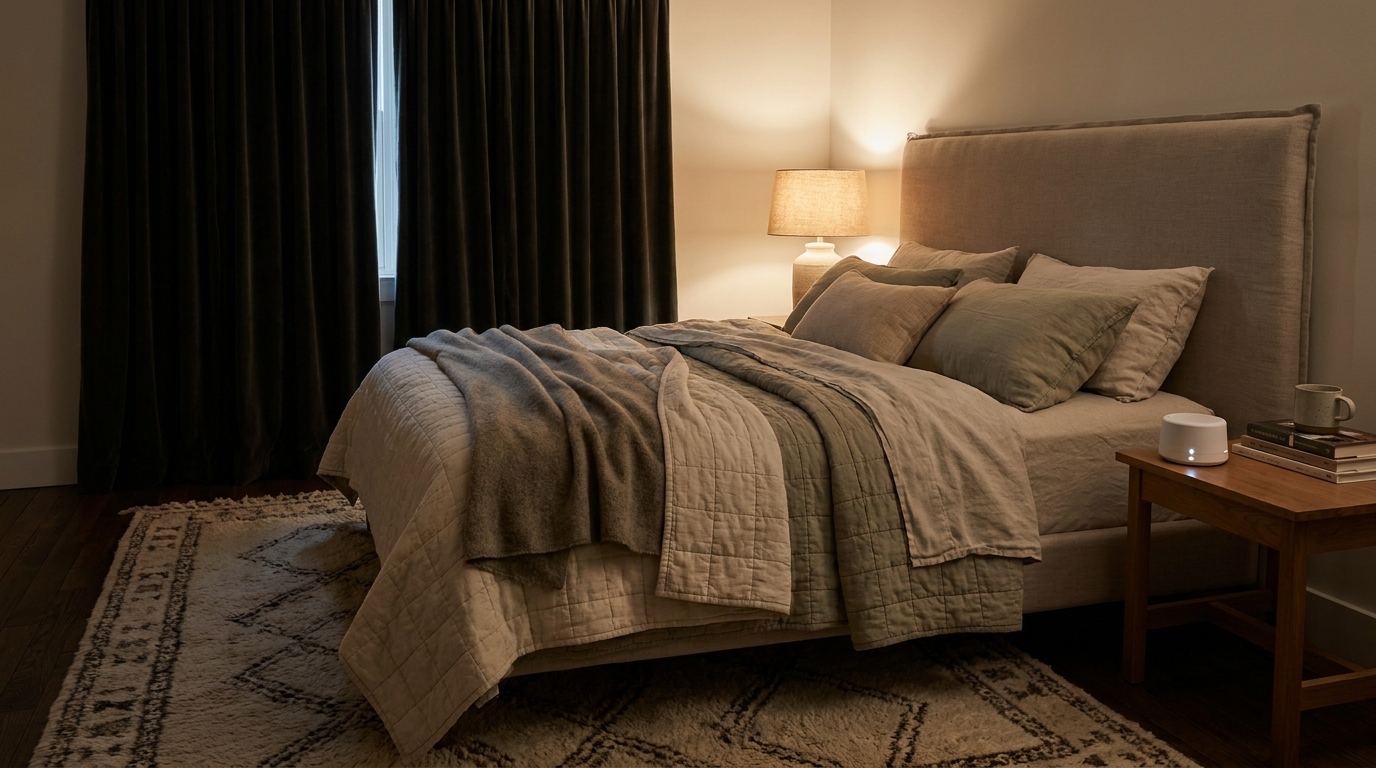
If you share your home with children, this approach can be especially helpful. Bedrooms and nurseries often benefit from a bedtime sound routine that includes quieter hallway habits, softened flooring, and a little sound masking to blur occasional interruptions. These are small acts of care, but they support deeper rest for the whole household.
9. Reduce the noise your home creates from the inside
Sometimes the most effective place to begin is not with outside traffic or neighbors but with the sounds your own home generates. HVAC systems, bathroom fans, dishwashers, laundry appliances, television volume, gaming setups, and endless phone notifications can create a background layer of stimulation that feels normal until it is reduced. Once those sounds are softened, people often realize how much they had been carrying mentally throughout the day.
Start with free changes. Lower notification volume or turn it off entirely at night. Use headphones for late-night entertainment when possible. Place felt pads under chairs that scrape. Close cabinet doors more gently and add soft bumpers if needed. Keep mechanical systems maintained so rattles and hums do not become part of the atmosphere. These adjustments are not dramatic, but they create a home that behaves more quietly, which can be just as valuable as blocking outside noise.
In family homes, this step can become part of the household culture rather than a one-time project. A quieter dishwasher cycle scheduled earlier in the evening, slippers instead of hard shoes indoors, or a simple expectation that certain spaces stay calm after bedtime can shift the entire feel of the house. The emotional benefit is subtle but significant. The home begins to support rest rather than compete with it.
10. Rearrange rooms to match the soundscape you actually have
Not every room in a home needs the same level of quiet, and one of the smartest low-cost strategies is to match each space to its natural sound conditions. If a street-facing room gets traffic noise all day, perhaps it functions better as a living room or dining area than as the primary bedroom. If a room near the laundry machines echoes, maybe it is not the best place for focused work. Rearranging uses the architecture you already have rather than fighting it constantly.
This can be a particularly useful step in smaller homes where renovation is not realistic. Sometimes simply moving a bed away from a noisy window, placing a desk on an interior wall, or shifting a reading chair to the quietest corner makes a room feel transformed. Room layout affects not only acoustics but also your relationship to a space. When quiet activities happen where the home is naturally calmer, everyday life feels less effortful.
If you work from home, think carefully about echo, privacy, and concentration. A space with soft furnishings and fewer shared walls may support calls and deep focus far better than the visually ideal but acoustically harsh option. This kind of practical realism is often the key to creating a home that looks beautiful and truly works.
What to expect from affordable noise reduction
One of the most helpful mindset shifts is understanding that affordable noise reduction works best as a collection of small wins. Sealing a door might reduce hallway sound. A rug might soften footsteps and echo. Curtains might make the room feel less exposed. A bookcase might create more privacy along a shared wall. None of these changes alone is likely to erase a major noise issue entirely, but together they can create a space that feels noticeably calmer, softer, and easier to enjoy.
This realistic approach matters because many people abandon their efforts after trying one or two popular fixes and feeling disappointed. The most common misconception is that one product, such as foam panels or thick curtains, will fully soundproof a room. In reality, effective results usually come from a layered plan that combines sealing, absorption, and furniture placement. Once you understand that, progress becomes easier to see and appreciate.
It also helps to remember that not all sound needs to disappear in order for your quality of life to improve. If the bedroom feels more stable at night, the living room no longer echoes, and the front door blocks hallway chatter more effectively, those are meaningful upgrades. The emotional payoff often arrives before perfect silence ever does.
A simple tiered plan if you want to start this weekend
If the idea of tackling noise reduction feels overwhelming, a tiered plan can make it much more manageable. Begin with free and very low-cost actions such as turning off device sounds at night, identifying the noisiest weak spots, adding felt pads under furniture, rearranging room use, and using white noise if sleep is being disturbed. These changes require very little investment but can quickly improve daily comfort.
Next, move into modest upgrades such as weatherstripping doors, adding a door sweep, sealing gaps around windows, hanging fuller curtains, and placing rugs where sound feels harshest. These are the workhorses of affordable home noise control because they address the most common sound pathways while also improving the feel of a room. In many homes, this middle layer does the most visible work.
After that, consider medium-impact additions such as larger bookcases against shared walls, more upholstered furniture, a denser bedroom setup, or improved window treatments for rooms facing traffic. If you eventually want a bigger acoustic improvement, these steps can also help you decide where future investments would matter most. By then, you will know exactly which room and which noise source deserve more attention.
How quiet supports well-being at home
Quiet is often treated as the absence of something, but in a home it is really the presence of something valuable. It is the presence of better sleep, easier concentration, more private conversations, calmer family evenings, and a gentler transition between a busy world and your personal space. In that sense, noise reduction is not only a technical project. It is a lifestyle upgrade rooted in comfort and care.
Health and environmental guidance continues to reinforce that environmental noise is not merely an annoyance. It can affect sleep, mood, stress, and overall well-being. That makes the pursuit of a quieter home feel much less frivolous and much more essential. Even modest reductions in sound can support a deeper sense of restoration, particularly in bedrooms and shared family spaces.
There is also something empowering about solving this problem in a practical, accessible way. You do not have to wait for a perfect house on a perfectly quiet street to feel better in your own home. By paying attention to gaps, textures, layout, and nighttime habits, you can create meaningful change with what you already have and what your budget allows.
Final thoughts
If your home has been feeling noisy, overstimulating, or just a little too hard to relax in, begin with one small fix. Seal the bedroom door, add a rug, hang the curtains you have been meaning to install, or move the bookcase to the wall that needs it most. Then notice how the room feels in the evening, in the early morning, or during a quiet hour on the weekend. Often the first shift is not dramatic silence but a softer atmosphere, and that is a wonderful start.
The beauty of these affordable methods is that they build on one another. Each small layer adds comfort, and comfort changes the emotional quality of home in ways that are easy to underestimate until you experience them. A quieter space can help children settle more easily, support better rest after a long day, and make ordinary moments like reading, cooking, or talking across the table feel more easeful.
In the end, creating a quieter living space is really about creating a more supportive one. It is about choosing an environment that protects your peace a little more faithfully and welcomes you more gently every day. That is not a minor luxury. It is one of the kindest upgrades you can make to the way your home feels to live in.


No Comment! Be the first one.