



Crafting Elegance: DIY Pendant Lighting for Every Home
There is something singularly transformative about pendant lighting. A pendant does more than illuminate a table or brighten a forgotten corner. It draws the eye upward, gives structure to a room, and adds that quiet note of intention that makes a home feel designed rather than merely furnished. When approached with care, a DIY pendant light can look every bit as polished as a boutique fixture, especially when the focus is on proportion, material quality, and the softness of the light it casts.
Table Of Content
- Why Pendant Lights Belong in More Than Just the Kitchen
- The Foundations of an Elegant DIY Pendant
- Safety First: What Every DIY Lighting Project Must Respect
- Plug-In vs Hardwired: Choosing the Right Path
- Materials That Look Expensive Without Costing a Fortune
- What You Will Need Before You Begin
- Project One: The Frosted Globe Pendant
- Step 1: Select the Globe and Hardware
- Step 2: Choose the Right Bulb
- Step 3: Assemble According to Kit Instructions
- Step 4: Hang and Adjust
- Project Two: The Linen Drum Pendant for Soft, Layered Light
- Step 1: Source a Lightweight Drum Shade
- Step 2: Pair with a Quality Cord Set
- Step 3: Use a Diffusing LED Bulb
- Step 4: Style the Surroundings
- Project Three: The Woven Pendant for Organic Sophistication
- Step 1: Find a Shape with Good Proportion
- Step 2: Keep the Hardware Minimal
- Step 3: Use the Pendant to Soften Modern Rooms
- How to Get Placement Right
- The Light Beyond the Fixture: Bulbs, Dimming, and Ambience
- Room by Room Inspiration
- Kitchen
- Dining Room
- Bedroom
- Entryway and Hallway
- Common Mistakes That Undermine an Otherwise Beautiful Pendant
- A Note on Sustainability and Long-Term Value
- Final Thoughts: Making Light Feel Like Part of the Architecture
For those who love interiors with a sense of grace, pendant lighting offers a rare opportunity. It allows creativity without demanding a full renovation, and it can be tailored to suit nearly any room, from a kitchen island to a bedside nook. The most elegant designs are often the simplest. Frosted glass, a linen-like diffuser, woven texture, matte black detailing, or a slim brass fitting can create an impression of understated luxury with surprisingly accessible materials.
There is also a practical reason pendant projects continue to attract attention. According to Natural Resources Canada, residential lighting accounts for approximately 11 percent of electricity use in a Canadian home. That makes lighting one of the more meaningful areas for thoughtful upgrades. A well-designed DIY pendant paired with LED bulbs can reduce energy use while improving the atmosphere of the space. Beauty, in this case, does not compete with practicality. It works beside it.
This guide is designed to help you create pendant lights that feel elegant, intentional, and safe. We will explore the styles that lend themselves most naturally to a refined result, the differences between plug-in and hardwired pendants, the essential safety principles you should never overlook, and several step by step approaches using affordable materials. Along the way, we will consider how to capture a French-inspired sense of balance and softness, proving that sophistication does not have to arrive with an extravagant price tag.
Elegance in lighting is rarely about excess. More often, it comes from restraint, warmth, and the confidence of a beautiful shape lit well.
Why Pendant Lights Belong in More Than Just the Kitchen
Many people first think of pendant lights above an island or dining table, and with good reason. These are classic placements where hanging fixtures can define a surface and create a visual rhythm. Yet pendant lights are not limited to kitchens. They can bring intimacy to bedrooms, add sculptural presence to hallways, soften an entryway, or become a charming substitute for table lamps in small reading corners.
One of the most common misconceptions about pendant lighting is that it must function as a bright central source. In truth, a pendant often performs best when it works in conversation with the rest of the room. It may provide focused task lighting over a work area, ambient light through a translucent shade, or a decorative layer that enriches the overall composition. The success of the fixture depends not only on its appearance, but also on its placement, bulb selection, and the quality of the glow.
Current North American lighting trends support this wider use. Warm minimalism remains influential, often pairing simple silhouettes with comforting textures. Brass accents, opal glass, frosted finishes, and organic materials such as rattan and wood continue to feel current without becoming fleeting. These are all directions that translate beautifully into DIY projects because they rely less on ornate manufacturing and more on smart combinations of shape and finish.
Pendant lights are especially effective in homes where floor and table space are precious. By lifting the light source off surfaces, they create visual clarity. In smaller rooms, this can make the space feel more open and composed. In larger rooms, pendants help carve out smaller zones of intimacy, which is one of the quiet hallmarks of elegant interior design.
The Foundations of an Elegant DIY Pendant
If you want a homemade light fixture to appear elevated rather than improvised, begin with the principles that make luxury interiors feel so compelling. The first is proportion. A shade that is too small can feel apologetic, while one that is oversized without intention can look clumsy. The diameter of the pendant should make sense for the room, the furniture beneath it, and the ceiling height above it.
The second is material contrast. Elegant pendant lighting often combines softness and structure. Think of frosted glass paired with brushed brass, woven rattan with a matte black cord, or a crisp linen shade hanging from warm metal hardware. Affordable materials can still look expensive if the contrasts feel thoughtful and the palette remains restrained. Limiting yourself to two or three finishes often produces the calmest result.
The third is light quality. A beautiful shade can be undermined by a harsh bulb. Bulb color temperature has a profound effect on the final ambience. In residential spaces, a warm LED bulb often creates the most flattering and inviting mood. The shade translucency matters as well. Opaque shades direct light downward and can feel tailored over a task zone, while opal, linen, or paper-like shades diffuse light gently and create a more romantic effect.
Finally, there is the matter of hanging height. A pendant that hangs too high may lose its intimacy. One that hangs too low can obstruct sightlines or feel oppressive. Adjustable hanging lengths are popular for good reason. They allow you to fine tune the fixture until the composition feels balanced. This flexibility is especially useful in DIY projects, where you may want to test the visual impact before committing to a final arrangement.
Safety First: What Every DIY Lighting Project Must Respect
A pendant light may be decorative, but it is still an electrical product. This is the point where beauty must be joined by discipline. Canadian consumer safety guidance warns that electrical products can pose shock or fire risks if used incorrectly. That means your project should never rely on questionable cord sets, unlisted sockets, or decorative components that are not suitable for heat and electrical use.
When sourcing materials, look for certified components appropriate for your region. Marks such as cUL, UL, ETL, or similar listing information indicate that components have been evaluated against safety standards. UL Solutions notes that certified decorative lighting products are assessed for hazards such as shock and fire, which reinforces the value of using listed parts even in a custom or creative build. A charming thrifted shade may be a wonderful visual element, but the electrical components that power it should be new, reliable, and compliant.
It is also important to understand the difference between decorative customization and electrical alteration. Wrapping a safe cord in fabric or pairing a socket with a shade may be a styling exercise. Reworking internal wiring without the necessary knowledge is another matter entirely. If your project involves permanent wiring into a ceiling box, local code requirements apply. In many cases, the safest recommendation is to have hardwired installation completed or inspected by a qualified electrician.
This advice is not meant to discourage creativity. It simply places the right boundary around it. A refined DIY pendant begins with components that are meant for lighting use, assembled according to manufacturer instructions, and installed in a way that respects local codes. The result is not only more secure, but almost always more beautiful, because certified parts tend to fit better, hang better, and age better.
Plug-In vs Hardwired: Choosing the Right Path
One of the smartest decisions you can make at the beginning of your project is choosing whether your pendant will be plug-in or hardwired. Plug-in pendant lights are especially appealing for renters, design experiments, and lower commitment updates. They can often be installed with a ceiling hook and routed neatly to a nearby outlet, creating dramatic impact without opening the ceiling. This makes them ideal for bedrooms, reading corners, and temporary dining areas.
Hardwired pendants, by contrast, offer a cleaner and more permanent look. The cord disappears into the ceiling canopy, and the fixture reads as an integrated architectural element. Hardwired installations are the more common choice over islands, dining tables, and entryways where the polished finish matters. They are also better suited to spaces where visible cords would disrupt the composition.
Neither option is universally superior. The better choice depends on your home, your comfort level, and whether the fixture is meant to be experimental or lasting. Plug-in pendants can be wonderfully elegant when the cord is routed thoughtfully and the wall color allows it to recede. Hardwired pendants can look magnificent, but they require a higher level of planning and, often, professional help.
Materials That Look Expensive Without Costing a Fortune
The secret to a high end look on a modest budget is not finding one magical inexpensive product. It is learning which materials create visual richness through texture, translucency, and finish. Frosted glass shades are among the best examples. They soften the bulb, flatter the eye, and instantly make a fixture feel more tailored. Opal and milk glass styles are equally graceful, especially when paired with brass or aged bronze hardware.
Linen and linen-like drum shades create another elegant route. They bring softness to a room and cast a diffused light that feels comfortable rather than glaring. For those who enjoy organic interiors, rattan, cane, and thin woven wood can lend warmth and sculptural interest. These materials feel current because they align with both warm minimalism and the broader appeal of nature-inspired interiors.
Metal finish deserves close attention. If you are hoping for French inspired elegance, brushed brass is particularly effective because it offers warmth without the shininess that can feel overstated. Matte black can also be elegant, especially in modern or pared back spaces where a darker line helps define the pendant silhouette. Antique bronze, soft cream, and muted pewter are also excellent choices when you want the fixture to blend gently into the room rather than demand attention.
Even humble materials can become beautiful with the right treatment. A plain paper lantern can gain sophistication when paired with a quality cord set and used in the right room. A thrifted glass shade can feel reborn with a cleaned edge, a carefully chosen bulb, and a balanced hanging length. Elegance is often a matter of editing. Remove what looks unnecessary, refine what remains, and the object begins to breathe.
What You Will Need Before You Begin
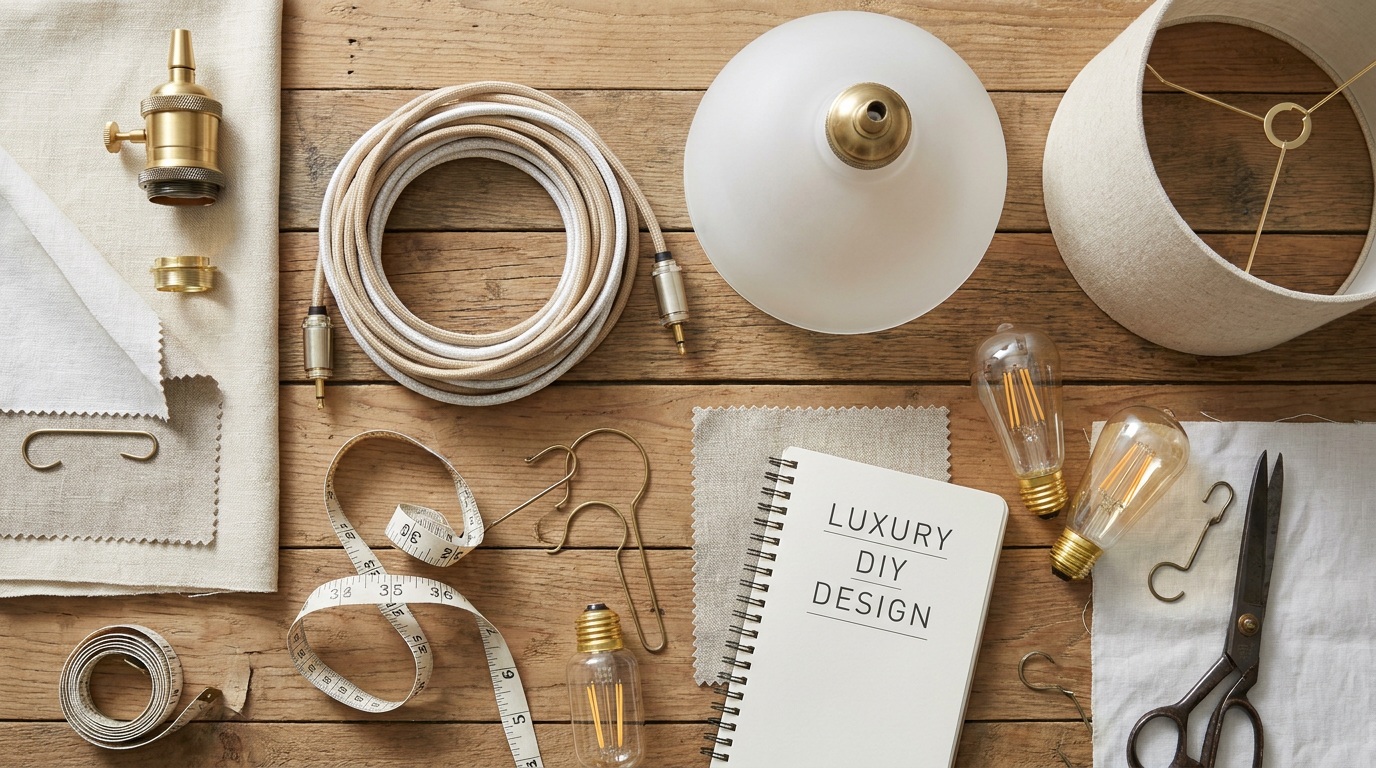
The exact supply list depends on the style of pendant you choose, but most projects benefit from beginning with a clear inventory. Organizing materials in advance helps you work more carefully and reduces the temptation to improvise with unsuitable parts. For electrical elements, always follow the specifications supplied with the certified kit you purchase.
- Certified plug-in or hardwired pendant cord set
- Compatible socket and canopy if required
- Shade, globe, basket, or diffuser material
- LED bulb in a warm residential color temperature
- Lightweight hardware such as shade rings or reducers if the shade requires fitting
- Ceiling hook for plug-in pendants if needed
- Measuring tape, level, pencil, and step ladder
- Optional dimmable bulb and compatible dimmer where applicable
If the fixture will hang over a task zone such as a table or island, measure the area carefully before ordering your shade. The most beautiful pendant can still feel wrong if it is oversized for the furniture below or too slight for the room around it. Good lighting begins with exactness, and exactness is itself a form of elegance.
Project One: The Frosted Globe Pendant
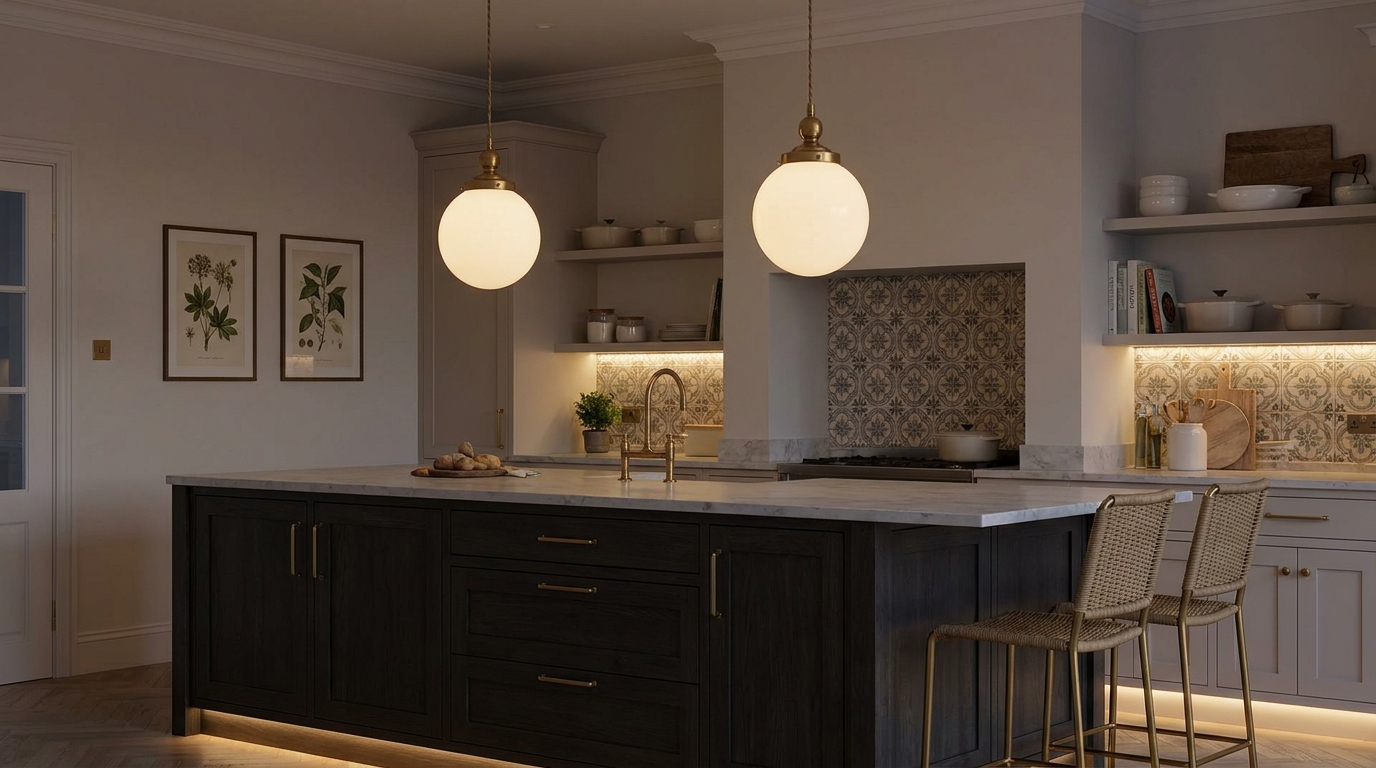
This is perhaps the most timeless of all DIY pendant styles. A frosted or opal globe creates a quiet, sculptural presence that suits nearly any room. It feels French in its restraint and modern in its simplicity. Best of all, the effect can be achieved with readily available components, provided the globe is designed or adapted appropriately for use with your lighting kit.
Step 1: Select the Globe and Hardware
Choose a frosted glass globe that is sized for your space and compatible with your socket arrangement. A globe that is too large can dominate a small room, while one that is too small may disappear. Pair it with a slim brass or matte black cord set to keep the silhouette clean. If your globe requires a reducer ring or fitter, confirm compatibility before assembly.
Step 2: Choose the Right Bulb
The bulb matters enormously here because the shade will diffuse its glow rather than hide it completely. A warm LED bulb usually offers the most inviting effect. ENERGY STAR qualified fixtures and lighting components are especially relevant for energy-conscious homes, since qualified lighting fixtures can use about one-third or less of the energy of traditional fixtures. This is one of those satisfying moments in design where efficiency enhances comfort rather than compromising it.
Step 3: Assemble According to Kit Instructions
Follow the manufacturer instructions for attaching the socket and securing the shade or globe. Do not force parts that do not align and do not substitute hardware casually. If the globe feels unstable or the fitter does not sit neatly, pause the project and find the proper adapter. A secure fit is both a safety necessity and a visual necessity.
Step 4: Hang and Adjust
If the pendant is plug-in, install a ceiling hook rated for the fixture weight and route the cord cleanly toward the outlet. If it is hardwired, ensure installation is handled in accordance with local code requirements. Stand back and assess the drop length from multiple angles. A globe pendant often looks best when it hangs low enough to feel present but high enough to preserve openness.
The finished result is serene and polished. Over a bedside table, it replaces the visual clutter of a lamp. In an entry, it lends poise from the moment one enters. Over a small dining table, it can feel like a glowing pearl suspended in air.
Project Two: The Linen Drum Pendant for Soft, Layered Light
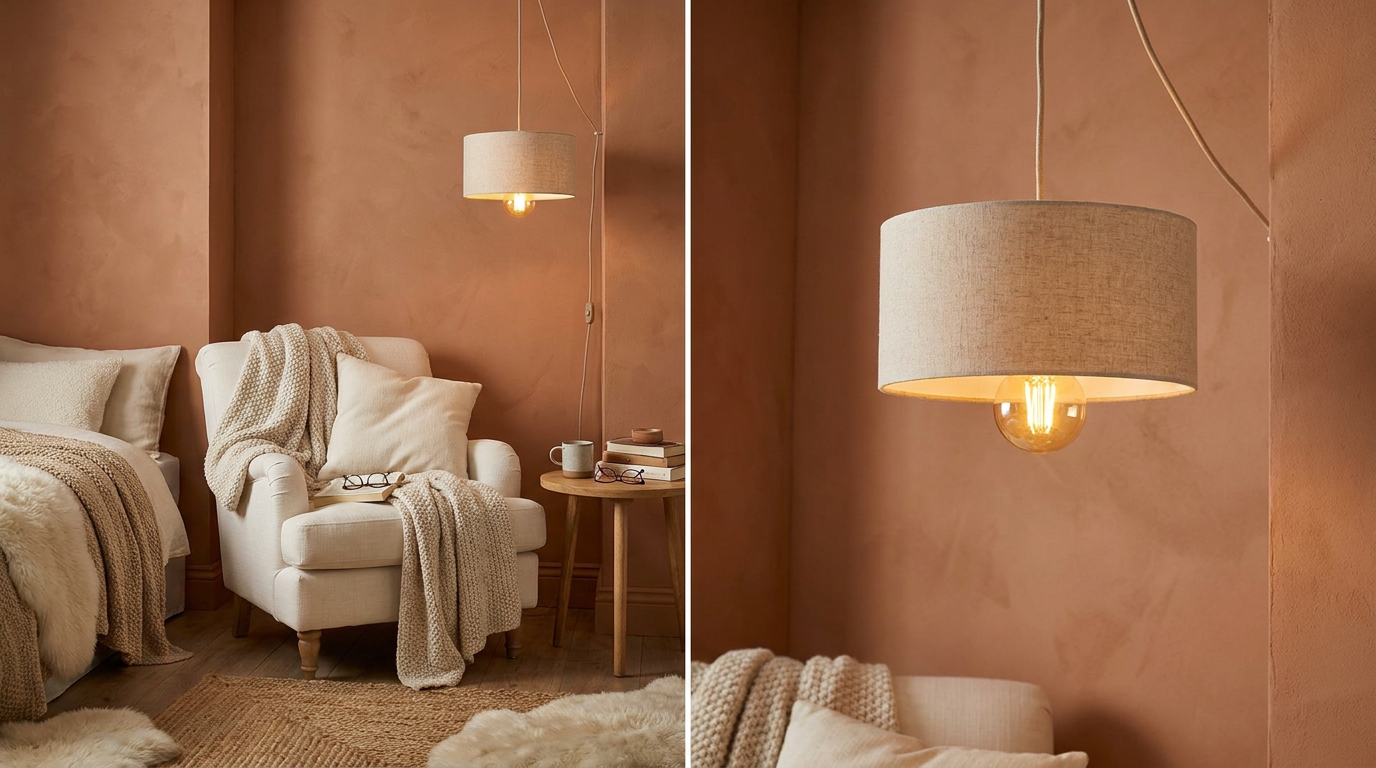
If your home leans toward softness and textile warmth, a linen drum pendant may be the most flattering choice. This style works beautifully in bedrooms, breakfast corners, and living rooms where the goal is ambience rather than sharp task lighting. The light becomes gentler, the room more forgiving, and the overall mood distinctly more intimate.
Step 1: Source a Lightweight Drum Shade
Look for a neutral fabric shade with a simple structure. Cream, flax, warm white, and pale taupe all feel quietly luxurious. Avoid heavy embellishment or overly bright trim, as the charm of this style comes from its discretion. The texture of the fabric should be the ornament.
Step 2: Pair with a Quality Cord Set
A linen shade deserves hardware that feels deliberate. A twisted fabric cord can be lovely in some homes, but in many elegant interiors a smooth cord in ivory, beige, black, or brass-toned detailing appears calmer. The relationship between the shade and the socket should feel visually balanced. If one seems too ornate for the other, the fixture loses its composure.
Step 3: Use a Diffusing LED Bulb
Because the shade is already softening the light, you do not need an aggressively bright bulb. Instead, select a bulb that complements the diffuser and supports the intended function of the space. In a bedroom or lounge, warmth matters more than intensity. This is a useful reminder that a brighter bulb does not automatically improve a pendant’s look. More often, it makes the fixture harsher and less graceful.
Step 4: Style the Surroundings
Linen pendants thrive when they are part of a layered composition. They look beautiful with plaster walls, light wood, soft upholstery, and brushed metals. If you are pursuing a French inspired interior, consider pairing the pendant with tailored curtains, a vintage mirror, or simple natural stone surfaces. The fixture will feel integrated rather than isolated.
Project Three: The Woven Pendant for Organic Sophistication
Organic textures continue to resonate because they bring life into clean interiors. A woven pendant made from rattan, cane, or a basket-like shade can feel relaxed yet deeply stylish when handled with restraint. The key is to avoid anything too bulky or rustic unless that is specifically the mood you are after. Elegant woven pendants rely on delicate pattern and an airy silhouette rather than heaviness.
Step 1: Find a Shape with Good Proportion
A bell shape, low dome, or rounded cylinder often works best. These forms cast interesting shadows while preserving a sense of order. If you are repurposing a woven basket or similar object, confirm that it is suitable for adaptation and that it will not sit too close to the bulb. Adequate clearance is essential, especially if the material is natural and delicate.
Step 2: Keep the Hardware Minimal
Woven shades already have visual texture, so the supporting elements should be spare. A slim black or brass cord usually works beautifully. Let the weave be the feature. This style becomes especially refined when used in repetition, such as two or three pendants spaced evenly over an island or long console.
Step 3: Use the Pendant to Soften Modern Rooms
One of the finest uses for a woven pendant is to temper a room that feels too sleek or cold. In a kitchen with stone counters and clean cabinetry, a woven shade introduces tactility. In a hallway with plain walls, it casts delicate patterns that animate the architecture. The effect is inviting and current without being loud.
How to Get Placement Right
Placement is one of the great differences between a pendant that feels custom and one that feels accidental. Above a dining table, the fixture should visually belong to the table rather than float vaguely in the room. Above an island, the pendants should align with the work zone and maintain even spacing between each unit. In a reading corner, the light should serve the chair or side table without blinding the person seated there.
Ceiling height plays a central role. Higher ceilings can support a slightly lower and more dramatic drop, while standard ceilings often benefit from pendants that remain visually present without encroaching on circulation. Sloped ceilings require specific compatibility, which many contemporary retail kits now address. If your ceiling is angled, do not assume every canopy will sit correctly. Check before purchase.
The number of pendants matters too. A single pendant can be sculptural and calm. A pair creates symmetry. A cluster brings energy and movement. Cluster pendants work especially well when you want a statement effect on a budget, since simple shades grouped together often look more luxurious than one oversized fixture with a less refined form.
The Light Beyond the Fixture: Bulbs, Dimming, and Ambience
It is easy to become absorbed in the visual design of the pendant itself and forget that its true purpose is the quality of light. Contemporary lighting trends continue to emphasize LED efficiency and smart-bulb compatibility, and for good reason. LED bulbs offer longevity, lower energy use, and a wide range of tones suited to residential life. They also align beautifully with the desire for elegant homes that are conscious of utility costs and environmental impact.
Warm bulbs are often the most flattering for living spaces because they soften surfaces and skin tones alike. Dimming is equally valuable. A pendant that can glow gently in the evening and brighten during a task is simply more versatile. If you plan to use dimmable bulbs, ensure the fixture and dimmer are compatible. This detail is technical, but it profoundly affects the livability of the final result.
Shade translucency changes everything. A fully opaque metal or dense fabric shade directs light downward and creates stronger contrast. A frosted glass or linen diffuser spreads the glow more evenly. Neither is universally better. The right choice depends on whether you need task lighting, ambient softness, or a blend of both. Thoughtful homes are rarely lit with only one kind of fixture effect.
Room by Room Inspiration
Kitchen
The kitchen remains the classic home for pendant lighting because it benefits from both function and style. Over an island, pendants establish order and bring a human scale to the room. Opal glass and brass combinations are especially beautiful here because they balance utility with warmth. If your kitchen is sleek, consider adding a natural or woven texture to keep the space from feeling too sharp.
Dining Room
A pendant above the dining table becomes part of the ritual of gathering. It frames conversation, flatters candlelight, and gives the table an architectural presence even when it is not set. In this setting, a frosted globe, soft drum shade, or small cluster can feel particularly elegant. The goal is intimacy, not glare.
Bedroom
Bedside pendant lights have a quiet luxury to them. They free the nightstand, simplify the room, and create a boutique hotel mood with very little effort. Plug-in pendants are especially practical here for renters or for anyone hesitant to alter wiring. A linen or opal pendant works beautifully in this more private, restful setting.
Entryway and Hallway
These transitional spaces are often overlooked, yet they set the tone for the home. A well chosen pendant makes an entry feel considered and extends beauty into areas that might otherwise remain purely functional. A modest globe or small woven pendant can be enough to give a narrow hall character. Because these spaces are seen in passing, the fixture should feel clear and disciplined rather than overly busy.
Common Mistakes That Undermine an Otherwise Beautiful Pendant
One of the most frequent mistakes is choosing the shade before choosing the electrical components. It is wiser to begin with a certified kit and then select a shade that fits it properly. Another common problem is buying the cheapest possible cord set. Low quality cords and sockets tend to look flimsy, age poorly, and may compromise safety. Saving a small amount at this stage often costs more in the final effect.
Harsh bulbs are another offender. A pendant may be perfectly designed but still feel unpleasant if the bulb is too cool, too bright, or visible in an unflattering way. Placement errors are equally damaging. A fixture that sits off center, hangs too high, or competes with cabinetry or artwork can make the room feel unsettled. Precision is not a luxury in lighting. It is the source of its calm.
Finally, many DIY projects falter because too many ideas are layered into one object. Brass, fringe, cane, beads, exposed filament, and a bright cord may each be charming on their own, but together they become noise. The most elegant pendant is edited. It makes one idea visible and lets the room breathe around it.
A Note on Sustainability and Long-Term Value
There is an appealing sustainability story in DIY lighting when it is approached intelligently. Reusing a beautiful shade, adapting a secondhand object appropriately, or choosing durable certified components that can be re-shaded later all reduce waste. Pairing the fixture with an efficient LED bulb strengthens the practical value further. In a time when households are increasingly attentive to both energy use and meaningful décor, a pendant project can satisfy both instincts.
Long-term value also comes from making timeless decisions. Brass that will patinate gently, glass that will not date quickly, a neutral linen texture, or a simple woven silhouette will continue to feel relevant long after trendier finishes fade. This is where French inspired elegance offers such wise guidance. It asks not what is loudest, but what will remain beautiful with time.
Final Thoughts: Making Light Feel Like Part of the Architecture
The finest pendant lights do not seem like afterthoughts. They feel as though they belong to the architecture of the home, even if they were assembled on a modest budget at your own worktable. That sense of belonging comes from a series of thoughtful decisions: choosing certified and compatible parts, respecting local installation rules, selecting materials with beautiful restraint, and shaping the glow through bulb warmth, dimming, and proportion.
DIY pendant lighting is so rewarding because it sits at the intersection of creativity and atmosphere. It is tactile enough to feel personal, practical enough to improve daily life, and expressive enough to alter the emotional tone of a room. A simple globe can make an entry feel serene. A linen shade can soften a bedroom into a retreat. A woven pendant can bring warmth to a modern kitchen. These are not minor changes. They are quiet acts of design that influence how a home is lived and remembered.
If you approach the project with patience and discernment, affordable materials can produce an effect of extraordinary grace. Let the form remain simple. Let the finishes feel considered. Let the light flatter the room rather than dominate it. In that balance, elegance arrives naturally, and your pendant becomes more than a fixture. It becomes a small piece of atmosphere made by hand.



No Comment! Be the first one.