


The outside of a house does two jobs at the same time. It gives the home its look, character, and curb appeal, but it also stands in front of weather every day. Rain, snow, sun, wind, and temperature swings do not care how attractive a finish looked in a showroom. If the material is a poor fit for the climate, installed without proper detailing, or chosen without thinking through maintenance, problems show up sooner than most homeowners expect.
Table Of Content
- Start with the wall assembly, not just the surface
- What really drives performance outdoors
- Wood: unmatched warmth, higher maintenance
- Where wood makes sense
- Where wood is harder to justify
- Metal: clean lines, strong durability, detail-sensitive installation
- Where metal works best
- What homeowners should watch for
- Fiber cement: one of the best all-around compromises
- Why it appeals to so many homeowners
- Its limits and tradeoffs
- Composites and engineered products: lower upkeep, wide design range
- Best use cases for composites
- Climate should lead the decision
- Matching the material to the style of the house
- Total cost of ownership matters more than sticker price
- Common mistakes homeowners make
- A practical decision framework for homeowners
- Questions to ask before you commit
- Final thoughts: choose what will hold up, not just what photographs well
That is why choosing the right outdoor finishing materials for your home needs to be approached as a practical decision first and a design decision second. The best exterior material is rarely the one with the boldest marketing language or the most dramatic texture sample. In most cases, the right choice is the one that fits your region, your house style, your budget, and your tolerance for upkeep. A material that looks good but constantly needs repairs is not really a good value.
The main outdoor finishing materials for a home are wood, metal, fiber cement, and composite or engineered siding, and the right choice depends on climate, maintenance tolerance, and architectural style rather than appearance alone. Wood offers unmatched natural warmth for heritage and craftsman homes but demands the most upkeep, especially in wet or shaded climates. Metal delivers clean, modern lines and strong durability with lower routine maintenance, though it depends on precise installation and corrosion-resistant detailing. Fiber cement is often the best all-around compromise, giving a painted-wood look with better resistance to rot, pests, and moisture for a wide range of house styles and climates. Composite and engineered products reduce maintenance further while mimicking wood grain, making them useful for hard-to-reach walls and broad facades. In every case, the finish only performs as well as the wall assembly, flashing, and drainage detailing behind it.
Across Canada and North America, one lesson keeps coming up in building science guidance: the visible finish is only part of the story. Exterior cladding needs to work with the wall assembly behind it to manage bulk water, allow drying, and reduce the chances of long-term moisture damage. In wet or freeze-thaw climates especially, a well-detailed drainage plane and rainscreen approach often matter as much as the cladding itself. If water gets trapped behind a beautiful finish, the finish is not doing its job.
This article looks at outdoor finishing materials the way a contractor or building envelope consultant would explain them to a homeowner. We will cover wood, metal, fiber cement, and composite options, along with where each one tends to work best. We will also look at maintenance, climate performance, repair issues, cost realities, and the common mistakes that lead to expensive disappointment. The goal is simple: help you choose a finish that looks right and holds up in real conditions.
Start with the wall assembly, not just the surface
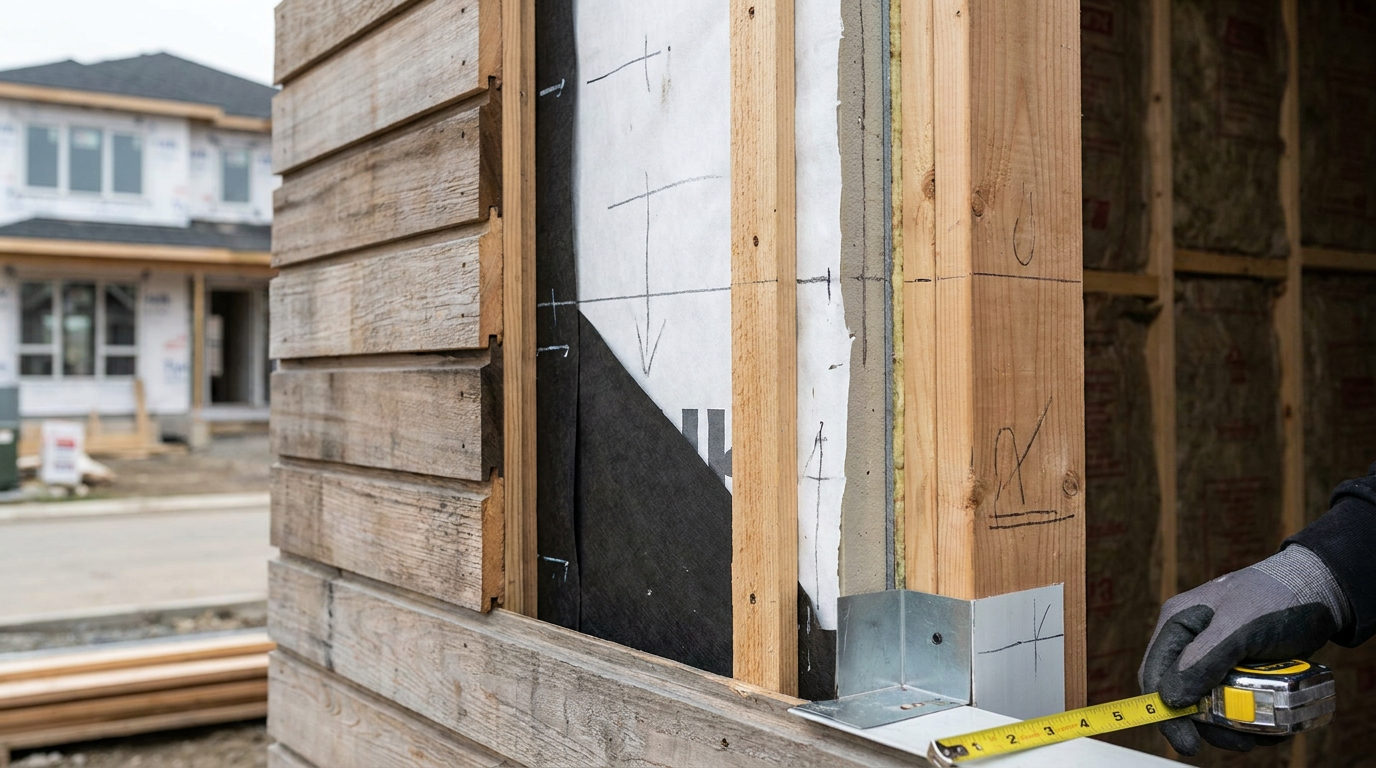
One of the most common mistakes homeowners make is thinking of exterior finishing materials as if they are standalone products. They are not. Your siding, panels, or exterior boards are part of a larger wall system that includes air barriers, water-resistive layers, flashing, fasteners, insulation, and sometimes a drainage cavity. If those parts do not work together, even a premium finish can fail early.
Canadian building science has long emphasized that exterior walls need to manage bulk water, not just repel surface moisture for a while. Wind-driven rain can push water into joints, around windows, at trim intersections, and behind penetrations. Once water gets behind the cladding, the wall needs a reliable way to drain and dry. This is the practical logic behind rainscreen-style assemblies, which create a small cavity that helps water escape and improves drying potential.
For homeowners, this means an important shift in mindset. The question should not only be, Which material is best? It should also be, How will this material be installed, flashed, ventilated, and maintained on my house in my climate? A mid-priced material installed correctly on a well-designed wall assembly often outlasts an expensive finish installed with poor detailing. Good workmanship is not an upgrade. It is part of the product.
Practical rule: If you are comparing exterior materials, ask about the full assembly, including drainage gap, flashing, sealant strategy, fastener compatibility, and drying potential. The right answer should sound specific to your home and climate, not generic.
What really drives performance outdoors
Exterior materials age differently depending on exposure. Two walls on the same house can perform very differently because of sunlight, wind, rain direction, snow accumulation, and nearby trees or roof overhangs. South and west elevations usually take more UV and weather exposure, while shaded areas may stay damp longer. A finish that looks stable on one side of the house may fail faster on another side for reasons that have nothing to do with product quality.
Moisture is still the main problem to respect. It causes paint failure, swelling, rot, mold, corrosion, freeze-thaw damage, and breakdown at joints. Bulk water from the exterior is a leading cause of wall trouble, which is why flashing details above windows, doors, decks, and roof-wall intersections deserve more attention than homeowners typically give them. You can often trace major exterior problems back to one weak transition point.
Temperature swings matter too. In much of Canada and the northern United States, materials are routinely exposed to freezing conditions, then thawing, then direct sun, then wet conditions again. That cycle stresses finishes, coatings, sealants, and fasteners. Some materials handle movement better than others, but no material is completely immune to poor detailing or neglected maintenance.
There is also a growing practical concern around wildfire exposure, extreme weather, and heat. In some regions, homeowners are moving toward noncombustible or ignition-resistant exterior finishes for peace of mind. At the same time, labor shortages and price volatility have changed project planning. Availability and installation expertise now influence material choices almost as much as appearance in some markets.
Wood: unmatched warmth, higher maintenance
Wood remains one of the most appealing outdoor finishing materials because it offers something manufactured products still struggle to fully copy. It has natural variation, depth, and warmth that suit heritage homes, cottages, traditional architecture, and high-end custom work. Properly selected and finished wood can look exceptional, and it gives designers flexibility in profiles, board widths, textures, and stain or paint colors.
That said, wood asks more from the homeowner. It is usually the highest-maintenance category among common exterior finishing options, especially in climates with persistent rain, heavy snow, or strong UV exposure. Wood is sensitive to repeated wetting, poor drying, and neglected coatings. If water gets trapped around joints, end cuts, lower edges, or poorly flashed openings, wood tends to show that mistake faster than more forgiving materials.
Wood can still perform well for many years when the species, finish, detailing, and maintenance plan are all handled properly. Good back-priming, adequate clearances from grade, thoughtful overhangs, and disciplined sealing or repainting schedules make a real difference. In the right setting, wood is not a bad choice. It is simply a choice that depends more heavily on attention and upkeep.
Where wood makes sense
Wood often makes the most sense where appearance is a top priority and the homeowner is realistic about maintenance. It suits craftsman homes, cabins, coastal-inspired houses, traditional neighborhoods, and restoration work. It also works well where the design includes generous overhangs and good shelter from direct weather. On a protected elevation, wood may age far more gracefully than it would on a fully exposed wall.
It is also a valid choice for owners who value repairability. A damaged wood board can often be replaced selectively, and touch-up work can be straightforward when done early. Some homeowners prefer that kind of manageable maintenance over dealing with a more industrial-looking finish they never really liked in the first place. That is a fair decision, as long as the maintenance burden is part of the plan from day one.
Where wood is harder to justify
Wet coastal climates, high-snow regions, and heavily shaded sites can be unforgiving to wood cladding. If your home gets frequent wind-driven rain and long damp periods, wood needs excellent detailing and regular inspection. It is rarely the best fit for homeowners who travel often, defer maintenance, or want long intervals between repainting or refinishing. In those cases, the beauty of wood can become a liability rather than an asset.
Another issue is inconsistency in expectations. Some owners love the weathered look of aging wood, while others expect it to look freshly finished for years. Those are not the same thing. If you want crisp, uniform appearance with low intervention, natural wood may frustrate you over time.
Metal: clean lines, strong durability, detail-sensitive installation
Metal cladding has moved well beyond barns and industrial buildings. Today it is widely used on modern homes, mountain houses, urban infill projects, and mixed-material designs. Aluminum and steel systems offer clean geometry, sharp shadow lines, and finishes that fit contemporary architecture especially well. For homeowners who want a lower routine maintenance exterior with a modern look, metal is often near the top of the list.
One of metal’s biggest strengths is durability. Properly coated metal can resist rot, insect damage, and many of the moisture problems that affect organic materials. It does not need repainting on the same schedule as wood, and it generally handles demanding weather better than people assume. In hail-prone or windy areas, profile choice and gauge matter, but metal still remains a strong candidate where resilience is part of the goal.
The caution with metal is that it must be thought through as a system. Corrosion resistance, coating quality, cut edge treatment, fastener compatibility, and thermal movement all matter. Near saltwater, the wrong combination of materials can shorten service life. Poorly detailed fasteners, flashing, or trim transitions can create problems that have less to do with the cladding itself and more to do with how it was assembled.
Where metal works best
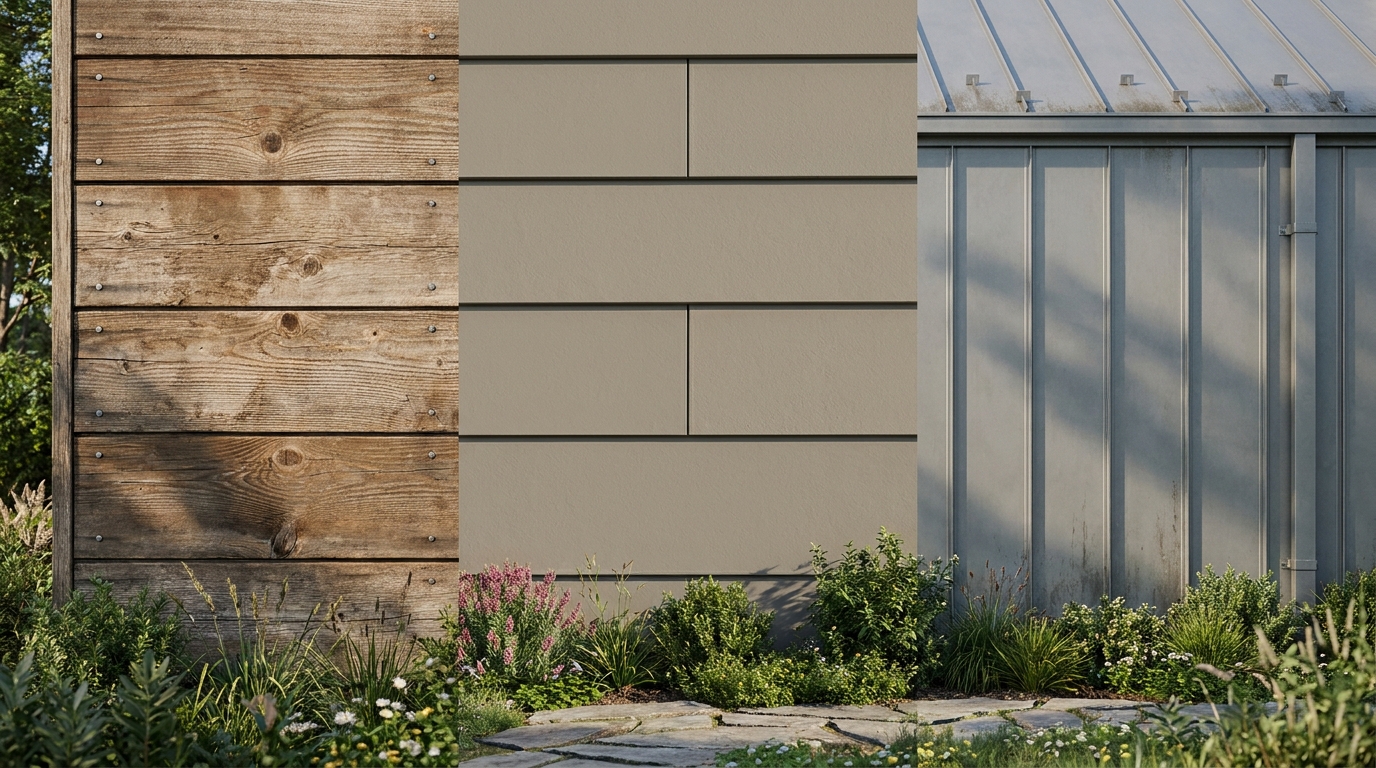
Metal is a natural fit for modern, minimalist, Scandinavian-inspired, and industrial-influenced residential design. It also performs well for accent areas, upper stories, bump-outs, and mixed-material exteriors where the goal is contrast. A common practical strategy is to use metal where weather exposure is strongest and combine it with warmer materials in more protected areas.
In many inland climates, metal is a smart option for homeowners who want fewer repainting cycles and a cleaner exterior appearance over time. It can also be a sensible choice in wildfire-conscious regions, depending on the specific assembly and product. Noncombustible finishes are getting more attention for good reason, and metal is often part of that discussion.
What homeowners should watch for
The biggest misconception about metal is that it is automatically carefree. It is lower maintenance than wood in many cases, but it still needs regular inspection, proper washing where dirt or salt accumulates, and careful attention to scratches, sealants, and movement joints. Dents can also be a concern depending on panel type, gauge, and local weather patterns. A thin decorative panel does not perform the same way as a more robust cladding system.
Another practical issue is appearance tolerance. Metal tends to look best when lines are straight, trims are crisp, and installation is very clean. Sloppy layout that might be less noticeable on textured siding can stand out immediately on a modern metal facade. If you are paying for a precise architectural look, the installer’s experience matters as much as the material itself.
Fiber cement: one of the best all-around compromises
For many homeowners, fiber cement hits the middle ground better than almost any other exterior finishing material. It can provide the look of painted wood siding while offering stronger resistance to rot, pests, and moisture-related deterioration. It is widely seen as a practical choice for suburban homes, renovations, and new construction because it balances appearance, durability, and maintenance more effectively than natural wood in many climates.
Fiber cement is often marketed as low maintenance, and compared with wood that is generally fair. But it is important to be realistic. Low maintenance does not mean no maintenance. Joints, caulking, paint finishes, clearances, flashing details, and installation quality still matter. If those basics are neglected, fiber cement will not magically cover for poor workmanship.
One advantage of fiber cement is that manufacturers increasingly position products for specific climate conditions. That reflects a useful trend in the market. Homeowners are asking tougher questions about moisture resilience, freeze-thaw durability, fire resistance, and expected upkeep, and manufacturers are responding with more regionally focused guidance. That is a good thing, but it still does not replace the need for a competent installer who follows the system requirements.
Why it appeals to so many homeowners
Fiber cement works across a wide range of house styles. It can fit traditional lap siding homes, farmhouse-inspired designs, transitional architecture, and even some contemporary builds depending on panel choice. It gives a painted, substantial look that many buyers and homeowners still prefer over highly synthetic appearances. In neighborhoods where resale appeal matters, that familiar look can be a practical advantage.
It is also a strong option in climates where moisture, insects, and moderate fire concerns influence decisions. Many homeowners who love the look of wood but do not want the same maintenance cycle end up here. That is usually for good reason. Fiber cement often offers a better total cost balance over time, even when the upfront price is higher than basic vinyl or lower-end products.
Its limits and tradeoffs
Fiber cement is heavier than many alternatives, and that affects labor, cutting, handling, and installation cost. It also still relies on proper painting and sealing strategies for long-term appearance. If cut edges, gaps, or transitions are handled poorly, water can still find a path to trouble. Again, the recurring theme is simple: no cladding material is more important than the detailing behind it.
Homeowners should also ask practical questions about repaint intervals, local installer experience, and warranty requirements. A good product installed by a crew that treats it like generic siding can become a disappointing investment. This is not the category to buy casually just because it is popular.
Composites and engineered products: lower upkeep, wide design range
Composite and engineered exterior materials cover a broad category, which is why homeowners need to read past the label. Some products are designed to mimic wood grain closely. Others lean into a cleaner, more manufactured appearance. Performance can vary significantly depending on the formulation, backing system, surface finish, and installation method.
The appeal is easy to understand. These products are often sold as lower-maintenance alternatives to wood, with improved resistance to rot, pests, and moisture. For many homeowners, they also solve a style problem by offering wood-look textures without demanding the same refinishing schedule. That makes them especially attractive in suburban projects, multifamily work, and renovations where owners want the warmth of wood but not the long-term burden.
The right way to think about composites is not maintenance-free, but maintenance-reduced. You still need to inspect joints, clean surfaces, monitor sealants where applicable, and make sure the assembly can drain and dry. Some products perform very well when installed exactly to specification. Others can disappoint if homeowners assume all engineered materials are interchangeable.
Best use cases for composites
Composites often make sense when owners want visual consistency and fewer refinishing cycles. They can be a practical fit for broad facades, hard-to-reach upper walls, and projects where low annual upkeep matters more than all-natural materials. In some designs, they also work well as accent features paired with metal or fiber cement, bringing warmth without taking over the maintenance profile of the whole exterior.
They can also be useful where labor costs are high and homeowners want predictable upkeep. If access for repainting would be difficult or expensive later, choosing a more stable finish upfront can save money over the life of the house. That is the kind of decision that looks boring at first and smart ten years later.
Climate should lead the decision
If there is one principle homeowners should remember, it is this: climate should drive material selection. A finish that performs well in a dry inland area may struggle on a wet coast. A material that looks perfect in a sheltered subdivision may age quickly on an exposed rural lot with strong winds and drifting snow. There is no universal best choice because there is no universal exposure condition.
In coastal British Columbia, Atlantic Canada, and other high-rain areas, moisture management should dominate the conversation. Rot resistance, effective flashing, ventilated drainage, and assemblies that dry well are more important than chasing a specific look. Wood can still work there, but it is less forgiving. Fiber cement, metal, and some composite systems are often easier to justify when long-term moisture resilience is the priority.
In prairie and inland continental climates, freeze-thaw cycling, hail, solar exposure, and strong winds deserve more attention. Materials need to handle movement, impacts, and repeated seasonal stress. Metal can be a strong fit, and fiber cement often performs well too, but detailing at joints and penetrations still decides whether the wall ages cleanly. Sun-facing elevations may also wear coatings and sealants faster than shaded sides.
In wildfire-prone areas, homeowners should seriously consider noncombustible or ignition-resistant finishes as part of a broader exterior risk strategy. Cladding alone is not the whole answer, but it is a meaningful part of it. Metal and many fiber-cement systems naturally enter the conversation here. The right assembly, vent detailing, and surrounding site management all matter alongside the finish itself.
Matching the material to the style of the house
Exterior performance matters first, but style still matters. Most homeowners do not want a house that only performs well. They want one that feels right for the architecture and the neighborhood. The good news is that practical materials now cover a wider visual range than they used to, so you usually do not have to choose between sensible and attractive.
For heritage, craftsman, and traditional homes, wood still offers the richest natural look if the owner is willing to maintain it. Fiber cement is often the pragmatic substitute when the goal is to keep a classic profile with a more manageable upkeep schedule. On modern and minimalist houses, metal often looks more natural than trying to force a faux-traditional material into a contemporary design.
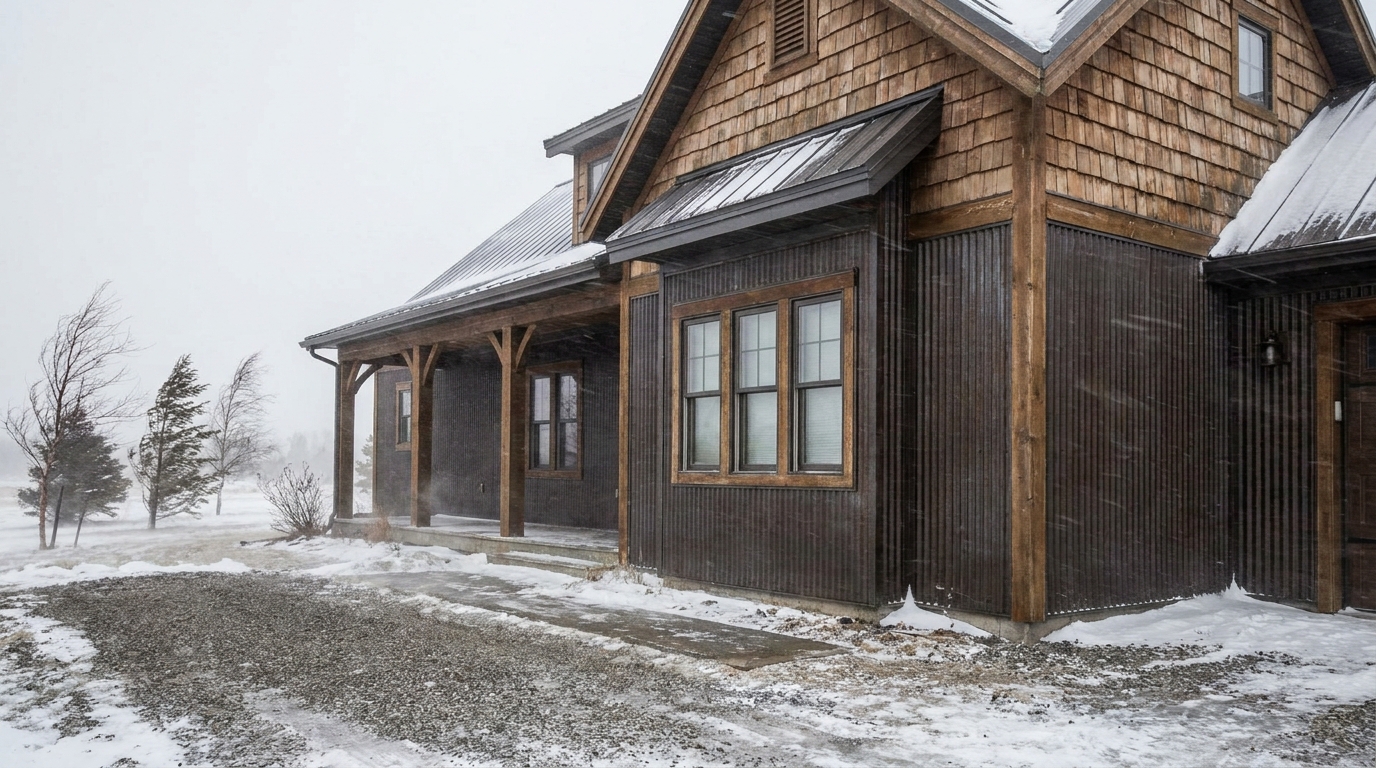
Many of the best exteriors today use more than one material. A house might use fiber cement as the primary cladding, wood or composite accents at entry areas, and metal on feature volumes or upper sections. That kind of mixing can improve both appearance and durability when done intentionally. The key is not to mix materials randomly, but to place them where their strengths make sense.
Total cost of ownership matters more than sticker price
Homeowners often compare exterior materials based on initial quote numbers alone. That is understandable, but it does not tell the full story. The smarter comparison is total cost of ownership over a realistic period, usually fifteen to thirty years depending on the project. That means looking at installation cost, maintenance cycles, repairs, repainting, cleaning, replacement of damaged components, and likely service life in your local climate.
A material with a lower upfront cost may become more expensive if it needs frequent refinishing or begins failing at vulnerable details. On the other hand, a premium product may not pay off if it is installed poorly or if replacement parts become difficult to source. Recent supply-chain disruption has made availability, lead times, and price stability part of the equation too. The best product on paper is not always the best product if getting it delays the job for months.
There is also the labor question. Some materials are straightforward to install for a broad range of crews. Others require more specialized tools, sequencing, or detailing experience. A product that looks cost-effective in a catalog can turn expensive once the labor line is accurate. Ask contractors which materials they install regularly and where they have seen callback problems. That answer is often more useful than a sales brochure.
Common mistakes homeowners make
Most exterior failures do not happen because homeowners chose a terrible product. They happen because a decent material was chosen for the wrong climate, installed with weak details, or expected to perform without maintenance. That is actually good news, because it means many problems are preventable with better decisions at the start.
-
Assuming any product is maintenance-free. Every exterior finish needs inspection and care. Paint fades, sealants age, fasteners move, coatings scratch, and joints need monitoring.
-
Focusing only on the visible finish. The drainage plane, flashing, and rainscreen details behind the cladding often matter more to durability than the cladding brand itself.
-
Ignoring orientation and exposure. One side of the house may take far more weather than another. Material choices and detail quality should reflect that reality.
-
Picking a style-first material with no upkeep plan. Wood is the classic example. It can be excellent, but only if the owner accepts what it needs.
-
Overlooking compatibility. Metal cladding, fasteners, flashings, trims, and adjacent materials need to work together to avoid corrosion and movement issues.
-
Buying on price alone. A lower bid today can become a higher lifecycle cost if maintenance or repair demands are heavy.
A practical decision framework for homeowners
If you feel overwhelmed by options, simplify the choice by working through a few grounded questions. Start with climate and exposure. Is your house in a wet region, a freeze-thaw zone, a windy open site, a wildfire-prone area, or a mix of all of them? Then ask how much maintenance you will actually do, not how much you hope you will do. The honest answer is the useful answer.
Next, look at the architectural style of the house. A finish should make sense visually, but it should not force you into a maintenance pattern that does not match your lifestyle. After that, evaluate budget using lifecycle thinking rather than initial price only. Finally, make sure your contractor can clearly explain the wall assembly, flashing strategy, and installation details for the exact material you are considering.
For many suburban homeowners, fiber cement or a well-chosen composite product will be the safest all-around compromise. For modern homes, metal often delivers the best mix of appearance and lower routine upkeep. For heritage and premium traditional homes, wood can still be the right answer if the owner wants its character enough to maintain it properly. None of those are universal truths, but they are sound starting points.
Questions to ask before you commit
-
How does this material perform in my specific climate and exposure?
-
What does the full wall assembly include behind the finish?
-
Will the system include a drainage gap or rainscreen approach?
-
How are windows, doors, deck ledgers, roof intersections, and penetrations flashed?
-
What maintenance should I expect at 1 year, 5 years, and 10 years?
-
How easy is it to repair or replace damaged sections?
-
Are local crews experienced with this exact product and installation method?
-
Has availability or lead time changed the project risk or cost?
Final thoughts: choose what will hold up, not just what photographs well
The best outdoor finishing materials are the ones that fit the real life of the house. That means they suit the weather, the wall assembly, the design, and the homeowner’s willingness to maintain them. Marketing often pushes the idea that one product solves everything. On actual homes, the truth is more grounded. Every material comes with tradeoffs, and the job is to choose the tradeoffs you can live with.
If you want natural richness and are willing to put in the upkeep, wood still has a place. If you want crisp lines and lower routine maintenance, metal is hard to ignore. If you want a balanced, practical option that works across many climates and styles, fiber cement earns its popularity. If you want a wood-look finish with more predictable upkeep, composites deserve a serious look. But in every case, long-term success depends on proper flashing, drainage, drying, and installation quality.
That is the practical bottom line. Do not choose an exterior finish the same way you choose interior paint. Choose it the way you would choose roofing, windows, or foundation waterproofing. It is part of the building enclosure. Get the assembly right, respect the climate, and be honest about maintenance. If you do that, the exterior will not just look good at handover. It will still be doing its job years later.



No Comment! Be the first one.