



Urban luxury living has changed in a meaningful way. It is no longer defined only by penthouse square footage, glossy finishes, or a prestigious address, although those things may still hold appeal. Today, true luxury in the city is often quieter, more personal, and far more connected to comfort. It is the feeling of walking through your front door and instantly exhaling, of knowing your home supports your routines, protects your peace, and reflects your taste without trying too hard.
Table Of Content
- The New Meaning of Urban Luxury Living
- Why Comfort Is the Foundation of Sophistication
- Start With Atmosphere, Not Objects
- Layered Lighting Makes a Home Feel Expensive
- The Power of Rich Materials and Soft Forms
- Biophilic Design: Bringing Nature Into the City
- Luxury in Small Spaces Is About Curation
- Create a Hospitality-Inspired Home Experience
- Personal Touches Are What Make a Luxury Apartment Feel Alive
- The Bedroom Should Feel Like a Private Retreat
- Wellness Features You Can Add Without Renovating
- Entertaining in an Urban Luxury Home
- Common Mistakes That Undermine Luxury
- A Room-by-Room Mindset for Urban Luxury Living
- Final Thoughts: Luxury That Feels Like Home
That shift matters because urban life can be stimulating in wonderful ways, but it can also be demanding. Noise, density, fast schedules, and smaller floor plans all place pressure on the home to do more. In that context, a luxurious apartment is not simply a beautiful backdrop. It becomes a sanctuary that helps restore energy, improve mood, and make everyday life feel more intentional. The best urban luxury interiors understand this emotional truth and build around it.
There is also a broader market story behind this evolution. Recent CMHC reporting found that the average vacancy rate for purpose-built rental apartments in Canada’s largest census metropolitan areas rose to 3.1% in 2025 from 2.2% in 2024. Even with some easing in market tightness, affordability pressure remains a reality in many cities, which makes luxury through design and experience more relevant than luxury through size alone. In other words, the modern urban home feels elevated not because it is enormous, but because it is composed with care.
This is where the idea of blending luxury with comfort becomes so compelling. The most desirable urban homes are not sterile or showy. They are layered, warm, thoughtfully lit, and deeply livable. They combine tactile materials, wellness-minded features, and personal details in a way that feels sophisticated yet inviting. When done well, even a modest apartment can carry the atmosphere of a boutique hotel suite while still feeling unmistakably like home.
In this guide, we will explore how to create that balance. From lighting, acoustics, and biophilic design to layout choices, textures, and meaningful decor, these ideas are designed to help transform an ordinary city apartment into a luxurious retreat. The goal is not perfection. The goal is a home that feels beautiful to live in every single day.
The New Meaning of Urban Luxury Living
Luxury has become more intimate. Rather than relying on obvious extravagance, many of today’s most admired urban interiors emphasize emotional ease, sensory comfort, and understated quality. This aligns with the broader rise of quiet luxury, a style philosophy that values richness in materials, craftsmanship, and atmosphere over loud displays of wealth. It is less about impressing guests at first glance and more about creating a space that continues to feel good over time.
This perspective is especially well suited to city living. In urban homes, every square foot matters, which means luxury must be intentional. A deeply comfortable sofa that anchors conversation, drapery that softens noise, lighting that shifts with the hour, and a bedroom that genuinely supports sleep may offer more lasting value than a dramatic but impractical design gesture. Luxury becomes a lived experience rather than a label.
Design trend reporting from NAHB in 2025 supports this direction. Warm, rich materials, soft corners, vertical elements, geometry, rooftop entertaining spaces, and personalized homes are all gaining attention. What is interesting is how naturally these trends align with comfort. Rich wood tones add warmth. Soft corners feel calming. Personalization creates belonging. These are not separate from luxury. They are central to it.
There is also an important misconception worth letting go of. Many people assume luxury requires minimalism or emotional restraint. In reality, some of the most elevated urban homes are full of life and character. They include books, art collected over time, fabrics with touchable depth, and objects that hold memory. A luxurious apartment should feel edited, yes, but never soulless.
Modern urban luxury is not about owning more space. It is about making your space feel more restorative, more intentional, and more beautifully yours.
Why Comfort Is the Foundation of Sophistication
Comfort is sometimes dismissed as casual, but in a well-designed city home it is actually one of the highest expressions of refinement. A home that supports your body, your mood, and your routines will always feel more luxurious than one that merely photographs well. This is one reason wellness design has become so influential in upscale interiors. People want homes that do more than sparkle. They want homes that help them feel better.
The WELL Building Standard has helped bring this idea into sharper focus. The framework emphasizes light, air, comfort, acoustics, mind, and other factors that shape well-being indoors. That is especially relevant when you consider that people spend more than 90 percent of their time indoors. A home’s environment is not a small detail in daily life. It is one of the most powerful influences on how settled, energized, and restored we feel.
Harvard housing research has also underscored the importance of indoor environmental quality, noting that environmental issues are widespread and that many households experience at least one risk factor in the home. While luxury design often highlights beauty, the deeper truth is that beauty and health are linked. Stale air, harsh lighting, poor acoustics, and uncomfortable furniture all undermine the sense of retreat that urban homeowners are craving.
Comfort-focused luxury asks a slightly different question than traditional decorating. Instead of asking, What looks expensive?, it asks, What helps this space feel calm, elegant, and supportive? The answer often includes better lighting, softer materials, cleaner air, more intuitive layouts, and rooms that reflect the rhythms of daily life. This is where true sophistication begins.
Start With Atmosphere, Not Objects
When people think about making a space feel luxurious, they often begin by shopping. While beautiful pieces matter, the stronger starting point is atmosphere. Atmosphere is the invisible layer that determines whether a room feels cold or comforting, restless or serene, cluttered or composed. It is created by the relationship between light, color, sound, texture, and proportion. Once that foundation is right, individual furnishings become far more effective.
In practical terms, atmosphere begins with editing what disrupts calm. Visual clutter, harsh overhead lighting, tangled cords, and too many competing materials can all make a room feel less elevated. Creating luxury often involves subtraction before addition. Simplify surfaces, refine the palette, and choose a few strong focal points rather than scattering attention across every corner. This does not mean making the home sparse. It means letting each element breathe.
Color plays a major role here. Many urban luxury homes now lean toward warm neutrals, mineral shades, muted greens, earthy taupes, cocoa browns, and softened stone tones. These colors feel grounded and current without becoming trendy too quickly. They also work beautifully with natural materials, which helps create a cohesive atmosphere from room to room.
Sound is another part of atmosphere that is often overlooked. An elegant apartment loses some of its magic if it echoes or constantly competes with city noise. Heavy drapery, rugs, upholstered furniture, bookshelves, and fabric wall panels can all help soften a room acoustically. In a busy city, quiet itself becomes a luxury feature.
Layered Lighting Makes a Home Feel Expensive
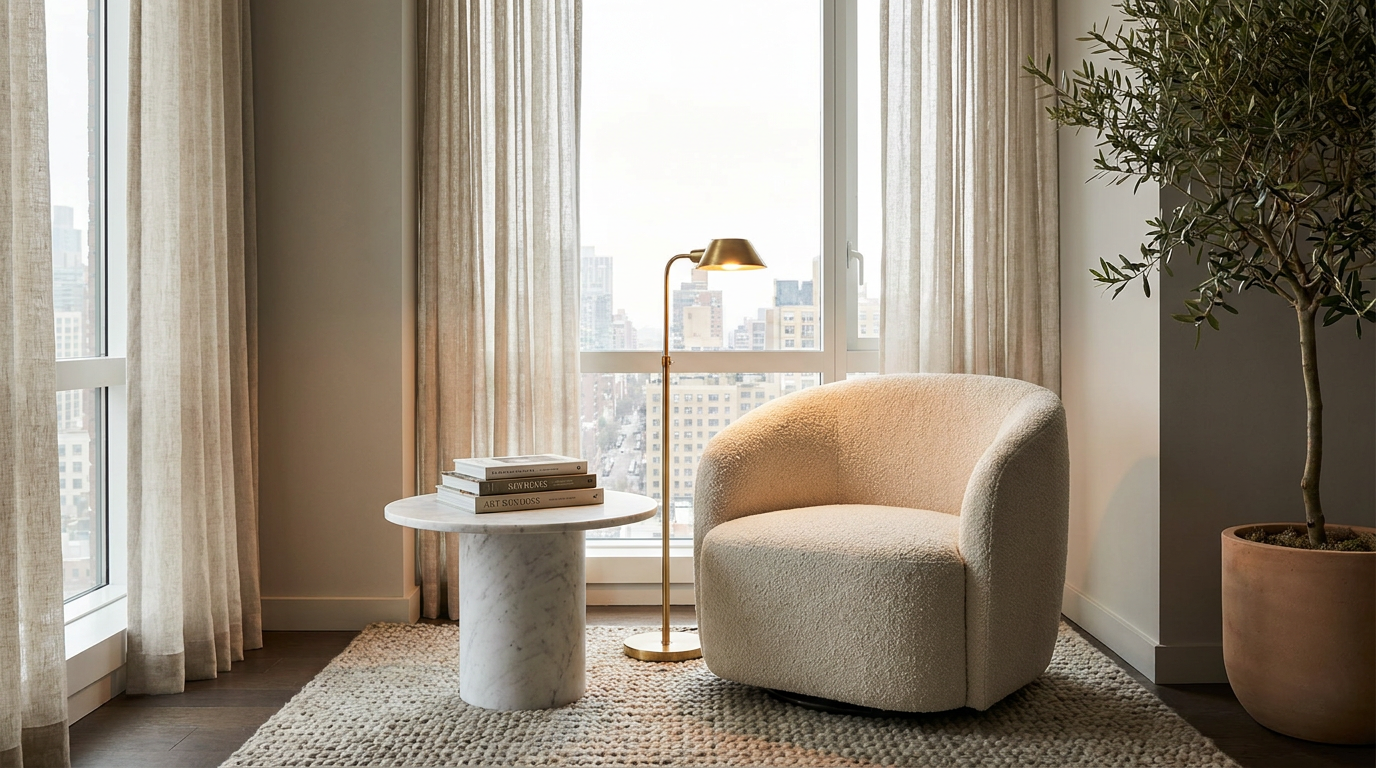
If there is one change that can instantly shift an apartment toward a more luxurious mood, it is lighting. Layered lighting adds softness, flexibility, and emotional depth in a way that no single statement piece can achieve alone. It allows a home to feel lively in the morning, functional in the afternoon, intimate in the evening, and restful at night. This adaptability is one of the defining qualities of sophisticated urban interiors.
Good lighting begins with understanding that overhead fixtures should not do all the work. A thoughtful lighting plan includes ambient lighting for general glow, task lighting for reading or working, and accent lighting for drama and warmth. Table lamps, floor lamps, wall sconces, dimmable fixtures, and under-cabinet lighting all contribute to a more nuanced environment. The room becomes less flat and more emotionally responsive.
This idea also connects beautifully to wellness. Circadian-friendly lighting that changes in intensity and warmth across the day can support both energy and rest. Cooler, brighter light is useful in the morning when you want alertness, while warmer light in the evening encourages your body to unwind. Even without a high-tech setup, simply switching to warmer bulbs in the bedroom and living areas can create a more soothing night-time experience.
Statement lighting still has a place, of course. A sculptural pendant above a dining table or a striking lamp on a console can add personality and polish. The key is balance. In luxury urban living, lighting should flatter both the room and the people in it. It should make skin look better, textures appear richer, and evenings feel slower in the best possible way.
The Power of Rich Materials and Soft Forms
Materials are one of the strongest signals of luxury, but their impact comes from feeling, not just visual effect. Warm woods, linen, bouclé, wool, leather, stone, plaster, and brushed metals all bring depth to a room because they engage the senses. They invite touch. They age with character. They create subtle contrast and make a space feel layered rather than one-dimensional.
NAHB’s recent design trend coverage points toward warm, rich materials and softer edges, and that feels especially relevant in urban homes. For years, many luxury interiors leaned cool and severe, with sharp lines and sleek surfaces dominating the look. Today, there is a clear movement toward interiors that feel gentler and more welcoming. Curved chairs, rounded coffee tables, arched mirrors, and softly upholstered beds all help a room feel more relaxed while still refined.
This softness has an emotional effect. A city apartment often benefits from design choices that counterbalance the hard edges of the urban environment outside. If the view is all glass, steel, and concrete, bringing in tactile and organic forms creates relief. It makes the home feel more human. A velvet cushion, a travertine tray, a handmade ceramic lamp, or a wooden stool can all contribute to this quiet richness.
When choosing materials, quality matters more than quantity. One beautiful marble side table will do more for a room than several trend-driven accessories. The same is true for upholstery, hardware, and bedding. Small upgrades in touch points can shift the entire feeling of a home. The goal is not to fill the apartment with expensive things. It is to make every visible and tactile element feel considered.
Biophilic Design: Bringing Nature Into the City
One of the most effective ways to make an urban apartment feel luxurious and emotionally restorative is through biophilic design. This approach draws on the human connection to nature and uses natural light, greenery, organic materials, and nature-inspired forms to improve comfort and well-being. Research reviews have linked these elements with restoration, mood support, and perceived comfort, which makes them especially valuable in dense city settings.
In a practical sense, biophilic design does not require a dramatic indoor jungle or a full renovation. It can begin with better use of daylight, a few sculptural plants, a palette drawn from earth and stone, and materials such as wood, rattan, clay, linen, and wool. Even artwork that references landscapes or water can contribute to the effect. The point is to create subtle reminders of the natural world inside the home.
Natural light deserves special attention. If your apartment has large windows, make them a focal point and avoid blocking them with heavy furniture. Use window treatments that offer privacy when needed but still allow soft daylight to filter through. If natural light is limited, mirrors placed thoughtfully can help bounce brightness around the room and amplify what you do have.
Plants can make an especially immediate difference. A tall olive tree in a corner, a trailing pothos on a shelf, or a row of herbs in the kitchen can soften architecture and bring gentle vitality into the room. Luxury is often associated with freshness, and few things feel fresher than living greenery. Combined with warm materials and good light, plants help a city apartment feel less like a box and more like a retreat.
Luxury in Small Spaces Is About Curation
One of the most liberating ideas in urban design is that luxury does not depend on size. In fact, smaller spaces often feel more elevated when they are curated with intention. A compact apartment invites discipline. It asks you to choose what truly deserves room, what supports your life, and what contributes to the mood you want to create. This kind of editing can make a home feel more premium, not less.
Right-sizing is increasingly relevant in North American design conversations, and it speaks directly to city living. A well-planned apartment can outperform a larger but poorly arranged home because it eliminates waste and sharpens function. Every corner has a purpose. Every storage solution supports calm. Every piece earns its place. This precision creates a sense of ease that feels inherently sophisticated.
Multifunctional design is part of the story. A dining nook might also serve as a work zone with the right chair and lighting. An entry console can provide beauty, storage, and a landing place for daily essentials. A guest room might become a reading lounge or wellness space between visits. Flexibility is not a compromise in urban luxury. It is part of living intelligently and beautifully within the rhythms of city life.
There is also something deeply comforting about a home that is exactly the right size for your life. It can be easier to maintain, easier to personalize, and easier to truly enjoy. When every room is actively used and thoughtfully styled, the apartment feels rich in experience rather than simply large in dimension.
Create a Hospitality-Inspired Home Experience
Some of the most memorable luxury homes borrow a few ideas from hospitality design. Not in a generic or impersonal way, but in the way they anticipate comfort, create flow, and make everyday rituals feel special. Boutique hotels understand that luxury is often a sequence of small sensations. A beautiful scent in the entryway, a soft robe in the bedroom, a tray for evening tea, flattering bedside lighting, and a comfortable place to sit with a book all contribute to the experience.
You can bring this sensibility into your own apartment by thinking beyond decor and into daily living. Consider how your home greets you when you arrive. Is the entry calming and organized, or does it immediately feel chaotic? Is there a place to set down your bag, remove your shoes, and transition out of the day? A console table, a small lamp, a mirror, and a bowl for keys can completely elevate this moment.
The living room can also benefit from hospitality thinking. Arrange seating for conversation rather than only around the television. Add a tray with glassware or a candle to the coffee table. Keep a throw within reach. Style open shelving in a way that blends utility and beauty. A room feels luxurious when it invites people to settle in comfortably.
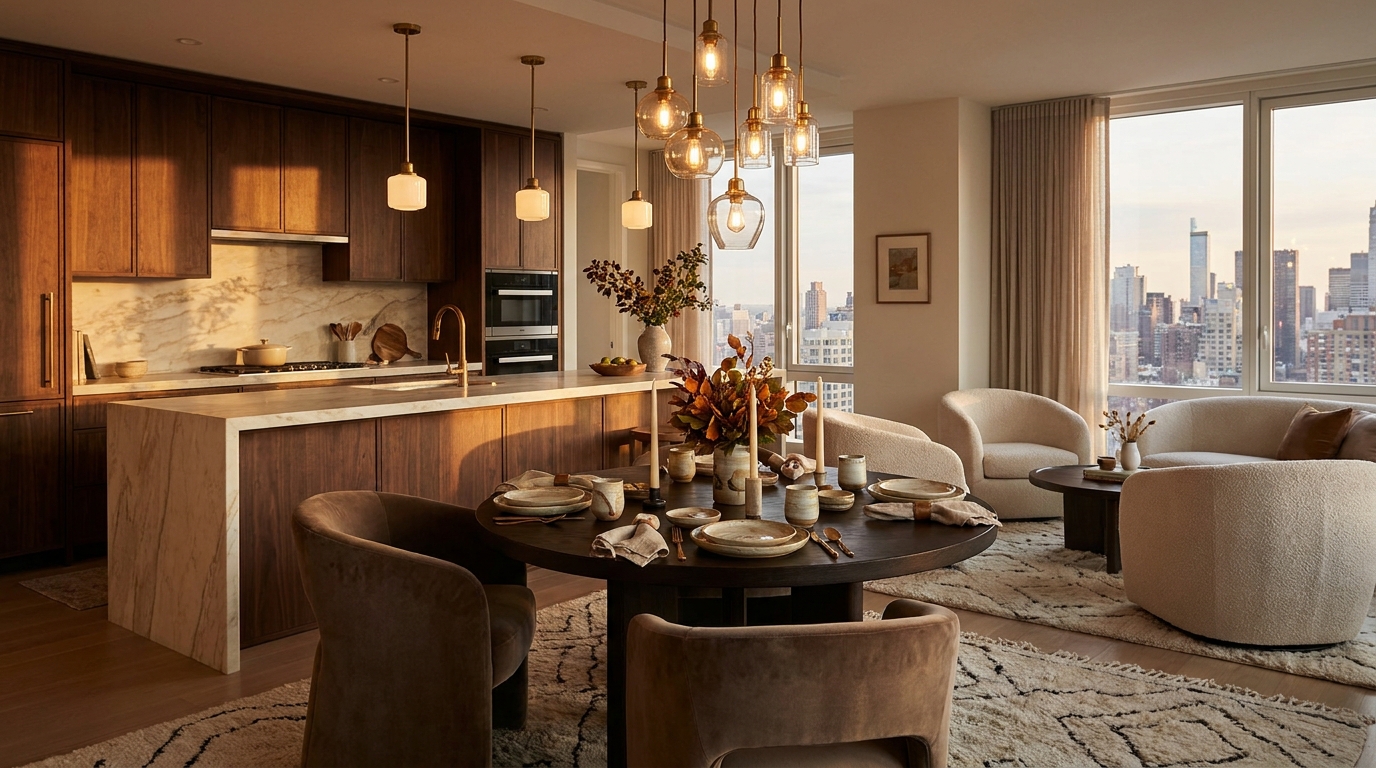
In the kitchen and dining area, this approach shows up in smaller details. Beautiful everyday dishes, linen napkins, a carafe for water, and a neatly styled countertop all make ordinary meals feel more elegant. The city home becomes a place where entertaining is easy and solitude is equally pleasurable. That duality is one of the signatures of urban luxury done well.
Personal Touches Are What Make a Luxury Apartment Feel Alive
There is no true luxury without personality. Even the most polished apartment will feel incomplete if it lacks emotional resonance. Personal touches are what transform a well-designed space into a meaningful one. They create warmth, memory, and identity, and they remind you that your home is not a showroom. It is the setting for your real life.
This can take many forms. Art that reflects your taste, books you return to often, objects collected on travels, inherited pieces, framed family photographs in elegant placements, and handmade ceramics all tell a story. These items should not overwhelm the apartment, but they should absolutely be present. They create intimacy and help the space feel grounded in who you are.
There is also a psychological benefit to surrounding yourself with things that hold positive associations. In a world that can feel noisy and overstimulating, familiar and meaningful objects become a form of emotional infrastructure. They support belonging. They comfort you without demanding attention. They help a home feel restorative in a way that expensive finishes alone never could.
If you are aiming for a more elevated look, the answer is not to remove personality but to edit it thoughtfully. Group smaller objects together rather than scattering them. Frame sentimental pieces beautifully. Choose a few larger artworks rather than filling every wall. Let the personal feel intentional. That is often where elegance and authenticity meet.
The Bedroom Should Feel Like a Private Retreat
In a luxury urban apartment, the bedroom should offer the strongest sense of retreat. It is the room where comfort, acoustics, lighting, and softness matter most because they directly shape rest. A beautiful bedroom is wonderful, but a bedroom that genuinely supports sleep and calm is where urban luxury becomes deeply personal.
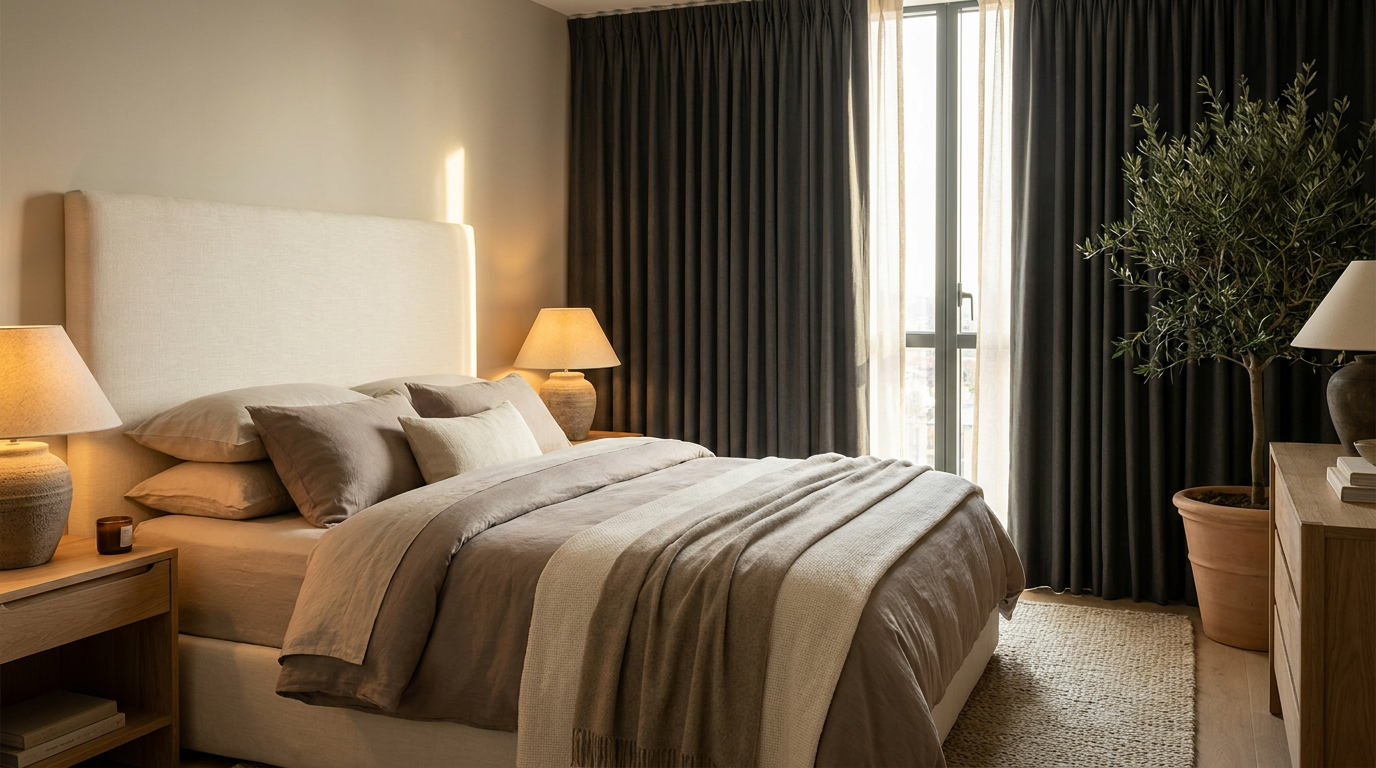
Start with the bed. Invest in quality bedding with breathable natural fibers, a generous duvet, and pillows that suit how you sleep. Layering the bed with texture creates visual richness, but it also changes the physical experience of the room. Washed linen, cotton sateen, wool throws, and an upholstered headboard all contribute to a cocooning atmosphere that feels indulgent in the best way.
Lighting should be gentle and flexible. Bedside lamps with warm bulbs are far preferable to relying on a bright ceiling fixture at night. Blackout curtains or lined drapery can help block city glare and support better sleep, while also softening sound. Add a rug underfoot so the room feels warm when you step out of bed in the morning.
Clutter is particularly disruptive in the bedroom. Keep surfaces relatively calm, store visible laundry, and avoid letting work items dominate the space if possible. Even in a smaller apartment, creating visual separation between productivity and rest can be transformative. The bedroom should feel like permission to slow down.
Wellness Features You Can Add Without Renovating
One of the biggest misconceptions about luxury wellness design is that it only belongs in newly built condominiums or high-budget renovations. In reality, many of the features that improve daily comfort can be introduced gradually and quite simply. Existing apartments can become healthier and more luxurious through thoughtful changes in furnishings, layout, lighting, and materials.
Air quality is a good example. An elegant air purifier, regular window ventilation when possible, and houseplants can support a fresher environment. Choosing low-odor, lower-toxin products such as candles, cleaners, and textiles can also make a noticeable difference. When a home smells clean, subtle, and natural rather than synthetic, it immediately feels more elevated.
Acoustic comfort is another powerful upgrade. Rugs with underlay, upholstered furniture, heavier drapery, and book-filled shelves all help absorb sound. If street noise is an issue, weather stripping or acoustic curtains may improve the feeling of calm significantly. These changes are not flashy, but they directly shape how restful the apartment feels.
You can also create small wellness zones within the home. A corner chair for reading and tea, a tray for evening skincare, a mat and basket for morning stretching, or a compact balcony arranged with planters and soft outdoor lighting can all become rituals of comfort. Luxury does not have to arrive all at once. It can be built through a series of thoughtful choices that support better living.
Entertaining in an Urban Luxury Home
City apartments often have to work hard when guests arrive, but that does not mean entertaining has to feel cramped or formal. In fact, intimate entertaining is one of the loveliest expressions of urban luxury. When a home is warm, well lit, and thoughtfully arranged, even a small gathering can feel incredibly special. The experience becomes less about abundance and more about atmosphere.
Start by making the seating arrangement feel inclusive. Pull chairs into the conversation area, clear unnecessary surfaces, and create one or two natural spots for drinks and small plates. Music matters here as much as decor. A soft, curated playlist can make the room feel polished and ease the transition from daytime to evening.
Styling also helps. Fresh flowers, candlelight, cloth napkins, and a tidy kitchen counter make hosting feel graceful without being fussy. If you have access to a balcony, rooftop terrace, or even a narrow outdoor nook, treat it as an extension of the entertaining space with lanterns, planters, and comfortable seating. Indoor-outdoor continuity is one of the premium features increasingly associated with urban luxury, and even a tiny outdoor space can feel magical when used well.
The beauty of entertaining in a thoughtfully designed apartment is that guests remember how the home felt. They remember the intimacy, the warmth, the ease of conversation, and the details that made the evening feel cared for. Those are the marks of a luxurious home life.
Common Mistakes That Undermine Luxury
It is possible to spend a great deal on a home and still miss the feeling of luxury. Often, the issue is not budget but imbalance. One common mistake is focusing too heavily on visual impact while neglecting comfort. A striking sofa that is not pleasant to sit on or dramatic lighting that feels harsh at night can make a room less enjoyable despite its beauty.
Another mistake is overfilling the space. Luxury needs breathing room. Too many small decor items, oversized furniture in a compact room, or multiple competing trends can create tension instead of elegance. Editing is essential. Let a few elements shine and give them space to be appreciated.
Ignoring acoustics and light is another missed opportunity. These factors shape emotional experience more than many people realize. If a room is noisy, dim in the wrong places, or glaringly bright in others, it will rarely feel truly luxurious. Solving these issues often has more impact than buying another decorative object.
Finally, do not mistake impersonality for sophistication. A home that feels too generic can become emotionally flat. The most beautiful urban apartments blend polish with intimacy. They feel refined, but they also feel inhabited, loved, and quietly expressive.
A Room-by-Room Mindset for Urban Luxury Living
Sometimes the easiest way to elevate your home is to think through each space according to how it supports your life. In the entry, focus on transition and order. In the living room, prioritize conversation, softness, and light. In the kitchen, aim for clean surfaces and beautiful functionality. In the bedroom, protect rest above all else. In the bathroom, add small spa-like details such as plush towels, a tray for essentials, and flattering lighting.
This room-by-room mindset helps keep luxury grounded in daily experience. It reminds you that sophistication is not just decorative. It is practical, sensory, and emotional. It shows up in the drawer that closes smoothly, the lamp that makes evening reading easier, the throw that is always within reach, and the scent that greets you gently at the end of the day.
If you are redesigning gradually, this approach is also more manageable. You do not have to transform the entire apartment at once. Begin with the room that affects you most, whether that is the bedroom, living area, or entryway, and build from there. Small upgrades done with consistency can create a remarkably cohesive result over time.
Final Thoughts: Luxury That Feels Like Home
Urban luxury living is at its best when it honors both beauty and life as it is actually lived. It is not about creating a space that looks untouchable or perfect from every angle. It is about shaping a home that makes you feel held, restored, and quietly inspired. In a fast-moving city, that kind of atmosphere is one of the most meaningful luxuries available.
The most compelling city homes today are not always the largest or most extravagant. They are the ones that understand comfort as a design principle, wellness as a priority, and personality as an essential ingredient. They use light, texture, sound, nature, and thoughtful curation to make everyday routines feel richer. They prove that sophistication does not have to be cold and that luxury does not have to be loud.
If you want to elevate your apartment, start by asking how you want it to feel. Calm, warm, private, graceful, grounded, welcoming. Those emotional qualities can guide every decision that follows. When you design around them, the result is not just a more beautiful space. It is a more supportive way of living.
And perhaps that is the true essence of urban luxury now. Not excess, but intention. Not distance, but ease. Not performance, but presence. A home that reflects your taste, supports your well-being, and offers a soft place to land in the middle of the city is not simply stylish. It is transformative.

No Comment! Be the first one.