The Quiet Premium Behind Toronto’s Hidden Townhouse Supply
In a slower market, the best signal is not always broad price growth. Sometimes it is a single, well-located asset selling in one day, above asking, after years of silence in the same complex.
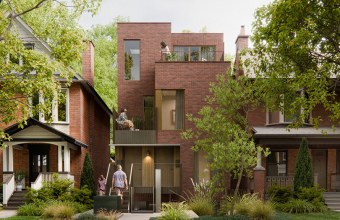
That is what happened at 18 Doncrest Rd. No. 7 in Toronto’s Playter Estates area, where a three-storey townhouse listed at $1,299,000 sold for $1.4-million in May, according to The Globe and Mail. The unit had last traded in 1996 for $250,000. The long-term capital appreciation is obvious, but the more useful investment lesson is in the speed and context of the sale.

The complex, a small group of roughly a dozen townhomes backing onto the Don Valley, had not recorded a sale in four years. Then three units came to market and sold within a month. For investors, that sequence matters. Thinly traded boutique properties can be difficult to value until a fresh comparable appears. Once one renovated unit achieved $1.52-million, the pricing floor for similar homes shifted quickly.
Unit 7 was not positioned as turnkey. It needed updates, which is why it was priced below the recent renovated sale. Yet a buyer submitted a strong pre-emptive offer almost immediately. That suggests demand was not just for finishes. It was for scarcity, location, space and the type of housing product Toronto continues to undersupply.
At 1,740 square feet, with two west-facing terraces, three bathrooms, underground parking and a street-level entrance, the property sits in a valuable middle category between a detached house and a conventional condo apartment. This is where much of Toronto’s ownership demand is increasingly concentrated. Buyers want family-capable space, private outdoor areas and transit access, but many are priced out of freehold homes in established east-end neighbourhoods.

The location strengthens the investment case. Doncrest Road is close to Broadview and Danforth, with subway access nearby, but the complex is set back from the intensity of the main corridors. That combination is difficult to replicate. Proximity to transit supports liquidity. Quiet positioning and valley adjacency support emotional demand. Together, they can create pricing resilience even when the wider market is selective.
Scarcity becomes more valuable when it is paired with transit, usable space and a setting buyers cannot easily duplicate.
There are still risk factors. Monthly fees of $1,170 are not insignificant and would affect carrying costs for both investors and owner-occupiers. Older townhouse complexes also require careful review of reserve funds, maintenance history and future capital work. A wood-burning fireplace, terraces and underground parking all add appeal, but they also come with due diligence questions around upkeep and common-element obligations.
For income-focused investors, the yield at a $1.4-million purchase price would need to be examined conservatively. This is unlikely to be a simple cash-flow play. The stronger argument is long-term capital preservation and appreciation in a constrained urban submarket. The asset behaves more like a scarce end-user property than a high-yield rental unit.

The broader takeaway is clear. In established urban neighbourhoods, investors should watch small, low-turnover developments closely. When comparable sales are rare, one strong transaction can reset buyer psychology. The opportunity is not always buying cheap. It is identifying properties where replacement value, lifestyle utility and location scarcity give the next buyer a reason to move quickly.
Source: The Globe and Mail