
Toronto’s Buyer Window Is Narrowing, But Not Closed
The Greater Toronto Area housing market is beginning to move again, but investors should resist reading June’s numbers as a clean price rebound. The more useful signal is subtler: demand is returning while supply is being withdrawn. That combination rarely stays neutral for long.
According to reporting from CP24 and The Canadian Press, GTA home sales reached 6,770 in June, up 9.4 per cent from a year earlier. On a seasonally adjusted basis, sales also rose 1.4 per cent from May. At the same time, new listings fell 12.9 per cent year-over-year to 17,282, while active listings declined 13.5 per cent to 27,329.
For investors, that spread matters more than the headline sales gain. Rising transactions alongside falling inventory suggest that buyers are re-entering the market before sellers fully capitulate. This is the stage where price discovery becomes uneven. Some properties still trade at discounts, while better-located assets begin attracting multiple serious buyers.
Prices have not yet turned. TRREB reported the average selling price at $1,058,658, down 3.9 per cent year-over-year, while the composite benchmark price fell 5.4 per cent. That confirms the market is still absorbing the impact of higher borrowing costs, softer buyer psychology, and a gap between seller expectations and current bids.
The opportunity is not simply that prices are lower. It is that liquidity is improving before pricing has fully recovered.
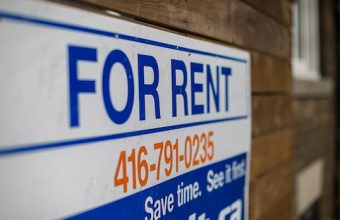
The seller side is especially important. Many owners are not distressed. As real estate agent Tom Storey noted in the CP24 report, some sellers who cannot achieve their preferred price are choosing to remove properties from the market and rent them out instead. That behaviour limits forced selling and slows the path to a definitive market bottom.
This has direct investment implications. If would-be sellers become landlords, resale supply tightens but rental supply may rise in certain segments. In the condo market, that can create a more competitive leasing environment in the short term, particularly for undifferentiated units. Investors underwriting condo acquisitions should be conservative on rent growth and vacancy assumptions, even if purchase prices look more attractive than they did two years ago.
Condos are the segment to watch. Sales rose 14.3 per cent year-over-year, leading all housing types. RBC Economics has also noted that Toronto condo affordability has improved meaningfully, with prices nearly back to late 2019 levels. For capital with a five-to-seven-year horizon, that is a notable reset. It does not mean every condo is a buy. It means the gap between weak sentiment and long-term urban demand is becoming investable again.
Detached homes remain a different calculation. Ownership costs still exceed 80 per cent of a typical Toronto household’s pre-tax income, which keeps end-user demand constrained. Investors considering detached assets need a stronger thesis: land value, redevelopment potential, multi-unit conversion, or a clear neighbourhood growth story. Pure appreciation bets remain harder to justify at current carrying costs.
The second half of the year will test whether June was the start of a durable tightening cycle or only a temporary lift from pent-up demand. Four consecutive months of higher sales and lower new listings is meaningful, but not yet conclusive. If that pattern persists, today’s buyer leverage will gradually erode.
The practical takeaway is discipline. Investors should not chase the market, but they should be underwriting actively. In soft markets, the best assets rarely announce the bottom. They simply become unavailable before consensus catches up.
Source: CP24