What a Softer Dollar Means for Cross-Border Property Capital
Currency moves rarely feel urgent to property investors until they affect purchasing power, debt costs, or the timing of capital flows. The latest retreat in USD/CHF is a useful reminder that real estate returns are not shaped by asset prices alone. For international buyers, exchange rates can quietly alter the economics of a deal before a valuation report is even opened.
According to FXStreet, USD/CHF fell 0.34% during Thursday’s North American session, slipping below 0.8100 after reaching a year-to-date high of 0.8139 the previous day. The move came as US Treasury yields softened, even though the latest US Core PCE inflation reading remained hot. That combination matters because it suggests the dollar’s recent strength may be losing momentum, at least in the short term.
For property investors with exposure to both dollar and Swiss franc assets, the message is not simply that one currency rose and another fell. It is that rate expectations, inflation pressure, and safe-haven demand are still pulling capital in different directions. When yields move lower, the appeal of dollar income can weaken. When inflation remains sticky, the path for central bank policy becomes less predictable. Both factors influence how global capital prices real assets.
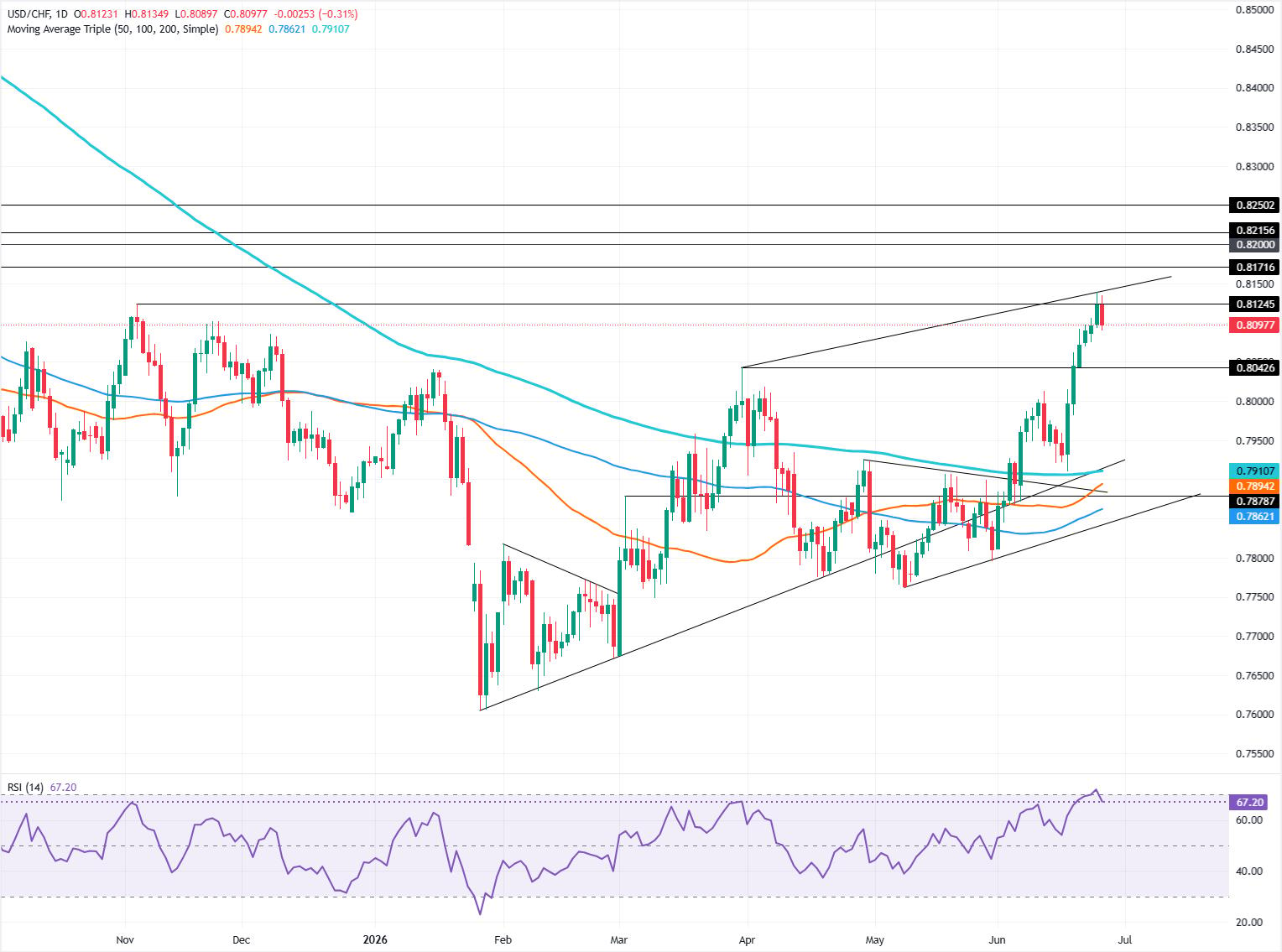
The technical picture also deserves attention. FXStreet notes that USD/CHF may be forming a bearish “tweezer-top” pattern after six consecutive days of gains. Immediate support sits near 0.8050, followed by the psychologically important 0.8000 level. A break below that could expose the 0.7910 area, where the June 17 daily low aligns with the 200-day simple moving average. On the upside, reclaiming 0.8100 would put the recent 0.8139 high back in focus, with 0.8200 as the next major marker.
For international real estate investors, currency is not a side issue. It is part of the entry price, the income yield, and the eventual exit return.
For a Swiss-based investor looking at US property, a stronger franc can improve acquisition power. Dollar-priced assets become more accessible when converted back into CHF. That can make US residential rentals, logistics assets, or income-producing commercial property appear more attractive, assuming local fundamentals remain sound. The advantage is especially relevant where pricing has already softened because of higher financing costs.
For US investors considering Swiss exposure, the opposite applies. A firmer franc can make entry more expensive, but it may also enhance the defensive profile of holdings. Switzerland’s limited land supply, institutional stability, and strong currency reputation have long supported its role as a capital preservation market. The challenge is yield. Prime Swiss property often trades on lower income returns, so currency movement can have an outsized effect on total performance.
The broader signal is about discipline. Investors borrowing in one currency and earning income in another should revisit hedging assumptions. A short-term pullback in USD/CHF may not change a long-term strategy, but it can shift timing, deposit requirements, and expected returns. In leveraged real estate, small currency moves can become meaningful when applied to large transaction values.
The practical takeaway is simple. Before committing to a cross-border property purchase, model the deal under several exchange-rate scenarios, not just today’s spot rate. Strong assets still matter most, but in a market where inflation, yields, and currencies are moving together, the best investors will treat foreign exchange as part of the investment case, not an afterthought.
Source: FXStreet