
Davenport Shows Why Infrastructure Delivery Must Protect the Public Realm Early
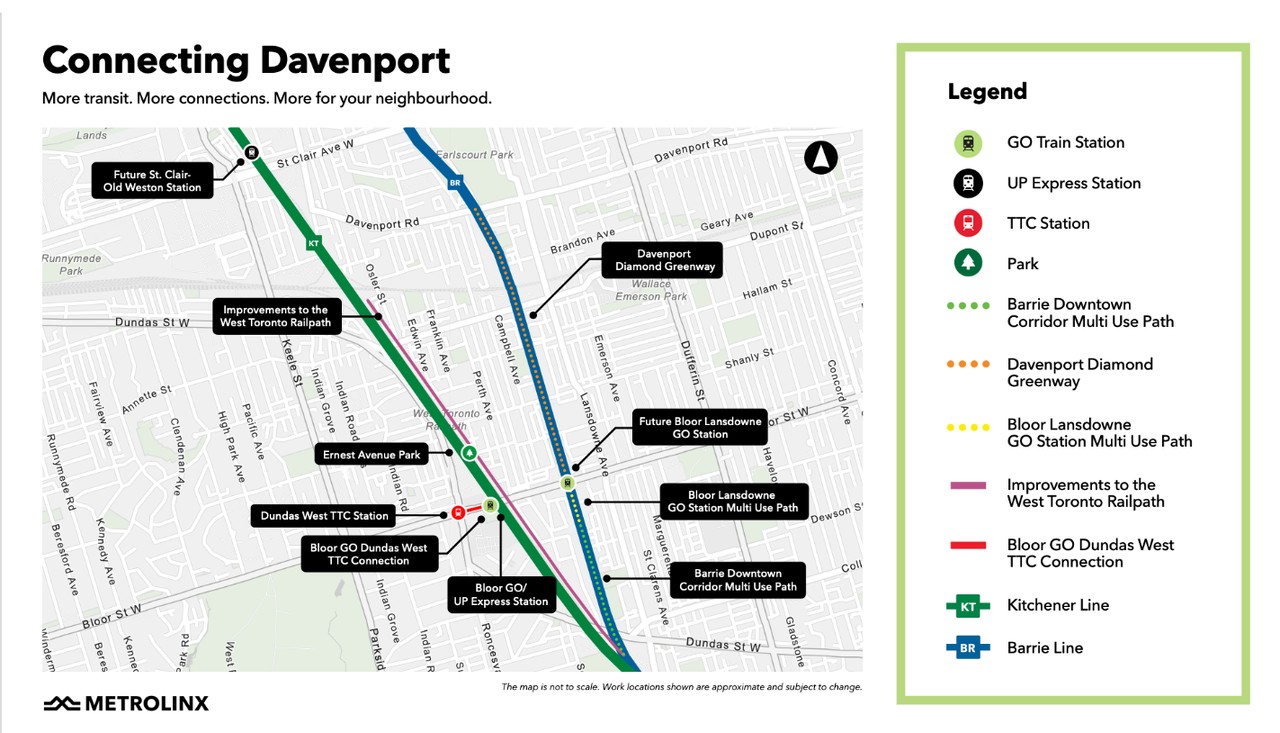
The slow buildout of the Davenport Greenway is more than a neighbourhood frustration. It is a clear development lesson for Toronto: major transit infrastructure cannot be treated as complete when the trains are moving but the city-building components remain unresolved. As UrbanToronto reports, the Barrie GO grade separation has improved rail operations since opening to trains in 2023, yet the promised public realm beneath and beside it is still moving through delays, ownership gaps, and staged construction.
For developers, planners, and landowners watching the west side of the city, the signal is important. Rail corridors are no longer just barriers or back-of-house infrastructure. In an intensifying Toronto, they are becoming structuring elements for mobility, redevelopment, placemaking, and land value. The Davenport corridor sits between Bloor Street and Davenport Road, near established neighbourhoods, employment lands, industrial buildings, and evolving mixed-use pressure. A completed greenway would not simply add landscaping. It would alter local access patterns and strengthen the development logic of sites that currently sit on the wrong side of fragmented movement networks.
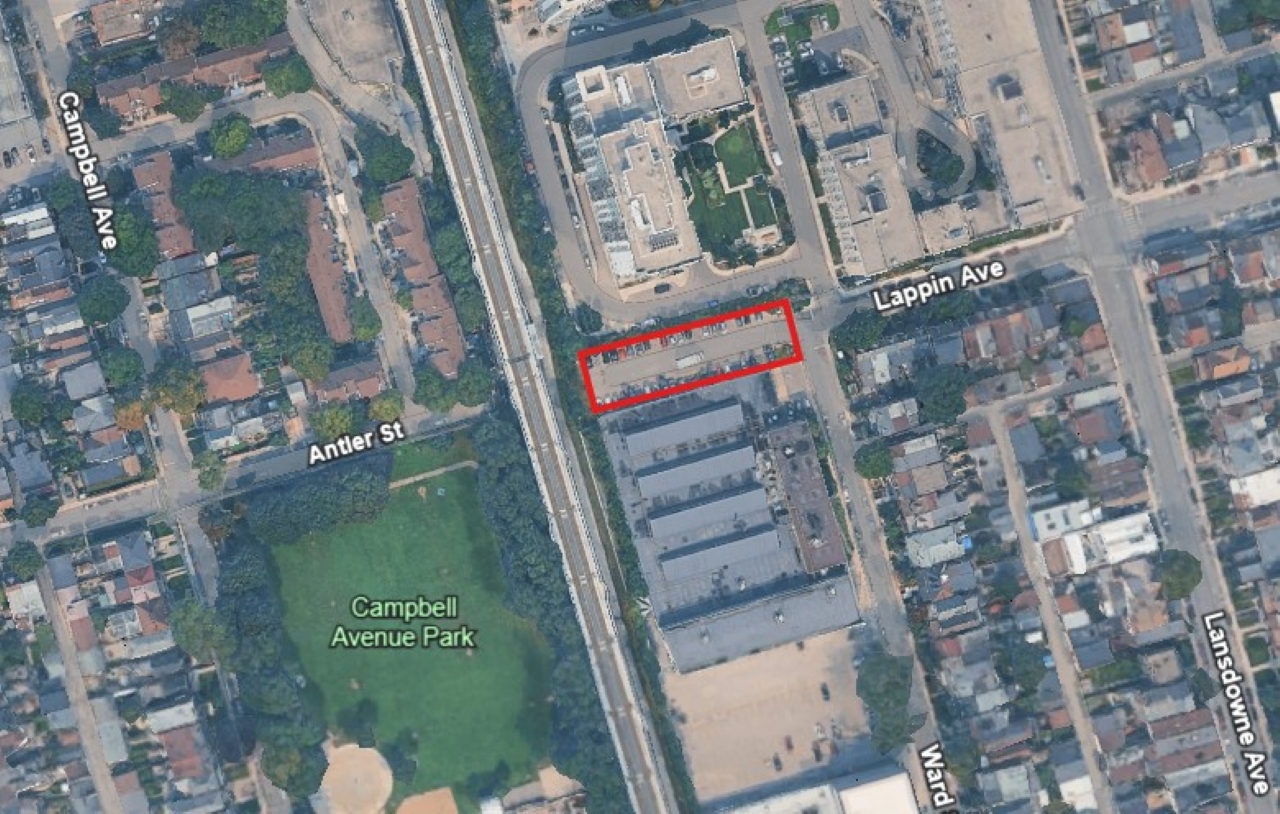
The challenge is that linear infrastructure depends on continuity. A multi-use path gains value when it connects blocks, crossings, stations, parks, retail streets, and future housing sites. When even a 30-metre missing link remains unresolved, the network underperforms. The Antler Street to Lappin Avenue connection illustrates the cost of weak corridor protection. The City once owned the key parcel at 90 Ward Street, then sold it in 2012 for $145,000, despite the broader grade separation already being in design. Now Council has approved $2.5 million for the short connection, with much of that likely tied to reacquiring or resolving access to the land.
That is not just a budgeting problem. It is a governance problem. Cities that want transit-oriented growth need to secure rights-of-way, pedestrian routes, servicing corridors, and public realm obligations before land control becomes fragmented or values rise. Once infrastructure is announced, adjacent land becomes strategically different. What looks like surplus land in one budget cycle can become a critical mobility asset in the next.
Infrastructure value is not fully realized by moving trains faster. It is realized when the surrounding city becomes easier to move through, easier to develop, and easier to live in.
The Davenport case also matters because Toronto is entering a period where public infrastructure will carry more development responsibility. GO expansion, electrification, new stations, cycling corridors, and complete street investments will all influence where density is politically acceptable and financially feasible. But feasibility depends on certainty. If public realm commitments lag by years, private investment has to price in uncertainty around access, approvals, local opposition, and marketability.
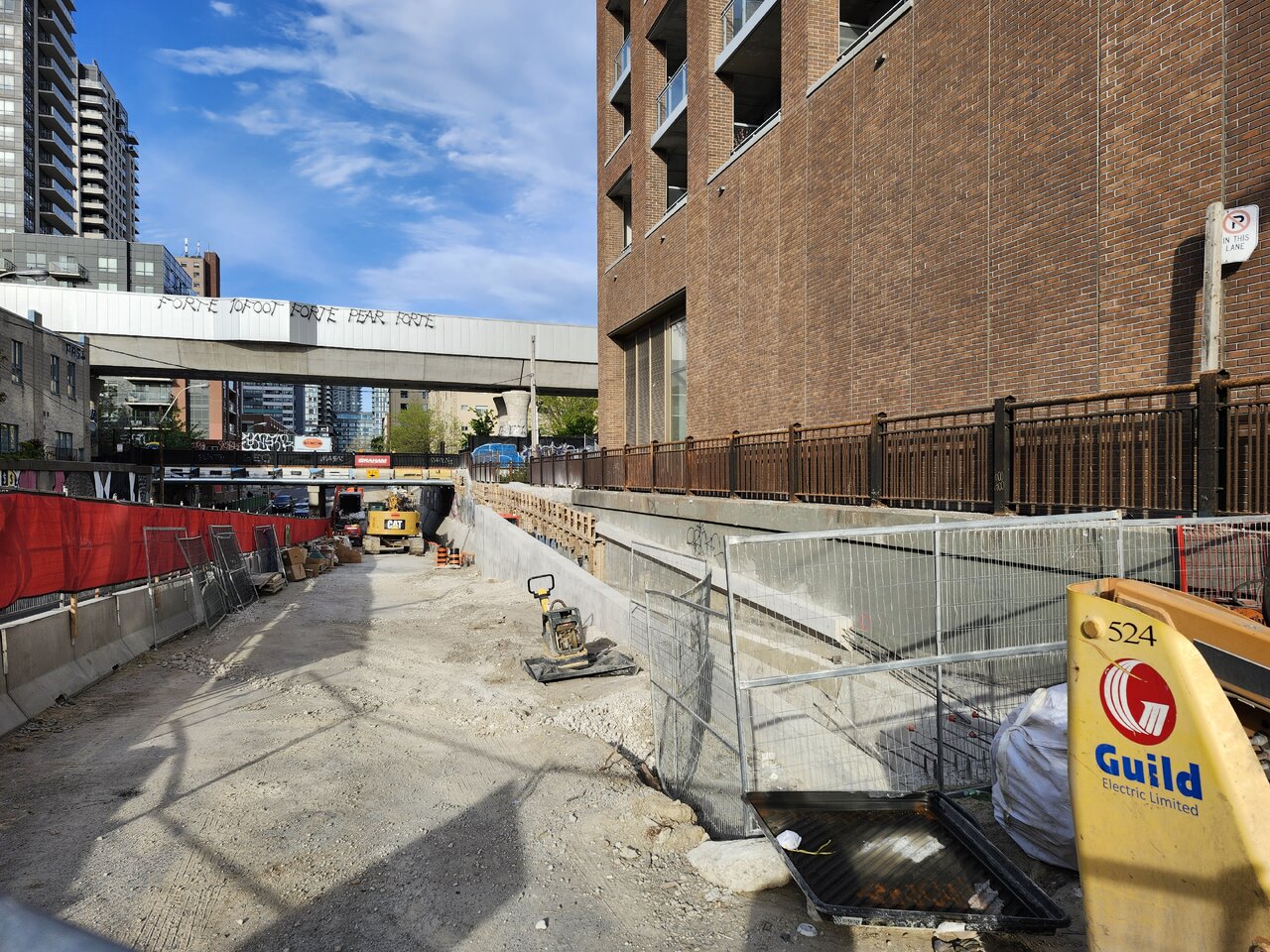
There is still upside here. The Paton Road and Wallace Avenue crossings show how grade separation can repair long-standing neighbourhood barriers. The Dupont ramps and CPKC overpass will eventually create a more useful north-south active transportation spine. Once complete, the greenway can support more walkable development conditions along a corridor that has historically been defined by rail separation, industrial edges, and awkward pedestrian movement.
The lesson for future projects is straightforward. Public realm, land assembly, and neighbourhood connectivity must be embedded into infrastructure delivery from the beginning, not appended after the engineering milestone is achieved. Developers should watch whether the City and Metrolinx treat Davenport as an exception or as a warning. The answer will shape how confidently the market can underwrite growth around Toronto’s next generation of transit corridors.
Source: UrbanToronto