The Outdoor Kitchen Becomes a Room in Motion
The most interesting shift in outdoor living is not simply that we are cooking outside more often. It is that the garden is being asked to behave like architecture. It must host, adapt, shelter, store, illuminate, and still feel effortless. As Homes & Gardens reports in its look at the modular outdoor kitchen trend for 2026, the built-in backyard kitchen is no longer the only expression of luxury. Flexibility has become its own form of refinement.
For design-minded homeowners, modularity offers a quieter kind of intelligence. Rather than committing to one permanent composition, the outdoor kitchen can now evolve in layers: a worktop today, refrigeration later, a movable island when the space begins to host more generously. This is especially relevant as renovation costs rise and contractor timelines stretch. The appeal is practical, but its aesthetic potential is far more nuanced.
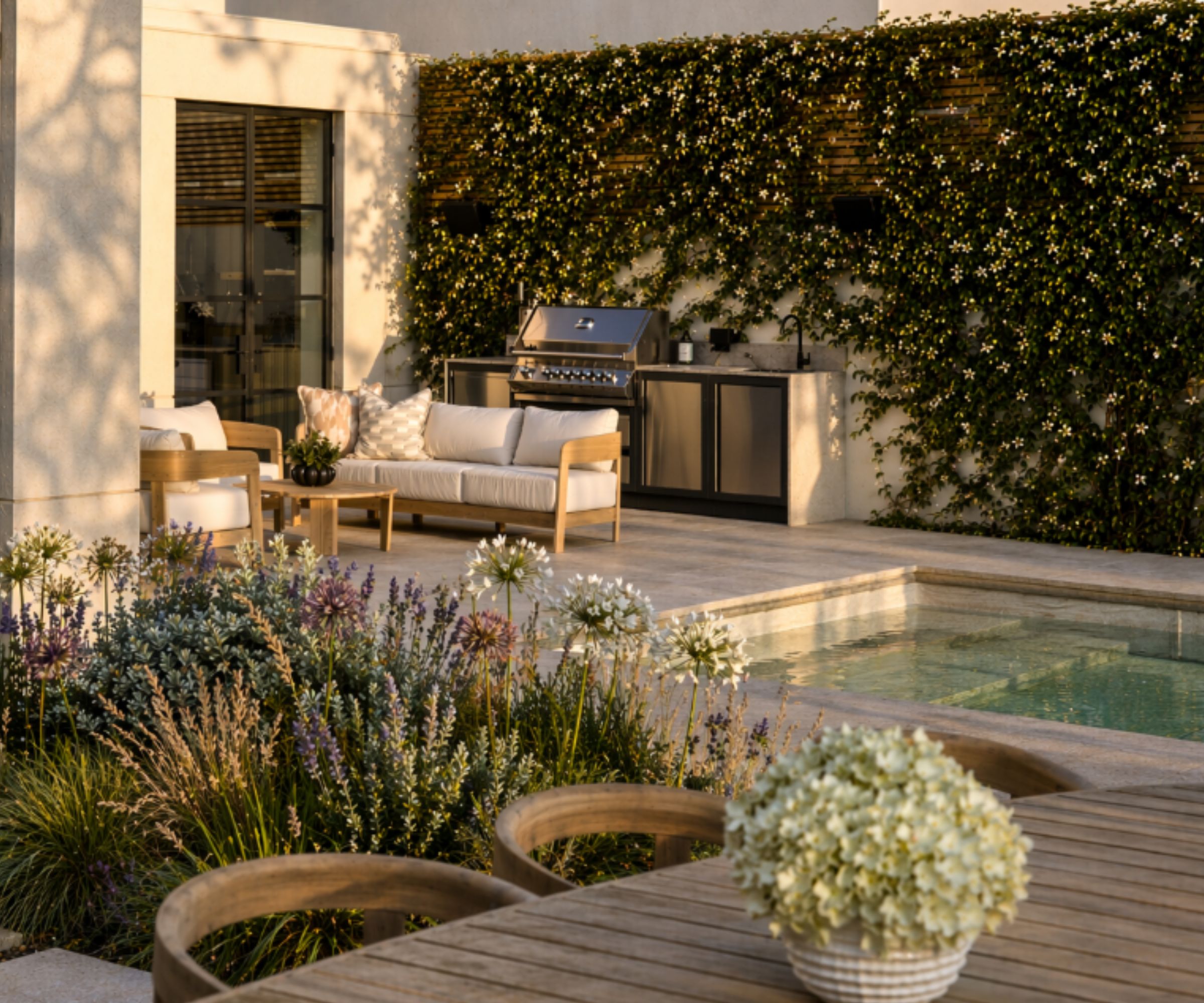
The strongest modular schemes do not announce themselves as equipment. They borrow from interior language: waterfall stone counters, slatted timber fronts, powder-coated metal, discreet lighting, and hardware with a considered silhouette. These details matter because the outdoor kitchen is no longer a seasonal add-on. It is part of the visual sequence of the home, seen from windows, crossed on the way to the garden, used during lunches, evenings, and informal gatherings.
Material choice is where modular outdoor kitchens either become elegant or remain merely convenient. Stainless steel brings hygiene, resilience, and a professional edge, but it benefits from warmth nearby: acacia, teak, woven seating, clay planters, or stone with natural variation. Powder-coated frames can disappear into shadowy greens and charcoals. Timber doors soften the hard geometry of appliances. A pale countertop, if well chosen, catches evening light and gives the entire composition a sense of permanence.
Luxury outdoors is no longer measured by permanence alone, but by how gracefully a space can change.
The most successful examples also understand the choreography of use. A good outdoor kitchen is not only about the grill. It considers where the cook stands, whether guests can gather without interrupting preparation, where the sink sits in relation to view lines, and how far the dining table is from the heat and smoke. A movable island can become a prep station, a serving bar, or a poolside counter. Closed storage protects, while open shelving keeps the ritual of cooking relaxed and visible.
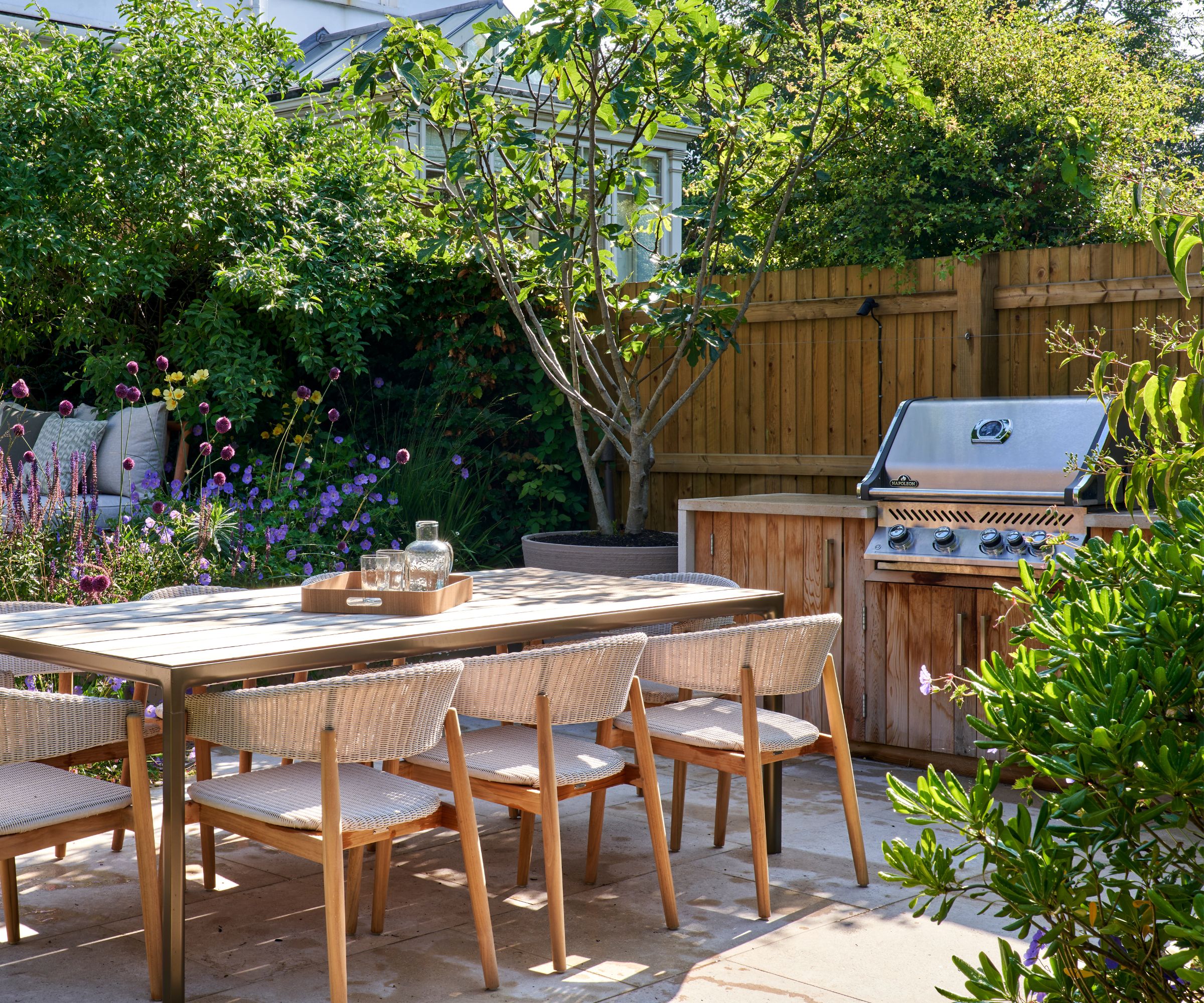
There is also the question of atmosphere. Outdoor kitchens often fail when they are designed as isolated objects rather than rooms. Shade, planting, lighting, and seating complete the architecture. A pergola can define the ceiling. Climbers can soften a wall. Low lamps on a counter can create the same intimacy as a kitchen table indoors. Even a small rechargeable lamp or a beautiful bowl can shift the mood from utility to hospitality.
This movement reflects a broader design preference for homes that are less fixed and more responsive. The garden is becoming a living plan, not a finished diagram. For readers considering their own outdoor spaces, the lesson is clear: begin with proportion, flow, and material harmony before choosing appliances. A modular kitchen should not look temporary. It should look intentional, as if it belongs to the landscape now, while leaving room for the life that may come next.
Source: Homes & Gardens