


Geothermal energy often sounds like something reserved for volcanic regions, utility-scale power plants, or highly technical green building projects. In reality, when most homeowners talk about geothermal systems, they are usually referring to ground-source heat pumps. These systems use the stable temperature below the surface of the earth to move heat into a home in winter and pull heat out of it in summer. That may sound sophisticated, and in some ways it is, but the core idea is surprisingly straightforward.
Table Of Content
- What a Geothermal System Really Is
- Why Geothermal Can Be So Efficient
- What Homeowners Usually Like Most About Geothermal
- Geothermal vs. Other Heat Pump Options
- How the Installation Process Actually Works
- Common Loop Configurations
- What Geothermal Installation Costs Really Reflect
- Is Your Home a Good Candidate for Geothermal?
- Questions to Ask Before You Install
- Maintenance, Lifespan, and Daily Use
- Sustainability Benefits Without the Hype
- Common Misconceptions, Clearly Answered
- “Does geothermal mean drilling deep into the earth for energy?”
- “Is geothermal only useful in very cold places?”
- “Is geothermal only realistic in a brand-new house?”
- “Is it maintenance-free?”
- “Is the indoor unit the expensive part?”
- The Bottom Line for Homeowners
For people trying to lower energy bills, reduce reliance on fossil fuels, and make more durable long-term housing decisions, geothermal deserves a closer look. The U.S. Department of Energy explains that geothermal heat pumps use buried loops, an indoor heat pump, and a standard distribution system such as ductwork or hydronics. Rather than creating heat through combustion, they transfer it. That difference matters because moving heat is typically much more efficient than generating it by burning fuel on site.
This is also why geothermal is increasingly part of the broader conversation around practical sustainability. The International Energy Agency has pointed to continued growth in renewable heat, and both Canadian and U.S. policy discussions now place greater attention on heat pumps and clean heating pathways. For homeowners, that means geothermal is no longer an obscure concept. It is becoming a realistic option within a larger shift toward electrification, better building envelopes, and lower-carbon living.
If the installation process has always felt intimidating, you are not alone. A lot of people understand the basic sustainability appeal of geothermal but stop short when they imagine drilling rigs, excavation, or technical engineering. This guide is meant to close that gap. We will walk through how residential geothermal systems work, why they can be so efficient, what the installation process actually involves, and how to assess whether your home is a good candidate.
The most helpful place to begin is with a simple distinction. Residential geothermal does not usually mean generating electricity from deep underground heat. It almost always means a shallow ground-source heat pump system designed for one home or property. Once that distinction is clear, the rest becomes much easier to understand.
What a Geothermal System Really Is
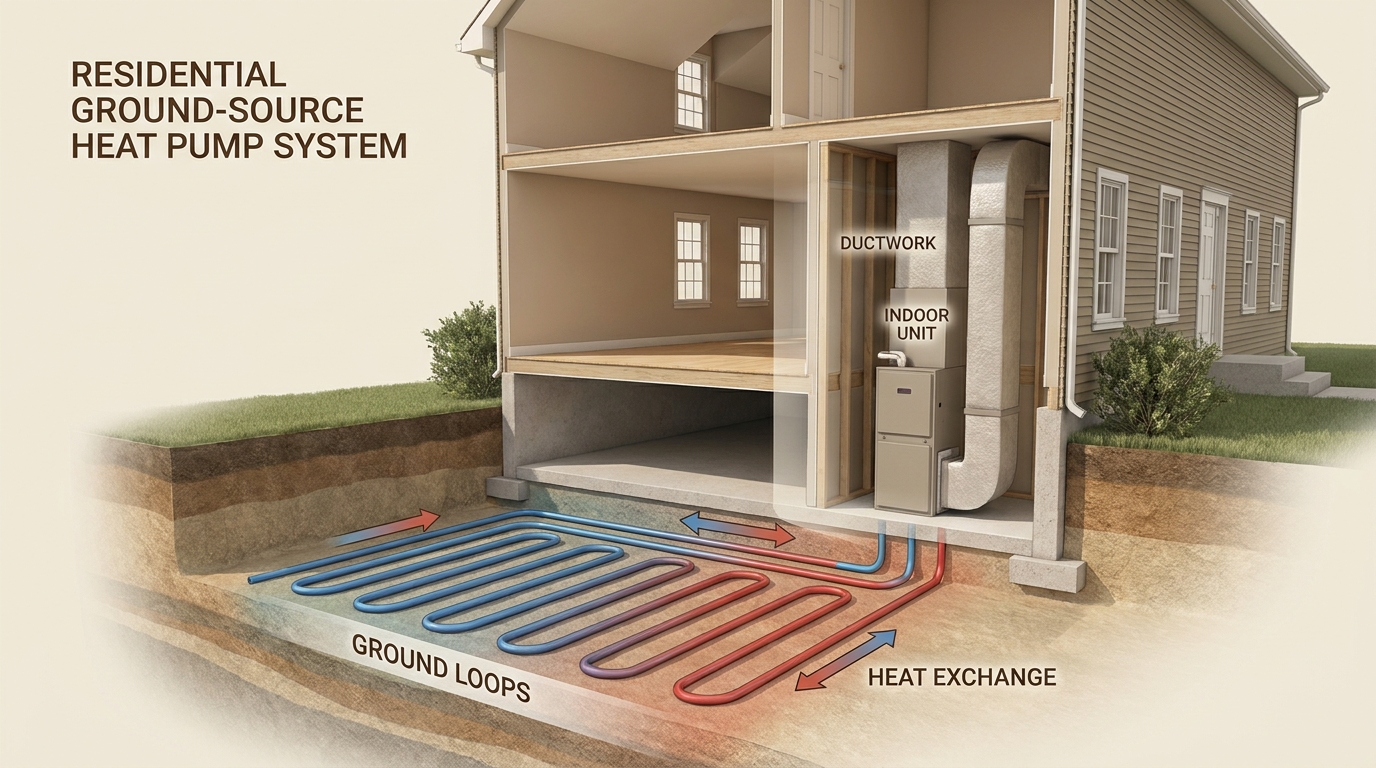
A residential geothermal system is a heating and cooling system that uses the earth as a heat source in winter and a heat sink in summer. A few feet below the ground, temperatures stay far more stable than outdoor air temperatures. That stable environment gives a ground-source heat pump a thermal advantage. On a freezing winter day or a very hot summer afternoon, the equipment is exchanging heat with the ground rather than battling extreme outdoor air conditions.
The system usually includes three main parts. The first is the ground loop, which is a network of buried pipes filled with a fluid that circulates through the earth. The second is the indoor heat pump unit, which transfers heat between the loop and the home. The third is the distribution system, which could be forced-air ductwork, radiant floor heating, or another hydronic setup depending on the home.
In winter, the loop absorbs heat from the ground and brings it to the indoor heat pump. The heat pump concentrates that thermal energy and delivers it into the house. In summer, the process reverses. Heat is pulled from the home and moved into the ground, which is cooler than the outdoor air during hot weather. This is why geothermal can provide both heating and cooling from the same core system.
One of the most persistent misconceptions is that geothermal only works in cold climates. According to the U.S. Department of Energy, geothermal heat pumps can be installed in all climates. Another common misunderstanding is that they only make sense for new construction. DOE also notes that these systems can work in both new and existing buildings, which is especially important for homeowners considering retrofits.
For most homes, geothermal is not about tapping dramatic underground heat. It is about using the earth’s steady temperature as a reliable partner in heating and cooling.
Why Geothermal Can Be So Efficient
The efficiency story is at the heart of geothermal’s appeal. Traditional furnaces burn fuel to create heat. Standard air conditioners work by removing heat from indoor air and dumping it outside. Air-source heat pumps also move heat rather than generating it, but they depend on outdoor air temperatures, which can swing dramatically through the seasons. Geothermal systems have a more stable heat exchange environment because the ground changes temperature far less than the air does.
That stability reduces the workload on the equipment. The heat pump is not trying to extract warmth from extremely cold outside air in winter, and it is not trying to reject indoor heat into intensely hot summer air. As a result, geothermal systems can operate with strong efficiency across seasons. Over time, that often translates into lower heating and cooling costs, especially in homes with high energy demand or in regions with substantial seasonal temperature swings.
The U.S. Department of Energy notes that while geothermal heat pumps are generally more expensive to install than air-source systems, the additional cost can often be recovered through energy savings over time. This is one of the reasons geothermal tends to appeal most to homeowners with a longer ownership horizon. If you plan to stay in your home for many years, the life-cycle economics usually become more attractive than if you expect to move in the near future.
Efficiency also has a sustainability dimension. A geothermal system reduces or eliminates direct on-site combustion for space conditioning. That can lower a home’s dependence on natural gas, propane, or heating oil. When paired with a cleaner electrical grid or on-site solar generation, the emissions profile can improve even further. This is why geothermal often fits naturally into broader decarbonization strategies for homes.
The International Energy Agency’s 2025 renewables analysis suggests that modern renewable heat is expected to grow significantly from 2025 to 2030. In that larger context, geothermal heat pumps are part of a practical shift in how buildings are heated and cooled. They are not the only path, but they are one of the more durable and high-performance options for households that want long-term efficiency with lower direct fossil fuel use.
What Homeowners Usually Like Most About Geothermal
People often start researching geothermal because they want lower utility bills, but they tend to appreciate other benefits once they understand the full picture. One of the most noticeable is comfort. Because geothermal systems are designed to deliver steady heating and cooling rather than short, intense bursts, indoor temperatures can feel more even and stable. Homes may experience fewer temperature swings and less of the hot-and-cold cycling that some conventional systems create.
Noise is another underrated benefit. DOE notes that geothermal systems are typically quieter than many air-source alternatives. Since there is no outdoor condensing unit handling the same kind of exposure and fan activity as a conventional central air system, the overall sound profile can be gentler. For homes where outdoor mechanical noise is a concern, that can make a meaningful difference in day-to-day experience.
Durability also matters. Ground loops are typically built to last a very long time when installed properly, and geothermal systems generally require less maintenance than many conventional systems. That does not mean maintenance-free. Filters still need attention, controls should be checked, and the system should be professionally serviced at appropriate intervals. Still, the reduced wear associated with stable operating conditions can support a longer service life for key components.
There is also a design advantage in some homes. Geothermal can work with ducted systems, but it can also integrate with hydronic heating and radiant floors in the right setup. For new construction or major renovations, that flexibility can be appealing. It allows homeowners and designers to think more holistically about comfort, efficiency, and how rooms are conditioned.
These benefits are especially relevant in a housing market that increasingly values resilience, lower operating costs, and practical clean technology. Even with some heat pump market fluctuations in 2025, the IEA reported that heat pumps still outsold gas boilers for the fourth year in a row in the United States. That does not mean every home should choose geothermal specifically, but it does show that efficient electric heating is steadily moving into the mainstream.
Geothermal vs. Other Heat Pump Options
Because the term heat pump appears in several technologies, homeowners sometimes confuse geothermal with air-source heat pumps. Both systems move heat rather than creating it through combustion, and both can provide heating and cooling. The difference is the medium they exchange heat with. Air-source heat pumps exchange heat with outdoor air. Ground-source heat pumps exchange heat with the earth.
That distinction shapes performance, installation complexity, and cost. Air-source heat pumps are usually easier and less expensive to install because they do not require buried loops, trenching, or drilling. They are often the faster retrofit option and can be an excellent fit for many homes. Geothermal, by contrast, usually has a higher upfront cost because the ground loop installation is labor- and site-intensive.
However, geothermal’s use of stable ground temperatures can support stronger efficiency and more consistent performance over time. In settings with high heating and cooling loads, or where homeowners want a premium long-term system and are prepared for the upfront investment, geothermal can be compelling. The decision is not always about which technology is universally better. It is usually about which one suits the property, budget, energy goals, and timeline.
It also helps to compare geothermal not just against air-source heat pumps, but against the whole picture of home performance. A drafty house with poor insulation may not get the full value from any advanced heating system. That is why geothermal tends to work best as part of a broader strategy that may include air sealing, insulation upgrades, smart controls, and in some cases distribution improvements like duct sealing or radiant system optimization.
How the Installation Process Actually Works
The installation stage is where geothermal can feel most mysterious, but the process is more understandable than many people expect. It starts with a site assessment. A qualified contractor evaluates the property size, soil conditions, access for equipment, local geology, heating and cooling loads, and the type of indoor distribution system the home has or could accommodate. They also assess whether the home is best served by a horizontal loop, vertical loop, pond or lake loop, or another design.
Horizontal loops are typically installed in trenches and generally require more land area. They can make sense for rural or suburban properties with sufficient yard space and good excavation access. Vertical loops are drilled deeper into the ground and are often used when land is limited. These systems can be a practical choice for smaller lots, but drilling can add to project complexity and cost. Pond or lake loops may be possible on suitable properties with nearby water bodies, though they depend on site-specific conditions and regulations.
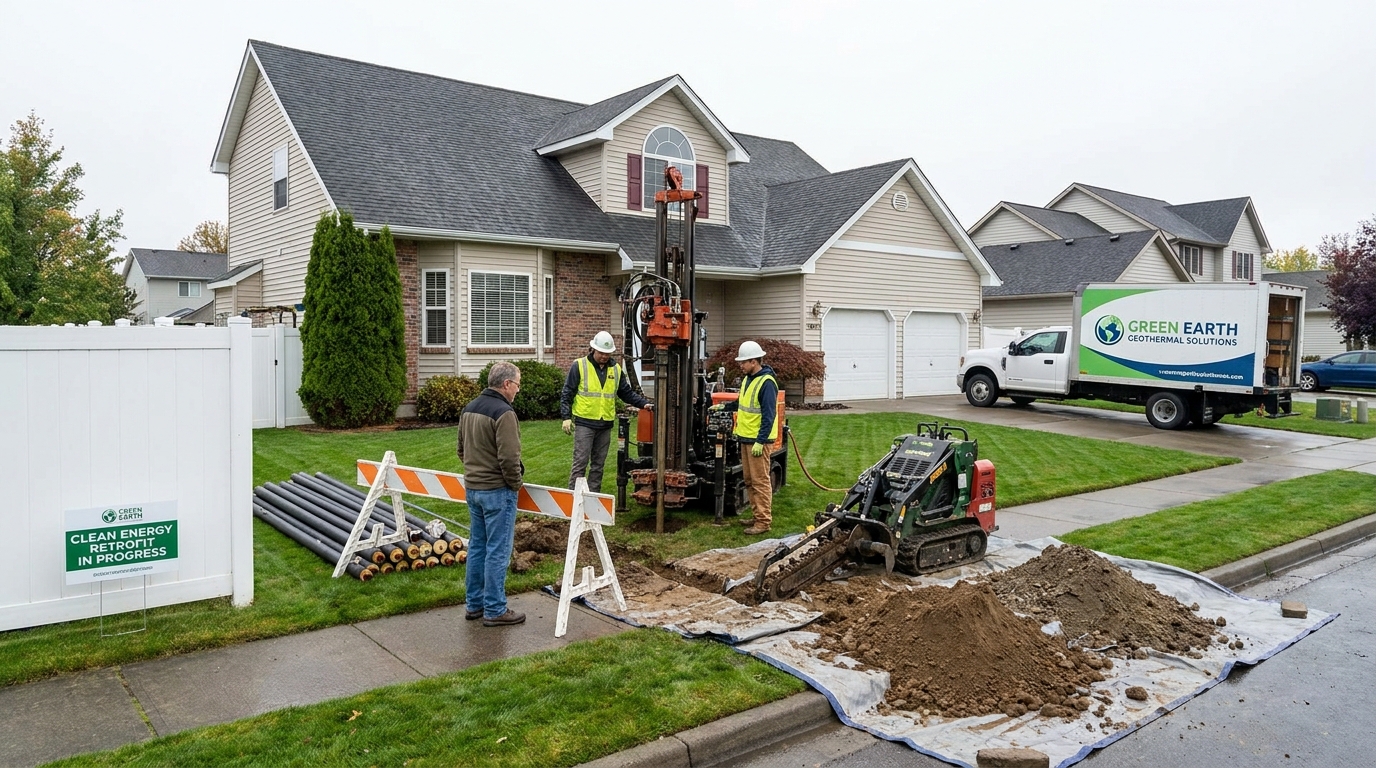
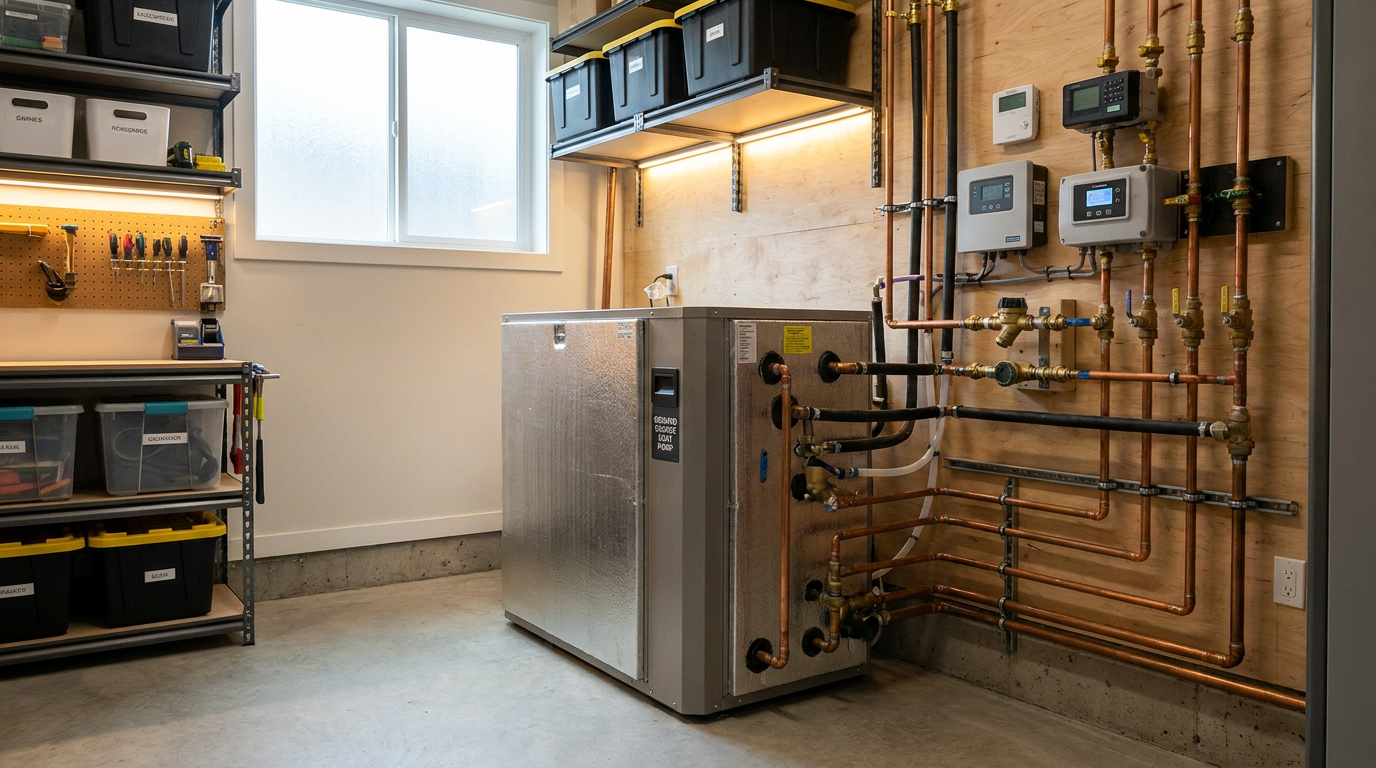
After the design is finalized, contractors install the ground loop. This may involve trenching across a yard or bringing in drilling equipment to bore vertical holes. The loop piping is placed, connected, pressure-tested, and tied back to the home. Indoors, the heat pump unit is installed in a mechanical room or utility area and integrated with the home’s existing ductwork or hydronic system. Controls are configured, the system is commissioned, and the contractor verifies that the equipment is operating properly.
From a homeowner’s perspective, the most visible part of the project is often the temporary disruption outside. There may be excavation, drilling equipment, soil movement, and landscape disturbance. This is one reason planning matters. A thoughtful installer will help sequence the work, explain restoration expectations, and coordinate around driveways, gardens, trees, drainage, and utility lines.
It is worth knowing that proper design is not a minor technicality. DOE notes that soil thermal characteristics matter for ground-coupled systems. In other words, the loop field cannot simply be guessed. It must be sized and configured for the site and the home’s energy demand. That is also why homeowners should look for experienced installers who understand performance calculations, permitting requirements, product eligibility, and commissioning standards.
Common Loop Configurations
Although the engineering can get detailed, the practical differences between loop types are fairly easy to summarize. The best loop design depends on available land, geology, and budget.
- Horizontal loops are buried in trenches and usually cost less than drilling vertical wells, but they need more open land.
- Vertical loops are drilled deep into the ground and are useful for smaller properties or sites where trenching is difficult.
- Pond or lake loops may work when a suitable body of water is available, though feasibility depends on site conditions and local rules.
- Open-loop systems use groundwater directly in some cases, but they are more site-specific and depend heavily on water quality, supply, and regulation.
For most homeowners, the key takeaway is simple. The installer is not choosing a loop type based on preference alone. The choice should reflect the realities of your land, your home, and your local environment.
What Geothermal Installation Costs Really Reflect
One of the biggest barriers to geothermal adoption is upfront cost. This is important to say plainly because homeowners deserve realism, not sales language. Geothermal systems are often more expensive to install than air-source heat pumps, furnaces, or conventional air conditioners. The reason is not that the indoor unit is uniquely extravagant. In many cases, the largest cost variable is the ground work itself, especially drilling or trenching.
Cost reflects several factors. Property conditions matter. Loop type matters. Local labor rates matter. The complexity of integrating with existing ductwork or hydronics matters. In retrofit situations, electrical upgrades, duct modifications, or mechanical room changes may also add cost. If a property is rocky, hard to access, heavily landscaped, or constrained by utilities, project pricing can shift significantly.
That said, the economics should be viewed across the full life cycle of the system. Geothermal often brings lower operating costs, a long-lived loop field, quieter operation, and reduced maintenance relative to some alternatives. If you expect to stay in the home long enough to benefit from those savings, the investment may make sense. If your timeline is short, or if the property presents unusually difficult site conditions, a different heat pump strategy may be more practical.
Incentives can also influence the equation, although they change over time and vary by jurisdiction. Natural Resources Canada has listed ground-source heat pumps as eligible retrofits within the Greener Homes framework, with previously published grant amounts of $5,000 for a new full system and $3,000 for replacing an indoor heat pump unit. At the same time, program deadlines and closures matter. For example, Natural Resources Canada has indicated that Canada Greener Homes Loan applications are closed and that the Grant document submission deadline was December 31, 2025. This is a good reminder that homeowners should verify current programs rather than relying on outdated incentive assumptions.
There is also broader policy momentum behind clean heating. Canada’s federal clean technology tax credit framework includes ground-source heat pumps among eligible low-carbon heat equipment for businesses, which signals continued institutional support for the technology category even when homeowner-specific programs evolve. In both Canada and the U.S., geothermal is increasingly part of a larger clean energy conversation rather than an isolated niche.
Is Your Home a Good Candidate for Geothermal?
Not every home is an ideal fit for geothermal, and that is perfectly fine. The goal is not to force the technology into every situation. It is to understand where it works well. In general, strong candidates have enough yard space or drilling access for a loop field, a heating and cooling load that justifies the investment, and owners who plan to stay long enough to benefit from long-term savings.
The home’s existing condition also plays a major role. A geothermal system can be highly efficient, but it still performs best when the building envelope is reasonably strong. If a home leaks air heavily, has poor insulation, or suffers from major duct losses, those issues can undermine comfort and efficiency. This is why many energy advisors encourage homeowners to think in terms of whole-home performance rather than equipment replacement alone.
In practical terms, a pre-installation energy assessment can be extremely useful. It helps identify whether insulation, air sealing, windows, or distribution upgrades should happen before or alongside a geothermal project. It may even reveal that a smaller system will suffice once the home is tightened up, which can improve both cost and performance. The best geothermal projects are often the ones that begin with careful load analysis, not just enthusiasm for the technology.
Ownership horizon matters too. Geothermal tends to reward patience. Homeowners who expect to remain in place for many years are more likely to capture the financial and comfort benefits that make the investment worthwhile. For someone preparing to sell soon, the payback calculus can look very different, even if the system itself is excellent.
There are also access questions to consider. Can trenching or drilling equipment reach the site? Are there mature trees, septic systems, hardscaping features, or narrow lot constraints that complicate the loop field? None of these automatically rule geothermal out, but they do shape feasibility and cost. A reputable installer should be able to assess these factors clearly.
Questions to Ask Before You Install
If you are seriously considering geothermal, the most useful next step is not shopping by brand name alone. It is asking good questions. The answers can reveal whether a contractor is approaching the project as a true building system or simply as a product sale.
- Has a room-by-room heating and cooling load calculation been completed? Proper sizing is essential for comfort and efficiency.
- Which loop configuration is recommended for this property, and why? The explanation should reflect land, geology, access, and budget.
- How will the system integrate with existing ductwork or hydronics? Distribution quality matters as much as equipment quality.
- What site restoration is included after trenching or drilling? Landscaping and surface repair should be clearly discussed.
- What maintenance will the system require? Lower maintenance does not mean no maintenance.
- Are there any local permits, utility requirements, or incentive documentation steps? Administrative details can affect project timing and eligibility.
It is also wise to ask about performance expectations in plain language. What indoor comfort changes should you notice? What range of savings is realistic based on your current energy use? How will backup heating, if any, be handled? Clear answers can make the decision feel much less abstract.
Maintenance, Lifespan, and Daily Use
One reason geothermal is attractive to many homeowners is that daily operation is fairly simple once the system is installed. There is no fuel delivery to schedule, no outdoor condenser exposed in the same way as a conventional central air unit, and no combustion process happening on site for normal heating operation. Most people interact with the system through a thermostat or control interface, much as they would with other central HVAC equipment.
Maintenance is still important, though usually not burdensome. Air filters need replacement or cleaning on schedule. The heat pump should be inspected periodically by a qualified technician. Pumps, controls, fluid levels, and overall system operation should be checked. If the system uses ductwork, that distribution network should also be kept in good condition so airflow remains balanced and efficient.
The ground loop is often the most durable part of the system. When properly designed and installed, it can last for decades. The indoor heat pump unit has a shorter service life than the buried loop, but geothermal systems are generally recognized for longevity and lower maintenance demands relative to some alternatives. DOE specifically notes that these systems tend to be quieter, last longer, and require less maintenance than air-source systems.
From a comfort perspective, homeowners may need to adjust expectations slightly if they are accustomed to very hot supply air from a furnace. Heat pumps often deliver warmth more steadily and at lower supply temperatures than combustion systems. That does not mean they are underperforming. It simply means the comfort profile is more gradual and even. Many people come to prefer this once they live with it.
Sustainability Benefits Without the Hype
Geothermal fits naturally into sustainable housing discussions because it offers a practical way to reduce direct fossil fuel use in buildings. Instead of burning fuel on site to create heat, it uses electricity to move heat. That can significantly lower operational emissions, especially as grids become cleaner and as households pair electrified heating with renewable electricity sources.
There is also a resilience argument. Efficient homes with modern electric heating and cooling systems are often better positioned for a future in which energy costs, carbon policy, and equipment standards continue to evolve. A geothermal system is not a magic fix for every climate, budget, or building type. But it can be a durable component of a lower-impact home strategy, particularly when matched with insulation, air sealing, and thoughtful system design.
This measured view is important because sustainability works best when it feels achievable rather than idealized. Geothermal is not the only responsible choice, and it is not automatically the best one. For some homes, an air-source heat pump may be the smarter path. For others, envelope improvements may deliver the strongest immediate return. The value of geothermal lies in the fact that it is a mature, proven, and increasingly supported option within a broader clean-heating transition.
The wider policy landscape reinforces that point. The IEA has highlighted growing support for renewable heat, while Canadian announcements in 2026 about a national geothermal roadmap focused on deep geothermal resources show that geothermal energy as a category is gaining attention. For homeowners, the key is to separate that big-picture momentum from the residential reality. Your project is not about building a power plant. It is about using a well-understood ground-source heat pump system to make home heating and cooling more efficient and lower impact.
Common Misconceptions, Clearly Answered
“Does geothermal mean drilling deep into the earth for energy?”
No. Residential geothermal usually means a shallow ground-source heat pump system with buried loops. It does not mean tapping deep geothermal reservoirs for electricity generation.
“Is geothermal only useful in very cold places?”
No. According to DOE, geothermal heat pumps can be used in all climates. They help with both heating and cooling.
“Is geothermal only realistic in a brand-new house?”
No. DOE says geothermal systems can work in existing homes as well as new construction. Retrofit feasibility depends on site conditions and distribution systems, not only on whether the house is new.
“Is it maintenance-free?”
Not quite. Geothermal generally requires less maintenance than many alternatives, but it still needs professional installation, periodic inspection, and routine upkeep such as filter changes.
“Is the indoor unit the expensive part?”
Usually, the main cost challenge is the ground work. Drilling or trenching for the loop field is often what makes geothermal more expensive upfront than many other systems.
The Bottom Line for Homeowners
Geothermal systems can seem intimidating until they are translated into plain language. At their core, they are simply a way of using the earth’s stable temperature to heat and cool a home more efficiently. The system moves heat instead of generating it through combustion, which is why it can deliver strong energy performance, quieter operation, and lower direct fossil fuel use over time.
The decision to install geothermal should be practical, not ideological. A good candidate home usually has the right site conditions, a solid building envelope or a plan to improve it, and owners who expect to stay long enough to benefit from the investment. When those pieces align, geothermal can be one of the most durable and elegant ways to support comfort, efficiency, and lower-impact living.
If you are intrigued by the idea, the next best step is a professional site assessment combined with a broader look at your home’s energy performance. That approach keeps the conversation grounded in reality. It also reflects the most useful lesson in sustainable housing: the smartest solutions are rarely about one piece of equipment alone. They are about making calm, informed decisions that help a home work better for the long term.



No Comment! Be the first one.