



Essential Drainage Care: A Practical Homeowner’s Guide to Sustainable Water System Maintenance
Drainage care is easy to underestimate because most of it happens quietly in the background. Water falls on the roof, moves through gutters and downspouts, crosses the yard, and leaves the property without much attention. Indoors, sinks, showers, toilets, floor drains, and laundry lines carry wastewater away with the same quiet reliability. When these systems work well, homeowners rarely think about them. When they fail, the results can be expensive, disruptive, and surprisingly hard on both the home and the environment.
Table Of Content
- Why drainage care matters more than many homeowners realize
- Know your home’s two drainage systems
- Step one: inspect the roof to ground water path
- Step two: keep gutters and eavestroughs clean and functional
- Step three: improve downspouts, splash zones, and discharge points
- Step four: use the landscape as part of the drainage system
- What to look for in sustainable drainage landscaping
- Step five: maintain indoor drains with low impact habits
- Step six: respond to slow drains the safer way
- Special care for homes with septic systems
- Seasonal drainage maintenance that is actually manageable
- Spring
- Summer
- Fall
- Winter
- Warning signs that should never be ignored
- How water efficiency supports drainage care
- What to do after a drainage failure or minor flood event
- When to call a professional
- Building a realistic drainage care routine
At its core, drainage care is about helping water go where it is supposed to go and keeping it away from the places where it can cause damage. That means protecting foundations, reducing basement seepage, minimizing mold risk, preventing avoidable clogs, and lowering stress on municipal sewer systems or private septic systems. It also means recognizing that a home has two related drainage paths. One is the roof and yard system that manages rain and snowmelt. The other is the indoor plumbing and wastewater system that handles daily use inside the house.
There is a practical sustainability lesson in this. The most effective drainage strategy is usually not a dramatic repair. It is a series of small, consistent habits that prevent trouble at the source. Clean gutters before they overflow. Keep downspouts discharging well away from the foundation. Avoid sending grease, wipes, and harsh chemicals into drains. Shape landscapes to absorb water rather than rush it into the street. These are not extreme measures. They are manageable maintenance choices that help a home stay resilient, efficient, and healthier over time.
That matters even more now. Public guidance in Canada and the United States increasingly connects routine drainage maintenance with climate resilience. Heavier rain, rapid snowmelt, and more intense storms are increasing flood risk in many regions. What used to feel like ordinary upkeep is now part of a broader strategy to protect buildings from more variable weather. For homeowners, this is actually encouraging. It means that simple, affordable actions still make a meaningful difference.
Practical drainage care is not just a repair strategy. It is a long term home protection strategy that also supports water conservation, pollution prevention, and healthier indoor spaces.
This guide walks through the systems you need to understand, the warning signs to watch for, the maintenance tasks worth doing each season, and the sustainable upgrades that can improve drainage without making homeownership feel overwhelming. The goal is not perfection. It is steady, informed care that keeps water moving safely and sensibly through your home and property.
Why drainage care matters more than many homeowners realize
When people hear the word drainage, they often think of standing water in the yard or a clogged bathroom sink. Those are valid concerns, but drainage affects a much wider range of home performance issues. Poor drainage can allow water to pool beside the foundation, seep into basements or crawl spaces, weaken hardscaping, erode planting beds, and contribute to moisture conditions that support mold growth. Indoors, neglected drains can clog, smell, back up, or overload plumbing and septic systems with materials they were never designed to handle.
There is also a public infrastructure side to the story. Water that is mismanaged on one property can add unnecessary pressure to local stormwater systems and sanitary sewers. Environmental agencies have repeatedly warned that fats, oils, grease, and non flushable products are common contributors to sewer blockages and overflows. This means a homeowner’s drain habits do not only affect their own sink or toilet. They can also affect the reliability of larger systems that serve the neighborhood.
Drainage maintenance also overlaps with indoor health. When water enters a basement, lingers in a crawl space, or leaks around the foundation, it creates conditions that can compromise air quality. The CDC advises drying flood affected areas quickly, ideally within 24 to 48 hours, to reduce mold growth. That guidance reflects a simple truth. Moisture problems are not cosmetic problems. They can become structural and health related problems if they are ignored.
Seen from that perspective, drainage care becomes easier to prioritize. It is not just about keeping things tidy. It is about protecting the parts of a home that are costly to repair and difficult to replace. It is also about choosing maintenance methods that reduce waste, conserve water, and prevent pollution before it starts.
Know your home’s two drainage systems
One reason drainage advice can feel confusing is that homeowners are really caring for two different systems at once. The first system is exterior drainage. It includes the roof, gutters or eavestroughs, downspouts, splash blocks or extensions, yard grading, swales, retaining areas, sump discharge, and any landscape features that absorb or redirect runoff. This system manages rainwater and snowmelt. Its job is to move water away from the house safely while allowing the property to absorb what it reasonably can.
The second system is interior drainage. It includes sinks, showers, tubs, floor drains, toilets, vent stacks, branch lines, the main sewer connection, and in some homes a septic tank and drainfield. This system manages wastewater. Its job is to carry used water away hygienically and reliably without backups, odors, or contamination.
The distinction matters because the right maintenance practices are different for each system. A downspout problem is not solved the same way as a kitchen drain clog. A sump pump discharge issue is not the same as a sewer lateral issue. A rain garden belongs to stormwater management, while a sink strainer belongs to indoor plumbing care. When homeowners treat all drainage problems as if they are the same, they often spend time or money in the wrong place.
It is also important to check local rules before changing any exterior drainage arrangement. Guidance in Canada notes that downspout connections and discharge practices may be regulated differently by municipality. The same is true in many U.S. cities, especially where sanitary and storm systems are sensitive to overload. Roof leaders, foundation drains, and sump pumps should never be connected in ways that violate local codes or send unnecessary water into sanitary sewer systems.
Step one: inspect the roof to ground water path
The most effective place to begin is outside, following the path water takes from the roof to the ground. Start with a visual inspection after a normal rainfall if possible. Observe where water spills, where it gathers, and how long it lingers. This simple walk around can tell you a great deal. Overflowing gutters, downspouts discharging too close to the house, and soggy soil at the foundation line are all early signs that the system is not doing its job properly.
Look for gutters that sag, leak at joints, or pull away from the fascia. Even a minor low spot can trap debris and reduce flow. Check whether downspouts are firmly connected and whether their lower outlets send water far enough away from the house. Canadian flood guidance recommends directing downspouts and rain barrel overflow at least 1.8 metres, or 6 feet, away from foundations when possible. That distance helps reduce the chance that roof runoff simply circles back into the basement wall or footing area.
Next, look at the soil and hardscape around the home. The ground should generally slope away from the foundation rather than toward it. Over time, planting beds settle, mulch builds up, walkways shift, and surface patterns change. A yard that drained well five years ago may not drain well now. Standing water near the house after a storm is not something to dismiss as normal. It often indicates a grading issue, compacted soil, or a discharge point that needs to be extended or redirected.
Finally, note where sump pump discharge exits if your home has one. The outflow should be directed away from the foundation and should not create icy walkways, erosion, or recurring saturation. It also should not be connected to systems that local rules prohibit. The broader goal is simple. Every part of the exterior drainage route should carry water away efficiently without pushing the problem onto another vulnerable part of the property.
Step two: keep gutters and eavestroughs clean and functional
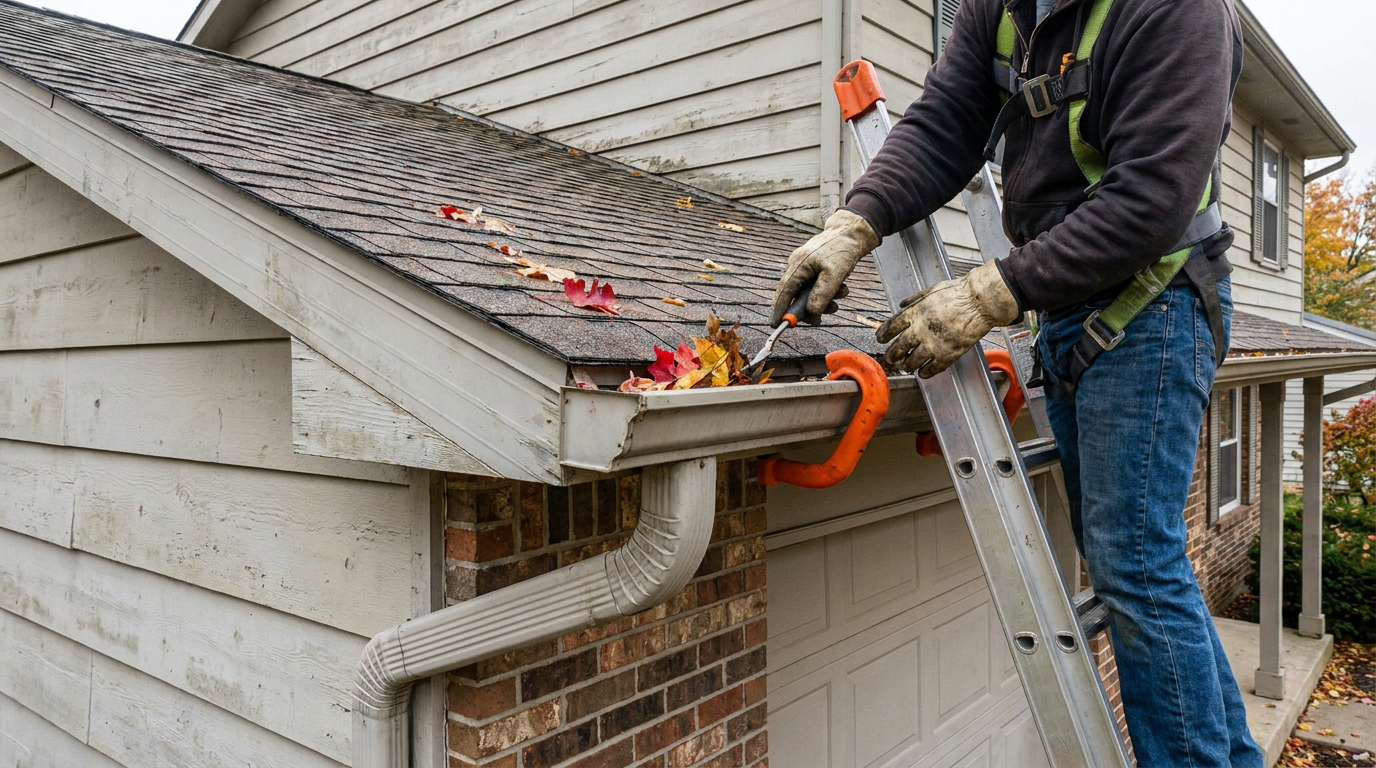
Clean gutters are one of the simplest forms of flood prevention available to homeowners. When gutters fill with leaves, shingle grit, seeds, and small twigs, water cannot move freely to the downspouts. Instead, it spills over the edge and lands directly beside the foundation. During heavy rain, that overflow can be substantial. During winter or spring thaw, clogged sections can also contribute to ice buildup and unpredictable water release.
Most homes benefit from gutter cleaning at least twice a year, usually in late spring and late fall. Homes surrounded by mature trees may need more frequent attention. During cleaning, remove debris by hand or with an appropriate scoop, flush the line with water, and watch how quickly it drains. If water pools in certain sections, the gutter may need to be rehung for proper slope. If water leaks through seams, those joints may need resealing or repair.
Safety matters here. Use a stable ladder, avoid overreaching, and consider professional service for high or difficult rooflines. Practical sustainability includes knowing when to protect yourself rather than turning every task into a solo project. A safe maintenance routine is a durable maintenance routine.
Gutter guards can reduce debris buildup in some settings, but they are not maintenance free. They should be treated as a support tool rather than a complete solution. The key principle remains the same. Roof runoff should enter the gutter, travel through the downspout, and leave the building perimeter without overflowing or backing up.
Step three: improve downspouts, splash zones, and discharge points
Once gutters are flowing well, the next question is where the water goes. Many drainage problems start not on the roof, but at the bottom of the downspout. If the discharge ends right beside the house, it can saturate the soil around the foundation very quickly. In some cases, homeowners assume a basement leak must come from below, when the real issue is thousands of gallons of roof runoff repeatedly dumped too close to the wall above.
Downspout extensions, splash blocks, and directed piping can all help. The objective is to carry water far enough away that it can soak in or continue downslope without returning toward the structure. Keep an eye on erosion where water exits. A good drainage setup should not create trenches, bare soil, or mulch washout. If it does, the discharge may be too concentrated and may need to be diffused or redirected.
Rain barrels can be useful here as well, especially when combined with a thoughtful overflow plan. They can reduce immediate runoff and provide water for garden use, but they should never be allowed to overflow right against the foundation. The overflow path should be just as carefully directed as a standard downspout discharge. A rain barrel is a sustainability tool only when it is integrated into a complete drainage plan.
Be careful not to assume that more piping is always better. In some landscapes, a short extension to a well graded lawn is enough. In others, a shallow swale, dry creek feature, or planted infiltration area may perform better. The best solution is the one that moves water safely while fitting the natural patterns of the site.
Step four: use the landscape as part of the drainage system
One of the most practical sustainable shifts in drainage care is to stop thinking of the yard as separate from water management. Landscaping can do more than look attractive. It can slow runoff, improve infiltration, reduce erosion, and lower the burden on storm systems. This is where low impact features become especially valuable because they solve functional problems while improving the feel of the property.
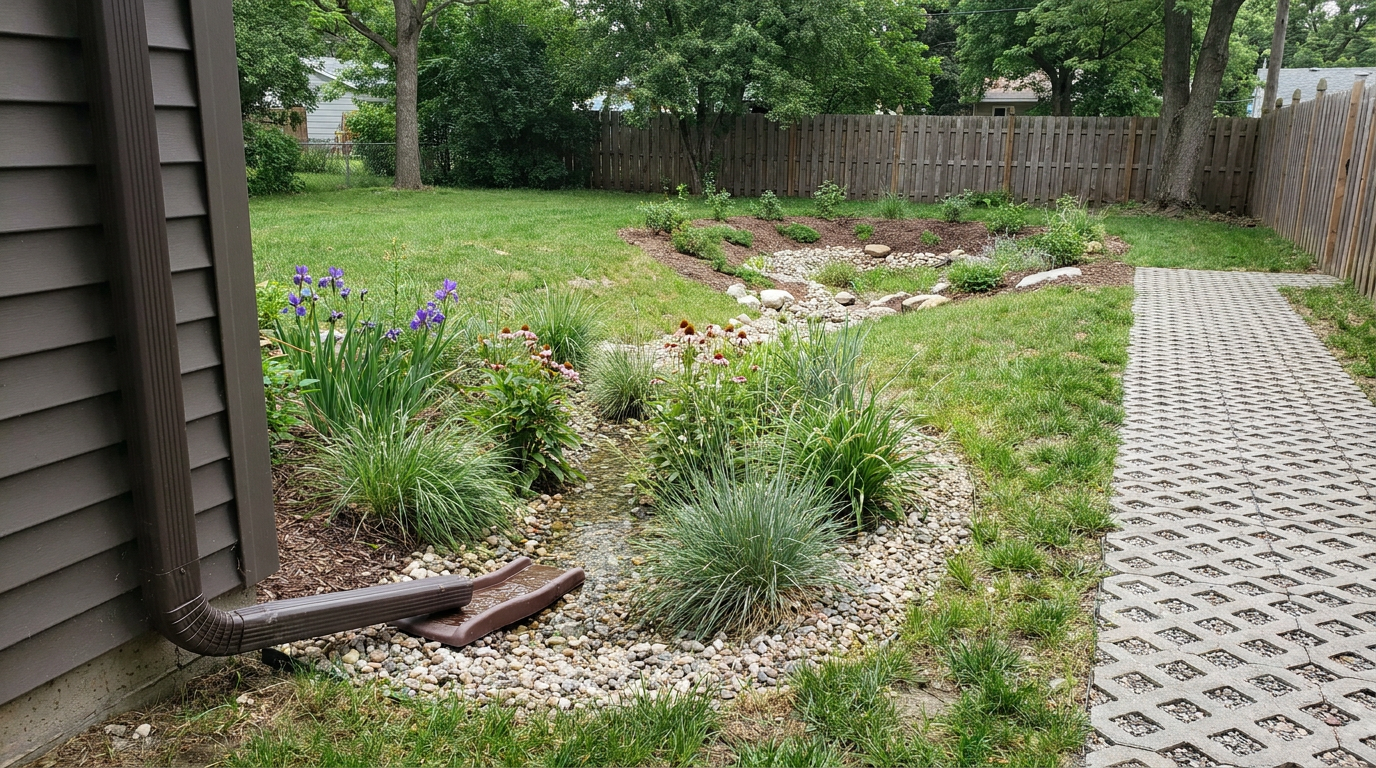
Rain gardens are a strong example. Canadian guidance notes that a rain garden can absorb about 30 percent more water than a lawn of the same size. That is significant for homeowners dealing with short bursts of heavy rain or snowmelt. A properly placed rain garden collects runoff from roofs or paved areas and lets it soak into amended soil through planted vegetation. It is not a pond and it should not hold water indefinitely. It is a designed infiltration area that supports both drainage and landscape health.
Bioswales perform a similar role along the natural route of water movement. They are shallow, vegetated channels that slow runoff and direct it through the yard more gently than a hard, eroded path would. Permeable paving also helps by allowing water to pass through the surface rather than race across it. This can be especially useful for patios, walkways, or driveways where traditional paving contributes to runoff volume and speed.
The appeal of these solutions is that they are scalable. A homeowner does not need a major landscape redesign to benefit. Even a modest planted depression near a discharge point, a strip of deep rooted native planting along a low spot, or a small permeable walkway can improve how water behaves on site. These are realistic upgrades for households that want better drainage without relying only on larger pipes and harder surfaces.
What to look for in sustainable drainage landscaping
Effective drainage landscaping is guided by observation rather than trend. Notice where water naturally flows and where it wants to settle. Work with those patterns instead of fighting them. The most durable results usually come from shaping and planting the landscape to support the site’s existing movement of water.
- Choose the right location. Keep infiltration features away from the immediate foundation zone and place them where runoff can enter safely.
- Use appropriate plants. Native or regionally adapted plants often handle wet and dry cycles better than ornamental species that prefer constant conditions.
- Protect overflow routes. Every rain garden or swale should have a safe place for excess water to go during unusually large storms.
- Maintain the feature. Remove sediment, refresh mulch thoughtfully, and keep inlets clear so the system remains functional over time.
These measures are practical because they are preventative. They reduce the amount of water that becomes a problem in the first place. In a changing climate, that kind of source control is often more reliable than reacting after every storm.
Step five: maintain indoor drains with low impact habits
Indoor drainage care is less visible than exterior drainage, but the habits matter just as much. The biggest problems often start with ordinary routines in the kitchen and bathroom. Cooking grease goes into the sink while warm and liquid, then cools and congeals in the pipes. Food scraps slip past the drain opening. Wipes get flushed because the packaging suggests convenience. Over time, these choices build into slow drains, odors, clogs, and in some cases sewer or septic failures.
The most important rule is simple. Never pour fats, oils, or grease down the drain. The EPA specifically warns that grease and cooking oil should not enter household drains, particularly in homes with septic systems. Instead, let grease cool, collect it in a container, and dispose of it according to local waste guidance. The same logic applies to thick sauces, coffee grounds, fibrous vegetable scraps, and starchy residues that can accumulate in plumbing.
In bathrooms, avoid flushing wipes, cotton products, hygiene items, paper towels, and other non flushables. Even products marketed as flushable have been identified by EPA guidance as contributors to sewer problems and overflows. The toilet should be treated conservatively. Human waste and toilet paper are the intended materials. Almost everything else belongs in the trash.
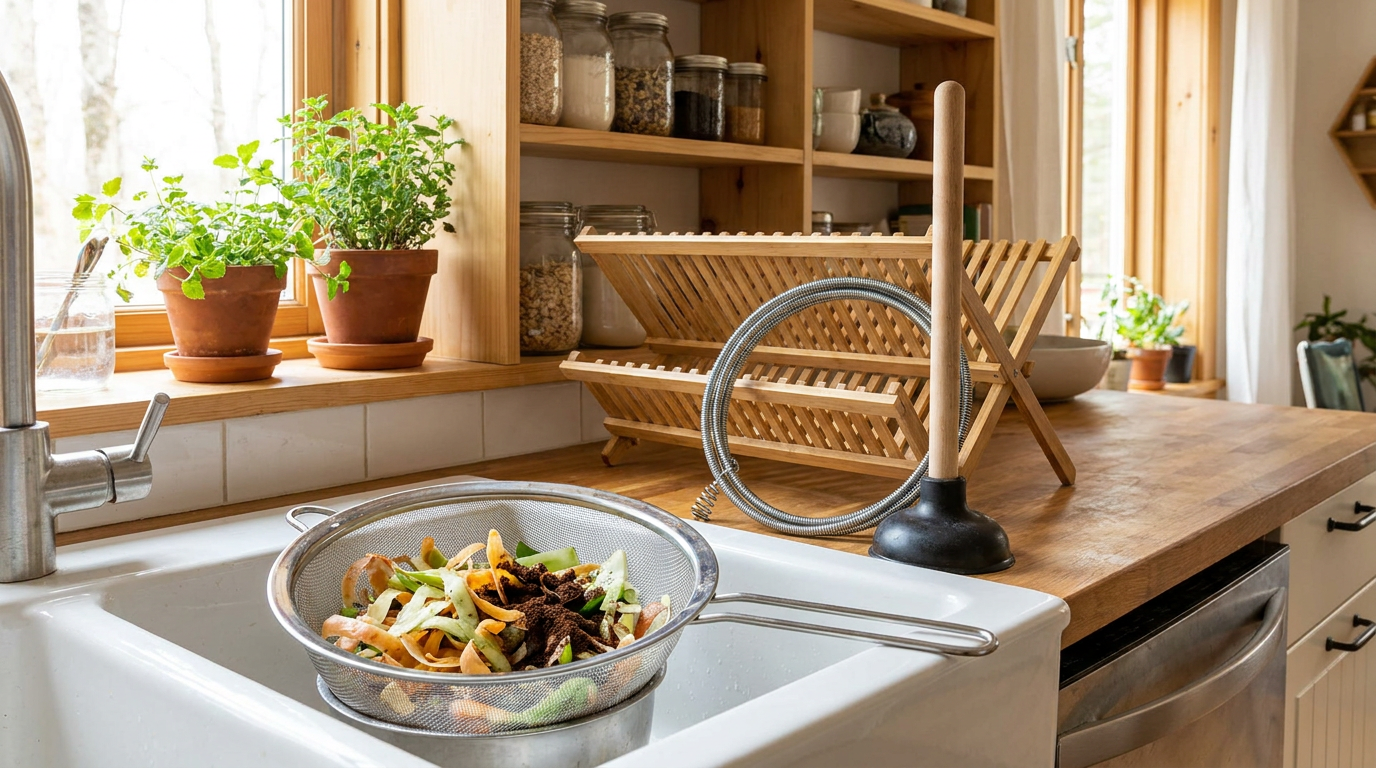
Drain strainers are a modest but highly effective tool. In kitchen sinks, they catch food solids before they enter the pipe. In showers and tubs, they collect hair and soap residue that would otherwise gather into stubborn blockages. Because they work at the source, they reduce the need for reactive cleaning later.
Step six: respond to slow drains the safer way
When a drain slows down, many homeowners reach for chemical drain cleaner first. It is understandable. The products are heavily marketed and seem fast. But this is not usually the best first move. EPA septic guidance recommends trying mechanical or gentler approaches before chemical drain openers, which can interfere with septic treatment processes and add unnecessary chemicals to the waste stream.
Start with the simplest likely cause. Remove and clean the stopper in a bathroom sink. Clear hair from the shower strainer. Use hot or boiling water where appropriate and safe for the plumbing material, especially for soap or grease related buildup in a kitchen drain. A plunger can be very effective for localized clogs if used correctly. For deeper blockages, a hand drain snake is often a practical next step.
If clogs are recurring, resist the urge to keep treating symptoms. Repeated slow drainage often signals a larger issue, such as buildup in branch lines, a venting problem, root intrusion in the sewer lateral, or poor habits upstream. Sustainable maintenance is not only about using fewer harsh chemicals. It is also about solving the right problem once rather than creating a cycle of repeated quick fixes.
Professional help is warranted when multiple fixtures back up at once, when sewage odors persist, when floor drains bubble, or when water appears in low fixtures after using others. Those signs can point to a main line issue that household tools are unlikely to solve safely. Calling early can reduce water damage and keep a minor obstruction from becoming a major event.
Special care for homes with septic systems
If your home uses a septic system, drainage care becomes even more closely tied to environmental stewardship. A septic system depends on biological processes to break down waste and on a functioning drainfield to disperse treated effluent into the soil. Grease, wipes, harsh chemicals, and excessive water loads can all interfere with that balance. What goes down the drain matters greatly because the system cannot rely on a large municipal treatment network to correct misuse.
Water efficiency helps here in a practical way. EPA WaterSense information points out that efficient fixtures and leak control can significantly reduce household water use, lowering both utility costs and system stress. In many homes, a typical WaterSense labeled setup can save tens of thousands of gallons over time. For septic households, that lower flow can support better treatment performance by reducing overload and allowing the system to operate within its intended design.
Keep vehicles, heavy storage, and deep rooted invasive plantings away from the drainfield. Surface water should also be directed away from it. The drainfield is meant to process treated wastewater through soil, not receive concentrated roof runoff or standing stormwater. If the area becomes soggy, smells unpleasant, or shows unusually lush growth compared with the surrounding yard, have it evaluated promptly.
Routine pumping intervals depend on household size, tank size, and use patterns, but the broader principle is universal. Septic care works best when it is preventative rather than reactive. Conserving water, protecting the drainfield, and keeping inappropriate materials out of the system all support longer life and fewer emergency repairs.
Seasonal drainage maintenance that is actually manageable
Drainage care becomes much easier when it is tied to the seasons instead of waiting for a crisis. A basic seasonal rhythm keeps tasks small and helps homeowners notice change over time. The goal is not to create an exhausting maintenance calendar. It is to create a repeatable one.
Spring
Spring is the time to check for winter damage, rapid snowmelt effects, and early heavy rain performance. Inspect gutters for loose fasteners or seam failures. Watch how downspouts discharge during spring storms. Look for new low spots, washed mulch, or basement dampness after thaw cycles. If your home has a sump pump, test it before the wettest period arrives.
Summer
Summer is ideal for grading corrections and landscape improvements because the site is easier to access and observe. This is a good season to add a rain garden, improve a swale, extend a downspout, or switch a compacted path to a more permeable surface. It is also a good time to inspect crawl spaces and basements for subtle moisture issues that may have lingered since spring.
Fall
Fall is critical for gutter cleaning and roof runoff preparation. Remove leaf buildup before freeze thaw cycles begin. Confirm that downspout outlets remain clear and that splash zones are stable. Trim or manage plant growth that blocks swales, drains, or discharge paths. This is also a useful time to review indoor habits before holiday cooking and higher guest use place more demand on drains.
Winter
In winter, focus on observation and prevention where conditions allow. Watch for ice formation near discharge points and areas where meltwater refreezes dangerously. Make note of any icicles or overflow patterns that suggest blocked gutters or poor roof drainage. Indoors, be alert to slower drains or unusual odors, especially if colder temperatures reveal weaknesses in the system. Winter is often when small maintenance oversights become easy to spot.
Warning signs that should never be ignored
Some drainage problems announce themselves clearly, while others begin quietly. The sooner you recognize the signs, the easier and less expensive the solution usually is. Homeowners do not need advanced technical knowledge to spot early indicators. They simply need to know what to pay attention to.
- Water pooling near the foundation after rain or snowmelt
- Overflowing gutters or leaking joints during routine storms
- Basement dampness, staining, or musty smells near walls or floors
- Slow drains in sinks, tubs, or showers that return after basic cleaning
- Gurgling sounds or bubbling in nearby fixtures when water is used elsewhere
- Sewage odors indoors or near exterior drains or septic areas
- Erosion channels, washed mulch, or bare soil at downspout outlets
- Persistent standing water in the yard long after rainfall ends
These signs do not all point to the same root cause, but they all justify attention. The most important thing is not to normalize them. Water almost always leaves clues before it causes major damage. Responding early is one of the most sustainable choices a homeowner can make because it extends the life of existing systems and avoids wasteful emergency repairs.
How water efficiency supports drainage care
It may seem like water efficiency belongs in a different conversation than drainage, but the two are closely connected. The less unnecessary water a home uses, the less strain it places on plumbing, septic systems, treatment infrastructure, and in some cases moisture vulnerable building areas. Leaks, inefficient fixtures, and overuse can all contribute to avoidable wastewater volume.
EPA WaterSense materials note that the average family spends meaningful amounts on water each year and that efficient fixtures and appliances can reduce both water and energy bills. In some cases, retrofitting with WaterSense labeled fixtures and ENERGY STAR certified appliances can save hundreds of dollars annually. That financial angle matters because sustainable maintenance tends to last when it also feels economically sensible.
For drainage care, efficiency works best when paired with leak detection. A small toilet leak, dripping faucet, or unnoticed appliance line issue can send extra water through the system every day. Over time, that contributes to higher bills, unnecessary wear, and in some homes hidden moisture problems. A practical home water strategy includes both keeping clean water use efficient and ensuring used water exits reliably.
What to do after a drainage failure or minor flood event
Even a well maintained home can experience a drainage failure during an extreme storm or unusual thaw. The important thing then is to respond quickly and methodically. Safety comes first. Shut off power to affected areas if there is any risk of electrical contact, wear protective gear where contamination is possible, and do not assume floodwater is clean.
Once it is safe, remove standing water and begin drying the area as quickly as possible. The CDC advises aiming to dry flood affected areas within 24 to 48 hours to reduce mold growth. That often means using fans, dehumidifiers, wet vacuums, and removing water damaged porous materials that cannot be dried effectively. Fast drying is not just cleanup. It is prevention of the next layer of damage.
Then investigate the source before restoring finishes. Was the issue caused by overflowing gutters, a failed sump pump, poor grading, sewer backup, or a localized plumbing problem? Without this step, homeowners risk rebuilding over an unresolved water pathway. If the event exposed a weakness in the exterior drainage system, this is often the right moment to upgrade discharge routes or add infiltration features so the same pattern is less likely to return.
When to call a professional
Many drainage tasks are well within the reach of homeowners, but not every problem should be handled alone. Call a qualified professional if you notice repeated foundation seepage, significant yard regrading needs, suspected sewer line blockages, septic drainfield problems, or drainage failures that affect structural elements. The same is true if you are unsure whether a downspout, sump, or footing drain connection complies with local rules.
Good professionals can also help distinguish between similar looking issues. For example, water in a basement may come from surface runoff, hydrostatic pressure, plumbing leaks, or condensation. Treating the wrong cause can waste both time and money. A calm, evidence based assessment is often the most cost effective path when symptoms are persistent or unclear.
There is nothing unsustainable about asking for expertise when it is needed. In fact, accurate diagnosis can prevent unnecessary excavation, repeated chemical use, avoidable material replacement, and recurring damage. Practical sustainability is not about doing everything yourself. It is about making sound decisions that protect resources over the long term.
Building a realistic drainage care routine
The most resilient homes are not necessarily the ones with the most complex systems. They are often the ones where owners pay attention, act early, and make gradual improvements over time. Drainage care fits that model well. A clean gutter, a longer downspout extension, a simple drain strainer, a corrected slope, or a small rain garden may seem modest on its own. Together, those choices can significantly reduce risk.
If you are not sure where to begin, start with observation and the highest impact basics. Make sure roof runoff is reaching the ground safely and moving away from the house. Make sure indoor drains are not receiving grease, wipes, or other harmful materials. Test the systems you rely on before severe weather arrives. Then, as time and budget allow, add landscape features and efficiency upgrades that make the whole property work better with water rather than against it.
That is the encouraging part of sustainable drainage care. It is accessible. It does not require an all at once renovation or a perfect environmental strategy. It asks for practical attention, a willingness to work with natural water patterns, and a few good habits repeated consistently. In return, it helps protect the home, reduce waste, support public infrastructure, and create a healthier indoor environment.
In the end, good drainage is quiet by design. When water moves well, the home feels drier, steadier, and easier to maintain. That kind of reliability is worth preserving, and for most homeowners, it starts with small choices that are both achievable and sustainable.


No Comment! Be the first one.