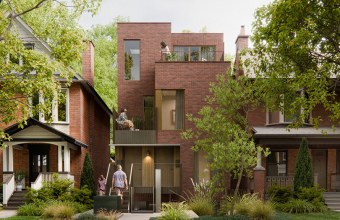
The New Minimalism Is Warm, Brown, and Quietly Tactile
White interiors have long promised calm, but their restraint can sometimes feel more clinical than composed. The latest shift toward latte, porcini, tan, and chocolate suggests a softer kind of minimalism, one rooted not in absence, but in warmth. As Homes & Gardens recently noted through Drew Barrymore’s latte swivel chair for Walmart, brown is no longer behaving like a background shade. It is becoming the emotional architecture of the room.
The appeal of a latte-colored accent chair lies in its modest scale and its atmospheric power. Unlike a sofa, which often dictates the entire room, a single chair can redirect a scheme without requiring demolition of what already exists. Placed in an all-white living room, it gives the eye somewhere to rest. Set beside a deeper chocolate sofa, it creates tonal depth. Against patterned cushions, striped textiles, or warm woods, it becomes a bridge between minimalism and character.
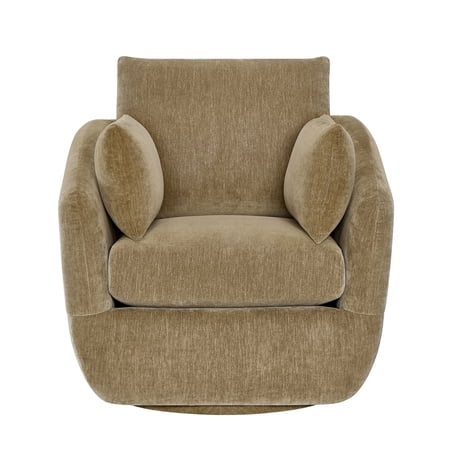
What matters here is not simply color, but temperature. Cool neutrals recede with a certain purity, while warm browns gather a room inward. Latte has the softness of milk in coffee, a beige with more body and less fragility. Porcini suggests mushroom, earth, and shaded stone. Terracotta leans sun-baked and Mediterranean. Together, these shades answer a wider design fatigue with rooms that look immaculate but feel untouched.
The chair’s mid-century silhouette is also significant. Curved seating, low proportions, and swivel bases belong to a language of sociability. They soften the formality of a living room and encourage conversation rather than display. A swivel chair is spatially intelligent because it refuses to face only one direction. It can turn toward the sofa, the window, the fireplace, or the guest beside it. In open-plan homes, that flexibility has become a quiet luxury.
Warm minimalism is not about adding more. It is about choosing tones and textures that make restraint feel human.
Texture completes the movement. Performance fabric, boucle, chenille, velvet, and linen each change how brown is perceived. A flat tan can look ordinary, but a woven tan collects shadow. Boucle makes brown cloudlike. Velvet deepens it into something almost mineral. Linen, especially in stripes, brings a coastal discipline to the palette, preventing warmth from becoming heaviness.
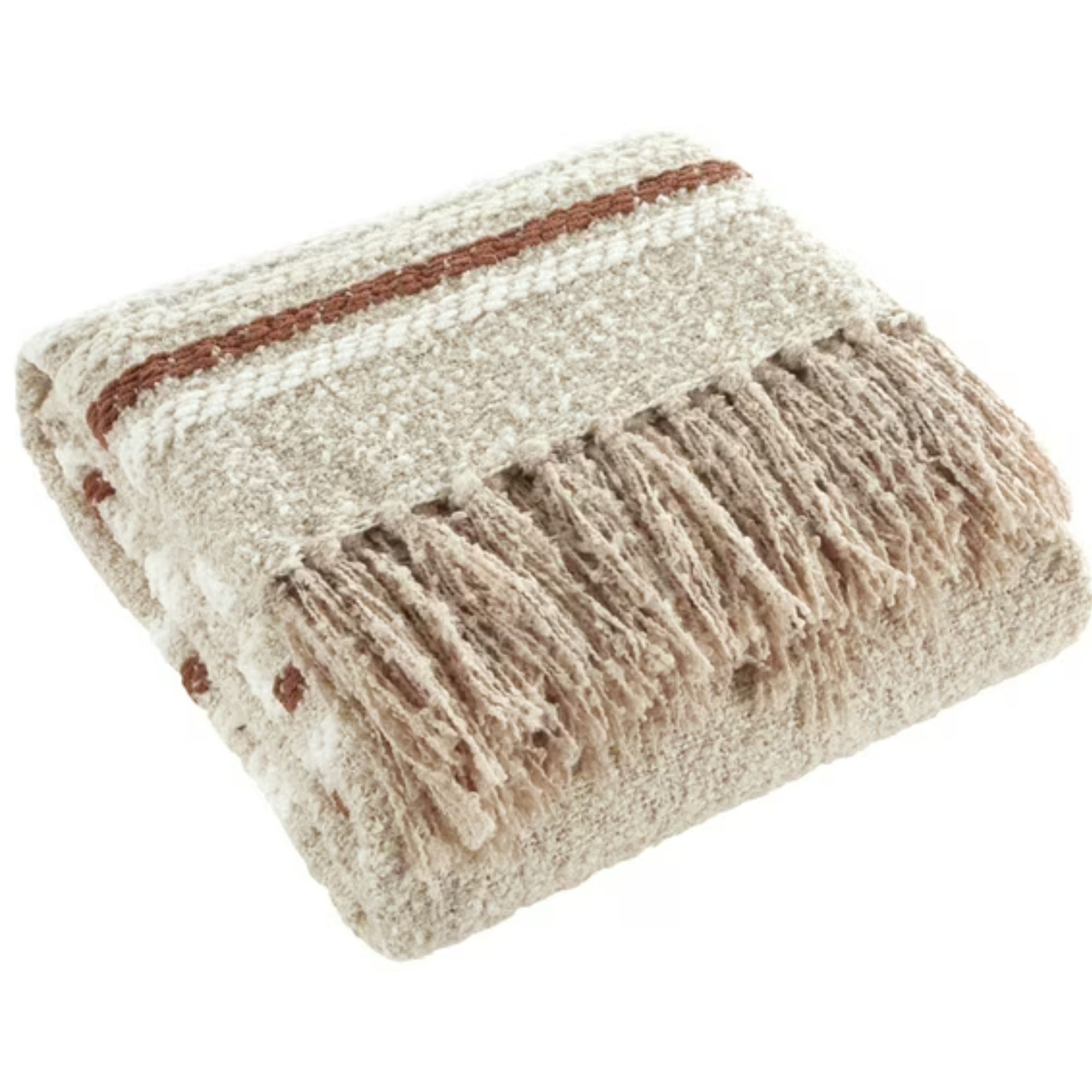
For the home, the lesson is precise: brown works best when layered in values rather than repeated exactly. A latte chair beside a walnut table, a porcini throw over a cream sofa, a terracotta cushion against striped linen. The effect is not monochrome, but tonal composition. It is closer to architecture than styling, because the color begins to organize depth, weight, and intimacy.
This is where contemporary interiors appear to be moving: away from sterile neutrality and toward rooms with quiet warmth, practical fabrics, rounded forms, and emotional ease. Brown, handled with care, is no longer a compromise. It is a way of giving minimal spaces memory, softness, and a more lasting sense of welcome.
Source: Homes & Gardens