



Luxury has changed in a meaningful way. For many families today, the most desirable home is no longer one that feels like a showroom where nobody can relax. Instead, it is a home that feels deeply comfortable, beautifully composed, and capable of supporting real life with grace. That shift matters because family living is wonderfully dynamic, full of routines, gatherings, noise, rest, growth, and change, and the best luxury homes now reflect that emotional reality.
Table Of Content
- Why Family-Friendly Luxury Looks Different Today
- Start with a Floor Plan That Supports Real Life
- Smart Layout Priorities for Family Luxury Living
- Create a Kitchen That Handles Both Weekday Rush and Weekend Entertaining
- Choose Furnishings That Feel Relaxed, Tailored, and Resilient
- What to Look for in Family-Friendly Luxury Furnishings
- Design Storage So the Home Stays Calm
- Make Wellness Part of the Luxury Experience
- Balance Adult Sophistication with Child-Friendly Ease
- Use Layered Lighting to Create Warmth and Flexibility
- Plan for Multigenerational Living and Future Flexibility
- Bring in Warmth Through Materials, Detail, and Tradition
- Make Private Spaces Restorative, Not Just Beautiful
- Entertain Beautifully Without Disrupting Everyday Life
- What to Prioritize First if You Are Building or Renovating
- The Emotional Heart of a Luxury Family Home
In North America, this conversation is especially relevant. According to the U.S. Census Bureau, about 64% of U.S. households were family households in 2024, and less than half of those family households included children under age 18. That tells us something important about modern home design. A family home is not one fixed idea. It may include toddlers, teenagers, adult children returning home, visiting grandchildren, aging parents, or a household that simply wants to be ready for all of those stages with ease and elegance.
Multigenerational living adds another layer to the story. In the United States, multigenerational households represented 4.7% of all households and 7.2% of family households in 2020, which reinforces the growing need for homes that can adapt over time. In Canada, housing conditions and regional market shifts are increasing the value of long-life design and adaptable floor plans, especially for higher-end buyers who want resilience, flexibility, and lasting value. In other words, luxury is becoming more intentional. It is less about excess and more about thoughtful choices that make daily living feel lighter, calmer, and more beautiful.
A family-friendly luxury home is not a compromise between beauty and practicality. It is the realization that comfort itself is a luxury feature. Soft yet durable fabrics, generous circulation, quiet rooms, well-placed storage, healthy materials, and warm lighting are not secondary details. They are often the very things that make a home feel elevated. When these elements are considered from the beginning, a home can support school mornings and elegant dinner parties with equal confidence.
This article explores how to create that balance. From floor plans and furnishings to wellness, storage, and atmosphere, the goal is to help you design a home that feels sophisticated without ever becoming stiff. Because for families, the most luxurious spaces are often the ones that invite everyone to truly live in them.
The new definition of luxury for families is simple: a home should look polished, feel restorative, and stand up beautifully to everyday life.
Why Family-Friendly Luxury Looks Different Today
There was a time when luxury interiors often leaned heavily on formality. Rooms were arranged for visual impact, delicate finishes were chosen for prestige, and comfort sometimes came second. Today, that formula feels out of step with how many people actually want to live. Families are asking more from their homes. They want places that offer privacy without isolation, beauty without fragility, and flexibility without visual clutter.
This evolution also aligns with broader design trends. Houzz’s 2026 design predictions point to a renewed interest in traditional style, curves, arches, and softer detailing. That movement away from stark minimalism makes perfect sense for family homes because warmth and softness tend to feel more welcoming at every age. A curved chair, an arched passage, or a tailored but plush sectional can make a room feel refined while also making it easier to settle in.
There is also a growing awareness that family life is not static. Children grow quickly, work patterns shift, relatives visit for longer stretches, and lifestyle needs change. A home that feels luxurious in the most lasting way is one that can respond to these changes without needing a complete redesign every few years. This is where durable materials, flexible rooms, and timeless planning become more than practical decisions. They become investments in ease and longevity.
Another misconception worth letting go of is the idea that family-friendly design is somehow less stylish. In reality, some of the most elegant homes are also the easiest to live in because they are designed with clarity and purpose. A hidden bank of storage can preserve visual calm more effectively than any decorative accessory. A resilient fabric in a beautiful weave can offer more confidence than a delicate textile that causes anxiety. A quiet room with good acoustics can feel far more luxurious than a grand room that echoes and overwhelms.
Start with a Floor Plan That Supports Real Life
The foundation of a successful luxury family home is not a specific sofa or finish. It is the floor plan. Before thinking about colors or decorative details, it helps to consider how the household moves through the day. Where do backpacks land. Where do adults take private calls. Where do children spread out homework. Where can guests stay comfortably. A well-planned home answers these questions gently, almost invisibly, so daily life flows without friction.
Open-concept living still appeals to many households because it allows connection and easy entertaining, but it is not always the best answer in every space. Families often benefit from a combination of openness and separation. A large kitchen that connects to the family room can feel wonderful, yet nearby quiet zones are just as important. A library, study, snug, den, or flex room can absorb noise and provide privacy while preserving the social ease of the main living area.
For multigenerational households, flexibility matters even more. A main-floor guest suite can function beautifully for aging parents, long-stay visitors, a live-in caregiver, or an adult child in transition. A bonus room can evolve from playroom to media room to teen lounge. A secondary prep kitchen or scullery can make entertaining feel effortless while keeping the main kitchen calm enough for family use. These are not indulgent extras. They are features that support the rhythms of a home over many years.
Generous circulation is another often-overlooked element of luxury. Wider hallways, easy transitions between rooms, and furniture layouts that do not obstruct movement can make the home feel more relaxed and more accessible for every generation. That sense of ease is especially important in households with small children, older relatives, or frequent guests. Good planning makes people feel looked after, which is one of the most powerful forms of luxury.
Smart Layout Priorities for Family Luxury Living
- Blend open gathering spaces with enclosed rooms for work, rest, and quiet play.
- Include transitional spaces such as mudrooms, vestibules, and laundry zones near entries.
- Plan at least one flexible suite that can serve guests, grandparents, or changing family needs.
- Create visual sightlines in key social spaces so adults can feel connected without sacrificing style.
- Think ahead about how rooms may evolve over the next five to ten years.
Create a Kitchen That Handles Both Weekday Rush and Weekend Entertaining
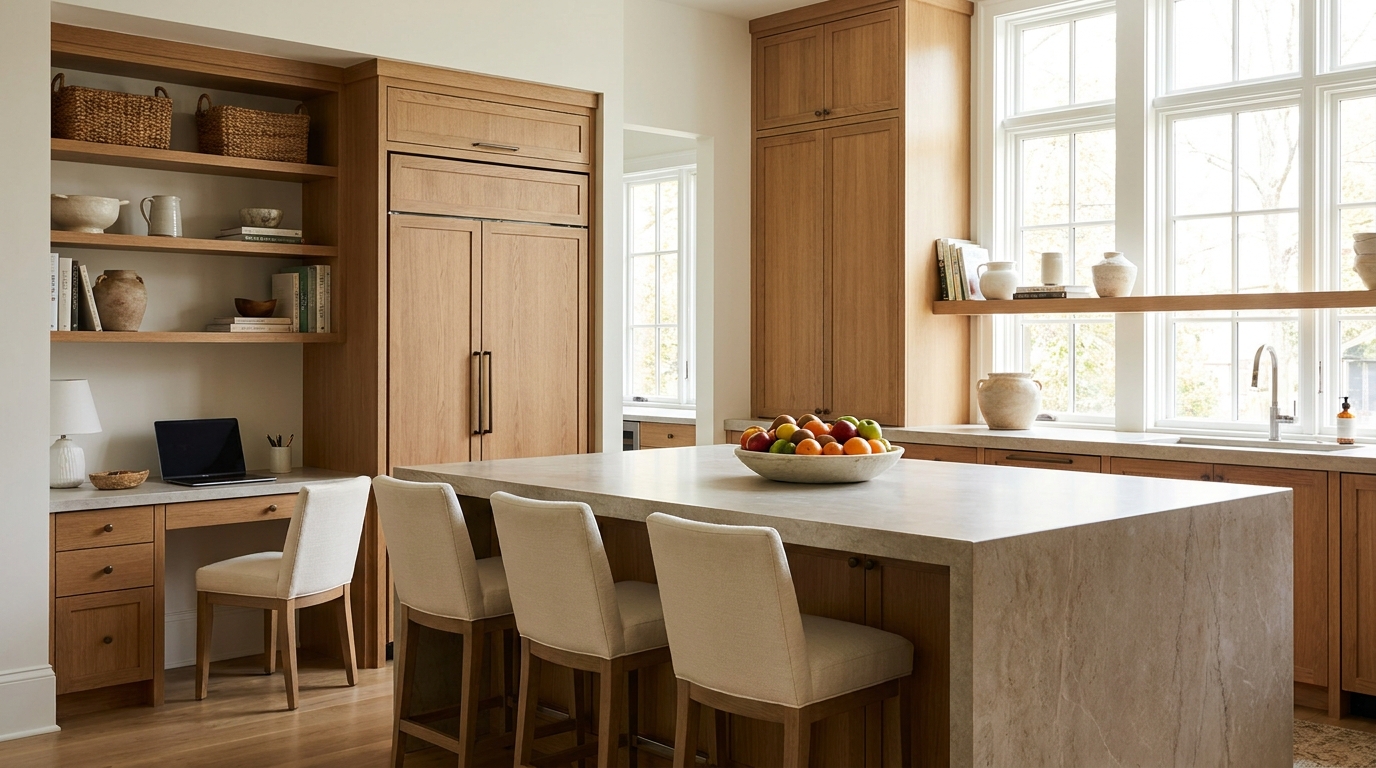
Few rooms carry more responsibility in a family home than the kitchen. It is where breakfasts are rushed through, conversations linger, snacks appear, homework unfolds, and guests inevitably gather. In a luxury setting, the goal is not simply to create a stunning kitchen. It is to create one that can perform beautifully under very different conditions while still feeling welcoming and composed.
A large island is often the emotional center of the space because it offers room for preparation, dining, conversation, and display. But scale should always be matched with function. Comfortable seating, wipeable upholstery, rounded corners, and enough clearance around the island all make the room work more smoothly for families. Integrated appliances and thoughtful millwork can maintain a clean, elegant appearance while reducing visual noise.
Storage is what often separates a beautiful kitchen from a truly livable one. Deep drawers, appliance garages, pantry walls, and concealed charging zones can keep countertops from becoming crowded. If space allows, a secondary prep area or back kitchen can be transformative for larger households or frequent entertainers. It allows the main kitchen to remain calm and presentable while the practical work happens just out of sight.
Material selection matters just as much. Families often do best with surfaces that are durable, easy to clean, and forgiving of daily wear. That does not mean sacrificing elegance. It simply means choosing thoughtfully. Beautiful stone alternatives, sealed natural surfaces, and cabinetry finishes that can handle fingerprints and movement will age more gracefully than choices made purely for appearance.
Lighting should be layered here as well. Task lighting over work zones, pendant lighting for atmosphere, and softer perimeter lighting can make the kitchen shift effortlessly from early morning functionality to evening warmth. The result is a room that does more than impress. It supports life beautifully.
Choose Furnishings That Feel Relaxed, Tailored, and Resilient
One of the clearest signs that a home understands family life is the way it feels to sit down. In a family-friendly luxury home, furniture should invite use rather than demand caution. Comfort does not need to mean overstuffed or casual in a messy way. It can be structured, elegant, and refined while still soft enough for movie nights, reading hours, and afternoon naps.
Performance fabrics are one of the most useful tools in this category. They have become far more sophisticated, with textures and finishes that look every bit as refined as more delicate textiles. Choosing stain-resistant upholstery for dining chairs, family room seating, and banquettes can instantly reduce stress in a home. That peace of mind is incredibly valuable because it allows beauty to be enjoyed instead of protected from everyone.
Shape also plays a role. Rounded edges, curved seating, and softened silhouettes are not only on trend, they also tend to feel kinder in family settings. They improve flow, reduce sharp corners for young children, and support the warmer design language many homeowners are now seeking. This is where current luxury trends and practical family choices meet very naturally.
Durability underfoot is equally important. Flooring should feel beautiful, but it should also stand up to pets, guests, toys, and constant movement. Wide plank wood, high-quality engineered wood, certain natural stone finishes, and well-chosen rugs can all contribute warmth and elegance. The key is to avoid making the house feel precious. A luxurious room should be one people want to gather in, not one they hesitate to enter.
What to Look for in Family-Friendly Luxury Furnishings
- Deep comfort with supportive structure so pieces hold their shape over time.
- Performance fabrics or easy-clean natural materials in high-use areas.
- Rounded profiles and thoughtful scale for easier circulation.
- High-quality craftsmanship that improves with age rather than quickly wearing out.
- Timeless silhouettes that can evolve with changing accessories and family stages.
Design Storage So the Home Stays Calm
Clutter is one of the quickest ways to make even the most expensive home feel stressful. Families have a natural volume of daily items that need to live somewhere, from shoes and sports gear to chargers, school papers, serving platters, seasonal clothing, pet supplies, and extra linens. Luxury design handles this reality with discretion. Instead of allowing belongings to dominate the visual experience, it creates places for them to disappear with ease.
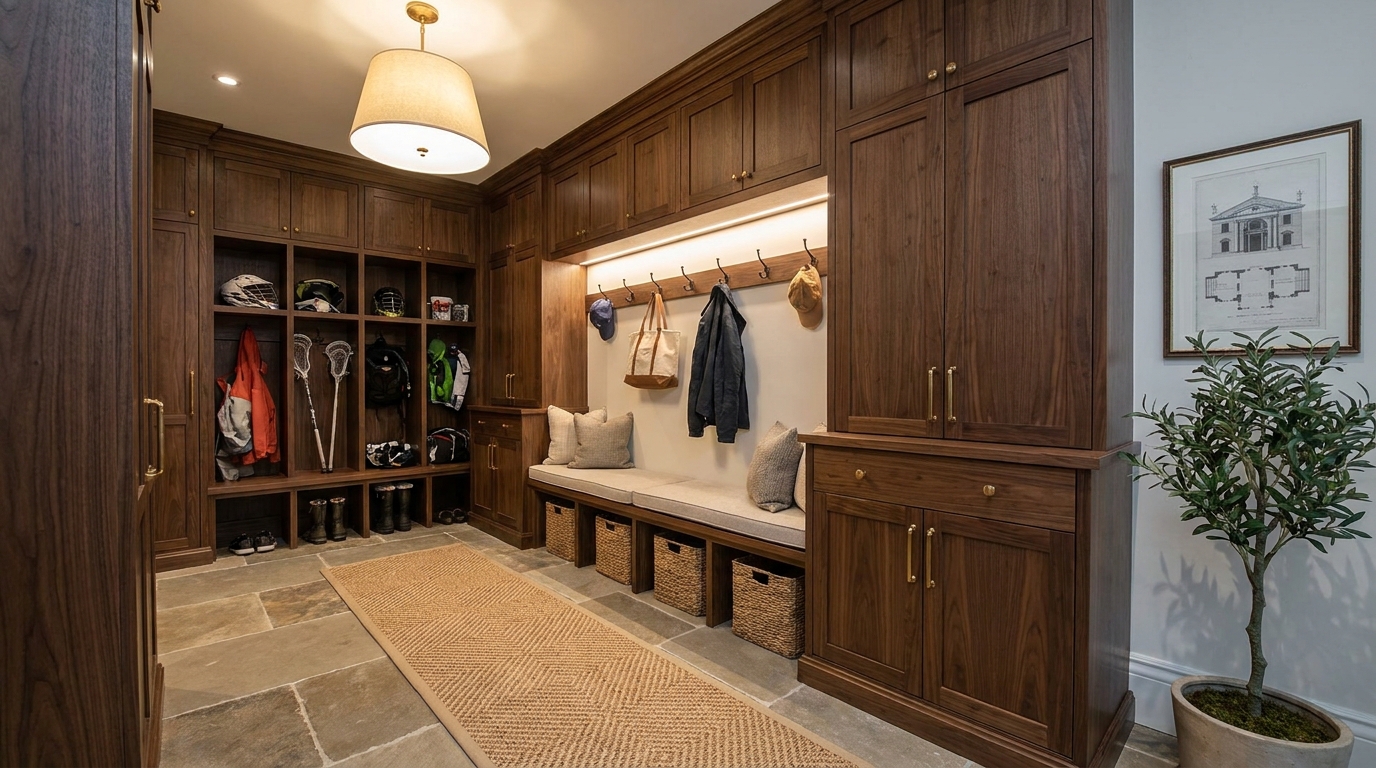
Custom millwork can be especially valuable because it allows storage to feel integrated rather than utilitarian. Built-in cabinetry in living spaces, window seats with hidden compartments, mudroom lockers, and tailored wardrobes all preserve the polished feeling of the home. What matters most is that storage is placed where life actually happens. A beautiful cabinet on the wrong floor will not solve the everyday problem of where bags land after school.
The mudroom deserves special attention because it is one of the hardest-working spaces in a family home. When designed well, it acts as a buffer between the outside world and the calm of the interior. Closed storage keeps visual mess contained, benches make transitions easier, and durable floors stand up to weather, dirt, and traffic. This is one of those rooms where practical planning can feel surprisingly luxurious because it reduces so much daily friction.
Storage in children’s rooms and family spaces should also grow with the household. Open bins may work for early years, while deeper drawers, display shelves, and built-in desks become more useful later on. Flexibility is the true elegance here. The more quietly a home absorbs changing needs, the more timeless and composed it feels.
Make Wellness Part of the Luxury Experience
Wellness design has become one of the most meaningful directions in luxury living, and for families, it is especially relevant. A beautiful home should not only look good in photographs. It should help people feel better in their bodies and minds. That means paying attention to daylight, air quality, acoustic comfort, material health, and the emotional atmosphere of each room.
Natural light is one of the simplest and most powerful luxuries. Large windows, carefully chosen window treatments, glass doors, and thoughtful room orientation can all improve the quality of daily life. Morning light in the breakfast area, softer filtered light in bedrooms, and bright but controlled illumination in work zones create subtle but important support for family routines. These choices shape mood more than many people realize.
Air quality matters too. Low-VOC paints and finishes, high-performing ventilation, and materials that contribute to a cleaner indoor environment are increasingly desirable in premium homes. Quiet mechanical systems also make a real difference. A home that hums, rattles, or echoes can never feel fully restorative. Acoustic comfort, from insulation choices to rugs and drapery, is often one of the most underestimated aspects of luxury family design.
Indoor-outdoor connection is another key feature of a wellness-oriented home. Families tend to use outdoor spaces more often when those areas feel easy, comfortable, and integrated with the interior. A covered terrace, outdoor dining zone, soft landscaping, or even a simple sitting area near the kitchen can encourage daily fresh air and casual gathering. These spaces do not need to be elaborate to feel special. They simply need to invite use.
The most successful family luxury homes reduce friction in small, repeated moments. Better light, cleaner air, quieter rooms, and easy access to outdoor space can transform how the home feels every day.
Balance Adult Sophistication with Child-Friendly Ease
A family home should not feel as though the adults have disappeared from the design. One of the loveliest things about luxury family living is the ability to create an environment that honors every member of the household without becoming childish or overly serious. This balance begins with a mature design foundation. Rich textures, layered neutrals, classic forms, and curated materials give the home its enduring elegance. Then, family life is welcomed into that framework through durability, flexibility, and smart details.
For example, a living room can include a refined palette, sculptural lighting, and beautiful art while still offering forgiving upholstery and room to move comfortably. A child’s bedroom can feel playful without relying only on themes that will date quickly. A family bathroom can be visually serene while featuring storage, double sinks, and surfaces that are easy to maintain. In each case, the room remains stylish because its practicality has been integrated gracefully rather than added as an afterthought.
There is emotional value in this approach too. When children grow up in spaces that are beautiful and calm, they learn that comfort and care are part of daily life, not reserved for special occasions. At the same time, adults benefit from a home that still reflects their taste, identity, and aspirations. Luxury in this sense is not about impressing others. It is about creating an environment where everyone feels considered.
Use Layered Lighting to Create Warmth and Flexibility
Lighting is one of the most transformative tools in any home, and in family spaces it becomes even more important. A single overhead fixture rarely creates the depth or softness that a luxury interior needs. Layered lighting allows each room to adapt to different activities and moods throughout the day, which is essential in households where one room may serve several purposes.
In living rooms, combine ambient lighting with table lamps, sconces, and dimmable accent lighting. This approach supports everything from playtime to evening conversations. In kitchens, task lighting should be strong where needed, but balanced by softer light that makes the space feel inviting after dark. Bedrooms benefit from a gentle mix of overhead, bedside, and reading light, especially in homes where winding down is treated as a wellness ritual rather than an afterthought.
Hallways, staircases, and transitional spaces should not be overlooked. These are often the areas that give a home its quiet polish when lit thoughtfully. Soft illumination along a staircase, a warm lamp in an entry, or discreet cabinet lighting in a mudroom can make ordinary routines feel more elevated. This is where style and comfort truly begin to merge.
Plan for Multigenerational Living and Future Flexibility
Because family life now takes so many forms, future-ready planning is one of the wisest luxury decisions you can make. Less than half of U.S. family households included children under 18 in 2024, which reminds us that family-focused design must serve more than one household type. A home may need to support grandparents, returning adult children, long-term guests, or care needs at some point, even if those needs are not immediate.
That is why flexible suites, dual-primary possibilities, accessible circulation, and main-floor accommodations are becoming more relevant. These features do not need to feel clinical or obvious. In a well-designed home, they simply feel generous. A beautiful ensuite bedroom on the main level, a bathroom with a curbless shower, wider passages, or a private sitting room attached to a guest suite can all be integrated elegantly.
Work-from-home patterns add another reason to think flexibly. A room that functions as an office today may later become a nursery, lounge, or music room. Built-in cabinetry, good light, and proportionate scale can make these transitions easy. The most luxurious homes tend to have this quiet intelligence. They are not locked into one moment of life. They are ready to evolve with the people inside them.
Bring in Warmth Through Materials, Detail, and Tradition
Family luxury interiors feel especially inviting when they lean into warmth. This does not mean overdecorating or making everything rustic. It means choosing details that soften scale and create emotional comfort. The return of arches, curves, traditional profiles, and more tactile finishes supports this beautifully. These elements help large homes feel more human and timeless.
Wood tones, natural linens, textured wall treatments, honed stone, and hand-finished details can all add richness without becoming flashy. Traditional references such as paneled millwork, scalloped edges, or classic cabinetry profiles often work well because they feel rooted and familiar. In a family home, that sense of familiarity can be deeply calming.
Color also plays a meaningful role. Warm neutrals, muted greens, soft blues, clay tones, and gentle earth shades tend to age gracefully while creating a more livable atmosphere than stark contrast alone. These palettes also pair beautifully with family-friendly materials because they hide wear more gracefully and contribute to a sense of ease. The effect is sophisticated, but never cold.
Make Private Spaces Restorative, Not Just Beautiful
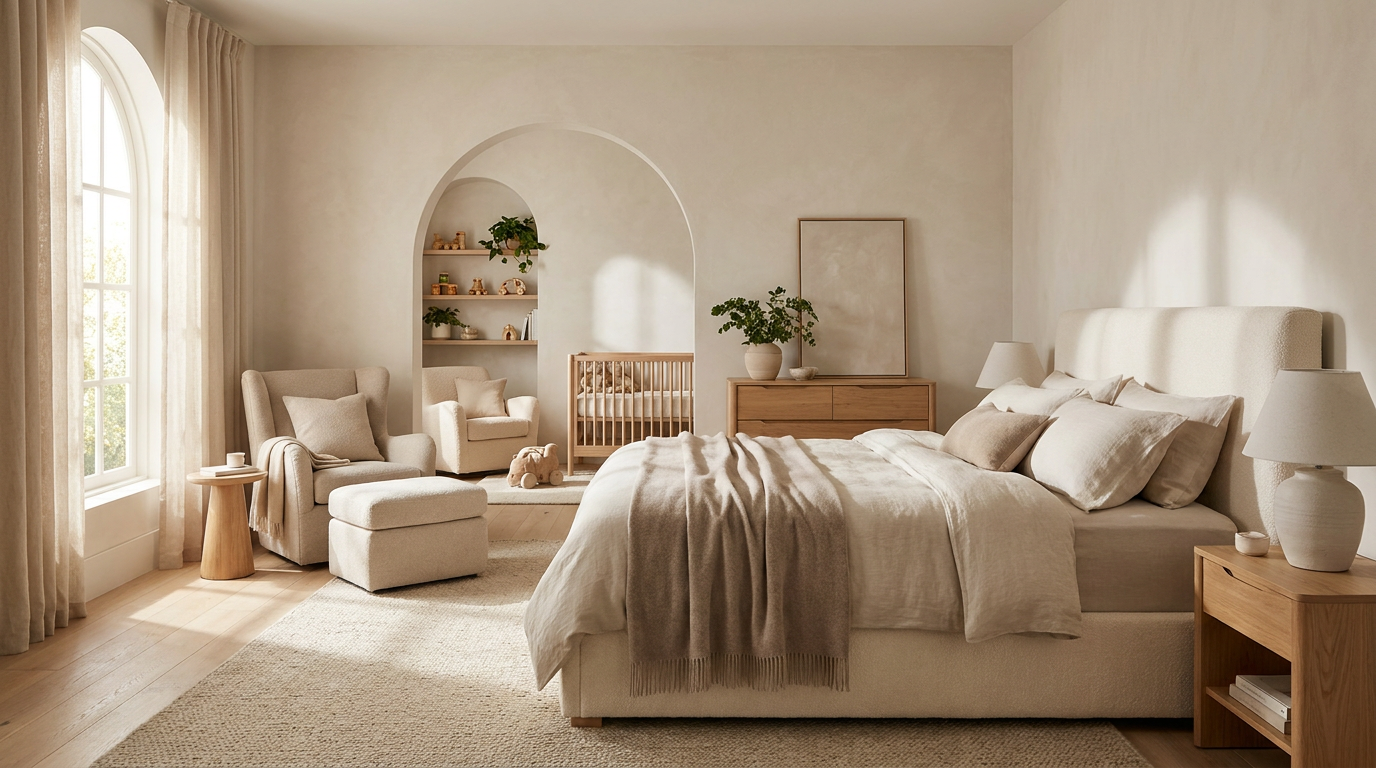
Bedrooms, bathrooms, and smaller retreats deserve the same level of thought as the main entertaining spaces. In fact, these private rooms are often where luxury is felt most personally. A serene primary bedroom with layered textiles, quiet lighting, and acoustic softness can become a genuine place of recovery. A child’s bedroom with calm colors, comfortable storage, and space to read or unwind supports rest just as much as play.
Bathrooms should balance elegance with family practicality. Durable surfaces, good ventilation, generous storage, and easy-to-clean fixtures all matter. Double vanities, integrated niches, and thoughtful lighting can make even busy mornings feel more manageable. In a luxury home, practicality in the bathroom is not mundane. It is part of how the space stays beautiful over time.
If there is room, consider small sanctuaries throughout the house. A reading corner, a tucked-away window seat, a small upstairs lounge, or a quiet garden bench can serve as emotional breathing spaces for different family members. These are often the places people remember and use most. They offer comfort in a way that feels deeply personal, and that is one of the truest forms of luxury.
Entertain Beautifully Without Disrupting Everyday Life
Many families want a home that can host holidays, celebrations, and dinner parties while still feeling easy on ordinary days. This is one of the biggest design challenges in luxury family living, but it is also one of the most rewarding to solve well. The answer usually lies in zoning, storage, and layered functionality rather than in creating formal rooms that sit empty most of the year.
A dining room can feel special without being untouchable. A living room can host elegant guests while still welcoming children and pets. Outdoor spaces can extend entertaining capacity without putting pressure on indoor rooms. When furnishings are chosen for both comfort and appearance, and when serving pieces, linens, and entertaining tools have dedicated storage, the transition from weekday to gathering mode becomes much smoother.
Secondary kitchens, bar areas, butler’s pantries, or even simply well-designed pantry storage can make entertaining feel graceful. They allow the visible areas of the home to remain calm while the work of hosting happens more discreetly. This is where luxury and practicality become nearly inseparable. The home looks effortless because it has been planned thoughtfully behind the scenes.
At 216 Duncan Rd in Richmond Hill, this was built in from the start, with a secondary prep area behind the main kitchen, a display bar off the dining room and a black marble bar in the home theatre.
What to Prioritize First if You Are Building or Renovating
If you are designing from scratch or planning a major renovation, it can help to focus on decisions that have the most lasting impact. Decorative items can always evolve, but core planning choices shape the experience of living in the home every single day. The following priorities tend to offer the strongest return in comfort, functionality, and enduring style.
- Layout and zoning: Make sure the home has both social flow and quiet retreat.
- Storage planning: Build in more concealed storage than you think you need.
- Material resilience: Choose finishes that can age beautifully under real use.
- Lighting and wellness: Prioritize daylight, layered lighting, air quality, and acoustic comfort.
- Flexibility: Give at least a few spaces the ability to adapt over time.
- Entry function: Invest in mudrooms, laundry access, and transitional zones that reduce daily disorder.
- Timeless design language: Select shapes, colors, and details that will still feel lovely years from now.
The Emotional Heart of a Luxury Family Home
Beyond all the design strategies, materials, and planning decisions, there is something more personal at the center of this conversation. A family-friendly luxury home should feel emotionally generous. It should welcome noise and quiet, togetherness and privacy, routine and celebration. It should offer beauty that supports life rather than interrupting it.
That is why the best homes often do not announce their luxury too loudly. You feel it in the softness of the lighting at dusk, in the way the entry absorbs the day’s mess, in the comfort of a chair that holds you properly, in the peace of a quiet bedroom, and in the confidence of knowing the materials around you can handle the realities of family life. These are not small things. They are the details that turn elegance into experience.
For modern families, intentional elegance is the real aspiration. Not perfection, and not performance in the social sense, but a home that lives well and ages well. A home that can host grandparents, children, friends, and future versions of your household with equal grace. A home that feels elevated because it has been designed with care.
When comfort, style, wellness, and resilience come together, luxury becomes something more meaningful than appearance alone. It becomes a daily atmosphere. And for families, that may be the most beautiful definition of home there is.


No Comment! Be the first one.