



Wellness preferences used to be driven largely by culture, routine, advertising, and personal intuition. People chose a diet, a fitness class, a sleep routine, or a mindfulness practice based on what seemed popular, what a friend recommended, or what felt manageable in the moment. That still happens, but the decision environment has changed. Today, many consumers are making wellness choices inside digital ecosystems that measure sleep, track activity, interpret stress, log food, monitor recovery, and suggest next steps through apps, wearables, smart devices, and AI interfaces.
Table Of Content
- Why wellness has become a data-driven lifestyle category
- The rise of personalized wellness expectations
- What the evidence says about wearables and behavior change
- How AI and automation are becoming wellness interfaces
- Why trust, privacy, and access shape adoption
- The new wellness stack: ecosystems instead of isolated tools
- Where modern wellness preferences are headed
- How to use personalized wellness data without becoming ruled by it
- Conclusion: wellness preferences are becoming smarter, but they still need to stay human
This shift matters because it changes what wellness means in everyday life. Health is increasingly presented as something that can be observed in real time, translated into scores and patterns, and adjusted through small daily interventions. A person no longer just decides to sleep better. They review a sleep score, compare trends over a week, get a notification about late caffeine, and receive an AI-generated summary that recommends an earlier wind-down routine. The preference is no longer just for wellness itself. It is for a personalized system that can help turn intention into action.
Across Canada and the United States, consumers are increasingly choosing not only products but also wellness ecosystems. These ecosystems can include smartwatches, health apps, telehealth portals, connected scales, meditation platforms, digital coaching tools, and voice assistants. The appeal is not simply convenience. It is the promise that data can make health advice more specific, more relevant, and more adaptive to the realities of a person’s own schedule, goals, and constraints.
At the same time, the most credible evidence suggests a more nuanced story than the marketing often implies. Technology can support healthier habits, but it is not a cure-all. Devices can track activity, but tracking alone does not guarantee long-term behavior change. AI can summarize patterns, but algorithms can miss context. Apps can increase access, but adoption depends heavily on trust, usability, privacy, and digital inclusion. In other words, wellness technology works best when it strengthens human decision-making rather than replacing it.
This is where modern wellness preferences become especially interesting. Consumers are not just buying tools. They are expressing values about personalization, autonomy, convenience, security, and the kind of guidance they find credible. Understanding those preferences means looking at the intersection of technology, behavior change, and everyday life. It also means asking a harder question: when does data genuinely improve well-being, and when does it simply add more noise?
In this article, we will explore how personalized data shapes wellness habits in the digital age, why automation and smart systems are becoming part of routine lifestyle decisions, what the evidence says about wearables and AI-assisted guidance, and why privacy and accessibility are now central to the consumer wellness market. The deeper pattern is clear. People increasingly prefer wellness systems that adapt to them, but those systems only work well when the data is useful, the design is human-centered, and the individual remains in control.
Why wellness has become a data-driven lifestyle category
Wellness has expanded far beyond gyms, vitamins, and occasional health checkups. It now sits inside a broader digital lifestyle economy where people expect services to remember their preferences, personalize recommendations, and reduce friction. Music platforms learn listening habits, shopping sites predict purchase intent, and navigation apps optimize routes. Wellness is moving in the same direction. Consumers increasingly expect health-related tools to know whether they slept poorly, whether stress has been trending upward, whether activity levels have dropped, and whether the advice they receive fits the way they actually live.
This expectation is reinforced by the structure of digital health itself. The World Health Organization describes digital health as a pathway toward more efficient, sustainable, affordable, and equitable health systems, while emphasizing the importance of standards, interoperability, and evidence-based implementation. That framing matters for consumer wellness because it places personal tracking tools within a larger movement. What happens on a smartwatch or app is not separate from the broader health data ecosystem. It is part of a cultural and technical shift toward measurable, shareable, and increasingly connected health information.
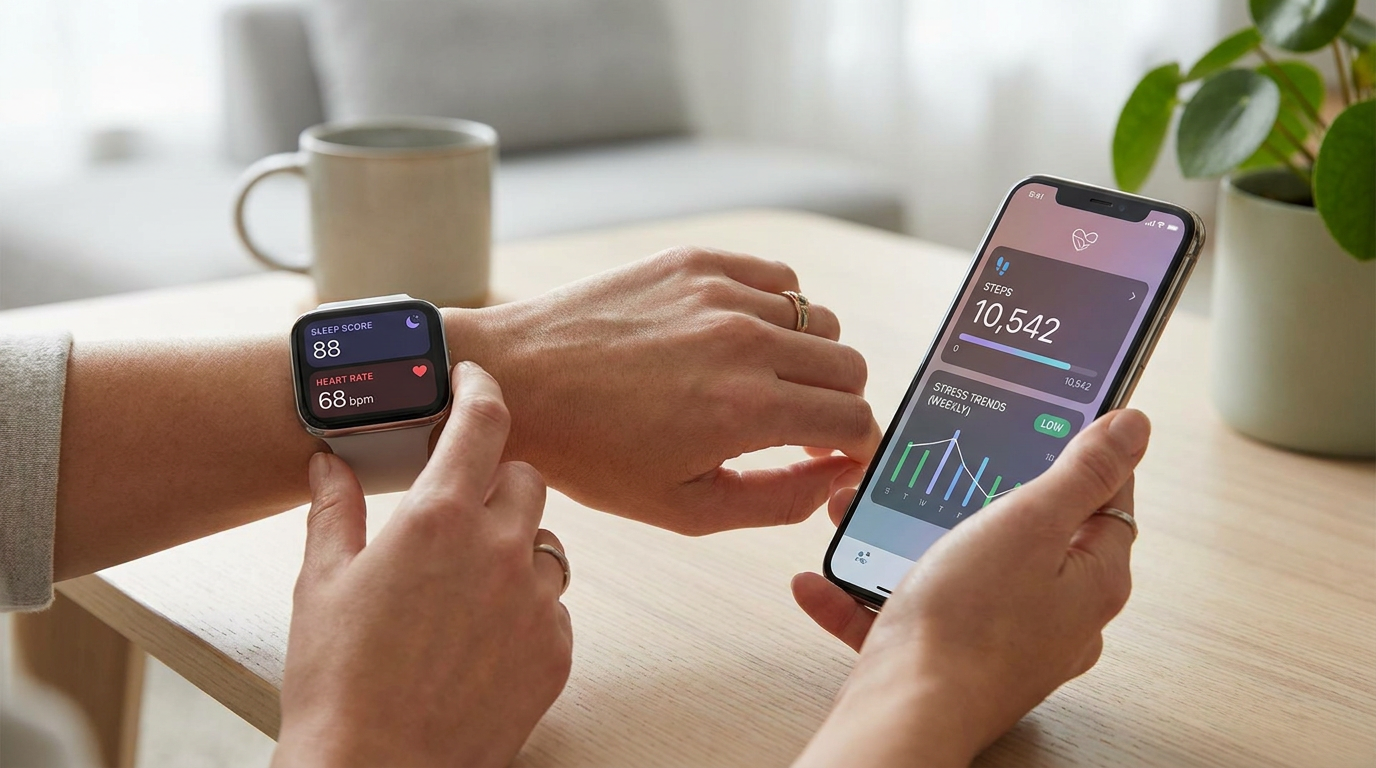
For consumers, the practical effect is simple. Wellness no longer feels like a disconnected set of one-time choices. It feels like an ongoing feedback loop. The body generates data, devices record signals, platforms interpret trends, and interfaces suggest adjustments. A morning recovery score can influence whether someone does an intense workout, takes a walk instead, or prioritizes stretching and hydration. A spike in stress alerts can prompt a breathing exercise or an early bedtime. A week of poor sleep can lead someone to change dinner timing, screen habits, or caffeine intake.
That does not mean every data point is meaningful. In fact, one of the defining tensions of digital wellness is that measurement has become easier than interpretation. Many people can now see metrics they had never tracked before, but not every metric helps them make better decisions. This is why the most successful wellness products increasingly focus not on raw information but on translation. They package complexity into a simpler narrative: here is what changed, here is why it might matter, and here is what you can do next.
From a consumer preference perspective, this is a significant change. People are not only seeking healthy outcomes. They are seeking clarity. They want systems that reduce ambiguity and help them understand which habits are worth adjusting. In a noisy market full of generic advice, personalized data offers a more compelling proposition. It says, in effect, that your wellness plan should reflect your body, your routine, and your goals rather than a population average.
The rise of personalized wellness expectations
Personalization is no longer a premium feature in wellness. It is increasingly the baseline expectation. Consumers want recommendations that reflect sleep quality, step count, recovery status, stress patterns, diet preferences, fitness history, medical context where relevant, and even the time available in a given day. Generic health advice still has value, but it often feels too broad to guide actual behavior. A reminder to exercise more means something very different to a person who slept eight hours and feels energized than it does to someone who was awake half the night and is already under strain.
This demand for relevance is one reason wearables and app-based systems have become so attractive. They can gather continuous or semi-continuous data and use it to tailor prompts, goals, and summaries. Instead of a fixed daily target, a platform may offer adaptive coaching based on recent activity, soreness, sleep debt, or stress. Instead of a universal bedtime recommendation, it may propose a small adjustment based on observed sleep timing and consistency. The value is not simply information. It is the sense that the system is responding to real conditions rather than speaking in abstractions.
The quantified self movement helped normalize this logic years ago by encouraging people to track elements of their own physiology and behavior. What has changed now is the scale and sophistication of the tools involved. Tracking is more seamless, interfaces are more polished, and analytics are increasingly automated. Consumers no longer need to manually log every variable to participate in personalized wellness. Much of the process happens in the background through sensors, integrations, and predictive models.
Yet the appetite for personalization also reveals something deeper about modern life. Many people are trying to optimize wellness under conditions that are not ideal. They are balancing demanding work, family responsibilities, irregular schedules, financial pressure, and information overload. In that environment, broad advice can feel disconnected from reality. Personalized systems are appealing because they seem more practical. They acknowledge constraint. They can suggest smaller, more realistic interventions that fit the day as it exists, not as an idealized plan imagines it.
Still, personalized wellness is not automatically better simply because it is individualized. Personalization is only useful when the underlying data is reasonably accurate, the interpretation is responsible, and the recommendations are actionable. If a platform generates constant alerts without clear meaning, or if it overstates the precision of weak signals, personalization can quickly become another form of digital clutter. The preference consumers are really expressing is not for data alone. It is for useful personalization.
What the evidence says about wearables and behavior change
One of the most important misconceptions in this space is that wearables alone are enough to improve health outcomes. The evidence is more encouraging than skeptical, but it is also more specific. A 2024 umbrella review found moderate-certainty evidence that wearable devices can increase physical activity, especially step count and minutes of moderate-to-vigorous activity. That is meaningful. It suggests that self-tracking tools can support healthier movement patterns for many users.
However, the same research base also shows that devices are usually most effective when combined with behavior-change supports such as coaching, feedback, goal-setting, and self-monitoring. In other words, the wearable is often the sensor layer, not the complete solution. It can capture the signal, but durable progress often depends on how that signal is translated into motivation, accountability, and realistic habits. This aligns with a broader principle in behavior change science: awareness is necessary, but it is rarely sufficient by itself.
That distinction helps explain why some consumers become deeply engaged with a wellness tool while others abandon it after a few weeks. The novelty of tracking can create short-term motivation, but sustainable use often depends on whether the system helps people interpret patterns and adapt behavior without feeling overwhelmed. A watch that counts steps is useful. A watch that explains why activity dropped after several poor sleep nights and then recommends a manageable recovery plan is far more compelling.
Behavioral support can take several forms. It can be human, such as a coach who uses the data to guide decision-making. It can be digital, such as progress dashboards, reminders, streaks, and personalized prompts. It can also be social, with peer comparison or community accountability. The common thread is that the data becomes part of a larger routine of reflection and adjustment. Without that structure, many metrics remain observational rather than transformative.
This matters for consumer wellness preferences because it changes how people evaluate technology. They are not always looking for the device with the most sensors. Often, they prefer the one that helps them maintain consistency, reduces guesswork, and fits naturally into daily life. A lower-friction system with good feedback loops may produce more meaningful wellness gains than a highly sophisticated product that generates data few users understand.
In digital wellness, the winning product is rarely the one that collects the most information. It is usually the one that turns information into the next right action.
How AI and automation are becoming wellness interfaces
The next major shift in wellness preferences is the rise of AI as an interface layer. Pew Research Center reported in 2026 that about half of U.S. adults use AI chatbots, a signal that conversational AI has already entered mainstream consumer life. That statistic is not limited to health, but it has clear implications for wellness. As AI becomes a familiar part of everyday digital behavior, it also becomes a natural channel for interpreting wellness data, answering health-adjacent questions, and helping users build habits with less effort.
AI systems are increasingly being used to summarize sleep trends, explain fluctuations in heart rate or training load, suggest meal adjustments, recommend breaks, and nudge users toward consistency. This changes the user experience significantly. Instead of opening several apps and manually reviewing graphs, a consumer may receive a concise explanation: your sleep has declined for four consecutive nights, afternoon caffeine may be contributing, and your recovery markers suggest a lighter workout today. The friction drops, and the guidance feels more conversational.
Automation also affects the timing of wellness support. Traditional health content often required a user to seek information out. Smart systems increasingly bring recommendations to the user at the moment they are most relevant. A reminder to stand arrives after long inactivity. A prompt to begin a wind-down routine appears before the usual bedtime drift. A stress alert triggers a guided breathing session during a high-load part of the day. These interventions are small, but their cumulative effect can be powerful because they connect wellness behavior to lived context.
There is a reason consumers respond to this model. Habit change is difficult partly because it depends on memory, energy, and timing. Even a motivated person can forget or postpone a helpful routine if life is crowded. Automation reduces that burden. It does not eliminate the need for discipline, but it can make healthy choices easier to remember and easier to perform. This is one of the clearest ways technology shapes wellness preferences. People gravitate toward systems that lower the activation energy required for healthy behavior.
Still, AI-based wellness guidance should be framed carefully. It can improve interpretation and convenience, but it is not the same as clinical judgment or deep personal understanding. Algorithms work with available inputs, and those inputs may be incomplete. They can identify correlations without fully understanding causes. They can also reflect hidden assumptions from their design. The most credible role for AI in wellness is therefore assistive rather than authoritative. It should help users see patterns, ask better questions, and follow through on goals, not replace professional care or personal judgment.

Why trust, privacy, and access shape adoption
It is easy to talk about the benefits of digital wellness as if adoption were automatic, but real consumer behavior is more complex. Statistics Canada reported that just over half of Canadians accessed electronic health information in the previous 12 months, based on 2023 survey data released in 2024. That is a substantial level of engagement, but the non-users are just as informative. Reported barriers included discomfort with technology, lack of access to required technology, and privacy or security concerns.
These barriers are not side issues. They are central to understanding wellness preferences in the digital age. A consumer may appreciate the idea of personalized health guidance and still avoid a platform if the app feels intrusive, the interface is confusing, or the data-sharing terms are unclear. In this category, trust functions as infrastructure. Without it, even high-performing products can struggle to become part of routine behavior.
Privacy concerns are especially important because wellness data can feel deeply personal even when it is not formally medical. Sleep patterns, stress levels, heart rate trends, menstrual tracking, mental health check-ins, and location-linked exercise data all carry emotional and practical sensitivity. Canada’s public-sector privacy guidance stresses written safeguards and data-sharing agreements whenever personal information is shared with third parties. That principle has direct relevance for consumer platforms. Users increasingly want to know who can access their data, how long it is stored, whether it is used for advertising, and how easily consent can be changed.
Trust also extends beyond cybersecurity. It includes whether a platform feels honest about what it can and cannot do. Overclaiming is a credibility risk. If a product implies that more data automatically leads to better health, sophisticated users may become skeptical. If it presents uncertain metrics as settled facts, confidence can erode quickly. The stronger approach is transparent design that communicates limitations, explains why a recommendation is being made, and gives users meaningful control over settings and permissions.
Accessibility is equally important. Digital wellness tools are not equally usable for everyone. Older adults, people with disabilities, those with limited connectivity, and those with lower digital literacy may experience more friction. A service that assumes constant internet access, expensive devices, or comfort with layered dashboards may inadvertently exclude large segments of the population. As a result, accessibility and inclusion are not just ethical concerns. They are core product design issues that shape adoption and long-term engagement.

The new wellness stack: ecosystems instead of isolated tools
Another major trend shaping wellness preferences is the move from isolated products to connected ecosystems. A consumer may use a wearable for activity and sleep, a smart scale for body composition, a meditation app for stress management, a telehealth portal for professional advice, and a nutrition platform for meal tracking. Each tool produces information, but the real value increases when the systems can connect, share context, and reduce repetition. This is where interoperability becomes more than a technical term. It becomes a consumer expectation.
When systems do not communicate, the user carries the burden. They need to re-enter data, compare conflicting metrics, and mentally stitch together disconnected signals. When systems are integrated, the experience becomes more coherent. Sleep data can inform recovery recommendations. Activity trends can shape calorie or hydration guidance. Stress scores can influence mindfulness prompts. Health records can support more informed care conversations when appropriate. The result is a more continuous picture of well-being.
This ecosystem model also changes how brands compete. The strongest players are not only selling devices or subscriptions. They are building intelligence layers around user behavior. Their value lies in organizing information, generating personalized insights, and becoming the default interface for daily wellness decisions. In practical terms, a smartwatch is not just a hardware product. It is an entry point into a broader environment of coaching, dashboards, reminders, summaries, and behavior support.
For consumers, ecosystems can be helpful because they reduce fragmentation. But they can also create lock-in, where switching platforms becomes inconvenient because so much historical data and personalized setup are tied to one system. That dynamic makes interoperability even more important. If users are expected to trust platforms with sensitive wellness information, they should also be able to move that data, understand it, and decide how it is used across contexts.
The most durable wellness ecosystems are likely to be those that combine convenience with flexibility. People want integrated experiences, but they do not necessarily want to surrender control. That balance will increasingly define market leaders in the consumer wellness space.
Where modern wellness preferences are headed
The emerging pattern in North American consumer wellness is clear. Preferences are shifting from generic programs toward tailored routines built around feedback loops, automation, and context. Fitness tracking remains important, but it is now part of a wider interest in sleep optimization, stress management, recovery, metabolic health, weight management, and preventive care. The center of gravity is moving from one-dimensional tracking to multi-signal lifestyle guidance.
This does not mean every consumer wants extreme optimization. In fact, many people are drawn to digital wellness precisely because they want a simpler, more navigable way to care for themselves. The desire is often not for maximal tracking, but for sensible support. Consumers increasingly prefer tools that can answer practical questions such as whether they are sleeping enough to handle a demanding day, whether a workout helped or overreached, whether stress is becoming chronic, or whether small adjustments are producing measurable gains.
That preference aligns with the broader movement toward preventive health. Instead of responding only when something feels wrong, people are using technology to detect patterns earlier and maintain healthier routines over time. Smart systems fit this mindset because they can surface small signals before they become bigger problems. A decline in consistency, recovery, or movement can prompt intervention while the issue is still manageable. This is one reason wellness technology feels so compelling to many consumers. It promises not just insight, but earlier insight.
At the same time, the market will likely reward products that recognize the limits of constant tracking. More data is not always better. Excessive monitoring can create anxiety, perfectionism, and alert fatigue. Research on biometric monitoring has found that perceptions such as privacy, alarm burden, relevance, and interference with daily life strongly affect uptake. A tool that is technically sophisticated but emotionally exhausting is unlikely to remain part of a healthy routine.
The future of wellness preferences therefore points toward a more balanced model. Consumers will likely favor products that are intelligent but calm, personalized but not invasive, automated but still transparent, and data-rich but selective about what really deserves attention. In design terms, this means surfacing fewer but more meaningful insights. In behavioral terms, it means helping users do a handful of useful things consistently rather than chase endless optimization.
How to use personalized wellness data without becoming ruled by it
For individuals, the most productive relationship with wellness technology usually starts with a simple shift in mindset. Data should be treated as a decision aid, not a measure of personal worth. A low sleep score does not mean failure. A missed activity target does not erase progress. The purpose of personalized data is to create awareness, identify patterns, and support better choices over time. When people relate to tracking in that way, it is far more likely to improve well-being rather than undermine it.
It also helps to focus on a small number of meaningful metrics rather than every available variable. For one person, sleep consistency and daily movement may be the most useful anchors. For another, stress trends and recovery signals may matter more. The point is to choose signals that connect directly to a goal and a practical action. If a metric does not change behavior or deepen understanding, it may not deserve much attention.
A sensible digital wellness routine often follows a simple structure.
- Track a limited set of indicators that matter to your current goals.
- Review trends rather than reacting too strongly to a single day.
- Translate patterns into one realistic behavior change at a time.
- Use coaching, prompts, or accountability if motivation tends to fade.
- Reassess whether the tool is helping or creating unnecessary pressure.
This approach mirrors the best available evidence. Tools are most helpful when they support reflection, action, and consistency. They are less helpful when they generate endless observation without a clear path forward. For many consumers, the smartest wellness system is not the one that knows everything. It is the one that helps them make a few better decisions every day.
It is also worth remembering that some of the most important wellness inputs are still difficult to quantify fully. Emotional resilience, social support, financial stress, caregiving demands, and the texture of everyday life do not fit neatly into a dashboard. Personalized data can illuminate patterns, but it cannot capture the whole person. Human context still matters, and it often explains why the same recommendation works for one individual and fails for another.
That is why the hybrid model remains the strongest one. Data collection plus interpretation, paired with behavior support, privacy safeguards, accessible design, and room for human judgment. This model is more realistic than either extreme view. Technology is not a magic fix, but neither is it a superficial gadget when used well. It is part of the intelligence layer that can make wellness more responsive, preventive, and personally relevant.
Conclusion: wellness preferences are becoming smarter, but they still need to stay human
Understanding wellness preferences in the digital age requires more than noticing that people like wearables or health apps. The deeper shift is that consumers increasingly prefer wellness systems that adapt to their own data, habits, schedules, and constraints. They want actionable insights rather than generic advice, timely nudges rather than abstract intentions, and low-friction support that fits into ordinary life. Personalized data has become central because it makes wellness feel specific, measurable, and responsive.
At the same time, the most reliable research calls for realism. Wearables can improve physical activity, especially when paired with feedback, coaching, and goal-setting. AI can help interpret data and reduce friction, but it should support rather than replace judgment. Privacy, interoperability, usability, and trust are not secondary details. They are core conditions for adoption. Without them, even strong technology can remain underused or misunderstood.
The most important takeaway is that digital wellness works best when it helps people act on meaningful signals without becoming overwhelmed by constant measurement. Consumers do not just want more data. They want better guidance. They want systems that respect their time, protect their information, and translate patterns into routines that are realistic enough to sustain.
In that sense, modern wellness preferences are not simply about optimization. They are about alignment. People are looking for tools that align health advice with actual life, that align data with action, and that align technology with human needs. The digital age has made wellness more measurable than ever. The next challenge, and the real opportunity, is making it more useful, more trustworthy, and more humane.



No Comment! Be the first one.