



Build-to-rent communities are moving from the edge of the housing conversation to the center of it. In both Canada and the United States, this model is gaining attention because it responds directly to a basic reality that many households now face: ownership is increasingly difficult to reach, while demand for well-located rental housing continues to rise. What was once seen as a niche product is now being treated as a serious development strategy with implications for land use, financing, infrastructure planning, and long term housing supply.
Table Of Content
- What Build-to-Rent Communities Actually Are
- Why Build-to-Rent Is Growing Now
- How Build-to-Rent Changes the Development Equation
- What Residents Gain From Build-to-Rent Communities
- The Urban Planning Significance of Build-to-Rent
- Can Build-to-Rent Solve Affordability?
- The Role of Policy, Zoning, and Public Financing
- The Main Constraints and Risks Facing the Sector
- Where the Model Is Headed Next
- What Developers, Investors, and Cities Should Take From This
- Conclusion: A Strategic Housing Model for a Changing Urban Future
- Frequently Asked Questions About Build-to-Rent Communities
- Is build-to-rent the same as affordable housing?
- Are build-to-rent communities only suburban single-family homes?
- Why are investors so interested in build-to-rent?
- Can build-to-rent help reduce housing shortages?
- What is the biggest barrier to more build-to-rent development?
At its core, build-to-rent, often shortened to BTR, refers to housing that is designed, financed, built, owned, and operated specifically for rental use. Unlike condominiums or traditional single-family subdivisions that are created to be sold unit by unit, build-to-rent communities are planned as long term rental assets from the beginning. In Canada, this often takes the form of purpose-built rental apartments, while in the United States the label can also include single-family rental homes, townhomes, and professionally managed rental neighborhoods.
The strategic importance of this model is not hard to understand. North American cities are under pressure from population growth, immigration, changing household formation, and years of underbuilding. Housing shortages are not only a social problem. They are also an economic problem, a labour market problem, and an infrastructure problem. When households cannot find suitable housing near jobs, schools, and transit, the costs ripple across the entire region. Build-to-rent communities offer one pathway to add professionally managed, scalable housing supply in markets where traditional ownership product no longer fits the needs or budgets of many residents.
This is why the conversation around build-to-rent matters far beyond real estate circles. It speaks to how cities grow, how land is allocated, and how housing systems adapt when affordability deteriorates. It also reveals an important shift in development thinking. The future housing market will not be defined only by who can buy. It will increasingly be shaped by who can access stable, well-managed rental housing in the right location and at the right scale.
Recent data reinforces how significant this shift has become. CMHC reported that in the first half of 2024, rental construction accounted for 47% of apartment starts in Canada’s six largest metropolitan areas and more than one third of all housing starts in that period. That is not a side trend. It is a structural signal that rental housing, especially purpose-built rental, is becoming one of the primary engines of new supply. For anyone involved in development, planning, or policy, that deserves close attention.
Build-to-rent is no longer just an alternative product type. It is increasingly a core response to the mismatch between housing demand, affordability, and the realities of modern urban growth.
What Build-to-Rent Communities Actually Are
A clear definition matters because the term build-to-rent is often misunderstood. Some people assume it refers only to suburban rental houses. Others confuse it with older scattered rental stock owned by small landlords. In practice, build-to-rent is a much broader and more intentional housing format. It includes projects conceived from day one for rental occupancy, with ownership, operations, maintenance, and leasing organized around long term asset performance rather than quick unit sales.
In Canada, the closest parallel is purpose-built rental housing. These are apartment or multi-unit developments that remain under unified ownership and are professionally managed for renters. In the United States, BTR may include detached homes, townhouses, cottage clusters, or mixed-density rental communities. The common thread is not the building form alone. It is the development model. The project is built as an income-producing housing platform designed to serve renters over time.
This distinction changes many decisions upstream. Site planning, amenity design, leasing strategy, unit mix, operating systems, and financing assumptions all look different when a project is intended to remain rental. Developers can optimize for resident retention, maintenance efficiency, and community management instead of designing for individual resale values. Investors can evaluate stable income streams rather than depending entirely on exit pricing. Residents, in turn, often gain access to more predictable management standards and a community experience that is more coherent than fragmented small-landlord stock.
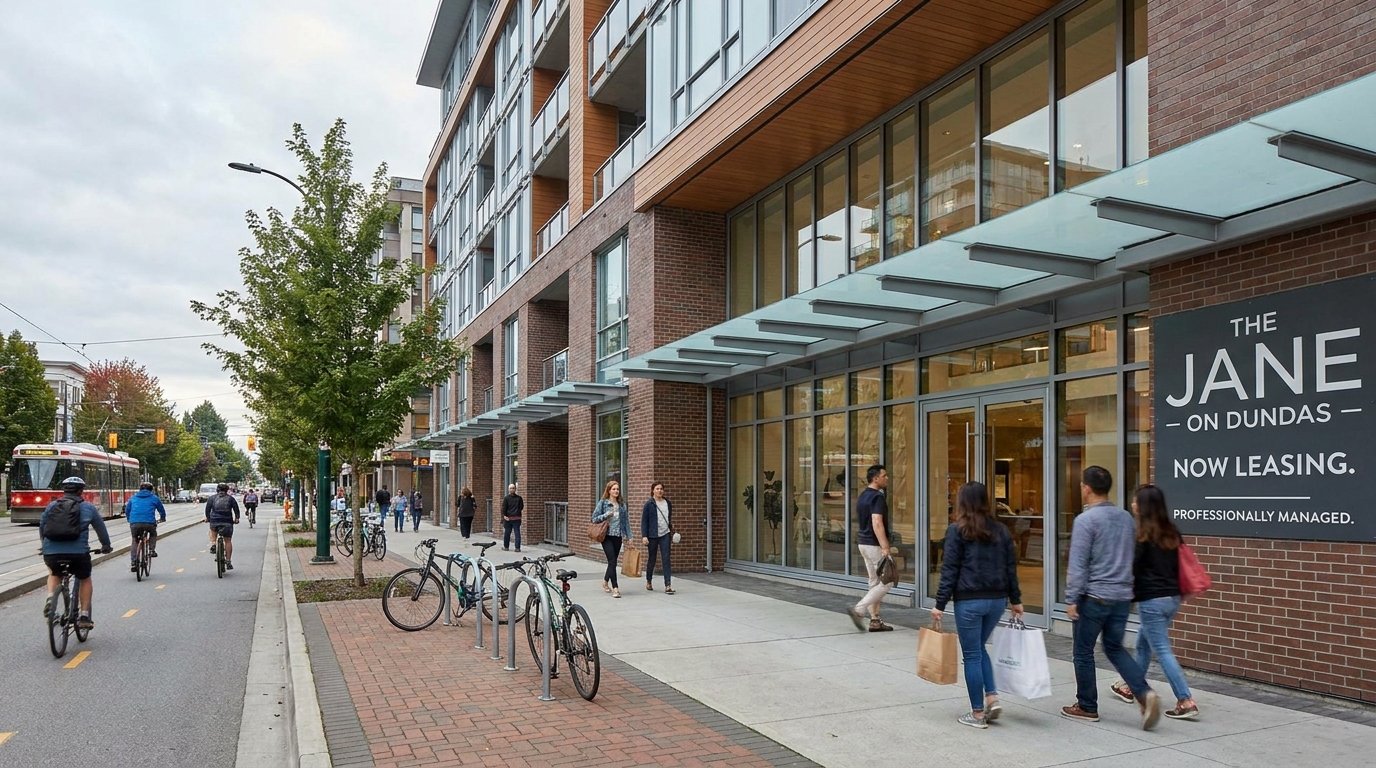
Build-to-rent should also be understood as a flexible category rather than a single building type. It can appear as mid-rise apartments near transit corridors, rental townhome communities in growth suburbs, mixed-use projects in intensifying neighborhoods, or missing middle housing formats in markets where detached ownership has become unaffordable. That flexibility is part of its strength. It allows the model to respond to different land conditions, approval environments, and household preferences.
Why Build-to-Rent Is Growing Now
The rise of build-to-rent is not happening by accident. It is the result of several market forces aligning at the same time. First, ownership affordability has deteriorated sharply in many urban and suburban markets. Elevated home prices and higher borrowing costs have pushed many households out of ownership or forced them to delay buying. This has expanded the renter pool and created stronger demand for rental housing that feels more permanent, more spacious, and more professionally managed.
Second, the rental market has remained structurally tight, even as supply has started to improve. CMHC reported that Canada’s national primary rental vacancy rate fell to 1.5% in 2023, the lowest level since tracking began in 1988. At the same time, same-sample rent growth for two-bedroom purpose-built rental units reached 8% in 2023. Those numbers tell a straightforward story. Demand has been outrunning supply for years, which creates a strong rationale for more purpose-built rental development.
By 2025, average vacancy in purpose-built rental apartments had risen to 3.1%, according to CMHC, suggesting that some pressure was easing. But easing does not mean the affordability problem is solved. In many high-growth metros, rents remain high relative to incomes, and the overall stock of professionally managed rental housing is still not deep enough to meet the range of household needs. A moderate rise in vacancy can improve choice at the margin, yet the broader system still requires substantial new supply.
Third, the model is increasingly financeable under the right conditions. Lenders and institutional capital often value the predictability of recurring rental income, particularly in markets with durable demand fundamentals. CBRE has described build-to-rent as an increasingly important subset of rental housing investment, and NAHB reported approximately 18,000 single-family built-for-rent starts in the first quarter of 2024. That kind of activity reflects a market adapting to new economics. In many locations, rental product pencils more effectively than for-sale housing because buyer affordability has been compressed.
Fourth, public policy has played an outsized role, especially in Canada. CMHC has stated that its construction financing programs and products supported an estimated 88% of new purpose-built rental apartment starts in 2024. By the end of 2025, it had committed more than $29 billion in low-cost loans to support more than 74,500 new purpose-built rental units. That level of support matters because housing supply is not created by demand alone. It requires viable financing structures, feasible approvals, and enough confidence that a project can move from concept to completion.
How Build-to-Rent Changes the Development Equation
From a development perspective, build-to-rent is not simply a different tenure. It is a different business model. A conventional for-sale project often depends on presales, staged closings, and shorter-term capital recovery. By contrast, BTR requires a long horizon. Revenue arrives over years through rents rather than through immediate unit sales. That changes how land is valued, how cash flow is projected, and how risk is distributed across the life of the project.
For developers, one of the biggest attractions is the ability to create a scalable operating asset. Instead of exiting the project after sales are completed, the owner can retain a stabilized community that generates recurring income. In volatile markets, that can be strategically valuable. It creates exposure to long term rental fundamentals rather than solely to short term sales conditions. It also allows developers to differentiate with design, amenities, technology, and management quality in ways that support resident retention and operating performance.
For investors, BTR offers a real asset class linked to housing demand that tends to remain durable across economic cycles. Households may delay ownership in weak affordability environments, but they still need housing. That demand resilience is part of what has pulled more institutional interest into the sector. Pension funds, real estate investment firms, and long horizon capital increasingly view professionally managed rental housing as a way to access stable cash flow while participating in one of the most supply-constrained segments of the market.
There is also a land strategy dimension that should not be overlooked. Build-to-rent can unlock sites that may be less practical for condominium sales or detached ownership projects under current conditions. In some cases, rental economics support more compact forms of housing. In others, clustering rental townhomes or single-family rentals allows developers to deliver a community format that meets family demand without depending on each unit being individually sold. The outcome is a broader housing menu and, potentially, better land utilization.
Still, this model is not automatically easier. Developers must carry long term operational responsibilities, absorb lease-up risk, and navigate financing structures that can be sensitive to interest rates. Success depends on disciplined underwriting, thoughtful product positioning, and a strong read on local absorption. Build-to-rent rewards strategic execution, but it does not eliminate the fundamentals of feasibility.
What Residents Gain From Build-to-Rent Communities
One of the most important misconceptions about build-to-rent is that it only serves investors. In reality, its staying power depends on resident value. If these communities did not answer a genuine housing need, they would not be gaining traction across so many markets. The demand is there because many households want a rental option that offers more than temporary accommodation.
For residents, the appeal often begins with quality and consistency. A purpose-built rental community is typically designed with rental living in mind from the start. That means more standardized maintenance systems, professionally managed common spaces, leasing teams, digital service platforms, and amenities that align with long term occupancy. Compared with fragmented rental stock where management quality can vary widely, this can create a more stable and predictable experience.
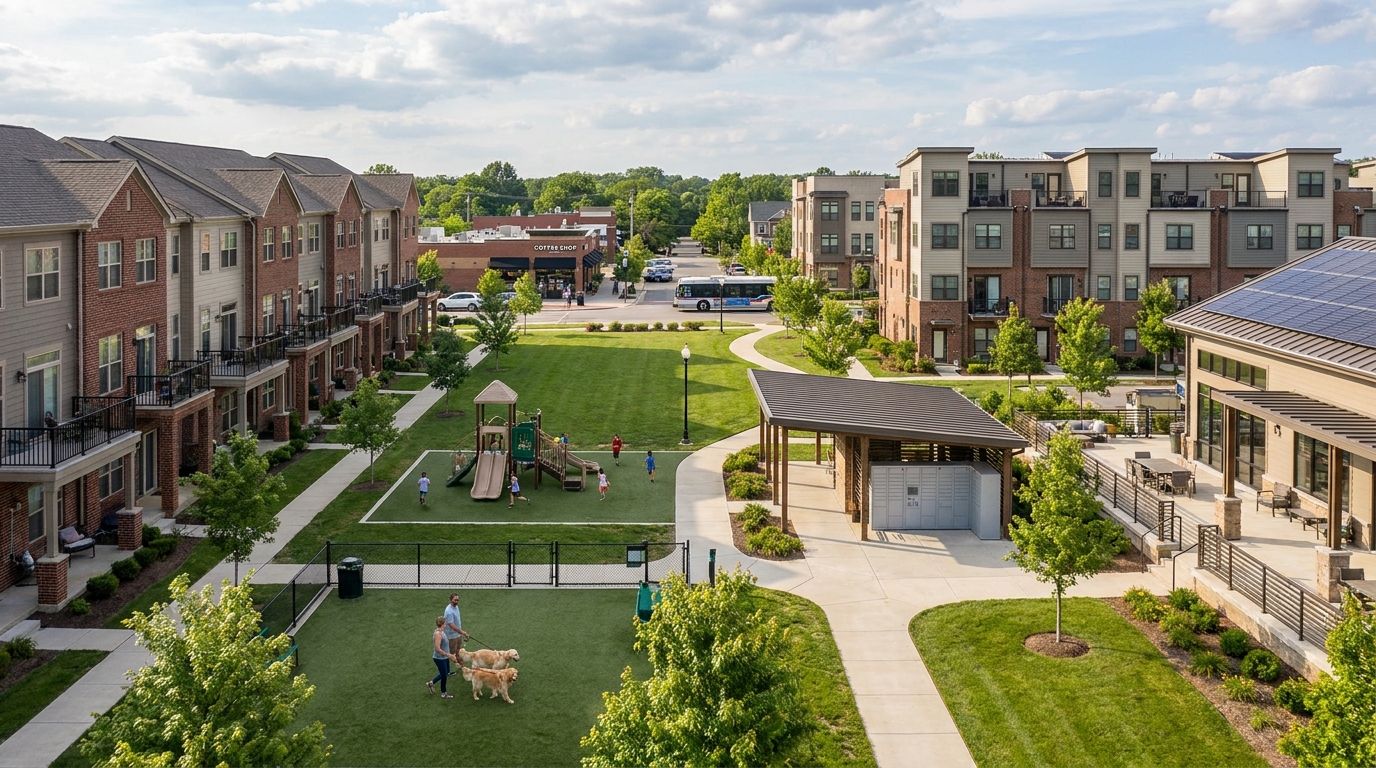
There is also a lifestyle dimension. Some households want the privacy and space of a townhome or detached house but are not in a position to buy, or do not want the financial and maintenance burden of ownership. Build-to-rent communities can bridge that gap by offering larger formats, shared outdoor areas, parking, pet-friendly design, and neighborhood-oriented planning in a rental framework. This is particularly relevant for young families, downsizers, and mobile professionals who value flexibility but still want a sense of permanence.
Professional management can also reduce one of the quieter frictions in the rental market: unpredictability. In small-scale rentals, tenants may face inconsistent maintenance practices, informal lease processes, or abrupt shifts in ownership. In a purpose-built rental environment, the operator’s business depends on occupancy, resident satisfaction, and asset performance. That does not guarantee perfection, but it often creates stronger incentives for organized service and long term community stewardship.
For cities, that matters because housing quality is not just about shelter. It affects resident stability, neighborhood continuity, school enrollment patterns, and local economic participation. A rental system that offers more durable and better managed housing can support healthier urban growth over time.
The Urban Planning Significance of Build-to-Rent
Build-to-rent should be viewed not just as a real estate product but as a planning tool. Cities need a diversified housing mix if they want to remain economically competitive and socially functional. When the market delivers too much of one tenure or one built form, the result is imbalance. Some households are pushed too far from employment centers. Others remain in unsuitable housing because there are too few alternatives. Purpose-built rental can help correct that imbalance by expanding options within established and emerging communities.
This is especially relevant in transit-oriented and mixed-use planning. Rental housing near rapid transit, major employment nodes, and civic infrastructure can improve accessibility while supporting more efficient land use. Households that cannot or choose not to buy still need the benefits of location. If those households are excluded from well-connected areas, cities create a geography of inequality where access depends too heavily on ownership status. BTR can help broaden who gets to live near opportunity.
The model also aligns with missing middle and gentle density goals in many municipalities. Not all housing demand needs to be met through high-rise towers. Townhomes, stacked towns, low-rise apartments, and compact rental communities can all play a role in increasing supply while fitting local context. In this sense, build-to-rent can support a more nuanced urban form, especially in neighborhoods that resist large-scale change but still need additional housing capacity.
At a regional level, the implications are even larger. Housing shortages constrain labour mobility, slow business investment, and increase infrastructure inefficiencies by forcing longer commutes. When workers cannot find housing within a practical distance of jobs, the urban system becomes less productive. Rental housing that is planned at scale can help regions absorb growth more effectively. It can also complement public investment in transit, utilities, schools, and community services by placing more residents in locations where infrastructure already exists or can be expanded strategically.
This is why the build-to-rent conversation belongs inside broader growth planning. It is not simply about whether one project succeeds. It is about whether cities create the conditions for a more resilient housing pipeline over the next decade.
Can Build-to-Rent Solve Affordability?
The honest answer is that build-to-rent can help, but it is not a silver bullet. This is a critical distinction. There is a tendency in housing debates to ask every new model to solve every problem at once. That is not how housing systems work. Different tools serve different parts of the market. BTR is best understood as a way to expand supply, improve housing choice, and create more professionally managed rental stock. Those are meaningful benefits, but they are not the same as delivering deeply affordable housing on their own.
Research from the Urban Institute makes this point clearly. Build-to-rent can help close the gap between housing demand and housing supply, but broader pro-housing policies are still needed if affordability gains are to be significant and durable. Supply matters because scarcity drives up prices and rents. But the level of affordability achieved by any given project depends on land costs, financing costs, approval timelines, construction costs, taxes, and the revenue needed to make the project viable.
In many markets, new build-to-rent communities will target middle-income renters rather than the lowest-income households. That is not a failure. It reflects the economics of new construction. The housing system still benefits when middle-income households have more options, because it reduces pressure on older rental stock and creates movement across the market. But if policymakers want deeply affordable units, they typically need additional measures such as subsidies, inclusionary frameworks, public land strategies, or tax incentives.
It is also worth noting that affordability is shaped by time. New supply often enters the market at newer-build pricing, yet over the longer term, adding enough rental housing can moderate overall pressure and improve market balance. The point is not that every BTR unit will be inexpensive on day one. The point is that a system that consistently underbuilds rental housing will almost certainly remain less affordable than one that allows supply to scale.
Build-to-rent is most powerful when it is treated as part of a larger housing strategy that includes zoning reform, transit-oriented planning, infrastructure coordination, and targeted affordability tools.
The Role of Policy, Zoning, and Public Financing
Policy support is one of the clearest reasons build-to-rent has accelerated in Canada. When CMHC financing supports an estimated 88% of new purpose-built rental apartment starts in a given year, it tells us that public lending tools are not peripheral. They are central to getting projects delivered. Low-cost loans, extended amortizations, and program certainty can materially improve feasibility in a high-cost environment where many otherwise viable projects stall.
Yet financing alone is not enough. Zoning and approvals remain major constraints. If land that is suitable for rental housing cannot be entitled at sufficient density, the math breaks down quickly. Long approval timelines add carrying costs and uncertainty, both of which are particularly damaging to BTR because the model already depends on patient capital and future income rather than immediate sales revenue. Municipalities that say they support rental housing but maintain restrictive land use rules often undermine their own goals.
Infrastructure coordination is equally important. Rental communities perform best when they are integrated into complete neighborhoods with transit, schools, parks, utilities, and everyday services. This means cities need to think beyond project-by-project approvals and toward corridor planning, servicing capacity, and growth sequencing. If infrastructure is treated as an afterthought, housing production slows and costs rise. If it is planned proactively, BTR can become part of a more coherent urban expansion strategy.
There is also a policy balance to strike around tenure goals. In some debates, rental development is framed as competing with homeownership. That is a false binary in many markets. A healthy housing system needs both. When ownership is out of reach for large segments of the population, insisting that every developable site prioritize ownership can actually deepen the shortage by preventing rental supply that households urgently need. The objective should be a resilient housing continuum, not ideological preference for one tenure alone.
The Main Constraints and Risks Facing the Sector
Despite its momentum, build-to-rent faces real obstacles. The first is construction cost. High labour, materials, development charges, and servicing expenses can make even well-located projects difficult to justify. Because BTR depends on long term cash flow, every cost increase must be absorbed through financing structure, operating efficiency, or higher rents. That creates pressure on feasibility, particularly in markets where residents are already stretched.
The second is interest rates and capital markets volatility. Rental development often requires substantial upfront capital with returns realized gradually over time. When borrowing costs rise, projects become more difficult to underwrite. This is one reason developers in some markets have shifted toward smaller and faster-to-deliver rental projects. CMHC’s 2026 Housing Supply Report noted that developers were moving toward smaller projects to reduce capital exposure and manage uncertainty. That is a rational adjustment, but it also shows how sensitive supply can be to financing conditions.
The third is local resistance. Community opposition to density, traffic concerns, parking debates, and fears about neighborhood change can all slow or shrink rental proposals. In some places, there is still a stigma attached to rental housing despite the fact that renters make up a substantial and growing share of urban populations. If municipalities are serious about addressing housing shortages, they need approval systems that distinguish between legitimate planning issues and simple resistance to change.
The fourth is the risk of oversimplifying who BTR serves. While the model can help many households, it is not universally suited to every market segment or every location. Some communities may need deeply affordable non-market housing more urgently. Others may need ownership pathways, student housing, seniors housing, or supportive housing. Strategic planning means understanding where build-to-rent fits best rather than assuming one product can meet every housing need.
Where the Model Is Headed Next
The next phase of build-to-rent will likely be defined by specialization and integration. Some projects will continue to scale up as large institutional communities with extensive amenities and professional operating platforms. Others will move toward smaller, more targeted formats that can be approved and delivered more quickly. Both paths make sense in a market where capital discipline, speed, and product-market fit all matter.
We are also likely to see more blending of forms. The distinction between multifamily rental, townhome rental, and single-family rental may become less rigid as developers focus on creating communities that serve different household types within one planned environment. That could mean mixed-density sites with apartments near transit edges, townhomes along internal streets, and community amenities tied together through shared management and placemaking. In development terms, this is not just a housing product. It is a community operating system.
Technology and operations will matter more as the sector matures. Leasing platforms, maintenance systems, resident apps, parcel management, energy efficiency, and data-driven asset management can all improve performance. In a competitive rental environment, operational quality becomes part of the product itself. The strongest BTR communities will not succeed on building design alone. They will succeed because they combine design, service, and location into a reliable resident experience.
Most importantly, the sector will be shaped by whether governments continue to align financing, zoning, and infrastructure with housing supply goals. If supportive policies remain in place and approval systems improve, build-to-rent can become a durable component of the housing pipeline. If policy becomes inconsistent or restrictive, momentum could slow even while demand remains high. The lesson is straightforward: housing outcomes follow systems, not slogans.
What Developers, Investors, and Cities Should Take From This
For developers, build-to-rent represents a chance to operate in a demand-rich segment where long term income can be more attractive than near-term unit sales under the right market conditions. The opportunity is strongest for teams that understand entitlement strategy, capital structure, operations, and resident needs as one connected business. BTR is not a shortcut. It is a more integrated development discipline.
For investors, the sector offers access to a housing category supported by strong structural drivers, including affordability barriers to ownership, demographic change, and chronic rental undersupply. But selectivity remains essential. Market depth, location quality, operating capability, and policy context all determine whether a project performs over time. The best opportunities are not defined only by cap rates or rent growth projections. They are defined by whether the community fits the long term shape of urban demand.
For cities and policymakers, the message is even broader. Build-to-rent can help expand supply, diversify housing options, and support more balanced urban growth, but only if municipal frameworks allow it to happen at scale. That means zoning reform, faster approvals, infrastructure planning, and targeted affordability mechanisms where needed. It also means recognizing that rental housing is not secondary housing. In many fast-growing metros, it is the housing that will determine whether growth remains functional and inclusive.
Conclusion: A Strategic Housing Model for a Changing Urban Future
Build-to-rent communities are emerging because the housing market has changed, and because cities are being forced to confront that change more directly. The old assumption that most households would move steadily from renting to ownership no longer holds in many regions, at least not on the same timeline or at the same scale. That requires a more mature housing strategy, one that values professionally managed rental housing as essential urban infrastructure rather than a temporary stop on the way to ownership.
Purpose-built rental and build-to-rent development will not solve every affordability challenge by themselves. They cannot replace social housing, land use reform, or broader efforts to improve housing supply elasticity. But they can play a major role in closing supply gaps, supporting complete communities, and giving residents better housing choices at a time when those choices are badly needed. That is why this model deserves serious attention from developers, investors, and governments alike.
The future of housing development will belong to the places that can align land, policy, capital, and infrastructure with real household demand. Build-to-rent is one of the clearest expressions of that alignment now taking shape across North America. It reflects a market that is adapting to new economic realities, and a planning landscape that must evolve if cities are going to remain livable, competitive, and inclusive over the long term.
Frequently Asked Questions About Build-to-Rent Communities
Is build-to-rent the same as affordable housing?
No. Build-to-rent can improve housing supply and expand renter choice, but it does not automatically create deeply affordable housing. In most markets, truly affordable units require additional subsidies, incentives, or public policy tools layered onto the development model.
Are build-to-rent communities only suburban single-family homes?
No. Build-to-rent includes a wide range of forms, including purpose-built rental apartments, townhomes, stacked townhouses, cottage clusters, and mixed-density communities. In Canada, it often appears through professionally managed apartment development.
Why are investors so interested in build-to-rent?
Investors are attracted to durable rental demand, recurring cash flow, and the long term value of professionally managed housing assets. In markets where ownership affordability is weak, rental housing can offer resilient occupancy and stable income performance.
Can build-to-rent help reduce housing shortages?
Yes, especially when it is delivered at scale and supported by zoning, financing, and infrastructure. It is not the only solution, but it can meaningfully add new supply in markets where rental demand continues to outpace available housing.
What is the biggest barrier to more build-to-rent development?
The biggest barriers are usually a combination of land use restrictions, high development costs, financing challenges, and long approval timelines. When those constraints are reduced, more rental housing can move from proposal to construction.


No Comment! Be the first one.