



Smart infrastructure is physical infrastructure — buildings, roads, bridges, transit systems, water networks, electrical grids, and public spaces — built and managed so it can sense conditions, share information, and respond in ways that improve performance. It works through three connected layers: a physical layer (the actual asset), a digital layer (sensors, controls, networks, and software), and a decision layer, where operators, planners, and engineers use the data to maintain assets, improve service, and plan future investments. For construction and urban planning, this matters because infrastructure is no longer just about pouring concrete, pulling wire, and walking away. Owners and municipalities now expect visibility into where energy is being wasted, which assets are nearing failure, how traffic is moving, and where maintenance money will have the biggest impact. Smart infrastructure helps answer those questions before problems become expensive.
Table Of Content
- What Does Smart Infrastructure Actually Mean?
- Why Construction Is a Big Part of the Smart Infrastructure Shift
- From Design Model to Operating Asset
- Smart Buildings: The Most Familiar Form of Smart Infrastructure
- Transportation Systems That Respond to Real Conditions
- Utilities, Water Systems, and the Value of Early Detection
- Climate Resilience Is Now Part of the Job
- Why People-Centred Planning Matters
- Cybersecurity and Privacy Have to Be Built In
- The Role of Data, Interoperability, and Asset Management
- Common Mistakes That Hold Smart Infrastructure Back
- What the Future Looks Like in Practical Terms
- What Owners, Builders, and Cities Should Focus on Now
- Conclusion
The practical shift is important. This is not about futuristic cities filled with gadgets for the sake of appearances. The strongest smart infrastructure projects are grounded in useful outcomes such as lower energy bills, better transit flow, safer streets, reduced downtime, stronger climate resilience, and better service for residents. In Canada and across North America, the conversation has matured from showcase technology to real-world performance.
That is also why smart infrastructure belongs in any serious discussion about the future of construction and urban living. It touches design, procurement, operations, maintenance, public policy, and quality of life. It affects how projects are coordinated in the field and how cities plan for growth, aging assets, and climate stress. When done properly, it gives owners and communities a clearer picture of how the built environment is actually performing, not just how it was expected to perform on paper.
What Does Smart Infrastructure Actually Mean?
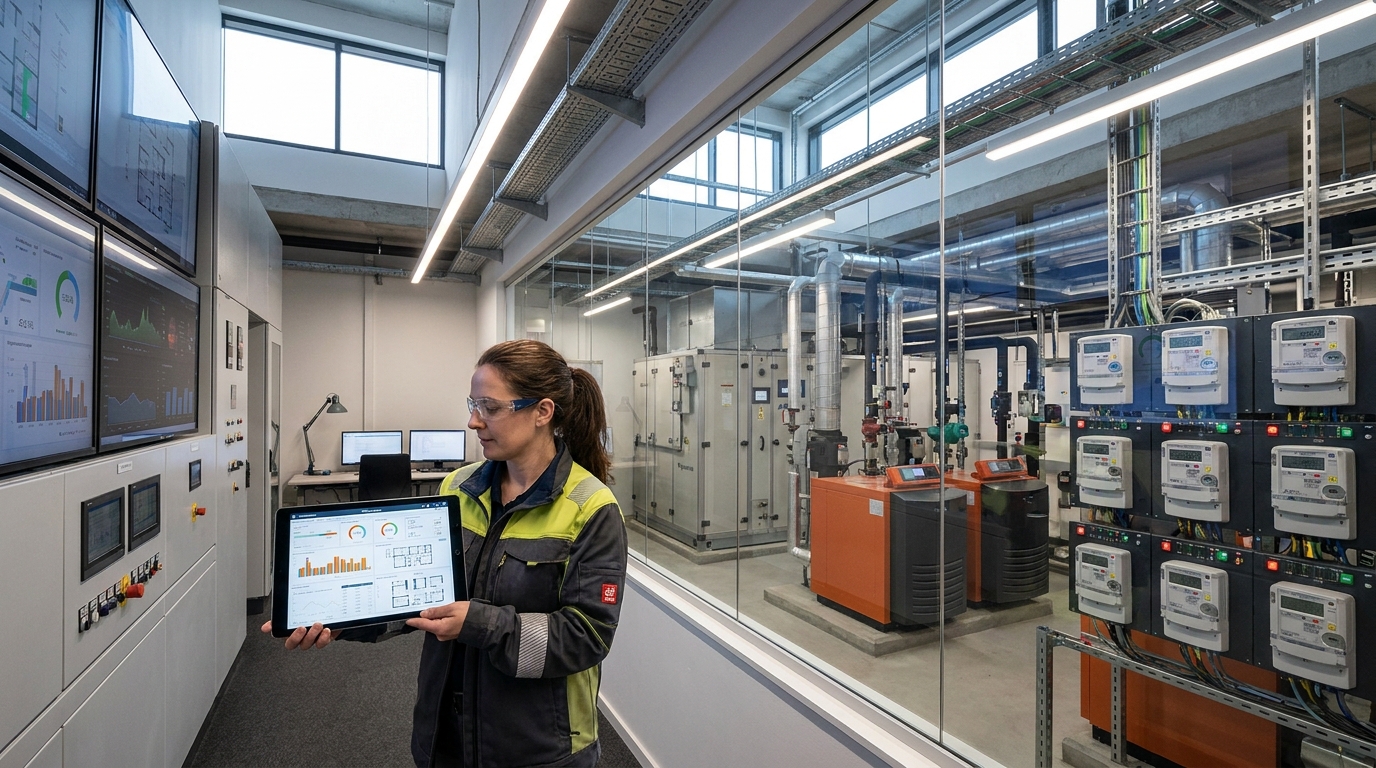
At its core, smart infrastructure combines physical assets with digital systems. A building might use occupancy sensors, smart thermostats, lighting controls, and a building automation system to adjust performance in real time. A city street might use adaptive traffic signals and connected transit data to reduce delay at peak times. A water utility might install leak detection sensors and pressure monitoring to find waste early. None of these systems work in isolation for long. Their value comes from coordinated use and from the decisions they support.
A useful way to understand the concept is to think of three layers working together. First is the physical layer, which includes the building, bridge, road, water main, pump station, or substation. Second is the digital layer, which includes sensors, controls, communication networks, and software platforms. Third is the decision layer, where operators, planners, engineers, and public officials use the data to maintain assets, improve service, and plan future investments. If one of those layers is weak, the system tends to underperform.
This is where many misconceptions start. Smart infrastructure is not just adding sensors to old systems and hoping for the best. It also involves standards, interoperability, cybersecurity, lifecycle planning, and governance. A city can install thousands of devices, but if the data is inconsistent, the software does not integrate, and the staff cannot act on the information, the project will not deliver much value. The practical work is in connecting information to decision-making.
NIST describes smart cities and communities as cyber-physical systems that combine networked devices with physical infrastructure to improve services and quality of life. That definition is useful because it keeps the focus on outcomes. The technology matters, but it is only one part of the picture. The larger goal is to make infrastructure more responsive, more resilient, and more useful to the people who rely on it every day.
Why Construction Is a Big Part of the Smart Infrastructure Shift
Construction is where many smart infrastructure decisions are either set up for success or compromised before occupancy even starts. If designers, contractors, and owners do not coordinate system requirements early, building controls, metering, communications, and asset data can end up fragmented. Retrofitting intelligence into a finished facility is possible, but it is usually more expensive and less effective than planning for it from the beginning.
One of the most important tools in this area is Building Information Modeling, usually called BIM. For infrastructure, BIM is an intelligent 3D model-based approach that improves planning, design, construction, and maintenance. The Federal Highway Administration has highlighted its value for highways and bridges, and the same principle applies across many building and civil projects. Instead of teams working from disconnected files and assumptions, BIM creates a shared model that supports coordination across disciplines.
That coordination matters in very practical ways on site. Mechanical, electrical, structural, and civil systems all compete for space and budget. A strong digital model helps teams catch clashes before fabrication or installation. It reduces rework, improves sequencing, and creates a better handoff to operations. In smart infrastructure projects, BIM also becomes the foundation for future asset information, which gives facility managers a more complete record of what was built and where components are located.
Construction teams are also using connected tools more often in the field. Tablets linked to drawings, quality control platforms, sensor-based site monitoring, drone surveys, and progress tracking all support smarter delivery. None of that replaces experience or field judgment. What it does is reduce blind spots. A superintendent still needs to know how a job is actually running, but better information helps that person make faster and more reliable calls.
From Design Model to Operating Asset
The real value shows up when the design model does not die at project closeout. In older workflows, owners often received boxes of manuals, scattered digital files, and as-built records that were hard to use. In smarter workflows, project data is structured so it can support commissioning, maintenance scheduling, equipment replacement planning, and future renovations. That makes the asset easier to run and less dependent on guesswork.
This is one reason digital twins are gaining attention. A digital twin is more than a 3D model. It is a living digital representation connected to real operating data. In practical terms, a digital twin can help an owner compare design assumptions to actual energy use, test maintenance scenarios, monitor building systems, or plan capital upgrades. For cities, digital twins can support planning across roads, transit, utilities, and public buildings in a much more coordinated way.
Smart Buildings: The Most Familiar Form of Smart Infrastructure
For many readers, the easiest place to see smart infrastructure at work is inside a building. Smart buildings use connected controls and data systems to manage heating, cooling, ventilation, lighting, access, safety systems, and energy use more effectively. The best examples are not flashy. They are comfortable, efficient, and predictable. Occupants may not notice the software, but they notice when temperatures stay stable, air quality is good, and maintenance problems are handled before they become disruptions.
The International Energy Agency has noted that digitalisation and smart demand-side management in buildings can reduce building energy use by up to 10 percent in some scenarios. That is significant because buildings are major energy users in North America. Even modest improvements in controls, schedules, occupancy response, and load management can produce meaningful savings. Those savings matter to owners, tenants, and utilities alike.
In practice, smart building systems often begin with a few core elements. These include smart thermostats, occupancy sensors, lighting controls, submeters, equipment monitoring, and a central platform that ties systems together. In larger buildings, facility teams can review performance in real time, respond to alarms, track trends, and fine-tune settings. This kind of operational visibility helps move building management from reactive problem solving to planned optimization.
There is also a strong quality-of-life angle here. Smart buildings can improve comfort, indoor air quality, lighting conditions, and accessibility. During heat waves or cold snaps, better controls help maintain stable conditions while managing energy demand more intelligently. In healthcare, education, office, and residential settings, these gains translate into healthier and more dependable spaces, not just better utility reports.
Still, it is important to be realistic. Smart does not automatically mean efficient. A poorly commissioned system, weak controls sequence, or overloaded interface can waste money and frustrate operators. The technology only performs when it is designed for the building, installed correctly, commissioned thoroughly, and supported by staff who understand how to use it.
Transportation Systems That Respond to Real Conditions
Transportation is another area where smart infrastructure has moved from theory into useful practice. Cities are dealing with congestion, transit reliability issues, road safety concerns, and pressure to reduce emissions. Intelligent transportation systems help address those problems by using sensors, signal controls, connected data, and analytics to manage traffic more effectively. This is one of the clearest examples of infrastructure becoming responsive instead of static.
Adaptive traffic control is a practical case. Rather than running on fixed timing plans that may not reflect current conditions, adaptive systems can respond to traffic volumes, transit movement, and pedestrian demand. That can improve travel times, reduce idling, and support more reliable bus service. In busy corridors, even small gains in signal coordination can produce noticeable improvements in flow.
Smart transportation also supports safety. Connected crosswalk systems, curb management tools, traffic monitoring, and transit priority measures can help create more predictable interactions between drivers, cyclists, pedestrians, and buses. The goal is not just to move cars faster. It is to manage the street as a shared public system that serves different users with fewer conflicts and less wasted time.
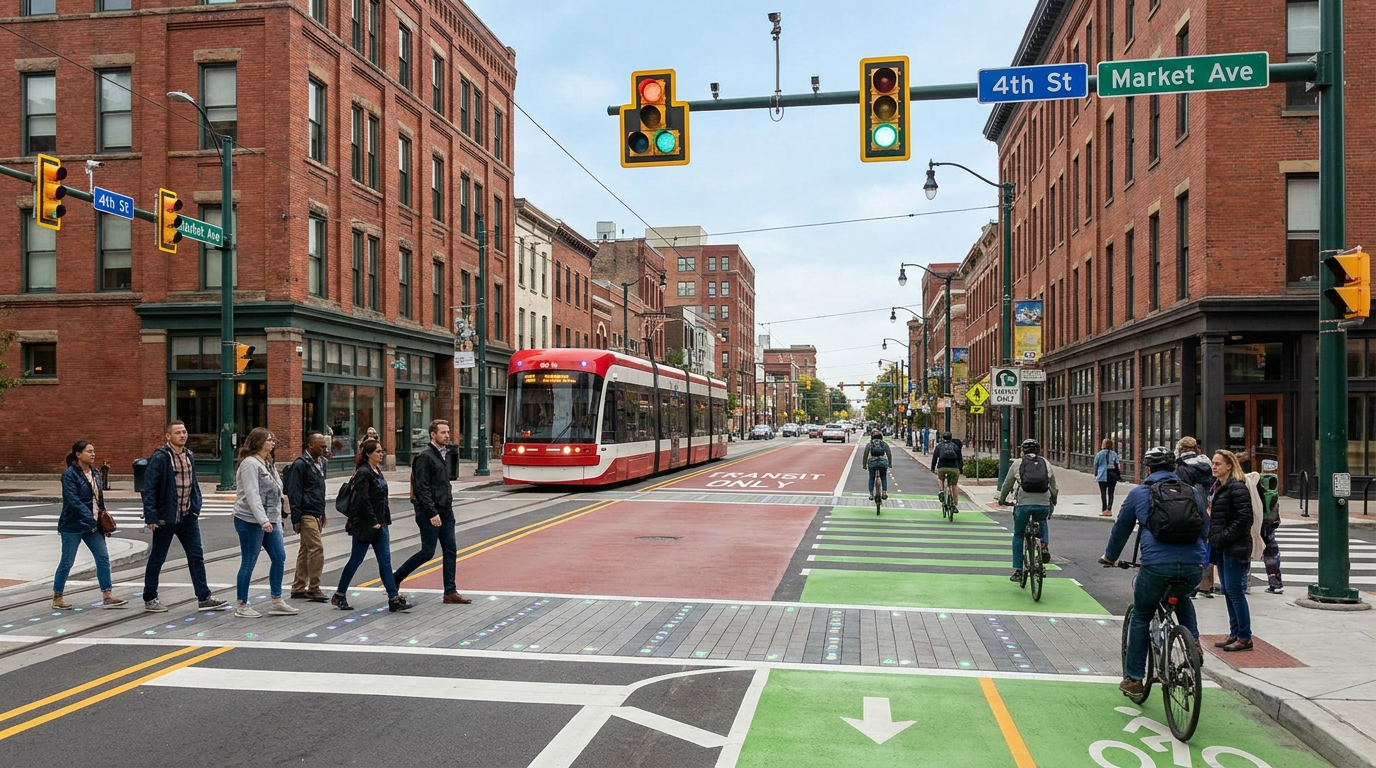
For planners and public works departments, the value extends beyond daily operations. Better transportation data helps identify bottlenecks, prioritize investments, and measure whether street changes are actually working. Instead of relying only on periodic traffic studies, agencies can use ongoing data to support capital planning, maintenance schedules, and service improvements. That leads to better use of limited budgets.
Again, the caution is straightforward. More sensors and more dashboards do not guarantee better mobility. Data has to be accurate, systems need to talk to each other, and decision-makers need clear objectives. A city that installs smart traffic technology without a policy framework for transit, safety, and public access may improve measurement without improving outcomes.
Utilities, Water Systems, and the Value of Early Detection
Some of the best returns in smart infrastructure come from systems the public rarely sees. Water networks, power grids, district energy systems, and wastewater infrastructure all benefit from better monitoring and faster response. These are the systems that keep cities functioning, and they are expensive to repair after failure. Smart tools help shift the work toward prevention.
In water systems, leak detection and pressure monitoring are practical examples. Small leaks can become major losses if they go unnoticed for too long. Connected monitoring can identify abnormal conditions early, allowing crews to intervene before streets are excavated in emergency conditions or treated water is wasted for months. For municipalities facing aging underground assets, this kind of visibility can make a major difference.
On the electrical side, smart grids improve how power is distributed and managed. Utilities can monitor load patterns, respond to outages faster, and coordinate demand-side management with buildings and equipment. As more electric vehicles, distributed solar, battery storage, and heat pumps are added to the system, this coordination becomes even more important. The grid needs to be flexible enough to handle changing demand without sacrificing reliability.
Microgrids are part of this conversation as well. In campuses, hospitals, remote communities, and critical facilities, microgrids can improve resilience by allowing local energy generation and storage to support key services during wider outages. That does not replace the need for a stable main grid, but it does add a practical layer of protection for high-priority loads and emergency operations.
What ties these systems together is asset management. Smart infrastructure gives utility operators better information about asset condition, system performance, and replacement priorities. Instead of waiting for visible failure, organizations can plan interventions based on evidence. That is usually safer, cheaper, and less disruptive to the public.
Climate Resilience Is Now Part of the Job
Across Canada and North America, climate resilience is no longer a separate topic from infrastructure planning. It is part of the core job. Flooding, heat, wildfire smoke, freeze-thaw damage, and grid stress are all putting pressure on existing systems. Smart infrastructure helps because it improves visibility, supports faster response, and allows assets to be managed with changing conditions in mind.
Canadian federal planning documents now emphasize the use of the best available data, standards, and guidance to support low-carbon, resilient infrastructure and buildings. That direction matters because resilience depends on better information over the full lifecycle of an asset. It is not enough to design for yesterday’s weather patterns and hope the structure lasts through tomorrow’s extremes. Owners need tools that help them monitor risks and adapt operations.
Flood monitoring is one practical example. Sensors placed in vulnerable areas can provide early warnings, support emergency response, and guide infrastructure upgrades. A city that understands where water is rising, where culverts are overwhelmed, and which roads are repeatedly affected can make better capital decisions. The same principle applies to heat events, where smart building controls and grid coordination can help reduce stress while protecting occupant comfort.
Predictive maintenance is equally important for resilience. Bridges, roads, pumps, and building systems all deteriorate over time, especially under environmental stress. Connected monitoring and analytics can help agencies spot patterns that suggest a higher risk of failure. That allows maintenance teams to act earlier, often at lower cost and with less service disruption than emergency repairs.
There is also a carbon angle that cannot be ignored. Smarter systems can reduce energy waste, improve operations, and support electrification strategies. But the honest point is this: technology alone does not make infrastructure low-carbon. The system still needs good design, durable materials, realistic operating plans, and policies that support efficient performance over decades.
Why People-Centred Planning Matters
One of the biggest improvements in the smart infrastructure conversation is the shift away from technology for its own sake. The strongest current models focus on public value. UN-Habitat’s recent work on people-centred smart cities emphasizes inclusion, sustainability, rights-based digital urban infrastructure, and better quality of life. That is the right direction because infrastructure should first serve people, not platforms.
In practical terms, that means asking better questions at the start of a project. Will this system improve accessibility for seniors and people with disabilities? Will it make housing or public buildings more efficient without making them harder to operate? Will it improve safety in public spaces? Will it serve smaller communities with limited staff as well as large cities with full digital teams? Those questions matter more than whether the technology looks advanced.
Canada’s Smart Cities Challenge reflected this broader approach. The federal government committed $300 million over 11 years to support communities using innovation, data, and connected technology to improve residents’ lives. The program was designed to address complex economic, environmental, and social challenges, not just deploy hardware. More than 225 municipalities expressed interest, which shows that the demand for smarter approaches reaches far beyond major metropolitan centres.
This is an important correction to another common misconception. Smart infrastructure is not only for giant cities with large budgets. Smaller municipalities, regional communities, and Indigenous communities can also benefit, especially when the focus is on practical needs such as water reliability, energy management, emergency response, and asset planning. In many cases, targeted smart systems deliver more value than flashy citywide programs.
The best smart infrastructure projects start with a service problem, not a technology wishlist. When the goal is clear, the technology becomes a tool. When the goal is vague, the technology often becomes the problem.
Cybersecurity and Privacy Have to Be Built In
The more connected infrastructure becomes, the more exposed it is to cyber risk. This is not a side issue. Utilities, transit systems, building automation platforms, access controls, and emergency systems are all part of the built environment, and all can be affected by weak security design. NIST and related U.S. guidance treat cybersecurity and privacy as core requirements for smart infrastructure because connectivity expands the attack surface.
From a construction and operations standpoint, that means cybersecurity cannot be dumped on the IT department after installation. It has to be considered in system design, procurement specifications, vendor selection, commissioning, and long-term operations. Secure communications, access control, network segmentation, patch management, and clear responsibility for updates all need to be part of the plan. If no one owns those details, the system will drift into risk.
Privacy also matters, especially in buildings and public spaces that collect occupancy or movement data. Owners and municipalities need to know what is being collected, why it is being collected, how long it will be stored, and who can access it. Good governance protects both the organization and the public. It also builds trust, which is essential if communities are expected to support broader digital infrastructure programs.
This is another area where practical discipline beats marketing language. A building with advanced controls but poor security practices is not truly smart. A city with connected services but no clear data governance framework is not prepared. Reliable smart infrastructure is built on secure architecture, clear policies, and operators who understand the systems they are responsible for.
The Role of Data, Interoperability, and Asset Management
Smart infrastructure only works well when information can move between systems in a useful way. That is where interoperability comes in. If the building automation system cannot share meaningful information with the energy platform, or if transportation data cannot be connected to planning tools, the organization ends up with isolated silos. Those silos are expensive to maintain and hard to use for long-term decision-making.
Good asset management depends on consistent, reliable data. Cities and owners need to know what assets they have, what condition those assets are in, what risks they face, and how replacement decisions should be prioritized. Smart infrastructure improves this process by providing better condition data and clearer operating patterns. Instead of guessing which assets should be addressed first, managers can use evidence to support budget decisions.
Digital twins and integrated platforms are making this easier. Rather than treating each project or department as separate, these tools support lifecycle planning across multiple systems. A municipality can connect information from roads, bridges, water assets, and buildings to see where investment will have the greatest impact. An owner with a building portfolio can compare performance across sites and direct upgrades where they will deliver the best return.

There is a practical warning here as well. More data is not always better. If information is poor in quality, inconsistent in format, or impossible to interpret, it creates noise instead of insight. The goal should be useful data tied to operating needs, maintenance workflows, and planning decisions. Quality and usability matter more than volume.
Common Mistakes That Hold Smart Infrastructure Back
One common mistake is treating smart infrastructure like a product purchase instead of a system. Organizations buy sensors, software, or control packages without defining the operational problem first. After installation, the tools produce streams of data, but no one is assigned to interpret them or act on them. The result is a technically advanced system with little measurable value.
Another mistake is underestimating commissioning and training. Even good systems fail when setpoints are wrong, integration is incomplete, or operators are left without practical guidance. In construction, there is often a rush to finish and turn over the asset. That rush can leave a smart system only half-ready for real use. Owners should push for strong commissioning, clear documentation, and realistic training that reflects day-to-day operating conditions.
Poor interoperability is another recurring issue. Different vendors may provide capable tools that do not communicate well with one another. Without common standards and clear requirements, the owner ends up with multiple dashboards and fragmented control logic. That is hard to manage and even harder to expand in future phases.
There is also the temptation to over-automate. Automation is useful, but it does not replace planners, engineers, technicians, or operators. Human judgment still matters, especially when conditions change or data is incomplete. Smart infrastructure works best when automation supports people who understand the system, not when it is expected to replace them.
Finally, some projects fail because they ignore long-term maintenance. Every connected device, platform, and network component needs support. Firmware updates, calibration, software licensing, cybersecurity review, and hardware replacement all cost money and time. If the owner does not plan for that reality, the system will degrade faster than expected.
What the Future Looks Like in Practical Terms
The future of smart infrastructure is less about isolated pilots and more about integration. The trend is toward connected platforms that tie together design data, operational data, maintenance history, and planning scenarios. The World Economic Forum’s recent work on intelligent infrastructure describes a practical architecture built around devices, networks, AI, and cyber-resilience. That framework is useful because it reflects what owners are actually trying to build today.
Artificial intelligence will likely play a larger role, especially in predictive maintenance, traffic optimization, and energy management. But the near-term value is not magic. It is pattern recognition, anomaly detection, and faster analysis of large operating datasets. In a building, AI might help spot unusual equipment behavior before a failure occurs. In a city network, it might improve traffic signal timing or identify asset deterioration patterns that deserve inspection.
Digital twins will also continue to grow as a planning and operations tool. As data quality improves and more assets are connected, twins can support scenario testing for capital projects, climate risks, and service changes. That can help public agencies and private owners make more confident decisions about where to invest first. Given budget pressure across North America, that kind of clarity is valuable.
Climate adaptation will remain a major driver. Infrastructure owners will keep looking for tools that help them manage flood risk, heat stress, energy reliability, and emergency response more effectively. Smart systems are well suited to this work because they provide real-time visibility and support faster operational decisions. The challenge will be making sure these systems remain secure, affordable, and usable over the long term.
Another likely shift is that smart infrastructure will become less visible as a category and more embedded in normal practice. Just as energy modeling, life safety systems, and asset registers became standard expectations, connected monitoring and data-enabled operations will increasingly be part of baseline project delivery. The label may feel less novel, but the work will be more important.
What Owners, Builders, and Cities Should Focus on Now
If there is one practical lesson in all of this, it is that smart infrastructure should start with clear operating goals. Owners should define what problem they are trying to solve, whether that is energy waste, poor maintenance visibility, traffic delay, water loss, or resilience planning. Once the objective is clear, the right mix of sensors, platforms, controls, and workflows becomes much easier to define.
Project teams should also think across the full lifecycle of the asset. The construction phase is important, but it is only the beginning. Smart infrastructure needs a plan for commissioning, data ownership, cybersecurity, updates, maintenance, training, and future expansion. Too many projects spend heavily on installation and too little on long-term performance.
Municipalities and institutional owners should prioritize interoperability and governance early. It is much easier to establish standards before procurement than to force integration after multiple vendors are already in place. Strong standards also help protect public value by keeping systems usable, scalable, and less dependent on a single proprietary environment.
Finally, the work should stay grounded in service to people. Better infrastructure should mean more comfortable buildings, more reliable transit, safer streets, stronger utilities, and better use of public money. Those are practical outcomes, and they are what make smart infrastructure worth pursuing. The technology is only valuable when it supports those results in a durable and manageable way.
Conclusion
Smart infrastructure is not a single device, software package, or futuristic vision. It is a practical way of designing, building, and operating the systems that shape everyday life. In construction, it improves coordination, reduces rework, and creates a better handoff to operations. In cities, it supports better mobility, stronger utilities, lower energy waste, more resilient public assets, and better-informed investment decisions.
The reason this matters now is simple. Urban systems are under pressure from aging assets, climate risks, energy transition demands, population growth, and budget constraints. Owners and municipalities need infrastructure that can do more than sit in place and slowly wear out. They need systems that can report conditions, support faster decisions, and adapt to changing demands with fewer surprises.
That is the practical future of smart infrastructure in Canada and across North America. It is not about chasing novelty. It is about building and managing infrastructure with better information, stronger coordination, and a clearer focus on public value. When the work is done properly, the result is not just smarter systems. It is better buildings, better cities, and a better everyday experience for the people who live in them.



No Comment! Be the first one.