



Hydrogen energy often enters the conversation with a mix of promise, confusion, and technical language. For many people, it sounds like something reserved for scientists, industrial plants, or futuristic vehicles rather than everyday life. Yet at its core, hydrogen is not an abstract idea at all. It is a practical energy tool that could help connect renewable electricity, transportation, industry, and backup power in smarter ways.
Table Of Content
- What Is Hydrogen Energy, Really?
- Why Hydrogen Matters in the Clean Energy Conversation
- How Hydrogen Is Made
- Gray Hydrogen
- Blue Hydrogen
- Green Hydrogen
- How Electrolysis Works in Simple Terms
- What Happens When Hydrogen Is Used?
- Where Hydrogen Is Used Today
- Hydrogen in Transportation
- Can Hydrogen Power Homes?
- What Home Use Might Look Like in the Future
- Why Canada Is a Meaningful Hydrogen Story
- The Benefits of Hydrogen Energy
- The Limitations and Realities
- Common Misconceptions About Hydrogen
- What the Numbers Tell Us
- How Hydrogen Fits Into a Sustainable Lifestyle
- Should Homeowners Pay Attention to Hydrogen Now?
- The Future of Hydrogen Energy
- Final Thoughts
If you have ever wondered whether hydrogen is a true clean energy solution, the short answer is that it can be, but not always. The climate value of hydrogen depends on how it is made, how it is transported, and where it is used. That makes hydrogen a topic worth understanding clearly rather than simply celebrating or dismissing. A balanced view helps us see where it is genuinely useful and where expectations need to stay realistic.
This guide is designed for beginners who want a calm, practical explanation of hydrogen energy without the jargon. We will look at what hydrogen actually is, how it works, the difference between green, blue, and gray hydrogen, and where it fits into the clean energy transition today. We will also talk honestly about whether hydrogen has a role in homes, what is still in development, and why many experts see it as a behind the scenes enabler of sustainability rather than a one size fits all replacement for every fuel we use.
Key idea: Hydrogen is best understood as an energy carrier. It stores and moves energy made from other sources, rather than acting as a primary source like sunlight or wind.
What Is Hydrogen Energy, Really?
Hydrogen is the most abundant element in the universe, but it does not usually exist by itself in a form we can collect easily for energy. On Earth, hydrogen is commonly bound up in substances such as water or hydrocarbons. To use it for energy, we first have to separate it from those other elements. That is why hydrogen is not considered a primary energy source. It has to be produced using electricity, natural gas, biomass, nuclear energy, or another input.
Once produced, hydrogen can be stored, transported, and used later. This is what makes it valuable in energy systems that increasingly depend on renewable electricity. Solar and wind power are clean, but they are not always available at the exact moment energy is needed. Hydrogen can act as a kind of bridge, helping store energy made at one time and deliver it somewhere else or later on.
The U.S. Department of Energy describes hydrogen as a flexible energy option that can connect sectors that are otherwise difficult to decarbonize. When hydrogen is used in a fuel cell, it can generate electricity with water and heat as byproducts. This is one reason it is often described as a clean end use fuel. The important qualifier is that the emissions profile depends heavily on the production method used upstream.
Why Hydrogen Matters in the Clean Energy Conversation
Hydrogen matters because not every part of the economy is easy to electrify directly. Homes can often switch from gas furnaces to heat pumps. Passenger vehicles can increasingly run on batteries. But some sectors remain more difficult. Heavy industry, long distance freight, certain chemical processes, shipping, and long duration energy storage all present challenges that batteries alone may not solve efficiently.
In these harder cases, hydrogen offers a different pathway. It can deliver high temperature heat for industry, serve as a feedstock for chemicals like ammonia, and support fuel cell systems in vehicles or stationary power units. It can also store energy over longer periods, which becomes more relevant as grids rely on larger shares of variable renewable power. In other words, hydrogen is not always the first solution, but it can be an important supporting solution.
That practical framing matters. Hydrogen is sometimes marketed as if it will soon power everything from stoves to family cars to entire neighborhoods. The more grounded reality is that its strongest applications today are often industrial and commercial. That does not make hydrogen less important. It simply means its role is likely to be more strategic than universal.
How Hydrogen Is Made
One of the most useful things a beginner can learn is that hydrogen is not automatically green. The word itself sounds clean, but the production pathway makes all the difference. Today, most hydrogen used globally is still made from fossil fuels without capturing the associated carbon emissions. According to the International Energy Agency, global hydrogen demand reached 97 million tonnes in 2023 and about 100 million tonnes in 2024, and that demand is still overwhelmingly met by hydrogen produced from unabated fossil fuels.
That fact can be surprising because public discussion often jumps straight to green hydrogen. In reality, low emissions hydrogen still represents a small share of the overall market. The IEA reports that low emissions hydrogen production was less than 1 million tonnes in 2023. So while hydrogen has strong long term potential, the present day market is still in transition.
Gray Hydrogen
Gray hydrogen is typically produced from natural gas through a process called steam methane reforming. This method is widely used and relatively established, but it releases carbon dioxide into the atmosphere. Because there is no carbon capture involved, gray hydrogen has a significant climate footprint. It is the most common form of hydrogen in the market today.
For beginners, the main takeaway is simple. Gray hydrogen may be useful industrially, but it is not a clean climate solution. When people speak about hydrogen as a sustainable energy option, they are usually referring to lower emissions pathways rather than the conventional gray version.
Blue Hydrogen
Blue hydrogen also starts with fossil fuels, often natural gas, but includes carbon capture, utilization and storage, often shortened to CCUS. The idea is to reduce the carbon emissions associated with hydrogen production by capturing a substantial share before it enters the atmosphere. This can lower emissions compared with gray hydrogen, though it does not eliminate them completely.
That distinction matters. Blue hydrogen is sometimes presented as fully clean, but it is more accurate to think of it as lower carbon rather than zero emissions. Its effectiveness depends on capture rates, methane leakage across the gas supply chain, and the quality of the storage system. For some regions, blue hydrogen may serve as a transition option, but it should not be confused with a perfect solution.
Green Hydrogen
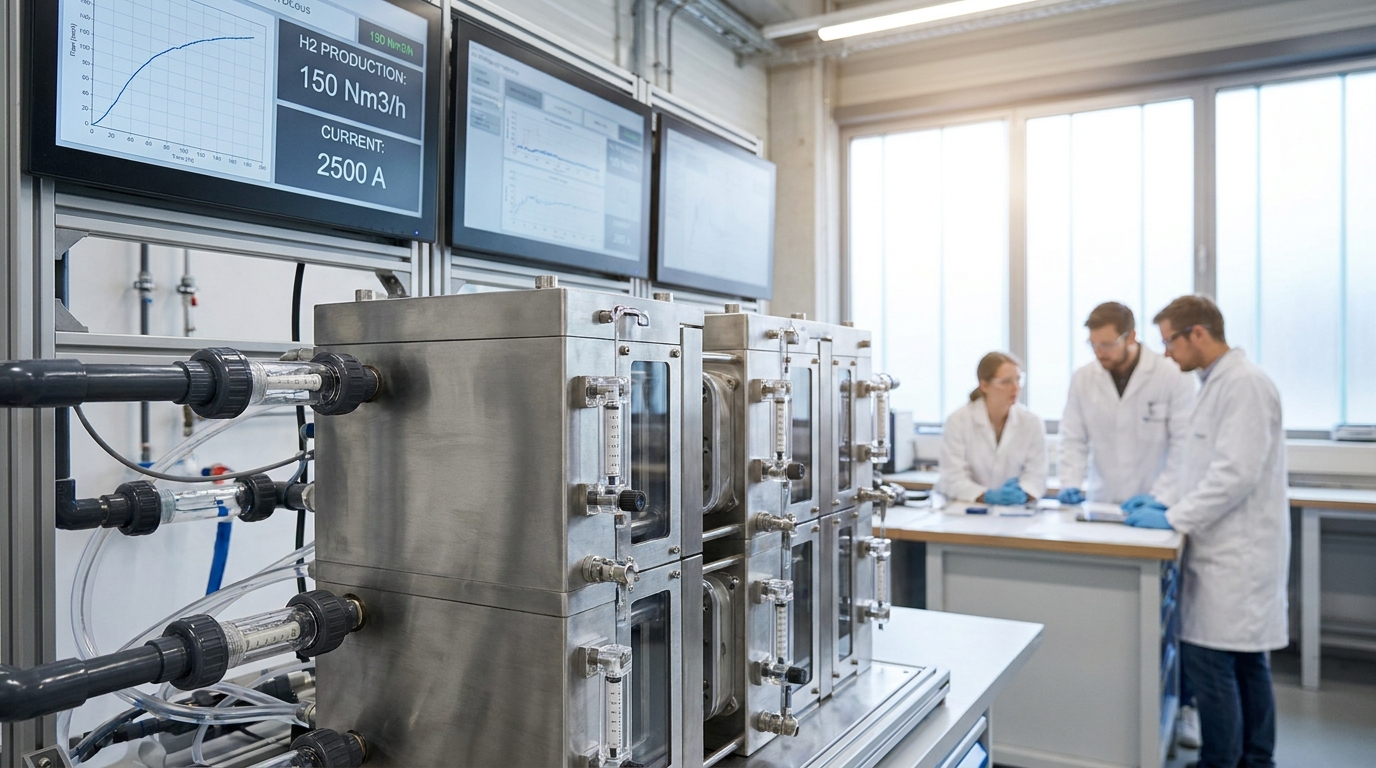
Green hydrogen is produced through electrolysis powered by low emissions electricity, such as wind, solar, hydro, or nuclear depending on the framework being used. Electrolysis splits water into hydrogen and oxygen using electricity. If that electricity comes from a low carbon source, the resulting hydrogen can have a much smaller climate impact than fossil based alternatives.
This is the pathway that attracts the most excitement in clean energy planning. Green hydrogen creates a direct link between renewable electricity and sectors that cannot run easily on electricity alone. It is also the pathway most people have in mind when they imagine hydrogen helping build a more sustainable future. Even so, cost, equipment scale, infrastructure, and market demand remain real barriers to widespread adoption.
How Electrolysis Works in Simple Terms
Electrolysis can sound complicated, but the underlying concept is straightforward. Water is made of hydrogen and oxygen. An electrolyzer uses electricity to separate those elements. The oxygen can be released or used elsewhere, while the hydrogen is collected, stored, and later used as a fuel or industrial input.
Think of electrolysis as a kind of conversion step. Extra renewable electricity that might otherwise be curtailed can be turned into hydrogen and used later. That could support industrial operations, long term storage, or transport applications. This is one reason electrolyzers are receiving so much attention from manufacturers and policymakers.
The IEA has highlighted the scale up of electrolyzer manufacturing as an important trend because larger factory output can help bring costs down over time. Announced low emissions hydrogen projects could reach 49 million tonnes per year by 2030, supported by nearly 520 GW of announced electrolyzer capacity. Those numbers are substantial, but they reflect potential based on announced projects, not guaranteed outcomes. Many proposals still face financing and regulatory hurdles.
What Happens When Hydrogen Is Used?
Hydrogen can be used in more than one way. It can be burned in combustion systems, and it can also be used in fuel cells. For everyday readers, fuel cells are often the more interesting concept because they generate electricity electrochemically rather than by burning fuel in the traditional sense.
In a fuel cell, hydrogen reacts with oxygen to produce electricity, heat, and water. This is why hydrogen is often described as clean at the point of use. There is no tailpipe carbon dioxide when a fuel cell vehicle operates, and there is no smoky exhaust from a stationary fuel cell system. The local byproducts are water and heat, which makes fuel cells appealing in places where air quality and efficiency matter.
It is helpful to separate fuel cells from hydrogen combustion because the two are often confused. A hydrogen fuel cell is not simply a different kind of engine. It is an electrochemical device that converts chemical energy directly into electricity. That makes it a distinct technology with its own strengths, costs, and infrastructure needs.
Where Hydrogen Is Used Today
Despite all the headlines, hydrogen is not primarily used in homes right now. Most of today’s hydrogen demand comes from refining and chemical production, especially for ammonia and methanol. These industrial uses have existed for years, long before hydrogen became a mainstream clean energy topic.
What is changing is the effort to make that hydrogen cleaner and to expand its role into other difficult sectors. Heavy industry is a major area of focus because some manufacturing processes require intense heat or feedstocks that electricity alone cannot easily replace. Hydrogen may also support iron and steel production, certain forms of heavy transport, and parts of the power system that need long duration storage or reliable backup.
For the average reader, this is an important mindset shift. Hydrogen’s value may be less visible than rooftop solar or an electric car charger. It may work more quietly in industrial supply chains, freight corridors, or grid balancing systems. Even if you do not interact with hydrogen directly at home, it may still shape the carbon footprint of products, transportation networks, and energy infrastructure around you.
Hydrogen in Transportation
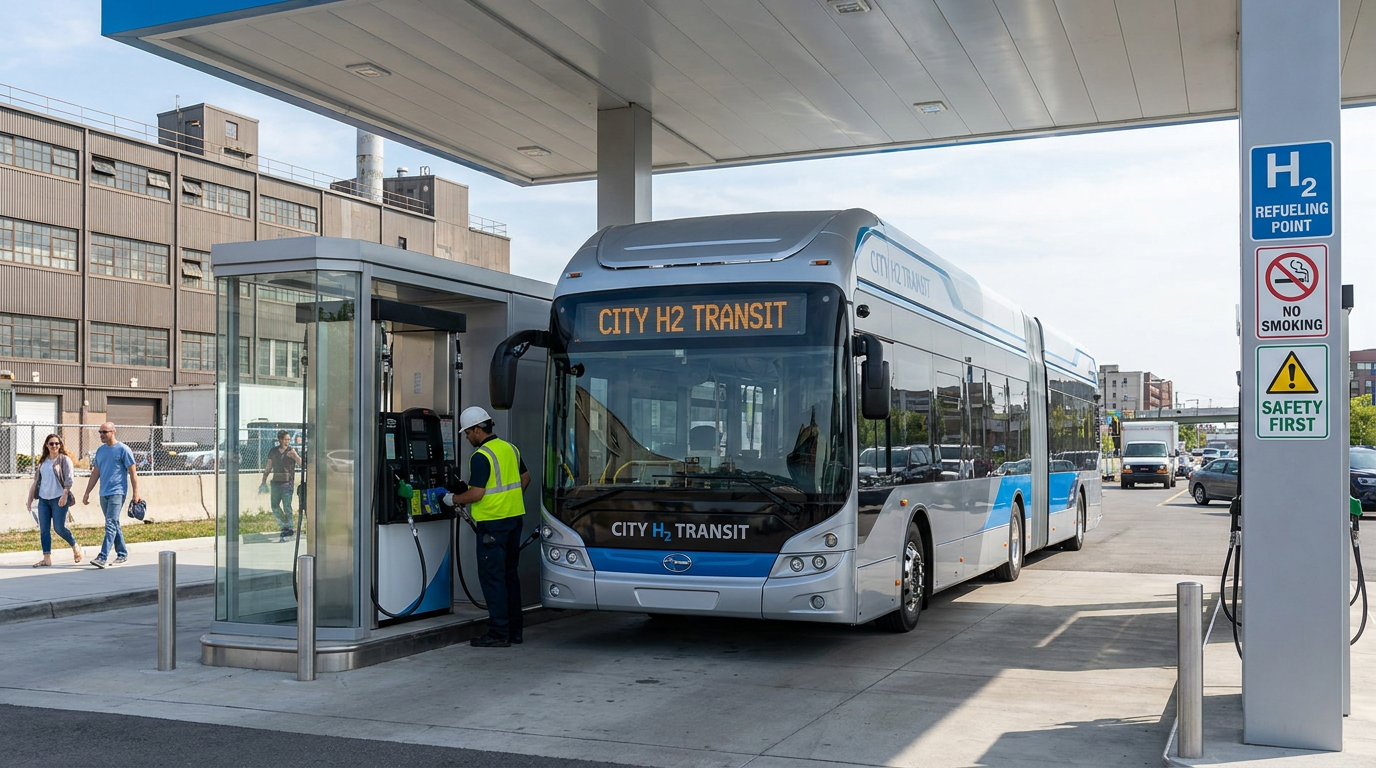
Transportation is one of the most visible hydrogen applications because fuel cell vehicles give people a tangible example of the technology in motion. Hydrogen can power cars, buses, trucks, trains, and potentially ships through fuel cell systems. Refueling can be relatively fast compared with charging large battery packs, which is one reason hydrogen remains interesting for commercial fleets.
That said, not every transport use case is equally strong. Battery electric vehicles have gained a clear lead in many passenger car markets because charging networks are expanding and batteries have improved significantly. Hydrogen may prove more competitive in parts of transport where weight, range, uptime, or refueling speed are especially important, such as heavy trucks, buses, and some specialized fleet operations.
This again points to hydrogen’s likely role as a targeted solution. It does not need to win every transportation segment to be valuable. If it helps decarbonize the toughest parts of freight and logistics, that would still be a meaningful contribution.
Can Hydrogen Power Homes?
This is one of the most common questions, and it deserves an honest answer. In theory, yes, hydrogen can play a role in residential energy. In practice, most households are not going to produce, store, or manage hydrogen casually any time soon. Home use remains limited compared with industrial and mobility applications, and the economics and infrastructure are not yet in place for mass adoption.
There are some possible residential or neighborhood scale applications. Hydrogen fuel cells can provide backup electricity for buildings. In certain settings, fuel cell combined heat and power systems may supply both electricity and useful heat. Some regions are exploring the idea of hydrogen ready gas networks or blending hydrogen into existing gas systems, though these concepts raise technical, efficiency, cost, and safety questions.
For homeowners interested in practical sustainability, the right conclusion is not disappointment. It is perspective. If your goal is lowering household emissions today, proven tools like insulation, heat pumps, efficient appliances, solar panels, and better building envelopes usually offer more immediate value. Hydrogen may become part of the residential picture later, but it is not the first place most people should look right now.

What Home Use Might Look Like in the Future
A future household relationship with hydrogen may be more indirect than direct. You might live in a region where surplus renewable electricity is converted into hydrogen for seasonal storage. Your local utility might use hydrogen fueled turbines or fuel cells to improve resilience during peak demand. A small building or community center might use a hydrogen backup system that keeps essential services running during outages.
In some cases, homeowners may benefit without ever handling hydrogen themselves. That is often how meaningful energy transitions work. The cleanest changes are not always the most visible. Better grids, cleaner industrial supply chains, and more resilient infrastructure can improve daily life even when the technology stays behind the scenes.
Why Canada Is a Meaningful Hydrogen Story
Canada is often mentioned in hydrogen discussions for good reason. The country has substantial low carbon electricity resources, including hydropower, and a policy environment that has become increasingly active around hydrogen development. Natural Resources Canada’s Hydrogen Strategy highlights the country’s strong position for producing hydrogen from electricity, especially through electrolysis.
This matters because clean hydrogen becomes more credible when a region has a relatively low carbon power base to begin with. Producing hydrogen from high emissions electricity would weaken the environmental case. Canada’s grid profile, in many provinces, gives it a structural advantage for certain hydrogen pathways. It also gives the country an opportunity to support domestic industry, exports, and technology development in a growing global market.
The IEA has also pointed to Canadian policy incentives, including production and manufacturing tax credits tied to electrolysis and natural gas with CCUS projects. Real world deployment is already happening in North America, including major industrial projects that have moved beyond the lab stage. That does not mean success is automatic, but it does show that hydrogen is no longer just a theoretical concept.
The Benefits of Hydrogen Energy
Hydrogen’s value becomes clearer when we focus on its practical strengths rather than broad slogans. It can help reduce emissions in sectors that are difficult to electrify directly. It can store energy, support fuel cell systems, provide industrial feedstocks, and connect renewable power to uses that demand flexibility. These are meaningful benefits in a world trying to decarbonize at scale.
Another strength is versatility. The same hydrogen molecule can serve very different purposes depending on the context. It can move through industrial systems, fuel certain vehicles, or help stabilize parts of an energy network. Few energy tools are useful across so many sectors, which is why hydrogen often appears in serious long term decarbonization plans.
There is also a resilience angle. In some situations, hydrogen can provide backup power where reliability is essential. Hospitals, data centers, remote infrastructure, and emergency systems may benefit from technologies that can store energy for extended periods and generate electricity when needed. That may become more valuable as climate related disruptions place new pressure on energy systems.
The Limitations and Realities
If hydrogen is so promising, why is it not everywhere already? The answer is that promising does not always mean easy. Producing low emissions hydrogen can be expensive, especially compared with conventional fossil based hydrogen. Building new pipelines, storage systems, fueling stations, and industrial equipment takes time and capital. Permitting, regulations, and safety requirements add complexity, as they should for any energy system.
The IEA identifies several major barriers to deployment, including unclear demand signals, financing hurdles, regulatory uncertainty, licensing and permitting delays, and operational challenges. These are not small obstacles. They explain why many announced projects move slowly or are delayed, resized, or cancelled. Public enthusiasm is helpful, but infrastructure transitions depend on policy design, customer demand, and bankable economics.
Efficiency is another important part of the conversation. Every time energy is converted from one form to another, some is lost. If you use electricity to make hydrogen, then store it, transport it, and convert it back to electricity, the overall efficiency is lower than simply using electricity directly where possible. That is why hydrogen should generally be reserved for cases where direct electrification is difficult or impractical, rather than being treated as the default answer for all energy needs.
Common Misconceptions About Hydrogen
Because hydrogen attracts so much attention, it also collects a fair number of myths. Clearing those up helps people make better sense of both the opportunity and the limits.
-
Misconception: Hydrogen is a primary energy source. In reality, hydrogen is an energy carrier. It must be produced from another source first, whether that source is natural gas, electricity, biomass, or something else.
-
Misconception: Hydrogen is automatically clean. Its climate impact depends on how it is produced. Gray hydrogen has a high emissions footprint, blue hydrogen lowers emissions but does not eliminate them, and green hydrogen can be much cleaner if powered by low emissions electricity.
-
Misconception: Hydrogen will replace household natural gas soon. That remains uncertain and limited. Most experts see hydrogen as more immediately valuable in industry, freight, and storage than in widespread residential heating.
-
Misconception: Fuel cells and combustion are the same thing. Fuel cells generate electricity electrochemically, while combustion burns fuel. They are related to hydrogen use, but they are not the same technology.
-
Misconception: Hydrogen is either the future of everything or a complete dead end. The truth is more balanced. It is a useful tool for specific clean energy challenges, not a miracle fuel and not a meaningless distraction.
What the Numbers Tell Us
The global market data offers an important reality check. Hydrogen demand is already large, with the IEA reporting 97 million tonnes in 2023 and about 100 million tonnes in 2024. That means hydrogen is not a niche substance in the economy. It is already deeply embedded in industrial systems worldwide.
At the same time, low emissions hydrogen remains a very small share of total supply. Less than 1 million tonnes of low emissions hydrogen was produced in 2023. That gap between total demand and clean supply is one of the clearest signs that the hydrogen transition is still in its early phases.
Looking ahead, the IEA says announced low emissions hydrogen projects could reach 49 million tonnes per year by 2030. This is encouraging, especially alongside the nearly 520 GW of announced electrolyzer capacity. Still, announced capacity is not the same as operational capacity. For beginners, the best interpretation is cautious optimism. Momentum is real, but execution remains the hard part.
How Hydrogen Fits Into a Sustainable Lifestyle
For everyday readers, sustainable living often starts with decisions that are immediate and personal. Better insulation, efficient appliances, lower carbon transportation, and resilient home systems all feel concrete. Hydrogen, by comparison, can seem distant. But it still fits into a sustainable lifestyle, just in a more indirect way.
One way to think about it is through the products and systems you rely on. If cleaner hydrogen reduces the emissions associated with steel, fertilizer, shipping, freight, or backup power, that affects the broader footprint of the economy. A sustainable lifestyle is not only about what sits inside your home. It is also about supporting energy systems and policies that reduce emissions at the industrial and infrastructure level.
That perspective can be reassuring. You do not need to install a hydrogen tank next to your house to benefit from the technology’s progress. In many cases, the most meaningful clean energy improvements happen upstream, where they quietly reshape the materials, transport networks, and power systems that support daily life.
Should Homeowners Pay Attention to Hydrogen Now?
Yes, but with the right expectations. Homeowners do not need to treat hydrogen as an urgent shopping category. There is no need to feel behind if you are not exploring hydrogen appliances or residential storage systems. For most households, the best near term actions remain energy efficiency, electrification where practical, and thoughtful upgrades that lower bills and improve comfort.
Still, hydrogen is worth watching because it could influence future utility planning, backup power options, and the carbon intensity of the wider energy system. If you live in a region investing heavily in clean industry or grid innovation, hydrogen may become part of the local story. It could also shape policy decisions, infrastructure investments, and long term energy costs in ways that reach households indirectly.
A calm and informed approach is the most useful one. Hydrogen does not need to be your first sustainability move to be relevant. It simply deserves a place on the list of technologies that may help build a more flexible and lower carbon future.
The Future of Hydrogen Energy
The future of hydrogen will likely be defined less by headlines and more by fit. Where does it solve a problem better than direct electrification? Where does it lower emissions meaningfully without excessive cost? Where can infrastructure be built sensibly and safely? The sectors that answer those questions well are where hydrogen is most likely to succeed.
Industry is likely to remain central, especially for chemicals, refining transitions, steelmaking, and high temperature heat. Heavy transport and specialized fleet use may also grow, particularly where batteries face practical constraints. Long duration energy storage and grid balancing are other promising areas, especially as renewable electricity expands and energy systems need more flexibility over days or seasons rather than just hours.
Residential applications may emerge, but probably more slowly and selectively than some early narratives suggested. In the near term, hydrogen seems strongest as a decarbonization tool for hard to electrify sectors and as a strategic complement to renewables, not a replacement for every electrification pathway. That may sound less dramatic, but it is actually a sign of maturity. Good energy planning is rarely about one perfect solution. It is about using the right tool in the right place.
Final Thoughts
Hydrogen energy becomes much easier to understand once we stop expecting it to be simple magic. It is not a primary source of energy, and it is not automatically clean. It must be produced, stored, and used thoughtfully. Yet within those realities, hydrogen offers something genuinely valuable: flexibility. It can connect clean electricity to sectors that are otherwise difficult to decarbonize, support industrial transformation, and provide new options for storage and backup power.
For beginners, that is the most practical conclusion. Hydrogen is real, promising, and already important, but it is not yet a mass market household energy solution. Its best near term role is likely to be behind the scenes in industry, freight, infrastructure, and selected building applications. Over time, those uses could still have a meaningful impact on everyday life by making the systems around us cleaner and more resilient.
If sustainability is about making thoughtful long term choices, hydrogen deserves careful attention rather than hype. It may not be the answer to every energy question, but it could be one of the tools that helps make a lower carbon future more achievable. And for a technology often described as complex, that is actually a very practical place to begin.



No Comment! Be the first one.