Quayside’s Library Approval Signals a More Mature Model for Waterfront Growth
Toronto’s decision to approve the eastern waterfront’s first public library branch is more than a civic amenity announcement. It is a signal about how the city expects major growth districts to function: housing delivery, public infrastructure, and community services must arrive as one coordinated package, not as separate obligations negotiated after density has already landed.
As reported by Construction Canada, the branch will be delivered within the Quayside development, one of the most significant housing projects on Toronto’s waterfront. Phase one is expected to include roughly 563 affordable rental homes and 1,170 market rental homes, positioning the site as both a housing supply intervention and a test case for complete-community planning on publicly visible urban land.
For developers and planners, the important detail is timing. Toronto Public Library and the city have been planning library service for the eastern waterfront for more than a decade. By securing space during Quayside’s construction, the branch can open closer to the arrival of residents instead of following years later, after pressure on local services has already built up. That matters because new urban districts often absorb population faster than governments can deliver social infrastructure. The result is a gap between approved density and lived functionality.
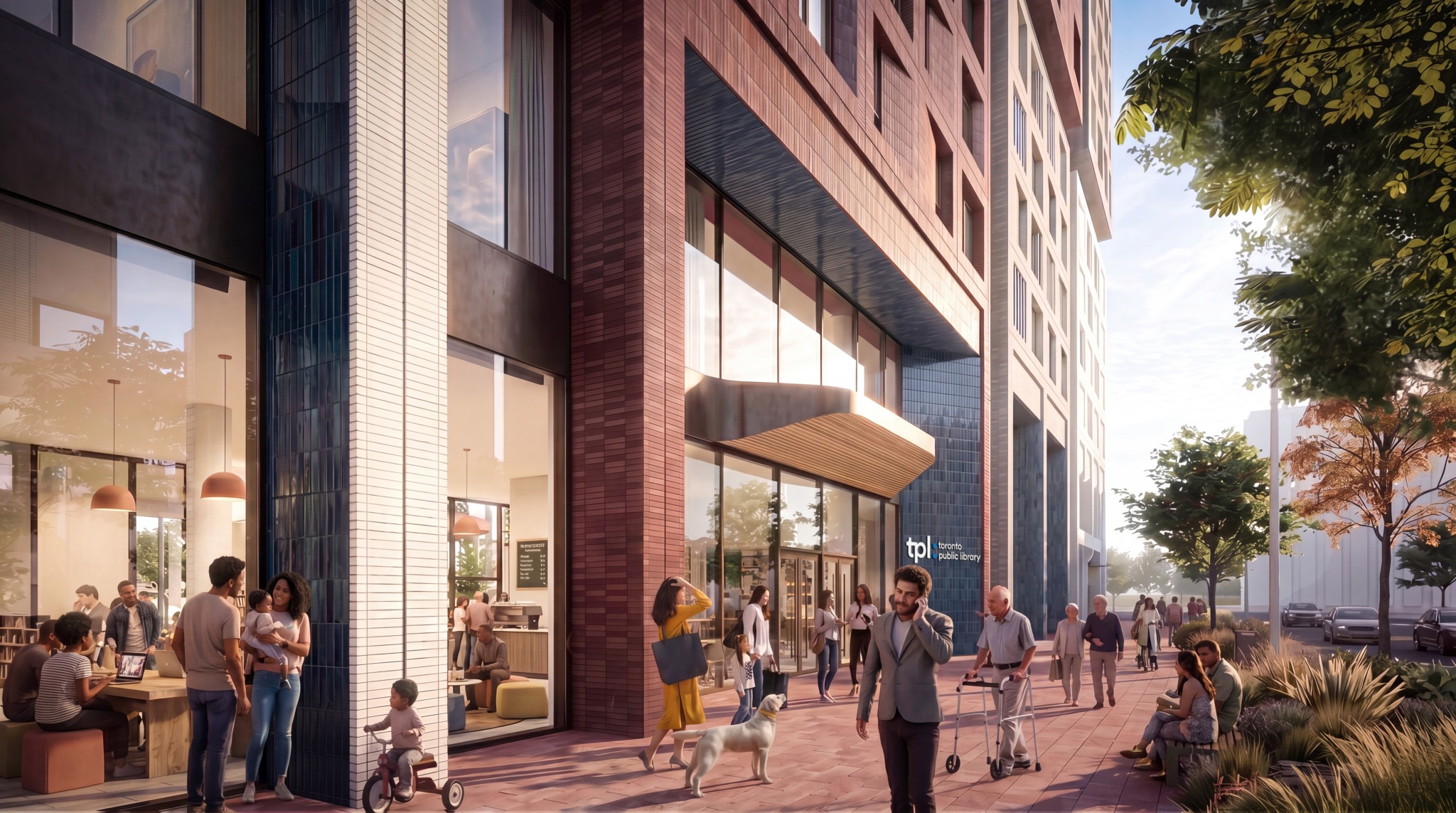
Quayside is also showing how community benefit structures are being used to advance public facilities without relying entirely on new tax-supported capital funding. Development partner Dream Unlimited Corp. will build the library’s base structure through community benefit contributions, while Toronto Public Library will fund the interior design, fit-out, and furnishings. This is the kind of blended delivery model cities will likely use more often as capital budgets tighten and expectations around public amenities rise.
The planning implication is clear. Major rezonings and master-planned communities will increasingly be evaluated not only on unit count, affordability mix, and built form, but on whether they solve for service capacity. Libraries, schools, childcare, parks, transit connections, and health infrastructure are no longer secondary considerations. They are part of the feasibility equation because they affect approvals, political support, absorption, and long-term land value.
Density without civic infrastructure is not city-building. It is only population placement.
The eastern waterfront has always carried a higher burden than a conventional private development site. It is expected to deliver housing, climate resilience, public realm, employment space, mobility improvements, and a new civic identity for a large piece of Toronto’s urban edge. A library branch may appear modest beside those larger ambitions, but it anchors the everyday life of the district. It gives the neighbourhood a public interior, a non-commercial gathering place, and a service platform for residents across income levels.
The consultation process, expected to follow the selection of an architectural firm for the interior fit-out beginning in 2028, will be worth watching. Programming choices will reveal who the city believes this waterfront community is being built for: families, newcomers, students, workers, seniors, entrepreneurs, or all of the above. Those decisions shape not only library operations, but the social profile and perceived completeness of the district.
For large-scale investors and development teams, Quayside reinforces a practical lesson. In high-growth urban precincts, land value is increasingly tied to integrated public infrastructure. Projects that can align housing delivery with civic assets will be better positioned for approvals, public acceptance, and long-term resilience. The next frontier of development strategy is not just building more units. It is building districts that are ready to function the day people move in.
Source: Construction Canada