

When Data Centers Outbid Housing: The New Land War Reshaping Rural America
Every city I have watched grow, from Toronto’s edges outward, taught me the same lesson: land is never just land. It is the raw material of a community’s future, and whoever controls it decides what that future looks like. Right now, across the United States, that control is shifting fast, and not toward housing.
Land purchases for future data centers hit roughly six billion dollars in the first half of 2026, a 79 percent jump from the year before, according to commercial real estate firm Avison Young. Data centers now account for 27 percent of U.S. development sites, second only to apartment buildings and ahead of industrial, office, retail and mixed-use combined. That is not a niche trend. That is a fundamental reallocation of the country’s most valuable resource.
What should concern anyone thinking about long term housing supply is not just where this capital is going, but what it is displacing. In Loudoun County, Virginia, one developer reportedly offered 4.4 million dollars per acre for land where the median price sat closer to 125,000 dollars per acre just a year earlier. The National Association of Home Builders put the consequence plainly in a July brief: a home builder’s land budget is capped by what buyers can afford, but a data center operator faces no such ceiling.
The result is not more expensive homes on that parcel. It is no homes at all.
That line, from the NAHB, is the one every planner, council member, and developer should sit with. When compute infrastructure can out-negotiate residential construction for the same parcel, we are not looking at a pricing quirk. We are looking at a structural shift in how land gets allocated in growth corridors, one that could quietly starve housing pipelines in exactly the regions that need supply the most.
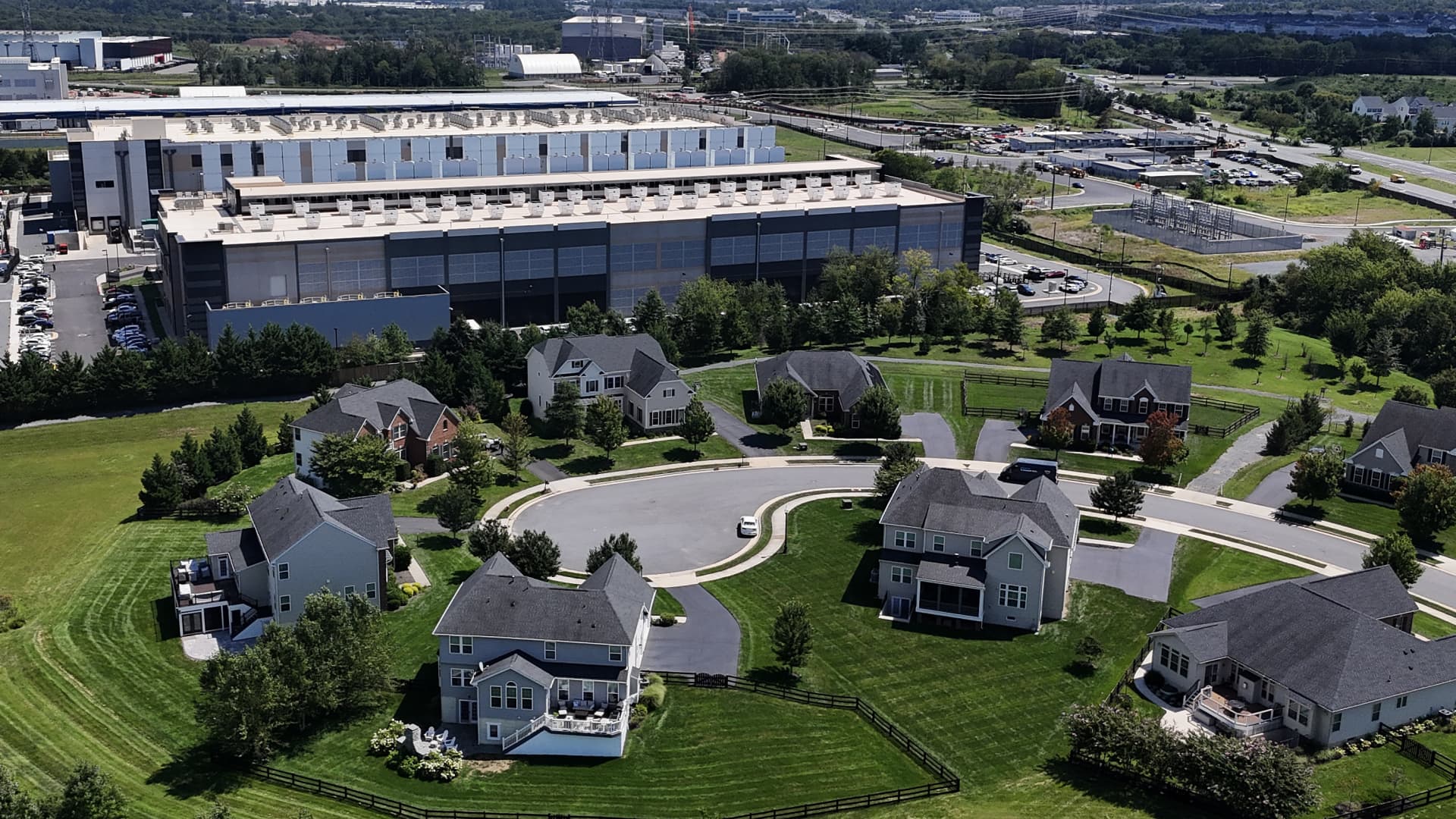
The feasibility conversation now has to widen. Farmland in Lancaster County, Pennsylvania, is being rezoned into industrial complexes exceeding a million square feet. Alfalfa fields outside Boise have become the anchor points of a semiconductor and data center corridor. In Saline Township, Michigan, opposition to a multibillion dollar project became so intense that township officials resigned over death threats, and New York’s governor has already issued a statewide moratorium on new hyperscale data centers, citing utility bills, resource strain, and uncertainty for residents. Mizuho counts as many as nine states weighing similar moratoriums.
For those of us who think in terms of infrastructure, timing, and community identity, this is the real feasibility question of the decade: can a region absorb hyperscale compute demand without sacrificing its capacity to house people? Power availability, water access, and grid capacity are now competitive advantages fought over by two very different kinds of development, and housing is not always winning that fight. Any serious growth strategy for a data center adjacent market now needs an explicit land use position, not an assumption that residential supply will simply keep pace.
The municipalities that get ahead of this, through zoning discipline, negotiated community benefits, and deliberate land use separation, will be the ones that still have room to build homes a decade from now. The ones that do not may find their most valuable farmland converted into server halls, with nothing left over for the families the community was meant to house.
Source: CNBC