



Maximizing Returns: The ROI of Energy-Efficiency Investments in Real Estate
In an era where sustainability is becoming more critical than ever before, the real estate market is witnessing a profound shift toward energy-efficient investments. Investors are increasingly recognizing that energy upgrades are not merely optional enhancements; rather, they are essential features that can significantly impact a property’s financial performance. This article delves into the long-term financial advantages of energy-efficient upgrades, examining how they enhance property value, lower operating costs, and ultimately lead to improved returns on investment (ROI).
Table Of Content
Understanding Energy Efficiency in Real Estate
Energy efficiency in real estate refers to improvements made in buildings that reduce energy consumption while maintaining or enhancing comfort and functionality. This can include a variety of upgrades, such as high-efficiency lighting, improved insulation, energy-efficient heating and cooling systems, and even renewable energy installations like solar panels. By adopting these upgrades, property owners can significantly reduce their energy usage and operating costs.
The foundation of energy efficiency lies in understanding building performance standards and regulatory requirements. In many North American markets, legislation increasingly mandates energy disclosure, performance standards, and compliance for existing buildings. As these requirements become more prevalent, the financial incentives for making energy-efficient upgrades grow in tandem. Investors can realize immediate benefits from tax incentives, while also enhancing the long-term value and marketability of their assets.
Financial Benefits of Energy-Efficient Upgrades
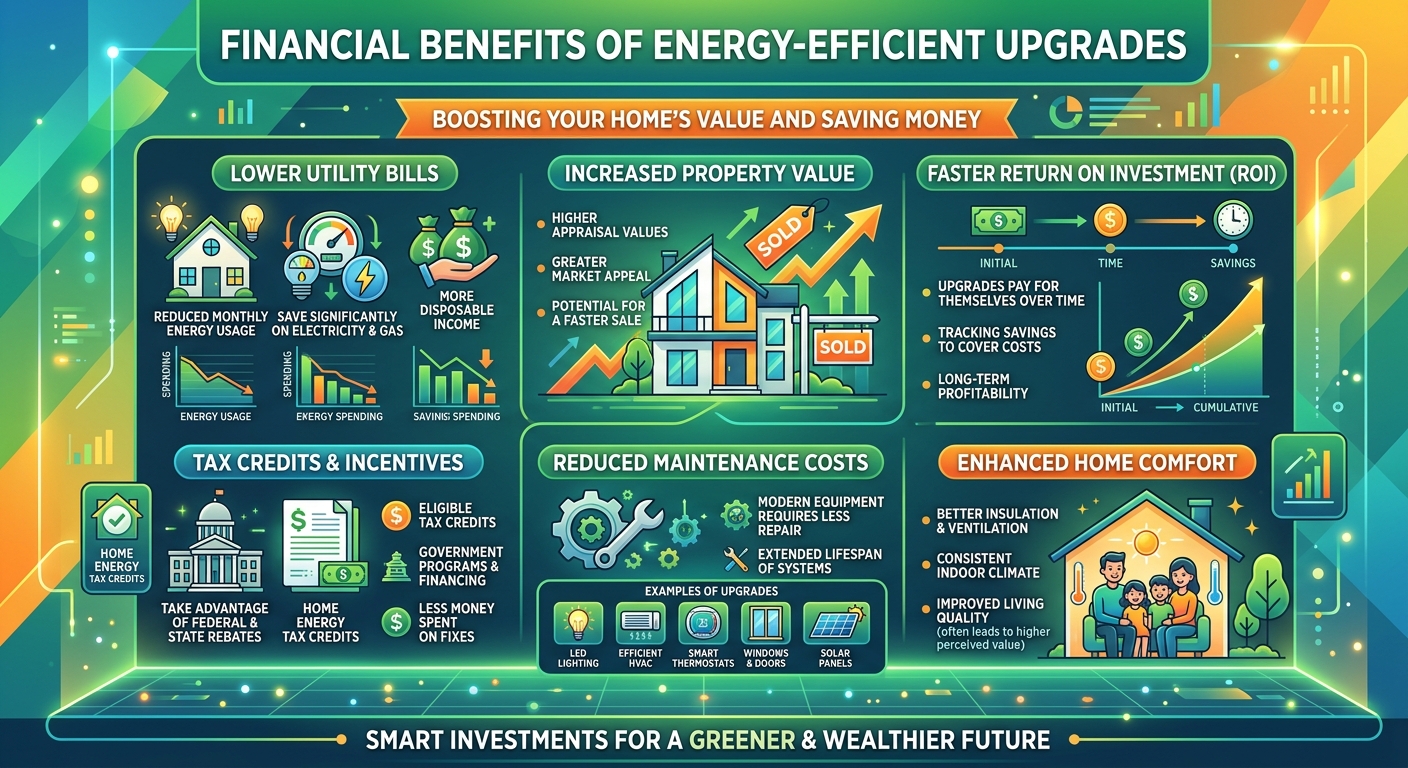
The financial advantages of investing in energy-efficient upgrades extend across multiple dimensions. First and foremost, these upgrades lead to substantial cost savings. For instance, projects that focus on life-cycle retrofits can result in energy savings between 5-15%, with payback periods often under three years, as highlighted in Canadian case studies by Natural Resources Canada (NRCan). This rapid return on investment is compelling for real estate investors seeking to optimize their portfolios.
Furthermore, energy-efficient buildings often attract a higher quality of tenants. A growing number of renters are prioritizing sustainability when choosing a property, and they are willing to pay a premium for units that are energy efficient. For green-certified office buildings, the evidence supports this trend; historical data indicates a rent premium of approximately 2-3% per square foot, with even higher premiums for newer or higher-quality assets. This trend is not merely anecdotal but underpinned by empirical research that shows a clear link between energy efficiency and stronger financial performance, even amidst varying market cycles.
Moreover, energy-efficient properties experience lower turnover rates. Tenants often prefer to remain in spaces that offer comfort and lower utility bills, which translates to reduced vacancy rates and associated costs. This stability can lead to stronger net operating income (NOI), ultimately bolstering the asset’s valuation. As highlighted in studies conducted throughout major markets, energy performance emerges as a core value driver that cannot be overlooked by investors.
Case Studies: Successful ROI from Energy-Efficiency
To illustrate the tangible benefits of energy efficiency investments, let’s explore some case studies that demonstrate successful ROI from such upgrades. In Toronto, a series of retrofit analyses showcased significant enhancements in occupancy and rent levels post-retrofit, leading to increased NOI and asset value. The findings indicated that building owners who implemented comprehensive energy upgrades saw not just immediate savings, but lasting value in their properties.
Another notable case comes from the United States, where commercial buildings that achieved LEED certification demonstrated approximately 11% higher rental income compared to their non-LEED counterparts. Additionally, these properties commanded up to 21.4% higher sales prices per square foot. The evidence strongly suggests that the market rewards energy-efficient assets, and savvy investors can capitalize on this trend.
Further illustrating this point, data compiled by UBS Asset Management found that LEED/BREEAM-certified office buildings in major cities like New York command remarkable price-per-square-foot premiums—around 28% in New York and 19% in London. Such statistics highlight the growing financial imperative for real estate investors to prioritize energy efficiency as part of their investment strategy.
Conclusion: Making Energy-Efficiency Part of Your Investment Strategy
In conclusion, the ROI from energy-efficient investments in real estate is undeniable and extends beyond immediate savings. As outlined throughout this article, energy upgrades contribute to enhanced property values, reduced operating costs, and improved tenant retention—essential elements for a successful investment strategy.
As the market continues to evolve, and as regulatory frameworks increasingly emphasize energy performance, investors who prioritize energy efficiency will not only meet compliance demands but also secure their financial futures. By treating energy upgrades as indispensable features rather than optional improvements, investors can pave the way for sustained growth and profitability in their real estate portfolios.
As we move forward, let it be clear that energy efficiency is not just a trend; it is a critical part of a robust investment strategy that responds to the modern market’s demands. The future of real estate is undoubtedly green, and those who adapt will reap the rewards.



No Comment! Be the first one.