The Quiet Architecture of a Hushed Living Room
In a home associated with the velocity and spectacle of professional football, the most revealing room may be the quietest one. As reported by Homes & Gardens, Patrick and Brittany Mahomes’ living room turns away from the bright red visual identity of the Kansas City Chiefs and toward a softer domestic language: cream walls, beige curtains, a white fireplace, and a palette designed to lower the volume of daily life.
This is not neutrality as absence. It is neutrality as architecture of feeling. The room belongs to a broader movement often described as “hushing the home,” where design is edited until the space feels rested, breathable, and emotionally precise. In practice, that means every surface must work harder. A cream wall is no longer simply a background. It becomes a reflector of light, a softener of shadow, and a canvas for proportion.
The fireplace is especially important in this kind of composition. In a highly decorative room, a hearth can become one object among many. In a hushed room, it becomes the visual anchor. White on white gives it architectural presence without heaviness, allowing the eye to settle rather than search. The effect is almost classical in its restraint, closer to a plastered European salon than a celebrity showpiece.
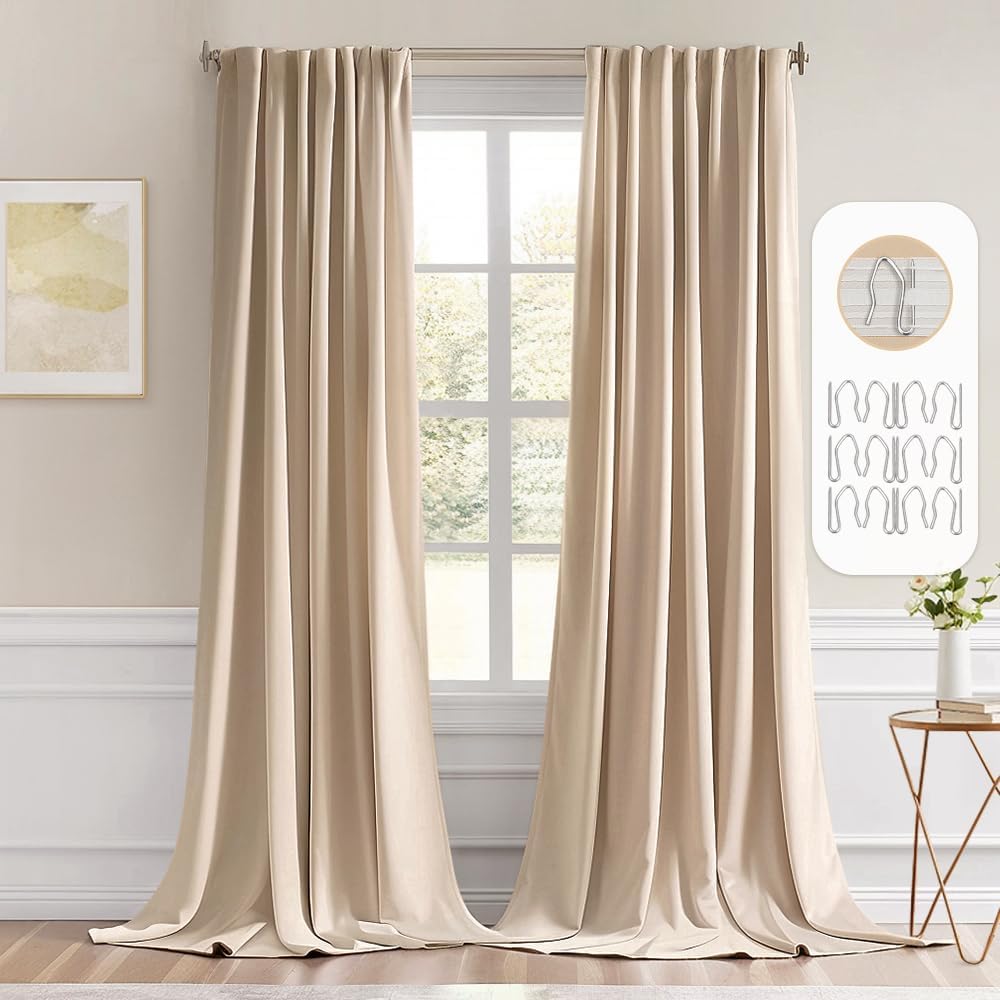
Curtains play a subtle but decisive role. Beige drapery does more than frame a window. It filters daylight, changes the temperature of the room, and adds the vertical softness that modern living spaces often lack. When chosen in a warm, textured fabric, curtains can make minimalism feel humane rather than severe. They give air a material quality.
The success of this palette depends on variation. Cream, ivory, sand, oatmeal, chalk, and stone are not interchangeable. Layered together, they create depth without contrast. A rug with a raised weave, a matte ceramic planter, a boucle chair, or a linen curtain panel can all sit within the same family of tones while speaking different tactile languages. This is the quiet discipline of tonal design.
A hushed room is not empty. It is edited until every remaining object can breathe.
What makes the Mahomes living room relevant beyond celebrity curiosity is its resistance to performance. So much contemporary interior imagery is built for impact, with saturated color, sculptural furniture, and dramatic styling. The hushed home moves in another direction. It values decompression over display. It asks how a room supports the nervous system, how it receives a tired body, how it makes silence feel intentional.
For readers considering the same approach, the lesson is not to remove personality. It is to refine it. Begin with the largest planes: wall color, window treatments, flooring, and the architectural focal point. Then add texture before adding pattern, and warmth before adding decoration. A single olive tree, a ceramic vessel, or a tonal rug can do more than a crowded arrangement of accessories.
The future of luxury at home may be less about visible abundance and more about atmosphere. In that sense, this living room suggests a larger design shift: toward spaces that protect attention, soften light, and make calm feel beautifully constructed.
Source: Homes & Gardens